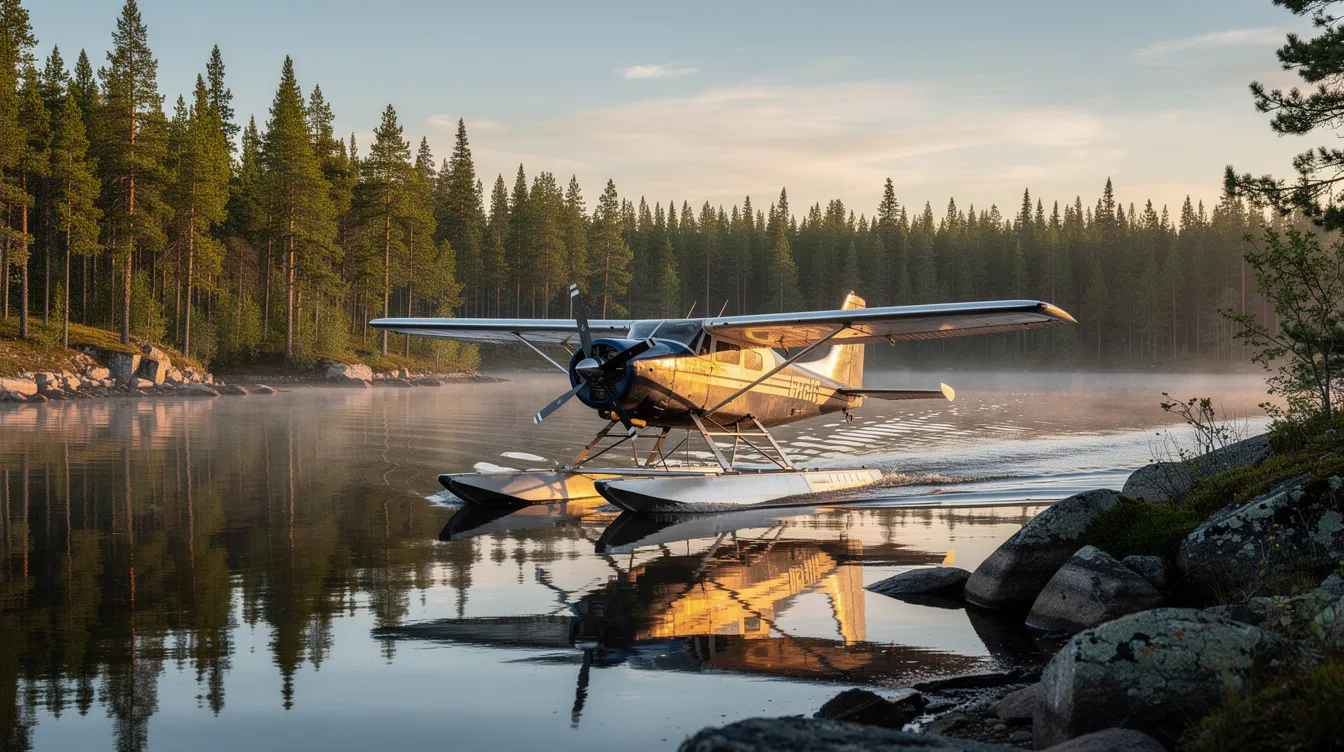
Bush planes open access to terrain that roads, commercial airlines, and most fixed-wing aircraft cannot reach. From gravel bars along Alaskan rivers to fishing lodge strips in northern Canada and unimproved airfields across Papua New Guinea, these aircraft serve as the final link between civilization and the wild. This guide covers the full spectrum of types of bush planes, their specifications, and the missions each one handles best.
Strategic value of bush planes vs. conventional aviation
Bush flying began in Canada in 1919, when pilots started using aircraft to reach mining camps, fur trading posts, and communities scattered across roadless terrain. More than a century later, the core mission remains the same: getting people, cargo, and supplies into places no other vehicle can reach.
Bush planes differ from standard general aviation in several concrete ways. Runways are often improvised: gravel bars, frozen lakes, tundra clearings, or strips under 1,000 feet cut into forest. There are no control towers, minimal weather reporting stations, and fuel must often be cached in advance. Weather and terrain challenges include high density altitude, crosswinds funneling through valleys, and landing surfaces that change with seasons.
Compared to helicopters, bush planes carry larger loads over longer distances at lower cost per mile. Compared to commercial routes, they land where scheduled airlines never will. A lodge on a lake 200 miles from the nearest paved airport is a routine destination for a bush aircraft, but completely inaccessible by airline.
Bush planes have a variety of typical uses, including cargo delivery and medical evacuation. They also excel in operations such as wildlife monitoring or search and rescue. Beyond logistics, bush planes support tourism by providing access to remote camps and lodges, operating in remote regions without traditional runways, and landing on lakes, rivers, and gravel bars.
Key advantages of bush aviation:
Extreme access to undeveloped areas where roads do not exist
Load flexibility for passengers, supplies, and specialized gear
Cost efficiency versus helicopter operations for moderate payloads
Resilience through rugged airframes built for harsh climates
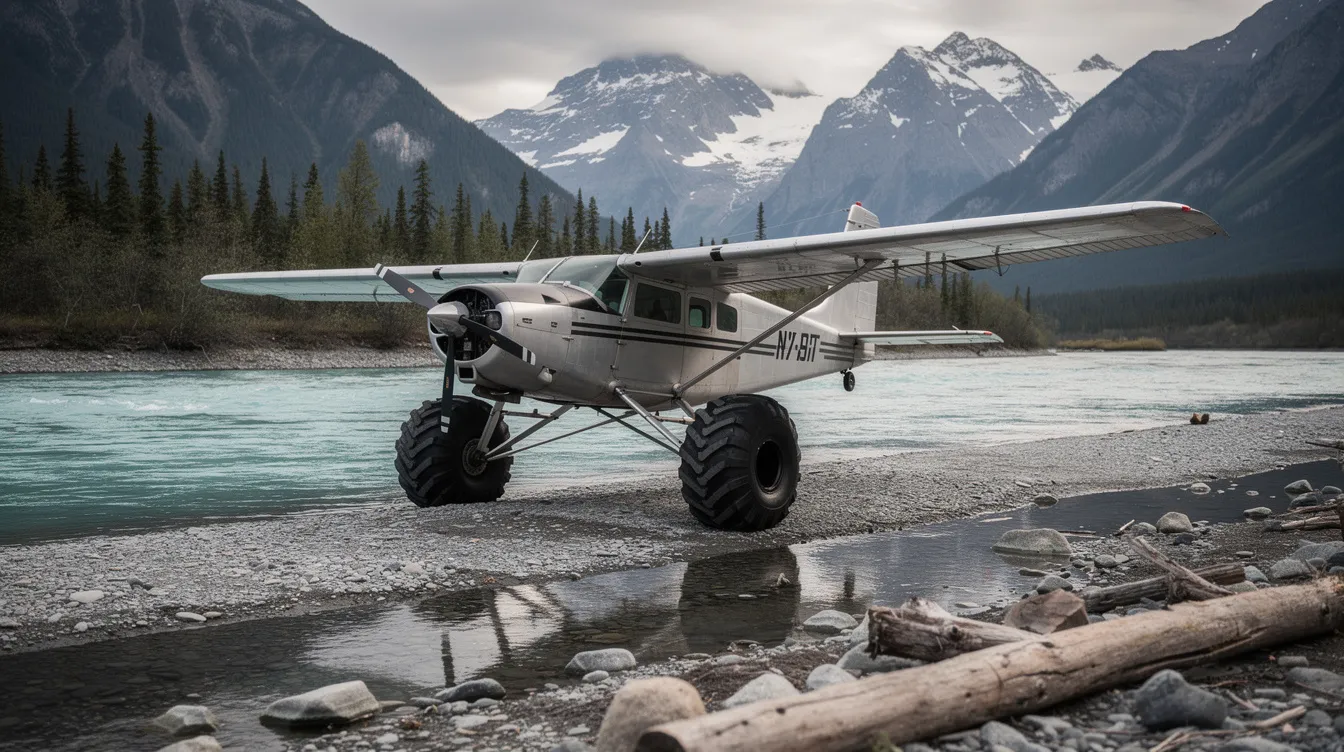
Versatility through interchangeable gear: wheels, floats, skis, or tundra tires
While BlackJet focuses on private jet access and Jet Card programs through its premium private jet card services, the same principles of safety, performance, and mission-matched aircraft also govern how bush pilots choose their planes.
What is a bush plane? Core definition and key traits
A bush plane is a general aviation or utility aircraft designed to operate from short, rough, or improvised strips and water surfaces in roadless areas. Common operating regions include Alaska, northern Canada, Papua, the African interior, and Patagonia.
Bush planes can land on short, rough runways, and they use powerful piston or turboprop engines to manage rough flying conditions. Bush planes are often designed with high power-to-weight ratios for enhanced performance in demanding environments.
Core traits of common bush aircraft:
Most bush planes have high wings for better obstacle clearance and visibility, plus simplified float or ski attachment
Bush planes prioritize STOL (short takeoff and landing) capabilities, with some clearing obstacles in under 200 feet
Bush planes often feature rugged landing gear for handling rough terrain; tundra tires are designed for rough surfaces found in bush flying, while skis allow bush planes to operate on snow and ice surfaces.
Floats enable bush planes to operate on water for takeoffs and landings
Bush planes can be equipped with wheels, skis, or floats depending on the mission
Landing gear configurations vary among bush planes to adapt to diverse environments
Low stall speeds (often under 50 knots) and forgiving handling at low airspeed
Bush aircraft span both piston and turboprop models, from two-seat taildraggers to 20-seat utility turboprops. A floatplane mounts external floats under the fuselage; a flying boat uses a hull-shaped fuselage. Taildraggers place the main wheels forward with a tailwheel aft; tricycle gear places a nosewheel forward.
Main types of bush planes by role and configuration
Bush planes are categorized by size, payload capacity, and landing gear configuration. Here is a roadmap to the major types covered in this article:
Light taildraggers (two-seat, extreme STOL): Piper PA 18 Super Cub, Carbon Cub, Aviat Husky. Best for solo pilots or a pilot plus one passenger accessing tiny strips.
Four-to-six-seat utility haulers: Cessna 185, Cessna 206, Maule M-7, Helio Courier. Move small groups or moderate freight on wheels, floats, or skis.
Canadian classics: de Havilland DHC-2 Beaver and DHC-3 Otter. Iconic heavy-lift bush aircraft with decades of proven service.
Kit-built and experimental amateur-built: Carbon Cub FX (kit version), Zenith STOL CH 701/750, Bearhawk. Personal bush aircraft with modern materials and customization.
Heavy turboprop utility platforms: Daher Kodiak 100/900, Cessna 208 Caravan, de Havilland DHC-6 Twin Otter. Carry larger groups and heavy cargo into remote strips worldwide.
Payload, cruise speed, and runway length requirements differ sharply by category. The table below gives a quick comparison; figures are approximate and vary by aircraft variant, equipment, loading, and conditions.
Bush plane type | Typical aircraft | Seats (including pilot) | Typical strength | Common landing configurations |
|---|
Light taildragger | Piper PA-18 Super Cub | 2 | Extreme STOL access; about 500 feet to clear a 50-foot obstacle | Wheels, tundra tires, skis, floats |
Modern light STOL | Carbon Cub, Aviat Husky | 2 | Low-speed handling and access to very short strips | Wheels, tundra tires, skis, floats |
Utility hauler | Cessna 185, Cessna 206, Maule M-7 | 4–6 | Passenger and freight transport with greater payload than a light taildragger | Wheels, skis, floats |
STOL specialist | Helio Courier | Up to 6 | Minimum controllable speed of about 27 mph | Wheels, skis, floats |
Canadian classic | de Havilland DHC-2 Beaver | Up to 7 | Floatplane capability and loads of up to about 1,500 lb | Wheels, skis, floats |
Larger utility aircraft | de Havilland DHC-3 Otter | About 11–12 | Higher passenger capacity than the Beaver | Wheels, skis, floats |
Turboprop utility | Cessna 208 Caravan, Daher Kodiak | Usually up to 9–10 | Larger payloads, longer range, and commercial utility | Wheels; floats on selected variants |
Twin-engine regional utility | de Havilland DHC-6 Twin Otter | About 18–20 | Larger groups and remote community routes | Wheels, skis, floats |
These categories overlap: an aircraft's real-world capacity and runway requirements depend on its specific configuration, fuel load, weather, elevation, and operator limits.
Light taildraggers: the classic image of bush flying
Lightweight STOL aircraft can access very short landing strips that other aircraft cannot use. Light taildraggers are two-seat, fabric-covered planes optimized for extreme short takeoff and low-speed handling. They are the aircraft of choice for solo bush pilots, guides, and one guest plus light gear.
The taildragger layout places the main gear forward and a tailwheel aft. This configuration provides better propeller clearance over rocks and brush, handles rough-field operations well, and reduces the chance of nosing over on soft ground.
These planes typically cruise slower than larger bush planes but can operate from places no other airplane can reach: tiny remote gravel bars, tundra benches, and mountain ridgelines. This section covers three key types:
Piper PA 18 Super Cub
Carbon Cub
Aviat Husky
Piper PA-18 Super Cub: benchmark bush plane
The Piper PA-18 Super Cub was built from 1949 to 1994, making it one of the longest-produced light aircraft in aviation history. It remains the benchmark against which other light bush planes are measured.
Configuration: two seats in tandem, fabric-and-tube construction, taildragger gear. The Piper PA-18 Super Cub has a 150 hp Lycoming engine in its most common later variants, though earlier models used 90 to 125 hp powerplants. Gear options include big tires (tundra), skis, or floats.
Performance: stall speed around 43 mph with flaps, cruise speed roughly 115 mph at 75% power. The Piper PA-18 Super Cub has a takeoff distance of 500 feet to clear a 50-foot obstacle, with ground rolls as short as 200 feet. These numbers make it capable of reaching strips that would stop most other aircraft.
Bush pilots use Super Cubs for scouting river sandbars, shuttling a single hunter or angler into constrained landing sites, and glacier landings. Its cultural status in Alaska and Canada is comparable to the Land Rover in African safari country: the original tool for the job.
Carbon Cub: modern Super Cub evolution
CubCrafters' Carbon Cub is a modern reinterpretation of the Super Cub, using carbon fiber and CNC steel frames to reduce weight and boost performance. The FX-3 variant produces 186 hp from a CC363i engine, carries a gross weight of around 2,000 lb, and offers a useful load close to 977 lb.
Some Carbon Cub variants are sold as factory-assist kits and registered as experimental amateur-built, allowing owners to participate in construction. This status permits more customization but prohibits Part 135 commercial operations.
Performance is where the Carbon Cub separates itself: takeoff distances well under 200 feet in optimal conditions (some demonstrations show 90 to 110 feet), stall speeds around 36 mph, and cruise speed up to 135 mph. For backcountry owner-pilots who want modern avionics and a Garmin glass panel alongside extreme STOL capability, the Carbon Cub is among the most popular aircraft in this segment.
Aviat Husky: clean-sheet taildragger
The Aviat Husky, introduced in the mid-1980s and still in production, was designed from scratch for STOL and utility operations rather than evolving from an older airframe. Engines range from 180 to 200 hp, producing cruise speeds in the 135 to 140 mph range with stall speeds in the low 50s mph with flaps.
The Husky balances better cruise speed than a Super Cub with strong short-field capability, making it a popular personal bush aircraft for owners who want to cover ground between remote strips without sacrificing off-airport landing performance. Equipment options include modern avionics, skis, floats, and tundra tires. Common roles include patrol, pipeline observation, wildlife service operations, and recreational bush flying.
Four-to-six-seat utility haulers: workhorse bush aircraft
This category forms the backbone of commercial bush operations. The Cessna 185 and 206 are popular utility bush planes for various missions, and cargo and passenger transport is a common mission for utility bush planes in this class.
These aircraft seat four to six people, often with cargo, and operate on wheels, skis, or floats. Cruise speeds typically range from 120 to 165 mph, with greater range and load capacity than light taildraggers but slightly longer takeoff and landing requirements.
Cessna 180 and 185 Skywagon
The Cessna 180 first flew on May 26, 1952, establishing Cessna's presence in the high-wing tailwheel utility category. The 185 Skywagon followed with more power (around 300 hp) and a higher max gross weight of roughly 3,350 lb.
Both are high-wing tailwheel utility haulers used extensively in Alaska, Canada, and bush operations worldwide. The Cessna 185 Skywagon can carry up to 1,400 lbs of payload, with cruise speed in the 140 to 150 mph range. Seating accommodates up to six occupants.
Missions include hauling small groups of hunters and fishermen, float operations to lakes and rivers, and shuttle flights from main hubs into backcountry staging areas. The Cessna 185 often bridges the gap between smaller Super Cubs and the larger de Havilland Beaver.
Cessna 206 "Super Skywagon" / Stationair
The Cessna 206 is a high-wing, six-seat utility aircraft first produced in the early 1960s and still manufactured in updated forms. Its reputation as a "sport-utility" airplane comes from large double cargo doors, a useful load often around 1,400 to 1,600 lb, and capability on wheels, skis, or floats.
Cruise speed runs around 140 to 150 mph depending on configuration. In bush flying, the 206 moves families or small groups plus gear into gravel bars, lodge airstrips, and floatplane docks. It is a common sight across Alaska's interior and Canadian backcountry. Compared to the 185, it offers a slightly more spacious cabin but typically needs a bit more runway.
Maule M-7 and family
The Maule M-7 series (first flown in 1984) is a family-built, high-performance STOL airplane available with tailwheel or tricycle gear. Typical specs include a pilot plus four passengers, engines in the 200 to 260 hp range, gross weights around 2,500 to 2,800 lb, and cruise speeds roughly 135 to 150 mph.
Maules deliver excellent short-field performance and versatility on wheels, skis, or floats, though they hold a more modest market share than Cessna models in commercial bush fleets. They serve small operators and owner-pilots who want a capable family backcountry airplane with strong climb rates.
Helio Courier: extreme STOL specialist
The Helio Courier, produced from the 1950s into the 1970s, is a legendary STOL specialist. About 500 airframes were built, each featuring automatic leading-edge slats and large slotted flaps engineered for ultra-low-speed flight. The Helio Courier has a minimum controllable speed of 27 mph, a figure that still astonishes pilots accustomed to other aircraft.
Configuration: high wing, taildragger, seating for a pilot plus up to five passengers, powered by a geared Lycoming engine near 295 hp. This powerful engine, combined with advanced high-lift devices, allows operation from strips where other aircraft of similar size simply cannot go.
Historic roles include missionary work in remote jungles, covert operations during the Vietnam era, and community support in Arctic and mountain environments. While not massively produced, the Helio Courier remains iconic among bush pilots for its extreme capabilities.
The Canadian classics: de Havilland Beaver and Otter
De Havilland Canada designed rugged utility aircraft tailored to post-WWII Canadian wilderness operations. The Noorduyn Norseman was Canada's first designed bush plane, but de Havilland's DHC-2 Beaver and DHC-3 Otter became the backbone of bush flying across Canada, Alaska, and remote regions worldwide.
The Grumman Goose, originally built in 1936, also served bush operators as an amphibious aircraft, but the de Havilland types eclipsed it for backcountry versatility. Many Beavers and Otters are still flying 50-plus years after production, often upgraded with turboprop engines and modern avionics.
de Havilland DHC-2 Beaver
The de Havilland Canada DHC-2 Beaver first flew on August 16, 1947, and 1,657 DHC-2 Beavers were built before production ended in 1967. Many remain in daily service.
The de Havilland DHC-2 Beaver has a 450 hp radial engine, high-wing design, seating for a pilot plus up to six passengers, large cargo doors, and a robust airframe. The de Havilland Beaver can carry up to 1,500 lbs, and the de Havilland DHC-2 Beaver is known for its floatplane capabilities. The de Havilland DHC-2 Beaver can take off from 1,000-foot dirt airstrips, making it ideal for operations into remote strips, remote gravel bars, and lake surfaces.
Cruise speed runs around 120 to 140 mph. Typical loads include building materials, fuel drums, ATVs, and expedition gear for lodges and remote camps. Turbine conversions (Turbo Beaver) replace the radial engine with a PT6A turboprop, improving reliability and climb performance while preserving STOL and payload strengths.
de Havilland DHC-3 Otter
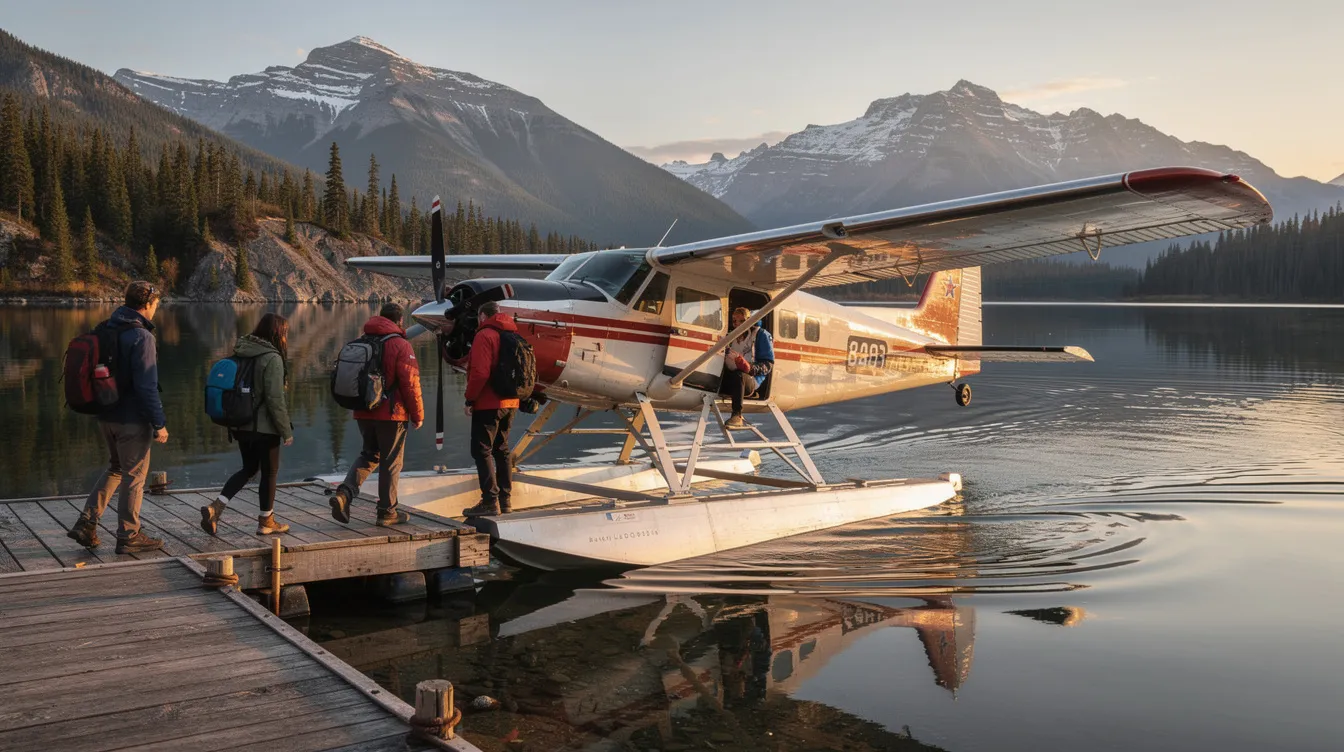
The de Havilland DHC-3 Otter first flew on December 12, 1951, as a larger evolution of the Beaver. Roughly 466 airframes were produced, and many still operate around the world. The de Havilland DHC-3 Otter has a higher passenger capacity than the Beaver, seating around 10 to 11 passengers plus substantial cargo.
Originally powered by a 600 hp radial engine, most flying Otters have been retrofitted with turboprops for higher reliability and power. Cruise speed runs around 100 to 130 mph depending on the engine variant. The Otter's spacious cabin, wide doors, and window layout make it popular for sightseeing flights and larger groups.
Typical bush uses: remote community resupply, lodge access for larger groups, medical evacuation, scenic flights in places like Alaska's Katmai region and Canadian coastal inlets.
Kit-built and experimental amateur-built bush aircraft
Experimental amateur-built bush aircraft are planes constructed by individuals from kits or plans, under regulations requiring the builder to complete a majority of the work. This category has grown because of cost savings over factory-built bush planes, customization freedom, and modern designs optimized for STOL.
These aircraft cannot be used for typical Part 135 commercial charter but are widely flown by private owners. Representative types include the Carbon Cub FX-3 (kit version), Zenith STOL CH 701/750, and the Bearhawk family. For those exploring the cost of a bush plane, kit-built options often reduce acquisition price by 30 to 50 percent compared to factory-certified equivalents, much like choosing budget-friendly private aircraft options can lower the overall cost of entering private aviation.
Turboprop utility bush planes: heavy lifters of the backcountry
This is the "big iron" of bush aviation. Modern turboprop bush planes offer better power and reliability than piston-powered predecessors, carrying 10 to 20 passengers or heavy cargo loads into short or rough strips on Jet-A fuel.
Common missions: regional commuter routes to remote communities, logistics for mining and energy projects, humanitarian flights, and fleet operations for lodge resupply. Four types dominate this segment: the Pilatus PC-6 Porter, Daher Kodiak 100/900, Cessna 208 Caravan, and the de Havilland DHC-6 Twin Otter.
Daher Kodiak: modern mission-ready bush aircraft
The Daher Kodiak 100 is a high-wing, single-engine turboprop first flown in 2004 and certified in 2007. Daher acquired Quest Aircraft in 2019. The Kodiak mounts a PT6A turboprop producing around 750 hp, seats up to 10 occupants, and features a large cargo door with fixed rugged landing gear.
STOL performance includes takeoff runs under 1,000 feet at max weight. Roles include missionary and humanitarian operations, remote medical transport, and corporate access to undeveloped areas. The larger Kodiak 900 variant adds an extended fuselage and higher cruise speed for operators who need more range and cabin comfort.
Cessna 208 Caravan
The Cessna 208 Caravan first flew on December 9, 1982, and thousands are now in service worldwide. Configuration: PT6A turboprop (often 675 to 867 hp), high wing, fixed gear, and large cargo doors. The Cessna 208 Caravan can carry up to 9 passengers in standard layouts, or up to 14 in high-density configurations.
The Cessna 208 Caravan can cruise at 214 mph, with range near 1,000 nautical miles depending on load. Amphibious Caravan variants on floats and cargo pod options add versatility. It operates across Africa, Alaska, Canada, and remote island regions, making it one of the most common bush aircraft for heavier loads in commercial fleets.
de Havilland DHC-6 Twin Otter
The de Havilland DHC-6 Twin Otter first flew in 1965 as a twin-turboprop STOL aircraft. Production was later revived by Viking Air in the 2000s. Two airplanes in this class can often serve an entire regional route network for a remote community.
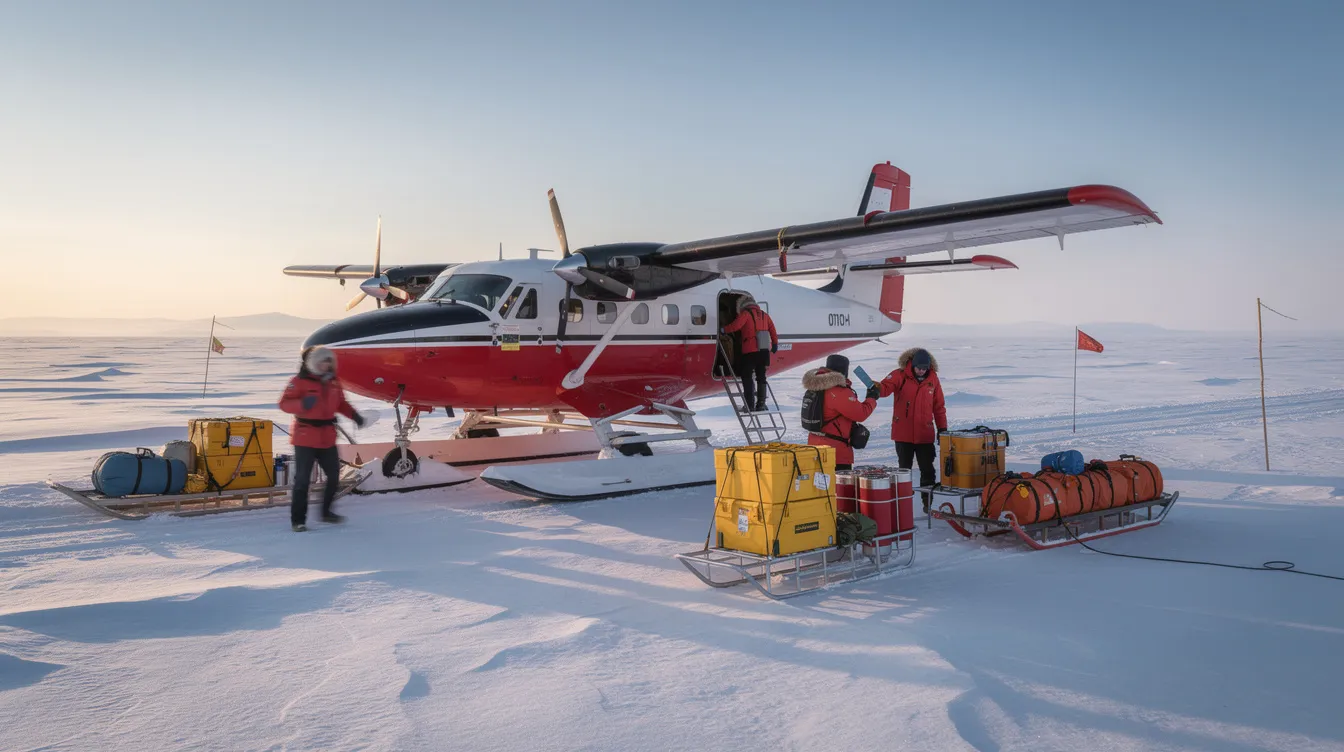
Configuration: twin PT6A engines, high wing, fixed rugged landing gear, seating for roughly 18 to 20 passengers, and compatibility with wheels, skis, and floats. The Twin Otter provides multi-engine redundancy in harsh environments and operates in conditions ranging from polar to tropical.
Notable operations include service across Canada's North, the Himalayas, Antarctica (including early winter flights to South Pole Station), and island-hopping routes in the Caribbean and Pacific. It is one of the largest and most capable bush planes regularly used in scheduled and charter operations.
How to choose the right type of bush plane for the mission
Matching mission needs to the right bush plane depends on a few concrete variables:
Passenger count and how much cargo weight
Strip length and surface type (water, gravel, snow, grass)
Terrain and elevation (high density altitude reduces all performance numbers)
Required cruise speed and range to the destination
Fuel type availability (avgas for pistons, Jet-A for turboprops)
Trade-offs are real. A Super Cub or Carbon Cub reaches a 200-foot gravel bar that no other airplane can use, but it carries only one passenger and light gear. A Beaver or Cessna 185 handles four to six people with gear but needs 800 to 1,200 feet. A Caravan or Twin Otter moves larger loads at higher speed but needs more ground infrastructure.
Seasonal conditions matter: float-equipped aircraft need open water, ski planes need consolidated snowpack, and tundra tires work best on firm tundra or dry gravel. Working with experienced local operators who know the terrain, weather patterns, and regulatory constraints is the single most important step in selecting the right aircraft.
Safety, regulation, and legality in bush flying
Core safety challenges in bush flying include:
Short and improvised strips without condition reports
Minimal on-site weather reporting and few navigation aids
Terrain-induced turbulence and wind shear at ridgelines
Wildlife hazards on runways and water surfaces
High pilot workload with small margins for error
Regulatory basics (U.S. and Canadian examples): tailwheel endorsements are required for taildragger operations, off-airport landing rules vary by jurisdiction, and landowner or agency permissions (national parks, forestry lands) must be confirmed before landing. Commercial bush operations must use properly certified aircraft with a type certificate and pilots operating under relevant regulations (Part 135 in the U.S.). Experimental amateur-built aircraft are restricted to non-commercial use.
This contrasts with the structured safety ecosystem in private jet operations, where formal safety audits, standardized maintenance, optimized cruising altitudes for private jets, and strict operating procedures are the norm. Both worlds share a core principle: safety is built into the system before the flight, not improvised during it.
From bush strips to business jets: where BlackJet fits
Bush planes are optimized for access to unimproved strips. BlackJet's expertise lies in providing private jet access via Jet Card programs across established airports, including many that serve as gateways to bush flying regions, with a range of private jet types for every traveler to match different mission profiles.
A typical scenario: a BlackJet member flies by private jet to Anchorage, Vancouver, or Fairbanks, choosing this option after weighing whether chartering a private jet is worth it. At the gateway airport, a local bush operator meets them with a Beaver, Kodiak, or Super Cub for the final flight into a remote fishing lodge or expedition camp.
BlackJet's carbon-neutral flights, informed by a clear understanding of the private jet price landscape, and 24/7 booking support handle the long-haul and regional legs
Bush operators handle the final, specialized mile into the wild
Just as mission determines the right bush aircraft, BlackJet helps clients choose the optimal jet category for their broader travel plan by matching private jet sizes to each journey
Key takeaways and how to plan your next remote adventure
The main types of bush planes each fill a distinct role:
Light taildraggers (Super Cub, Carbon Cub, Husky) for extreme STOL and minimal strips
Utility haulers (Cessna 185, 206, Maule, Helio Courier) for small groups and moderate cargo
Canadian classics (Beaver, Otter) for heavy loads and floatplane operations
Turboprop heavy lifters (Daher Kodiak, Cessna Caravan, Twin Otter) for large payloads and longer ranges
No single bush aircraft is ideal for every mission. Each type balances cruise speed, payload, and field length capability differently.
To plan a high-end backcountry trip: choose your destination, identify the required bush aircraft type, coordinate with reputable local operators, and align your inbound and outbound travel with private jets for maximum efficiency.
Elevate your travel at every altitude. With BlackJet, the long-range, time-critical portions of your journey are handled through Jet Card programs built on safety, carbon-neutral performance, and flexibility. Pair premier private jet access with specialized bush planes at the destination, and the world's most remote places become part of your itinerary.
Frequently asked questions about types of bush planes
What are the main types of bush planes?
Common types include light taildraggers such as the Piper PA-18 Super Cub, four-to-six-seat utility aircraft such as the Cessna 185 and 206, float-capable classics such as the de Havilland Beaver, and larger turboprops such as the Cessna Caravan and Twin Otter. The right choice depends on passenger count, payload, terrain, and landing surface.
How much weight can a bush plane carry?
Payload varies substantially by aircraft and configuration. A Super Cub generally carries a pilot, one passenger, and light gear, while a Cessna 185 can carry up to about 1,400 pounds of payload and a Beaver up to about 1,500 pounds in some configurations. Floats, skis, fuel, equipment, weather, and operating conditions affect usable capacity, so confirm the specific limits with the operator before flying.
Can bush planes land without a runway?
Many bush planes are designed for off-airport operations. Depending on their equipment and local conditions, they may land on gravel bars, lakes, rivers, snow, or short unprepared strips. A qualified pilot must assess the site, aircraft performance, weather, permissions, and applicable regulations before attempting a landing.
What makes a bush plane different from a regular airplane?
Bush planes are built or equipped for short takeoff and landing performance, low-speed control, and operation from rough or improvised surfaces. High wings, rugged landing gear, and interchangeable wheels, tundra tires, floats, or skis help them serve remote locations that conventional aircraft cannot easily reach.
Which bush planes are best for carrying larger groups?
The de Havilland DHC-3 Otter carries more passengers than the Beaver, while turboprops such as the Cessna 208 Caravan and DHC-6 Twin Otter serve larger passenger or cargo missions. Actual capacity depends on the cabin layout, payload, fuel requirements, and operating conditions.
Are bush planes safe?
Bush flying involves distinctive risks, including changing weather, limited runway information, terrain, and wildlife. Safety depends on a capable aircraft, appropriate maintenance and certification, a properly qualified pilot, careful weight-and-balance planning, and conservative decisions based on current conditions. Ask the operator about its aircraft, pilot qualifications, and safety procedures before booking.
What should I ask a bush-flight operator before traveling?
Confirm the aircraft type and configuration, passenger and baggage limits, departure location, weather and cancellation policies, and whether the destination requires special access permission. Share the weight of passengers and gear accurately; a comment or estimate is not a substitute for verified weight-and-balance information.
Conclusion: choosing among the types of bush planes
The types of bush planes range from nimble, two-seat STOL aircraft to turboprop workhorses built for passengers and freight. A Piper PA-18 Super Cub can reach a tiny gravel bar with a light load; a Beaver or Otter can carry more people and equipment; and a Caravan or Twin Otter can serve larger remote operations. The right choice depends on the landing surface, weather, terrain, passenger count, payload, and range—not simply the aircraft’s headline specifications. Review bush plane costs and different aircraft types when comparing options.
For any backcountry flight, work with an experienced, properly certified operator and confirm aircraft configuration, weight limits, pilot qualifications, and site permissions. Those details matter because every landing surface and mission presents different demands. For travelers heading farther afield, BlackJet Jet Card access can streamline the journey to a regional gateway, where a local bush operator can manage the final leg. Explore premium private jet access with BlackJet, combining flexible travel planning, rigorous private jet safety standards, and carbon-neutral flights.


 Sign up with google
 Sign up with Apple