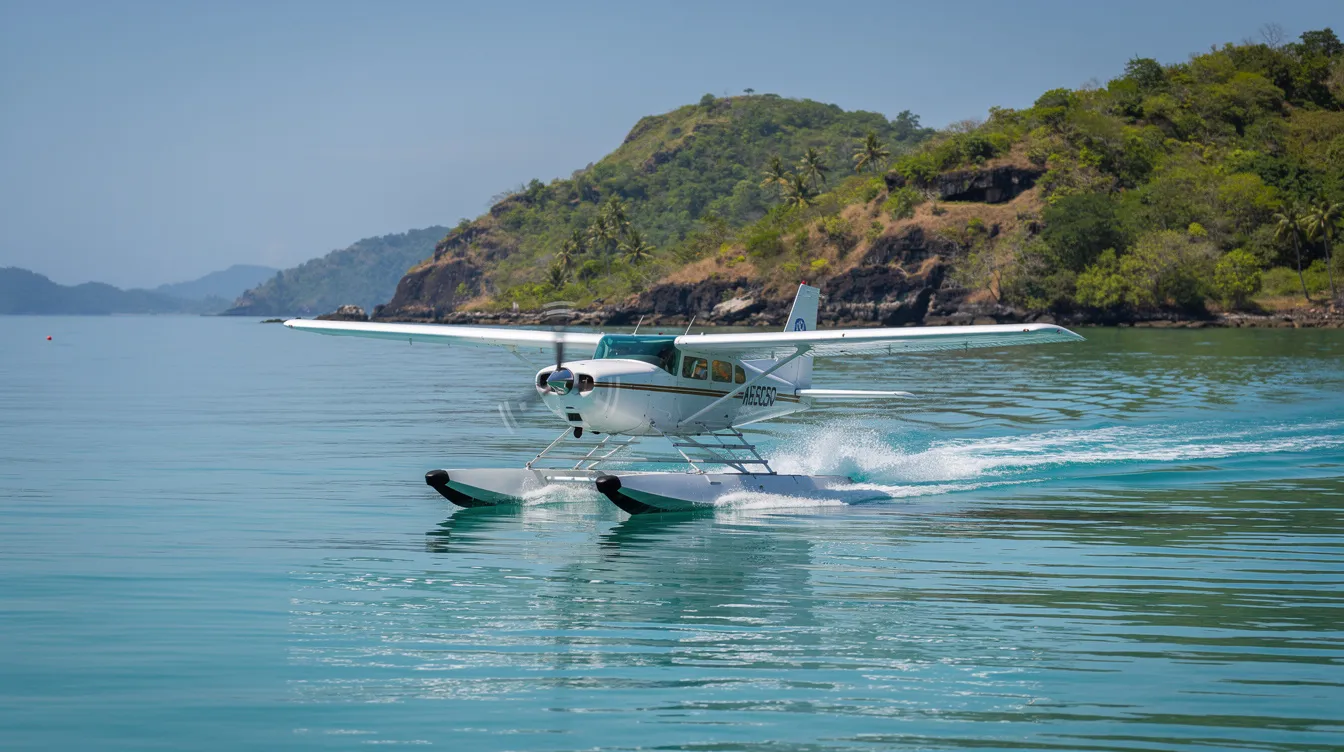
Private aviation eliminates the inefficiencies of commercial travel, but even the most capable jet needs a runway. A water aircraft is a fixed-wing airplane built to take off and land on water, whether as a flying boat with a hull, a floatplane with pontoons, or an amphibious aircraft that can move seamlessly between water and land. That capability removes the final constraint, unlocking direct access to lakefront estates, private islands, and wilderness lodges that no paved strip can reach.
For discerning travelers, BlackJet members, and frequent private fliers who measure journeys in minutes rather than miles, understanding how these aircraft differ is a strategic advantage. This guide explains the main types of water aircraft, their operational and safety considerations, their history and modern luxury and bush applications, emerging sustainability developments, and how BlackJet incorporates them into bespoke itineraries for destinations unreachable by traditional jets alone.
Strategic Advantages of Water Aircraft for High-Net-Worth Travelers
Commercial aviation funnels passengers through congested hubs and rigid route networks. Even private jets, for all their flexibility, ultimately depend on airports. Water aircraft break that dependency entirely. Seaplanes help access areas without traditional roads or airports, and they use relatively small bodies of water instead of needing runways - a sheltered bay, a calm lake, or even a wide river can serve as a landing zone.
Consider a practical scenario. A BlackJet member flying from Miami to a private cay in the Exumas faces a choice: land at Nassau's Lynden Pindling International, arrange ground transfer to a marina, then take a 90-minute boat ride - or land at Nassau and step directly onto an amphibious floatplane that delivers them to the cay's dock in under 25 minutes. The math on time saved is obvious. The same logic applies to Vancouver, where a midsize jet followed by a float plane hop replaces hours of driving and ferrying to reach a remote British Columbia fishing lodge.
Infrastructure independence is a key advantage of water aircraft, and it is precisely why they matter to BlackJet clients. These aircraft serve as first-and-last-mile connectors, extending the reach of a jet card itinerary beyond any runway. When the destination is the water itself - or only reachable by water - no other aviation solution delivers the same seamless result.
What Counts as a Water Aircraft? Definitions and Key Types
A water aircraft is any fixed-wing airplane designed for takeoff and landing on water, with or without the ability to operate from conventional runways. The category divides into two broad types, with a critical hybrid sitting between them.
A flying boat has a watertight fuselage resembling a boat's hull. The fuselage itself provides buoyancy, and the aircraft sits directly on the water without separate flotation devices. The Grumman G-21 Goose, introduced in the late 1930s, remains one of the most recognized flying boats ever produced. Flying boats can handle rougher water than floatplanes, making them suited to open-water and coastal operations.
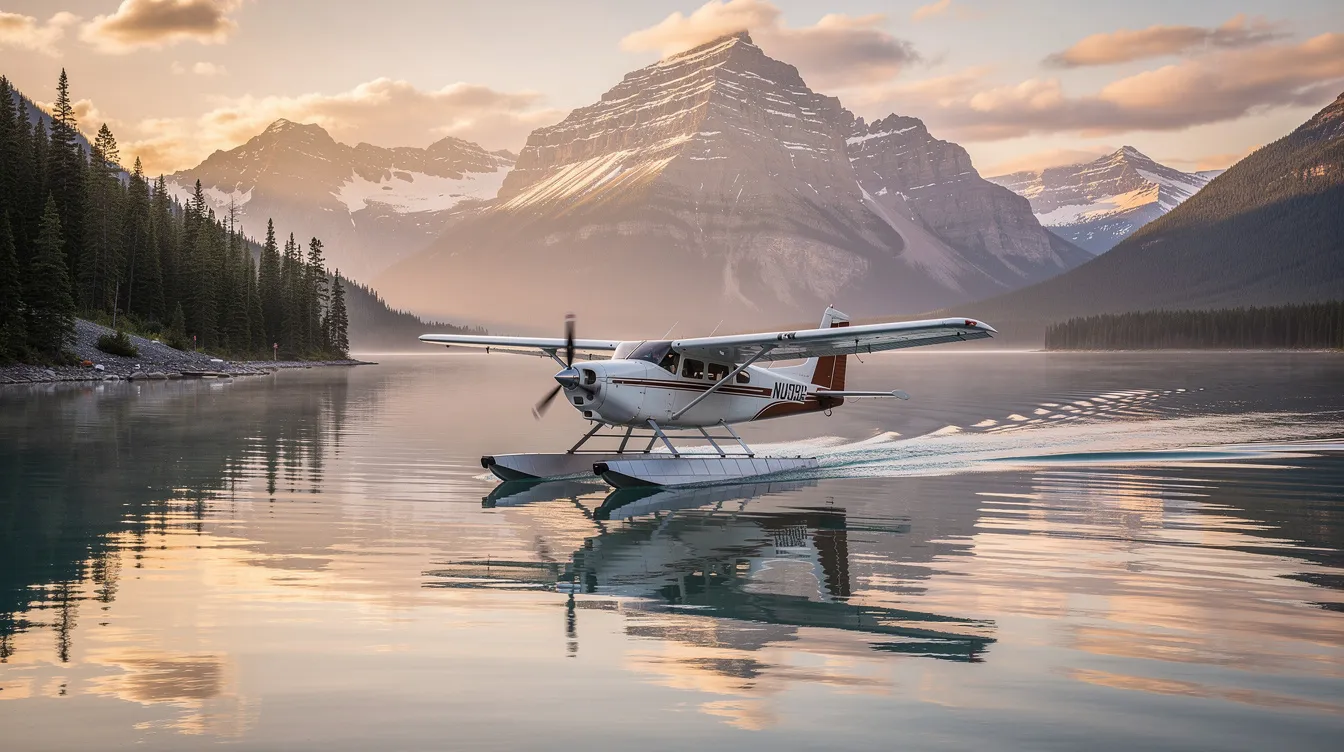
Floatplane aircraft, by contrast, use floats or pontoons mounted beneath a standard landplane fuselage. The airframe itself never touches the water. The De Havilland DHC-2 Beaver on floats is the definitive example - a utility aircraft that has served bush operators since 1948. Floatplanes are typically smaller and slower than flying boats and are designed primarily for water takeoffs and landings on lakes, rivers, and sheltered bays.
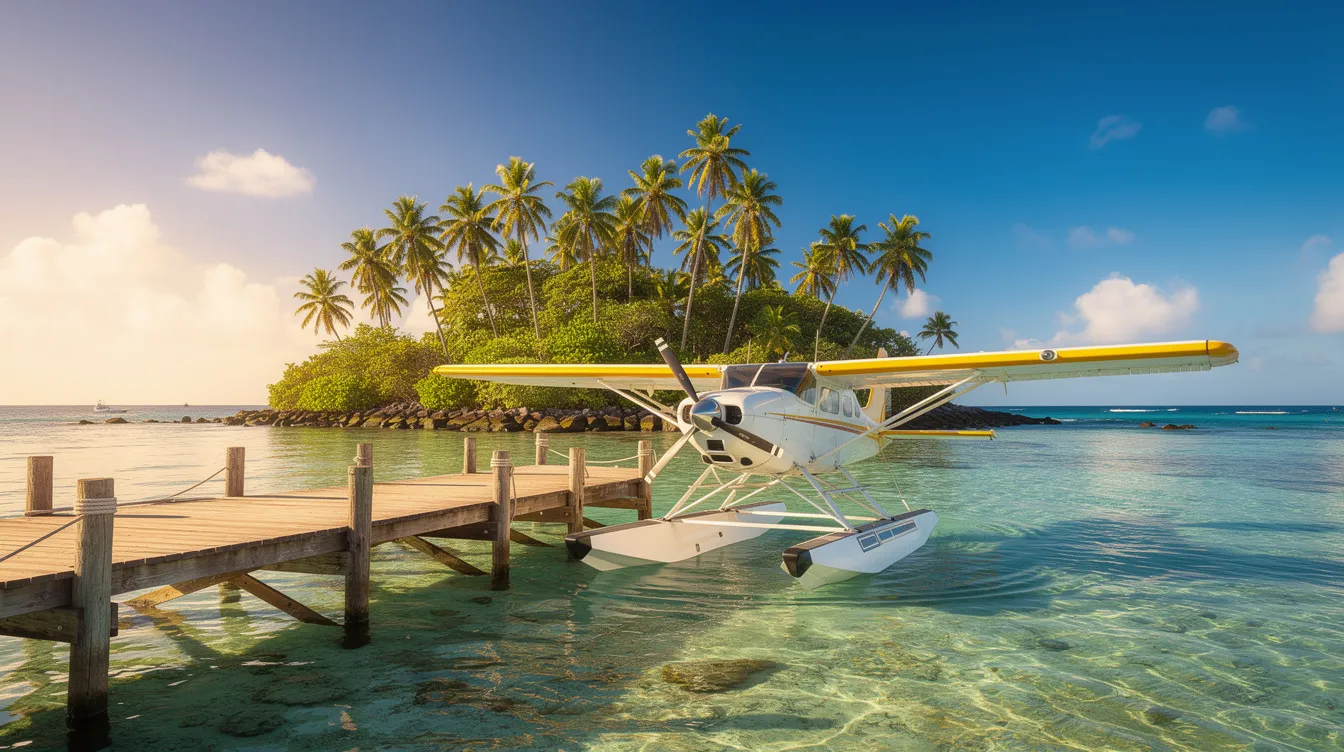
Amphibious aircraft can land on both water and land, typically through retractable landing gear housed within the hull or floats. The ICON A5, a popular light sport amphibious aircraft, represents the modern end of this spectrum. In bush plane operations, these categories overlap freely - a highly modified Cessna 185 might wear floats in summer, skis on a snow-covered lake in winter, and wheels the rest of the year, making four-season flying a practical reality. Amphibious aircraft operate from both water and land, and they account for around 41 percent of the seaplane fleet worldwide.
Traditional Comparison Table: Flying Boats, Floatplanes, and Amphibious Aircraft
Feature | Flying Boats | Floatplanes | Amphibious Aircraft |
|---|
Primary Buoyancy | Watertight hull/fuselage | Floats/pontoons attached under fuselage | Floats or hull with retractable wheels |
Water Handling | Better in rough/open water | Best in calm/sheltered waters | Versatile in both water and land |
Land Capability | Usually no (unless modified) | No | Yes |
Typical Size | Larger | Smaller | Varies (small to medium) |
Speed | Generally faster | Generally slower | Varies |
Use Cases | Open water patrol, rescue, luxury travel | Bush flying, remote access, recreation | Flexible travel, mixed terrain access |
Examples | Grumman G-21 Goose, PBY Catalina | De Havilland DHC-2 Beaver, Cessna 172 | ICON A5, Cessna Caravan EX Amphibian |
From Empire Routes to Remote Luxury: A Brief History of Flying Boats
The story of the flying boat begins at the turn of the twentieth century. Wilhelm Kress built the first seaplane around 1900, a tandem-wing design tested on an Austrian reservoir that never achieved sustained flight. Henri Fabre made the first successful seaplane flight in 1910, lifting off from a harbor near Marseille in a fragile floatplane powered by a 50-horsepower Gnome engine. The Curtiss model flying boats followed quickly - Glenn Curtiss became the leading figure in early American seaplane development, and the 1913 Daily Mail £10,000 transatlantic prize fueled a design race that would shape aviation for decades. The first all-British amphibious aircraft was the "Bat Boat" in 1913, a Sopwith design that could operate from both water and traditional runways. By 1914, the Benoist XIV was carrying paying passengers across Tampa Bay on the world's first scheduled airline route - a US flight achievement that proved the commercial viability of water-based aviation.
World War I transformed the flying boat from curiosity to strategic asset. The Felixstowe F.2A was produced extensively during World War I, patrolling coastal stations and hunting submarines across the North Sea. World War II expanded the role dramatically: the Consolidated PBY Catalina became an icon of long-range patrol and search and rescue missions, while the Short Sunderland - a hulking four-engine flying boat - served as an anti-submarine platform across the Atlantic. The Grumman Albatross served in military rescue missions for decades, solidifying the amphibian aircraft as a frontline tool for recovering downed aircrews.
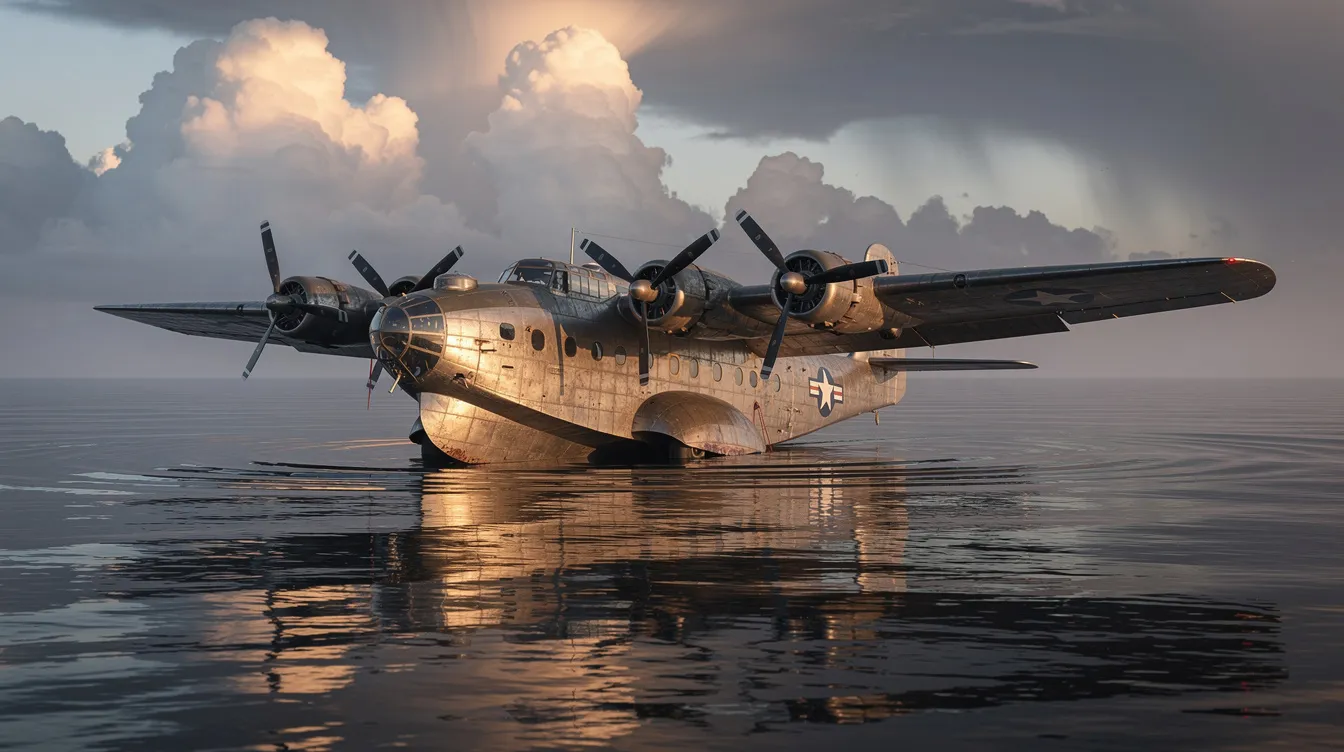
Between the wars, flying boats reached their golden age. Pan American Airways operated its famous Clippers - massive Boeing 314 flying boats - across the Pacific and Atlantic, offering wealthy passengers sleeping berths, dining rooms, and a level of luxury that rivaled ocean liners. Short Empire class flying boats linked the far reaches of the British Empire, connecting London to Sydney via a chain of colonial waterways. The Hughes H-4 Hercules flew in 1947 as the largest flying boat ever built - the iconic Spruce Goose, with a wingspan exceeding 97 meters, made its maiden flight over Long Beach harbor and never flew again, yet it remains the largest flying boat in aviation history.
The post-war era brought runways, jets, and the rapid decline of the great flying boats. Land-based airliners were faster, cheaper to operate, and freed from dependence on sheltered harbors. The giant flying boats gave way to smaller, more practical amphibious airplanes and floatplanes filling niche roles - bush transport, firefighting, and connecting remote areas that still lacked paved infrastructure. The aviation industry moved on, but the water aircraft endured where it was needed most.
Evolution Into Modern Amphibious Aircraft and Floatplanes
After 1945, demand shifted decisively from giant flying boats to smaller, more versatile designs. The De Havilland DHC-2 Beaver, introduced in 1948, became the definitive bush floatplane - rugged, reliable, and capable of hauling passengers and cargo into places no road could reach. The DHC-3 Otter followed in the 1950s, offering more seats and payload for operators who needed to move larger groups. The Cessna 180 and 185 Skywagon series, adapted to floats from the 1960s onward, gave pilots an affordable, adaptable platform for waterplane operations across North America and beyond.
Modern specialized amphibians have pushed the category further. The ShinMaywa US-2, a Japanese military amphibian, cruises at over 480 km/h with a range exceeding 4,700 km and can take off from rough water with wave heights up to three meters in as little as 280 meters of water run. The Canadair CL-415 "Super Scooper" fights wildfires by scooping water from lakes - filling its 6,140-liter tanks in roughly 12 seconds during a high-speed run across the surface. Water aircraft can deliver large amounts of water quickly in firefighting, and scooping water from lakes allows for rapid firefighting response. Water scooping aircraft can refill tanks directly from lakes without returning to base. The Russian Beriev Be-200, a twin-jet amphibian, handles maritime patrol, firefighting, and passenger transport with a 12,000-liter water capacity. Search and rescue operations utilize amphibious flying boats like these, demonstrating their unique capabilities in scenarios where few aircraft of other types could operate.
These aircraft remain relevant because they serve areas without paved runways, supporting tourism, logistics, VIP eco-lodges, and emergency response in regions where conventional infrastructure is either impractical or nonexistent.
Flying Boats vs Floatplanes vs Amphibious Aircraft: Practical Differences
For aircraft owners, charterers, and jet card members planning complex itineraries, understanding the practical differences between these three categories is essential. The choice affects everything from passenger capacity and comfort to which destinations are actually reachable.
A flying boat operates via its hull - the fuselage is the primary buoyant body, sitting directly in the water. Classic examples include the Consolidated PBY Catalina and the Republic Seabee RC-3, a small amphibian from 1946 that brought flying boat design to private owners. Pure flying boats lack land capability unless modified with retractable wheels, which limits their flexibility but gives them superior water handling in rough water and open-ocean conditions.
A floatplane aircraft uses a standard fuselage with detachable floats - EDO or Wipline pontoons being the most common. A Cessna 172 Amphib can take off from both land and water when fitted with amphibious floats, while a Cessna Caravan on Wipline 8750 floats becomes a workhorse for lodge operators. The performance impacts are real: floats add weight and parasitic drag, resulting in reduced cruise speed, lower climb rate, and slightly longer takeoff distance compared to the same airframe on wheels. Floatplanes account for about 48 percent of market demand for seaplanes globally, reflecting their versatility and lower conversion cost versus purpose-built hulls.
Amphibious aircraft offer dual capability through retractable wheels housed within the hull or floats - wheels down for land, wheels up for water. Classic amphibians include the Grumman Widgeon and Goose; modern examples range from the ICON A5 to the Cessna Caravan EX Amphibian. The mission profile determines the best fit: how often does the traveler need water versus land access, how many passengers are aboard, and is there a runway at either end? For a BlackJet private plane charter itinerary that mixes jet legs with water segments, amphibious aircraft offer the most flexibility, and understanding when chartering a private jet is worth the cost helps frame how water aircraft fit into an overall travel strategy.
How Water Operations Change Takeoff and Landing
Takeoff and landing on water introduce variables that pavement never presents. The aerodynamics are familiar; the hydrodynamics are not. Planning a water leg requires understanding how water, wind, and weight interact in ways that differ fundamentally from runway operations.
A water takeoff proceeds in three stages: plowing, where the hull or floats push through the water at low speed under heavy hydrodynamic drag; planing on the step, where the aircraft accelerates onto the forward portion of the hull and drag decreases sharply; and liftoff. For a DHC-2 Beaver at maximum gross weight in calm conditions, expect roughly 1,800 to 2,000 feet of water run and 15 to 20 seconds to liftoff. Compare that to the ShinMaywa US-2, which achieves water takeoffs in approximately 280 meters at maximum lift-off weight thanks to boundary layer control and advanced lift devices.
Several factors affect takeoff and landing distance on water: wave heights and direction relative to wind, water density (fresh water versus saltwater), temperature affecting density altitude, and weight loading. A moderate headwind of 10 to 15 knots can significantly shorten the water takeoff run by helping lift the hull or floats off the surface sooner. Conversely, glassy-calm water creates dangerous depth perception illusions for the pilot, making conservative approach techniques essential.
For amphibious designs, gear retraction and extension sequences are critical safety items - retractable wheels must be confirmed up before water landings and down before runway approaches. Modern cockpit annunciations and warning systems reduce the risk of error, but experienced seaplane pilots still follow disciplined checklists every time. When BlackJet clients are aboard, reputable operators plan water approaches conservatively, including go-around policies and daylight VFR preferences for unfamiliar lakes or remote lake destinations.
Light Sport Aircraft on Water: The ICON A5 and Beyond
The light sport aircraft category, introduced by the FAA in 2004, created a regulatory pathway for smaller, simpler aircraft with defined weight and speed limits - a natural fit for small water aircraft designed for personal flying.
The ICON A5 is a popular light sport amphibious aircraft and arguably the flagship of the category. It features a two-seat carbon fiber hull, retractable landing gear that allows operations from water and traditional runways, folding wings for trailer transport, and a Rotax 912 iS engine producing 100 horsepower. Cruise speed reaches approximately 95 knots with a range of about 427 nautical miles. Takeoff distances run roughly 640 feet on a runway and 840 feet on water. The useful load sits around 430 to 490 pounds - enough for two adults and light baggage. The aircraft includes advanced safety features: a spin-resistant airframe, a whole-aircraft parachute, and an angle-of-attack indicator. The empty weight reflects the use of lightweight materials common in amphibious aircraft designed for efficiency.
Other aircraft in this space include the SeaRey Elite, introduced in the 2000s as a kit-built amphibian, and the Seamax M-22, which is designed for smooth takeoff and landing and features integrated amphibious floats. These light sport amphibians democratize access to water flying for aviation enthusiasts who want to experience water landings without committing to a full-size seaplane. Their low operating costs and recreational appeal make them lifestyle assets - but with limited payload and range, they complement rather than replace a BlackJet jet card for serious business travel.
Certification and Safety: From Light Sport to FAA Type Certification
Regulatory categories matter enormously in water aviation. The differences between light sport, standard category, and primary category certification determine where an aircraft can operate, who can fly it, and whether insurers and international regulators will accept it.
The ICON A5's light sport version is designed primarily for US pilots operating under sport pilot privileges. However, the FAA has granted type certification for a separate edition intended for broader and international markets. Type certification entails rigorous compliance with FAA airworthiness standards, extensive flight testing, detailed documentation, and ongoing production oversight - a process that reassures insurers, regulators, and corporate operators. The first prototype of any certified aircraft must demonstrate compliance across hundreds of test conditions before approval.
Safety technologies have trickled steadily into water aircraft. Spin-resistant airframes prevent the most common fatal loss-of-control scenarios. Whole-aircraft parachutes - once exotic - are now available on several versions of light sport and small land aircraft alike. Advanced avionics with synthetic vision overlay terrain and obstacle data onto cockpit displays, dramatically improving situational awareness during low-level flight over water. Emergency locator beacons and ADS-B out transponders ensure that even aircraft operating in remote areas remain visible to rescue coordination.
When a water aircraft is used in conjunction with a BlackJet itinerary, it must be operated by carriers meeting stringent maintenance, pilot experience, and safety audit requirements. BlackJet applies standards equivalent to Wyvern Wingman and ARG/US ratings where relevant, ensuring that the off-runway segment meets the same safety threshold as the primary jet leg.
Water Aircraft in Bush Flying and Remote Operations
The bush plane is an aircraft built - or adapted - for rugged, short-field, and off-grid operations. In Alaska, northern Canada, Scandinavia, and the South Pacific, bush-configured floatplanes and amphibious aircraft are not luxuries; they are essential transportation. They are valuable for remote transportation and emergency response, and amphibious aircraft deliver cargo to remote locations that have no other supply chain.
Common bush-capable models include the DHC-2 Beaver, the undisputed bush icon since 1948, with a useful load of around 1,500 pounds and a range of approximately 450 nautical miles on floats. The Cessna 185 Skywagon, in service from the 1960s onward - often with a Robertson STOL kit for shortened takeoff runs and a low stall speed - handles backcountry strips and lakes with equal confidence. The Cessna Caravan on Wipline amphibious floats, available since the 1980s, carries up to nine passengers and significant cargo. The Cessna T206 has a range of 379 to 945 nautical miles depending on configuration, making it another versatile option. Many of these airframes feature a beautifully upgraded panel with modern avionics, a Garmin aera portable GPS, and a fresh annual inspection cycle maintained by specialized shops.
Typical missions include flying fishing and hunting parties to a remote lake, resupplying wilderness lodges, conducting medical evacuations 6 they are used for emergency medical services in isolated areas - and connecting to regional hubs where larger private jets can land. Seasonal adaptations are standard: operators swap between wheels, skis, and floats depending on the season, sometimes on the same Piper PA-12 Super Cruiser or Cessna 180 airframe. Amphibious aircraft can operate in remote areas without runways, which is precisely why they remain indispensable.
A BlackJet member might combine a mid-cabin jet flight to Anchorage or Whitehorse with a chartered floatplane hop to a wilderness property, with BlackJet managing the complete itinerary from tarmac to dock.
Luxury Use Cases: Private Islands, Lakeside Estates, and Yacht Transfers
Picture this: a BlackJet card member lands by midsize jet at Nassau's executive terminal. Dockside, an amphibious aircraft idles with engines warm. Within minutes, they are airborne again, skimming over turquoise shallows toward a private cay with no airstrip and no road - just a dock, a villa, and silence. This is what charter flights to the Caribbean look like when water aircraft complete the journey.
Seaplanes are widely used in commercial passenger transport across archipelago nations, but their luxury applications are equally compelling. Water aircraft support access to private islands, overwater villa resorts, and lakeside estates without traditional runways. Amphibious planes support eco-tours in Alaska and the Pacific Northwest, and they are popular for recreational activities like fishing and diving at destinations unreachable by road. For yacht operations, flying boats or floatplanes can shuttle guests and supplies to superyachts anchored offshore, replacing slow tender transfers or expensive helicopter charters.
Key considerations for luxury travelers include cabin comfort, noise levels, and baggage capacity. A rugged utility seaplane with bare aluminum interior and headset-required noise levels differs vastly from a Cessna Caravan EX Amphib outfitted in VIP configuration with leather seating, soundproofing, and climate control. BlackJet's role is curating premium-grade operators and aircraft so that the off-runway segments match the standards of the primary jet legs.
Safety Protocols and Risk Management for Water Operations
Water flying introduces risks that demand respect: changing surface conditions, floating debris, variable depth, and the ever-present possibility that wind and wave patterns shift mid-approach. Water aircraft are sensitive to weather and water conditions, and piloting water aircraft demands specialized training and skills that go well beyond standard instrument and multi-engine ratings.
Reputable operators maintain rigorous standards. Captains hold recurrent seaplane training with high minimum flight hours 6 often 2,000-plus total time with several hundred on type. Operations adhere to strict daylight and weather minima, and weight and balance calculations respect conservative margins around gross weight limits and low stall speed parameters. The co-pilot, where crew composition requires one, undergoes the same water-specific training. Accident history and incident records are reviewed during operator vetting.
Standard equipment includes life vests for all occupants, life rafts for overwater segments, satellite communications, terrain and obstacle warning systems adapted to low-level coastal and lake flying, and an autopilot system where the aircraft supports one. Saltwater exposure requires frequent maintenance for aircraft - corrosion control protocols are non-negotiable for any operator working in marine environments.
BlackJet evaluates partner operators providing amphibious aircraft and floatplane services against the same safety benchmarks applied to its jet fleet: maintenance logs, insurance levels, pilot qualifications, and operational track record. Sophisticated charter clients should ask about fleet age, maintenance cycle status, pilot experience on type, and the operator's weather cancellation policies before any water leg.
Sustainability and the Future of Water Aircraft
Water aircraft occupy a niche where sustainability innovation is active, particularly for short-range missions over lakes and coastal waters where electric propulsion's current range limitations matter less.
Harbour Air, based in Vancouver, partnered with magniX to convert a De Havilland DHC-2 Beaver to electric propulsion. The "eBeaver," powered by a 560 kW magni500 motor, completed its first test flight in December 2019, proving that electric floatplane operations are technically feasible. Range remains constrained by battery energy density, but for high-frequency short hops 6 the kind that connect a regional airport to a nearby lodge 6 the economics and environmental profile are promising.
Lighter airframes, efficient turboprops, and optimized routing already lower fuel burn per passenger on many floatplane services. BlackJet's commitment to carbon-neutral flights extends naturally to water aircraft segments: carbon offset programs can cover the entire door-to-dock journey, ensuring that even the floatplane hop carries no unaccounted environmental cost.
Looking ahead, the FAA's MOSAIC rule, effective in stages through 2026, modernizes the light sport framework to allow amphibious types with retractable gear, new propulsion systems including electric motors, higher performance envelopes, and night operations under appropriate endorsements. This regulatory shift lowers barriers for advanced water aircraft to reach certification and the market. By the early 2030s, expect type certification pathways for electric amphibious aircraft to mature, potentially transforming short-range water aviation into one of the greenest segments of the aviation industry.
Ownership vs Charter: How Water Aircraft Fit a BlackJet Member's Portfolio
Many BlackJet clients are already aircraft owners or partial owners and may consider adding a floatplane or amphibian aircraft to their fleet. The question is whether the economics justify it.
Purchase prices span an enormous range: a complete restoration of a 1950s-era Beaver on floats might run $500,000 to $900,000, while a new ICON A5 lists around $400,000. A factory-new Cessna Caravan EX Amphib with VIP interior and tip tanks can exceed $3 million. Beyond acquisition, specialized costs accumulate: dockage or water-accessible hangars, aggressive corrosion control schedules, insurance premiums reflecting water operations risk, and premium salaries for experienced seaplane captains.
Ownership makes sense when annual utilization is high 6 a lakeside estate visited 30 or more times per year, or a private island requiring weekly supply runs. For occasional use - a few trips per season to different destinations - on-demand charter through BlackJet's network eliminates the fixed-cost burden while delivering the same seamless experience. Jet card hours cover the primary jet segments, while BlackJet arranges separate but fully integrated water-aircraft charters for the connecting legs, keeping the traveler from needing to own multiple aircraft types. For many frequent flyers, a BlackJet 25+ Hour Jet Card balances that flexibility with predictable, transparent jet pricing.
Technology Onboard: Avionics, Comfort, and Connectivity
Modern water aircraft bear little resemblance to the bare-bones utility floatplanes of decades past. Even a working bush Beaver today may carry a Garmin G500-series glass cockpit, synthetic vision for low-visibility terrain awareness, ADS-B out for traffic visibility, and satellite weather. Several versions of popular floatplanes now feature panel upgrades that rival what you would find in other aircraft of similar vintage.
The gap between utility and VIP configurations is significant. A stripped floatplane offers aluminum bench seats, headset-required noise levels, and minimal climate control. A Caravan EX Amphib in VIP configuration delivers leather seating, soundproofing, air conditioning, and dedicated luggage compartments. For BlackJet clients, the difference matters - and premium operators know it.
Connectivity expectations require honest calibration. Wi-Fi on a floatplane is rarely comparable to what a midsize jet offers. Satellite messaging and basic data are realistic; streaming video at altitude over a remote lake is not. BlackJet sets appropriate expectations for connectivity continuity on mixed-aircraft itineraries, ensuring travelers know where their digital access will pause and resume. Even in rugged environments, premium operators deliver a comfortable, curated experience aligned with the brand standards BlackJet members expect.
How BlackJet Integrates Water Aircraft Into Bespoke Itineraries
BlackJet functions as a private aviation partner that orchestrates jet card flights together with local amphibious aircraft and floatplane segments. The goal is a single, seamless travel experience from origin to final destination - whether that destination has a 6,000-foot runway or a sheltered cove.
Consider a concrete example: a BlackJet member departs New York on a midsize jet using a 25-hour Jet Card, arriving in Vancouver approximately five hours later. At Vancouver Harbour, a De Havilland Beaver on floats is fueled and waiting. A 45-minute flight north delivers the traveler to a remote British Columbia fishing lodge accessible only by water. BlackJet coordinates scheduling, baggage transfers, and customs documentation where relevant. If weather disrupts the water leg, the 24/7 support team reroutes in real time 6 rebooking alternative floatplane operators or adjusting timing until conditions clear.
Members can request water-capable connections inside the mobile booking platform or via concierge. Key information to provide: group size, luggage volume and weight, and whether the destination offers water-only or both runway and water access. Many clients pair these segments with BlackJet�s premium private jet card programs, using a single partner for both runway and water-based travel. BlackJet's selection of partner operators for water segments follows the same safety, certification, and sustainability pillars that differentiate its core jet card offering.
Frequently Asked Questions About Water Aircraft and Private Travel
What is the difference between a flying boat, a seaplane, a floatplane, and an amphibious aircraft?
A seaplane is the broadest term - any aircraft that can operate from water. A flying boat uses its hull as the primary flotation structure. A floatplane mounts separate pontoons beneath a conventional fuselage. An amphibious aircraft adds retractable wheels to either a hull or float design, enabling operations on both water and land. Ekranoplans represent a related but distinct concept 6 they skim above the water surface using ground effect rather than achieving conventional flight altitude.
How safe is it to land on lakes or the ocean compared with a runway?
Water landings are safe when conducted by trained seaplane pilots operating within established weather, daylight, and sea-state limits. Risks are real but manageable through specialized training, conservative operational procedures, and modern safety equipment. Reputable operators maintain rigorous standards that minimize exposure to the unique hazards of water operations.
Can I use my BlackJet Jet Card hours on water aircraft?
Jet card hours apply to jet segments, and travelers comparing membership options can start with a clear overview of jet card cost and pricing structures. BlackJet arranges separate but fully integrated water-aircraft charters for connecting legs, managing the entire itinerary as a single seamless experience. The water segment is quoted and coordinated alongside your jet booking.
How many passengers and how much luggage can a typical water aircraft carry?
Capacity varies enormously. An ICON A5 seats two with minimal baggage. A DHC-2 Beaver carries five to six passengers with moderate luggage. A Cessna Caravan on amphibious floats handles up to nine passengers with substantial cargo. A Twin Otter can seat 19 in high-density layouts.
Do water aircraft operate at night or in winter?
Most water operations are conducted in daylight under VFR conditions, though regulatory changes under MOSAIC are expanding night endorsements for appropriately equipped light sport aircraft. In winter, operators in northern latitudes swap floats for skis, enabling landings on frozen or snow covered lake surfaces - true four-season flying. Iconic seaplanes like the Beaver routinely operate year-round through seasonal gear changes.
Choosing the Right Water Aircraft for Your Next Journey
The right water aircraft depends on distance, passenger count, comfort expectations, operating frequency between water versus land, and local infrastructure. The decision falls into two categories: personal recreation and serious transportation.
For personal recreation, an ICON A5 or similar light sport amphibian delivers an extraordinary flight experience at modest operating cost. For adventurous bush trips with four to six passengers, a DHC-2 Beaver or Cessna 185 6 ideally one that has seen a complete restoration and carries a fresh annual 6 remains the best seaplane choice for backcountry access. For groups, lodge transfers, or VIP comfort, a Caravan EX Amphib or Twin Otter on amphibious floats sets the standard.
BlackJet advisors help clients weigh these options when designing travel around jet card itineraries, ensuring seamless transitions from runway to water. The flight achievement of reaching a destination with no runway 6 a private island, a wilderness lodge, a lakefront estate 6 is one that stays with you long after the journey ends.
Discover how BlackJet can integrate bespoke water aircraft connections into your next itinerary. Explore what becomes possible when your travel has no boundaries - not even the edge of the runway.


 Sign up with google
 Sign up with Apple