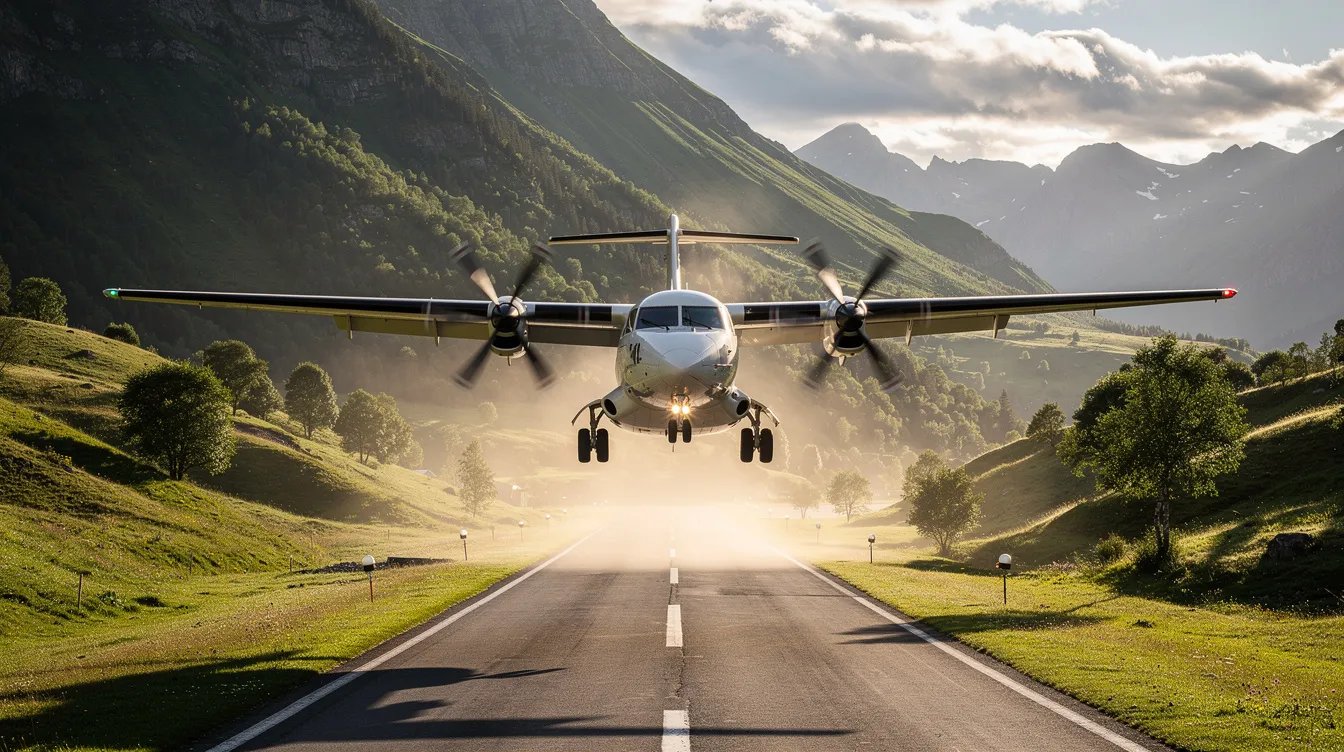
Understanding the full spectrum of types of planes is more than an aviation enthusiast's exercise. For executives, founders, and high-net-worth travelers who measure success in hours saved and decisions made, knowing which aircraft fits which mission is a genuine strategic advantage. This guide breaks down every major aircraft category in civil aviation-from widebody airliners to very light jets-so you can match the right plane to every trip on your calendar.
Why Types of Planes Matter for Strategic Travel
The difference between commercial and private travel is not simply a matter of comfort. It is a matter of time, control, and compounding productivity gains across dozens of annual flights.
Consider the arithmetic. A typical commercial airline departure involves 60 to 120 minutes of airport dwell time per flight leg, security screening, boarding queues, customs, and ground transfers from large hub airports to final destinations. Multiply that by 40 or 50 trips a year, and you lose the equivalent of weeks. Private jets eliminate most of that overhead by operating from private terminals (FBOs) close to your destination, departing on your schedule, and skipping the hub-and-spoke model entirely.
Onboard, the contrast sharpens further. Commercial airliners offer a fixed layout in a shared cabin with variable service and limited privacy. Private jets provide uninterrupted space for meetings, calls, or rest, complete with configurable seating, reliable Wi-Fi, controlled catering, and cabin temperature set to your preference. The cabin becomes a mobile office or a recovery suite, not a waiting room at altitude.
BlackJet operates within the private aviation and business aviation segment of civil aviation, distinct from both scheduled commercial airlines and military aircraft. Within this domain, the type of aircraft you select-whether a light jet, midsize jet, or heavy jet-directly determines which airports you can access, how far you can fly nonstop, how much luggage you can carry, what the cabin experience feels like, and what you pay per hour. A heavy or ultra-long-range jet may cost double or more per hour compared to a light jet, but it can cross oceans nonstop and offer suite-like interiors.
This article covers the major types of planes across civil aviation: fixed-wing aircraft, rotorcraft, lighter-than-air aircraft, gliders, and more. The deepest focus, however, will be on commercial airliners and private jets-the categories most relevant to BlackJet Jet Card members making real travel decisions every week.
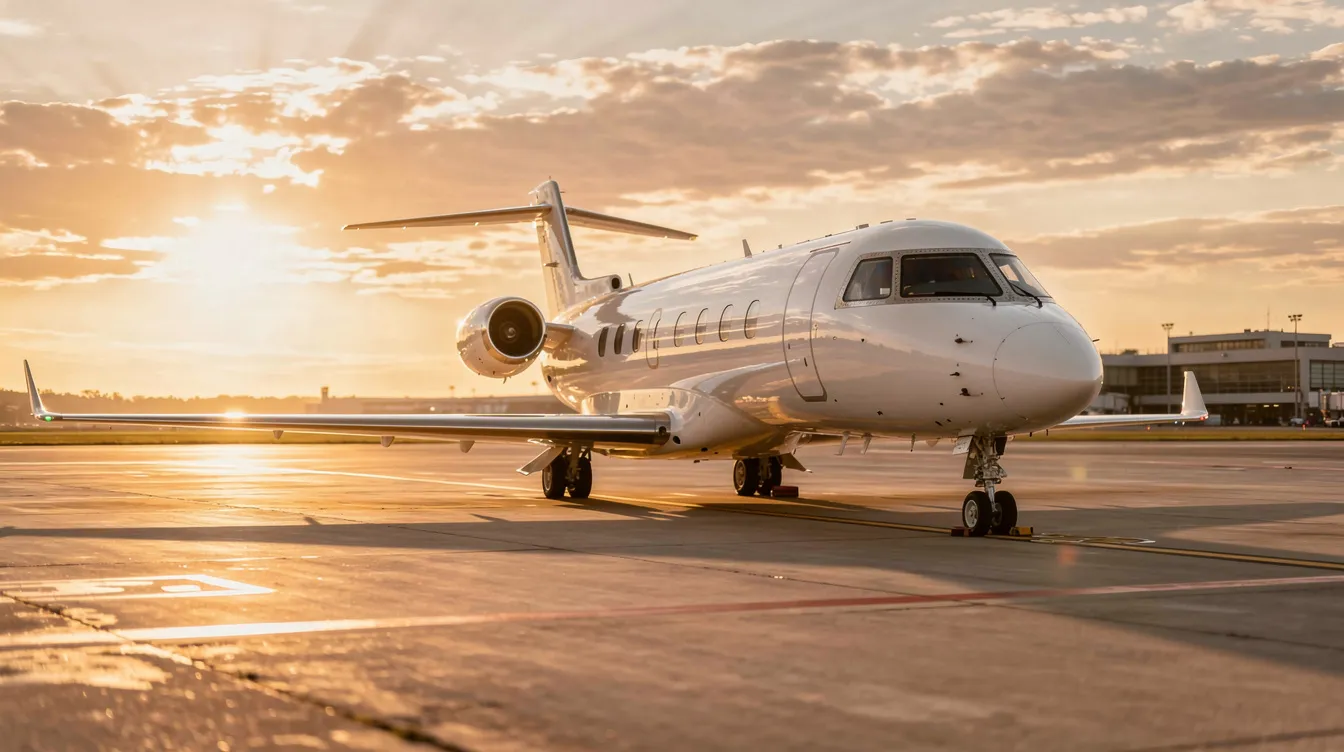
Core Aircraft Categories in Civil Aviation
In civil aviation, aircraft categories are formal classifications defined by regulators like the Federal Aviation Administration (FAA), the European Union Aviation Safety Agency (EASA), and the International Civil Aviation Organization (ICAO). These categories drive aircraft certification, pilot licensing, and operational rules-all of which ultimately protect passengers. Aircraft can be categorized based on design and operating principles, and airplanes are classified by their purpose and design.
The main design-based categories include:
Fixed-wing aircraft (airplanes) - powered aircraft that generate lift through wings and forward motion, ranging from single-engine trainers to widebody airliners and private jets.
Rotorcraft - helicopters, autogyros, and gyrodynes that generate lift through spinning rotors rather than fixed wings.
Lighter-than-air - balloons, blimps, and airships that use buoyancy (displacing the surrounding air with lighter gases or heated air) instead of aerodynamic lift.
Gliders/sailplanes - unpowered fixed-wing aircraft that sustain flight through aerodynamic efficiency and rising air currents.
Powered lift / VTOL - aircraft like tiltrotors capable of vertical takeoff and transitioning to forward wing-borne flight, recognized by the FAA as a distinct category.
Beyond design, the aviation industry groups aircraft by operational role: commercial airliners on scheduled routes, cargo aircraft for freight, business and private jets for on-demand travel, general aviation piston and turboprop planes for training and recreation, and special-mission aircraft used for firefighting, medevac, and surveillance.
Civil aircraft include private jets and cargo planes, operating under ICAO, FAA, and EASA regulations. Military aircraft, by contrast, include bombers, fighter jets, and transport planes, operating under separate flight rules and often with regulatory exemptions. Fighter aircraft are designed for air-to-air combat. Bombers carry heavy payloads to attack ground targets. Transport planes move troops and cargo for military operations, and military aircraft must withstand hostile environments and damage. Military aircraft modified for civilian purposes still require civil certification. BlackJet operates exclusively within the civil, non-military domain, where rigorous aircraft certification and safety oversight ensure consistent standards for every flight.
Commercial Airliners: The Backbone of Global Civil Aviation
Commercial airliners are transport-category civil aircraft that move over four billion passengers annually on scheduled routes worldwide. They represent the most visible segment of the aviation industry-and the benchmark against which private aviation is often compared.
Key subcategories include regional jets seating 50 to 110 passengers on shorter sectors, narrowbody single-aisle jets carrying 140 to 240 passengers on domestic and medium-haul routes, and widebody twin-aisle jets designed for long-haul intercontinental service. Each aircraft type-say, a "Boeing 737-800"-refers to a specific make and model within a broader class, and airline pilots must hold a type rating for each jet engine rated above a certain complexity threshold.
Scheduled airline travel enforces fixed routes, departure slots, and security queues. Private jet travel removes those constraints. But before exploring that contrast, it helps to understand what commercial airlines actually fly.
Widebody and Jumbo Jets
Widebody aircraft are twin-aisle commercial aircraft designed for high-capacity, long-range routes, transatlantic, transpacific, and intercontinental sectors that define global connectivity. Widebody jets can carry 250 to over 400 passengers on long-haul flights.
Key types and milestones:
Boeing 747 - the original jumbo jet, entering service in 1970. The Boeing 747 can carry between 350 and over 600 passengers, rs depending on configuration. Its freighter variant, the 747-8F, remains in active cargo service.
Airbus A380-800 - entered commercial service in 2007 as the world's largest passenger aircraft. Commercial airliners in the A380 configuration can carry 500 to over 850 passengers in high-density layouts, though most airlines configured them for around 500 in two or three classes.
Boeing 777-300ER and Airbus A350-900 - modern, efficient twins with ranges of 6,000 to 8,000+ nautical miles. The A350 family has logged over 710 deliveries as of 2026, serving more than 1,365 routes globally.
Many widebody aircraft also operate as cargo aircraft variants-the 777F and 747-8F blur the line between passenger and freight operations.
How does a widebody first-class cabin compare to a heavy private jet? Even the most exclusive airline suite is a shared environment on a fixed schedule. A heavy jet charter delivers a fully private cabin, departure on your timeline, and often access to airports closer to your destination. The privacy gap is absolute.
Narrowbody and Regional Jets
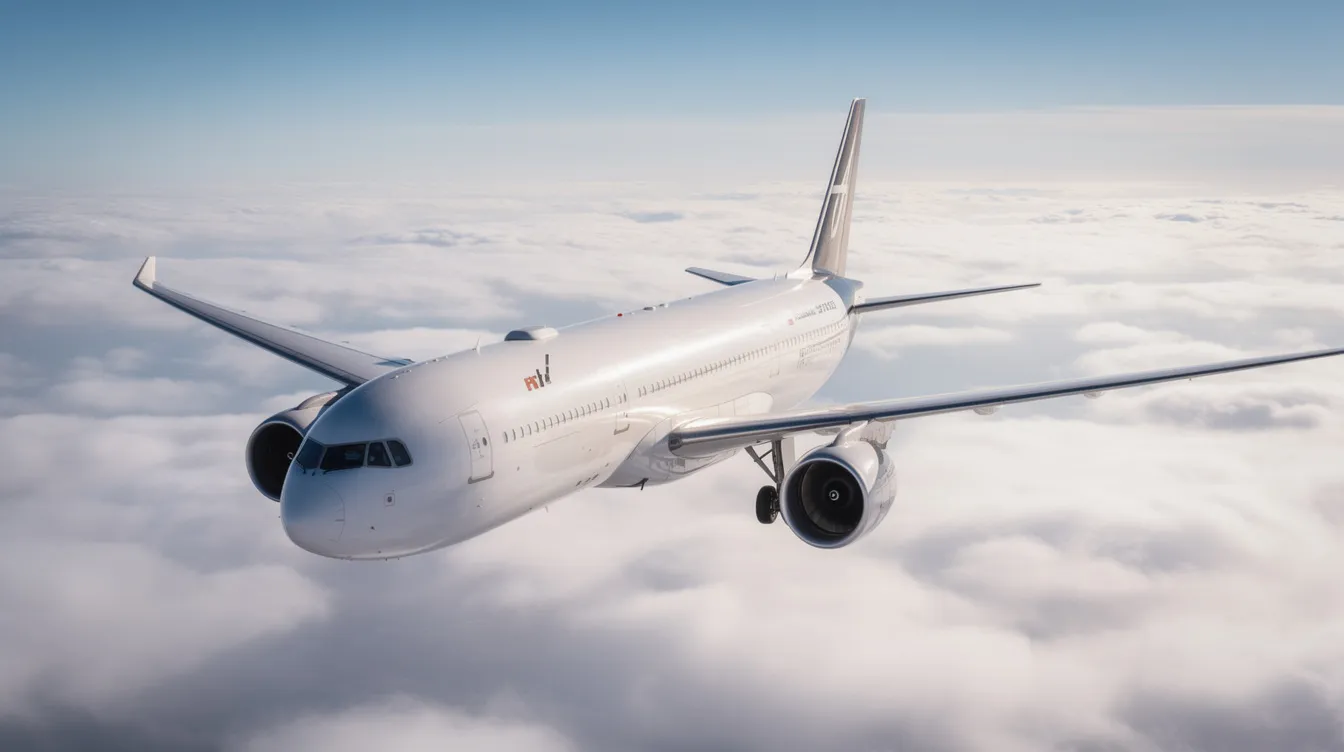
Narrowbody and regional jets dominate short- and medium-haul civil aviation, particularly across North America and Europe. These are the modern aircraft most travelers encounter weekly.
Single-aisle narrowbodies-Boeing 737 NG/MAX and the Airbus A320 family, including A321neo- typically carry 140 to 240 passengers with ranges around 2,000 to 3,500 nautical miles. The A321neo achieves roughly 3,995 nautical miles in its long-range variant, seating 180 to 220 in a two-class configuration. The Boeing 737 MAX series has seen over 2,230 deliveries as of 2026.
Regional jets like the Embraer E175, E190, and E195 seat 50 to 110 passengers on 300 to 1,500 nautical mile routes, feeding major hubs with frequent service. These aircraft excel at high utilization and quick turnarounds but offer limited cabin comfort, rigid departure times, and the familiar congestion of regional flights at hub airports.
For a BlackJet Jet Card member, the contrast is sharp. A typical New York–Chicago corridor flight on a narrowbody means navigating JFK or LaGuardia, battling terminal crowds, and losing flexibility. The same route on a light or midsize jet, departing from Teterboro or White Plains, landing at a suburban Chicago airport, saves hours and delivers productive cabin time instead of queue time.
Cargo Aircraft and Special-Mission Planes
Dedicated cargo aircraft and special-mission planes are essential to global logistics and specialized operations, even though passengers rarely see them up close. These aircraft fulfill cargo transportation demands that range from overnight parcels to oversized industrial equipment.
Main cargo aircraft types include:
Purpose-built freighters - Boeing 747-8F, 777F, and the Airbus BelugaXL (designed for transporting aircraft parts). Cargo planes like the Boeing 747-8F are adapted from passenger models, optimized for maximum payload and cargo operations efficiency.
Heavy-lift giants - The Antonov An-124 Ruslan can carry payloads of approximately 150 tonnes with a cargo hold roughly 36 meters long. The Antonov An-225 Mriya was the heaviest aircraft ever built, weighing 550 to 700 tons at maximum takeoff weight. The An-225 could carry up to 250 tonnes of payload before its destruction in 2022, making it an unrivaled asset for oversized logistics and humanitarian missions. It remains the heaviest aircraft ever built in aviation history.
Converted passenger jets - older widebody aircraft manufactured as passenger models but reconfigured for cargo transport with modified interiors and reinforced floors.
Special-mission civil aircraft extend the role of conventional aircraft into emergency and environmental response. Firefighting tankers like the Canadair CL-415 "Super Scooper" scoop water from lakes and drop it over wildfires. Airborne medical evacuation planes convert jet or turboprop interiors into flying intensive care units. Surveillance and research platforms support everything from weather monitoring to border security.
Although BlackJet does not operate cargo planes or transport planes, the same safety culture, maintenance rigor, and aircraft certification standards developed for transport-category and cargo operations inform best practices across private aviation. Aviation safety protocols in business aviation trace their lineage directly to these demanding operating environments.
Private Jets and Business Aircraft: Categories That Matter to Travelers
Private jets are not simply luxury amenities-they are productivity tools in civil aviation that convert dead transit time into focused work, confidential calls, or genuine rest. For executives who measure outcomes by the quality of their first meeting after landing, the aircraft category they choose is a strategic decision.
The business jet market is segmented into widely accepted aircraft categories by cabin size and range: very light jets, light jets, midsize jets, super-midsize jets, and heavy or ultra-long-range jets. Private jets can range from very light jets to ultra-long-range jets, each optimized for different mission profiles.
Category | Passengers | Typical Range | Sample Mission |
|---|
Very Light Jet | 4–6 | 600–1,200 nm | Regional day trips |
Light Jet | 5–8 | 1,000–1,800 nm | Financial center hops |
Midsize Jet | 7–9 | 2,000–3,000 nm | Coast-to-coast |
Super-Midsize Jet | 8–10 | 3,000–3,600+ nm | Transcontinental |
Heavy / Ultra-Long-Range | 10–14+ | 4,000–7,700+ nm | Nonstop intercontinental |
BlackJet Jet Card members can select an aircraft category per trip rather than being locked into a single aircraft type, optimizing cost and capability for each leg. Safety underpins every flight: BlackJet relies on audited operators meeting ARGUS Gold/Platinum, Wyvern Wingman, or IS-BAO Stage 2/3 benchmarks. Every journey is carbon neutral through mandatory offsets and sustainable aviation fuel, wherever available.
Very Light Jets (VLJs) and Light Jets
Very light jets and light jets are the entry point to jet-powered private travel, ideal for one- to three-hour regional flights where time savings over commercial airlines are disproportionately large.
Very light jets typically seat 4 to 6 passengers and fly short distances, often certified for single-pilot operation. They access small airports with shorter runways, keeping you closer to your destination. Representative models include the HondaJet HA-420, Eclipse 500/550, and Cirrus Vision Jet SF50, with typical ranges of 600 to 1,200 nautical miles.
Light jets expand the envelope: 5 to 8 seats, maximum takeoff weight generally under 20,000 pounds, and ranges around 1,000 to 1,800 nautical miles. Aircraft intended for this category include the Cessna Citation CJ3+/CJ4, Embraer Phenom 300E, and Learjet 75.
Mission profiles include day trips between financial centers-London to Zurich, New York to Toronto-client meetings across neighboring states, or quick leisure getaways. A BlackJet 25-hour Jet Card user might consistently choose a light jet for regular New York–Toronto or Los Angeles–Napa flights, balancing cost, speed, and access to airports that commercial airlines simply don't serve.
Midsize and Super-Midsize Jets
Midsize and super-midsize jets deliver stand-up cabins, meaningful luggage capacity, and the range for coast-to-coast or intra-Europe routes, where a light jet would require a fuel stop and a heavy jet would be overkill.
Midsize jets typically seat 7 to 9 passengers with ranges of 2,000 to 3,000 nautical miles. Models include the Cessna Citation Latitude, Bombardier Learjet 60XR, and Gulfstream G150. Cabins offer 5.6 to 5.9 feet of headroom, enclosed lavatories, and full galleys-enough to work comfortably across a five-hour leg.
Super-midsize jets push further: 8 to 10 passengers, 3,000 to 3,600+ nautical miles of range, and wider cabins with more generous luggage holds. The Bombardier Challenger 350/3500, Gulfstream G280, Cessna Citation Longitude, and Embraer Praetor 600 define this segment. Multi-engine propeller aircraft cannot match these speeds or ranges, making super-midsize jets the preferred choice for transcontinental business travel.
Consider an executive team flying from New York to Los Angeles on the same day for a board meeting: a super-midsize jet offers room for in-flight preparation, reliable high-speed Wi-Fi, and arrival at Van Nuys instead of LAX. BlackJet members can upgrade from the light to the midsize or super-midsize category within their Jet Card for longer missions or added comfort, without the need to change providers, while keeping the predictable Jet Card cost per hour.
Heavy and Ultra-Long-Range Jets
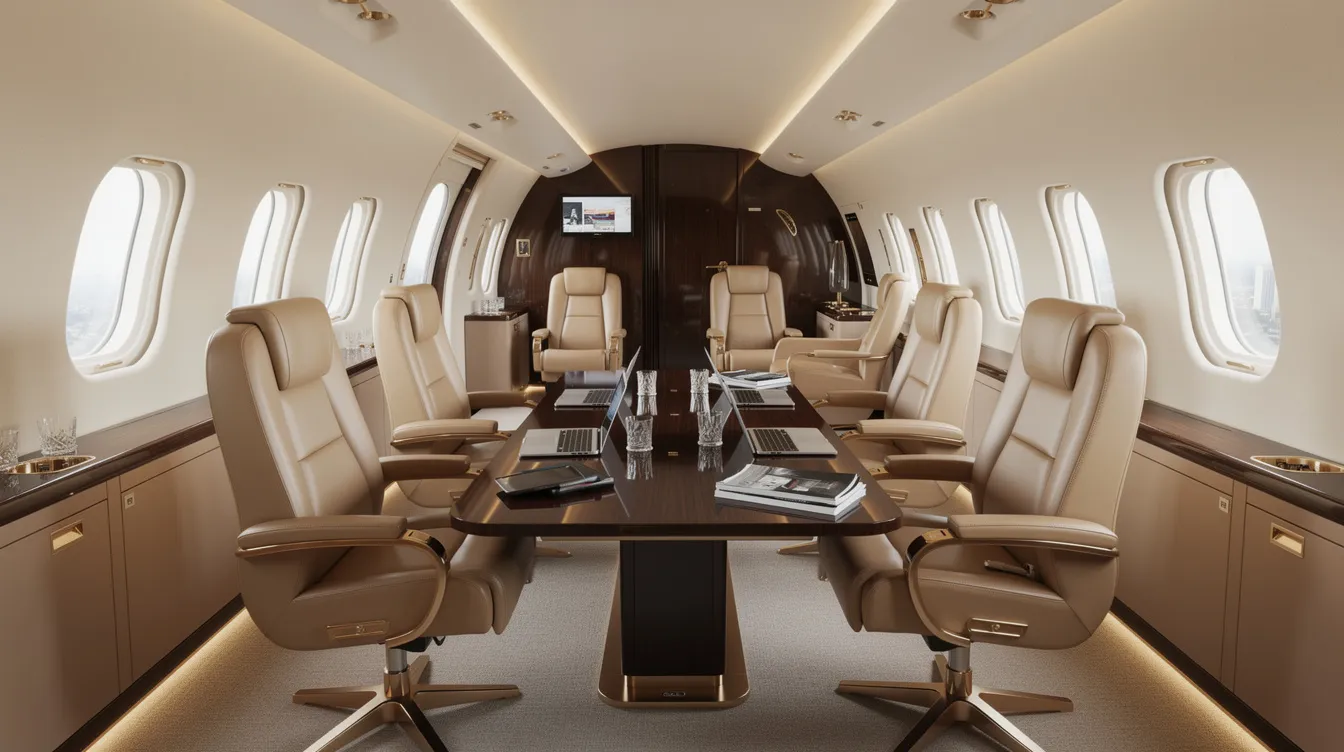
Heavy and ultra-long-range jets sit at the pinnacle of business aviation, enabling nonstop intercontinental flights with residential-style interiors that redefine what "arriving ready" means-and mirror the capabilities of the best long-range private jets for sale.
Heavy jets accommodate 10 to 14+ passengers with ranges of 4,000 to 6,000 nautical miles. The Gulfstream G450/G550, Dassault Falcon 900LX/2000LXS, and Bombardier Global 5000/6000 anchor this segment with full cabin zones, dedicated crew rest areas, and extensive baggage capacity.
Ultra-long-range jets extend to 7,000 to 7,700+ nautical miles, enabling city pairs like New York to Hong Kong or London to Buenos Aires without refueling. The Gulfstream G650ER has a range of approximately 7,000 nautical miles, making it one of the longest-range business jet options available. The Gulfstream G700, Bombardier Global 7500, and Dassault Falcon 8X round out this category. These are aircraft capable of connecting virtually any two major cities on earth in a single leg.
Cabin environments feature private suites, conference areas, full galleys, and advanced environmental controls, including low cabin altitude (as low as 3,000 to 4,000 feet equivalent at cruise) and sophisticated air filtration. The result: significantly less fatigue compared with many commercial airliners that pressurize cabins to 6,000 to 8,000 feet.
Use case: A CEO departs New York at 7 PM on a G650ER via BlackJet. She conducts a board call during the initial climb and cruise, has dinner prepared by her preferred caterer, sleeps in a full-flat suite for six hours, and lands at Luton at 7 AM London time, rested, briefed, and ready for a morning meeting. No layover. No customs queue. No wasted hour in a first-class lounge.
Safety, Certification, and Sustainability in Business Aviation
Aircraft categories don't exist in a vacuum-they are anchored to safety standards and aircraft certification rules that determine how private jets can operate. Aviation safety in this segment is not aspirational; it is regulatory and contractual.
Transport-category and business jets are certified under FAA Part 23 (smaller, less complex aircraft) or Part 25 (large transport-category jets), with EASA applying similar CS-23 and CS-25 standards. Certification involves rigorous testing: structural loads on the entire aircraft, fuselage pressurization cycles, engine-out performance, systems redundancy, and minimum equipment lists. Every aircraft manufactured for business aviation must pass these gates before carrying a single passenger.
Key safety markers for private jet operators include:
ARGUS Gold/Platinum - independent safety audits of operational history, pilot qualifications, and maintenance programs.
Wyvern Wingman - ongoing operational assessment and crew verification.
IS-BAO Stage 2/3 - International Standard for Business Aircraft Operations, a global code of best practices.
BlackJet partners only with operators that meet or exceed these benchmarks, often delivered through structured Jet Card membership pricing that bakes safety and compliance into every hour you fly.
Sustainability is no longer optional. Newer, more efficient airframes deliver 15 to 20 percent better fuel efficiency per passenger compared with older models. BlackJet ensures every journey is carbon neutral through mandatory carbon offsetting and adoption of sustainable aviation fuel where available, while helping clients identify budget-friendly private aircraft options that align with both cost and sustainability goals. Modern avionics suites-Garmin G5000, Gulfstream Symmetry Flight Deck-enable optimized flight planning that reduces fuel burn and repositioning emissions. BlackJet's digital platform supports this by matching aircraft category to route, minimizing empty legs and environmental impact.
Propeller Aircraft: Piston, Turboprop, and Utility Planes
Propeller aircraft remain the workhorses of general aviation and regional air transport. While jet aircraft dominate the headlines, propeller planes serve millions of flights annually in roles where jets are impractical or uneconomical. General aviation covers private travel and flight training, and propeller-driven fixed-wing aircraft are central to both.
The fundamental distinction is between piston engine aircraft and turboprops:
Piston engine aircraft use internal combustion engines to drive propellers. They are smaller, fly at lower altitudes, and serve primarily as training aircraft, recreational platforms, and personal transport. Piston engine transports capable of carrying 2 to 4 passengers include the Cessna 172 Skyhawk, Piper PA-28 Archer, and Cirrus SR22, with cruising speeds of 110 to 180 knots and ranges of 400 to 800 nautical miles. Recreational pilots and students at institutions like Epic Flight Academy often begin flight training on these models.
Turboprop planes use turbine-driven jet engines to spin propellers, delivering higher performance, greater reliability, and the ability to operate from short or unpaved runways. Turboprop planes cruise at speeds of 250 to 320 knots. Key models include the Pilatus PC-12 NGX, Beechcraft King Air 250/350, ATR 72-600 (in regional airline fleets), and Cessna Caravan.
When might a BlackJet member choose a turboprop over a jet? For very short hops into short runways-access to a remote ski resort, a Caribbean island strip, or a ranch airfield-a turboprop offers capabilities that even a light jet cannot match and often aligns with the cheapest private jet and turboprop options for short sectors. Cost efficiency on legs under 300 nautical miles also favors propeller aircraft in many scenarios.
Amphibious and Special-Role Propeller Planes
Some propeller aircraft are tailored for specialized missions that extend far beyond typical business routes, expanding the geographic reach of powered flight.
Amphibious aircraft operate on both water and land, serving island communities, eco-resorts, and remote coastal destinations. Notable types include:
ICON A5 - a light amphibian for one to two occupants, popular among sport pilots.
De Havilland DHC-2 Beaver - a legendary bush plane used across Alaska, Canada, and the Pacific Islands, equally at home on floats, skis, or wheels. These flying boats and float variants remain in service decades after original production.
DHC-6 Twin Otter - versatile, rugged, and commonly configured with floats for inter-island service in the Caribbean and South Pacific.
Firefighting and search-and-rescue aircraft like the Canadair CL-415 "Super Scooper" play critical roles in civil protection and environmental response, scooping water from lakes and dropping it directly over wildfires. These special-role planes support tourism, resource extraction, and emergency services in areas without conventional airports.
While amphibious aircraft are rarely part of Jet Card fleets, BlackJet members may interface with them for last-mile transfers-arriving by private jet at a regional airport, then connecting via floatplane to an extremely remote resort or lodge.
Other Aircraft Types: Rotorcraft, Lighter-Than-Air, and Gliders
Not all aircraft are fixed-wing, and several categories serve highly specific niches in civil aviation, military aviation, and experiential travel.
Rotorcraft
Rotorcraft include helicopters, autogyros, and gyrodynes, each using rotating blades for lift but in different configurations. Helicopters can perform vertical takeoff and landing, making them ideal for urban helipads, offshore platforms, mountainous rescue, and quick city-center transfers. Models like the Airbus H145 and Bell 429 serve executive transport, emergency medical, and search-and-rescue missions. Autogyros use unpowered rotors for lift during forward flight, spinning freely as air flows upward through the disc. Gyrodynes combine rotor lift with additional thrust engines for improved speed and range. Tiltrotors, like the Bell V-28Valor, are classified as powered lift aircraft, transitioning between vertical and horizontal flight modes. Stealth aircraft and combat aircraft in military aviation sometimes incorporate rotorcraft principles, though those are outside BlackJet's operating environment.
Lighter-than-Air Aircraft
Lighter-than-air aircraft include balloons, blimps, and airships. Lighter-than-air aircraft use buoyancy to achieve flight rather than aerodynamic surfaces. Hot air balloons are used for recreational flights, offering a serene experience that has endured for centuries. Airships can be rigid, semi-rigid, or non-rigid in construction-a distinction that traces back to the early 20th century. The Hindenburg disaster in 1937 effectively ended passenger airship travel, but modern designs are reviving the concept. The Airlander 10 is a modern hybrid airship exploring potential roles in surveillance, cargo transport, and luxury tourism.
Gliders
Gliders are unpowered fixed-wing aircraft that rely on rising air currents and thermal columns for sustained flight. Used primarily for sport aviation and flight training, gliders showcase the pure aerodynamics behind all heavier-than-air aircraft. Performing aerobatic flight in gliders demands exceptional skill, while acrobatic aircraft (powered) are built for extreme aerial maneuvers. Utility aircraft, by contrast, are built for limited aerobatic maneuvers, prioritizing practicality over performance thresholds.
Unmanned Aerial Vehicles (UAVs)
Unmanned aerial vehicles (UAVs) are remotely controlled drones used for various operations, including aerial photography, agricultural monitoring, infrastructure inspection, and military reconnaissance. While not yet part of passenger-carrying private aviation, UAVs represent a fast-growing segment of the aviation industry.
Emerging VTOL and Hybrid Aircraft
Emerging VTOL and hybrid aircraft represent a new powered-lift category. Electric and hybrid vertical takeoff designs may, over the next decade, complement short-range private and urban mobility options-potentially integrating with Jet Card ecosystems for last-mile connections.
Experimental Aircraft
Experimental aircraft also push the boundaries of conventional aircraft design, testing new propulsion systems, materials, and configurations that eventually filter into production models across commercial and private aviation.
How Aircraft Categories, Classes, and Types Work in Regulation
Understanding the regulatory language-aircraft category, aircraft class, and aircraft type-matters even to non-pilots choosing how to travel. These definitions shape pilot qualifications, maintenance requirements, and the safety standards applied to every flight you take.
FAA Aircraft Categories
FAA aircraft categories (as defined in 14 CFR)are classified by fundamental design:
Normal category aircraft are designed for everyday transport, while aircraft are also categorized by structural stress endurance, determining which maneuvers and operating conditions they can safely handle.
Aircraft Classes
Aircraft classes subdivide each category. Within the airplane category: single-engine land, multi-engine land, single-engine sea, and multi-engine sea. A Cessna 172 is a single-engine land airplane; a de Havilland Beaver on floats is a single-engine airplane. A pilot's license must include the appropriate class rating for each aircraft they fly.
Aircraft Type
Aircraft type refers to a specific make and model-"Gulfstream G650ER," "Boeing 737-800," or "Embraer Phenom 300E." For large or complex jet aircraft, pilots need a type rating under both FAA and EASA rules, requiring additional training and checkrides specific to that model. Jet engines that transport above certain thresholds always require type-specific qualification. Aviation organizations worldwide enforce these standards to maintain consistency.
For BlackJet members, this regulatory framework translates directly into safety: every flight operates with type-rated crews on appropriately certified aircraft types, delivering the same rigor that underpins commercial airline safety. The operating environment may be private, but the standards are equally exacting.
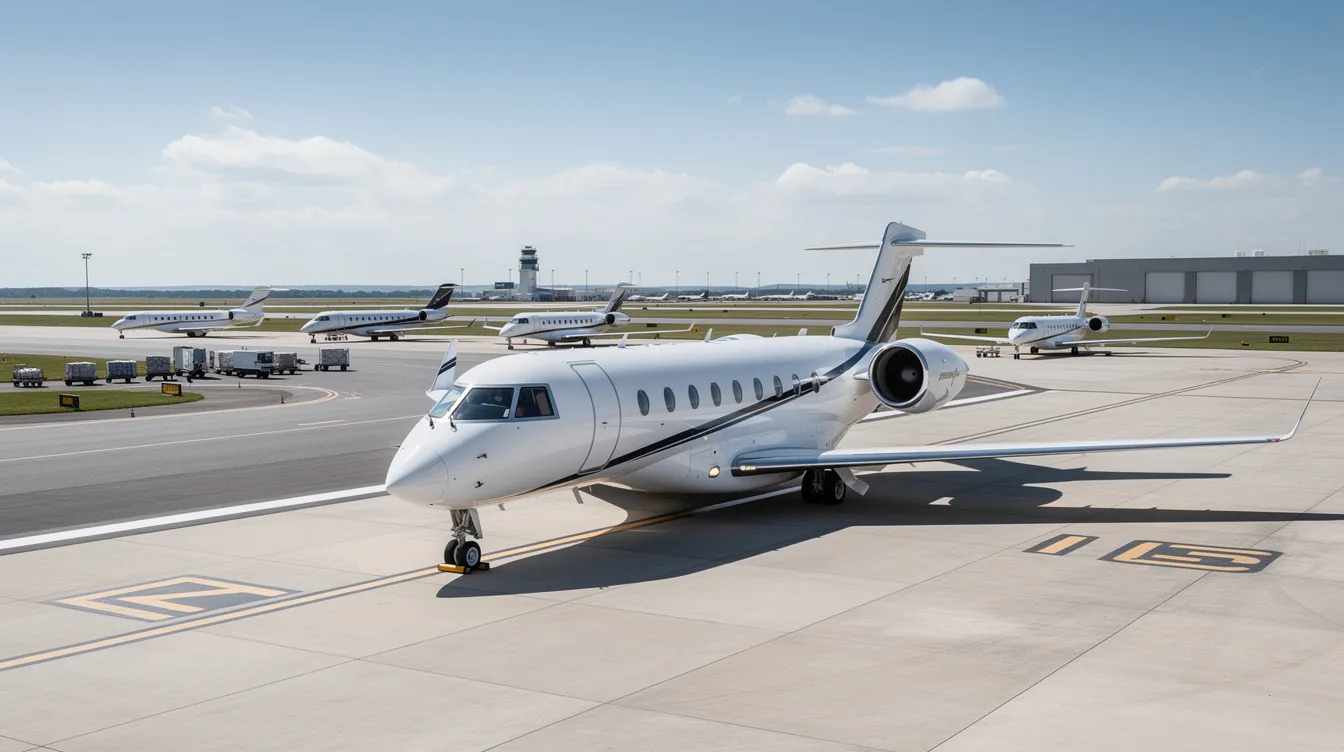
Choosing the Right Type of Plane for Your Mission
Matching aircraft category to mission is the core decision for smart, efficient private travel, and the best Jet Cards for frequent flyers translate those choices into predictable access and pricing. The goal is simple: fly the right-sized aircraft for the distance, passenger count, and experience you need, without overpaying or compromising, supported by a clear understanding of Jet Card pricing structures.
High-level Guidance by Distance
Distance | Recommended Category | Examples |
|---|
Under 500 nm | Light jet or turboprop | NYC–Boston, LA–Vegas |
500–1,500 nm | Light or midsize jet | NYC–Chicago, London–Nice |
1,500–3,500 nm | Super-midsize jet | NYC–LA, London–Dubai |
3,500+ nm | Heavy or ultra-long-range | NYC–London, LA–Tokyo |
Beyond range, consider runway length and surface (some model aircraft strips cannot support heavy jets), airport access (primary vs. secondary fields), passenger count, luggage and equipment volume, and onboard needs-whether you need a conference table, a flat bed, or simply four seats and speed.
Three Scenarios
Silicon Valley founder, SFO–Seattle day trip. Four passengers, minimal luggage, return the same evening. A light jet departs from San Carlos or Palo Alto and arrives at Boeing Field in 90 minutes. Total door-to-door time: under four hours round-trip. Commercial alternative: six to eight hours, including airport dwell and transfers. Low-speed flight turboprops could work, but add 30+ minutes each way.
Family of five, London–Mediterranean islands. Luggage for a week, children, and a dog. A midsize jet from Farnborough reaches Sardinia nonstop with room for everyone and everything. No connections, no baggage carousel, no pet cargo hold.
Executive team of eight, New York–Dubai overnight. A Gulfstream G650ER or Bombardier Global 7500 covers the 6,000+ nautical mile leg nonstop. Conference table for pre-arrival strategy. Flat beds for rest. Arrival at Al Maktoum or DXB private terminal. Fresh, prepared, and on time.
A BlackJet 25+ Hour Jet Card simplifies this choice. Members request an aircraft category in-app or via concierge, with transparent hourly rates and safety-vetted aircraft types across regions. No ownership complexity. No broker uncertainty. Just the right plane for the mission, whether you compare it with NetJets jet card costs and structures or other legacy providers.
Frequently Asked Questions About Types of Planes
What are the main categories of planes in civil aviation?
Civil aviation primarily includes fixed-wing aircraft (airplanes), rotorcraft (helicopters and autogyros), lighter-than-air aircraft (balloons and airships), gliders, and powered-lift aircraft like tiltrotors. Each category serves distinct operational roles and mission profiles.
How do private jets differ from commercial airliners?
Private jets offer unmatched flexibility, privacy, and direct access to thousands of airports beyond commercial hubs. Unlike commercial flights with fixed schedules and shared cabins, private jets operate on your timeline, provide customizable interiors, and enable seamless door-to-door travel.
What is the difference between a light jet and a turboprop?
Light jets typically fly faster and at higher altitudes, offering more comfort and speed for regional trips. Turboprops use turbine engines to drive propellers, excel at short runway performance, and are more economical for very short sectors or remote locations.
Why is aircraft certification important?
Certification ensures that aircraft meet rigorous safety, performance, and maintenance standards set by regulatory authorities like the FAA and EASA. It guarantees operational reliability and passenger safety across all types of planes, including private jets.
How does sustainability factor into different types of planes?
Modern aircraft incorporate advanced jet engine technology, lightweight materials, and aerodynamics to reduce fuel burn. Many operators, including BlackJet, offset carbon emissions and use sustainable aviation fuels to minimize environmental impact without compromising performance.
What determines the type rating a pilot needs?
Pilots require specific type ratings to operate complex or large aircraft, especially jet engine transports rated above certain thresholds. This ensures they have specialized training and proficiency for the aircraft they fly, enhancing safety.
Can I choose different aircraft types with a Jet Card?
Yes. Jet Card programs offer flexible access to a range of aircraft categories—from very light jets to heavy ultra-long-range jets—allowing travelers to select the right plane for each mission without ownership burdens.
Conclusion and Next Steps with BlackJet
Civil aviation encompasses a remarkable spectrum of aircraft categories-commercial airliners moving billions of passengers on fixed routes, cargo aircraft powering global logistics, propeller aircraft connecting remote communities, rotorcraft providing vertical-lift agility, and private jets delivering unmatched flexibility for those who value time above all.
For travelers who fly frequently and fly with purpose, private jets accessed through a Jet Card deliver advantages that no other mode can match: schedule control, access to thousands of airports beyond the airline grid, complete privacy, and the ability to choose the right aircraft category for every trip. Whether it's a VLJ for a 90-minute hop or an ultra-long-range jet for an overnight crossing, the aircraft adapts to your mission, not the other way around.
BlackJet builds on three pillars: rigorous aviation safety and aircraft certification standards through vetted operator partnerships, carbon-neutral flights through offsets and sustainable aviation fuel, and a technology-driven booking and support platform available 24/7.
Elevate your travel-effortlessly. With BlackJet, private flight is accessible on your terms through our Jet Card programs, complete with rigorous safety, carbon-neutral performance, and unmatched flexibility. Explore our 25-hour and 50-hour Jet Card options to gain structured, predictable access to multiple aircraft types without the complexity of ownership.
To match aircraft categories, routes, and budget with your actual travel patterns, speak with a BlackJet advisor or explore options like buying a seat on a private jet or requesting a tailored Jet Card proposal. The right plane for every mission is not a luxury-it is a decision framework. And it starts with a single conversation.


 Sign up with google
 Sign up with Apple