Private aviation is not only about comfort; it is about strategic access. A water plane can turn a remote bay, lake, river, or yacht anchorage into an arrival point, reducing wasted time in airports, tenders, and ground transfers. For BlackJet members, that capability can extend a Jet Card itinerary beyond the runway and closer to the destination itself.
Why Water Planes Matter for Modern Private Aviation
Water planes, including float planes, flying boats, and amphibious aircraft, unlock destinations where runways do not exist: Alaskan fjords, Canadian lakes, Caribbean cays, Pacific islands, and expedition vessels at anchor.
A commercial traveler may fly through a hub, wait for a regional connection, then drive hours to a dock. A private traveler can fly by jet to a regional airport, then transfer to an amphibious aircraft that can take off from a runway and land beside a resort, yacht, or lodge.
BlackJet focuses on curated private jet access through Jet Card programs, supported by digital booking, real-time flight support, safety certification, and carbon-neutral flights. Where it adds value, BlackJet can coordinate with vetted operators that provide float plane and amphibious segments for final-mile destination access. Choosing the best seaplane for a given itinerary involves evaluating operational flexibility, water-only versus amphibious capabilities, and key performance specifications to ensure the aircraft matches the traveler’s needs.
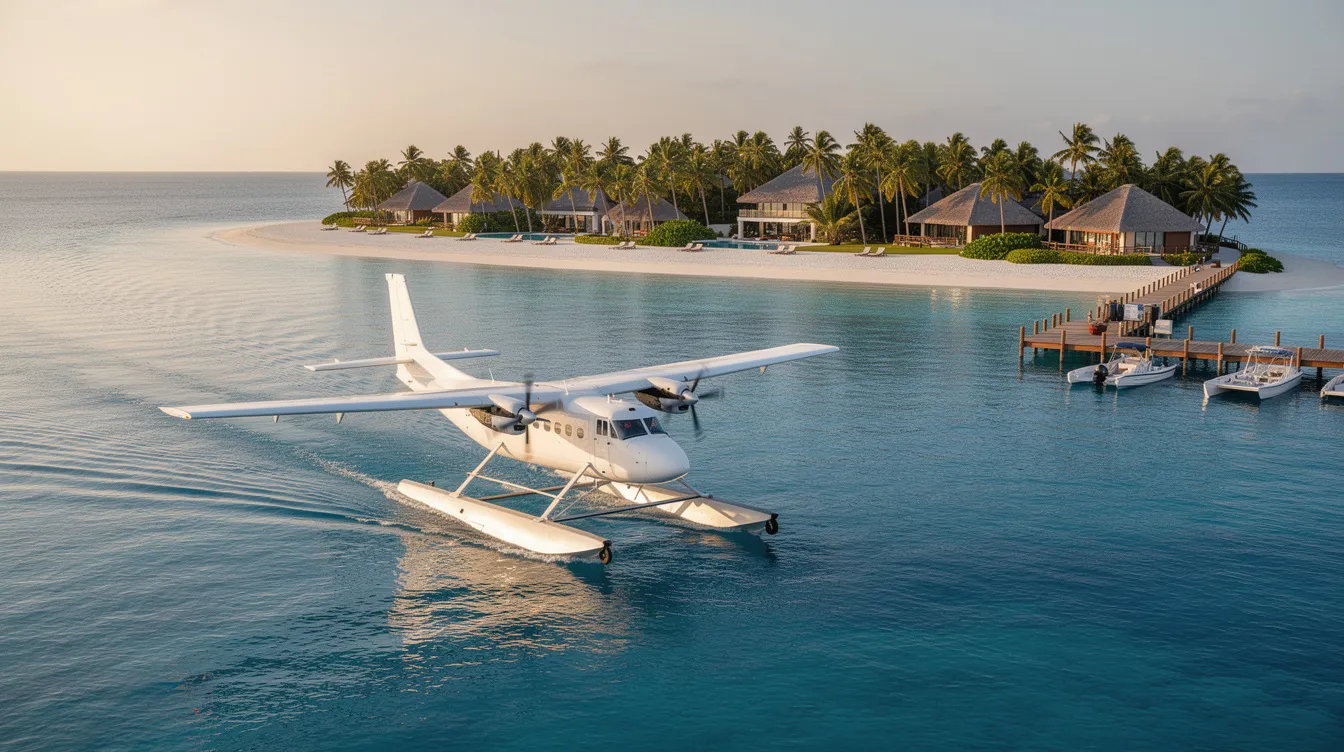
What Is a Water Plane? (Seaplanes, Float Planes, and Flying Boats)
A water plane is an umbrella term for aircraft that take off, land, and float on water. A seaplane is an aircraft capable of taking off, landing, and floating on water, categorized into floatplanes and flying boats.
Key distinctions:
All float planes are seaplanes, but not all seaplanes are float planes; seaplanes include flying boats that land using their fuselage directly on the water.
Float planes are designed with external pontoons, or floats, which are intended to maximize buoyancy and enable water takeoffs and landings, distinguishing them from flying boats whose hulls are intended to serve as the primary flotation device and allow direct water landings.
Float planes use external pontoons for water landings, while seaplanes are designed with a hull that acts as a flotation device and land directly on the water.
Many modern seaplanes are built as amphibious aircraft, featuring retractable wheels for takeoff from both water and paved runways.
Examples include a Cessna 185 on EDO floats as a classic float plane and the Consolidated PBY Catalina as a historic flying boat.
For clients seeking remote waterfront properties, BlackJet can help explore vetted water-capable operators as part of a broader aviation plan.
Types of Water Planes: Float Planes, Flying Boats, and Amphibious Aircraft
Not every water plane is built for the same mission. Some suit rugged lakes and rivers; others serve resort shuttles, sightseeing, or private transfers from airports to marinas.
Floatplanes are usually small land aircraft or standard aircraft converted with external floats. A 1979 Cessna 182 or 1976 Cessna 185 on pontoons keeps the fuselage above the surface while the floats provide buoyancy. They are common on lakes, rivers, sheltered bays, and remote areas.
Flying boats, including the 1913 Curtiss “Flying Fish,” the Short Empire, and the World War II PBY Catalina, use a boat-like hull that sits on the water. Their wings often carry small tip floats for stability. Over time, several versions of flying boats have been developed, each with evolving designs and capabilities to meet different operational needs.
Amphibious aircraft combine water and traditional runways. Examples include the ICON A5, DHC-2 Beaver on amphibious floats, 2016 Cessna Caravan 208 with Wipline 8750 amphibious floats, 2025 Cessna T206H HD, and Twin Otter DHC-6-300 float options. High-end travelers often prefer amphibious flexibility: depart a paved runway, then land near a villa, lagoon, or ship.
Float Planes in Detail
Float planes are landplanes fitted with straight floats or amphibious floats, such as Wipline 3000, EDO 3430, or Aeromarine 750 ultralight floats. The empty weight of a float plane, with its floats or amphibious gear installed, is a key factor in determining its useful load and operational performance.
Straight floats operate on water only; amphibious floats add wheels and landing gear for runways. Operators in Alaska, northern Canada, and remote communities choose based on dock access, runway availability, payload, and maintenance.
Examples include a 1999 Cessna 182S on Wipline 3000 amphibious floats serving lake communities, or a 1956 Beaver DHC-2 MK I on Wipline 6000 floats for lodge access. Float planes provide access to remote areas without the need for traditional runways, making them essential for transport and tourism in isolated regions.
Flying Boats and Classic Seaplanes
Flying boats are purpose-built boats of the air: aircraft with a hydrodynamic hull. Early examples include the Curtiss Model America and the British “Bat Boat,” an amphibious aircraft that foreshadowed modern amphibious designs.
Before World War I, Benoist flying boats operated early airline routes in the United States. The first successful commercial flying boat service was introduced in 1923, connecting the Channel Islands and marking the beginning of regular passenger transport by float planes.
By the 1930s, float planes enabled regular air transport between the U.S. and Europe, significantly enhancing international travel and commerce by allowing access to areas without traditional runways. Today, true flying boats are rarer, though classic hull-type seaplanes such as the Republic RC-3 Seabee remain part of aviation history and boutique sightseeing.
Amphibious Aircraft: Ultimate Flexibility
Amphibious aircraft are water planes that can also use conventional runways through retractable wheels or gear integrated into floats or hulls, just as certain 16-seat private jets balance runway performance with cabin comfort for group travel. Amphibious seaplanes combine the benefits of water and land operations, providing versatility in landing and takeoff options.
Contemporary examples include the 2016 Kodiak 100 on floats, DHC-6 Twin Otter 300/400 series resort shuttles, and ICON A5 personal amphibious models.
This matters for BlackJet members because the jet can fly to a regional airport, then an amphibious aircraft can complete the last miles to a lodge dock or yacht. The tradeoff is weight and complexity, so load planning, pilot experience, and maintenance standards are critical.
History of Water Planes: From World War I to the Twenty-First Century
Water planes have a long history because water offered natural runways before concrete airports became common. Their development accelerated through mail routes, reconnaissance, military patrol, and passenger flight.
The arc is clear: pre-1914 experiments, World War I expansion, World War II peak, and later specialization. World War I Today, that history supports premium eco-tourism, safari access, and remote luxury hospitality.
Birth of the Water-Plane Industry (Pre–World War I)
From 1910 to 1913, pioneers refined hulls, floats, and water takeoffs. Glenn Curtiss developed the “Flying Fish” and worked on hull forms that improved takeoff performance.
In 1913, the Daily Mail newspaper offered a £10,000 prize for the first non-stop aerial crossing of the Atlantic, which spurred the development of float planes like the Curtiss America, designed for long-distance flights over water.
The Benoist XIV began one of the first scheduled heavier-than-air airline services in 1914 between St. Petersburg and Tampa. It was a US flight achievement and a wider flight achievement that proved commercial water aviation could exist beyond the experiments of the Wright brothers' era.
World War I and Interwar Expansion
During World War I, from 1914 to 1918, flying boats and floatplanes advanced quickly. British designer John Cyril Porte improved Curtiss hulls at Felixstowe, creating aircraft such as the Felixstowe F.2 and F.3.
During World War I, flying boats like the Felixstowe F.2 were extensively used by the Royal Navy for coastal patrols and anti-submarine warfare, marking a significant military application of float planes. They supported coastal stations, convoy protection, and long-range reconnaissance.
Other aircraft included Italian Macchi M.5 flying boats and German Hansa-Brandenburg types. Interwar aircraft such as the Short Empire and Dornier Do X expanded range, speed, and reliability.
World War II and the Decline of Large Flying Boats
The military value of float planes was recognized during World War II, with aircraft like the PBY Catalina and Short Sunderland being used for various operations, including reconnaissance and search-and-rescue missions.
After the war, more runways, better landplanes, and jetliners such as the Boeing 707 and Douglas DC-8 reduced demand for large ocean-going flying boats. Many surplus military boats entered civilian use, but smaller float planes and amphibious aircraft became a durable niche.
Twenty-First Century Developments and Modern Roles
Modern amphibious aircraft such as the Beriev Be-200 and ShinMaywa US-2 serve firefighting and long-range search and rescue, paralleling how the largest private jets serve ultra-long-range and high-capacity missions in private aviation. Float planes and amphibious aircraft now operate in Alaska, Canada, Scandinavia, the Maldives, and Pacific island chains.
Saltwater operations require costly maintenance to prevent corrosion, while freshwater operations risk debris damage to the aircraft. Seaplanes are generally more susceptible to corrosion due to their direct contact with water, while float planes, which do not touch the water with their fuselage, may have fewer corrosion-related issues, as budget-friendly private aircraft demand disciplined maintenance planning to preserve value.
How Water Planes Work: Design, Safety, and Performance
Operating from water adds aerodynamic and hydrodynamic demands. Seaplanes rely on hydrodynamics for operation on water, which involves three distinct modes: Idling/Displacement, Plowing, and Planing/Step.
In the Idling/Displacement Mode, the aircraft is supported by the buoyancy of the floats or hull and sits deep in the water. In the Plowing Mode, the aircraft pushes through the water, creating a large bow wave and requiring careful control by the pilot to manage drag. In the Planning/Step Mode, hydrodynamic lift lifts the aircraft onto the water surface, reducing resistance and allowing it to take off.
Seaplanes experience slower cruising speeds, increased drag, and weight, resulting in poorer overall efficiency compared to land-based aircraft. Seaplanes generally have a reduced payload capacity due to the added weight of floats or hull reinforcements compared to traditional aircraft.
Floats, Hulls, and Stability on Water
Straight floats, such as Aeromarine 750 all-aluminum straight floats, serve water-only missions. Amphibious floats, such as Wipline 3730 or 8750, add wheels for mixed operations.
The design of float planes includes careful weight distribution to prevent tipping or instability during takeoff and landing on water, ensuring safe operations in various conditions. Wide float spacing, wingtip floats, proper loading, and inspection discipline reduce nose-over or wing-dip risks.
Seaplanes are equipped with retractable water rudders for steering at low speeds on water, which are retracted when ready to take off. Safety checks include float leaks, bilge pump function, corrosion, and hull integrity.
Engine Placement, Avionics, and Safety Systems
Float planes typically feature engine placements that optimize aerodynamics and minimize water interference, which is crucial for maintaining performance during water operations. Nose-mounted or pylon-mounted engines help keep propellers clear of spray.
Modern equipment may include Garmin G1000 NXi in a 2025 Cessna T206H HD, Garmin G500/G3X suites in Cessna 182s and Seawind 3000s, and ADS-B Out. Light amphibious aircraft may include parachute systems; commercial DHC-2, DHC-3, and DHC-6 operations emphasize communication redundancy and water operations training.
Certification and Regulatory Oversight
Water planes operate under aviation certification systems, with added considerations for water landings, pilot ratings, and landing areas. International maritime law classifies a seaplane as a vessel while on water, requiring pilots to adhere to navigation rules.
In the U.S., commercial charter flights generally operate under FAA Part 135 rules, covering maintenance, pilot qualifications, duty time, and operational control. BlackJet’s safety philosophy verifies certified aircraft, properly rated pilots, and reputable operators before integrating any water-plane segment.
Water Planes in Warfare: World War I, World War II, and Beyond
Global conflict accelerated waterplane innovation. Maritime patrol, convoy protection, reconnaissance, and rescue made seaplanes central to naval aviation.
Today’s private uses are different, but many procedures for rough-water judgment, navigation, and maintenance trace back to wartime lessons.
World War I: Patrols and Reconnaissance (1914–1918)
World War I saw seaplanes deployed for coastal patrol, submarine spotting, and reconnaissance across the North Sea, Mediterranean, and Adriatic. Felixstowe flying boats, developed from improved Curtiss hulls, influenced later hull performance.
Italian Macchi fighters and German Hansa-Brandenburg seaplanes show how global the development became. The experience built confidence in endurance, open-water navigation, and operations from imperfect surfaces.
World War II: Flying Boats at Their Peak
World War II was the peak of large flying boats. The PBY Catalina, Short Sunderland, and Kawanishi H8K patrolled vast ocean areas for anti-submarine warfare, convoy escort, maritime rescue, and transport.
Float planes also launched from cruisers and battleships for scouting. Wartime reliability in harsh waves, weather, and isolation later supported civil confidence in remote water operations.
Post-war Transition to Civilian and Specialist Roles
After 1945, paved airfields and long-range land aircraft reduced the need for large flying boats, setting the stage for modern fleet and access models like NetJets-style jet cards. Many ex-military aircraft were converted for passenger service, freight, surveying, and supply.
By the late twentieth century, water planes had shifted to specialist roles: bush flying, tourism, firefighting, and maritime rescue with aircraft such as the Canadair CL-215/415 and Beriev Be-200, while fixed-wing private jets increasingly used 25-hour Jet Card programs to structure access for frequent travelers.
Modern Uses of Water Planes: Tourism, Access, and Private Charters
Today, seaplanes are vital for transportation, tourism, and emergency search-and-rescue in remote areas where traditional infrastructure is lacking, complementing structured jet card cost models that govern the mainline private jet segments feeding those remote connections. They connect remote locations, move cargo, support medical evacuation, and create memorable sightseeing experiences.
Seaplanes can land on lakes, rivers, and coastal bays, bypassing traditional airports for direct point-to-point travel. For BlackJet travelers, the value is often final-leg precision after the jet flight.
Tourism and Sightseeing
Float planes are particularly popular for tourism, offering scenic aerial tours and direct access to remote destinations, enhancing the travel experience. Classic trips include Alaska’s Inside Passage, glacier sightseeing near Juneau, and San Francisco Bay flights over the Golden Gate Bridge.
DHC-2 Beavers and DHC-3 Otters often carry small groups, with refurbished interiors and modern avionics. For a BlackJet itinerary, they can become the elegant link between Vancouver, Seattle, or Anchorage and a wilderness lodge.
Remote Community and Lodge Access
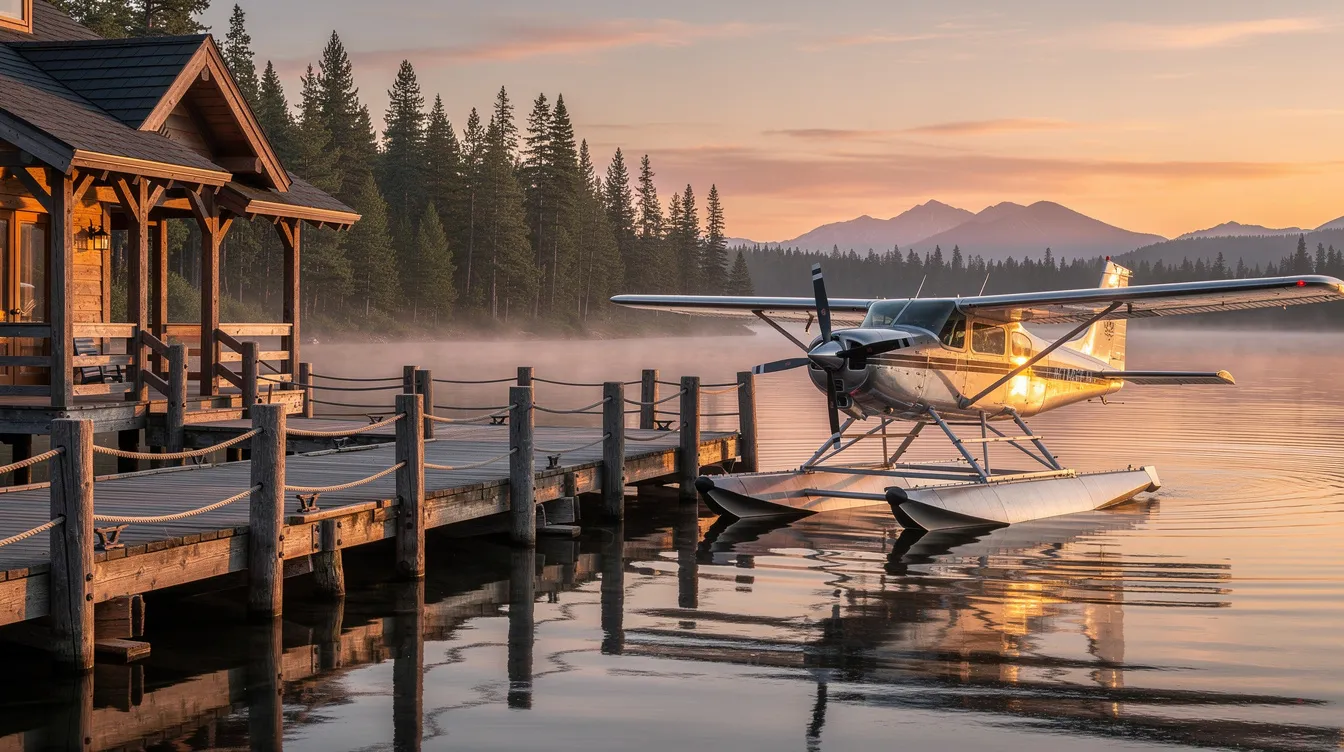
In northern Canada, Alaska, Scandinavia, and the Pacific, lakes and rivers operate like highways. Their ability to land on water allows float planes to reach locations where roads and airports are nonexistent, serving as a crucial lifeline for communities and industries.
A typical premium itinerary: fly by super-midsize jet to Anchorage or Vancouver, then board a pre-arranged amphibious aircraft for the last 100–200 miles to a lakeside retreat, often paired with a 50-hour Jet Card structure for predictable jet pricing.
Emergency, Firefighting, and Government Operations
Water bombers such as the CL-415 or Be-200 scoop water from lakes to fight wildfires. Amphibious aircraft also support maritime patrol, border surveillance, evacuations, and search and rescue.
BlackJet does not operate these public-service profiles, but awareness matters when arranging contingency routes or emergency extraction planning in remote locations.
Water Planes and Private Jet Travel: How BlackJet Integrates Amphibious Access
For high-net-worth and corporate travelers, the advantage is not only the jet; it is the end-to-end plan, aligned with a clear understanding of the broader private jet price landscape. BlackJet Jet Card members can pair light, midsize, super-midsize, or large-cabin aircraft with vetted water-plane segments where appropriate.
BlackJet’s pillars remain consistent: safety, certification, sustainability, and technology. Jet segments are carbon neutral, digital booking tools simplify requests, and real-time support coordinates timing, baggage, and alternatives.
Sample Itineraries: Jet + Water Plane Combinations
Here are practical combinations for anything from small groups to 20-passenger private jet travel:
New York to Vancouver by super-midsize jet, then a DHC-2 Beaver float-plane transfer to a British Columbia fishing lodge.
London to Malé by private jet and regional connection, ending with a Twin Otter seaplane transfer to a Maldivian private island.
Los Angeles to Anchorage by jet, then a Caravan on amphibious floats to a remote Alaskan heli-ski camp.
Compared with commercial, these plans reduce layovers, surface transfers, and missed connections while showcasing how affordable private aviation options can complement mission-specific water access.
How Jet Cards and On-Demand Charter Work with Water-Plane Segments
BlackJet’s Jet Card model, including 25- and 50-hour programs, simplifies budgeting and access for jet segments across cabin classes. Water-plane legs are usually supplemental charter segments with specialized operators.
Members can request a route through BlackJet’s app, portal, or concierge team, similar to the streamlined process used when buying a seat on a private jet. Jet hours apply to the jet flight; water-plane pricing is quoted transparently alongside the itinerary for clean comparison with helicopter, yacht tender, or ground alternatives.
Safety, Certification, and Standards for Partner Water-Plane Operators
BlackJet expects water-plane partners to meet rigorous standards: operator certificates where applicable, seaplane or float ratings, instrument capability when needed, minimum time in type, and documented water-operations training, mirroring the decision discipline used when selecting the best small private aircraft for a mission.
Inspection priorities include corrosion control, spray protection, float and hull condition, logbook compliance, and airworthiness directives. Many operators use Garmin glass cockpits, ADS-B Out, traffic awareness, and terrain tools, aligning rustic access with professional aviation discipline.
Sustainability and the Future of Water-Plane Travel
Aviation sustainability is no longer optional. BlackJet provides carbon-neutral private jet flights through verified offset programs and efficient routing.
Water planes are part of the same conversation because they fly short sectors, serve remote communities, and may reduce long ground transfers, much like the most cost-efficient private jet options reshape longer legs of the journey. BlackJet evaluates partner practices around fuel planning, shoreline impact, corrosion-control chemicals, and noise-sensitive operations.
Carbon Offsets, Fuel Efficiency, and Operations
For jet segments, BlackJet supports high-quality offsets and flight planning that reduces unnecessary fuel burn. For connecting water-plane operations, a similar discipline means selecting efficient turboprops, such as PT6-powered Caravans and Twin Otters, where mission-appropriate.
Direct water access can also reduce extra car, ferry, or helicopter legs, in the same way that private jet rideshare models optimize seat usage on core trunk routes. Operators can further reduce impact through careful wake management, low-toxicity treatments, and wildlife-aware departure paths.
Innovation: Electric and Hybrid Water Planes
Short island and lake hops are strong candidates for electric aviation. Programs such as Harbor Air’s electric Beaver work, Elfly’s NOEMI, and Jekta’s PHA-ZE 100 point toward quieter, lower-emission seaplanes in the 2030s.
Fully commercial electric amphibious fleets are not yet mainstream. BlackJet tracks these technologies so members can adopt certified, reliable, lower-emission options when they mature.

FAQs: Water Planes, Safety, and Booking Through BlackJet
What’s the difference between a float plane, a seaplane, and an amphibious aircraft?
A seaplane is the broad category. Float planes use floats; flying boats use a hull; amphibious aircraft can use water and traditional runways.
Is flying on a water plane as safe as flying on a private jet?
It can be professionally managed, but it has different risks: waves, docks, corrosion, water depth, and weather. BlackJet works only with operators that meet serious safety and certification expectations.
How does BlackJet vet water-plane operators?
BlackJet reviews certification, pilots, maintenance records, aircraft condition, training, and operational history before recommending a provider.
Can Jet Card hours be used on seaplane segments?
Jet Card hours apply to BlackJet jet segments. Water-plane segments are quoted separately and integrated into the same travel plan.
How much luggage can I bring on a float plane compared with a midsize jet?
Usually less. Floats, fuel, passenger weight, and performance limits make load planning essential.
What happens if the weather or water conditions are too rough?
BlackJet support coordinates alternatives, which may include waiting, rerouting to runways, ground transfer, helicopter, or a different aircraft model.
Conclusion: Elevating Your Reach with Water-Plane Access
Water planes extend private aviation beyond runways. From classic float planes and flying boats to modern amphibious aircraft, they add precision, romance, and real logistical value to trips that would otherwise be slowed by terrain, distance, or infrastructure.
BlackJet brings that capability into a broader travel strategy: carbon-neutral jet access, rigorous safety standards, digital coordination, and vetted partners for specialized water-plane transfers.
Explore BlackJet’s Jet Card programs and speak with a travel specialist about designing itineraries that integrate float planes, flying boats, or amphibious transfers where they add the most value.


 Sign up with google
 Sign up with Apple


