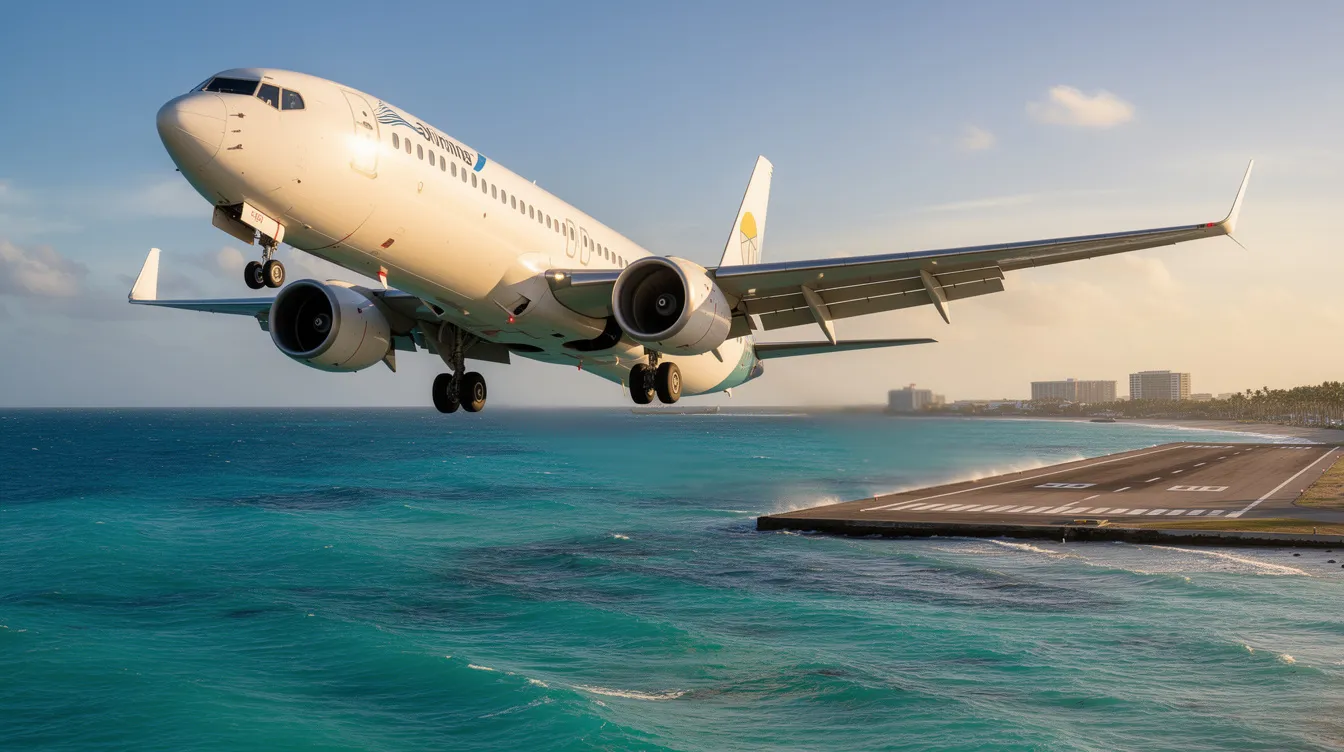
Knowing different plane names is more than aviation trivia. When you understand that a Boeing 737 is a single-aisle workhorse, a Gulfstream G700 is an intercontinental private cabin, and a de Havilland Beaver is a rugged bush plane, you gain a strategic edge in planning every journey-whether commercial or private.
Consider the difference: a New York–Miami trip in commercial first class typically consumes six to eight hours door-to-door once you factor in check-in, security, and ground transfers. That same trip on a private light jet through BlackJet takes roughly three to four hours, departing from a closer regional airport with no terminal queues. The airplane you choose shapes every minute of the experience.
This guide decodes the major aircraft categories-commercial airliners, cargo aircraft, general aviation, business jets, amphibious aircraft, agricultural aircraft, bush planes, rotorcraft, drones, and more-so you can speak the language of aviation with confidence. Along the way, we will connect each category back to practical travel decisions: cabin class, range, comfort, and airport access.
At BlackJet, we simplify this complexity. Our Jet Card programs and on-demand charter let you select by cabin size and mission profile rather than memorizing every model number. But behind every booking, aircraft type drives safety standards, sustainability outcomes, and the technology that powers mobile booking and real-time flight support. Understanding different plane names turns that invisible machinery into a strategic advantage.

Aircraft Categories 101: How the Industry Organizes Different Plane Types
Aircraft can be classified by how they generate lift and how they are powered. At the broadest level, there are two main categories of aircraft: aerodynes (heavier-than-air) and aerostats (lighter-than-air). Aircraft are primarily classified by how they generate lift and their structural design, plus whether they serve civil or military roles.
Here is how civil aviation organizes the major types:
Commercial airliners - Scheduled passenger jets and turboprops operated by airlines for public transport.
Cargo aircraft - Freighters carrying goods rather than passengers, from converted airliners to purpose-built haulers.
Business jets - Corporate and private aircraft ranging from four-seat light jets to intercontinental large-cabin aircraft.
General aviation - Everything from flight training and recreational flying to aerial survey work in small piston-engine aircraft.
Rotorcraft - Helicopters and gyrocopters using rotating blades for lift. Rotorcraft includes helicopters and gyrocopters.
Lighter-than-air aircraft - Balloons and airships that float using buoyant gas. Aerostats include lighter-than-air aircraft like balloons and airships.
Unmanned systems (UAVs) - Drones performing surveillance, delivery, or mapping without a crew on board.
Special-purpose aircraft - Vehicles performing unique missions outside standard roles, including firefighting tankers, air ambulances, and agricultural sprayers.
Within aerodynes, the split matters. Fixed-wing aircraft generate lift using forward motion and airfoils or wings-airplanes are fast and efficient but require runways. Fixed-wing aircraft include airplanes and gliders. Aerodynes include heavier-than-air aircraft like airplanes and helicopters, and aerodynes generate lift using engine power and wings. Heavier-than-air aircraft must keep moving or use rotating wings to stay aloft.
Powered lift aircraft combine properties of both, enabling vertical takeoff without a runway. Aircraft can be classified into civil and military categories, though this article focuses on civil aviation and business travel, with a brief section on military aircraft names for context.
Every aircraft type also receives an ICAO type designator-a short alphanumeric code like B738 for Boeing 737-800 or GL7T for the Bombardier Global 7500. These codes appear on itineraries and charter quotes.
At BlackJet, fleet options are classified primarily by cabin size (light, midsize, super-midsize, large-cabin) and mission profile (range, runway length). If you want a deeper dive into different private jet sizes and how they compare, those same dimensions carry through every decision. Beneath those labels sit the formal aircraft categories described here, and understanding them helps you interpret every recommendation your flight advisor provides.
Commercial Airliners: The Big Names You See on Airline Tickets
Commercial airliners are the scheduled, passenger-carrying aircraft that move the world. Commercial aircraft carry around four billion passengers annually across tens of thousands of airports. Commercial aircraft prioritize passenger comfort and economic efficiency, balancing fare revenue against operating cost on every route.
Airliners are typically grouped into five bands:
Regional jets - 50–100 seats, serving feeder routes into larger hubs.
Narrow-body jets - Single-aisle aircraft seating 100–240 passengers, dominating short and medium haul routes.
Wide-body jets - Twin-aisle layouts seating 200–400 passengers, built for long-haul flying.
Jumbo jets - The largest wide bodies, such as the Boeing 747 and Airbus A380, with enormous passenger capacity.
Turboprop airliners - Propeller-driven, efficient for shorter regional segments.
The major commercial plane models you will encounter include, and many travelers also weigh comparable small private aircraft options for shorter or more flexible missions:
Manufacturer | Key Families | Typical Role |
|---|
Boeing | 737, 777, 787 | Short-haul to ultra-long-haul |
Airbus | A320, A330, A350, A380 | Short-haul to ultra-long-haul |
Embraer | E-Jets (E170–E195) | Regional |
ATR / De Havilland | ATR 72, Dash 8/Q400 | Short-haul turboprop |
A quick comparison: a typical Boeing 737-800 carries around 160–189 passengers over roughly 3,000–3,500 km, while an Airbus A320neo handles similar ranges with improved fuel efficiency and noise reduction. Both dominate intra-European and US coast-to-coast flights.
For luxury travelers, comfort differences between aircraft types are significant. Modern wide bodies like the Boeing 787 and Airbus A350 maintain lower cabin altitudes (around 6,000–6,500 ft), better humidity control, and quieter cabins-important on ten-hour sectors. Some BlackJet members still choose commercial premium cabins for specific trunk routes when private access isn't optimal, and understanding airliner names helps them request the right equipment.
BlackJet clients often combine premium commercial flights for transoceanic legs with private jets for first-mile and last-mile segments. Knowing that your London–Singapore leg flies on an A350 while your Singapore–Langkawi hop could be a private midsize jet lets you plan a seamless itinerary from end to end.
Narrow-Body Jets: Boeing 737 & Airbus A320 Families Explained
Narrow-body jets make up roughly 60% of the global airline fleet, and two families-the Boeing 737 and Airbus A320-account for over 90% of that segment. Narrow-body jets typically seat between 100 and 240 passengers and are most efficient on short to medium-haul routes, which is why airlines deploy them relentlessly on domestic and medium haul networks.
The Boeing 737 Family
The Boeing 737 Next Generation was introduced in 1965, launching one of aviation's longest-running production lines. The Boeing 737 family includes the 737-700, 737-800, and 737-900 in the Next Generation series, with the newer MAX variants (737 MAX 7, 8, 9, and 10) adding re-engined efficiency. The 737 family collectively flew 10.8 million flights in 2025, up roughly 12% from the prior year. Airlines like Southwest and Ryanair built entire fleets around boeing 737 variants, standardizing crew training and maintenance.
The Airbus A320 Family
The Airbus A320 first flew in 1987 and seats up to 180 passengers. The family spans the A318, A319, A320, and A321, each scaling in length and capacity. The "neo" (new engine option) variants-A319neo, A320neo, A321neo-brought substantial fuel efficiency gains. The Airbus A320neo family has over 10,000 orders since 2010, making it the fastest-selling airliner family in history. Carriers like easyJet and JetBlue rely heavily on A320-family aircraft.
What Travelers See
On your boarding pass or flight-tracking app, you might notice codes like "738" (737-800), "32N" (A320neo), or "321" (A321). Frequent flyers learn these plane names to predict legroom, overhead bin size, and overall cabin feel.
For BlackJet members, the appeal of private aviation often lies in bypassing these crowded single-aisle terminals entirely. A direct flight between secondary airports on a light jet eliminates the connection through a congested hub, saving hours that a 737 or A320 route would consume in layovers alone.
Wide-Body & Jumbo Jets: Boeing 777, 787, Airbus A350, A380 and More
Wide-body jets usually seat between 200 and 400 passengers across twin-aisle cabins and are designed for long-haul flying-transoceanic routes where range and capacity justify the aircraft's size.
Boeing Wide Bodies
Boeing 767 - A mid-size twin-aisle workhorse, originally designed for medium to long routes, now increasingly seen as a freighter.
Boeing 777 - The 777-300ER remains one of the most popular long-range passenger jets. The 777X program introduces folding wingtips and composite wings.
Boeing 787 Dreamliner - Available as the 787-8, -9, and -10. The Boeing 787-9 can carry around 296 passengers, with a composite fuselage delivering lower cabin altitude and larger windows.
Airbus Wide Bodies
Airbus A330 - Available in ceo and neo variants, often serving medium to long-haul routes.
Airbus A340 - A historic four-engine long-range jet, now largely retired.
Airbus A350 - The A350-900 and A350-1000 feature carbon-fiber construction and quiet cabins. A350 flights more than doubled compared to 2019, growing over 117%.
Airbus A380 - The double-deck jumbo that can seat up to 853 passengers in all-economy configuration. The Boeing 747 can carry between 400 and 600 passengers, but the A380 surpassed even those numbers. Production ended in 2021, though airlines like Emirates and Singapore Airlines still operate large fleets.
City pairs like New York–London, Los Angeles–Tokyo, and Dubai–Sydney are commonly served by 777s, 787s, and A350s.
For luxury travelers, these wide bodies offer the quietest cabins and most sophisticated premium cabin designs in commercial aviation. Some BlackJet clients choose first or business class on a 787 or A350 for ultra-long sectors, then connect seamlessly to a private jet at either end. A Dallas–London–Nice itinerary, for example, becomes a smooth multimodal journey: private jet to Dallas, commercial premium to London, then a private midsize jet onward to Nice.
Regional Jets and Turboprops: Embraer, Bombardier, and ATR Names
Regional jets (50–100 seats) and turboprop airliners (40–80 seats) serve as feeders, connecting smaller cities to major hubs. Turboprop engines are efficient for regional flights, burning less fuel per seat-mile on short sectors than jets.
Regional Jet Families
Bombardier CRJ series - CRJ200, CRJ700, CRJ900, and CRJ1000, operated by carriers like American Eagle and Air Nostrum across North American and European feeder networks.
Embraer ERJ series - ERJ 135, 140, and 145, with 37–50 seats for thinner routes.
Embraer E-Jets - E170, E175, E190, E195, plus the newer E2 generation, offering wider cabins and ranges up to ~2,600 nm.
Turboprop Airliners
ATR 42/72 - Workhorses for short routes, island services, and remote communities.
De Havilland Canada Dash 8/Q400 - A fast turboprop seating around 76–90 passengers, often on Caribbean and Pacific island hops.
Passenger experience on these smaller planes differs noticeably: prop noise, limited overhead bins, and boarding via stairs rather than jet bridges. Some travelers prefer them for scenic, low-altitude approaches; others avoid them.
For BlackJet Jet Card members, a direct private flight on a light jet can replace a regional jet connection entirely-no double-security, no tight connection windows, and no reliance on airlines' regional schedules.
Cargo Aircraft: From 747 Freighters to Beluga and Dreamlifter
Cargo aircraft haul the goods that keep global commerce moving. They fall into two categories: purpose-built freighters and passenger-to-freighter conversions (e.g., 737-800BCF, A321P2F).
Flagship Cargo Names
Aircraft | Role | Approximate Payload |
|---|
Boeing 747-400F / 8F | Long-range heavy freighter | ~130 tons |
Boeing 777F | Intercontinental freighter | ~103 tons |
Boeing 767F | Medium-range freighter | ~52 tons |
Airbus BelugaXL | Oversize aircraft component transport | ~51 tons |
Boeing 747 Dreamlifter | Large composite fuselage sections | ~113 tons |
Antonov An-124 Ruslan | Outsized cargo, humanitarian aid | ~150 tons |
The Antonov An-225 Mriya, once the world's heaviest cargo aircraft with a maximum landing weight of roughly 1,100,000 lb, was destroyed during the conflict in Ukraine and is no longer flying.
E-commerce growth since the 2010s has expanded reliance on cargo aircraft dramatically. Integrators like UPS, FedEx, and DHL operate hundreds of named freighters-many of them converted passenger jets.
While BlackJet focuses on passenger business jets, some of the same airframes (737, 767) exist in both passenger and freighter variants. This versatility shows how a single aircraft type can serve radically different missions depending on configuration-a principle that applies equally when selecting cabin class for private travel.
Business Jets Overview: From Very Light Jets to Ultra-Long-Range Flagships
Business jets are a specific subset of general aviation focused on corporate and high-net-worth business travel. The US alone hosts tens of thousands of registered business jets, and the global fleet continues to grow as more travelers discover the time advantages of private flight.
The standard categories of private jets break down by cabin size and range:
Very Light Jets (VLJ) - 4–6 passengers, ~1,000–1,200 nm range
Light jets - 6–9 passengers, ~1,500–2,500 nm
Midsize jets - 8–10 passengers, ~2,500–3,500 nm
Super-midsize jets - 8–12 passengers, ~3,500–4,500 nm
Large-cabin jets - 10–16 passengers, ~5,000–6,500 nm
Ultra-long-range jets - 10–19 passengers, ~6,500–7,800 nm
Major manufacturers and their naming conventions include:
Gulfstream - G-series (G280, G500, G600, G650ER, G700)
Bombardier - Learjet (legacy), Bombardier Challenger series, Global series (5500, 6500, 7500, 8000)
Dassault - Falcon series (Falcon 2000, 6X, 8X, 10X)
Cessna/Textron - Citation family (M2, CJ3+, CJ4, XLS+, Latitude, Longitude, X)
Embraer - Phenom 100/300, Praetor 500/600, Legacy, Lineage
With a BlackJet Jet Card, members access multiple aircraft types without owning a plane, simply selecting by cabin class and mission. For travelers comparing programs, understanding overall jet card costs and how different memberships are priced helps frame the value. Compared to ad-hoc chartering-where you negotiate each specific aircraft name and price-a Jet Card delivers pricing transparency, aircraft consistency, and guaranteed availability across cabin classes.
Very Light Jets (VLJs): Compact Names like HondaJet and Vision Jet
VLJs are the entry ramp of the jet world: typically under 10,000 lb maximum takeoff weight, seating four to six passengers, and covering ranges around 1,000–1,200 nm. They are ideal for quick regional hops and owner-operators who want jet speed without large-cabin costs.
Key VLJ names include:
Cirrus Vision Jet SF50 - A single-engine jet with a distinctive V-tail, cruising around 300 knots with a range near 1,200 nm. Ideal for short trips like Los Angeles to Napa.
Honda HA-420 HondaJet - Recognizable for its over-the-wing engine mounts, offering a particularly quiet cabin and about 1,200 nm range.
Cessna Citation M2 - A light, versatile entry-level Citation with slightly more cabin room than the smallest VLJs.
Eclipse 500/550 - One of the first jets marketed specifically as a VLJ, designed for affordability and efficiency.
The VLJ experience is compact but efficient: quick boarding, minimal ground time, and the ability to access small airports with short runways that larger jets cannot reach. Single-pilot operation is common, though all VLJ flights arranged through BlackJet's network are operated by certified operators meeting strict audit standards-matching the safety rigor applied to far larger aircraft.
A BlackJet member traveling solo or as a couple from London to Geneva or New York to Nantucket would find a VLJ perfectly suited: low operating costs, fast turnarounds, and access to airfields that bypass commercial congestion entirely.
Light & Midsize Business Jets: Citation, Phenom, Challenger and More
Light jets typically carry six to nine passengers over 1,500–2,500 nm, while midsize jets push capacity to about eight to ten passengers with ranges up to 3,500 nm. Together, they cover the sweet spot of cross-country business trips and weekend getaways where speed and comfort must balance cost, especially for travelers exploring small private jet options that maximize luxury and efficiency.
Popular Light Jet Names
Embraer Phenom 300 - The best-selling light jet in recent years, seating up to nine with a range around 2,000 nm.
Cessna Citation CJ3+ / CJ4 - Reliable, versatile Citations with flat-floor cabins and ranges approaching 2,000–2,100 nm.
Learjet 75 - Bombardier's legacy light jet, known for speed and a distinctive profile.
Key Midsize Names
Cessna Citation Latitude - A wide-cabin midsize with flat-floor standing room and about 2,700 nm range.
Cessna Citation XLS+ - A step below the Latitude in cabin volume, favored for its efficiency.
Embraer Praetor 500 - A midsize with transcontinental range and a fly-by-wire flight deck.
Bombardier Challenger 300/350 - The Challenger 350 offers a large-cabin feel in a midsize envelope, popular for missions like New York–Dallas or Paris–Dubai with one stop.
Scenario: Winter Weekend
A BlackJet 25-hour Jet Card member books a Citation Latitude for a New York–Aspen round-trip. The aircraft's flat-floor cabin accommodates four passengers plus ski equipment in the baggage compartment, and its runway performance handles Aspen's elevation and shorter strip comfortably.
Regardless of size, pilot qualifications and safety remain constant: more pilots in the cockpit, advanced avionics for instrument rating conditions, and de-icing systems that allow reliable operations in winter weather. Size does not compromise safety when operators are properly vetted through programs like BlackJet's proprietary certification process.
Large-Cabin & Ultra-Long-Range Jets: Gulfstream G700, Global 7500, Falcon 10X
Large-cabin and ultra-long-range jets represent the pinnacle of private aviation: ten to nineteen passengers, ranges above 5,000–7,700 nm, and cabins that function as airborne offices, dining rooms, and bedrooms—particularly in 16-seat private jet configurations designed for group comfort.
Flagship Names
Gulfstream G650ER - Range ~7,500 nm, one of the most sought-after long-range private jets in the world.
Gulfstream G700 - Certified in 2024, the G700 offers a maximum range of approximately 7,750 nm at Mach 0.85 with eight passengers and reserves. Cabin dimensions reach about 6 ft 3 in height and 8 ft 2 in width, with up to five living areas.
Bombardier Global 7500 - The first purpose-built business jet with a four-zone cabin, boasting a range of roughly 7,700 nm, a service ceiling of 51,000 ft, and cabin dimensions of approximately 6 ft 2 in height by 8 ft width.
Dassault Falcon 8X / 10X - The 8X offers ~6,450 nm range with a trijet layout; the upcoming 10X pushes cabin width further.
The Cabin Experience
Full stand-up height, multiple zones (office, lounge, stateroom), ultra-low cabin altitude, advanced air filtration, and near-silent cruising speed near Mach 0.9. These are not mere luxuries-they are productivity tools. A board member who arrives in Hong Kong after fourteen hours of rest, meetings, and uninterrupted work has a measurable advantage over one who spent two days navigating commercial connections.
Scenario: New York to Hong Kong Nonstop
A BlackJet client boards a Global 7500 at Teterboro. Onboard Wi-Fi supports a three-hour video conference. The stateroom provides flat-bed rest. Fourteen hours later, the passenger steps off in Hong Kong alert and prepared. That trip replaces roughly two days of commercial travel, including layovers and ground transfers.
BlackJet's model allows access to this class on-demand or via higher-tier Jet Cards, without tying up fifty to eighty million dollars in capital for outright ownership. And with BlackJet's commitment to carbon-neutral flights, newer fuel efficient designs and offset programs reduce environmental impact across every cabin class.

Business Turboprops: Pilatus PC-12, King Air, and Versatile Workhorses
Turboprops use turbine engines driving propellers rather than producing jet thrust directly. They trade off some cruise speed for remarkable short-field performance, fuel efficiency, and access to rough strips and remote airfields where jets cannot safely operate.
Flagship Business Turboprop Names
Pilatus PC-12 - A single-engine turboprop seating up to nine passengers with a range near 1,800 nm. Renowned for accessing unpaved and short runways.
Beechcraft King Air 200/350 - Twin-engine turboprops with pressurized cabins, seating six to nine, and ranges of roughly 1,500–1,800 nm. Workhorses of corporate aviation for decades.
TBM 910/960 - Fast single-engine turboprops popular in European and US markets for owner-operators.
Use Cases
Medical evacuation, access to remote lodges, reaching smaller islands, and replacing long car drives after a commercial flight are all missions where choosing among the best small private aircraft for specific needs becomes critical. A BlackJet member flying a PC-12 into a short, unpaved strip for a Montana ranch retreat lands much closer than any commercial airport could allow.
Compared to light jets, turboprops offer similar seating capacity but often more flexible luggage and cargo space, with slight differences in cruise speed and cabin noise. Many turboprops have decades-long service records in demanding environments-from the African bush to the Alaskan tundra-and meet the same regulatory standards as jets when operated by top-tier providers.
General Aviation: Cessna 172, Piper PA-28, and Everyday Private Aircraft
General aviation encompasses all non-military, non-airline powered flight: flight training, private touring, aerial work, pipeline patrol, and recreational flying. It is the broadest segment of civil aviation by number of registered aircraft.
Iconic Names
Cessna 172 Skyhawk - The most produced aircraft in history, used globally for flight training and weekend cross-country trips.
Cessna 182 Skylane - A step up in payload and performance, popular for personal touring.
Piper PA-28 Cherokee/Archer - A staple trainer and personal aircraft found at virtually every flight school.
Cirrus SR20/SR22 - Modern composite designs with whole-aircraft parachute systems, popular among private pilot owners.
Piston engines are common in small private aircraft like these. Propulsion methods include piston-driven propellers and jet engines, and in general aviation, the piston-prop combination dominates. Typical missions range from a student earning a private pilot license to weekend flights within a state, aerial photography, and pipeline patrol.
These small piston aircraft differ significantly from the jets in BlackJet's network in speed, range, altitude, and comfort, even though they share airspace and regulatory frameworks. Pilot licensing progresses from a private pilot certificate through an instrument rating and eventually a commercial pilot certificate, each step expanding the aircraft type and conditions a pilot may fly.
Many BlackJet members began their aviation journey in general aviation as student pilots or aircraft owners accumulating flight hours in Cessna 172s or Cirrus SR22s. As business travel demands grew and the value of their time increased, they shifted to Jet Cards for efficiency-letting professional crews handle the flying while they focus on the work or rest that matters most.
Amphibious Aircraft & Seaplanes: de Havilland Twin Otter and More
Seaplanes land exclusively on water using floats or hull designs. Floatplanes are conventional aircraft fitted with pontoons. Amphibious aircraft combine both capabilities-retractable wheels plus floats-allowing takeoff and landing on runways or water.
Classic Names
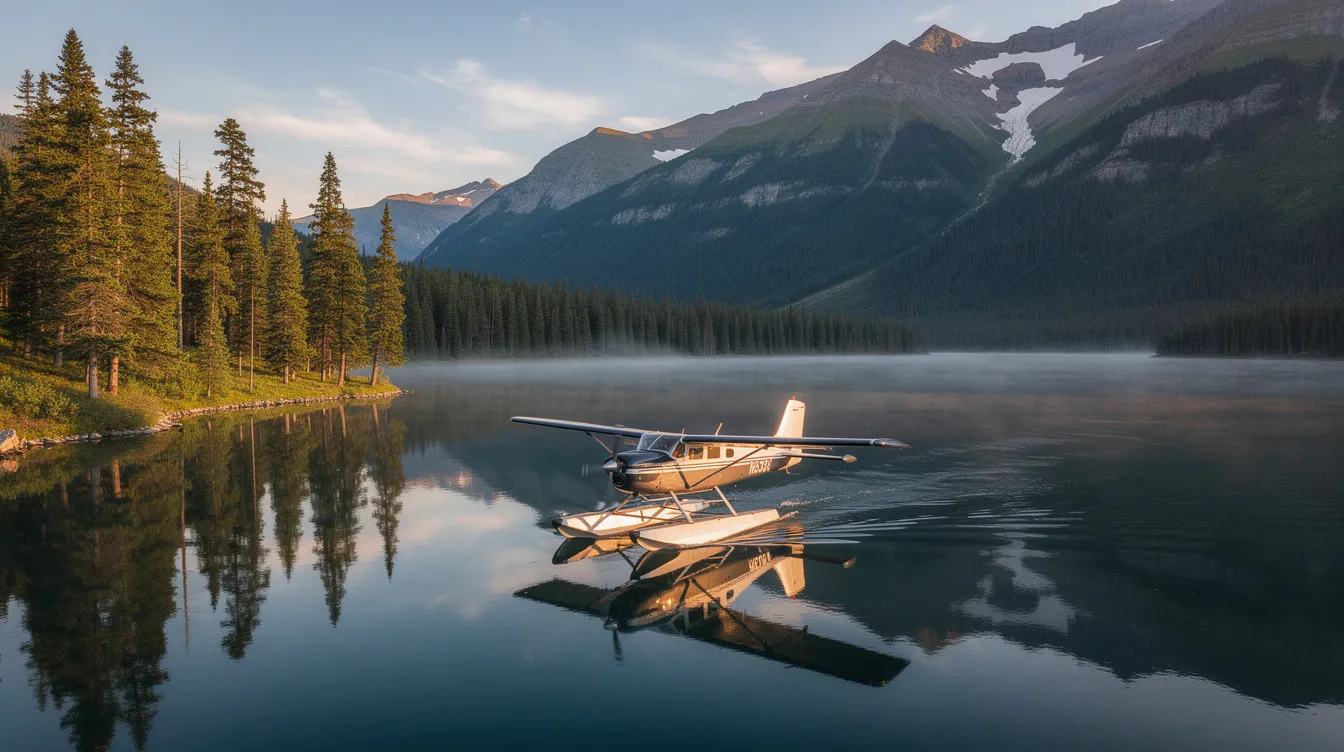
de Havilland DHC-2 Beaver - A legendary single-engine bush and floatplane originally designed for Canadian backcountry operations. Still flying decades after production ended.
de Havilland DHC-3 Otter - A larger sibling of the Beaver, carrying up to fourteen passengers on floats.
de Havilland DHC-6 Twin Otter - A twin-engine STOL turboprop used extensively in the Maldives, coastal British Columbia, and the Caribbean on float and amphibious configurations.
Modern Amphibious Aircraft
Bombardier CL-415 / De Havilland DHC-515 - Purpose-built water bombers for firefighting, scooping water from lakes mid-flight.
Icon A5 - A sport amphibious aircraft for recreational flying, bridging aviation and watersport culture.
Island-hopping in the Maldives by Twin Otter floatplane is a travel experience unlike any other: water landing aircraft taxi to wooden docks, baggage is loaded by hand, and the scenic low altitude approach replaces jet bridges with ocean spray. Regional seaplane services also connect communities in Alaska, Norway, and the Pacific Islands.
While BlackJet does not typically position amphibious aircraft in its core offerings, understanding these names helps clients planning trips where water-only destinations require a separate seaplane transfer beyond their private jet leg.
Agricultural Aircraft & Utility Planes: Air Tractor, Thrush, and Others
Agricultural aircraft-commonly called crop dusters-apply fertilizers, pesticides, and seeds at low altitude over farmland. They are purpose-built for precision and endurance in demanding conditions.
Key Names
Air Tractor AT-402/502/802 series - Bright yellow turboprop-powered aircraft with hopper tanks and spray booms, a common sight over US farmlands.
Thrush 510G - A turboprop ag plane known for payload capacity and versatility.
Cessna 188 AgWagon - A classic piston-powered ag aircraft, now largely retired but historically significant.
Piper PA-25 Pawnee - Another legacy crop duster that helped define the category.
These aircraft feature reinforced wings and fuselage, powerful engines (turboprop or piston), and specialized safety equipment for low-level operation. Structural strength is essential because ag flying involves repeated pulls at high G-loads close to the ground.
Other utility roles include pipeline inspection, fire spotting, and surveillance, where some general aviation types overlap with agricultural aircraft missions.
For a BlackJet client, these planes are not for passenger charter. But understanding their names helps differentiate them from passenger-capable bush planes or turboprops sometimes sharing the same rural airfields. If you see an Air Tractor on the ramp next to your King Air, you will know it is not your ride.
Bush Planes & STOL Aircraft: de Havilland Beaver, Cessna 185, Carbon Cub
Bush planes are aircraft optimized for rugged, remote operations with short takeoff and landing performance on gravel bars, tundra, or rough strips that would ground conventional aircraft.
Classic Bush Aircraft
de Havilland DHC-2 Beaver - Arguably the most famous bush plane ever built, with superb payload for its size and the ability to operate on floats, wheels, or skis.
de Havilland DHC-3 Otter - A larger complement to the Beaver, hauling heavier loads into remote strips.
Cessna 180/185 Skywagon - Rugged tailwheel aircraft with strong short-field performance and the ability to carry significant payload.
Piper Super Cub - A lightweight two-seater that can land and take off from astonishingly small clearings.
Modern STOL Types
CubCrafters Carbon Cub - A modern interpretation of the classic Cub with carbon-fiber construction and impressive short takeoff capability.
Pilatus PC-6 Porter - A Swiss-built turboprop famous for operating into mountain strips.
Modified Cessnas with tundra tires, vortex generators, and STOL kits extend the capability of conventional airframes.
Scenario: Alaskan Fishing Lodge
You fly a BlackJet large-cabin jet into Anchorage. From there, a local operator's de Havilland Beaver on tundra tires carries you to a gravel bar beside a river lodge-a mission that even the most capable business jet cannot accomplish. Knowing bush plane names helps you evaluate the operator's safety reputation, aircraft condition, and capabilities before committing to that final leg.
Safety in bush flying depends on weather discipline, performance margins, and pilot experience. Prioritize reputable operators with up-to-date maintenance records, especially in Alaska, Africa, and other remote regions where smaller planes are the lifeline of communities.
Rotorcraft: Helicopters and Gyrocopters in Modern Aviation
Rotorcraft differ fundamentally from fixed wing aircraft: rotating blades provide lift, enabling vertical takeoff and landing plus the ability to hover in place.
Common Civilian Helicopter Names
Model | Manufacturer | Typical Use |
|---|
Robinson R22/R44 | Robinson | Training, personal use |
Airbus H125 (AS350) | Airbus Helicopters | Utility, tour, EMS |
Airbus H145 | Airbus Helicopters | EMS, corporate, offshore |
Leonardo AW139 | Leonardo | VIP transport, offshore |
Bell 206/407 | Bell | Charter, utility, news |
Helicopters can hover and fly backward using engine-driven rotors. They can hover and land almost anywhere but are slower than airplanes-a trade off that makes them ideal for specific missions rather than long-distance travel.
Gyrocopters (autogyros) use an unpowered rotor that spins from forward airflow, requiring a short takeoff run. They are used largely for sport and recreational flying.
When BlackJet Clients Use Helicopters
Downtown heliport transfers (Manhattan to JFK or Teterboro)
Ship-to-shore transfers for yacht arrivals
Last-mile hops from a regional airport to a city center or resort
These are often arranged as part of a seamless itinerary, connecting a long-range private jet to the client's final destination. Commercial helicopter operations require specific air operator certificates, pilot training, and maintenance standards, and BlackJet vets partner operators accordingly.
Lighter-Than-Air Aircraft: Balloons, Blimps, and Airships
Lighter-than-air aircraft float because they are filled with a gas that is less dense than air-helium for modern airships, heated air for hot air balloons. They use gas lighter than air to float, relying on buoyancy rather than aerodynamic lift.
Categories and Examples
Hot air balloons - From the Montgolfier brothers' first flight in 1783 to modern recreational and competition flights.
Gas balloons - Filled with helium or hydrogen, used historically for exploration and now for scientific research.
Non-rigid blimps - The Goodyear Blimp fleet is the most recognizable example, used for advertising and sports event coverage.
Rigid / semi-rigid airships - Zeppelins defined early 20th-century air travel. Modern hybrid airship concepts explore cargo and tourism roles.
The passenger experience of a hot air balloon flight differs fundamentally from powered flight: low speed, no precise directional control, altitude governed by burner heat, and a gentle, wind-driven path. It is an experiential add-on rather than point-to-point transport.
While BlackJet's domain is powered fixed-wing and rotorcraft, lighter-than-air aircraft are part of aviation's broader vocabulary. Occasionally they appear in luxury travel itineraries-a Cappadocia balloon flight paired with a BlackJet charter into Kayseri, for example-as memorable experiential bookends.
Drones and Unmanned Aerial Vehicles (UAVs): From Mavic to MQ-9 Reaper
Unmanned aerial vehicles operate without a human pilot on board. Drones perform many roles without carrying a person onboard, from wedding photography to battlefield surveillance.
Consumer and Commercial Drones
DJI Mavic / Phantom / Inspire series - Dominant consumer and professional camera drones for photography, filmmaking, and real estate.
DJI Agras - Agricultural drones for precision spraying, joining traditional crop dusters in the field.
Mapping and survey drones - Used by construction, mining, and infrastructure companies for terrain modeling.
Military UAVs
MQ-1 Predator - The drone that transformed modern surveillance and strike operations.
MQ-9 Reaper - A larger, more capable successor used extensively by the US air force and allied nations.
RQ-4 Global Hawk - A high-altitude, long-endurance surveillance UAV with intercontinental range.
Emerging Cargo and Delivery Drones
Zipline's fixed-wing medical drones deliver blood and vaccines in Rwanda and Ghana. Wing (Alphabet) and Amazon Prime Air are testing last-mile package delivery in select markets. Regulatory frameworks are evolving rapidly.
UAVs intersect with business aviation indirectly: airspace management must accommodate both drones and manned aircraft, and airport operations increasingly plan for advanced air mobility infrastructure. While drones are rarely passenger vehicles today, their names are part of aviation's everyday language-and they may become relevant for air taxi networks that complement services like BlackJet in a few years.
eVTOL and Advanced Air Mobility: Joby, Archer, and the Next Wave
Electric vertical takeoff and landing (eVTOL) aircraft promise to reshape short-range urban and regional travel. These powered lift aircraft combine helicopter-like vertical takeoff with the efficiency of fixed wing cruise, powered by electric motors rather than jet fuel.
Leading Names
Joby Aviation S4 - A five-seat tilt-rotor design with a range of roughly 100–150 miles and near-silent operation.
Archer Midnight - A four-passenger eVTOL targeting urban air taxi routes in cities like Los Angeles and Miami.
Vertical Aerospace VX4 - A UK-based design with airline-backed pre-orders.
Lilium Jet - A German design using 36 electric engines in a canard configuration, targeting regional routes up to 180 miles.
Planned Operations
City-center vertiports, rooftop pads, and multimodal hubs integrating with high-speed rail and airports. Early commercial services are expected in select cities by the late 2020s, pending regulatory certification and battery technology maturation.
Significant hurdles remain: battery energy density, noise standards, and certification timelines. But the trajectory is clear.
Companies like BlackJet will likely integrate with or complement eVTOL networks in the future, offering long-range jet travel combined with short eVTOL transfers for city access. Today, many of those missions are already handled via traditional charter flights and bespoke charter itineraries. Imagine landing a Global 7500 at a regional airport and transitioning to an Archer Midnight for a ten-minute hop to a downtown vertiport. That is the extension of the private aviation convenience BlackJet clients expect-not a replacement for mid- or long-range jets, but a seamless first-mile and last flight connector.
Military Aircraft Names: Fighters, Bombers, and Transports as Reference Points
While BlackJet operates only civil aircraft, military aircraft names dominate public consciousness and illustrate the performance extremes of aviation. Military aircraft focus on speed, combat, and mission durability, contrasting sharply with civil aircraft that focus on safety, efficiency, and capacity. Military aircraft are designed for specific tactical missions. Military aircraft include bombers, fighter jets, and transport planes.
Iconic Fighter Names
F-16 Fighting Falcon - A lightweight, highly maneuverable multirole fighter.
F/A-18 Hornet / Super Hornet - Carrier-based military jets used by the US Navy and allied forces.
Eurofighter Typhoon - A European consortium fighter with twin engines and delta-canard design.
F-22 Raptor - The first operational fifth-generation stealth fighter.
F-35 Lightning II - A stealth multirole fighter with more powerful engines, now in service with over a dozen nations.
Bomber Names
B-52 Stratofortress - In service since the 1950s, still flying strategic deterrence missions.
B-1B Lancer - A supersonic variable-sweep bomber.
B-2 Spirit - A flying-wing stealth bomber.
B-21 Raider - The newest stealth bomber, entering service in the mid-2020s.
Transport and Support Types
The Lockheed C-130 Hercules is the most produced military transport aircraft, serving dozens of air forces worldwide. The C-17 Globemaster III handles strategic airlift, while the C-5M Super Galaxy lifts outsized cargo. AWACS platforms like the E-3 Sentry provide airborne command.
Some military airframes influence civil design and vice versa. The Boeing KC-135 tanker shares DNA with the 707, the first airplane to make jet-powered commercial use viable for Pan Am and American Airlines. Operational standards in the military also help raise expectations for safety and performance across civil aviation, just as modern private standards demonstrate how safe and tightly regulated private jet travel is in practice.
How Aircraft Type Affects Your Private Flight Experience
Every aircraft type shapes five dimensions of your journey: time, comfort, privacy, baggage capacity, and airport access. Here is how those dimensions map to real decisions.
Time
A light jet covers New York–Chicago in roughly two hours. A turboprop takes closer to three. A large-cabin jet flies the same route in under two hours but costs significantly more per flight hour. The trade off between speed and cost depends on mission frequency and passenger count.
Comfort
Cabin height - Stand-up height starts in midsize jets (~5 ft 8 in) and reaches 6 ft 3 in in the Gulfstream G700.
Seating layout - Club four, conference groupings, or fully reclining beds in large-cabin aircraft.
Noise - Modern jets with high-bypass engines are dramatically quieter than older designs.
Amenities - Wi-Fi, full galley, enclosed lavatory, and entertainment systems vary by aircraft category.
Privacy and Baggage
Smaller planes carry fewer passengers but also less luggage. A bombardier challenger 350 balances cabin space and cargo volume well for groups of six to eight with golf bags or ski equipment. Ultra-long-range jets accommodate steamer trunks and presentation materials for corporate roadshows.
Safety
Twin-engine jets offer redundancy; advanced avionics handle instrument conditions; de-icing systems enable winter reliability. BlackJet's safety standards and operator audits ensure every offered aircraft type meets stringent criteria, regardless of size.
Sustainability
Modern jets like the Global 7500 and Gulfstream G700 improve fuel efficiency through aerodynamic design, high-altitude cruise, and efficient wing structures. BlackJet's carbon-neutral commitment offsets residual impact, so every flight-light jet or flagship-carries the same environmental assurance.
Airport Access
Light jets and turboprops reach small airports with runways as short as 3,000 ft. Large-cabin jets need 5,000–6,000 ft. Passenger capacity and runway requirements together determine which aircraft type unlocks which destinations-a critical factor when your meeting is in Jackson Hole, not Denver.
Choosing the Right Aircraft with a Jet Card vs. On-Demand Charter
On-demand charter means selecting and pricing a specific aircraft for each trip-effective but unpredictable in cost and availability. A Jet Card inverts that model: prepaid flight hours across aircraft categories with guaranteed availability, fixed hourly rates, and simplified booking.
How BlackJet Simplifies the Choice
BlackJet's Jet Card programs let members book by cabin size and mission profile rather than negotiating each specific aircraft name and price. If you are comparing options across providers, understanding how jet card pricing structures work-including hourly rates and fees-clarifies where a program like BlackJet fits. You tell us the route, passenger count, and luggage requirements; we match the right aircraft category and confirm within hours.
Example Decision Path
A client needs eight round-trip flights per year between New York and Florida plus two transatlantic trips:
Trip | Recommended Category | Why |
|---|
NY–Palm Beach (8x) | Light jet | Short range, 2–4 pax, fast turnaround |
NY–London (2x) | Large-cabin or ultra-long-range | 3,400+ nm, need rest and work space |
By combining categories under a single Jet Card, the client avoids overspending on large jets for short hops and under-booking on transatlantic legs.
Budgeting and Predictability
Knowing approximate hourly rates by aircraft category lets members forecast annual travel costs confidently, especially when they understand jet card cost per hour benchmarks across cabin classes. Larger jets are reserved only when range or passenger capacity demands them. Safety, maintenance, and sustainability remain non-negotiable across all aircraft types in the program-BlackJet handles operator vetting and carbon offsetting behind the scenes.
Learning different plane names is valuable. But with BlackJet, you can focus on outcomes-time saved, comfort, productivity-rather than technical spec sheets. The aircraft knowledge sharpens your questions; BlackJet delivers the answers.
Sustainability and Safety Across Different Aircraft Types
Aircraft type directly impacts environmental footprint. A turboprop burns a small fraction of the fuel a large-cabin jet consumes per hour, but it also covers a small fraction of the distance. Modern designs like the Boeing 787, Airbus A350, Global 7500, and G700 achieve significant fuel burn improvements over prior generations through composite materials, efficient engines, and aerodynamic refinement.
Carbon Offsetting
BlackJet ensures flights are carbon-neutral regardless of aircraft chosen. Offset projects-verified reforestation, renewable energy, and methane capture-are funded at no extra cost to members. Every Jet Card flight carries carbon-neutral certification as a baseline, not an upgrade, reflecting the broader BlackJet private jet service philosophy around safety, comfort, and sustainability.
Safety Certification
FAA and EASA - Every aircraft in BlackJet's network holds current airworthiness certificates under these or equivalent authorities.
Operator audits - BlackJet's proprietary certification reviews maintenance logs, pilot experience minimums, insurance, and operational history before approving any operator.
Airworthiness directives - Mandatory inspections and modifications are tracked and enforced, ensuring compliance regardless of aircraft age.
Common Client Questions
"Are smaller aircraft less safe?"
Not inherently. A properly maintained and crewed Phenom 300 meets the same regulatory standards as a Global 7500. Weather and route length can affect type selection, but safety margins are built into every recommendation.
"Are turboprops riskier than jets?"
No. Turboprops have long service records in demanding environments. The key differentiator is operator quality, not propulsion type.
BlackJet favors newer, more fuel efficient models where possible to align safety, comfort, and sustainability-but older types remain safe and legal when properly maintained and updated.
Practical FAQ: Common Questions About Plane Names and Aircraft Types
What does "B738" or "A321N" on my itinerary mean? These are ICAO aircraft type designators. B738 refers to the Boeing 737-800; A321N (or A21N) indicates the Airbus A321neo. They tell you exactly which airplane variant is operating your flight, which helps predict cabin layout and comfort.
Are business jets safer than commercial airliners? Both operate under stringent regulatory frameworks. Commercial airliners benefit from massive statistical safety records due to volume. Private jets operated by audited, certified providers like those in BlackJet's network meet equivalent safety benchmarks. The key is operator quality, not aircraft size.
Which aircraft types can land at smaller regional or private airports? Light jets, VLJs, turboprops, and bush planes excel at small airports with runways under 4,000 ft. Large-cabin jets typically need 5,000–6,000 ft. BlackJet advisors match aircraft to runway length automatically during booking.
What is the difference between a business jet and a turboprop? Business jets use jet engines for higher speed and altitude. Business turboprops use turbine-driven propellers for better short-field performance and fuel economy on shorter routes. Both serve private travel; the choice depends on distance, airport constraints, and speed requirements.
Which private jet is best for New York to London? Ultra-long-range jets like the Gulfstream G700 or Bombardier Global 7500 cover the ~3,450 nm distance nonstop with full passenger loads. Large-cabin jets like the Bombardier Challenger 650 can manage it with favorable winds but may require a fuel stop. BlackJet advisors recommend based on your specific timing and passenger count.
Do I need to understand aircraft performance numbers to book a private jet? No. BlackJet translates performance data into simple choices: cabin class, passenger count, and route. But understanding basics like range, runway needs, and passenger capacity helps you ask sharper questions and appreciate why certain recommendations are made.
Why are some aircraft names numbers (G650) and others words (Global 7500)? Manufacturers follow different naming conventions. Gulfstream uses "G" plus a number. Bombardier uses descriptive names plus numbers. Cessna's Citation family uses names like Latitude and Longitude. The convention reflects brand identity, not performance hierarchy.
How does BlackJet help me choose the right aircraft for my trip? BlackJet's flight advisors assess your route, passenger count, luggage, timing, and airport preferences, then recommend the optimal aircraft category from the network. Resources on the best jet cards for frequent flyers and how they work can further clarify when a membership model is right for you. With a Jet Card, you access multiple aircraft types under one program-no ownership, no ad-hoc negotiation, and guaranteed availability.
Conclusion: Turning Aircraft Knowledge into Smarter Travel with BlackJet
Understanding different plane names-from boeing jets and commercial airliners to business jets, turboprops, bush planes, and emerging eVTOL designs-gives travelers a framework for smarter, more strategic decisions. Every aircraft type carries implications for time, comfort, privacy, and access.
BlackJet's role is to translate that complexity into simple choices. Which cabin class fits this mission? What route and timing protect your schedule? Which aircraft category delivers the best balance of comfort and cost? These are the questions that matter, and BlackJet's flight advisors answer them with precision.
Safety, sustainability through carbon-neutral flights, and technology-24/7 digital booking, real-time support-remain constant across every aircraft type in BlackJet's network. Whether you board a midsize Citation Latitude for a weekend trip or a Global 7500 for a nonstop intercontinental crossing, the standards never vary.
As emerging aircraft types like eVTOL air taxis and next-generation business jets enter service in the coming years, flexibility and access will only increase. For high-utilization travelers, understanding options like a 100-hour jet card and when that commitment makes sense becomes part of long-term planning. BlackJet members will be positioned to integrate these new options seamlessly into their travel patterns, extending the door-to-door efficiency that defines private aviation.
Explore BlackJet's 25+ Hour Jet Card program or speak with a flight advisor to discover which aircraft types align with your routes, your schedule, and your life. If you are comparing membership tiers, guides to 50-hour jet card costs and value tradeoffs and broader jet card cost per hour benchmarks and overall jet card cost structures can help frame your budget. For some travelers, outright ownership of flagship aircraft highlighted among the most expensive private jets in the world is appealing; others prefer on-demand access to large-cabin options ideal for 15-passenger private jet missions, 20-passenger group flights, or even 50-passenger VIP airliner charters. The right airplane is not just a name-it is the beginning of a better journey, whether you ultimately choose NetJets and want to understand NetJets jet card costs and programs or decide that BlackJet's model better matches your flying profile.


 Sign up with google
 Sign up with Apple