Introduction: Why the Cost of Flying Private Matters in 2026
Private jet hire in 2026 typically costs from about $2,300 per hour for a turboprop to $23,000+ per hour for a VIP airliner, with most mainstream private jets falling between roughly $3,000 and $15,000 per flight hour.
For executives, founders, high-net-worth individuals, and frequent business or leisure travelers who measure success in hours recovered rather than dollars saved, that range matters because the private aviation market now offers more access, more pricing models, and more variables than ever.
Flying private is not simply a luxury purchase. It is a strategic allocation of your most finite resource: time.
A commercial flight from New York to Chicago, door to door, consumes five to seven hours once you account for security queues, boarding, taxiing, and ground transportation on both ends. The same trip on a light jet, departing from a private terminal on your own schedule, takes roughly three hours total.
Multiply that kind of time recovery across fifty trips a year, and the calculus shifts dramatically. Customers value flexibility, privacy, and luxury—but the real unlock is productivity, provided you understand the true cost before booking and avoid the hidden fees and surcharges that can distort a quote.
Here is a quick snapshot of where typical hourly rates fall:
Turboprops: approximately $2,300–$3,000 per flight hour
Very light jets: approximately $3,000–$3,800 per hour
Light jets: approximately $3,800–$5,000 per hour
Midsize jets: approximately $5,000–$7,500 per hour
Super-midsize jets: approximately $7,000–$9,500 per hour
Heavy jets: approximately $9,500–$15,000 per hour
Ultra long-range jets and VIP airliners: $15,000–$23,000+ per hour
Throughout this guide, we break down private jet hire costs by aircraft category, the factors that shape pricing, regional differences, hidden fees, and practical trip scenarios. We then compare charter with Jet Card membership, ownership, commercial flying, and empty leg opportunities.
We also cover safety standards, sustainable aviation, and the technology-enabled savings behind BlackJet’s Jet Card model, so you can choose the right aircraft, budget accurately, and decide whether private access makes sense for the way you travel.
At-a-Glance: Typical Private Jet Hire Prices by Aircraft Category
Every private jet charter quote starts with one fundamental variable: aircraft category. Aircraft category refers to the size and type of the jet, which directly affects hourly rental rates. Hourly rates for private jets depend heavily on aircraft size and type, so understanding where each category falls is your first step toward realistic budgeting.
Here are the typical 2026 worldwide charter price bands, based on data from FBO Finder and the European Private Jet Charter Price Index:
Turboprops (King Air, Pilatus PC-12): $2,300–$3,000 per flight hour
Very light jets (Eclipse 550, Citation Mustang): $2,900–$4,600 per hour
Light jets (Phenom 300E, Citation CJ4): $3,800–$5,000 per hour
Super light jets (Learjet 45XR, Hawker 400XP): $4,500–$6,000 per hour
Midsize jets (Citation XLS+, Hawker 800XP): $4,700–$7,500 per hour
Super-midsize jets (Challenger 350, Gulfstream G280): $7,000–$9,500 per hour
Heavy jets and ultra-long-range (Global 7500, Gulfstream G650): $9,500–$18,000+ per hour
VIP airliners (ACJ320, BBJ): $18,000–$23,000 per hour
Renting a private jet typically costs between $2,000 and $17,000 per flight hour across mainstream categories. VIP airliners can cost between $18,000 and $23,000 per hour, reserved for heads of state, large corporate delegations, or truly global itineraries.
These are typical on demand charter ranges. BlackJet Jet Card members, by contrast, lock in fixed hourly rates for their chosen cabin class rather than riding the volatility of floating market prices, an approach that aligns closely with how jet card cost per hour is typically structured across the industry. Private jet charter prices vary by aircraft size and distance, so securing a fixed price removes one of the biggest budgeting unknowns.
Key Factors That Decide How Much Private Jet Hire Costs
Even within a single aircraft category, the final quote for chartering a private jet can vary significantly depending on a handful of mission-specific variables. Private jet charters typically involve billing by flight hour rather than per seat, which means every factor below directly affects billable flight time and, in turn, the total invoice.
Aircraft Category
Moving from a light jet to a heavy jet can multiply the hourly rate by two to four times.
"Right-sizing" the aircraft—choosing the smallest cabin that comfortably serves your passenger count and flight distance—is one of the most effective ways to control direct cost.
Flight Distance and Flight Time
Flight time and distance directly influence the total costs of private jet rental.
Longer sectors burn more fuel and accumulate more block hours.
Multi-leg trips may also generate repositioning costs if an aircraft must fly empty to pick up passengers at a different airport.
Route and Airport Selection
High-traffic airports tend to have higher landing and handling fees.
A departure from London Heathrow costs significantly more in landing fees and slot charges than Farnborough or Biggin Hill.
Choosing smaller airports often reduces airport fees and eliminates queues.
Timing and Seasonality
Seasonal demand can increase private jet pricing during peak travel times.
Christmas, New Year, Art Basel in Miami, and Davos all create demand surges that push rates upward.
Last-minute bookings amplify this effect.
Services Onboard
Additional services can impact private jet rental costs significantly.
Bespoke catering, pet transport, Wi-Fi upgrades, de-icing in winter, and out-of-hours fixed base operator handling all contribute extras to the final bill.
BlackJet's membership model converts several of these moving pieces into predictable, fixed hourly rates for cardholders—removing the guesswork from budgeting while maintaining the flexibility to fly when and where you need.
Private Jet Hire vs Owning a Jet vs Commercial First Class
The question of how much it costs to fly private only makes sense in context. Against what alternatives are you measuring? The three most common comparisons are full aircraft ownership, on-demand charter or Jet Card access, and commercial first class.
Ownership: Acquiring a midsize to large jet typically requires $5 million to $70 million up front, depending on class and age. For buyers evaluating higher-end aircraft, understanding the features of a $20 million private jet can clarify where those acquisition dollars actually go. Beyond that, annual fixed costs—crew salaries, hangarage, insurance, and maintenance costs—run $500,000 to $4 million or more regardless of how often you fly. Industry consensus places the utilization threshold where ownership begins to compete with charter at roughly 250 to 300 flight hours per year. Below that, you are paying for an asset that sits idle.
On-demand charter vs Jet Card: On-demand flights offer pay-as-you-go access with variable pricing influenced by aircraft availability, season, and positioning. A Jet Card, by contrast, locks in a fixed price per hour across defined cabin classes. BlackJet's 25-hour and 50-hour programmes prepay blocks of time with guaranteed availability and rate certainty.
Flying private vs commercial flight: Consider four executives making a New York–Miami day return. Four first-class tickets run approximately $2,400–$4,000 per person round trip, totaling $9,600–$16,000. A light jet round trip on the same route costs roughly $18,000–$24,000 total. The per-person premium is modest when you factor in bypassing security queues, using a 30-minute departure window instead of arriving two hours early, conducting confidential meetings on board, and eliminating the need for overnight hotels. For business travel where time has a dollar value, the math frequently favors private travel.
How Hourly Rates Translate Into Real Trip Costs
Hourly rates are the starting point—not the finish line. The total cost of any private charter flight follows a straightforward formula:
Total cost ≈ hourly rate × billable flight time + positioning + airport and handling fees + taxes and surcharges
Example Route Scenarios
Here are three route scenarios illustrating how this plays out at 2026 market rates:
Short hop - London to Paris on a light jet: Roughly 1.0–1.5 flight hours each way. At a market rate of €5,000–€7,000 per hour, expect a round-trip charter cost of approximately £8,000–£12,000 all in. Split among six passengers, the per-seat cost approaches a full-fare business class ticket.
US coast-to-coast — New York to Los Angeles on a super midsize jet: Approximately 5–6 hours one way. At $9,000–$10,500 per hour, the one-way charter runs $45,000–$55,000, with a round trip reaching $90,000–$110,000 before extras like overnight crew expenses.
Transatlantic - New York to London on a heavy jet: Around 6–7 hours one way depending on winds. At $13,000–$16,000 per hour, one-way private jet charter costs land between $80,000 and $105,000, plus customs handling and landing fees at the destination airport. For many travelers, weighing these transatlantic figures against the value of time saved is central to deciding whether chartering a private jet is worth it.
BlackJet Jet Card members see transparent pricing that already anticipates repositioning in most common zones, meaning the hourly rate you lock in more closely reflects your final bill.
Light Jets and Super Light Jets: The Cost-Effective Entry Point
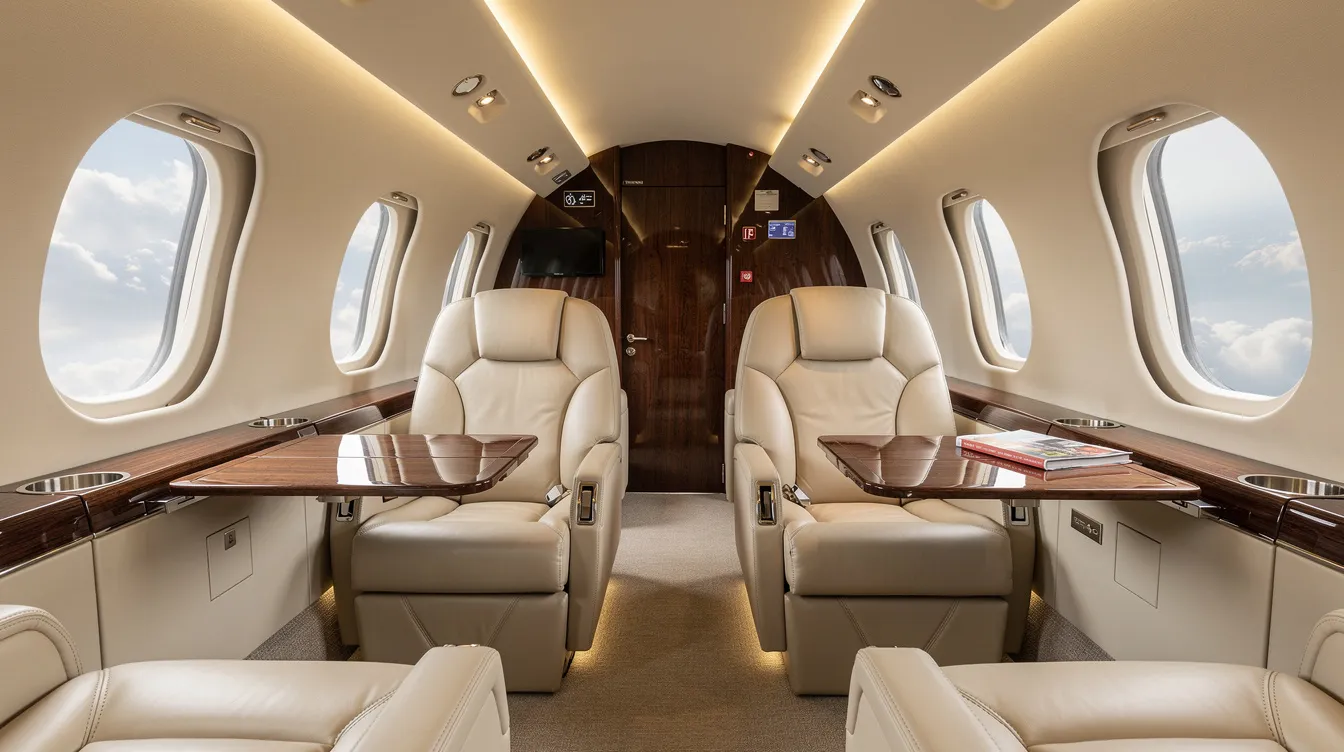
Light jets and super light jets seat four to eight passengers and excel on regional routes of up to two to three hours. They represent the most popular aircraft type for business and leisure travel within a single continent—and, alongside very light jets and turboprops, they are the cost-effective gateway to private flights for those exploring the cheapest private aircraft options.
Typical 2026 hourly rates: light jets run $3,800–$5,000 per hour; super light jets sit slightly higher at $4,500–$6,000 per hour.
Popular aircraft in this class:
Cessna Citation CJ3 and CJ4 - reliable, efficient aircraft with advanced avionics and a maximum range of roughly 2,000 nautical miles.
Embraer Phenom 300 and 300E - consistently among the most popular private planes in the world.
Learjet 45XR - a super light jet offering stand-up cabins and transcontinental reach.
Route examples and ballpark costs:
Los Angeles–Las Vegas (approximately 1 hour): $4,500–$6,000 one way; split among four travelers, roughly $1,200–$1,500 per person.
London–Geneva (approximately 1.5 hours): £6,000–£8,000 one way.
New York–Toronto (approximately 1.5 hours): $7,000–$9,000 one way.
BlackJet often recommends light jets for clients wanting same-day business hops without sacrificing cabin comfort. For shorter regional missions, these smaller private jets deliver exceptional value.
Midsize and Super-Midsize Jets: The Productivity Sweet Spot
Midsize and super-midsize jet categories represent the productivity sweet spot in private aviation. Many models feature stand-up cabins, enclosed lavatories, and enough range—up to 3,000–3,500 miles—to cover most transcontinental routes without fuel stops. Luggage capacity expands significantly over light jets, making them ideal for longer leisure travel itineraries as well.
Typical 2026 hourly rates: midsize jets typically rent for $4,700 to $7,500 per hour. Super-midsize jets command $7,000–$9,500 per hour.
Notable aircraft:
Cessna Citation XLS+ - one of the most chartered midsize jet models globally.
Bombardier Challenger 300 and 350 - super-midsize workhorses with flat-floor cabins and coast-to-coast US range.
Gulfstream G280 - an advanced super-midsize jet with efficient aircraft performance and a range exceeding 3,600 nautical miles.
Route examples:
Palm Beach–New York (midsize jet, approximately 2.5 hours): $14,000–$19,000 one way.
New York–Dallas (super midsize jet, approximately 3.5 hours): $28,000–$35,000 one way.
Geneva–Dubai (super midsize, approximately 5.5 hours): €42,000–€52,000 one way.
BlackJet Jet Card members can select midsize or super-midsize cabin classes at locked-in hourly rates, simplifying annual budgeting for frequent flyers who cover these medium-distance routes regularly. For a detailed breakdown of how this pricing works, see our guide to understanding jet card pricing.
Heavy Jets and Ultra-Long-Range: What You Pay for True Global Reach
When the mission demands intercontinental non-stop capability—or when the passenger count climbs above ten—a heavy jet or ultra-long-range aircraft becomes the only practical option. These cabins offer flat beds, multiple seating zones, crew rest areas, and the range to connect continents without refueling.
2026 hourly rates: heavy jets typically command $9,500–$15,000 per hour. Ultra-long-range jets push $15,000–$20,000+ depending on model and region. Large jets can cost between $8,500 and $17,000 per hour across the broader heavy category.
Aircraft examples:
Gulfstream G450 and G550 - proven long haul flights workhorses with maximum range exceeding 6,700 nautical miles.
Bombardier Global 6000 and 7500 - the Global 7500's 7,700 nautical mile range connects virtually any two cities nonstop.
Dassault Falcon 7X and 8X - known for fuel-efficient three-engine design and access to shorter runways.
Route examples:
New York–London (heavy jet, approximately 6.5 hours): $80,000–$105,000 one way.
Los Angeles–Tokyo via Honolulu (ultra-long-range, approximately 12 hours total): $180,000–$240,000 for the full routing.
London–Dubai (heavy jet, approximately 6 hours): £65,000–£90,000 one way.
For C-suite teams or families traveling together, the per-seat cost on a heavy jet can be competitive with full-fare first class on commercial long haul flights—especially once you factor the time saved bypassing connections and the ability to hold confidential meetings throughout the flight. These aircraft open access to a truly global network of destinations.
Turboprops and Very Light Jets: When "Smaller" Is Smarter
Not every private flight demands a jet engine. Turboprops and very light jets serve a vital niche: short sectors, runways too short for larger aircraft, and missions where economy matters more than speed, especially when you are evaluating what it costs to charter a small plane versus stepping up to a larger jet.
Typical hourly rates: hourly rates for turboprops start at $2,300 per hour, ranging up to $3,000. Turboprops are the most economical private aircraft category. Very light jets cost between $2,900 and $4,600 per hour.
Specific aircraft:
Pilatus PC-12 - pressurized single-engine turboprop seating up to nine, capable of using unpaved strips and accessing remote destinations.
Beechcraft King Air 200 and 350 - twin-engine turboprops with excellent short-field performance.
Eclipse 500/550 - a very light jet offering jet speed at a fraction of the aircraft weight and operating cost of larger cabins.
Use cases:
Access to smaller airports and regional airfields that larger jets cannot reach.
Short leisure hops such as London–Cornwall, Nice–Corsica, or Dallas–Austin.
Note that lower hourly rates can be offset by slower cruise speed on longer legs, so a turboprop may not always save money over a light jet on routes exceeding two hours.
BlackJet advisors help clients determine when a turboprop or very light jet is genuinely more cost-effective than stepping up to a light jet—an important distinction that depends on runway requirements, flight distance, and passenger count. For a deeper look at different aircraft types, our comprehensive guide covers every category in detail.
Empty Leg Flights: How to Save Up to 75% on Private Jet Hire
Empty leg flights—sometimes called leg flights or repositioning sectors—occur when jets reposition without passengers. If a heavy jet drops passengers in London and needs to return empty to New York to pick up its next booking, that return sector becomes available at a steep discount and is a core lever in many guides to renting a private jet and its costs.
Empty leg flights offer discounts of 25–75% off standard rates. A heavy jet empty leg between London and New York, for example, might be priced similarly to a first class commercial ticket per person when eight to ten passengers share.
Empty leg flights can save up to 75% on charter costs—but the trade-offs are real:
One-way only: empty leg flights can be booked for one-way trips only.
Flexibility is required to take advantage of empty leg flights. Departure times are dictated by the operator's scheduling needs, not yours.
The route may not be an exact match, sometimes requiring ground transportation at one or both ends.
Travelers can find empty leg flights through charter operators' websites and independent broker platforms. Empty leg flights can also be accessed through some membership programs, including BlackJet, which notifies members of relevant opportunities through its last-minute deals alerts.
Empty legs are ideal for adventurous, schedule-flexible travelers. For those who need fixed departure windows and specific routes, a Jet Card remains the more reliable option.
What's Included in a Private Jet Hire Price (and What's Not)
Transparent pricing starts with understanding what sits inside the number on a private jet charter quote. Private jet charter includes aircraft, crew, fuel, and insurance as standard. Private jet rental prices include crew, fuel, and insurance in the base hourly rate.
Typically Included
Aircraft and flight crew for the duration of the mission
Fuel for the planned routing
Standard aviation insurance
Standard catering appropriate to the time of day (snacks, light meals, beverages)
Basic landing fees and handling at selected FBOs
Common Extras and Variable Items
De-icing charges during winter operations
Out-of-hours handling at the fixed base operator
Premium catering—gourmet meals, specific vintage wines, bespoke menus
In-flight nanny, security personnel, or specialized medical equipment
Crew expenses including fees for overnight stays and travel (per-diem costs on multi-day trips)
Short-notice changes that require repositioning
Additional fees include a 7.5% US Federal Excise Tax on domestic flights, which some providers bundle and others add separately. Taxes and fees can add meaningfully to the final cost of private jet rentals—so always confirm whether the quoted rate is pre- or post-tax, and how each element fits into the broader structure of private jet charter pricing.
BlackJet's Jet Card quotes are structured to minimize hidden fees, with most core line items—including fuel surcharges, FET, standard handling, and carbon neutrality—wrapped into the fixed hourly rate.
Hidden Fees to Watch For When Comparing Quotes
Some providers advertise attractively low hourly rates only to layer on significant charges after the flight. When you are comparing private jet charter costs across brokers or operators, use this checklist to avoid invoice surprises:
Positioning and repositioning charges: The cost to move the whole jet to your departure point and back to its home base. Some quotes bury this; others exclude it entirely. Always ask whether repositioning is included or billed separately.
Minimum flight time charges: Even if a sector takes only 45 minutes, some operators enforce a minimum billable flight time of 1.5–2 hours per segment. Confirm the minimum before booking shorter routes.
Crew overnight and per-diem costs: On international flights or multi-day itineraries, crew expenses for hotels, meals, and ground transport can add thousands of dollars to the bill.
Fuel surcharges and security fees: Variable surcharges not disclosed in the base rate. Also watch for steep credit-card processing fees.
Segment fees and landing fees at primary gateway airports: Major hubs like Teterboro, Van Nuys, and Geneva levy premium fees that some quotes omit.
Before signing any charter agreement, ask for a fully itemized breakdown that includes all of the above. If a provider cannot produce one, consider it a warning sign.
BlackJet provides an all-in view for Jet Card flights. Every line item is transparent, and there are no surprise surcharges after the flight.
Regional Price Differences: US, UK, and Europe in 2026
How much private jet hire costs depends heavily on where in the world you are flying. Aircraft availability, regulation, fuel costs, and airport infrastructure all differ by region, and these differences flow directly into hourly rates and trip costs, which is why any serious private jet price list breaks out costs by aircraft category and region.
United States: The US has the densest private aviation fleet on earth, which drives competition and keeps rates relatively favorable. Light jets in the US market typically fall at $4,500–$7,000 per hour; heavy jets at $11,000–$16,000 per hour. Direct flights between well-served city pairs—New York to Miami, Dallas to Aspen, or West Coast shuttles like Los Angeles to San Francisco—tend to offer the most competitive pricing. However, the 7.5% Federal Excise Tax on domestic sectors adds a meaningful layer.
United Kingdom and Europe: The European private aviation industry features fewer based aircraft and higher airport handling costs, especially at primary gateway airports like Heathrow. Flying from London Farnborough or Biggin Hill instead of Heathrow can save several thousand pounds in landing fees alone. UK Air Passenger Duty, EU handling charges, and VAT in certain countries all affect the final bill. London–Ibiza on a light jet in peak summer can cost 20–30% more than the same aircraft type in the off-season.
BlackJet's global network prices flights across both regions while maintaining consistent safety and service standards, ensuring that whether you depart from Teterboro or Farnborough, the experience remains seamless.
How Jet Cards and Memberships Change the Cost Equation
A Jet Card is a pre-purchased block of flight hours—typically 25 or 50 hours—that entitles the holder to fly on certified private aircraft at predetermined rates. Jet card programs provide prepaid access to private jets, and for frequent flyers, they fundamentally change the private jet rental cost equation; understanding jet card pricing structures is therefore essential when comparing membership options.
Fixed hourly rates: Membership programs offer fixed hourly rates for private jet flights, shielding cardholders from fuel-price spikes, demand surges, and seasonal premiums. BlackJet locks rates for 12 months on its 50-hour programme.
Priority access and guaranteed availability: Jet Card holders receive guaranteed dispatch within defined notice windows—often 24–48 hours—removing the uncertainty of on-demand charter during peak periods.
Typical use case: A client flying 30–60 hours per year on routes like New York–Chicago, LA–San Francisco, or London–Zurich gains predictable annual budgeting. Instead of negotiating each trip individually, every hour is priced the same regardless of market conditions.
Additional perks: Memberships can include perks like personal account managers, 24/7 digital booking, and sustainability coverage. BlackJet includes carbon-neutral flights as standard, at no additional cost to members.
Membership programs help reduce costs for frequent private jet travelers by converting variable market pricing into a stable, known expense. For a side-by-side look at how BlackJet's pricing compares to other programmes, our jet card cost guide covers the full landscape and sits alongside broader resources on the best jet cards for frequent flyers.
How to Read and Compare Private Jet Quotes Like a Pro
Two quotes for the same route can look wildly different—and often, the cheaper one ends up costing more. Here is how to compare private jet quotes on an apples-to-apples basis.
Examine Each Element
Aircraft category and specific model offered. Older aircraft in the same category may quote lower but burn more fuel and lack advanced avionics.
Estimated flight time versus billable hours. Confirm whether taxiing is included in the hourly rate.
Clear breakdown of all fixed fees versus variable surcharges.
Apples-to-Apples Checklist
Ensure each quote covers similar aircraft size, age, and cabin configuration.
Check whether taxes (including FET), repositioning, de-icing, and standard catering are included or added on top.
Verify whether there are minimum flight time requirements per segment.
Ask about crew overnight costs for multi-day or international flights.
BlackJet Support
BlackJet advisors are available to audit competitor quotes and explain exactly where differences arise. The booking platform shows real-time options and pricing by aircraft category, enabling an instant comparison between cost and comfort trade-offs—so you can act with clarity from an independent broker–level perspective, backed by BlackJet's operator vetting.
Safety, Certification, and Why Cheaper Isn't Always Better
When a quote comes in significantly below market norms, the first question should not be "how do I book?" but "what are they cutting?" Safety certifications are important considerations in private aviation, and unusually low pricing often signals compromises in operator quality, aircraft age, or crew experience.
Industry safety frameworks: Standards such as ARGUS, Wyvern Wingman, and IS-BAO provide independent vetting of operators' safety management systems, pilot qualifications, maintenance records, and operational history, while a separate layer of due diligence involves understanding the full cost of flight operations—including what a private jet pilot typically costs.
How quality operators price: Adequate maintenance budgets, well-compensated crew salaries, rigorous recurrent training, and newer aircraft with current avionics are all embedded in the hourly rate. These are non-negotiable costs of safe operations—cutting them lowers the price but raises the risk.
BlackJet's approach: BlackJet works exclusively with BlackJet Certified operators that meet proprietary safety benchmarks. Even if a cheaper aircraft is available on a given route, it will not be offered unless it passes BlackJet's vetting. Safety is non-negotiable, and that standard is built into every Jet Card rate—a useful benchmark when comparing against the top private jet charter companies in the USA or other global providers.
Sustainability and Carbon-Neutral Flying: Does It Add to the Cost?
Sustainable aviation and carbon offset options are available for private flights, and demand for them is growing rapidly among corporate and individual travelers alike—particularly at the very top end of the market where clients are also weighing the most expensive private jet options for luxury travel. The practical question is whether going green adds meaningfully to the bill.
What offsets and SAF mean: Carbon offset programs fund projects that absorb or prevent greenhouse gas emissions equivalent to a flight's output. Sustainable Aviation Fuel (SAF) is a blended fuel produced from renewable feedstocks that reduces lifecycle carbon emissions by up to 80%.
Cost impact in the wider market: Many charter operators treat sustainability as an optional add-on, charging surcharges that range from 5–15% of the flight cost depending on the offset volume or SAF blend. As carbon pricing regimes tighten globally, these costs are expected to rise.
BlackJet's model: BlackJet ensures every flight booked on its Jet Card programmes is carbon neutral as standard—covering 300% of emissions through offset and sustainability initiatives—without hidden surcharges. This is not an opt-in; it is built into the hourly rate. For more on this commitment, visit BlackJet's sustainability page.
Case Study Scenarios: What Real Trips Actually Cost
Abstract hourly rates become far more meaningful when applied to actual itineraries, especially for larger groups where companies may be comparing standard charters with the economics of chartering a plane for 100 passengers. Here are four illustrative scenarios at 2026 market conditions:
London–Mykonos on a light jet (approximately 3.5 hours one way): Charter market rate of roughly $4,500/hr yields a one-way cost of approximately $16,000–$18,000. With six passengers, the effective per-seat cost is $2,700–$3,000—comparable to a full-fare business class ticket on a connecting commercial flight, but with direct flights and no layover.
New York–Nassau on a midsize jet (approximately 2.5 hours one way): At $6,500/hr, expect roughly $16,000–$18,000 one way. For a family of five, this translates to approximately $3,400 per person for a non-stop, private experience from a secondary airport.
Los Angeles–New York on a super midsize jet (approximately 5 hours one way): At $9,500/hr, one-way cost is roughly $47,000–$52,000. A round trip approaches $95,000–$105,000. On a BlackJet Jet Card at locked-in super-midsize rates, the same trip benefits from no fuel surcharges and no repositioning surprises, potentially saving $5,000–$10,000 versus a spot-market on-demand charter quote with added fees.
New York–London on a heavy jet (approximately 6.5 hours one way): At a $14,000/hr market rate, one-way cost is $85,000–$100,000. With twelve passengers aboard, the per-seat cost falls to roughly $7,500–$8,300—with privacy, schedule control, and zero airport wait time.

How Technology and Real-Time Support Reduce Overall Trip Cost
Better planning eliminates waste. In private aviation, waste takes the form of oversized aircraft, unnecessary repositioning legs, overnight crew costs triggered by avoidable delays, and missed empty leg opportunities. Technology addresses all of these, particularly when paired with a platform like BlackJet's premium private jet card programs that integrate live fleet data and membership pricing.
BlackJet's mobile booking platform: Real-time booking platforms enhance the convenience of private jet travel. BlackJet's platform displays live pricing and aircraft availability across cabin classes, enabling members to compare cost versus comfort trade-offs instantly. If a light jet can complete the mission at half the hourly rate of a super-midsize, you see that option immediately.
24/7 human support: Proactive re-routing during weather delays or airspace closures avoids costly diversions. Coordination of ground transportation and last-minute schedule changes can eliminate overnight costs or extra positioning legs that would otherwise inflate the bill—a level of concierge-style management that many billionaire travelers now prefer over outright ownership, as explored in our analysis of billionaire private jet price trends.
Smarter multi-leg planning: On complex itineraries—say a week-long European tour touching London, Geneva, and Olbia—advisors can sequence legs to minimize deadhead sectors, select smaller airports with lower fees, and identify where an efficient aircraft swap saves money without sacrificing comfort.
The combination of technology and human expertise is not just a service enhancement; it is a measurable cost-reduction tool.
Frequently Asked Questions About How Much Private Jet Hire Costs
What is the minimum cost to charter a private jet for a short hop?
Chartering a private jet costs $2,300 to $17,000 per hour depending on the aircraft. For the shortest turboprop sectors—say a 45-minute hop—expect a minimum charge of roughly $3,500–$5,000, as many operators enforce minimum billable flight time per segment.
How far in advance should I book to get the best rates?
Booking a private jet typically requires 30 to 60 days in advance for standard charter to secure preferred aircraft and competitive pricing. Jet Card holders with guaranteed availability can often book with 24–48 hours' notice without premium surcharges.
Can I share a private jet hire with other travelers to reduce my per-seat cost?
Yes. While traditional private charter flights bill for the whole jet rather than per seat, programs like pay-per-seat private jet options and shared-flight marketplaces are growing. On a light jet seating six, sharing the aircraft brings the per-person cost to within range of commercial business class on many routes.
Are empty leg flights always the cheapest option?
Not always. Empty leg flights offer the deepest discounts—up to 75%—but they are one-way only, departure times are inflexible, and routes are fixed. If the timing and route align with your needs, they are exceptional value. If you need a round trip on your own schedule, a Jet Card with a fixed price per hour will typically be more reliable and, over a year of travel, more cost-effective.
How do Jet Cards compare to pay-as-you-go charter in total annual spend?
For travelers flying more than 20–25 hours per year, a Jet Card typically reduces total annual spend by locking in rates below peak-season charter pricing and eliminating repositioning surcharges that inflate on-demand quotes. The predictability alone—knowing your annual private aviation budget to the dollar—has strategic value for executives managing company travel expenses.
How to Decide if Private Jet Hire Is Cost-Effective for You
This is a strategic decision, not simply a luxury purchase. The right framework starts with three questions:
How many hours per year do you realistically expect to fly private? If the answer is fewer than 10, on-demand charter supplemented by empty leg flights is likely the most economical path. Between 15 and 50 hours, a Jet Card program becomes significantly more cost-effective. Above 50 hours, larger block purchases—or even fractional ownership—merit evaluation.
How much is your (and your team's) time worth per hour? If four senior executives each value their productive time at $500 per hour, saving three hours per trip on 40 annual trips recovers $240,000 in effective value—a figure that can offset a substantial portion of private jet charter costs.
How often do you need to reach secondary or remote destinations poorly served by commercial flight? Routes to smaller airports, seasonal resort towns, or industrial sites without reliable airline service make private charter flights not just convenient but functionally necessary.
Compare your current annual spend on premium commercial tickets, airport hotels, and lost productivity against a modeled year of flying with a BlackJet Jet Card across the aircraft categories you would actually use. You might consider starting with the flexible BlackJet 25+ Hour Jet Card if your flying sits in the 25–50 hour range.
For high-frequency travelers, membership almost always delivers superior economics. Those regularly moving larger groups can also benchmark costs against options like private jets for 20 passengers or even explore what a 12-seater private jet costs. For occasional travelers, a blend of on-demand charter and finding affordable one-way flights offers the most flexibility.
Next Steps: Getting a Transparent, Tailored Price with BlackJet
The answer to how much private jet hire costs ultimately depends on your personal travel patterns—but the core cost structure is now clear. Chartering a private jet in 2026 spans from $2,300 per hour on a turboprop to $23,000 per hour for VIP airliners, with the majority of business and leisure travel falling between $4,500 and $15,000 per hour.
What turns those ranges into a precise, workable budget is the right partner:
Share a sample itinerary—your three most common annual routes—and receive a no-obligation cost comparison showing both on-demand charter and BlackJet Jet Card pricing side by side. Learn more about how to read and compare private jet quotes.
Explore BlackJet Jet Card options at 25-hour and 50-hour levels, with fixed hourly rates by aircraft category, hours that never expire, and full transparency on what is included. Discover the benefits of our Jet Card programs.
Count on BlackJet's commitments: no hidden fees, carbon-neutral flights at no extra cost, safety-vetted operators only, and real-time digital booking support around the clock. Read about our safety standards and certifications and our sustainability initiatives.
Discover how BlackJet can reshape the economics—and experience—of your private travel.


 Sign up with google
 Sign up with Apple