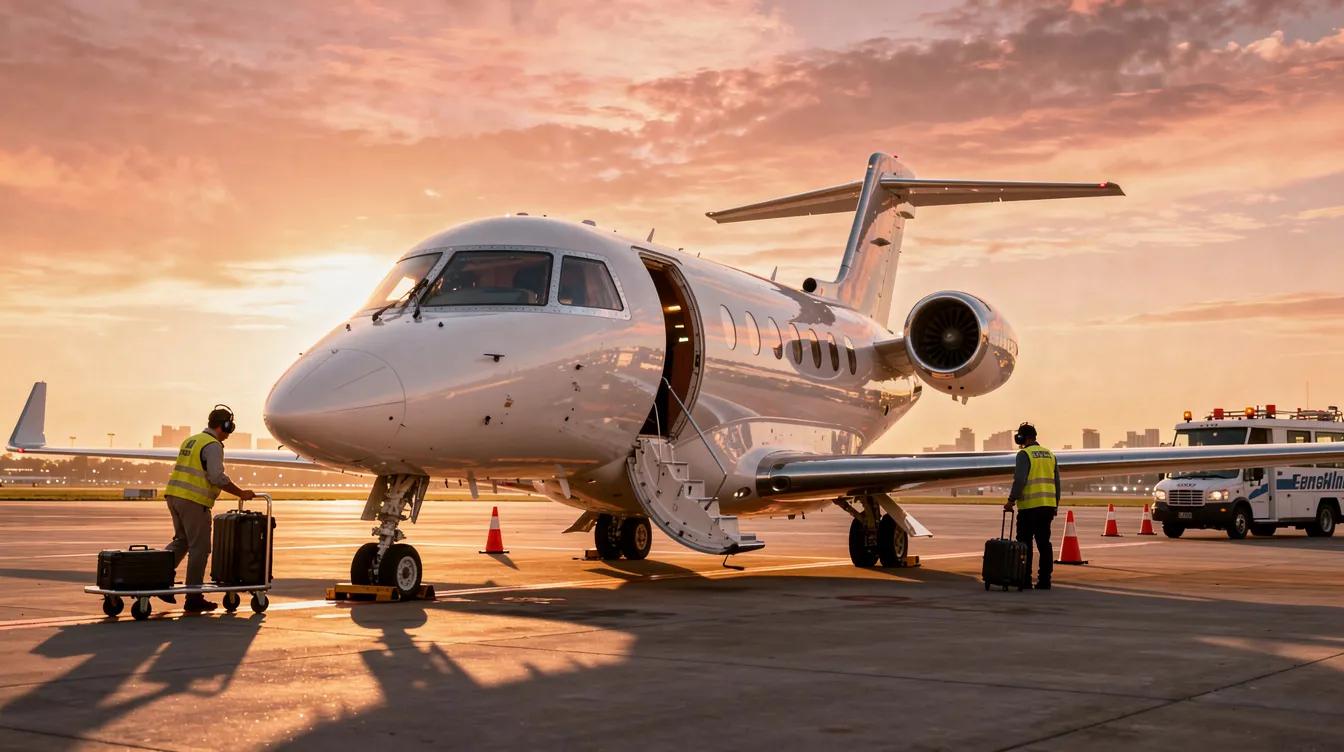
A private jet card is a prepaid block of private jet flight hours. With BlackJet, you choose a 25-hour or 50-hour card, prepay for private jet travel at fixed hourly rates, and every flight is arranged on a BlackJet Certified aircraft with automatic carbon-neutral coverage included. Jet cards differ from other private aviation options like chartering and fractional ownership by offering fixed rates, prepaid private jet access, and predictable availability, rather than on-demand pricing or shared ownership models. Rather than purchasing an aircraft or booking individual charter flights, which can require an asset purchase involving significant capital investment and a long-term commitment, jet cards provide a flexible, convenient alternative. Here’s exactly how the process works.
What Is a Private Jet Card? (plain-English definition)
A jet card is a prepaid private aviation program that provides holders with access to a range of aircraft types, including light jets, midsize jets, and heavy jets. Rather than purchasing an aircraft or booking individual charter flights trip by trip, you deposit funds into an account and convert them into guaranteed flight hours at a fixed rate. The concept of jet cards was originally introduced by Sentient Jet in 1997, marking a pivotal moment in the evolution of the private aviation industry.
Jet cards sit between two extremes: ad-hoc private jet charter, where you shop and negotiate each trip separately, and fractional ownership or aircraft ownership, which requires significant capital and long-term asset commitment. Jet cards enable users to prepay for flight hours or deposit funds into an account, which can then be used to book private jet flights at fixed hourly rates—offering the convenience of ownership-style access combined with the flexibility typical of charter services. Standard charter-based jet cards allow holders to pre-purchase flight hours or deposit funds into an account, providing a straightforward approach to private jet travel with predictable costs and simplified booking, and broader resources on understanding overall jet card cost can help you benchmark different providers.
A BlackJet jet card functions as a private jet membership, giving you guaranteed access to private jets at fixed-rate pricing, without asset risk, long contracts, or surprise surcharges. The fixed hourly rate structure simplifies budgeting and planning travel expenses, making it a significant advantage for both personal and business travelers.
What sets BlackJet apart from many jet card companies is that hours are non-expiring. While many jet card programs impose 12–36 month expiration windows—forcing you to fly or forfeit value—BlackJet hours remain available until you use them. Standard charter-based jet cards allow holders to pre-purchase a specific number of flight hours or deposit funds into an account, but BlackJet eliminates the “use it or lose it” pressure entirely.
Some key terms worth understanding: prepaid private jet hours represent your account balance; fixed hourly rates mean predictable costs locked at purchase; guaranteed availability ensures aircraft access, often with just 24 hours’ notice; and your primary service area defines the geographic region where your card operates.
Jet cards offer access to a diverse range of aircraft types, allowing users to select the most suitable option for their specific travel needs, enhancing both comfort and efficiency. The market also includes variations: mileage-based pricing,g jet cards calculate costs based on distance flown rather than flight time, while dynamic-priced jet cards offer flexible pricing that adjusts with market conditions. BlackJet operates on a fixed-rate model for maximum predictability.
This product is designed for frequent business and high-net-worth leisure travelers flying roughly 15–75 private jet hours per year—enough to justify the commitment, but not so much that whole aircraft ownership makes sense; if you fall into this group, exploring the best jet cards for frequent flyers can further clarify how different programs compare.

How Does a BlackJet Jet Card Work, Step by Step?
This section walks through the exact operational process for BlackJet jet card programs, from signing up to flying and tracking your non-expiring hours.
The process is identical for both 25-hour and 50-hour cards. Every stage is managed by BlackJet’s 24/7 client management team, and all aircraft are sourced exclusively from BlackJet Certified operators that meet defined safety, maintenance, and service standards. Many private jet card providers offer 24/7 support to their clients, ensuring assistance is always available. BlackJet also provides digital tools via web and mobile for booking and account management, alongside continuous human support.
Step 1 — Choose your card: 25-hour or 50-hour
BlackJet’s core jet card programs are 25-hour and 50-hour blocks, available across standard cabin categories: light jets, midsize, super midsize jets, and large cabin aircraft. Jet cards are typically sold in increments of dollars or hours, allowing users to purchase a set number of flight hours based on their anticipated travel needs, and jet card pricing structures vary based on how those hours or deposits are packaged.
You select both the total hours and a primary cabin category. Want a larger aircraft for a specific trip? BlackJet uses a transparent interchange grid to upsize or downsize per flight without penalty surprises.
Entry-level jet card programs typically require a minimum purchase of 10 to 25 flight hours, with deposits ranging from $50,000 to $150,000 depending on the provider and number of hours purchased; understanding jet card cost per hour across programs is key to comparing true value. For specific BlackJet jet card prices, contact the client management team or visit the BlackJet 25+ Hour Jet Card pricing page. Hourly rates for jet card flights can range from $6,500 for very light jets to $20,000 for ultra-long-haul private jets, depending on the aircraft type and market conditions, and travelers considering larger commitments may want to review 100-hour jet card cost details before deciding on program size. Jet card prices can vary significantly based on factors such as the provider, aircraft type, and program details, especially when comparing focused products like a 25-hour jet card guide to features and costs.
When you purchase, funds are deposited into your individual BlackJet account and converted into prepaid private jet hours at your contracted fixed rates. Unlike many competitors, BlackJet does not attach a 12- or 24-month expiration to those hours—they remain available until fully used.
Onboarding includes setting approved users (family members, executives, assistants) and preferences for airports, catering, and ground transportation arrangements.
Step 2 — BlackJet Certified aircraft selection with guaranteed availability
“BlackJet Certified” means aircraft are sourced only from operators that hold appropriate air operator certificates, pass recurring third-party safety audits, and meet BlackJet’s internal vetting standards.
In the U.S., only aircraft operating under a Part 135 certificate issued by the Federal Aviation Administration can be used for private flights sold as part of jet card programs. Jet card providers often utilize third-party safety auditors such as ARGUS, IS-BAO, and Wyvern to evaluate the operators they source. Top jet card providers implement proprietary vetting processes that exceed certification requirements, continuously monitoring operator performance and auditing partner relationships.
BlackJet’s vetting includes operator history review, insurance levels, pilot training, and flight hours verification, simulator-based recurrent training records, maintenance tracking, and incident/violation checks. Safety standards and certifications are critical factors to consider when selecting a jet card provider, as adherence to industry safety regulations ensures passenger and crew safety.
When you request a flight, BlackJet’s client management team matches your itinerary to the best-fit BlackJet Certified aircraft based on cabin size, range, runway length, and passenger count. The size and diversity of a provider’s fleet can significantly impact your travel experience, as a larger fleet offers greater flexibility in aircraft selection. Some private jet card providers operate their own fleets, while others, like Jet Linx, manage aircraft on behalf of owners, and companies such as Magellan Jets source aircraft from a network of vetted operators—each model affecting service quality, guaranteed availability, and flexibility, and mirroring the variety of approaches seen among top private jet companies for luxury travel.
BlackJet does not auction trips to the lowest bidder. Instead, it uses a curated network of certified fleet operators to maintain consistent service, safety, and cabin quality. You can request recurring preferences—always a specific aircraft type for certain routes, or always Wi-Fi capable—and these are stored in your profile for automatic application.
Aircraft options and confirmations are shared digitally with tail-specific safety credentials, so you know exactly what you’re flying.

Step 3 — Booking via 24/7 client management
To book flights, contact BlackJet via phone, app, or email with your dates, times, origin, destination, and passenger list.
BlackJet’s 24/7 client management team handles the entire private jet scheduling process: sourcing a BlackJet Certified aircraft, confirming crew, slot times, and ground arrangements. Some jet card programs include additional services such as catering and ground transportation, enhancing the overall travel experience. —BlackJet coordinates these based on your stored preferences.
Jet cards provide guaranteed availability, allowing users to book flights on short notice, often within 24 hours, which is particularly beneficial for business travelers with unpredictable schedules, and this 24/7 access is a core promise of BlackJet’s premium private jet card programs. BlackJet typically requires a minimum of 24 hours’ notice for standard, non-peak domestic private jet flights, with 72 hours recommended for peak travel periods, complex international missions, or slot-controlled airports.
It’s important to note that some jet card programs may apply peak day surcharges during high-demand periods, and fuel surcharges may also be added depending on fuel prices and market fluctuations. Transparency in how these costs are incorporated into your rate is essential for managing expenses predictably.
BlackJet can often accommodate shorter-notice trips—same-day or sub-24-hour requests—but aircraft availability and type flexibility may be reduced. The team is transparent about constraints at the time of request.
Once your aircraft is secured, BlackJet sends a written itinerary with departure airport/FBO, wheels-up time, aircraft type, tail number, and any included services.
Changes and disruptions—meeting overruns, weather diversions, passenger additions—are handled in real time by the same 24/7 client management team, not a third-party call center.
Step 4 — Flying with carbon offset included automatically
Every BlackJet jet card flight is carbon-neutral by default. No opt-in or separate signup is required.
Here’s how it works operationally: for each private flight, BlackJet uses aircraft type, flight distance (great-circle plus standard routing factors), and estimated payload to calculate CO₂-equivalent emissions. This calculation runs automatically through BlackJet’s emissions engine as soon as a trip is confirmed, using internationally recognized methodologies.
BlackJet then purchases verified carbon offsets or invests in accredited projects—reforestation, renewable energy, or carbon capture technologies—in quantities that fully cover those calculated emissions for that specific flight, aligning with how many 10-million-dollar private jet ownership and access options now incorporate sustainability practices.
This is done at no additional cost to you. The cost of offsetting is built into BlackJet jet card pricing and not billed as a line-item surcharge. Unlike many jet card programs that offer optional sustainability add-ons, BlackJet makes carbon-neutral private flights standard.
For businesses needing ESG reporting or sustainability disclosures, BlackJet provides per-flight or annual carbon reports showing emissions calculated and offsets applied.
Step 5 — Flight hours deducted; balance never expires
After each completed private jet flight, BlackJet deducts the actual flight time (plus any standard taxi-time allowance) from your prepaid hour balance.
Card statements update after each trip, showing route, aircraft category, billable flight time, any applicable surcharges (international handling, deicing), and remaining jet card hours.
With BlackJet, hours do not expire. Whether you fly 12 hours one year and 30 the next, or pause for 18 months, your remaining BlackJet jet card hours stay available. Reviewing the terms and conditions of any jet card program is crucial to ensure alignment with your travel needs, including understanding expiration dates and refund policies. BlackJet’s non-expiring structure eliminates this concern.
This contrasts sharply with many traditional jet card programs that impose 12–36 month expiration windows, forcing clients to “burn” hours or forfeit value if travel patterns change; when evaluating options, many travelers compare a 50-hour jet card cost and value as a benchmark for longer-term usage. Many jet card programs include peak period surcharges that can range from 10% to 40%, affecting overall costs—another variable to consider when comparing programs and analyzing both jet card cost per hour and broader jet card pricing structures.
When your balance drops to a defined threshold (typically 3–5 remaining hours), BlackJet proactively alerts you and offers seamless top-up or upgrade paths from the 25-hour to the 50-hour level.
Cardholders can request detailed usage reports at any time, which helps CFOs, family offices, and executive assistants track business aviation spend across teams or family members.
BlackJet Jet Card Comparison Table
Feature | BlackJet Jet Card | Typical Jet Card Programs |
|---|
Prepaid Hours | 25-hour or 50-hour blocks | Varies, often 10-100 hours |
Hourly Rate | Fixed hourly rates, varies by aircraft category | Fixed or dynamic pricing |
Aircraft Vetting | BlackJet Certified operators with strict vetting | Varies; some use third-party audits |
Booking Notice | Minimum 24 hours, 72 hours for peak/complex trips | Typically 24-72 hours, varies by provider |
Carbon Offset | Automatic, included in price, no opt-in required | Often optional or unavailable |
Hour Expiry | No expiration on hours | 12-36 months expiration common |
Shared Access | Allowed with authorized users and bookers | Varies; some restrict sharing |
24/7 Client Management | Dedicated 24/7 BlackJet team | Varies; some use third-party call centers |
Peak Day Surcharges | May apply (10-40%) | Common, varies widely |
Upgrade/Downgrade Flexibility | Transparent interchange grid, no penalty | Varies; some charge fees |
Is a BlackJet Jet Card Worth It?
A BlackJet jet card is most financially efficient for travelers flying roughly 15–75 private jet hours per year who want guaranteed access, non-expiring hours, and fixed-rate predictability.
“Worth it” comes down to three factors: cost per hour over several years, time saved versus trip-by-trip charter shopping on a flight-by-flight basis, and avoiding forfeited hours due to expiration. Most jet card buyers spend between $50,000 and $500,000 on private flying annually, with some providers offering 100-hour cards reaching into seven figures.
When choosing a jet card provider, it is essential to assess the reputation and experience of the provider, as established companies are more likely to have reliable systems and processes in place; many travelers, for example, compare NetJets jet card costs and structure alongside boutique providers. Customer reviews and testimonials can provide valuable insights into the experiences of other jet card holders, particularly regarding customer service and flight reliability.
Non-expiring hours fundamentally change the math. Consider a three-year comparison: with a BlackJet card, flying 18 hours in year one, 10 in year two, and 22 in year three means no rollover fees or forfeited balances. With a conventional 12-month expiry program, you’d likely lose 5–7 hours of value in year two alone—effectively raising your real hourly cost by 15% or more.
Map your last year’s and next year’s expected flight hours, then speak with BlackJet to model whether a 25-hour or 50-hour card delivers better value than ad-hoc on-demand charters.
Worth it if…
You fly frequently, typically at least 15–20 private jet hours per year (e.g., monthly New York–Florida or Los Angeles–Aspen routes)
Your business regularly moves executives between specific city pairs with predictable private aviation needs.
Your travel volume varies year to year—some years 12 hours, others 40—and you want to avoid being forced into higher usage just to prevent expiration
You have multiple executives, teams, or family members who need consistent access to private jet travel across a fiscal year.
You prioritize safety vetting, personalized service, and 24/7 flight booking support over chasing the absolute lowest ad-hoc charter quote
You want carbon-neutral private flights as a standard feature tied to corporate sustainability goals or personal values.
You value VIP access and luxury perks like dedicated client management over shopping for each. trip
Not worth it if…
You fly fewer than 10 private jet hours per year, where the benefits of fixed-rate pricing may not outweigh the upfront commitment.
You primarily hunt for last-minute “empty leg” flights and accept unreliable schedules and aircraft types to save money, rather than considering structured options like unlimited private jet flight membership.s
You only need one-off special-occasion flights every few years—a single holiday trip is typically better served by a one-off private charter through a charter broker.
You want to own an aviation asset for tax or branding reasons, where fractional ownership or whole aircraft ownership offers different strategic value, and where understanding the tax benefits of fractional jet ownership becomes a major part of the decision.n
Your travel plans are highly experimental and infrequent—start with an ad-hoc charter before committing to a jet card.
How Far in Advance Do You Need to Book with BlackJet?
BlackJet requires at least 24 hours’ notice for most non-peak domestic jet card flights. This allows the client management team to source appropriate BlackJet Certified aircraft, confirm crew availability, and coordinate ground logistics.
For peak travel periods—major holidays, key weekends, and high-demand events like Aspen ski season or major sports championships—BlackJet recommends booking 72 hours or more in advance to maximize aircraft choice and departure flexibility. These peak periods often see higher demand across private aviation, and earlier booking ensures you get preferred departure times and aircraft configuration.
International flights, complex multi-leg itineraries, and flights involving slot-controlled or curfew airports benefit from 3–5 days’ lead time to secure permits and slots.
BlackJet’s 24/7 client management team monitors aircraft availability across the BlackJet Certified network and allocates aircraft to cardholders first—this is how guaranteed availability is maintained operationally. Unlike an open-market charter, where you compete for available aircraft, your jet card status provides priority allocation.
BlackJet can often support truly short-notice missions (same-day or sub-24-hour), but aircraft type flexibility may be reduced. The team communicates any such constraints transparently at the time of request.
Importantly, booking earlier does not change your fixed hourly rate. It simply improves your options for departure times, airports, and specific aircraft features.
Can You Share BlackJet Hours with Family or Your Team?
Yes. BlackJet allows shared jet card access for families and business teams under a single jet card account, subject to authorization rules.
This is one of BlackJet’s core design principles: a single pool of non-expiring hours that can be used across multiple travelers, trips, and even overlapping itineraries on the same day.
Hours function like a balance in a centralized prepaid account. Multiple flights can occur simultaneously using the same BlackJet jet card balance—your CEO flying to Chicago while your sales team heads to Dallas, for example.
Access can be structured for personal (family) use, corporate use, or a blended model, depending on how you set up your profile at onboarding. Assistant-level users (executive assistants, family office staff, travel managers) can be given flight bookings rights while the primary cardholder retains full oversight.

BlackJet’s shared access policy — exactly how it works
When your BlackJet jet card is set up, you designate an approved user list: specific individuals (family members, executives) who may fly using the card.
You can also designate authorized bookers—assistants who may schedule flights on behalf of approved travelers via phone, email, or portal—without needing to fly themselves.
The owner does not need to be on board for a flight to use card hours. Any approved traveler can fly independently using the same BlackJet jet card balance, whether for business or leisure travelers.
Multiple flights can be booked for the same calendar day, with hours deducted from the shared pool for each aircraft. This enables organizations to move multiple executives simultaneously without separate card accounts.
BlackJet provides reporting by traveler or department on request, helping businesses allocate costs internally and families monitor how hours are used across members.
The primary cardholder can change or revoke user permissions at any time by contacting BlackJet client management, ensuring control and security over who can access the account.
What Happens to Unused BlackJet Hours?
Unused BlackJet jet card hours simply remain in your account and never expire—there is no 12-, 24-, or 36-month “use it or lose it” clause.
This structure is intentionally designed for real-world travel patterns where some years are heavy on private aviation, and others are lighter due to business cycles, family changes, or macro events, which also influences how businesses plan for jet card-related tax deductions over multiple years.
Consider this example: you purchase a 50-hour card. Year one, you fly 18 hours. Year two, business slows, and you fly only 10 hours. Year three picks up with 22 hours. With BlackJet, your remaining balance carries forward without rollover fees, cancellation fees, or forfeited hours.
Contrast this with typical jet card programs that set hard expiries or charge monthly management fees and extension fees—effectively raising your “real” hourly cost if hours aren’t flown on schedule and complicating accurate comparisons of jet card cost per hour across providers. With entry-level programs at other jet card sellers, unused balances can represent significant lost value.
BlackJet does not reduce service level or priority for accounts with lower current-year usage. You retain guaranteed access at contracted fixed rates until all hours are consumed.
If your usage rises significantly, BlackJet helps you step up from 25-hour to 50-hour levels (or add additional cards) with aligned terms and without penalizing existing hours, making it easier to compare against market benchmarks for 25-hour jet card features and costs and 50-hour jet card pricing and value. The right jet card provider adapts to your evolving needs rather than penalizing flexibility.
Frequently Asked Questions
This FAQ section provides concise, direct answers to common questions about BlackJet jet cards.
How does a BlackJet jet card work?
You prepay for 25 or 50 flight hours at fixed hourly rates, which BlackJet stores in your prepaid program account. When you need a flight, contact the 24/7 client management team with your itinerary. BlackJet sources a BlackJet Certified aircraft from its vetted network, calculates and offsets emissions automatically at no extra charge, and deducts actual flown time from your non-expiring hour balance. The entire process—from aircraft availability to flight confirmation—is handled by dedicated BlackJet staff.
Is a BlackJet jet card worth it?
For travelers flying roughly 15–75 private jet hours per year who value guaranteed availability, fixed-rate pricing, non-expiring hours, and carbon-neutral flights, a BlackJet card typically delivers strong value compared to ad-hoc charter. Those flying only a few hours annually may find on-demand charters more appropriate, though they sacrifice predictability and priority access.
How far in advance must I book a BlackJet flight?
BlackJet requires a minimum of 24 hours’ notice for most standard domestic flights. For peak travel periods and complex international itineraries, 72 hours or more is recommended. The 24/7 team can often accommodate shorter-notice trips depending on aircraft availability in the certified network.
Can I share my BlackJet hours with family?
Yes. A single BlackJet jet card can be shared across approved family members. The primary cardholder sets the authorized traveler and booker list at account setup. Family members can book flights and fly independently—they don’t need the cardholder on board—as long as they’re on the approved list.
Do BlackJet jet card hours expire?
No. BlackJet jet card hours do not expire. Unused hours remain in your account until flown, whether that takes one year or five. This eliminates the forfeiture and extension-fee issues that many traditional jet card providers impose with 12–36 month expiration windows.
For more detailed questions about jet card funds, specific aircraft categories, European programs, luxury hotels partnerships, or safety standards, contact BlackJet directly or visit the dedicated pricing and certification pages, and for large-group missions or specific regions, you can also explore options like chartering a plane for 100 passengers, selecting the best private jet for 50 passengers, or arranging private jet charters in Karachi.
Conclusion: Why Choose a BlackJet Jet Card?
A BlackJet jet card offers a uniquely transparent, flexible, and financially sound approach to private aviation. By combining fixed hourly rates, a vetted network of BlackJet Certified aircraft, 24/7 dedicated client management, and automatic carbon offsetting, BlackJet delivers operational simplicity and peace of mind. The non-expiring hours model eliminates the hidden costs associated with expiration penalties, making it an ideal choice for travelers with variable flight needs. Shared access policies further enhance flexibility, allowing families and business teams to optimize usage under a single account.
If you seek guaranteed private jet access without the complexities of ownership or the unpredictability of ad-hoc charters, BlackJet’s jet card programs provide a practical, cost-effective solution. Whether you fly 25 hours or 50 hours annually, BlackJet’s operational rigor and client-focused approach ensure your private aviation experience is seamless, sustainable, and tailored to your lifestyle or business demands.
Explore BlackJet’s jet card options today and discover how prepaid private jet hours can transform your travel with confidence and clarity.


 Sign up with google
 Sign up with Apple