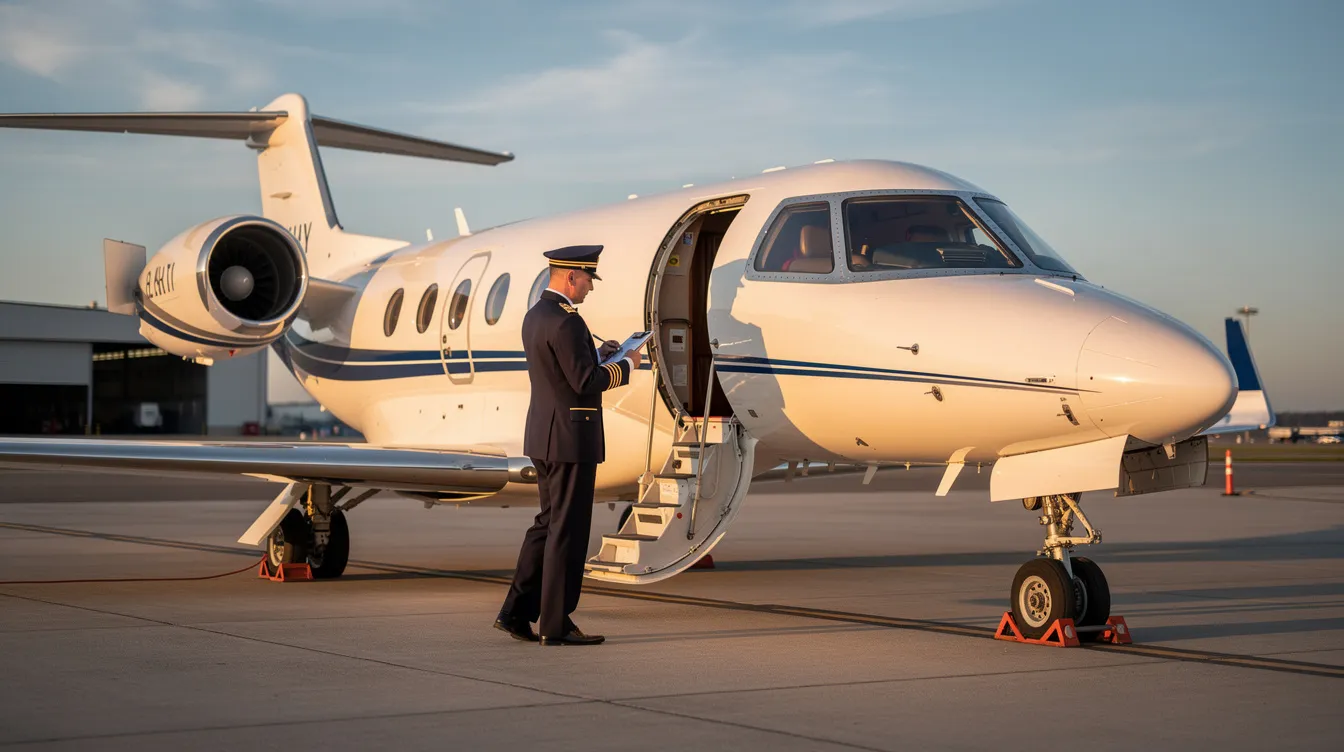
For executives and high-net-worth travelers, a used HondaJet typically costs about $2.3 million for early HA-420 aircraft and can run past $6 million for low-time, well-equipped Elite II models, with much of the market clustering around $3.7 million depending on year, hours, avionics, and maintenance status. For buyers who want private jet access to save time, control schedules, and reach secondary airports that commercial aviation ignores, the HondaJet remains one of the most searched aircraft in the light jet segment.
Understanding HondaJet pricing on the pre-owned market requires far more than scanning a listing page. This guide breaks down used HondaJet price ranges by model, the ownership and operating costs behind those numbers, the specs that drive value and depreciation, and how buying compares with flexible alternatives such as BlackJet Jet Cards and membership programs for travelers weighing access against full ownership.
Executive Snapshot: What a Used HondaJet Really Costs Today
In 2025–2026, the average price of a pre-owned HondaJet ranges from $2.3 million to over $6 million depending on variant, hours, and maintenance status. Early ha 420 models typically trade around $2.3M to $3.2M. Mid-generation HondaJet APMG and early HondaJet Elite variants sit roughly $3.0M–$4.2M, while the HondaJet Elite II often trades from $4.5 million to $6.0 million for well-equipped, low-time examples.
But the HondaJet price is only the starting point. The annual budget to operate a used HondaJet for 150–350 flight hour blocks per year - including fuel, maintenance programs, crew salaries, hangar, and insurance - typically runs $500,000 to over $1.1 million. For travelers flying under 200 hours annually, programs like BlackJet's Jet Cards and on-demand charter deliver HondaJet aircraft range and cabin class without the multi-million-dollar acquisition cost or ownership fixed costs.
Honda Aircraft Company & the HA‑420 HondaJet Family
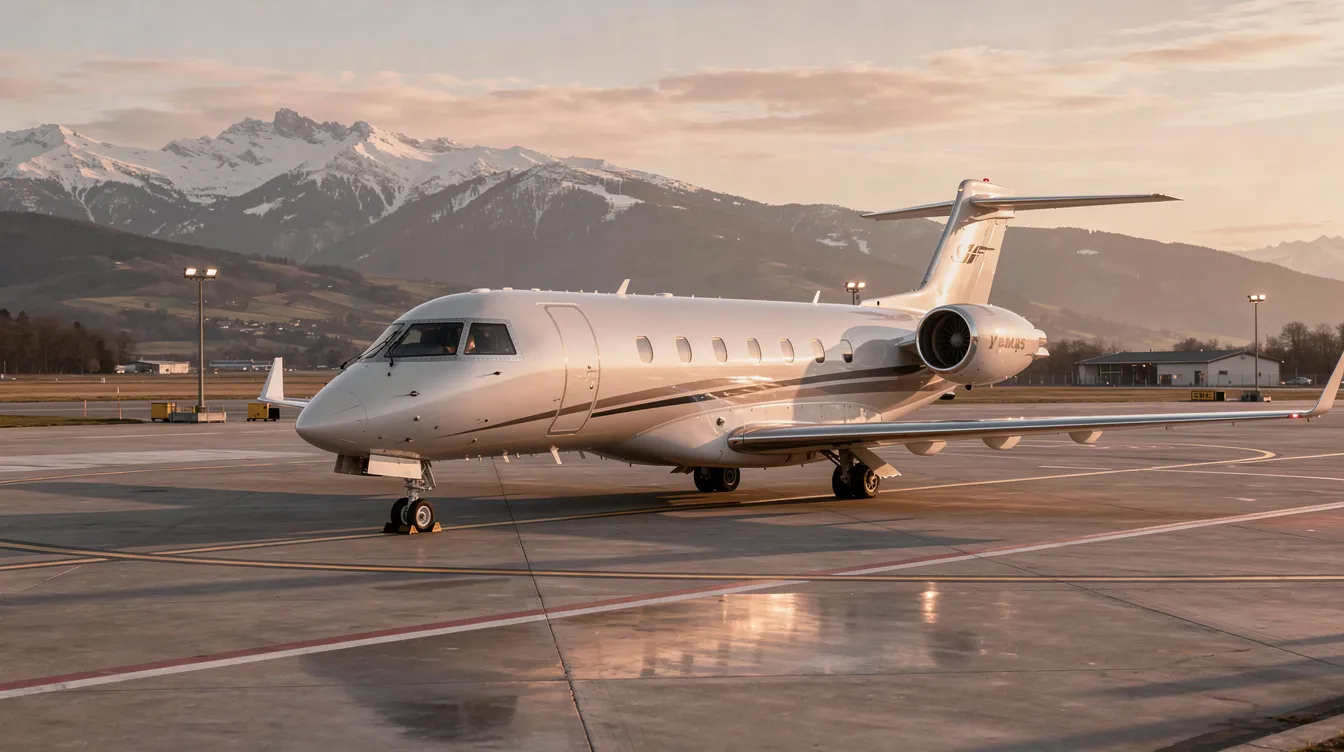
Honda Aircraft Company, headquartered in Greensboro, NC, is a subsidiary of Honda Motor Co. that brought automotive engineering rigor into private aviation. The HondaJet HA-420 - the company's flagship - entered service in December 2015 and has since evolved through several distinct variants:
HA-420 "Classic" (2015–2017): The original Honda Jet aircraft featuring a composite fuselage, twin GE Honda HF120 engines, and Honda's signature over-the-wing engine mount design. This innovative light jet introduced a new benchmark in the very light jet segment.
HondaJet APMG: The advanced performance modification group package upgrade represents improved takeoff distance, payload capacity, and improved avionics for earlier airframes.
HondaJet Elite and Elite S: Increased range to ~1,437 NM, refined cabin acoustics, and better fuel efficiency through optimized fuel systems. A well-equipped HondaJet Elite broadened the aircraft's appeal to small corporate flight departments.
HondaJet Elite II: Certified November 2022, the new HondaJet Elite II pushed maximum range to 1,547 nautical miles, maximum cruise speed to 422 KTAS, and added autothrottle plus Emergency Autoland provisions via the Garmin G3000 suite.
The over-the-wing engine mount design reduces aerodynamic interference drag, which lowers cabin noise, boosts cruise speed, increases usable cabin volume, and improves fuel burn - all factors that strengthen resale. The GE Honda HF120 engines deliver the thrust-to-weight ratio that positions HondaJet competitively against similar aircraft like the Phenom 100EV and Citation M2 in the light jet market.
Factors such as total flight hours and engine maintenance program enrollment - specifically EMC2 and P-series airframe coverage - are the recurring levers that shape every used transaction and deserve close attention throughout this analysis.
Current Used HondaJet Price Ranges by Model (2025–2026)
Market conditions, such as supply and demand, influence the price of pre-owned jets meaningfully. Interest rates, Jet-A pricing, and regional inventory all create variation. That said, here are the concrete bands buyers can expect when searching for a HondaJet price used listing in 2025–2026:
Variant | Typical Year Range | Hours Band | Asking Price Range |
|---|
HA-420 Classic | 2015–2017 | 1,500–2,000+ | $2.3M–$3.0M |
HA-420 with APMG | 2017–2018 | 1,000–1,500 | $2.7M–$3.4M |
Early Elite | 2018–2020 | 1,000–1,500 | $3.3M–$4.2M |
Elite S | 2020–2022 | 500–1,500 | $4.0M–$5.2M |
Early Elite II | 2023–2025 | Very low | $5.5M–$6.2M+ |
Current listings show HondaJet prices between $2,525,000 and $4,650,000 for the bulk of available inventory. Average pricing for used HondaJets across all variants is approximately $3,723,333. Later HondaJet Elite aircraft and Elite II examples command the top of the range, while used HondaJet prices range from $2.3M to $4.8M for Classic through Elite S. HondaJet Elite models usually command between $3.0 million and $4.5 million depending on hours and programs.
For a concrete example: a 2022 HondaJet Elite S with ~1,330 hours, enrolled in P3 airframe and EMC2 engine programs, was recently listed at $3,995,000. A higher-time 2020 Elite S (~3,189 hours) was listed around $2,950,000 - illustrating how airframe and engine hours directly impact the remaining operational life of a jet and thus its asking price.
Units marketed as "price on request" - typically trophy-condition, one-owner aircraft with very low time and active warranty - generally command premiums within or above these bands. In actual transactions, buyers report final sales often 5–15% below asking price depending on inspection findings and negotiation leverage.
Key Specs That Influence Used HondaJet Value
Many buyers fixate on the headline HondaJet price, but serious valuation hinges on how performance specs align with real-world missions. Broader private jet price lists, category benchmarks, and guides to the best small private aircraft for every need also help put HondaJet values in context. Here are the technical parameters that push prices up or down:
Range: From roughly 1,200 NM for early HA-420 variants to 1,547 NM for the Elite II (the HondaJet Elite II compares favorably to anything in the light business jet category on nonstop city pairs like Chicago–Miami).
Cruise speed: About 420–422 KTAS at typical cruise settings, making this among the quicker very light jets available.
Fuel burn: Around 90–110 gallons per hour in cruise. The HondaJet consumes approximately 96 gallons of fuel per hour as a planning baseline for Elite and Elite II models, yielding strong fuel relative efficiency against peers.
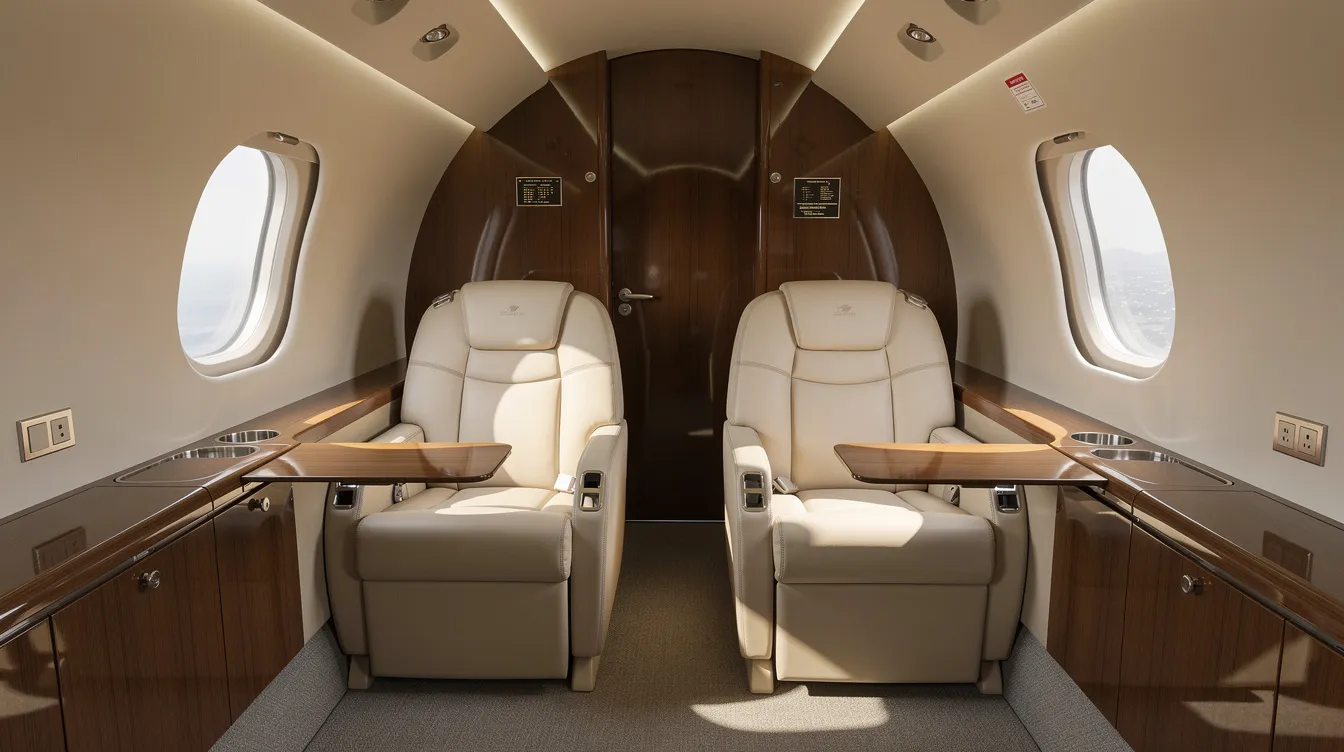
Cabin: The HondaJet's cabin volume is 324 cubic feet, accommodating 4–5 passengers in club layout plus a belted lavatory. Cabin management systems and Wi-Fi installations affect desirability on the secondary market.
Avionics and certification: Single-pilot operations are enabled through Garmin G3000-based avionics. Updated avionics and connectivity options can increase the resale value of used jets by $200,000–$500,000.
Runway performance: Improved takeoff distance and landing distance figures in later variants broaden airport access - a meaningful advantage for executives wanting to reach secondary business hubs inaccessible via commercial aviation.
The resale value of jets can be enhanced by documented maintenance history and service records. Clean ownership history usually results in higher valuations for private jets. The increased fuel capacity and aerodynamic refinements in each successive variant justify price gaps of several hundred thousand dollars on the used market - and enrollment in OEM campaigns like the HondaJet APMG or Elite avionics revisions improves both daily fuel efficiency and eventual resale.
Annual Budget: Real Cost to Own and Operate a Used HondaJet
The acquisition cost is the first check you write - not the last. The annual budget to operate an owner aircraft covers all fixed and variable costs for a given utilization level, excluding (for now) depreciation and financing:
150–200 hours/year: Expect roughly $500,000–$800,000 in total annual costs, blending total fixed costs with usage-driven expenses.
300–400 hours/year: Budget $850,000–$1.2 million+. Total annual costs can exceed $900,000 for 350-400 hours, with corporate-style operations and a professional crew pushing toward the top. Ownership costs can exceed $900,000 for 350-400 hours per year even before accounting for depreciation.
Scenario 1: An owner-pilot flying 180 hours/year from a regional airport with a modest hangar (~$40K/year) and minimal overnights. Fixed annual budget items run $120K–$160K; variable costs add roughly $1,200–$1,600 per flight hour. Annual total: approximately $550K–$700K.
Scenario 2: A business owner with a two-pilot crew, flying 350 hours/year to major hubs. Crew salaries, premium hangars, and higher fees push the fixed annual budget above $200K. Combined with variable costs, annual outlay reaches $1 million or more.
Then there's depreciation. Depreciation can reach up to 50% in the first 5 years for a $3M–$6M Honda Jet aircraft, adding a hidden six-figure "non-cash" cost that many first-time buyers underestimate when weighing Honda Jet ownership against access models, especially when compared with cheaper single-pilot jet options for budget-conscious buyers. This same flight volume could instead be funded via BlackJet Jet Cards at similar or lower total cash outlay - with zero exposure to resale surprises, or even scaled up to private jet options for 50 passengers when group travel demands it.
Fixed Costs of Owning a Used HondaJet
Fixed costs accrue whether your HondaJet flies 400 hours or sits idle in the hangar, and they are the primary reason low-utilization owners struggle with economics. Annual fixed costs for ownership range from $200,000 to $900,000 depending on your crew model and location. Here is where that money goes:
Hangar or parking: Roughly $30,000–$80,000+ per year depending on region and FBO tier.
Insurance (hull and liability): Around $40,000–$120,000 annually, varying with hull value and pilot experience.
Crew salaries: An owner-piloted setup minimizes this line; employing a single pilot costs ~$120,000–$200,000/year. A full two-pilot private jet crew with benefits can exceed $250,000+ annually.
Training, charts, subscriptions: Recurrent simulator training, avionics databases, and connectivity run $20,000–$50,000/year.
Maintenance reserves and program fees: EMC2 engine reserves and P2/P3 airframe coverage carry minimums that function as fixed costs even at low utilization. Enrollment in engine maintenance programs can attract buyers by reducing future maintenance uncertainties - but those program fees compound your annual carry.
At fewer than 100 hours per year, these fixed costs push effective cost per hour well above what a premium light jet charter or small-plane charter rate would cost. BlackJet members avoid these commitments entirely, paying only for flight time actually used.

Variable Costs: Fuel Burn, Hourly Operating Cost & Mission Profile
Variable costs scale directly with flight hours and are dominated by fuel burn and usage-tied maintenance. Operating costs for a HondaJet range from $1,200 to $1,600 per flight hour in 2025–2026, sitting squarely within the broader private jet rental cost spectrum. Here's the breakdown:
Fuel: Fuel burn is about 96 gallons per hour at cruise settings. At $6–$9/gallon Jet-A, that translates to approximately $540–$990 per flight hour. The efficient engines of the HondaJet keep this fuel relative cost competitive within the light jet segment.
Maintenance: Routine inspections (150/300/1,200-hour intervals), engine reserves under the GE Honda HF120 programs, and unscheduled items all contribute to HondaJet operating costs on a per-hour basis.
Fees: Landing, handling, navigation, and crew per diem expenses vary by airport and mission profile. Short legs carry proportionally higher operating costs due to more climb and taxi time.
Sample mission: A New York–Chicago round-trip (~1,400 NM total) in a HondaJet Elite aircraft with four passengers. At ~100 gph cruise, plus landing fees and crew costs, the direct operating cost might total $20,000–$25,000. Compare that with a Jet Card quote for the same route or a structured 100-hour Jet Card cost model: a similar or moderately higher price, but with zero fixed-cost carryover and no maintenance history to manage. BlackJet pricing already incorporates these variable costs into a predictable hourly rate or trip quote - no fuel surcharges, no line-item surprises.
Ownership vs. Jet Card & Charter: When Buying a HondaJet Makes Sense
Owning a used HondaJet can be a powerful asset for specific operators, but it is rarely optimal for travelers flying fewer than 200–250 hours per year. Here is how utilization shapes the decision:
Consider a regional CEO flying monthly between Los Angeles, Seattle, and San Francisco. A 25-hour BlackJet Jet Card covers those routes with predictable costs and zero downtime risk. Conversely, a family splitting time between New York, Florida, and Europe sometimes needs larger aircraft that a single HondaJet cannot provide - underscoring the flexibility of an access model that lets you right-size from light jets to super-midsize or large-cabin aircraft, or even long-range private jets for nonstop international travel, per trip, with no owned flown limitations.
Safety, Certification & Sustainability: Operating a Used Jet vs. Flying with BlackJet
Honda jet aircraft carry FAA certification and feature advanced systems, but safety outcomes depend on how the private jet is operated, maintained, and crewed, whether it was purchased through traditional financing or via private jet purchases with cryptocurrency. For an owner, that means:
Ensuring pilots maintain currency through recurrent simulator training and type ratings
Overseeing adherence to maintenance programs, airworthiness directives, and service bulletins - a burden that falls squarely on the owner aircraft operator
Managing insurance, operational manuals, and Part 135 compliance if chartering the aircraft to offset costs
BlackJet's approach removes this complexity. Members access only certified operators with strong safety records, vetted pilots, and disciplined maintenance history, comparable to leading private jet companies for luxury travel. Every flight is carbon neutral - verified offsets and support for sustainable aviation fuel where available - something individual owners struggle to replicate at scale, though some are exploring private plane rideshare options as another way to reduce cost and environmental impact.
Imagine a client booking HondaJet-class aircraft via BlackJet for a three-city business roadshow: digital booking, 24/7 live support, safety oversight grounded in comprehensive analyses of private jet safety, and ground logistics handled end-to-end. Compare that with dispatching an owner-operated jet across the same itinerary - managing crew overnights, fuel stops, permits, and maintenance windows alone.

How BlackJet Delivers HondaJet‑Class Travel Without Ownership Burden
BlackJet offers Jet Card programs - including 25-hour and 50-hour tiers - plus on-demand charter across light jets, midsize, and large-cabin aircraft, all on a carbon-neutral basis, competing directly with alternatives like Flexjet Jet Card pricing and options. Here is how it works in practice:
Prepaid hours lock in predictable rates across specific cabin classes, eliminating the guesswork of hondajet pricing fluctuations and variable costs through programs like the BlackJet 25+ Hour Jet Card
Priority access and guaranteed availability windows cover common routes and peak travel periods
Digital booking with 24/7 live support handles mission planning, catering, and ground transport seamlessly
For anyone researching hondajet price used, this model eliminates the $3M–$6M capital commitment, the fixed annual budget for hangars and crew, and the depreciation drag of a base price that erodes year over year. You choose light jets for short regional trips and step up to super-mid or large-cabin jets for transcontinental flights - matching aircraft to mission without the constraints of owning a single airframe, while leveraging top Jet Card programs for frequent flyers or comparing against NetJets Jet Card costs when appropriate.
A high-net-worth client flying 80–120 hours per year on routes like New York–Miami, Dallas–Scottsdale, and London–Nice can combine predictable costs, safety oversight, and sustainability without managing a single maintenance reserve payment or worrying about average pricing on resale day, and can even explore unlimited private jet membership models if their flying intensifies.
Explore BlackJet's Jet Card programs to discover how HondaJet-class private aviation fits your travel pattern - without the burden of ownership.
FAQs About Used HondaJet Pricing, Costs & Access Alternatives
What is the typical price of a used HondaJet Elite or HA-420 in 2025–2026?
Early HA-420 Classics list around $2.3M–$3.0M. HondaJet Elite models range from $3.0M–$4.5M. Later HondaJet Elite aircraft and Elite S variants may reach $4.8M or higher. High performance piston aircraft cost a fraction of this, but lack the speed, range, and cabin of even the earliest HondaJet compared with more affordable private planes for budding aviators. Travelers focused purely on budget may also look at the cheapest private jet options; mid-market buyers may evaluate 10 million dollar private jet options, but Hondajet elite ii compare at $4.5M–$6.0M+ for immediate delivery of low-time examples.
How much should I budget annually to operate a used HondaJet at 200 hours per year?
Expect a fixed annual budget plus variable costs totaling roughly $550,000–$800,000, covering hangar, insurance, crew, fuel, and maintenance reserves; international buyers should also consider regional factors similar to those affecting private jet prices in rupees.
What is the cruise speed and fuel burn of a HondaJet Elite II?
The HondaJet Elite II reaches a maximum cruise speed of 422 knots with fuel burn of approximately 96 gph at typical cruise settings - competitive against any comparable aircraft in the very light jets or light business jet category and even some of the best private jets in the world.
Is a Jet Card more cost-effective than buying if I fly 100–150 hours a year?
In nearly every scenario, yes. At that utilization level, ownership fixed costs dominate, and a Jet Card program like BlackJet's, private jet leasing options, or other budget-friendly private aircraft options deliver equivalent access without capital outlay, depreciation, or the complexity of managing hangars and crew.
Can I still enjoy HondaJet-level comfort without owning?
Absolutely. BlackJet programs include HondaJet-class and comparable light jets in the fleet - plus the flexibility to book larger aircraft when your mission demands it. You retain the cabin quality, speed, and privacy without the ownership burden.
How quickly do HondaJet aircraft depreciate?
Steeper depreciation occurs in the first 5–7 years. Well-maintained examples with strong program enrollment and clean records hold value better, but buyers should factor depreciation into any honest comparison against access models, much as they would when evaluating fractional jet ownership depreciation.
Conclusion: Smart Choices in HondaJet Ownership and Access
The used HondaJet market offers compelling options for discerning travelers seeking a blend of efficiency, performance, and cabin comfort in the very light jet segment. However, the initial acquisition price—ranging from $2.3 million for early HA-420 models to over $6 million for Elite II variants—is only the start of the financial commitment. Ownership entails high fixed and variable costs, including maintenance, crew, insurance, and depreciation, which can push annual expenses well above $500,000 depending on usage.
For travelers flying fewer than 200 hours annually, flexible alternatives like BlackJet’s Jet Card programs and on-demand charter provide HondaJet-class access without the complexities and financial risks of ownership. These models offer predictable costs, rigorous safety standards, and the ability to select aircraft tailored to each mission’s needs, all while supporting sustainability goals through carbon-neutral operations.
Ultimately, choosing between ownership and access hinges on your flight frequency, mission flexibility, and capital allocation preferences. BlackJet empowers executives and high-net-worth individuals to enjoy the prestige and convenience of HondaJet-level private aviation without the burdens of managing an aircraft, making it a strategic and sophisticated choice for modern private travel.
Discover how BlackJet can elevate your travel experience with seamless, safe, and sustainable HondaJet-class access—without ownership constraints.


 Sign up with google
 Sign up with Apple