This guide is for business owners, executives, and frequent private flyers evaluating the true costs of fractional jet ownership versus alternatives. Understanding the full cost structure is essential for making informed private aviation decisions.
Fractional jet ownership allows multiple individuals or companies to share ownership of a single aircraft, with each owner allocated a certain number of flight hours per year based on their ownership share. This arrangement is typically structured as a lease, providing a more accessible entry point into private aviation compared to full ownership.
Fractional jet ownership offers consistent aircraft access, guaranteed availability, and a level of service continuity that appeals to the most discerning private travellers. However, the true all-in cost of fractional ownership often exceeds the headline hourly rate by 40–60% once acquisition, depreciation, monthly management fees, and exit economics are factored in.
This guide explains what that experience actually costs and highlights the key factors influencing fractional jet ownership cost, such as acquisition, depreciation, fees, and exit economics. Sophisticated buyers increasingly compare fractional ownership against premium access alternatives such as BlackJet jet cards, which provide BlackJet Certified aircraft access, non-expiring hours, carbon-neutral flights, and no capital at risk.
Fractional Jet Ownership Cost Components at a Glance
Fractional ownership typically includes three primary cost components, plus additional fees and taxes:
Acquisition cost: $300,000–$3 million+ for a 1/16th share (typically representing 50 hours per year), depending on aircraft type and share size.
Monthly management fees: $4,000–$28,000+ per month, covering fixed expenses like pilots, maintenance, insurance, and hangarage.
Occupied hourly fees: $2,000–$10,000+ per hour, covering variable costs such as fuel and maintenance.
Additional costs: Fuel surcharges, Federal Excise Tax (FET) of 7.5% applied to U.S. flight charges, peak day surcharges, and exit fees.
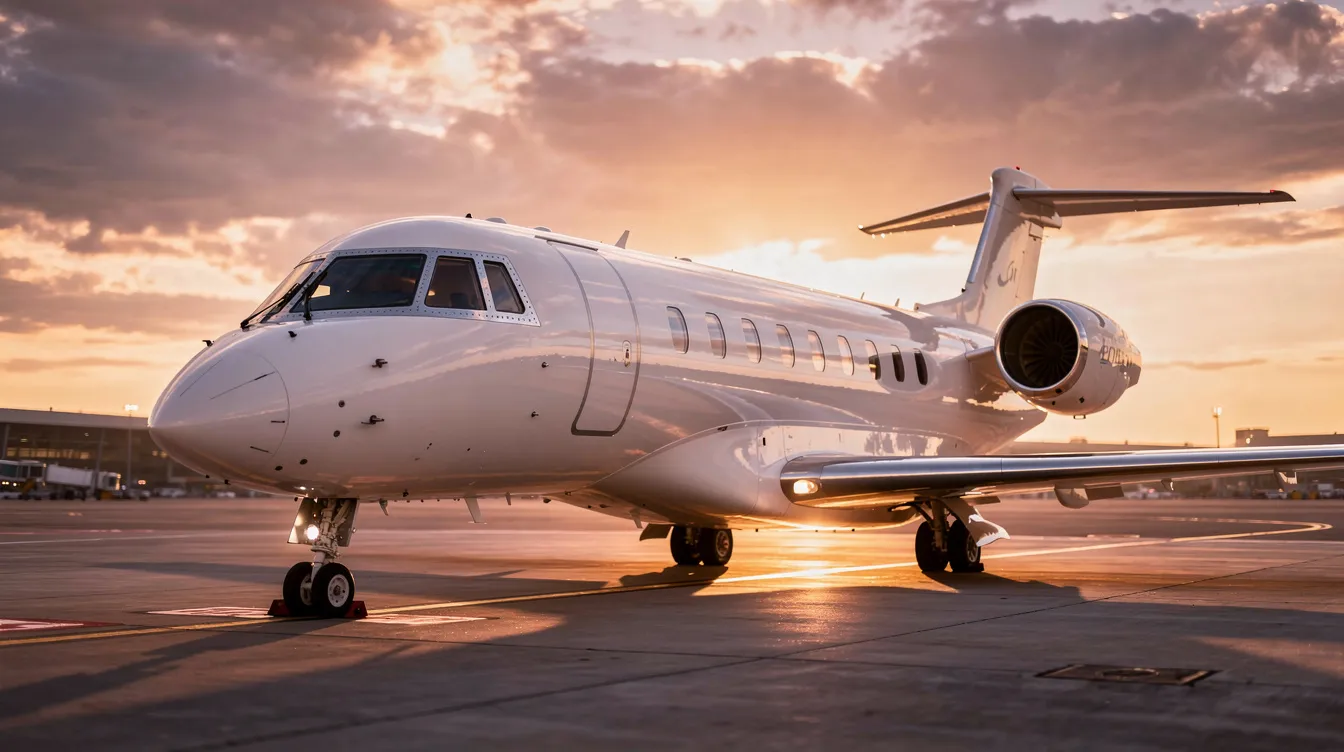
What Fractional Jet Ownership Costs — The Full Picture
Fractional jet ownership is an aircraft ownership model structured as a fractional ownership program, where multiple parties share the purchase and ongoing expenses of a private jet under the management of a third-party company. This arrangement makes private aviation more accessible compared to full aircraft ownership, as each fractional owner holds a stake—typically structured as 1/16, 1/8, 1/4, or 1/2 shares—that entitles them to a proportional allocation of annual flight hours.
Fractional jet ownership allows multiple individuals or companies to share ownership of a single aircraft, with each owner allocated a certain number of flight hours per year based on their ownership share. Typically, fractional ownership agreements are structured as leases, allowing owners to hold a share rather than a direct stake in the aircraft, which can provide flexibility in choosing different aircraft types.
Key Cost Components
In a fractional ownership program, multiple owners share a single aircraft, collectively covering operational costs through lease arrangements managed by the third-party provider. Fractional ownership typically includes:
Acquisition cost (your capital outlay for the share)
Monthly management fees (fixed overhead regardless of flight activity)
Occupied hourly fees (variable costs charged when flying)
Additional costs (fuel surcharges, Federal Excise Tax of 7.5% applied to U.S. flight charges, peak day surcharges, and exit fees when the contract concludes)
Additional Fees and Taxes
The total costs of fractional jet ownership can vary depending on factors such as aircraft type, usage, and the specific terms of the agreement. Most proposals highlight the occupied hourly rate and gloss over depreciation, management fee escalation, and resale constraints. In practice, acquisition and depreciation often represent 40–60% of the total five-to-ten-year cost, with management and hourly fees comprising the remainder.
While fractional ownership can provide significant cost savings compared to whole ownership, high costs remain a key drawback due to the substantial upfront investment and ongoing fees. Guaranteed availability of jets in fractional programs can be as short as 4–10 hours’ notice—a genuine benefit worth factoring into your evaluation.
Depreciation and resale value can significantly impact the total cost of ownership in a fractional ownership program, making it important to consider these financial factors when evaluating your options, ideally within a broader view of private jet pricing and access models. By contrast, BlackJet’s capital-light ownership model eliminates aircraft depreciation exposure, monthly management fees, and long-term lockups. The headline hourly rate is only one component of true fractional jet ownership cost.
Acquisition Cost: How Much Is a Fractional Share?
Fractional shares represent blocks of annual flight hours, typically ranging from 50 hours (1/16 share) to 400 hours (1/2 share). If your travel needs exceed your allocated hours, most providers allow you to purchase additional flight hours, though these come at an extra cost. The initial investment for fractional jet ownership can range from $100,000 to over $1 million, depending on the aircraft type and share size. Acquisition cost for fractional ownership can range from roughly $300,000 for a light jet to over $3 million for large cabin jets for a 1/16th share.
Pricing varies significantly by aircraft type, age, and provider, and many prospective owners also compare these structures to private jet leasing arrangements when evaluating capital commitment and flexibility. Typically, fractional ownership agreements are structured as leases, allowing owners to hold a share rather than a direct stake in the aircraft, which can provide flexibility in choosing different aircraft types. Providers like NetJets and Flexjet typically structure contracts over 5-year terms, after which the share is resold, and owners receive a residual value subject to market conditions.
Unlike a jet car,d where no capital is at risk, acquisition capital is illiquid and exposed to aviation market cycles—a reality demonstrated when fractional shares were resold at 30–50% below acquisition during the 2008 financial crisis. For some buyers, the same budget that could fund a fractional share might alternatively support outright ownership of a $5 million pre-owned jet, making it even more important to understand total lifecycle costs.
1/16 Share — The Entry Point
A 1/16 fractional share provides approximately 50 flight hours per year, suitable for regional travel and business owners or families flying 4–6 round trips annually. A 1/16 share of a midsize jet typically costs around $350,000 and provides approximately 50 flight hours per year, with total annual costs potentially reaching around $460,000 in the first year.
Realistic 2026 cost guidance places acquisition around $300,000–$450,000 for a light jet and $450,000–$650,000 for a midsize jet. Monthly management fees often range from $6,000–$9,000 per month, plus occupied hourly rates of roughly $4,500–$6,500 per hour for light or midsize aircraft, excluding fuel surcharges.
This share size suits travelers who value the psychological assurance of ownership and guaranteed availability but whose utilization is modest. Smaller shareowners may have less scheduling priority on peak days and face more surcharge exposure. At approximately 50 hours per year, buyers should compare these economics to a BlackJet 50-hour jet card with BlackJet Certified aircraft and no asset depreciation or exit friction.
1/8 Share
A 1/8 share typically provides about 100 flight hours per year and is often marketed as the “sweet spot” for frequent private flyers. Realistic 2026 acquisition ranges run approximately $600,000–$900,000 for a light or midsize jet, $1.0M–$1.6M for a super midsize aircraft, and $1.8M–$2.4M for a large cabin jet with global range.
Monthly management fees commonly fall in the $9,000–$14,000 per month range, with occupied hourly rates between $5,500–$9,500 depending on aircraft category. This share size suits entrepreneurs and executives flying domestically and to key international hubs 8–12 times annually, prioritizing guaranteed access and consistent cabin experience, but it also embeds substantial crew and pilot costs that mirror the economics outlined in private jet pilot cost breakdowns.
Many buyers searching “how much is a 1/8 jet share” underestimate depreciation and exit costs. Over a 5-year term, depreciation can erode several hundred thousand dollars of capital. For 75–125 hours of annual flying privately, buyers should also model a 100-hour jet card cost scenario alongside fractional projections.

1/4 and 1/2 Shares
A 1/4 share provides around 200 flight hours per year, while a 1/2 share delivers approximately 400 flight hours, approaching dedicated aircraft usage without full ownership responsibilities. Quarter-share acquisition ranges can run $1.2M–$1.8M for midsize jets and $2.0M–$3.5M for large cabin aircraft. Half-shares can reach $4M–$7M+ on current 2026 pricing.
Monthly management fees may range from $16,000–$25,000+ for 1/4 shares and $30,000–$45,000+ for 1/2 shares. Key benefits include higher scheduling priority, increased ability to secure multiple aircraft on peak days, and strong cabin consistency for complex itineraries.
At these utilization levels, buyers must compare fractional versus whole jet ownership versus large-scale jet card usage, considering hangar fees, crew salaries, and aircraft management in full ownership models, particularly if they routinely need capacity similar to a 20-passenger private jet or the capabilities of a $20 million long-range private jet. Financial exposure becomes material—residual value swings on large cabin aircraft can exceed $1M over a market cycle.
Fractional Share Sizes and Typical Costs (2026 Overview)
Share Size | Acquisition Cost | Annual Hours | Monthly Mgmt Fee | Occupied Hourly Rate | Typical Traveler Profile |
|---|
1/16 | $300k–$650k | 50 | $6k–$9k | $4,500–$6,500 | Regional families, business owners |
1/8 | $600k–$1.6M | 100 | $9k–$14k | $5,500–$9,500 | Frequent executives |
1/4 | $1.2M–$3.5M | 200 | $16k–$25k | $6,000–$10,000 | Global business travelers |
1/2 | $4M–$7M+ | 400 | $30k–$45k | $7,000–$12,000 | High-volume corporations |
Illustrative 2026 fractional jet ownership pricing ranges (not an offer). Large cabin aircraft typically sit at the high end of each range.
Note how quickly total capital at risk scales—from approximately $300,000 at 1/16 to $4M+ at 1/2. Equivalent annual hours via a BlackJet jet card can be secured with no acquisition cost, no aircraft depreciation exposure, and no exit friction.
Monthly Management Fees — What They Cover
Monthly management fees are due regardless of how much you fly and should be treated as a fixed carrying cost of jet ownership. Monthly management fees for fractional ownership cover fixed expenses like pilots, maintenance, insurance, and hangarage, ranging from $4,000 to over $28,000 per month based on aircraft size, and they sit alongside potential planning tools such as jet card tax deduction strategies for buyers using aviation primarily for business.
Fractional ownership programs are usually managed by specialized companies that handle the aircraft’s ongoing maintenance, crew staffing, and scheduling, ensuring that owners have access to the aircraft when needed. Cost buckets typically include:
Pilot salaries and benefits
Recurrent training
Hangar and parking fees
Insurance
Dispatch and 24/7 operations center
Maintenance oversight
Regulatory compliance
Fleet scheduling technology
Fractional jet owners bear responsibility for ongoing maintenance and operational expenses, which encompass costs such as fuel, insurance, pilot salaries, and aircraft storage fees. Providers often include annual escalation clauses—typically CPI plus 1–3%—meaning ongoing fees can rise 3–6% per year over a 5-year term.
BlackJet’s structure eliminates this: no monthly management fee. Costs are tied directly to actual flight hours, with BlackJet Certified aircraft, carbon-neutral flights, and 24/7 client management included in the hourly rate. Monthly management fees are effectively the “subscription cost” of being in a fractional program, separate from the per-hour flying cost.
Occupied Hourly Rates by Aircraft Category
The occupied hourly fee quoted in fractional jet ownership proposals generally excludes taxes and may exclude fuel surcharges, catering, and certain international fees. Occupied hourly rates cover variable costs such as fuel and maintenance, usually ranging from $2,000 to over $10,000 per hour, depending on the aircraft type.
Realistic 2026 ranges for fractional hourly rates: light jets around $4,000–$6,000 per occupied flight hour; midsize jets around $5,000–$7,500; super midsize jets around $7,000–$9,500; large cabin aircraft often $10,000–$14,000+ per hour. The Federal Excise Tax of 7.5% applies to U.S. flight charges on top of these rates, and they should be weighed against private jet charter pricing dynamics when assessing relative value.
Factors driving these rates include aircraft type and age, fuel costs volatility, labor costs, route structure, and whether the provider’s fleet is standardized or mixed. Larger cabin aircraft and long-haul profiles incur higher crew, fuel costs, and ongoing maintenance, reflected in both hourly rates and fuel surcharges.
BlackJet’s jet card pricing provides a transparent, pay-as-you-go alternative with guaranteed access to BlackJet Certified aircraft across categories. When comparing costs, consider average mission length and annual flight hours—fixed fees and minimum charges can materially change effective jet card cost per hour.
All-In Cost vs Pay-As-You-Go — A Realistic Comparison
Comparing Ownership Models
Sophisticated private aviation decisions concern capital allocation, liquidity, and experience quality—not merely minimizing the hourly rate. A wealth manager or family office would compare models across total five-year cash outlay, capital at risk, residual value uncertainty, and contractual lockups.
Fractional ownership economics involve large upfront investment, ongoing monthly fees, occupied hourly rates, fuel surcharges, and eventual resale proceeds that may fall below expectations. Compared to chartering a private jet, fractional ownership offers a more consistent and personalized experience, as owners enjoy guaranteed flight hours and access to the same aircraft when needed, unlike charter services,s which may have availability constraints.
Charter flights allow users to rent a private jet as needed without long-term commitment, making them ideal for occasional flyers who may not require frequent access to private aviation. For many buyers, understanding the broader meaning and structure of charter flights clarifies when charter is preferable to fractional or jet card models. However, this flexibility comes with variable pricing and potential availability gaps.
Full ownership of the entire aircraft provides complete control over usage, scheduling, and customization, but comes with significantly higher costs and responsibilities, including maintenance, crew management, and depreciation risk. This option is best suited for those who require maximum flexibility and are prepared for the financial and operational commitment.
Jet cards provide a pre-purchased set number of flight hours with fixed rates and guaranteed availability, offering more flexibility than fractional ownership, which is limited to a specific aircraft type. For buyers focused primarily on budget, exploring the cheapest private jet options alongside an analysis of jet card cost per hour and a broader private jet price list overview can clarify which model best aligns with expected usage. Premium jet card structures like BlackJet eliminate depreciation risk, monthly management fees, and exit penalties while providing non-expiring hours.
Who Should Consider Each Model?
Fractional jet ownership is often more cost-effective for those flying between 50 and 200 hours annually. For individuals flying fewer than 50 hours per year, 25-hour jet card programs or on-demand charter are generally more cost-effective alternatives. For clients flying roughly 25–150 hours annually, a capital-light jet card often matches fractional ownership in experience while reducing complexity and long-term financial exposure.

The Hidden Costs of Fractional Ownership (What the Proposal Doesn’t Show)
Fractional ownership contracts are detailed documents; most buyers engage counsel and aviation advisors, but may still underestimate secondary costs. The following subsections address four critical areas:
These are not “gotchas” but structural realities of aircraft ownership that should factor into any 5–10 year projection. Financial ranges are illustrative 2026 market norms; specific NetJets pricing, Flexjet pricing, or other provider contracts will vary, and a survey of top private jet companies can provide additional context on how different operators structure these terms.
BlackJet’s jet card structure avoids these categories entirely: no depreciation risk, no management fee escalation, no peak day ownership surcharges, and no exit penalties on unused non-expiring hours. Consider sharing this framework with your CFO, family office, or advisor as part of due diligence.
Depreciation and Residual Value Risk
Fractional jet shares typically depreciate over the contract term, with many programs assuming 40–60% cumulative fractional jet ownership depreciation over 5–10 years. A $1.2M acquisition in a midsize jet might see a programmed residual value of $600k–$750k after 5 years, but actual resale proceeds could be lower if the used aircraft market softens.
Fractional shares are typically sold back to the provider at fair market value minus commissions. Contracts for fractional ownership usually last for 3 to 5 years, with provisions for selling the share back to the company at market value at the end of the term. Residual value clauses often favor operator assumptions.
BlackJet’s capital-light model means clients commit to flight time, not an underlying airframe—no exposure to aircraft depreciation or residual value risk that sometimes accompanies the tax benefits of fractional jet ownership or the specialized tax planning around jet cards. Treat expected capital loss from depreciation as part of your effective per-hour cost when comparing options.
Management Fee Escalation Over Contract Terms
Most fractional contracts include escalation clauses allowing annual increases in monthly fees, often in the range of 3–6% per year. A $10,000 monthly management fee growing at 5% annually becomes roughly $12,800+ per month by year 5, adding more than $150,000 of additional cash outlay over the term.
Behind these increases lie pilot wage inflation, insurance premiums, hangar fees, and regulatory expenses. While increases reflect real value, initial pro forma projections may understate total cash flow.
BlackJet charges no monthly management fee; clients see rate adjustments transparently in hourly pricing tied directly to actual use. Model base, mid, and high inflation scenarios with your financial advisor.
Peak Day Fees and Holiday Surcharges
Most fractional programs designate 30–60 “peak days” annually—major holidays, long weekends, key conference windows—with higher hourly rates, surcharges, or stricter booking rules. Peak day surcharges can add 10–25% to the occupied hourly rate, with some programs imposing minimum flight charges.
One of the primary disadvantages of fractional jet ownership is the shared availability of the aircraft, which can lead to potential scheduling conflicts among multiple owners, particularly on peak days. Some programs also charge additional fees for international operations, de-icing, or extended ground holds.
With BlackJet, peak day policies are defined upfront, and clients see exact hourly rates and any surcharges before confirming a trip. Request a complete list of peak days and associated costs from any fractional provider before signing.
Early Exit and Termination Penalties
Fractional agreements usually have defined term lengths—often 5 years—and lockup periods during which selling or surrendering a share triggers penalties. Early exit penalties can range from 5–20% ofthe currentt share value, or may involve mandatory internal resale at a discounted surrender price.
Even at term end, resale may include remarketing fees of 7–12% and can take months depending on demand. Some contracts limit open-market sales, tying liquidity to provider processes.
BlackJet involves no long-term commitment, no exit friction—clients can reduce usage freely, with non-expiring hours preserving flexibility. View early exit provisions as key due diligence, especially if your travel profile may change within 3–5 years.
The Cheapest Fractional Programme — and What You Trade Away
While some providers advertise lower entry pricing or promote the cheapest private aircraft options, total experience quality remains paramount for UHNW travelers, especially when contrasted with the most expensive, ultra-luxury private jet options. Lower-cost fractional programs may rely on older aircraft, more restrictive booking rules, less geographic reach, or reduced cabin support and service consistency.
While fractional ownership offers guaranteed flight hours and availability, it may limit the choice of aircraft available to owners, which can be a drawback if their travel needs change. Some programs have tighter peak day access limitations, higher interchange fees when switching aircraft types, or fewer backup aircraft for maintenance situations.
These tradeoffs are not inherently problematic but must be understood against business needs, family security, and reputational expectations. Benchmark not just pricing but safety ratings, operational redundancy, and provider track record.
BlackJet focuses on curated private jet travel experience—BlackJet Certified aircraft, 24/7 client management, carbon-neutral flights—supported by transparent jet card pricing structures without requiring buyers to assume ownership risk for potentially lower hourly rates, even when evaluating private jet options in the $10 million budget range.
What a BlackJet Jet Card Costs by Comparison — and What’s Included
A BlackJet jet card is designed for travelers who want the many benefits of private aviation—reliability, privacy, curated service—without the overhead of fractional ownership commitments, and our broader guide to jet card cost can help contextualize these tradeoffs.
A BlackJet 50-hour card provides BlackJet Certified aircraft access, 24/7 client management, carbon-neutral flights, and non-expiring hours for a total commitment in the mid-six-figure range, with no capital at risk, no monthly overhead, and no exit friction; travelers needing fewer hours can consider a BlackJet 25+ Hour Jet Card for similar structural benefits at a lower commitment, while also exploring potential jet card tax deductions with their advisors.
Structural contrasts to fractional ownership: no upfront cost tied to an airframe, no exposure to depreciation, no monthly fees, no long-term lockup, no early exit penalties. BlackJet hours do not expire, allowing clients to flex with life events or shifting business strategies.
Service elements include guaranteed availability within defined notice windows, curated fleet across multiple cabin sizes, real-time flight support, and carbon-neutral operations, aligning closely with what many regard as the best jet card options for frequent flyers, including those comparing them to owning a $15 million-class private jet. BlackJet is particularly compelling for those flying 25–150 hours annually who value a premium experience and flexibility without the obligations of asset ownership.
Frequently Asked Questions
What does fractional jet ownership cost?
Fractional jet ownership typically involves a six- to seven-figure upfront cost (often $300,000–$3,000,000+), plus monthly management fees and per-hour occupied rates, bringing effective costs to $5,000–$12,000+ per flight hour depending on aircraft type. Over a 5-year term, the total cost can reach several million dollars once depreciation, ongoing expenses, and hourly charges combine. Specific pricing varies by provider, aircraft category, and share size. Comparing this projection to a premium jet card like BlackJet’s provides a complete view of private aviation economics.
How much is a 1/8 fractional jet share?
As of 2026, a 1/8 share in a light or midsize jet often ranges from $600,000 to $900,000, while super midsize or large cabin aircraft can range from $1.0M to $2.4M or more. This acquisition cost is only part of the picture—owners also pay monthly management fees and occupancy hourly rates. Over 5 years, depreciation means owners may recover only a portion of the initial capital. Compare the effective per-hour cost to a BlackJet jet card with no acquisition cost or residual value risk.
What are the monthly management fees on fractional jets?
Monthly management fees typically range from $6,000 to $25,000+ per month, depending on aircraft type and share size, and whether or not you fly frequently. These fees cover crew, training, hangar, insurance, and operations, often increasing annually under contractual escalation. BlackJet does not charge monthly management fees—clients pay only for actual flight time.
What are the hidden costs of fractional ownership?
Hidden costs include aircraft depreciation (40–60% over 5–10 years), management fee escalation, peak day surcharges of 10–25%, repositioning costs, and early exit penalties of 5–20%. Over a long horizon, these can add hundreds of thousands to the total cost. BlackJet’s jet card structure avoids depreciation, lockups, and exit penalties, simplifying planning.
Is NetJets worth the cost?
NetJets and similar leading fractional providers deliver high safety standards, fleet depth, and guaranteed availability that many clients find valuable, and understanding NetJets jet card cost is an important part of that evaluation. Whether NetJets pricing is “worth it” depends on annual flight hours, desire for aircraft ownership, tolerance for capital lockup, and importance of consistent brand experience. Sophisticated buyers compare NetJets to jet card solutions, including Flexjet jet cards, other top private jet companies, and BlackJet, to determine preference for ownership versus flexible access.
How does BlackJet’s jet card compare to fractional ownership in terms of cost?
BlackJet’s jet card eliminates acquisition cost, aircraft depreciation, monthly management fees, and exit penalties, shifting to transparent hourly rates that align with broader jet card pricing benchmarks. For travelers flying 25–150 hours annually, the total 5-year outlay often remains lower and more flexible than comparable fractional shares. BlackJet is positioned as a premium alternative solution—with BlackJet Certified aircraft, 24/7 management, carbon-neutral flights, and non-expiring hours—not a discount option. The optimal choice depends on whether you value asset ownership or prefer capital-light access to private aviation.
Conclusion
Fractional jet ownership offers unparalleled benefits in terms of consistent aircraft access, guaranteed availability, and a premium private aviation experience tailored to frequent flyers and business travelers. However, understanding fractional jet ownership requires a comprehensive evaluation of not just the initial purchase price but also high ongoing costs such as monthly management fees, occupied hourly rates, depreciation risk, and exit penalties. These factors contribute to a complex economic structure that sophisticated buyers must carefully analyze.
For those seeking operational simplicity, flexibility, and freedom from the capital lockup and asset depreciation inherent in fractional ownership, premium alternatives like BlackJet’s jet card programs provide compelling value. BlackJet delivers a premium private aviation experience with no monthly fees, no long-term commitments, and non-expiring hours—all while offering BlackJet Certified aircraft, 24/7 client management, and carbon-neutral flights.
Ultimately, the decision between fractional ownership and premium access models hinges on your priorities: whether you value the benefits and obligations of ownership or prefer a capital-light, commitment-free private aviation lifestyle. Some clients will instead pursue outright ownership—potentially even purchasing a jet with cryptocurrency—or rely on group travel solutions such as chartering aircraft for 100 passengers when missions demand it. Others may focus on smaller aircraft choices, from chartering a small plane cost-effectively to analyzing 12-seater private jet costs, or even buying individual seats on private jets for maximum efficiency. Regional pricing nuances, such as private jet prices in rupees for Indian travelers, and localized markets like UK private jets for sale or private jet charters in Karachi, further shape the optimal strategy. This guide aims to equip you with the financial literacy and operational insights necessary to make an informed choice aligned with your travel needs and lifestyle aspirations.


 Sign up with google
 Sign up with Apple


