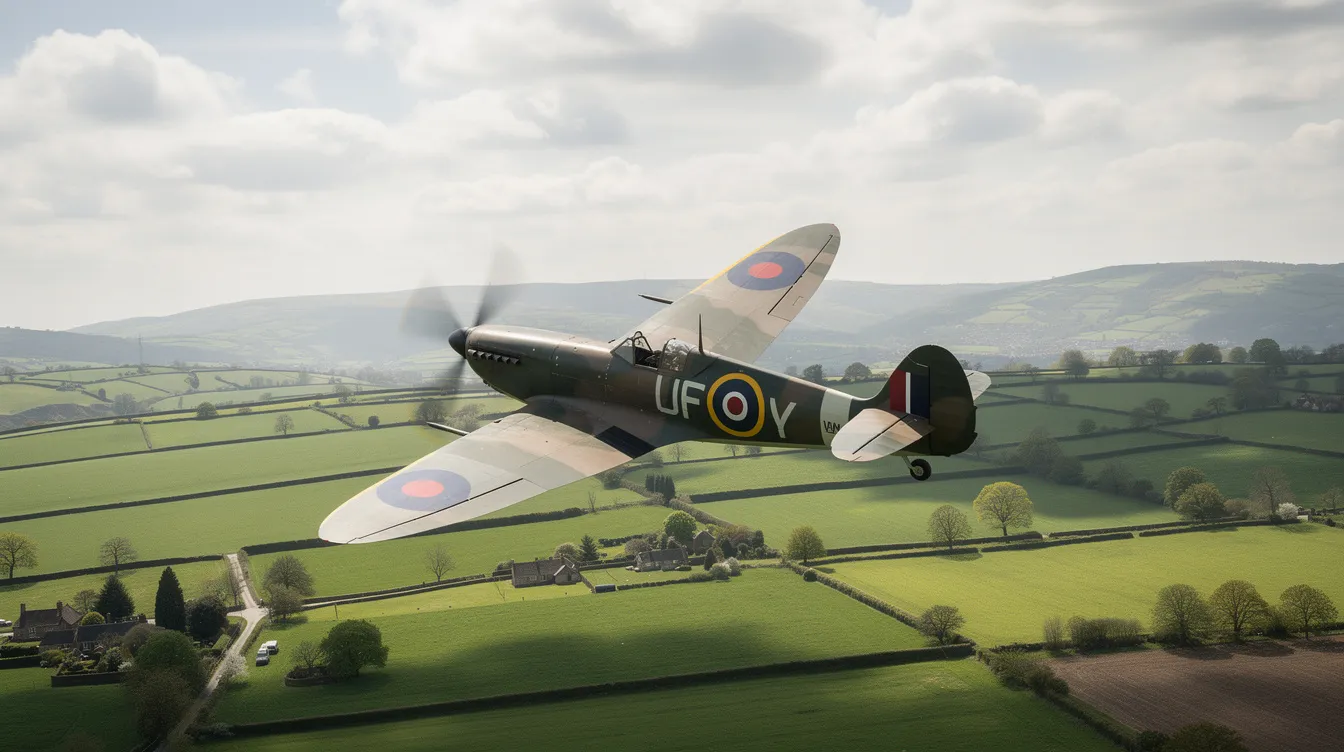
Few things stir the imagination quite like a fighter jet splitting the skies at supersonic speed. Military planes represent the absolute edge of human engineering-where aerodynamics, propulsion, materials science, and sheer ambition converge at Mach-level velocity. From the elliptical wings of the Supermarine Spitfire to the faceted stealth lines of the F-22 Raptor, the coolest military planes have shaped aviation history, redefined air combat, and inspired generations of pilots, engineers, and travelers.
Why Military Planes Capture the Imagination
Fighter aircraft have done more than win wars-they have reshaped global power projection and driven some of the most consequential technological leaps of the past century. During the Battle of Britain in 1940, the survival of a nation hung on the agility and courage of its fighter pilots flying Spitfires and Hurricanes against the Luftwaffe. Through the Cold War, jets like the MiG-21 and the F-4 Phantom embodied ideological and engineering competition between superpowers. In the Gulf War, stealth platforms like the F-117 proved that precision and invisibility could replace brute force in air combat.
Modern military aviation includes air-superiority specialists and tactical platforms designed for specific roles, from deep strike bombers to electronic warfare jets. Military aircraft capabilities include speed, range, maneuverability, and stealth attributes that also inform the aircraft civilians fly today. While BlackJet focuses exclusively on private jet access, many of the jet engines, avionics, and safety philosophies in today's business aviation descend directly from these military designs. Turbine powerplants, fly-by-wire controls, composite airframe construction, and advanced cockpit displays all made their debut in fighter programs before migrating to the civil fleet.
Rather than naming a single "best" or "coolest" plane, this article highlights standout aircraft across eras and roles-each one remarkable for different reasons.
The Cool Factor: What Makes a Military Plane "Cool"?
"Cool" in military aviation sits at the intersection of design, history, performance, and cultural influence. Here is what separates an ordinary aircraft from an icon:
Silhouette and aesthetics: The Spitfire's elliptical wings, the MiG-21's delta profile, the F-22's faceted stealth surfaces-instantly recognizable shapes that have entered pop culture.
Combat record: A fighter's kill ratio, endurance in active service, and versatility across missions all elevate its status among enthusiasts and historians.
Technological firsts: The first jet engines used in air combat (Me 262), the first stealth fighter, the first aircraft with sensor fusion-pioneering moments that redefined what was possible.
Pilot reputation and airshow presence: Stories of aces, daring operations, and jaw-dropping aerobatic displays keep certain planes alive in public memory decades after retirement.
Inspiration for private aviation: These same factors-clean lines, understated power, precision engineering-resonate with discerning travelers who choose sleek, high-performance business jets. The spirit of a fighter jet lives on every time a BlackJet member steps aboard a modern cabin.
Supermarine Spitfire – Elegant Savior of the Skies
The Supermarine Spitfire remains one of the coolest World War II fighter aircraft ever built and a timeless symbol of the Royal Air Force. Its prototype, K5054, completed its first flight on 5 March 1936. By 4 August 1938, the Spitfire had entered frontline RAF service with No. 19 Squadron.
During the Battle of Britain in the summer of 1940, the Spitfire's agility, rate of climb, and distinctive elliptical wing-engineered to minimize drag while maximizing lift-proved decisive against German bombers. Over the course of World War II, more than 20,334 Spitfires were produced across dozens of variants, from the Mk I (top speed approximately 353 mph) to the Mk XIV (reaching 448 mph). The RAF's last operational Spitfire sortie took place on 1 April 1954 during the Malayan Emergency in Southeast Asia, and around 60 Spitfires still fly at airshows today.
Variant | Top Speed | Armament | Range |
|---|
Mk I | ~353 mph | 8× .303 machine guns | ~395 mi |
Mk V | ~374 mph | 2× 20 mm cannon + 4× .303 | ~470 mi |
Mk XIV | ~448 mph | 2× 20 mm cannon + 2× .50 cal | ~460 mi |
Messerschmitt Me 262 – The World's First Operational Jet Fighter
The Messerschmitt Me 262 is one of the coolest planes in aviation history for a simple reason: it ushered jet engines into front-line air combat. Begun as Projekt 1065 around 1939, its piston-powered prototype flew in April 1941. Its first jet-powered flight followed in July 1942, and by 1944 it was operational with Luftwaffe units like Jagdgeschwader 7.
Powered by two Junkers Jumo 004 turbojets, the Me 262 reached a top speed of roughly 540 mph-about 150 km/h faster than any Allied piston fighter- a performance edge that was nearly impossible to counter in a traditional dogfight. Armed with four 30 mm MK-108 cannons, it was lethal against bombers. Around 1,443 Me 262s were manufactured, but only about 300 saw combat. Engine reliability issues, fuel scarcity, and relentless Allied bombing of production lines kept the rest grounded.
Tech Leap: The Me 262's Jumo 004 engines had a service life of roughly 25 hours before overhaul-fragile, thirsty, and unpredictable. Today's military and civil turbofans routinely operate thousands of hours between overhauls, with vastly better fuel efficiency. Vehicle performance can be improved with advanced engine systems for fuel efficiency, a principle that now benefits both fighter jets and private aircraft alike.
North American F-86 Sabre – Korean War Jet Icon
The F-86 Sabre was the first truly modern-looking Western jet fighter, its swept wings and sleek fuselage setting the template for an entire generation of fighter aircraft. Its first flight came on 1 October 1947, and in 1948, an F-86A set a world speed record of approximately 1,080 km/h (671 mph).
Over Korea, the Sabre clashed with the Soviet-built MiG-15 in the skies of "MiG Alley"-some of the most intense air combat of the jet age. Initial US Air Force claims credited Sabre pilots with roughly 792 MiG kills against 78 Sabre losses, a ratio near 10:1. Later research, including studies by RAND, reassessed that figure downward to approximately 2:1 overall, particularly against experienced Soviet pilots. Regardless, the Sabre cemented its reputation as a Korean War icon.
Over 6,000 F-86s were built in variants spanning day fighter, fighter-bomber, and interceptor roles.
It served in dozens of air forces throughout the Cold War and directly influenced later US Air Force jet design, from the F-100 Super Sabre onward.
McDonnell Douglas F-4 Phantom II – Brutal Power and Versatility
Loud, smoky, and unmistakably aggressive, the F-4 Phantom remains one of the most viscerally cool fighter jets of the supersonic era. Its first flight on 27 May 1958 launched a production run that would eventually exceed 5,195 aircraft-the most-produced American supersonic military jet in history.
The Phantom's primary role shifted constantly throughout its career: it served as an air superiority fighter, a ground attack platform, a bomber escort, and a reconnaissance aircraft for both the US Air Force and US Navy. It was exclusively flown in combat during the Vietnam War and set multiple high-speed and altitude records in the early 1960s, including a world speed record exceeding Mach 2.2. Allied air forces in the UK, Germany, Japan, Turkey, and Greece also operated the type extensively.
The F-4 Phantom left active US service in 2016 (its last USAF role was as QF-4 target drones), underlining a career that spanned nearly six decades. Visitors can still see one at the National Museum of the United States Air Force.
MiG-21 – Cold War Spearhead
The MiG-21 is arguably the most iconic jet of the Cold War-a stark, delta-winged fighter that screams speed from every angle. Its first flight came in 1955, and it entered Soviet Union service in 1959. With over 10,000 units produced, it became the world's most-produced supersonic jet fighter, serving in more than 50 air forces from India to Cuba.
In combat, the MiG-21 proved agile and deadly in dogfights across Southeast Asia, the Middle East, and Indo-Pakistani wars. Its simple, rugged design philosophy-easy to maintain, cheap to produce-stands in stark contrast to the complexity of today's F-22 or F-35. That tension between simplicity and sophistication also plays out in private aviation: some missions call for a nimble light jet, while others demand a large-cabin aircraft with intercontinental range. Travelers weighing these options can benefit from understanding the best small private aircraft for different missions. The right tool depends on the mission, not on cost alone.
General Dynamics F-16 Fighting Falcon – The People's Fighter Jet
Few fighter jets are as instantly recognizable-or as widely loved-as the F-16 Fighting Falcon, with its frameless bubble canopy, blended wing-body, and compact, agile airframe. Its official first flight came on 2 February 1974. By 2024, over 4,600 had been built, and more than 2,100 F-16s remain in active service across over 25 air forces, including the US Air Force, NATO allies, and nations across the Middle East and Asia.
The F-16 is the quintessential multirole fighter, capable of air superiority, ground attack, Suppression of Enemy Air Defenses (SEAD), and reconnaissance missions. One of its most dramatic combat vignettes came during Operation Opera in June 1981, when Israeli Air Force F-16s struck Iraq's Osirak nuclear reactor in a precision raid that reshaped strategic thinking about preemptive strikes.
The F-16's flexible mission profile-switching between roles with a change of weapons loadout-mirrors how BlackJet clients can flex between light jets and large-cabin aircraft via a Jet Card, selecting the right aircraft for each trip's unique "mission" and leveraging Jet Card membership pricing structures that keep costs predictable.
McDonnell Douglas / Boeing F-15 Eagle – Air Combat Perfection
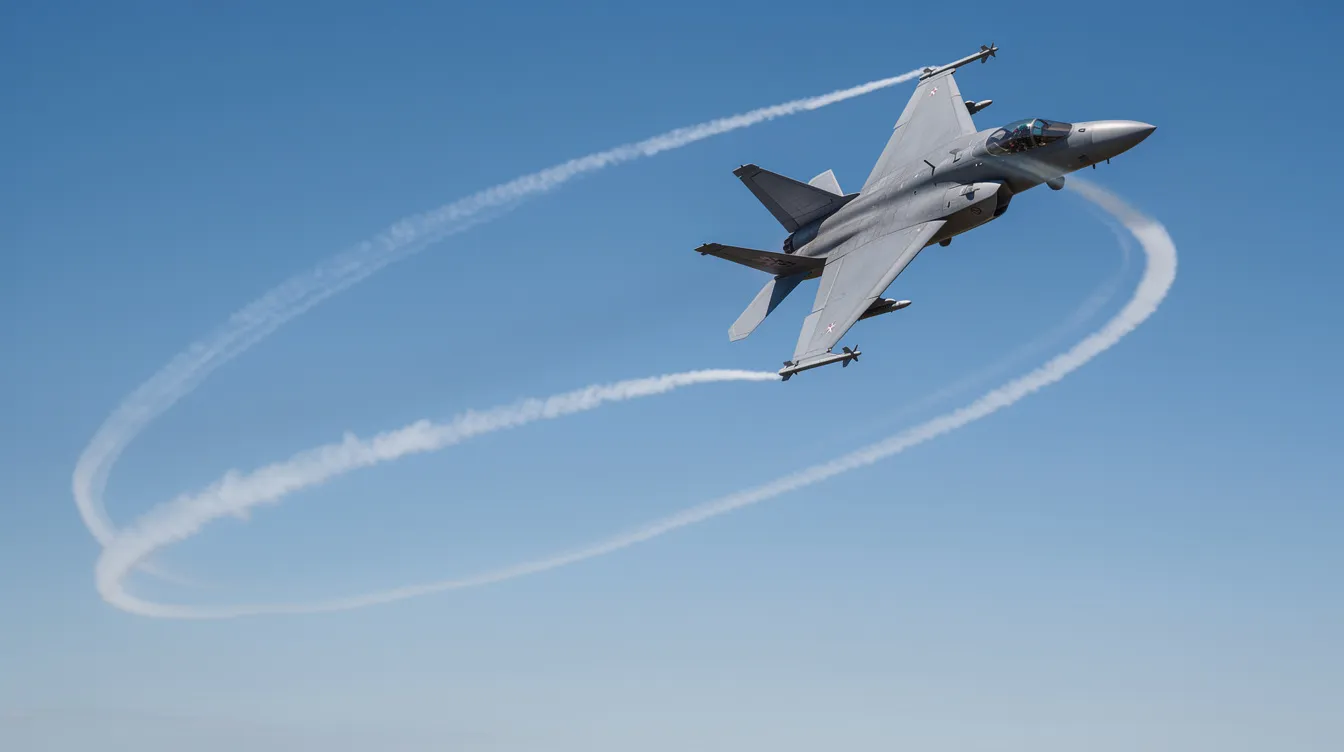
The F-15 Eagle is an air superiority legend with what may be the cleanest combat record in the history of military aviation. The Boeing-built fighter was designed with a singular mandate: do not lose a dogfight.
Top speed: The F-15 Eagle can reach a top speed of Mach 2.5 (approximately 1,650 mph / 2,655 km/h).
Combat record: The F-15 Eagle has a combat record of 100 wins and 0 losses in air-to-air engagements across multiple air forces, including Israeli and USAF operations. Its first aerial kill came in 1979 by the Israeli Air Force.
First flight: 27 July 1972.
Evolution: The platform has grown from a pure air superiority fighter into the F-15E Strike Eagle (a dual-role fighter-bomber) and the F-15EX Eagle II, a new aircraft variant entering USAF service in the 2020s.
For context, the only aircraft that claims a higher top speed among fighters is the MiG-25 Foxbat, which has a top speed of Mach 2.83-though the Foxbat was designed primarily as a high-speed interceptor and reconnaissance platform, not a dogfighter. The F-15 often takes second place in raw speed but remains unmatched in air combat versatility.
Lockheed Martin F-22 Raptor – Stealth Predator of the Skies
The F-22 Raptor is widely considered the most technologically advanced fighter jet in the world-a machine where stealth, supercruise, and extreme agility converge into a single, formidable airframe. Its first flight came on 7 September 1997. Only 195 were built, with roughly 187 operational at peak strength. Production ended in 2012.
The F-22 Raptor has a radar cross section comparable to a marble, making it virtually invisible to conventional radar systems. Stealth technology manages multiple signatures, including radar and infrared emissions, and the Raptor excels at suppressing all of them. The F-22 can supercruise at Mach 1.8 without afterburners-sustained supersonic flight that lets it cover ground faster while conserving fuel. Its top speed reaches Mach 2.25 with afterburners engaged.
The F-22 Raptor costs over $150 million per unit, making it the most expensive fighter jet on a per-airframe basis. US law bans its export, so it remains capable of being exclusively flown by the US Air Force-a level of exclusivity that few aircraft in history can match.
Its first air-to-air "kill" arrived in February 2023, when an F-22 shot down a Chinese surveillance balloon over the US East Coast using an AIM-9X missile. An oddly low-drama debut for such a formidable machine, but a reminder that air superiority can take unexpected forms.
Lockheed Martin F-35 Lightning II – The Most Expensive Fighter Jet Program Ever
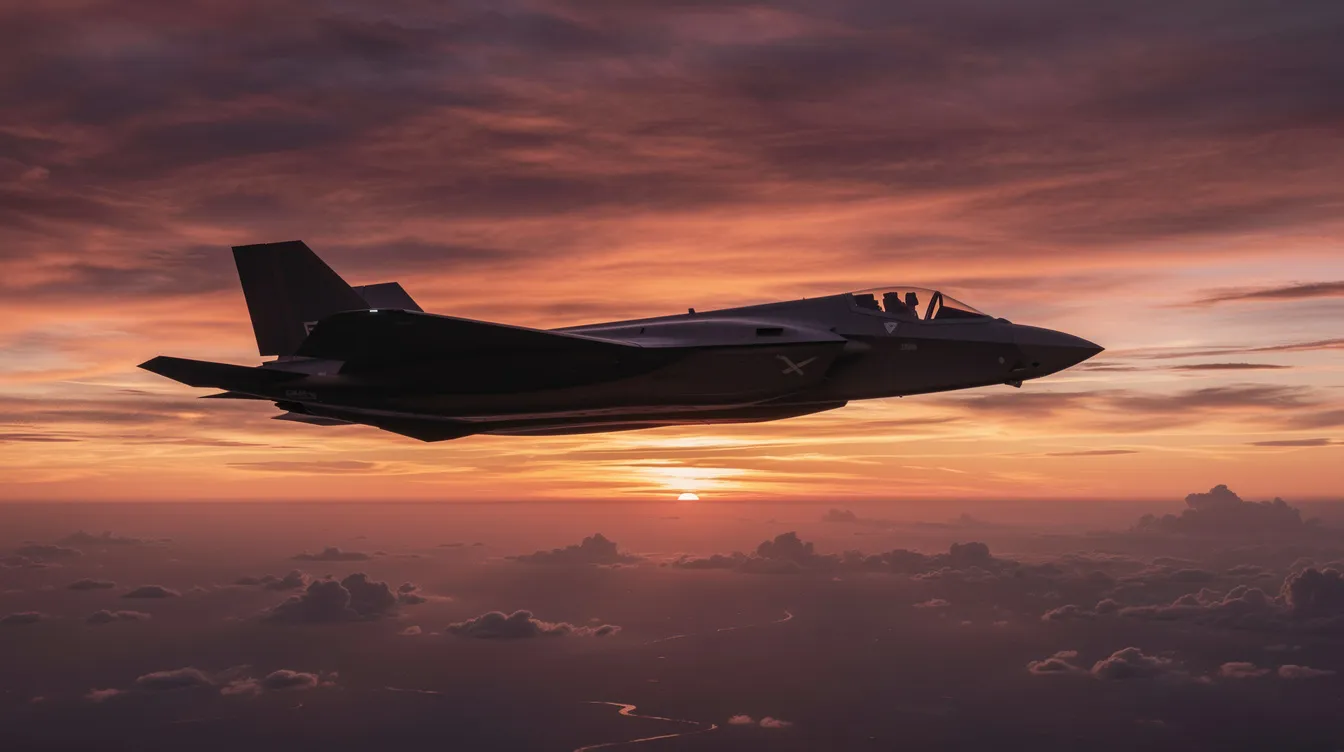
The F-35 Lightning II is both one of the coolest and the most controversial modern fighter jets. The F-35 Lightning II program costs approximately $1,196.4 billion over its lifetime, making it the most expensive military project ever undertaken by any nation.
The F-35 Lightning II is the most expensive fighter jet program in history. So why do air forces keep buying it? Because it offers 5th-generation stealth, advanced sensor fusion to synthesize data for pilots, and the ability to fly networked warfare across three distinct variants:
F-35A: Conventional takeoff and landing for the Air Force.
F-35B: Short takeoff/vertical landing (STOVL) for the Marines and allied navies.
F-35C: Carrier-based variant for the US Navy.
The F-35 Lightning II has a top speed of Mach 1.6 (1,060 mph). The F-35's radar cross section is equivalent to a golf ball. The F-35 Lightning II has over 880 units in active service worldwide, and the F-35 has over 880 units in active service across allied nations. The F-35 Lightning II can perform multiple roles simultaneously-air-to-air, ground attack, reconnaissance, and electronic warfare-on a single sortie.
Modern fighters increasingly use AESA radar systems and electronic warfare capabilities, and the F-35's AN/APG-81 radar is a prime example. Modern aircraft rely on sensor fusion to synthesize data for pilots, presenting a unified tactical picture rather than forcing the pilot to interpret separate sensor feeds. The U.S. Air Force anticipates a majority of its fleet will be fifth-generation aircraft by 2033, with the F-35 forming the backbone of that transition.
For BlackJet, the principle is similar: investing in modern, efficient technology and digital tools future-proofs the member experience, just as the F-35's open-architecture avionics are designed to evolve with new software updates for decades.
Sukhoi Su-27 & Su-35 – Russian Supermaneuverable Flankers
The Su-27 family represents Russia's answer to American air superiority fighters-visually stunning, extraordinarily agile, and capable of maneuvers that look impossible at airshows.
The Su-27's prototype completed its first flight on 20 May 1977. Designed explicitly to counter the F-15 Eagle, it features a large lifting body, enormous internal fuel capacity (giving it a range of approximately 3,530 km), and the ability to perform extreme maneuvers like the "Pugachev's Cobra." Around 680 basic Su-27s were built.
The Su-35 is a heavily modernized derivative with thrust-vectoring engines, an advanced Irbis-E passive electronically scanned array radar, and a larger weapons payload for long-range air combat. In the broader competition for air superiority, other aircraft have entered the arena: the Chengdu J-20 has 250 units in active service, while the Su-57 has approximately 30 units in service as of 2026-far fewer than Western 5th-generation fleets.
Feature | Su-27 | Su-35S |
|---|
First flight | 1977 | 2008 |
Top speed | Mach 2.35 | Mach 2.25 |
Range | ~3,530 km | ~3,600 km |
Thrust vectoring | No | Yes |
Weapons hardpoints | 10 | 12 |
Eurofighter Typhoon – European High-Tech Multirole Fighter
The Eurofighter Typhoon is one of Europe's coolest and most capable fighter jets, instantly recognizable by its distinctive canard-delta wing configuration. Developed as a joint project between the UK, Germany, Italy, and Spain, its first development flight came in 1994.
Originally conceived as a pure air superiority fighter, the Typhoon has evolved into a balanced multirole platform with precision ground attack capability. It can supercruise at approximately Mach 1.5 and carries advanced avionics that receive continuous upgrades, including new AESA radars and the ability to operate alongside drones. Collaborative Combat Aircraft are designed to operate alongside crewed fighters like the Typhoon, extending their sensor reach and weapons capacity. The introduction of AI in military aviation may assist in mission planning and decision-making, and programs like the UK's Tempest (now GCAP) aim to integrate these concepts into the Typhoon's eventual successor.
Compared to the F-22, the Typhoon lacks all-aspect stealth but remains highly competitive in beyond-visual-range combat and is fully exportable-an advantage the Raptor cannot claim. Frequent travelers weighing flexible access options may find that the best jet cards for frequent flyers offer a similar balance of advanced capability and practical accessibility in private aviation.
Dassault Rafale – The "Omnirole" French Fighter
The Rafale is sleek, compact, and undeniably cool, with its canard-delta configuration and carrier-capable design giving it a profile unlike any other aircraft in NATO service. Dassault coined the term "omnirole" to describe its philosophy: simultaneous air-to-air, ground attack, and reconnaissance capabilities in a single sortie.
The Rafale's SPECTRA electronic warfare suite provides 360-degree threat detection and jamming, while advanced sensor fusion and ongoing radar upgrades keep it competitive against newer platforms. Export successes to India, Egypt, Qatar, and Indonesia have boosted its global profile significantly. Rafale operates from both French Air Force bases and the carrier Charles de Gaulle-flexibility that parallels how certain business jets serve multiple mission types in private aviation, from short regional hops to transcontinental flights, much like the top private jets in the world that blend luxury and performance.
Boeing F/A-18E/F Super Hornet – Carrier-Borne Workhorse
The Super Hornet is a cool but practical US Navy fighter jet, purpose-built to launch from and land on aircraft carriers in some of the most demanding operational conditions in aviation. While it evolved from the classic F/A-18 Hornet, approximately 80% of the airframe is redesigned, making it effectively a new aircraft.
First flight: 1995; operational with the US Navy in the early 2000s.
Weapons payload: Approximately 17,750 lbs across 11 hardpoints.
In civilian travel, capacity shows up not as weapons but as seats and range, and solutions like private jet charters in Lahore give groups the ability to move quickly and comfortably between key regional destinations.
Variants: The single-seat E model and the two-seat F model, plus the EA-18G Growler electronic warfare variant.
Carrier features: Signature folding wings for tight carrier storage, reinforced landing gear for arrested recovery, and catapult-compatible nose gear.
For travelers who prize similar operational flexibility on the ground, private jet charters in Karachi bring tailored routing and time savings to one of South Asia’s busiest hubs.
The experience of a carrier landing-descending at a steep angle, catching the arresting wire at 150 mph, and decelerating to zero in roughly two seconds-remains one of the most intense moments any pilot can experience. The wind across the flight deck, the narrow window for a safe landing, and the precision required to hit the wire make carrier operations a league of their own.
Coolest Bombers and Support Aircraft: Beyond Fighter Jets
The world of cool military planes extends well beyond fighter jets. A few bombers and special-mission aircraft deserve their place in any list:
Boeing B-17 Flying Fortress
Boeing B-17 Flying Fortress: The iconic World War II heavy bomber with its distinctive silhouette and bristling defensive weapons. The B-17 flew daylight strategic bombing missions over Europe from 1942 to 1945, absorbing devastating damage and still bringing crews home. It remains one of the most recognizable aircraft in history.
Northrop Grumman B-2 Spirit
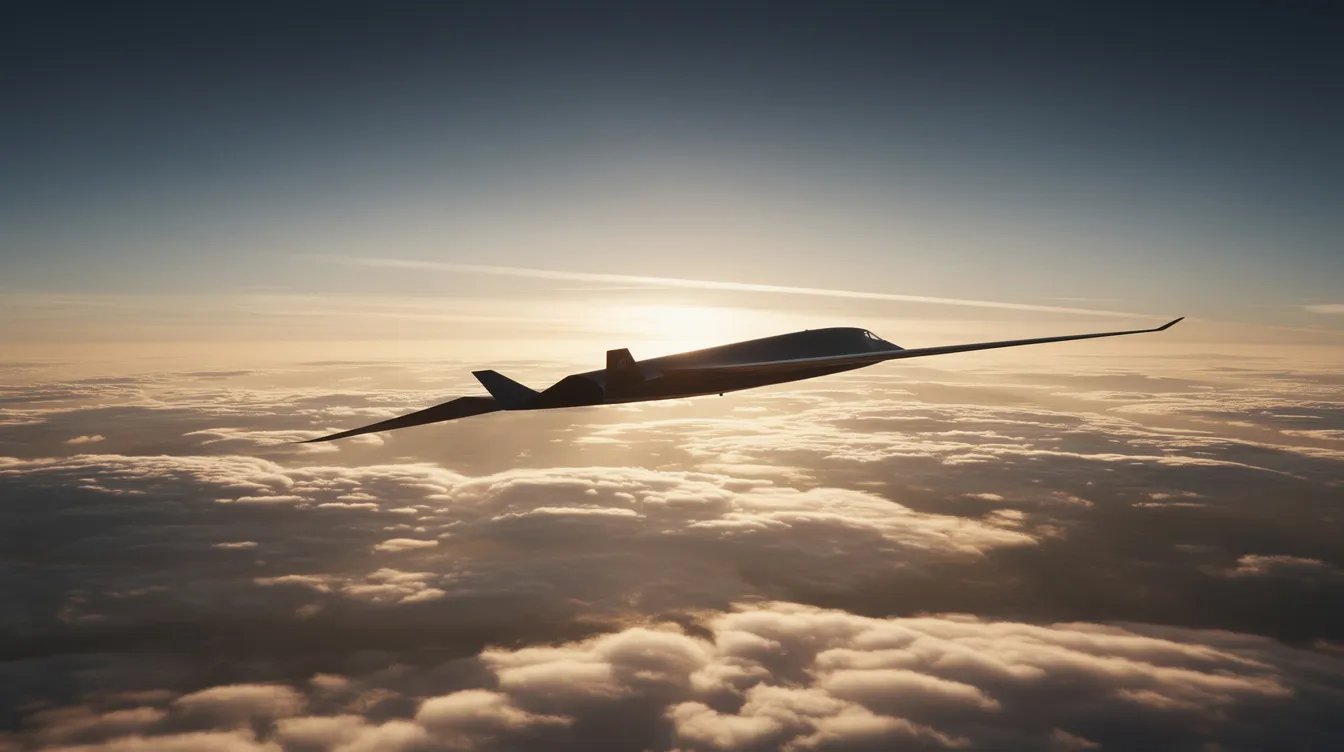
Northrop Grumman B-2 Spirit: A flying-wing stealth bomber that looks like it belongs in science fiction. The B-2 Spirit can deliver payloads undetected by robust air defense networks, using its radar-absorbing shape and materials to penetrate heavily defended airspace. It has conducted night strike missions since the 1990s.
Northrop Grumman B-21 Raider
Lockheed SR-71 Blackbird
Lockheed SR-71 Blackbird: A high-altitude reconnaissance plane that holds the speed record for an air-breathing crewed aircraft at Mach 3.32. It flew at altitudes above 85,000 feet, where the curvature of the Earth was visible from the cockpit. No SR-71 was ever shot down in operational service.
How Jet Engines and Stealth Tech Transformed Air Combat
The arc from propeller-driven fighters like the Spitfire to stealth platforms like the F-22 and F-35 traces four transformative shifts:
Jet Engine Evolution
Piston engines to jet engines: The Me 262 proved jets were the future, despite fragile early powerplants. Within a decade, every major air force had transitioned.
Early jets to supersonic fighters: Aircraft like the F-86 and MiG-21 broke the sound barrier routinely, introducing swept and delta wings for high-speed stability.
Multirole designs: The F-4, F-16, and F/A-18 showed that a single airframe could handle air superiority, ground attack, and reconnaissance missions, replacing fleets of specialized types.
Rise of Stealth Technology
Stealth and sensor fusion: The F-22, F-35, and China's Chengdu J-20 (which can reach speeds of Mach 2) represent a new paradigm where being unseen matters as much as being fast. The MiG-25 Foxbat, the fastest fighter jet at Mach 2.83, proved that raw speed alone is not enough without modern avionics and low observability.
Military aviation is shifting toward networked autonomy and advanced sensing. Next-generation military aircraft are incorporating AI for enhanced operations, from autonomous wingmen to real-time threat assessment. Sixth-generation jet programs aim for better stealth and autonomous aircraft coordination, with experimental aircraft already in test phases. These advances-powerful yet efficient engines, new plane technology, and fly-by-wire controls-later trickle into the business jets that serve private travelers, just as understanding jet card cost per hour helps flyers translate high-end capability into transparent, manageable private flight budgets.
From Combat Cockpits to Private Cabins: Military Tech in Private Jets
Many of the "cool" technologies celebrated in this article began life in fighters before migrating to civilian cabins. The connection between military aviation and private jet travel is not abstract-it is engineered into every flight.
Military Tech in Civil Aviation
Avionics and navigation: Glass cockpits, advanced autopilots, and GPS precision approaches were shaped by military needs. Today, they guide every BlackJet flight with the same level of accuracy that fighter pilots rely on during missions.
Data and connectivity: The same concept of sharing tactical information across an air force-networked operations, real-time situational awareness-now translates into real-time flight tracking, weather updates, and 24/7 support for BlackJet members through digital platforms.
Safety and Certification Advances
Safety and certification: Stringent military test standards-fatigue analysis, G-load tolerance, environmental stress screening-influenced modern civil certification under FAA Part 25 and EASA CS-25. BlackJet only uses operators meeting top safety ratings, including ARG/US and Wyvern audit standards.
Jet Engine Efficiency and Reliability
Jet engine efficiency and reliability: Lessons from high-performance fighter jet engines inform today's quieter, more efficient business-jet powerplants. Where the Me 262's engines lasted 25 hours, modern turbofans run thousands of hours between overhauls, reducing noise and emissions for private travelers, much as modern membership programs from major providers such as Flexjet jet cards with clearly defined costs aim to deliver reliability and predictability in access as well.
Experiencing Fighter-Like Performance in Private Aviation with BlackJet
For readers inspired by the speed, precision, and engineering excellence of fighter jets, BlackJet offers the closest civilian parallel: access to high-performance aircraft with the flexibility to match every mission.
Jet Card programs: BlackJet's 25-hour and 50-hour Jet Cards provide prepaid, predictable access to multiple aircraft categories-light jets for regional hops, large-cabin jets for intercontinental travel-without the burden of owning a single aircraft, and guides such as the complete guide to 25-hour jet cards and 50-hour jet card cost and value help clarify which structure best fits different flying patterns.
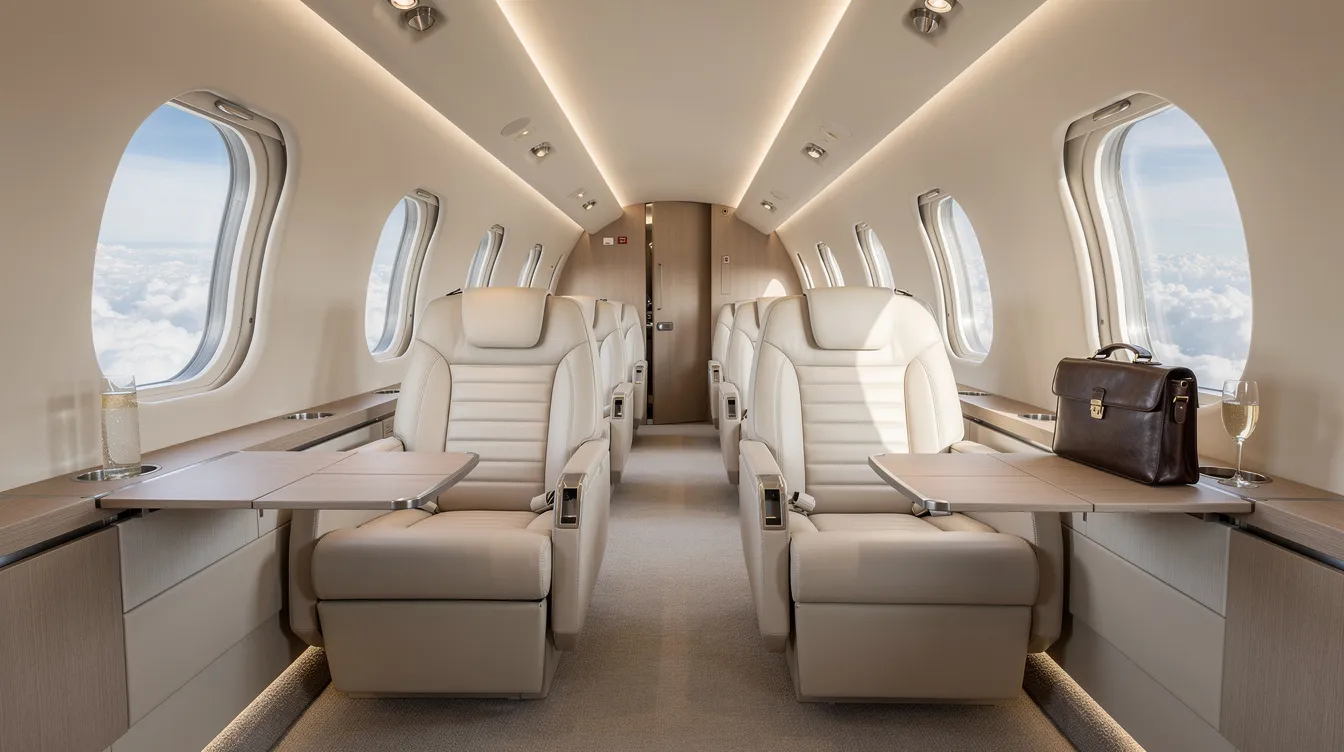
A sample trip: Consider an executive flying New York to London overnight on a large-cabin jet with BlackJet. The cabin is quiet, the flat bed is ready, and connectivity keeps you productive or lets you rest. The same cabin volume and range that serve an executive can also scale to large private jets for around 20 passengers when teams or families travel together. Contrast that with the cramped cockpit of an actual fighter, where the pilot sits in a narrow ejection seat wearing a G-suit. The engineering heritage is shared; the comfort level is worlds apart.
Technology: 24/7 digital booking tools, real-time support, and transparent pricing mirror how modern fighter forces rely on integrated digital systems for efficiency. BlackJet's platform puts scheduling, tracking, and communication in a single interface, and understanding jet card pricing structures helps members align that technology with clear expectations on cost.
Sustainability: BlackJet ensures every journey is carbon neutral through carbon offsets and efficient routing-a meaningful contrast to the fuel-hungry nature of supersonic fighters, whose afterburners can consume fuel at rates measured in thousands of pounds per hour. For travelers focused on budget as well as impact, exploring the cheapest private aircraft and access models can reveal how efficient, lower-cost platforms pair well with carbon-conscious flying.
Frequently Asked Questions About Cool Military Planes
What is the coolest fighter jet ever built?
This is inherently subjective, but several aircraft consistently top enthusiast polls. The F-22 Raptor is the most technologically advanced fighter jet, combining stealth, supercruise, and sensor fusion in ways no other aircraft can match. The F-15 Eagle's flawless combat record of 100 wins and 0 losses makes it a perennial favorite. The F-35 Lightning II earns praise for its futuristic capabilities despite controversy. And the Supermarine Spitfire, with its timeless elliptical wings, remains the sentimental choice among warbird enthusiasts. Each excels in its era and role.
What is the most expensive fighter jet?
On a per-unit basis, the F-22 Raptor costs over $150 million per unit, making it the most expensive fighter jet per airframe. As a program, the F-35 Lightning II is the most expensive fighter jet program in history-and the most expensive military project ever-with a lifetime cost of approximately $1,196.4 billion. For many air forces, the investment is justified by decades of operational relevance and continuous software upgrades.
Can civilians fly in real fighter jets?
Operational air force fighters are off-limits to civilians. However, flight experiences in ex-military trainers (like the L-39 Albatros) are available through specialized companies. For most civilians inspired by high-speed flight, the practical and comfortable alternative is a high-performance private jet. With a Jet Card from BlackJet, you can experience the thrill of private aviation-climbing rapidly to cruise altitude, covering ground at high speed, and landing at smaller airports closer to your destination-without the G-forces, while tools that clarify jet card cost per hour keep that adrenaline firmly within a planned travel budget.
How fast are modern fighter jets compared with private jets?
The difference is significant. The F-15 Eagle can reach Mach 2.5 (approximately 1,650 mph). The F-22 Raptor hits Mach 2.25. Even the F-35, optimized for stealth rather than pure speed, reaches Mach 1.6 (1,060 mph). Long-range business jets typically cruise at Mach 0.80–0.90 (roughly 575–690 mph). But for BlackJet clients, comfort, range, and efficiency matter more than raw top speed-you arrive rested, productive, and on your schedule.
What role do drones play in modern military aviation?
Drones and unmanned systems are transforming the skies. Collaborative Combat Aircraft are designed to operate alongside crewed fighters, extending sensor coverage and weapons capacity. Military aviation is shifting toward networked autonomy, where autonomous platforms fly alongside human pilots in coordinated formations. This hope for seamless human-machine teaming is driving sixth-generation fighter programs worldwide.
Choosing Your Own Skies: From Watching Fighter Jets to Flying Private
Military planes have always represented the pinnacle of what forces of engineering, ambition, and national will can achieve. From the Spitfire's desperate defense of British skies to the F-35's networked digital battlefield, each generation of fighter aircraft has pushed the boundaries of what remains possible in the air.
There is no single "best" or "coolest" fighter jet-each excels in specific roles, just as different jet sizes and cabin classes serve different private-travel missions. A light jet handles a two-hour regional flight with nimble efficiency. A large-cabin aircraft crosses oceans in quiet comfort. The right choice depends on the operation at hand, just as frequent flyers comparing commitment levels might evaluate whether a 100-hour jet card cost structure delivers the flexibility they need.
That same philosophy defines BlackJet: safe, certified private jet access with Jet Card flexibility, advanced technology, and carbon-neutral performance. If the precision engineering behind air combat inspires you, discover how that spirit of performance and reliability can reshape your personal and business travel, whether you’re chartering full aircraft or simply buying a seat on a private jet for specific routes.
Elevate your travel-effortlessly. With BlackJet, private flight is accessible on your terms through our Jet Card programs, complete with rigorous safety, carbon-neutral performance, and unmatched flexibility. Whether you’re comparing the best jet cards for frequent flyers, exploring premium private jets for sale in the UK, or researching the cheapest private jet options, explore BlackJet's Jet Card programs and discover how refined, meaningful travel becomes your new standard.


 Sign up with google
 Sign up with Apple