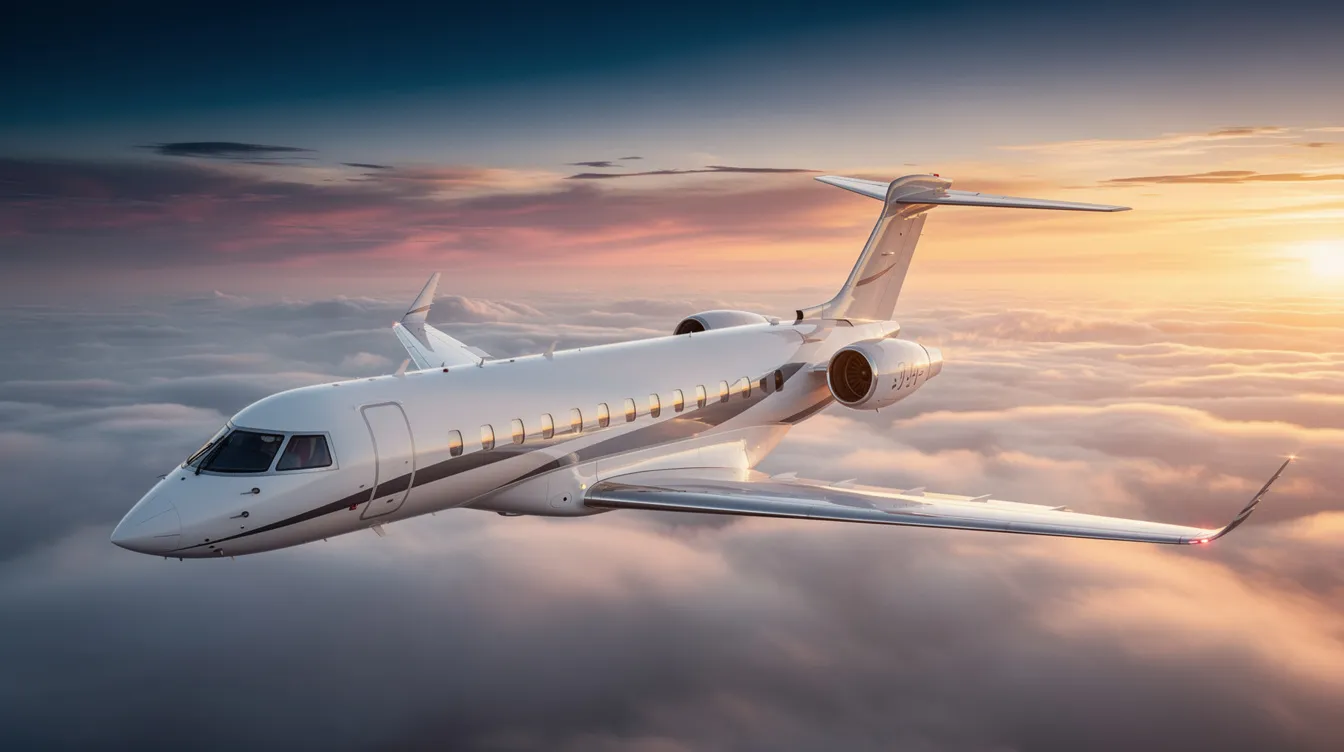
The aircraft that fill today's skies bear little resemblance to their predecessors. Whether designed for air superiority or built to carry executives across oceans, modern planes represent a convergence of materials science, propulsion engineering, and digital systems that was unimaginable a generation ago. For the discerning traveler, understanding what makes these aircraft different is more than trivia-it's the basis for making smarter decisions about how you fly.
Modern Aircraft at a Glance: Why They Matter to Today's Traveler
Modern aircraft have reshaped global mobility in ways that go far beyond raw speed. Ultra-long-range business jets like the Gulfstream G700 now achieve ranges of 7,750 nautical miles nonstop, while the Bombardier Global 7500 covers roughly 7,700 nautical miles in a single flight. These flagships sit near the top of the best private jets in the world in terms of range, comfort, and technology. That means a traveler can fly from New York to Dubai or Los Angeles to Sydney without stopping-missions that commercial airlines handle with layovers, connections, and hours of dead time in airport terminals.
The comfort gap is equally significant. Modern business jets maintain cabin altitudes as low as 2,840 feet even at a cruising altitude of 41,000 feet. Compare that to the typical commercial widebody, where cabin altitude often climbs above 6,000 to 8,000 feet on long hauls. Lower cabin altitude means less fatigue, less dehydration, and a meaningful reduction in jet lag-advantages that compound on frequent international itineraries.
Then there is flexibility. Modern planes access thousands of airports that commercial carriers never serve-regional fields, smaller coastal strips, facilities minutes from a final destination rather than an hour's drive away. This kind of route flexibility is what turns a two-day commercial trip into a same-day mission.
What many travelers don't realize is how much of this capability traces back to military development. Aviation technology originally funded for air superiority-fly-by-wire controls, sensor fusion, situational awareness systems-has filtered into civilian aircraft over the past three decades, elevating safety and performance across the board. At BlackJet, we don't build these aircraft. We curate them. Our Jet Card programs give members access to modern planes that embody these advances, converting aerospace innovation into a strategic travel advantage.
The Strategic Edge of Modern Planes for Business and Private Travel
Access to modern planes is not a luxury indulgence-it's a strategic asset. For executives and high-net-worth travelers, the value proposition rests on three pillars: time recovery, route precision, and cost predictability, all of which underpin BlackJet's premium private jet card programs.
Consider a concrete scenario. A BlackJet Jet Card member needs to attend a morning meeting in Dallas and an afternoon session in San Francisco, departing from New York. On a super-midsize jet, this itinerary is straightforward: depart Teterboro at 6:30 AM, land at Dallas Love Field by 9:00 AM local time, depart again by noon, and arrive at San Jose or Oakland by 1:30 PM Pacific. The entire day is productive. On commercial flights, the same routing likely requires a 5:00 AM departure from JFK, a connection through a hub, arrival in Dallas by early afternoon, and no realistic path to San Francisco until the following morning.
The cost question matters too. Jet cards provide prepaid access to private jets at fixed hourly rates, insulating members from the repositioning fees, peak-day surcharges, and fuel escalators that inflate on-demand charter costs. Travelers comparing options should look beyond headline figures and understand jet card cost-per-hour fundamentals. For 2026, average jet card rates for super-midsize aircraft sit at approximately $12,526 per hour, while large-cabin jets run around $15,236 per hour (Aviation Network Magazine). Charter quotes often appear lower on paper, but once deadhead legs and ancillary fees are factored in, the total can run 1.4 to 1.6 times the nominal rate.
BlackJet's model converts advanced aircraft capability into predictable, on-demand access. Members select the right category per mission-light jet for a regional hop, ultra-long-range for an intercontinental board meeting-without carrying the fixed costs of ownership that appear on any realistic private jet price list.
What Defines a "Modern Plane" in 2026?
"Modern" in 2026 means more than a recent model year. It is a suite of integrated design choices that collectively push the boundaries of efficiency, safety, and comfort. Here are the defining characteristics:
Composite materials and advanced structures. Modern aircraft utilize lightweight carbon-fiber-reinforced polymers for primary structure. Carbon fiber structures resist corrosion and metal fatigue better than aluminum, extending airframe life and reducing weight. For travelers prioritizing efficiency and value, this same technology underpins many of the cheapest private aircraft options. Cabin interior composite parts in business jets are growing at roughly 6.75% CAGR through 2031.
Fly-by-wire controls. Fly-by-wire systems use electronic signals instead of mechanical controls, saving weight, enabling envelope protection (stall and overspeed prevention), and providing smoother handling. Most current-generation large business jets employ digital control laws derived from military programs.
Advanced avionics. The Gulfstream G500's Symmetry flight deck exemplifies the trend: multiple touchscreens, synthetic vision, enhanced flight vision systems, and 3-D terrain mapping-all tools that improve pilot situational awareness and reduce workload.
Efficient turbofan engines. High-bypass turbofan engines improve fuel efficiency and reduce noise compared with earlier designs. New materials in engines-such as ceramic matrix composites in high-temperature core sections-allow higher operating temperatures and greater power output, balancing thermal efficiency gains with size, weight, and emissions targets (GE Aerospace). These powerplants also make it possible for heavy jets-the kind evaluated when choosing the best private jet for 20 passengers-to combine long range with refined cabin environments.
Aerodynamic refinement. Modern wings feature raked wingtips and winglets to minimize drag and improve efficiency. Laminar-flow optimization and computational design further trim fuel burn.
Cabin environment. Modern aircraft can maintain a lower cabin pressure altitude for enhanced passenger comfort-often below 3,000 feet at FL410. Modern jets also maintain higher cabin humidity levels than traditional aircraft, with novel environmental control systems capable of lifting relative humidity to approximately 28% at cruise altitude with roughly a 1% fuel penalty.
Sustainability compatibility. Newer business jets are certified to use sustainable aviation fuel blends up to 50%, and carbon-neutral flights are offered by private aviation companies including BlackJet, even on more economical platforms discussed in guides to the cheapest private jet options for travelers.
The difference between a "modern aircraft" in commercial, military, and business aviation lies in mission priority. An Airbus A350 optimizes seat-mile economics. An F-35 prioritizes stealth and combat survivability. A Gulfstream G700 balances range, speed, and passenger comfort. All three share the underlying technology pillars above.
From Air Superiority to Air Safety: Military Technology in Civilian Skies
Air superiority fighters like the F-22 Raptor and F-35 Lightning II are built around a singular objective: dominate the battlespace through stealth, sensors, and speed. Their AESA radars, infrared search-and-track systems, and secure data links create an unmatched picture of threats in real time, with that awareness depending on the nature of the flight environment as conditions change-what pilots call situational awareness.
That same principle now underpins civilian safety systems. Traffic Collision Avoidance Systems (TCAS), terrain awareness and warning systems (TAWS), and synthetic vision are direct descendants of military sensor development. NASA's research on Automatic Ground Collision Avoidance Systems (Auto-GCAS), originally developed for fighter programs, is being studied for adaptation into civil aircraft as a last-resort safety layer.
Two historic milestones illustrate the transfer clearly. In the 1990s, business jet manufacturers introduced glass cockpits-electronic displays replacing analog gauges-directly influenced by fighter display architecture. A decade later, enhanced vision systems (EVS) migrated from military night-operations platforms to business jet flight decks, allowing pilots to see runway environments in low-visibility conditions.
While BlackJet clients will never fly on combat aircraft, they benefit from decades of aerospace innovation originally funded by the Air Force and Navy. Every modern business jet in our curated network carries avionics whose lineage traces back to military programs.
Generations of Jets: From Early Airliners to Modern Business Aircraft
The story of the jet age begins in the 1950s with aircraft like the Boeing 707 and the de Havilland Comet-pressurized, turbojet-powered, and revolutionary for their era, but limited by high fuel burn, deafening noise, and rudimentary avionics.
Major leaps followed in roughly decade-long cycles:
1970s: High-bypass turbofans arrived, cutting fuel consumption and noise dramatically. The Airbus A330/A340 generation would eventually achieve fuel consumption 30% lower than 1950s models.
1980s–1990s: Digital fly-by-wire entered commercial service (Airbus A320 era). Business jets adopted glass cockpits and advanced autopilot systems.
2000s–2010s: Composite wings and fuselages appeared on Boeing's 787 and Airbus's A350, proving that carbon-fiber primary structures could serve at scale. Business jets followed, with clean-sheet designs like the Global 7500 and G700 pushing ultra-long-range capability and cabin refinement to new benchmarks.
Today's best business jets available through BlackJet's network embody every one of these generational advances-composite airframes, high-bypass engines, digital avionics, and cabin environments engineered for productivity and rest.
Modern Military Aircraft: Fighters, Bombers, and Light Attack Aircraft
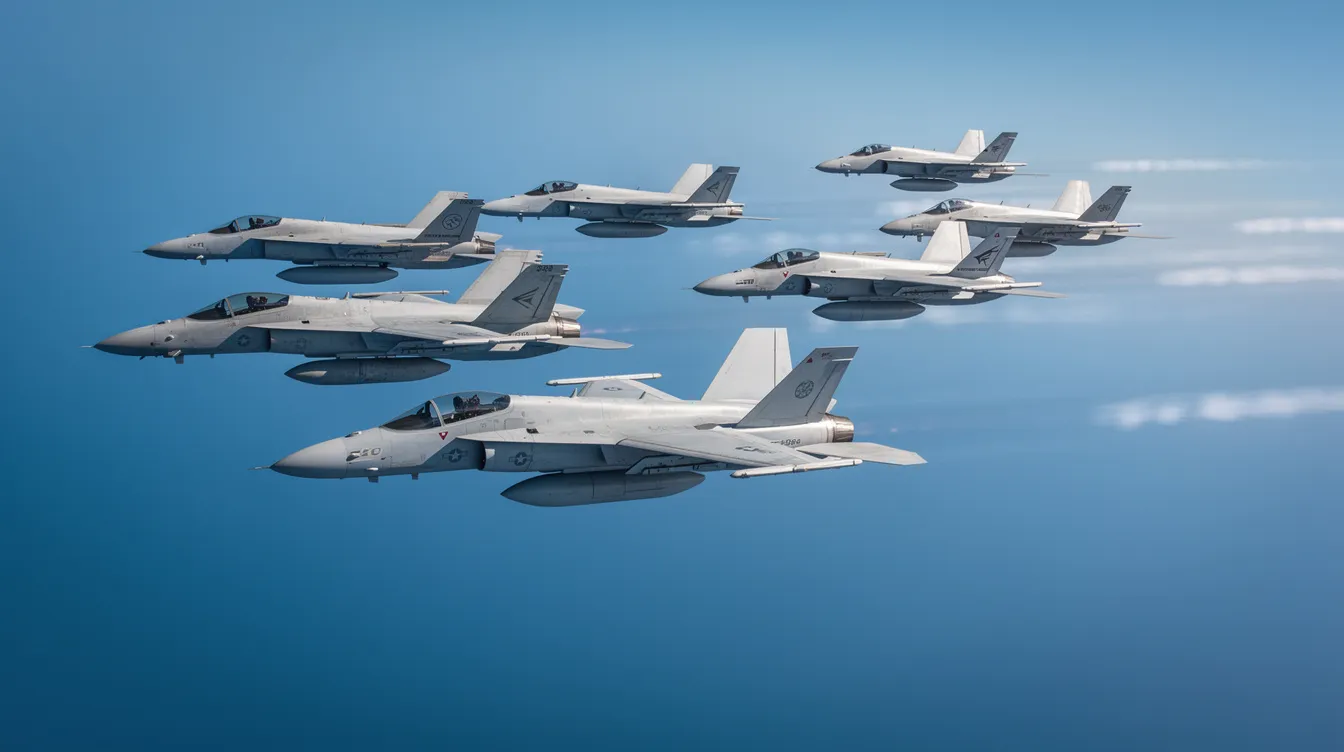
Modern military aircraft fall into several categories, each designed for distinct missions:
Air superiority fighters: Built to dominate in air-to-air combat. The F-22 Raptor remains the benchmark, while the F-15EX provides a modernized, high-capacity platform. Fighter jets are categorized by generations based on technological advancements, from first-generation subsonic designs to today's fifth-generation stealth platforms.
Multirole combat jets: The F-35 Lightning II, built by Lockheed Martin, serves as a strike, reconnaissance, and air-to-air platform across the Air Force, Navy, and Marine Corps. Its sensor fusion and stealth define a new era for tactical aviation.
Strategic bombers: The B-2 Spirit and the B-21 Raider carry bombs and precision weapons deep into contested airspace, relying on stealth and advanced communications to achieve their missions.
Light attack aircraft: Smaller, simpler platforms like the A-29 Super Tucano and the AT-6 Wolverine serve counterinsurgency and close air support roles. These light attack aircraft operate from austere ground strips, carry precision weapons, and keep operating, with service costs far below those of a fifth-generation fighter, much as regional private jet charters in markets like Karachi emphasize practicality and efficiency over sheer performance.
The contrast with civilian aircraft is fundamental. Military aircraft are designed to destroy targets, survive hostile environments, and operate at supersonic speed under extreme G-loads. Business and commercial jets prioritize cabin space, passenger comfort, fuel efficiency, and reliability over thousands of routine flights. Yet both worlds draw from the same well of materials science, propulsion, and digital control.
Air Superiority and Situational Awareness in the 21st Century
Air superiority-the ability to control the skies over a given area-remains central to every branch of the United States military in 2026. Achieving it requires more than fast aircraft and powerful weapons. It demands integrated sensors, real-time data links, and cockpit systems that fuse information from radar, infrared, electronic warfare equipment, and allied platforms into a single coherent picture.
Fifth-generation fighters emphasize stealth and sensor fusion capabilities, allowing a single pilot to track dozens of threats simultaneously while remaining nearly invisible to adversary radar. The United States Coast Guard, while not a combat force in the traditional sense, similarly relies on modern sensors and communications for maritime reconnaissance and patrol.
How does this connect to private aviation? The same concept of situational awareness-knowing everything relevant in the sky and on the ground-has migrated to civilian cockpits:
Glass cockpits integrate multiple digital displays for enhanced situational awareness, replacing cluttered analog panels.
Synthetic vision paints terrain and obstacles on primary flight displays, even in zero-visibility conditions.
Real-time flight support improves situational awareness for pilots through weather uplinks, traffic alerts, and data-link clearances.
Satellite navigation and digital communication have improved aircraft routing and safety across all classes of aviation.
For BlackJet passengers, these technologies translate into safer, more efficient flights-even if the systems' origins lie in combat.
Aviation Technology & Aerospace Innovation Driving Modern Planes
Four pillars of aviation technology define the current generation of modern planes:
Propulsion. Geared turbofan engines (like the PW1000G family, entering service in the mid-2010s) achieve higher bypass ratios, lower fuel burn, and significantly reduced noise. AI can optimize flight operations and predictive maintenance by analyzing flight data, further extending engine life and reducing unscheduled downtime-a major factor in modern jet card pricing structures, where reliability and availability underpin value.
Materials science. Beyond airframes, new materials in engines improve fuel efficiency and reduce emissions. Ceramic matrix composites withstand higher temperatures in turbine cores, enabling leaner combustion. NOx emissions from Rolls-Royce engines dropped by one-third since the 1970s, largely due to these material and combustion advances.
Digital avionics and controls. Advanced flight management systems, electronic flight bags, and data-link clearances reduce pilot workload and delays. Data connectivity allows aircraft to exchange information with ground systems for real-world coordination, supporting everything from ATC coordination to predictive maintenance-and it also underpins seamless app-based booking when you buy a seat on a private jet.
Cabin pressurization and environment. Research demonstrates that novel environmental control systems can raise cabin humidity to approximately 28% relative humidity at cruising altitude with a fuel penalty of roughly 1%-a meaningful improvement in passenger well-being on long-range flights. Cabin altitude management, HEPA filtration, and plasma ionization round out the cabin environment picture.
BlackJet's curated aircraft fleet reflects these innovations. Members experience smoother, quieter, and more efficient flights because the aircraft we select embody the latest in propulsion, materials, and cabin technology, especially within our flagship BlackJet 25+ Hour Jet Card offering.
Modern Business Jets: Categories, Cabin Classes, and Use Cases
Private jets are categorized into light, midsize, and heavy jets-each suited to different missions and passenger needs.
Category | Passengers | Typical Range | Example Models |
|---|
Light jets | 4–8 | 1,500–2,500 nm | Embraer Phenom 300, Citation CJ4 |
Midsize / Super midsize | 6–9 | 3,000–4,500 nm | Challenger 350, Citation Latitude |
Heavy / Ultra-long-range | 10–20 | 5,500–7,750 nm | Gulfstream G700, Global 7500 |
Light jets typically seat 4 to 8 passengers and fly shorter distances-ideal for regional hops like Boston to Charlotte. Midsize jets can accommodate 6 to 9 passengers with longer range capabilities, handling cross-country routes or Caribbean missions comfortably. Heavy jets offer more cabin space and can carry 10 to 20 passengers, with ultra-long-range variants spanning oceans nonstop, while specialized VIP airliners represent the best private jets for 50 passengers on large-group itineraries.
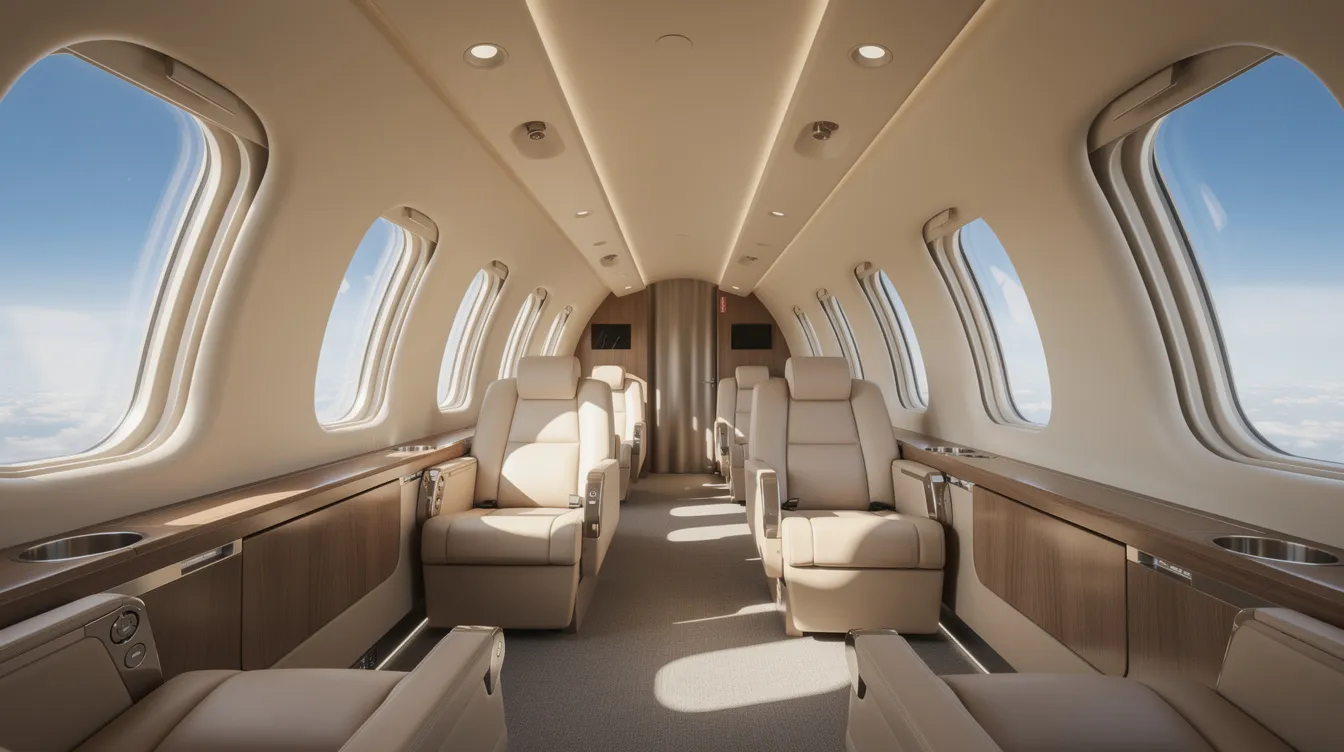
Cabin classes vary widely. Large-cabin jets like the G700 feature four distinct living zones-lounge, dining, workspace, and bedroom-with full galleys, crew rest areas, and in-flight luggage access. Super-midsize jets provide stand-up cabins and comfortable seating without the full suite of zones.
With BlackJet's Jet Card model, members select the right type of private jet on a trip-by-trip basis rather than being locked into a single aircraft. A light jet for a Tuesday meeting in Nashville, a large-cabin aircraft for a Friday transatlantic crossing-each matched to the mission.
Connectivity and Cockpit Tech: Modern Planes as Flying Workspaces
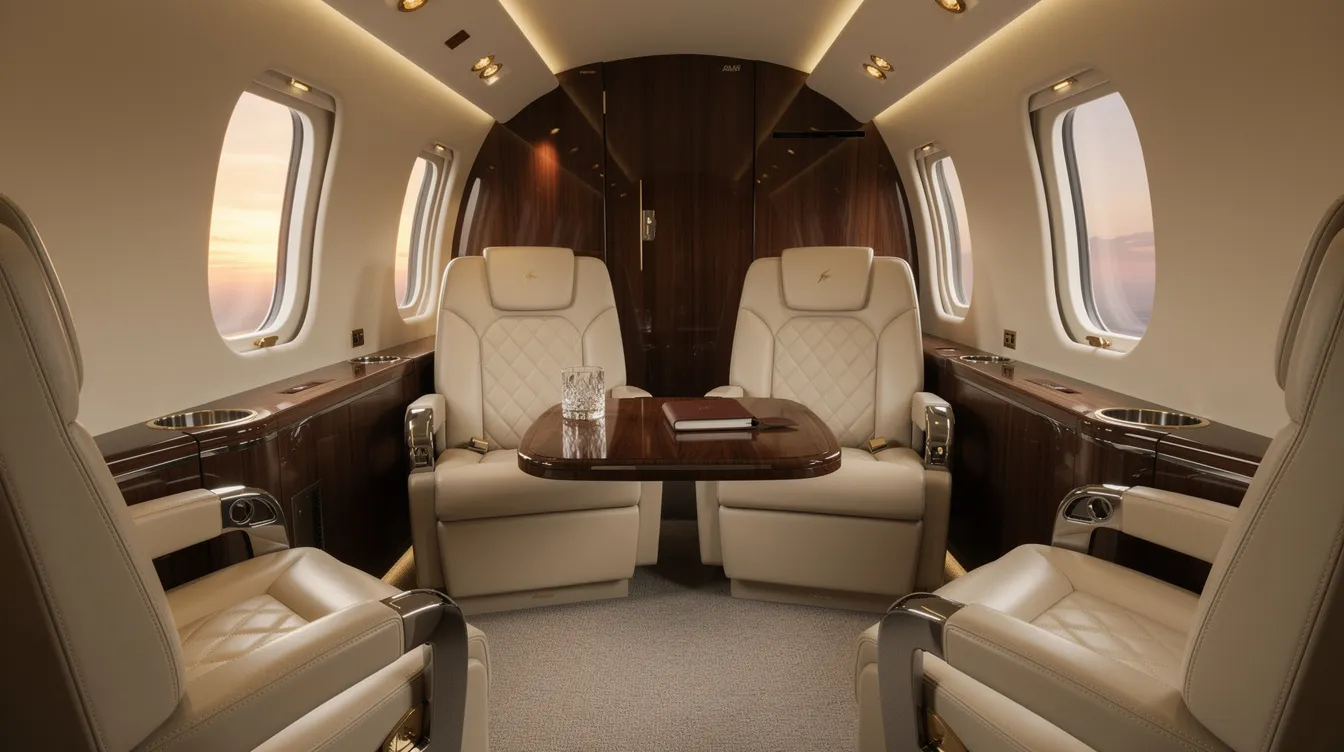
The modern business jet is as much a mobile office as it is a means of transport. Satellite Wi-Fi systems-including Ka-band solutions and newer satellite internet platforms like Starlink, now being installed on aircraft such as the G700-deliver speeds sufficient for real-time video conferencing, secure VPN access, and cloud-based workflows at 45,000 feet.
From 2024 onward, high-speed global internet installation has accelerated across midsize and super-midsize fleets, making reliable connectivity available on nearly every category of new aircraft. Predictive maintenance enables real-time monitoring of aircraft components, with data streaming from engines and flight systems to ground-based operations centers throughout each flight.
On the flight deck, advanced cockpit systems-glass cockpits, electronic flight bags, data-link clearances-reduce delays, improve routing, and free pilots to focus on decision-making rather than paperwork. Real-time flight support is available 24/7 for travelers and crew, ensuring that weather changes, airspace restrictions, or schedule adjustments are handled proactively.
BlackJet prioritizes aircraft with modern connectivity, enabling clients to treat the cabin as an extension of their office. When your flight time becomes productive time, the economics of private travel shift decisively.
Private Jet Access with BlackJet: Jet Cards vs. On-Demand Charter
BlackJet's Jet Card model offers a modern way to access a wide variety of aircraft without the complexity-or capital commitment-of ownership. For travelers evaluating membership options, understanding jet card cost and pricing structures is essential. Common jet card programs include 25-hour and 50-hour options, prepaid at fixed hourly rates with guaranteed availability windows.
Here is how the two primary access models compare:
Feature | BlackJet Jet Card | On-Demand Charter |
|---|
Pricing | Fixed hourly rate, inclusive | Variable; repositioning and surcharges added |
Availability | Guaranteed windows | Subject to market availability |
Aircraft selection | Curated modern fleet | Whatever is available |
Booking | 24/7 digital booking tools and concierge | Broker-dependent |
Cost predictability | High | Low (total often 1.4–1.6× quoted rate) |
Jet cards offer access to multiple cabin types, and jet card users benefit from 24/7 digital booking tools that provide instant access to flight information. Travelers who fly frequently can compare the best jet cards for frequent flyers to align benefits with their patterns of use. Digital booking tools are available around the clock, and mobile booking platforms offer transparent pricing for private jet charters. Real-time support helps manage flight changes and cancellations without the friction of renegotiating with a broker.
Jet cards are popular among high-net-worth leisure travelers and frequent business flyers alike. The ideal profile: someone who flies multiple legs per year, values schedule flexibility, and prefers predictable costs over the uncertainty of ad-hoc charter. For a deeper comparison, see our guide on Jet Card vs. Charter vs. Fractional vs. Ownership.
Safety, Certification, and Reliability in Modern Aircraft Operations
Modern aircraft are certified under rigorous FAA and EASA standards that govern structural strength, engine reliability, avionics redundancy, and noise emissions. Private jets must comply with FAA Part 135 regulations, which establish baseline requirements for commercial air operations, crew qualifications, and aircraft maintenance.
Several factors define safety in 2026:
Improved accident rates. The commercial aviation accident rate significantly decreased from 3.72 to 1.32 per million flights over recent decades-a trajectory driven by the same technologies now standard in business aviation.
Pilot training and duty time. Private aviation safety includes strict pilot duty time regulations. BlackJet's operator partners maintain pilot training programs that exceed regulatory minimums, including recurrent simulator sessions and proficiency checks.
Maintenance rigor. Private jet charters undergo regular maintenance checks for safety, with modern turbofans requiring fewer unscheduled interventions thanks to advanced materials and monitoring. Safety management systems are mandatory for private aviation operations under current regulations.
Avionics redundancy. Modern business jets use advanced avionics for improved safety, typically with dual or triple redundant channels for critical flight systems.
Real-time support. Real-time support enhances safety and efficiency in private aviation by connecting flight crews with dispatch centers that monitor weather, traffic, and operational status continuously.
BlackJet partners only with operators that meet or exceed recognized third-party safety ratings (Wyvern, ARGUS, IS-BAO). Our BlackJet Certified standard is not a marketing label-it represents audited maintenance oversight, experienced crews, and documented safety culture. In contrast, military aircraft are built to survive combat, accepting higher operational risk in exchange for performance. Civilian certification prioritizes gradual failure management and passenger protection above all.
Sustainable Aviation: Modern Planes, Fuel Efficiency, and Carbon Neutral Flights
Modern planes are designed for better fuel burn at every level-higher bypass ratios, lighter composite structures, aerodynamic refinement. Modern aircraft can reduce carbon emissions by 30% compared with designs from prior generations. Airbus A330/A340 fuel consumption is 30% lower than 1950s models, a benchmark the business jet segment has mirrored with its own generational improvements.
Sustainable aviation fuels may help lower lifecycle greenhouse gas emissions by up to 80% compared with conventional jet fuel. In 2026, global SAF production reached approximately 2.4 million tonnes-up from 1.9 million in 2025-though this still represents only about 0.8% of global jet fuel consumption (IATA). Newer business jets are certified to use SAF blends up to 50%, and the aviation industry expects usage to scale substantially as supply chains mature.
Looking further ahead, hydrogen-powered aircraft could potentially reduce or eliminate in-flight CO₂ emissions, though commercial deployment remains years away.
BlackJet's commitment to sustainability is embedded in every flight. Carbon-neutral flights are offered through integrated carbon offset programs at no extra effort for the member. For travelers who fly often enough to consider subscription-style flying, exploring unlimited private jet flight memberships can clarify when flat-fee models make sense alongside sustainable practices. Combined with fuel-efficient modern aircraft and SAF compatibility, this approach reduces the environmental footprint of frequent private flying without compromising the travel experience.
Modern Planes in the U.S. Air Force, Navy, and Marine Corps
The U.S. military deploys modern aircraft across a spectrum of missions that mirror the diversity of civilian aviation-albeit with fundamentally different objectives.
Air Force: The F-22 maintains air superiority, while the F-35A serves as the primary multirole strike and reconnaissance platform. KC-46 tankers extend the range of combat and transport operations. The B-21 Raider represents the next generation of strategic bombers, expected to carry both conventional bombs and nuclear weapons with unprecedented stealth.
Navy: Carrier-borne F/A-18E/F Super Hornets and F-35C variants operate from decks shorter than most runways, requiring specialized landing gear and arresting systems. The Navy's successful first flight programs for new aircraft often pioneer technologies that later serve civilian development.
Marine Corps: The Marine Corps' unique requirement for expeditionary operations-short runways, austere bases-drives aircraft like the F-35B, which can operate from amphibious assault ships and forward strips using short takeoff and vertical landing capability. These variants of the F-35 demonstrate how a single platform can serve across services while adapting to radically different operational environments.
There is a useful parallel for private travelers. Just as the military matches the right aircraft to each mission, BlackJet matches customer missions with the right aircraft class. A light jet for a 400-nautical-mile hop serves no purpose on a transatlantic crossing, just as a tanker has no role in a dogfight. Mission matching is everything.
How Modern Aircraft Enhance the Passenger Experience
For travelers, the most tangible benefits of modern planes are felt inside the cabin. Here is what the current generation delivers:
Lower cabin altitude. The Gulfstream G700 holds a cabin altitude of approximately 2,840 feet at 41,000 feet; the Bombardier Global 7500 achieves roughly 2,691 feet at the same altitude. The result is measurably less fatigue, fewer headaches, and better sleep on long flights.
Improved humidity. Cabin humidification systems lift relative humidity from near zero (typical of older jets) to approximately 28%, reducing dehydration and dry-eye discomfort.
Larger windows. Models like the G500 and G700 feature oversized panoramic windows that flood the cabin with natural light, contributing to psychological well-being and reducing the feeling of confinement.
Quieter cabins. High-bypass engines, improved acoustic insulation, and reduced vibration create interiors where conversation at normal volume is comfortable even during cruise.
Refined interior design. Four-zone configurations on large-cabin jets offer dedicated spaces for work, dining, lounging, and sleeping. Full galleys, showers, and circadian lighting systems come standard on flagship models.
BlackJet uses aircraft categories and cabin specifications to recommend options that fit client preferences-whether that means a dedicated workspace layout, a family-friendly configuration, or a pet-accommodating arrangement. The goal is not just to transport, but to arrive ready.
Choosing the Right Modern Plane for Your Mission with BlackJet
Selecting the right aircraft is a function of route length, passenger count, luggage requirements, and schedule constraints. Here are three example itineraries that illustrate how BlackJet tailors each flight:
Short-haul, light jet: Chicago to Nashville (roughly 400 nm). A light jet seats four comfortably, departs from a nearby executive airport, and arrives in under 90 minutes. Cost-effective, efficient, no need for a large cabin.
Cross-country, super midsize: New York to Los Angeles (approximately 2,150 nm). A super-midsize jet offers a stand-up cabin, full connectivity, and enough range to fly nonstop with reserves. The cabin supports a productive work session or restful sleep depending on departure time.
Transoceanic, large-cabin ultra-long-range: London to Dubai (roughly 2,990 nm) or New York to Tokyo (5,850 nm). A G700 or Global 7500 handles these missions nonstop, with four living zones, multiple crew, and an arrival experience that feels closer to a full night's rest than a transatlantic ordeal.
Mobile booking platforms enable instant access to private jets, allowing members to compare aircraft types and select the best fit within minutes. Mobile platforms streamline the private travel experience by presenting curated options-not an overwhelming marketplace-based on the mission parameters you provide. BlackJet advisors and the mobile booking platform work together to simplify complex aircraft decisions into a few clear options.
Elevate your travel-effortlessly. With BlackJet, private flight is accessible on your terms through our Jet Card programs, complete with rigorous safety, carbon-neutral performance, and unmatched flexibility. Explore our Jet Card offerings and discover how refined, meaningful travel becomes your new standard.
FAQs About Modern Planes and Private Jet Access
What's the real difference between commercial first class and a modern private jet? Commercial first class offers a premium seat on someone else's schedule, routed through hubs, with cabin altitudes above 6,000 feet and limited flexibility. A modern private jet- say, a Gulfstream G700-departs when you choose, lands at airports closer to your destination, maintains cabin altitude below 3,000 feet, and provides a multi-zone cabin with full connectivity. The difference is not just comfort; it's control over your time.
Can you charter a modern military fighter? No. Military aircraft like the F-22, F-35, and B-2 are restricted to government and military operators. They are not available for civilian charter. However, the technologies developed for these platforms-fly-by-wire controls, synthetic vision, advanced sensors-are now standard features on the business jets accessible through BlackJet's fleet.
How safe are modern business jets compared to commercial airliners? Business jets certified under FAA Part 135 regulations must meet rigorous standards for pilot training, maintenance, and operational safety. Modern business jets use advanced avionics, redundant flight systems, and are operated by crews subject to strict duty-time limits. BlackJet further narrows the field by partnering only with operators meeting top safety ratings such as Wyvern Wingman, ARGUS Platinum, and IS-BAO certification.
How does carbon-neutral private flying work? BlackJet ensures every journey is carbon neutral at no extra cost to you. Emissions from each flight are calculated and offset through verified environmental projects-reforestation, renewable energy, and methane capture. This is combined with fleet-level fuel efficiency gains and SAF compatibility to reduce the net footprint of private travel. Learn more about our sustainability commitment.
How do Jet Cards compare with owning a modern plane? Owning a jet means bearing depreciation, crew salaries, hangar fees, insurance, and maintenance costs that run regardless of how often you fly. Jet cards eliminate those fixed obligations while providing access to a curated fleet of modern aircraft across every cabin class. For travelers who fly 50 to 200 hours annually and value flexibility over asset ownership, a Jet Card delivers better economics and more variety. For a detailed breakdown, see our Jet Card vs. Ownership guide.
What aircraft categories can I access through BlackJet? BlackJet Jet Card members can access light jets, midsize and super-midsize jets, and large-cabin ultra-long-range aircraft from leading private jet manufacturers. Selection is based on your mission, route, passengers, and schedule- not a one-size-fits-all assignment.
Conclusion: The Transformative Impact of Modern Planes on Private Travel
Modern planes represent a fusion of cutting-edge aerospace technology, strategic design, and passenger-centric innovation. For the discerning traveler, these aircraft deliver more than speed and luxury—they provide a competitive edge through time savings, enhanced safety, and unmatched flexibility. From advanced materials and efficient jet engines to military-grade avionics and sustainable aviation practices, the latest generation of aircraft redefines what private travel can be.
At BlackJet, we translate these technological advances into practical benefits via our Jet Card programs, giving members seamless access to a curated fleet of modern jets tailored to every mission. Whether crossing continents nonstop, flying multiple legs in a day, or simply enjoying a quieter, more comfortable cabin environment, modern planes enable travel on your terms.
As aviation continues to evolve with innovations like AI-enhanced flight management and sustainable fuels, private jet travel will become even more efficient, safe, and responsible. Choosing modern planes today is an investment in a future of elevated, meaningful journeys—where every flight is not just transportation, but a strategic advantage and a refined experience.
Elevate your travel effortlessly with BlackJet—where modern planes meet unmatched service and sustainability for a new standard in private aviation.


 Sign up with google
 Sign up with Apple