The distance between a commercial boarding gate and a private terminal is measured in more than steps. It is measured in hours reclaimed, meetings kept, and the freedom to fly on your own terms. Today, a wave of next-generation aircraft is widening that gap further—delivering not just luxury, but a genuine strategic advantage for those who value time, safety, and precision. This article is for high-end travelers and private aviation clients seeking to understand the benefits of the latest aircraft. With rapid advancements in aviation technology, choosing a new plane can offer significant advantages in safety, efficiency, and comfort. In private aviation, a "new plane" typically refers to aircraft delivered within the last five years, featuring the latest advancements in materials, avionics, and efficiency. Understanding what qualifies as a new plane is essential for making informed decisions about private air travel.
What this article covers:
How next-generation aircraft transform speed, range, and comfort
The way military and airline R&D filters into private jets you can fly today
Why newer planes lead in safety, efficiency, and sustainability
How Jet Cards offer smarter access to new-plane quality without capital risk
Why a "New Plane" Matters Now for High‑End Travelers
Private aviation has always promised speed and privacy. What separates this moment in history is the sheer pace of technology transfer from defense and commercial aircraft programs into business jets. The Boeing CEO recently described the new Air Force One as the most complex twin-aisle airplane the company has ever built—a testament to how mission-readiness and redundancy now drive design across every tier of aviation. The 777X family integrates innovations from the 787 Dreamliner, featuring a spacious wide cabin and seamlessly connecting with the 777 and 787 families, proving that each generation pushes the entire industry ahead.
For BlackJet members, the result is tangible: access to the newest, most capable planes through a Jet Card model that removes the burdens of ownership while preserving every benefit of a new plane.
Key Takeaways: Why the New Plane Generation Matters for Private Aviation
Next-generation private jets deliver superior performance, safety, and comfort.
Military and commercial innovations like synthetic vision now enhance private jets.
New planes offer longer ranges and access to more airports, reducing travel time.
Sustainability advances include up to 25% better fuel efficiency and carbon-neutral flights.
BlackJet’s Jet Card model provides flexible access to the newest aircraft without ownership risks.
Digital booking platforms offer seamless, real-time access to vetted aircraft.
Choosing new planes with BlackJet ensures top safety, efficiency, and luxury.
The Next Generation of Private Jets: What Counts as a "New Plane" Today
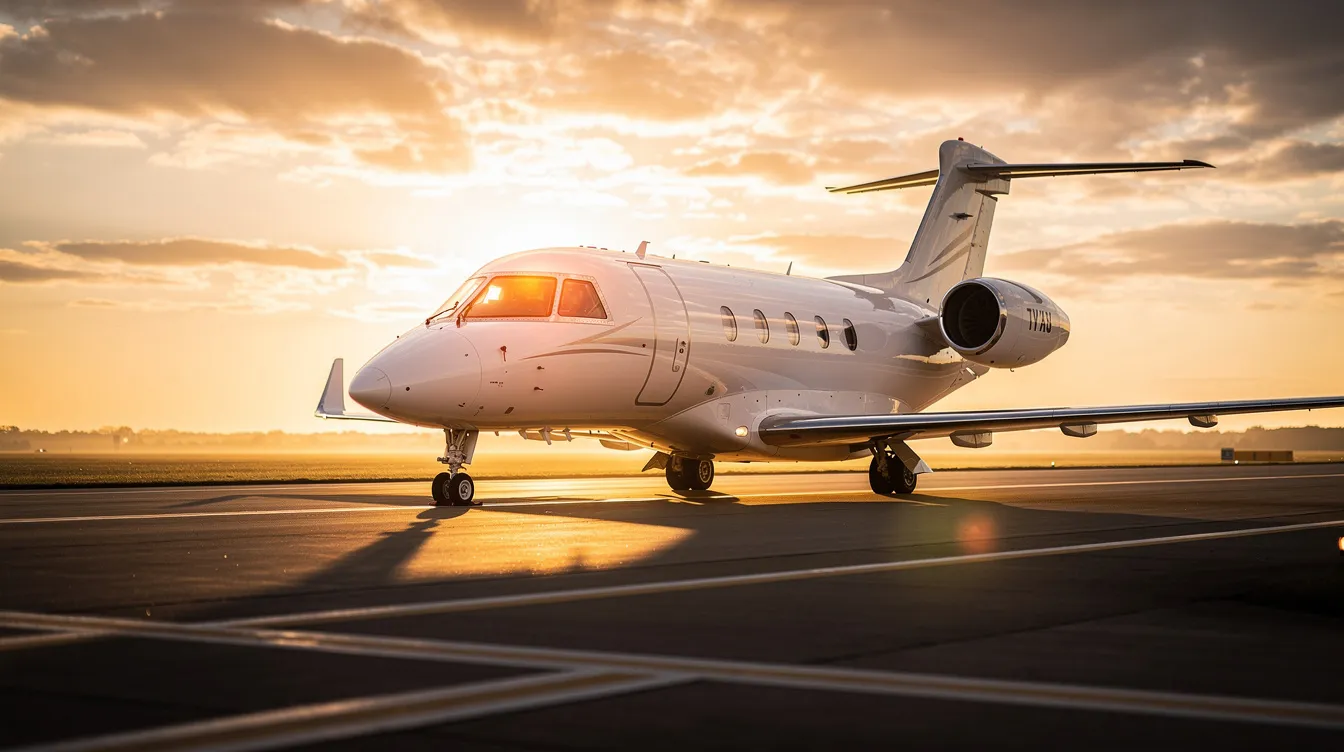
In private aviation, a "new plane" typically refers to aircraft delivered within the last five years, featuring the latest advancements in materials, avionics, and efficiency. A new plane in private aviation is defined by more than a recent delivery date. Modern aircraft increasingly utilize advanced composite materials for weight reduction, while the latest advancements in aircraft design focus on integrating lighter materials and improved aerodynamics. Ultra-efficient engines, digital fly-by-wire controls, and 3D-printed components that reduce parts count in manufacturing all contribute to a generation of jets that would be unrecognizable to pilots who flew even fifteen years ago.
Concrete examples delivered in the mid-2020s include the Embraer Praetor 500E and 600E, which reimagine super-mid cabins with next-generation management systems, and the Gulfstream G800, which offers an ultra-long range of 8,200 nautical miles. Cessna's Caravan family remains the most delivered utility turboprop lineup, while the Cessna SkyCourier celebrated its fifth anniversary of first flight—both signs that manufacturers across every class are committed to refreshing their fleets. Meanwhile, Airbus advances key technologies for its next-generation single-aisle studies, and a new FAA fuel efficiency rule effective January 1, 2028, will require new jets and turboprops to meet improved emissions requirements.
Key improvements that define this generation:
Up to 25% better fuel efficiency versus legacy jets
Reduced cabin noise, with some models below 50 dB
Longer nonstop range for intercontinental routes
Improved short-field performance for access to smaller airports
Ultra-efficient propulsion and advanced aerodynamics as standard
Next, let’s explore how these advancements transform the onboard experience for travelers.
Inside the Cabin: How New Planes Transform the Onboard Experience
Cabin Comfort Features
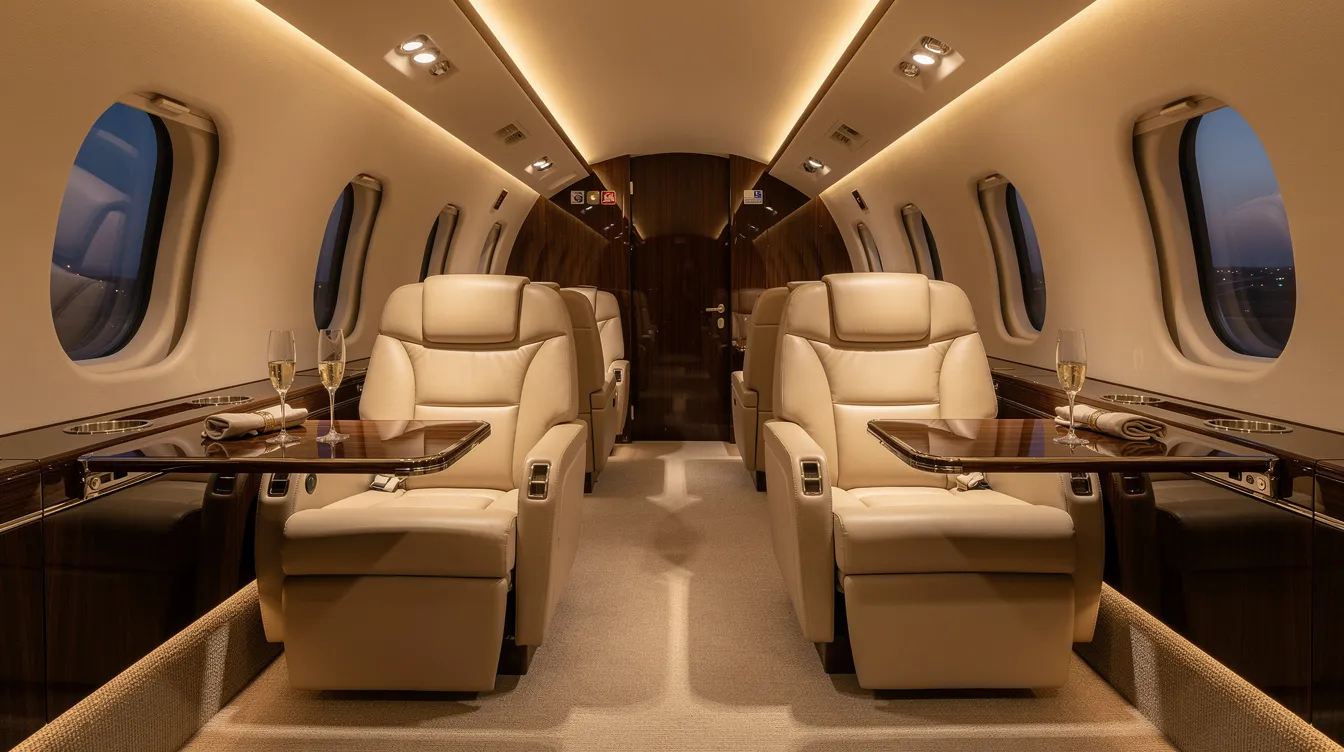
Step aboard a jet delivered in the 1990s and you meet narrow windows, high cabin altitude, and connectivity limited to a satellite phone. Step aboard a 2024-delivery airplane and the contrast is immediate: panoramic oval windows, cabin altitude held below 6,000 feet at cruise, HEPA filtration eliminating ozone and volatile compounds, and full-spectrum LED mood lighting that adjusts to your circadian rhythm.
Dassault's Falcon 10X—expected to begin its first flight in June 2026—promises interior sound levels below 50 dB and an advanced air-filtration design built to meet the most demanding wellness requirements. Even in the turboprop segment, the Cessna Grand Caravan EX now offers three new interior schemes (Lunar, Obsidian, Saddle Sport) for customers choosing their cabin design, along with eight USB-C chargers providing sixteen ports, plush carpeting, and quilted stitching. The Gulfstream G800's finished cabin stands roughly six feet three inches tall and eight feet two inches wide—a larger living space that can fit boardroom, lounge, and private suite configurations in a single fuselage.
Connectivity and Technology
Real-time flight data and connectivity are becoming standard features in new aircraft, enabling passengers to video-conference at 45,000 feet as naturally as from a corner office.
BlackJet selects cabin configurations across light, midsize, super-mid, and large-cabin classes to support every use case: an executive completing a New York–Dallas day trip needs a workstation and high-speed Wi-Fi; a family leaving Aspen for Los Angeles wants comfortable seating and entertainment; an overnight London–Dubai flight calls for lie-flat berths and quiet zones, sometimes best served by the largest private jets for sale and charter. Our fleet options are curated so the right cabin is always available.
Beyond comfort, new planes also benefit from military-grade innovations, which we explore next.
From Air Force One to Jet Cards: What Military‑Grade Innovation Means for You
The new Air Force One is a Boeing 747-8, valued at approximately $400 million and gifted by the Qatari government in 2025. The new plane features advanced technologies for security, EMP-hardened communications, and redundancies that allow it to serve as an airborne command center. It will replace the 747-2 used for over thirty years, and the new Air Force One will begin commissioning flights soon. The Boeing CEO's description of this Air Force program as the most complex ever undertaken underscores a deeper point: the suppliers who build avionics, navigation, and safety systems for new Air Force fleets also supply civil business jets.
Technologies pioneered for defense and airlines—satellite-based navigation, enhanced surveillance, advanced flight management—become standard on newer private aircraft. Dassault openly states that the Falcon 10X includes safety features stemming directly from the company's military work, including envelope protection that prevents excessive bank or pitch attitudes.
From air force tech to your cabin—three things you actually feel:
Smoother approaches and landings with synthetic and enhanced vision systems
Better weather avoidance through real-time radar and predictive route planning
More reliable schedule integrity with reduced unscheduled maintenance
BlackJet's safety protocols ensure our network favors aircraft with these newer systems, providing an added level of trust that passengers feel on every flight.
Next, let’s see how these innovations translate into real-world performance and expanded travel options.
Performance & Range: How New Planes Expand Where You Can Go
Range Benchmarks
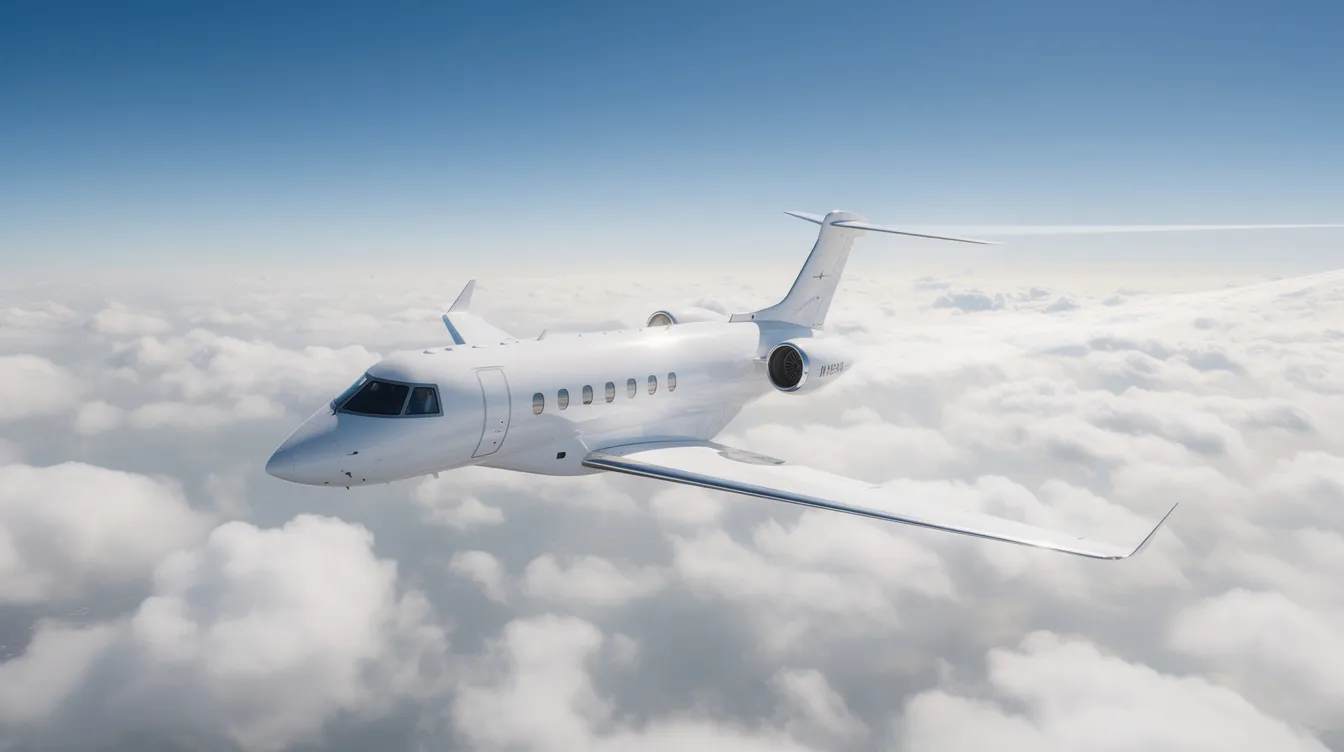
A new plane is not just a nicer seat—it is a way to reach destinations older jets cannot efficiently serve nonstop. The Boeing 777-9 achieves 20% lower fuel use and emissions, has a 40% smaller noise footprint than previous models, and offers 10% lower operating costs than its competition. These commercial aircraft benchmarks reflect the same engineering discipline applied to private jets: the Gulfstream G800's 8,200-nautical-mile range connects virtually any global city pair without a fuel stop, while the Gulfstream G300's approximately 3,600-nautical-mile range serves transatlantic missions at super-mid cost. In the narrowbody airliner world, the Airbus A321XLR has a range of 4,700 nautical miles, confirming that efficiency and range are the defining priorities of this generation.
Route Examples
Cabin Class | Sample Route | Approx. Nonstop Range | | Door-to-Door vs. Commercial |
|---|
Light jet | Los Angeles → Jackson Hole | ~1,500 nm | 2.5 hrs vs. 5+ hrs | |
Super-mid | Chicago → Cabo San Lucas | ~2,200 nm | 4 hrs vs. 7+ hrs | |
Large cabin | New York → London | ~3,500 nm | 7.5 hrs vs. 12+ hrs | |
Ultra-long | Los Angeles → Dubai | ~7,500 nm | 15 hrs vs. 22+ hrs | |
With a BlackJet Jet Card, members choose the best aircraft class for each mission instead of being locked into one owned airplane's limitations, applying the same strategic thinking you would use when evaluating private jet costs and access options.
With these performance gains, safety and certification standards become even more critical—let’s examine why.
Safety & Certification: Why Newer Aircraft and Strict Standards Matter
Safety is the foundation of every luxury claim. Without it, everything else is theater. The FAA certifies new aircraft following extensive regulatory reviews, and each generation of jets adds layers of protection: digital glass cockpits, integrated synthetic vision, runway overrun protection, and real-time performance calculators that give pilots unprecedented situational awareness. AI-driven systems are being integrated into aviation for predictive maintenance and optimization, enabling operators to identify component wear before it becomes an issue.
BlackJet works only with vetted operators who meet or exceed third-party safety ratings, maintain minimum pilot-hour thresholds, and require recurrent training. Our safety standards reflect a philosophy that the interest of every customer is best served by ensuring both the aircraft and the crew represent the highest level of certification in the industry.
Consider a winter approach into Aspen: in an older jet without enhanced vision, pilots may need higher weather minima—and a report of low ceilings could mean a diversion. A newer private jet equipped with synthetic and enhanced vision systems allows approaches at lower decision heights, keeping your schedule intact and your year of travel plans on track.
As safety and efficiency improve, sustainability is the next frontier for new planes.
Sustainability & Efficiency: New Planes and Carbon‑Neutral Private Flights
Private aviation faces fair scrutiny on emissions. The honest response is not deflection but investment: new passenger jets are designed for lower fuel consumption and emissions, delivering 15–25% fuel efficiency gains over legacy models. Demand for sustainable aviation fuels is increasing across the aviation industry, and newer engines are certified for higher SAF blends. Hybrid-electric and hydrogen propulsion technologies are being developed for future aircraft, pointing toward a longer-term transformation of private flight.
BlackJet is committed to carbon-neutral flights—every journey is offset automatically at no extra cost to the member through verified forest preservation and renewable energy projects.
Legacy midsize jet vs. new super-mid (illustrative comparison):
Feature | Legacy Midsize Jet | New Super-Mid Jet |
|---|
Fuel burn | ~1,200 kg/hr | ~950 kg/hr |
CO₂ per passenger-hour | Higher | Lower (with offsets and better utilization) |
Noise footprint | Higher | Lower on departure and arrival |
The result: private travel that is not only more comfortable but materially closer to the per-passenger impact of premium commercial service.
Next, let’s compare the benefits of Jet Cards versus owning a new plane.
Jet Cards vs Owning a New Plane: Smarter Access to Next Generation Aircraft
Taking delivery of a brand-new jet is undeniably exciting. But ownership carries capital exposure often exceeding $70 million for a large-cabin model, plus crew salaries, hangar fees, insurance, maintenance, and depreciation that begins on day one. A BlackJet Jet Card—available in 25-hour, 50-hour, and larger blocks—offers prepaid, predictable access to multiple aircraft types without any of those fixed costs, whether you are comparing 100-hour jet card pricing and value, exploring 50-hour Jet Card cost structures, reviewing a broader guide to Jet Card membership pricing, or considering the dedicated BlackJet 25+ Hour Jet Card program.
A San Francisco-based tech founder, for example, might use a 50-hour card for Bay Area–Seattle shuttles in light jets during the work week, then fly the family to Hawaii in July on a super-mid and to Europe in a large-cabin jet later in the year. No single-owned airplane could fit all three missions as efficiently.
Why Jet Cards lead over ownership and ad hoc charter:
No acquisition risk or depreciation
No crew, hangar, or insurance overhead
Choice of aircraft class for each mission
Access to new-generation fleets across the network
24/7 real-time dispatch and backup support
With access and flexibility covered, let’s look at how technology streamlines the booking experience.
Technology & Booking Experience: New Plane Meets New Platform
A modern airplane deserves a modern way to book it. BlackJet's digital platform lets members request, confirm, and manage flights with the same ease they expect from any premier digital service. Real-time pricing and availability across cabin types, secure payment, instant confirmations, and on-trip support—phone or chat, 24/7—are all standard.
An executive in London can explore options for a next-morning flight to Zurich via the app, filter by aircraft age and cabin class, and confirm in under five minutes, drawing on the same capabilities highlighted in BlackJet’s premium private Jet Card programs and services. Automated safety checks ensure only vetted aircraft appear, so the member sees choices that already meet BlackJet's requirements for certification, maintenance history, and pilot qualifications.
Next, we answer the most common questions about new planes and BlackJet membership.
FAQs: New Planes, Safety, and BlackJet Membership
How new are the planes in the BlackJet network?
Aircraft in our network are selected for modern avionics, cabin quality, and maintenance standards. Age varies by category, but we prioritize late-model jets that meet strict certification thresholds.
Is a new plane always safer than an older one?
Age alone does not determine safety. What matters is the combination of modern avionics, rigorous maintenance, operator certification, and pilot training. Newer aircraft typically offer more advanced systems, but operator standards are equally critical, and a broader understanding of private jet safety, risks, and realities helps put these factors in context.
What aircraft categories can I access with a Jet Card?
Light, midsize, super-mid, and large cabin. Each category covers different range and comfort profiles. Learn more about how Jet Cards work, dive deeper into Jet Card membership pricing and structures, or review the best Jet Cards for frequent flyers to see how different programs compare.
How does BlackJet ensure carbon-neutral flights?
Every flight is automatically offset through verified projects at no added cost. We also prioritize newer, more fuel-efficient aircraft to reduce gross emissions before offsets apply.
How quickly can I book a flight on a next-generation jet?
In many cases, flights can be confirmed within hours. Availability depends on location, cabin class, and notice, but our platform is built for speed.
How does military and air force technology influence civilian private jets?
Avionics suppliers who build for defense programs also provide navigation, safety, and communication systems for business jets. Features like synthetic vision and envelope protection originated in military aircraft and are now standard on many new private jets, and leading providers among the top private jet companies increasingly treat these technologies as baseline requirements.
Summary: What Makes a New Plane Different and Why Should I Care?
A new plane in private aviation—typically delivered within the last five years—stands apart due to its advanced materials, ultra-efficient engines, and state-of-the-art avionics. These innovations translate into tangible benefits: quieter and more comfortable cabins, longer nonstop range, access to more airports, and enhanced safety features derived from military and commercial R&D. New planes are also significantly more fuel-efficient and environmentally responsible, with many operators, like BlackJet, ensuring carbon-neutral flights. For travelers, this means faster, safer, and more flexible journeys, all while enjoying the highest standards of luxury and reliability. Choosing a new plane is not just about prestige—it's about maximizing every advantage modern aviation has to offer.
How to Experience a New Plane with BlackJet
Every section of this article points to a single truth: the future of private aviation belongs to those who choose access over ownership and the newest aircraft over legacy compromises. Faster routes, enhanced safety, lower environmental impact, and the flexibility to select the right jet for every mission—these are not aspirations. They are the standard BlackJet members already enjoy, whether they are exploring affordable private planes and entry-level jet options, comparing the best small private aircraft for specific mission profiles, researching the cheapest private aircraft and budget-friendly categories, learning how to buy just a seat on a private jet, evaluating a competitor’s NetJets Jet Card cost and structure, planning group trips on private jets for around 20 passengers or even up to 50 passengers, considering private jet rideshare options, reviewing premium UK private jets for sale, or asking what the cheapest private jet options look like today.
Join us in redefining what it means to fly privately. Explore BlackJet Jet Card tiers or speak with a travel specialist about accessing next-generation aircraft on your next trip.


 Sign up with google
 Sign up with Apple