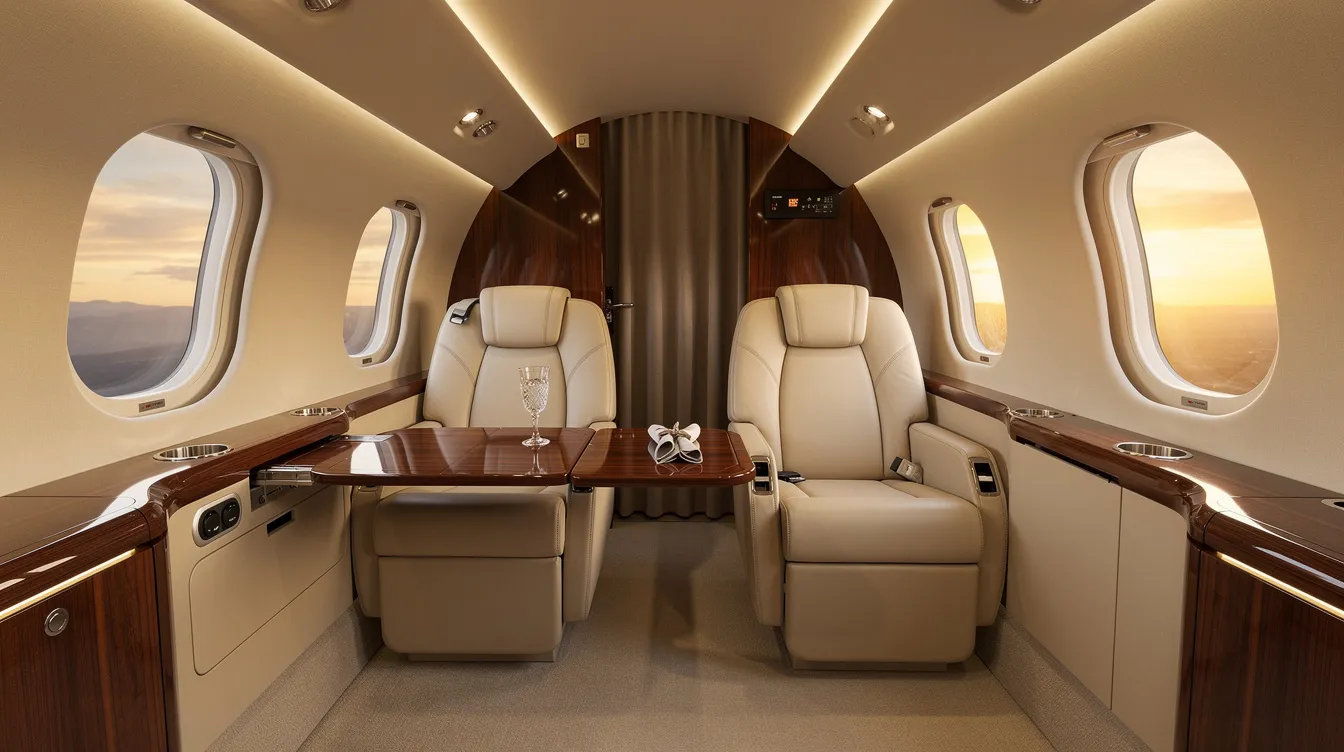
The Cirrus Vision Jet interior is a compact but genuinely upscale cabin built for regional private flying, with premium leather seating for up to seven occupants, oversized panoramic windows, modular seat configurations, climate control, USB power, and modern connectivity; in the G3 Vision Jet, Cirrus further improves ergonomics, aesthetics, and seating usability for six adults and one child. It has become the benchmark against which every personal jet is measured, not because it mimics a large-cabin aircraft, but because it refuses to. Since the Vision Jet first flew on 3 July 2008 and the SF50 earned its FAA type certificate on 28 October 2016, Cirrus Aircraft has steadily refined a cabin philosophy built around owner-pilots and their passengers: maximum utility in a compact, elegant package. The first customer Vision SF50 was delivered on 19 December 2016, Cirrus received EASA certification in May 2017, and by April 2023, 439 Vision Jets were registered in the US alone. That adoption rate tells a story about what frequent business travelers, executives, owner-pilots, and high-net-worth leisure flyers actually want from short-to-medium range private travel.
Compare the experience of boarding a Cirrus Vision jet to commercial first class. There is no security queue, no jet bridge, no overhead bin negotiation. You walk across a quiet ramp, step through the cabin door, and settle into a seat that was designed for this specific aircraft, not a generic tube. Against a typical light-jet charter, the Vision Jet trades a second turbine engine for lower operating costs, a whole-airframe parachute, and a cabin that punches above its weight in natural light, comfort, and modularity. For travelers who value privacy, schedule control, productivity, safety, and access to smaller regional airports, this single-engine jet delivers a practical advantage that commercial aviation and larger jets often cannot match on regional missions.
At BlackJet, understanding jet interior details and cabin capabilities is core to how we guide members toward the right aircraft for each mission. Whether you fly under a Jet Card program, book private regional trips, or evaluate ownership, the specifics matter: seating layout and comfort, cabin space and lighting, onboard technology and connectivity, baggage access, cockpit design, and safety systems such as CAPS and Autoland. This article walks through every layer of the Cirrus Vision Jet interior, from the newly designed seating in the G3 Vision Jet to the flight deck and the way the aircraft fits within BlackJet's private aviation offering, so you can judge how well it balances luxury, flexibility, and mission utility before you book, buy, or compare it with other private jet options.
Key Takeaways: Why the Cirrus Vision Jet Interior Stands Out
The Cirrus Vision Jet interior redefines what personal aviation can offer by blending thoughtful design, practical flexibility, and advanced technology in a compact, efficient package. Key highlights include:
Spacious yet compact: The largest cabin in its class with seating for up to seven occupants in versatile configurations, including a new third-row bench in the G3 model for six adults and one child.
Premium comfort: Bolstered leather seats with Alcantara accents, multi-zone climate control, panoramic windows, and improved noise attenuation create a refined environment for regional flights.
Mission adaptability: Modular seating enables easy reconfiguration for passengers, cargo, or a combination, supporting diverse travel needs from family vacations to executive trips.
Advanced connectivity: USB power ports, personal device mounts, in-flight entertainment, and Gogo WiFi on G2+ and later models keep passengers productive and entertained.
Flight deck innovation: The Garmin G3000 Perspective Touch+ system with autothrottle and safety features like CAPS and Safe Return Autoland enhances both pilot and passenger confidence.
Safety embedded: Whole-aircraft parachute and emergency autoland systems provide unique peace of mind rarely found in personal jets.
Seamless integration with BlackJet: The Vision Jet fits perfectly within BlackJet’s Jet Card and on-demand programs, offering carbon-neutral, efficient, and convenient regional private jet access.
These elements combine to make the Cirrus Vision Jet interior a benchmark for personal jets, balancing luxury, utility, and safety for discerning travelers.
First-Class Cabin Luxury: Seating, Space, and Layout
The Vision Jet interior is optimized not for raw speed but for how seven passengers experience the air, illustrating how affordable private planes and very light jets can still deliver a premium in-cabin experience for regional missions. In its standard configuration, the cabin seats up to seven occupants, five adults and two children, while the G3 Vision Jet reconfigures that to six adults and one child through an expanded seating option that adds a third-row bench designed for adult proportions.
The three-row layout works like this:
Row | Seats | Primary Use |
|---|
First (cockpit) | Pilot + co-pilot seats | Flight crew or owner-pilot + front passenger |
Second | Two primary passenger seats | Business or family seating with tray tables |
Third | Bench or modular seats | Flexible: child seating, additional adults (G3), or cargo |
The seats are bolstered and made of premium leather with Alcantara accents, with enhanced bolstered seats in the G3 featuring improved lumbar support, headrest geometry, and knee area padding. The cabin includes multiple USB power ports and personal device mount locations at each primary seat position. Seven USB-C ports across the cabin ensure every passenger stays connected. Built-in, collapsible tray tables fold out from the seat backs, offering a stable work surface for laptops or a convenient place for dining.
The seating arrangement includes removable and modular seats. This is where the "transformative" label earns its keep. Pull the third-row seats, and you open up space for loading mountain bikes, golf bags, ski gear, or oversized luggage-flexibility that is genuinely rare in the personal jet category. Picture a family of five heading to a ski weekend: two adults up front, two in the second row, one child in the rear, with boots and gear stacked where the bench was. Or picture an executive team of three using the mid-cabin as a focused work zone, the aft section entirely given over to presentation materials and luggage.
The cabin is referred to as the largest in its class, and the oversized panoramic windows amplify that perception. Natural light floods the interior, and the 180-degree-plus windshield wrap gives passengers in the second row a genuine sense of openness rather than the tube-like compression typical of many light jets.
Spacious and Transformative Cabin Design
The Cirrus Vision Jet features a carbon-fiber fuselage, a composite structure that enables a wider cross-section than aluminum alternatives at comparable weight, placing it among the best, cheapest single-pilot jets that balance performance, comfort, and operating efficiency for owner-operators. The result: a cabin that is 5.1 ft wide and 4.1 ft high, providing ample head and legroom for passengers, even in a jet aircraft this compact.
Mission flexibility defines the design:
Seven-seat family travel: All three rows occupied, offering expanded seating for a mix of adults and children.
Four-seat executive layout: Remove the third row for more elbow room, extra baggage, and a quieter working environment.
Cargo-heavy weekend escapes: Fold or remove aft seats entirely. The G3 model cabin allows for extra cargo through flexible seating, making it practical for mountain bikes, surfboards, or bulky duffel bags.
The single rear-mounted Williams FJ33-5A turbine engine sits above and behind the cabin, which frees interior volume and baggage space that wing-mounted configurations consume. The V-tail design contributes to aerodynamic stability while keeping the aft fuselage clean for cargo access.
Sound and vibration matter on a two-hour leg. The G2 model has improved cabin noise attenuation, roughly 3 dB quieter than the original, bringing cruise levels to approximately 80–85 dBA at FL 200–310. That is meaningfully quieter than many turboprops, though still louder than midsize business jets. The G3 continues with similar or incrementally better insulation. For conversation, it is comfortable; for a focused phone call, a quality headset helps.
Comparing the original 2016 cabin to the G3 Vision Jet redesign reveals tangible gains: seat geometry reshaped for six adults and one child, deeper storage pockets, improved accent lighting, and a redesigned cabin that feels a generation ahead in fit and finish. The G3 vision jet enhances passenger space through design features like the third-row bench, revised seat tracks, and a spacious cabin layout that maximizes every cubic inch.

In-Cabin Comfort Features and Technology
This section is a feature rundown of specifics that matter when you are evaluating a jet interior for repeated use, not a one-time demo flight, and how these details integrate with BlackJet's premium private jet card programs.
Climate and environment:
The cabin is equipped with multi-zone climate control, allowing passengers in different rows to adjust the temperature independently.
Individual air vents are adjustable per seat.
Panoramic windows provide improved visibility and generous natural light; window shades let passengers dim as needed.
Work and convenience:
Built-in, collapsible tray tables at each second-row seat accommodate laptops or meal service.
Cup holders and armrest storage pockets keep personal items organized.
The cabin includes ample storage areas and USB power ports for charging devices throughout the flight.
The G2 model features a 22-inch in-flight entertainment system with HDMI input, turning the cabin into a media-capable space for briefings or family movie time.
Connectivity:
Gogo WiFi is available on the G2+ and later variants, enabling real-time email, video calls, and streaming during regional flights.
Personal device mount locations are integrated into the seat backs and side panels, keeping tablets and phones at eye level without improvised solutions.
Aesthetic refinements:
The G3 model includes new "Arrivée" interior colorways, adding cabin aesthetic upgrades that elevate the visual experience.
The G3 model offers improved seat functionality for comfort on longer flights, with redesigned cushioning and ergonomic bolstering.
These features compare favorably to many chartered turboprops or older light jets, where USB power may be an afterthought and WiFi nonexistent. For a Jet Card member who flies several times a month regionally, a thoughtfully designed jet interior is a strategic productivity tool.
Consider this: an executive books a Monday morning hop from Teterboro to Pittsburgh on a Vision Jet. She boards at 6:45 AM, connects to WiFi, opens her laptop on the tray table, and finishes a board deck before wheels down at 8:15 AM. The cabin worked for her. That is the point.
Cockpit & Flight Deck: Where Passenger Experience Begins
In personal aviation, the flight deck directly affects every passenger. The pilot sits inches from the front row. Workload management, smooth handling, and efficient preflight translate directly into a calmer, more punctual journey for everyone on board.
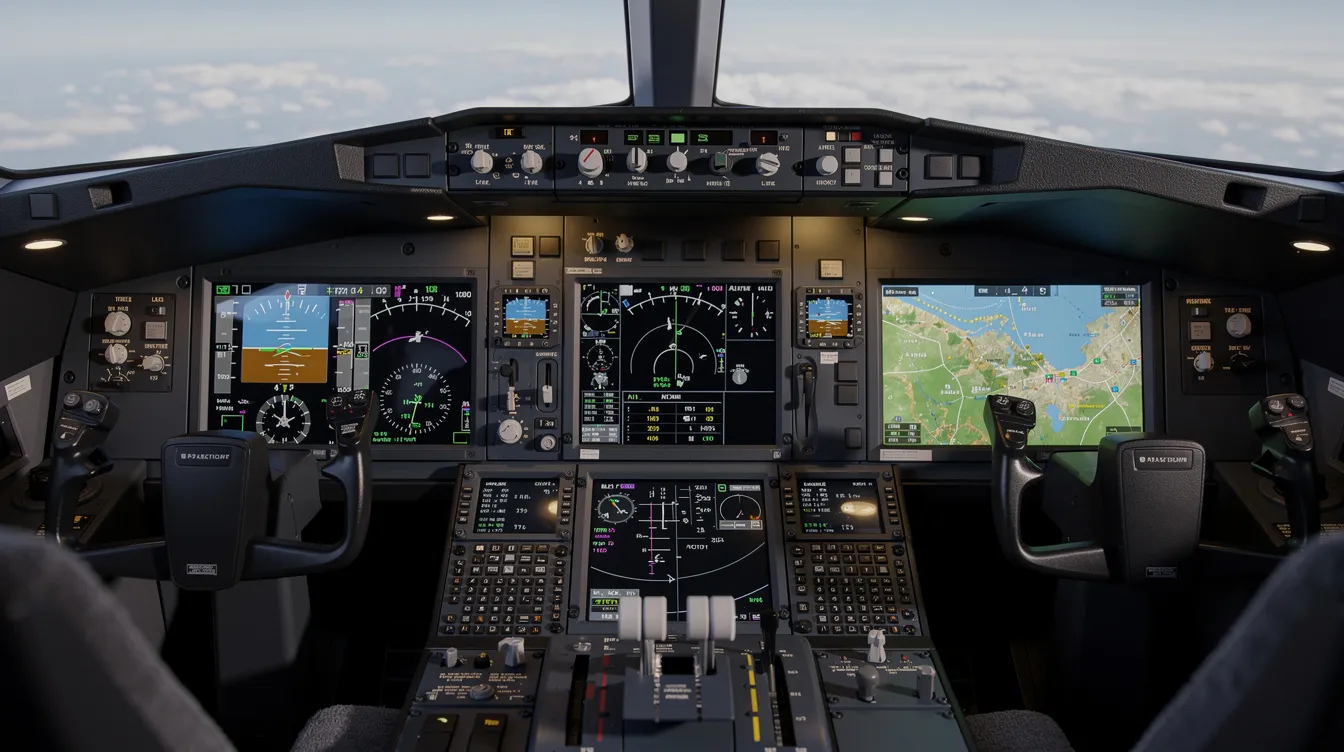
The Garmin G3000-based Cirrus Perspective Touch+ flight deck centers on three primary displays-two 14-inch PFD/MFDs and a Garmin touch controller cluster-delivering synthetic vision, terrain awareness, and traffic information in a layout that enhances situational awareness and reduces pilot workload while distinguishing the Vision Jet within key types of private jets for different travelers. The auto throttle, introduced with the G2, smooths power transitions during climb and descent, producing fewer abrupt changes that passengers feel. Envelope protection, angle-of-attack display, and a stall speed at maximum takeoff weight of just 67 knots provide generous safety margins, especially at lower approach speeds.
The aircraft achieves a max cruise speed of 300 knots, a range targeted at 1,100 nautical miles, a service ceiling of 31,000 feet, and a fuel flow of approximately 50–60 gallons per hour, efficient numbers for a jet aircraft in this category. Automated pressurization up to ~7.1 PSID in the G2+ and G3 means a lower cabin altitude at the higher ceiling, reducing passenger fatigue on longer sectors.
New features on the G3 Vision Jet flight deck include ATC datalink messaging, which lets the pilot receive air traffic control route changes via text rather than voice, fewer radio exchanges, and faster clearances. Automatic database updates via Cirrus IQ PRO Advanced eliminate manual chart loading, and alerts linked checklists surface relevant checklists tied to real-time system alerts, providing support during high workload scenarios. Three-dimensional taxiway routing (SafeTaxi) further enhances situational awareness on unfamiliar airports. Together, these capabilities cut ramp time and reduce delays-a direct benefit for time-sensitive travelers.
The panoramic windshield with embedded gold film reduces UV and solar radiation, keeping the forward cabin cooler on sunny days and reducing glare for the pilot. Over 250 pilots have been trained for the Vision Jet through Cirrus's comprehensive type rating program, which includes simulator and in-aircraft sessions lasting about two weeks. The Vision Jet is designed for a smooth transition from the SR22, meaning Cirrus owners moving from the SR series product line to a jet find the cockpit familiar, and that confidence translates to a better experience for their passengers. Single-handed operation of the pilot and co-pilot seats, which now adjust through their full aft range with one hand via left-hand controls, reflects continued investment in cockpit ergonomics.
Safety Systems Inside the Cabin: CAPS, Autoland, and More
One of the defining features of the Cirrus Vision is its commitment to whole-aircraft safety systems that are visible and tangible from the passenger seats, not hidden behind panels.
Cirrus Airframe Parachute System (CAPS): The overhead handle sits between the pilot and front passenger, clearly marked and accessible. The cirrus airframe parachute system deploys a ballistic parachute that lowers the entire aircraft to the ground under a canopy. It is standard equipment on every Vision Jet variant. This system, part of Cirrus's award-winning safety features, has contributed to saving lives across the SF50 and SR families.
Safe Return Emergency Autoland: Introduced as standard on the G2+ and G3, Safe Return allows a passenger to press a single red button if the pilot is incapacitated. The system then contacts air traffic control, selects a suitable airport, navigates terrain and weather, lands the aircraft, stops, and shuts down the turbine engine-all autonomously. For passengers unfamiliar with flying, this feature provides an extraordinary layer of reassurance. It represents reduced pilot workload taken to its logical extreme: zero pilot workload.
Additional protections:
Emergency oxygen masks are stored overhead for quick access and positioned to avoid obstructing seat movement.
Yaw stability augmentation and electronic stability protection (ESP).
Flight into Known Icing (FIKI) certification via pneumatic boots.
Many of these safety layers are rare even on larger business jets. They reinforce Cirrus's positioning in personal aviation and align with BlackJet's emphasis on stringent safety standards and operator certification across every aircraft in its network, which are core differentiators in any comprehensive private jet price and options overview.
Lighting, Atmosphere, and Landing Lights Influence on Cabin Feel
Lighting shapes perception. Inside the cabin, adjustable LED strips and individual reading lights allow a quick shift from focused work brightness to a subdued evening ambience, useful on red-eye repositioning legs or family flights where children need to sleep.
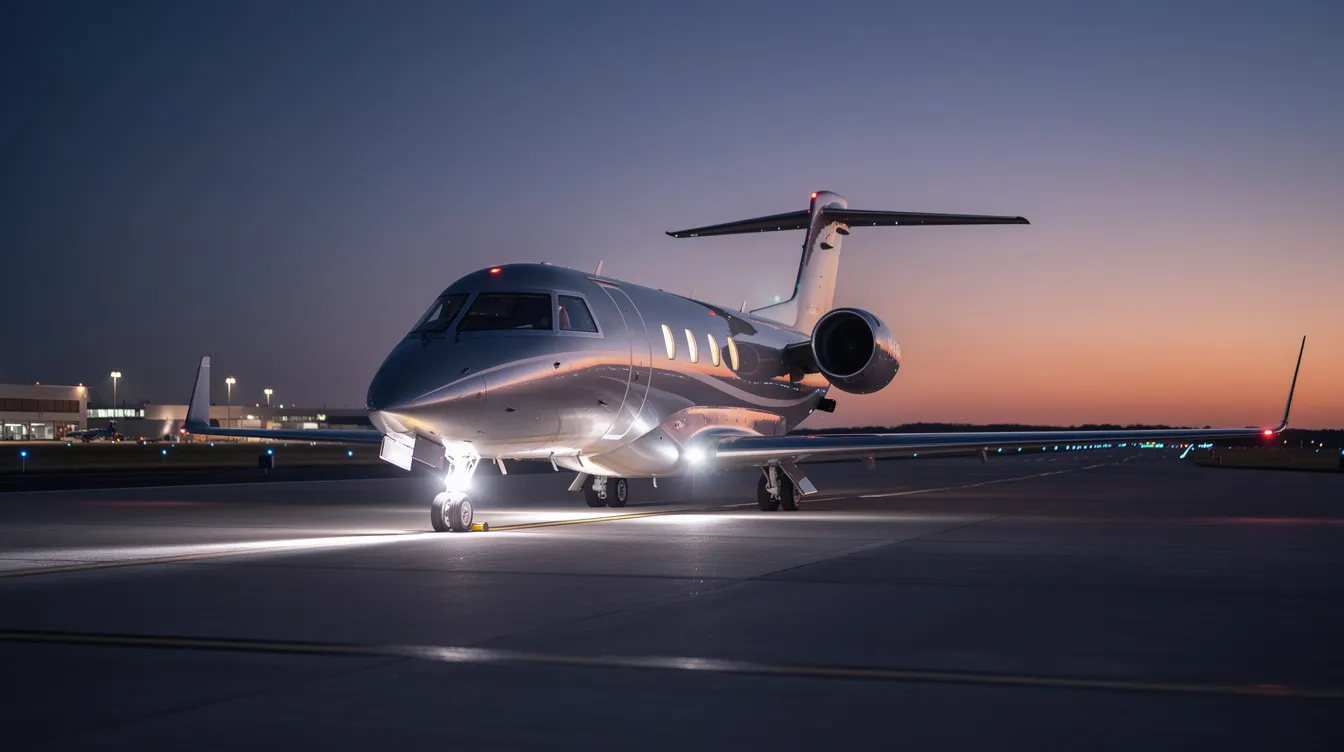
On the exterior, the cirrus spectra wingtip and landing lights on the G3 are claimed to be approximately 2.7 times brighter than previous units, improving safety during night operations. The signature cirrus halo light on the ramp creates a distinctive arrival and departure theater: passengers boarding at dusk step into a pool of well-lit space beneath the aircraft, a small but meaningful detail that communicates quality before anyone sees the cabin.
Picture an early-morning departure from a regional field. The cabin glows softly, tray tables are stowed, and the pilot completes flight planning on the Perspective Touch+ displays. Outside, the spectral lights sweep the taxiway as the aircraft advances toward the runway. It is calm, deliberate, and reassuring-a sensory experience that piston aircraft and many turboprops simply cannot replicate.
Baggage, Access, and Everyday Practicality
For Jet Card members and owner-operators, the value of the Cirrus Vision Jet interior is measured as much in practicality as in polish, especially when you understand jet card cost and private jet membership pricing.
Baggage capacity:
Internal baggage compartment: approximately 25 cubic feet, accessible in-flight.
External Cargo X-tend option (G3): accommodates longer items-skis, golf clubs, fishing rods-with a maximum external baggage load of roughly 300 lbs.
Weight and balance constraints apply, especially with full fuel, so operators plan loads carefully.
Cabin door and access: The single large cabin door with integrated step makes boarding straightforward. Handholds are positioned for stability, and the step height is manageable for older passengers and children. Once inside, the aisle is narrow but functional, and passengers reach their seats without contortion.
Real-world loading examples:
Trip Type | Typical Load | Configuration |
|---|
Golf weekend in Scottsdale | 3 adults + 3 golf bags | Remove third row; bags in aft compartment + Cargo X-tend |
Mountain bike trip | 2 adults + 2 mountain bikes | Remove second- and third-row seats; bikes secured in cabin |
Family holiday | 2 adults + 3 children + luggage | Full seven-seat config; luggage in aft baggage area |
The ability to travel efficiently with bulky gear-loading mountain bikes, skis, or multiple suitcases is where the Vision Jet's modular cabin earns its keep against competitors. Many light jets and turboprops cannot match this level of reconfiguration without significant crew effort. Cirrus's Jetstream program offers fixed-cost maintenance plans that keep the aircraft operationally available, so weekend trips do not get delayed by unplanned service events.
G3 Vision Jet vs Earlier Variants: Interior Evolution
The Cirrus G3 Vision Jet, announced in February 2026, refines the cabin for six adults and one child while adding more than 30 increased mission capability improvements, reinforcing its position among the best 2-million-dollar private jet options for buyers focused on modern safety and cabin design. Here is how the interior has evolved:
Generation | Year | Key Interior Changes |
|---|
G1 | 2016 | Original cabin; 5 adults + 2 children; 6.4 PSID pressurization |
G2 | Dec 2018 | Improved insulation (~3 dB quieter); autothrottle; Perspective Touch+; higher ceiling via FL 310 |
G2+ | 2021 | Gogo WiFi; Safe Return standard; improved payload; enhanced trim |
G3 | 2026 | Offering expanded seating (6 adults + 1 child); third-row bench; ATC datalink; automatic database updates; Arrivée colorways; Spectra lighting; redesigned pilot seats with full aft range adjustment |
The G3's new features directly touch passengers: ATC datalink means fewer voice-radio delays, automatic database updates cut preflight downtime, and the newly designed seating geometry provides better legroom and knee area comfort in the second row. Alerts linked checklists and three-dimensional taxiway routing reduce pilot task saturation during high workload scenarios, making departures and arrivals smoother.
These iterations reflect the broader evolution of personal aviation-from first-generation owner-flown jets to networked, increasingly capable aircraft suitable for on-demand and jet card operations, including products like the BlackJet 25+ Hour Jet Card that connect members with right-sized aircraft for regional missions. At BlackJet, we evaluate aircraft generations with continued investment in safety systems, comfort, and digital integration as primary criteria. The relentless innovation that Cirrus applies across each generation aligns with our own standards for fleet and partner selection.
Where the Cirrus Vision Jet Fits in the BlackJet Experience
The Cirrus Vision Jet complements BlackJet's broader portfolio of light, midsize, and large-cabin aircraft within its Jet Card and on-demand programs, fitting naturally alongside the best jet cards for frequent flyers that emphasize predictable pricing and guaranteed access. It fills a specific niche: regional missions under approximately 1,000–1,300 nautical miles, for groups of four to six adults, where airport flexibility and time savings outweigh the need for a stand-up cabin or transcontinental range.
Sample itineraries: Frequent users weighing these missions often compare the Vision Jet cabin experience against typical private jet rental costs on larger aircraft categories.
Los Angeles to Aspen (approximately 590 nm): Four executives depart Van Nuys at 7 AM, cruise at FL 310, and land in Aspen by 9:15 AM local. The spacious cabin allows work en route; ski gear travels in the Cargo X-tend pod. Total door-to-door time saved versus commercial: roughly three hours.
New York area to Hilton Head (approximately 600 nm): A family of five departs Westchester, arrives at a small coastal airport with no airline service, luggage in the aft bay. The flight hours log fewer than two hours of block time.
BlackJet ensures every journey is carbon neutral, at no extra cost to members, including flights operated on aircraft like the Vision Jet, aligning efficient single-engine operations with the most affordable private jet options for modern travelers. Our commitment to sustainable aviation layers carbon offset onto every mission, and the Vision Jet's single-engine fuel flow of 50–60 gallons per hour makes it one of the more efficient options in the jet category.
Discover how BlackJet's Jet Card programs can match your mission profile with the right aircraft. Explore your options or speak with an advisor to find out whether the Vision Jet fits your most frequent routes, and review jet card pricing structures and benefits to choose the right access model.
FAQ: Cirrus Vision Jet Interior and Private Jet Access
How many people can the Vision Jet seat?
The Vision Jet can seat up to seven occupants, which contrasts with typical 12-seater private jet options used for larger corporate or family groups. In the G2/G2+, this is typically five adults and two children. The G3 reconfigures seating for six adults and one child through its expanded seating design.
What is the comfortable flight duration in the Vision Jet?
With a range of approximately 1,100 nautical miles and a max cruise of 300 knots, typical missions run one to three hours, placing it firmly in the very light jet category within broader types of private jets for every traveler. Multi-zone climate control, USB power, WiFi, and tray tables make flights of this length productive and comfortable. The cabin is designed to be spacious for passengers, even on longer legs.
How do CAPS and Safe Return work from a passenger's perspective?
The cirrus airframe parachute system deploys via an overhead handle visible from the cabin. Pulling it deploys a whole-aircraft parachute. Safe Return requires a single button press: the system then lands the aircraft autonomously, contacts ATC, and shuts down the engine. Both are standard equipment.
How does the Vision Jet compare to commercial first class?
You gain schedule control, privacy, access to thousands of smaller airports, and the elimination of security and boarding delays, but you should still understand how much it costs to rent a private jet on comparable routes and aircraft sizes. A typical door-to-door trip on the Vision Jet saves two to four hours versus commercial first class on comparable routes. The trade-off: a smaller cabin without a galley or full lavatory.
Can BlackJet Jet Card members request specific aircraft, like the Vision Jet?
Yes. Members work with advisors to match mission length, passenger count, luggage requirements, and budget to the right aircraft category, whether they are considering a 100-hour jet card cost structure or a smaller commitment. For regional hops with four to six passengers, the Vision Jet is often recommended. Learn more about how jet cards work.
Does BlackJet offset carbon emissions on Vision Jet flights?
Every BlackJet flight is carbon neutral at no additional cost to members, complementing aircraft like the Vision Jet that already rank among the top affordable private planes for efficient travel. This applies to all aircraft categories, including flights operated on Cirrus Vision Jets. The Vision Jet's efficient fuel flow of approximately 50–60 gallons per hour also makes it a comparatively fuel-efficient choice in the jet segment.
Where can I learn more about pricing and availability?
For a detailed look at acquisition costs and operating economics, visit our guide on the price of the Cirrus Vision Jet and how it compares with 2-million-dollar private jet options. To discuss personalized aircraft recommendations and cabin walkthroughs based on your most frequent routes, contact BlackJet's advisory team directly.
Conclusion: The Cirrus Vision Jet Interior as a New Standard in Personal Aviation
The Cirrus Vision Jet interior exemplifies how thoughtful design, advanced technology, and mission-focused flexibility can elevate personal aviation beyond mere luxury. Its spacious yet compact cabin, premium materials, and transformative seating configurations make it uniquely suited for regional travelers who demand comfort, convenience, and adaptability. Safety features like CAPS and Safe Return Autoland provide unmatched peace of mind, while connectivity and climate controls ensure a productive and pleasant flight experience.
For discerning travelers and owner-pilots, the Vision Jet’s interior strikes a precise balance between utility and refinement, setting a benchmark in the personal jet category. Integrated seamlessly within BlackJet’s Jet Card and on-demand programs, it offers an efficient, carbon-neutral, and accessible private aviation solution tailored to the realities of modern business and leisure travel.
Choosing the Cirrus Vision Jet means embracing a new era of private flight—one where innovation, safety, and genuine passenger comfort converge to redefine what personal aviation can achieve. Discover how this exceptional cabin experience can transform your next regional journey with BlackJet’s premium private jet access.


 Sign up with google
 Sign up with Apple