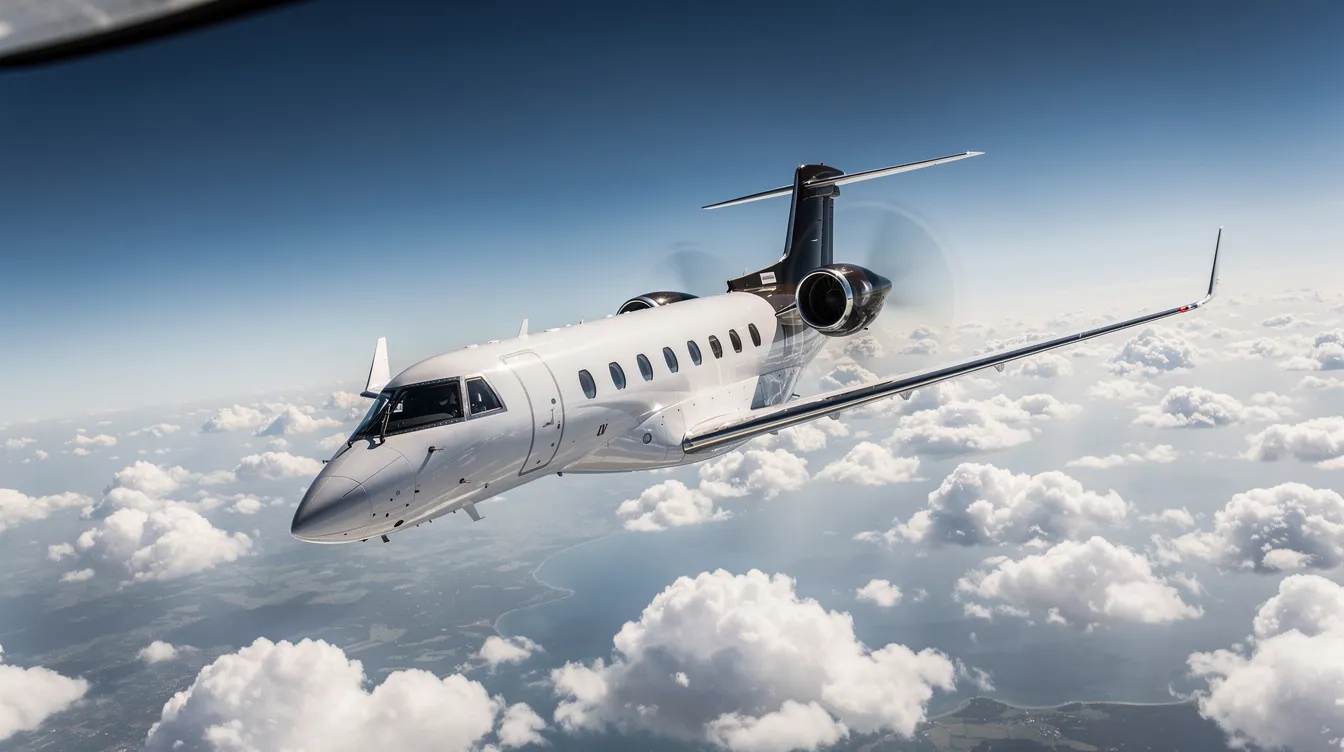
Private aviation is not simply a luxury purchase. For high-net-worth travelers and corporate leaders, private jet access is a strategic advantage: fewer connections, shorter ground time, private terminals, and the ability to fly closer to the actual destination. This article explores the most fuel-efficient airplanes available to private travelers, from turboprops to light jets and midsize jets, and explains why choosing the right aircraft can optimize cost, sustainability, and travel experience.
Yet the smartest private flyers are no longer asking only which plane is fastest. They are asking which aircraft delivers the right balance of time, comfort, safety, cost, and environmental impact. That is where the most fuel-efficient airplanes become especially relevant.
Why Fuel Efficiency Matters in Private Aviation Today
Fuel efficiency matters because fuel is one of the largest variables in aviation. For airlines, optimized flight planning helps minimize fuel consumption across thousands of routes. For private flyers, the same principle applies on a more personal scale: choose the right aircraft for the mission, and the trip becomes more economical, more efficient, and lower-impact.
Fuel burn is often the single biggest driver of operating expenses for both airlines and private jet owners, commonly representing 30–40% of direct operating costs. When jet fuel consumption rises, charter pricing, ownership budgets, and fuel surcharges tend to follow. A business jet that burns less per hour can save real money over a 25-hour or 50-hour Jet Card travel year.
A few terms help frame the discussion:
Fuel efficiency: how far an aircraft travels on a given amount of fuel, often measured in nautical miles per gallon or miles per gallon.
Fuel burn: how much fuel an aircraft uses per hour, usually stated as gallons per hour.
Fuel economy: the cost per mile or per seat-mile, which matters when comparing a two-passenger trip with an eight-passenger trip, and on a per-seat basis can sometimes look closer to an efficient car than readers expect—especially when structured through predictable Jet Card pricing or comprehensive jet card cost models.
The most fuel-efficient aircraft are not always the largest, newest, or fastest. They are the aircraft best matched to the mission: distance, passenger count, runway length, baggage, maximum range, and schedule. A turboprop may be the right airplane for a 350-mile regional hop, while a midsize jet may be more efficient for six executives flying nonstop across the continent.
This is where BlackJet’s premium Jet Card programs create an advantage. Instead of owning one plane with one fuel burn profile, members can access turboprops, light jets, and midsize jets according to the trip. BlackJet 25+ Hour Jet Card solutions also include carbon-neutral flights as standard, so every improvement in fuel efficiency reduces the volume of carbon offsets required per trip.
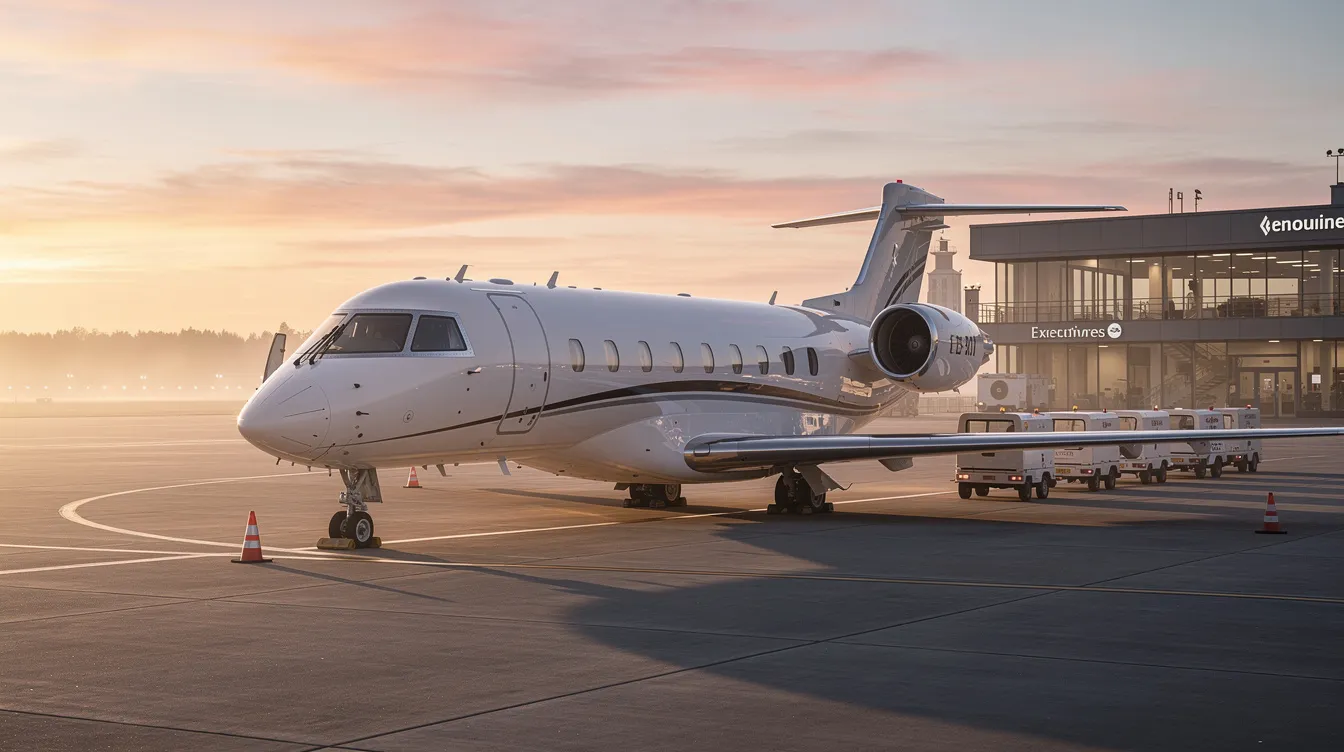
How We Measure the Most Fuel-Efficient Aircraft
Comparing fuel-efficient aircraft is not as simple as asking how many gallons the aircraft burns. A larger cabin may use more fuel per hour but less fuel per passenger when every seat is occupied. A faster aircraft may burn more per hour but arrive earlier, changing the total fuel cost.
Here are the core metrics:
Gallons per hour (GPH): total fuel burn during cruise or across a typical mission.
Nautical miles per gallon (nmpg): how many nautical miles the aircraft travels per gallon.
Miles per seat: a useful way to compare aircraft with different capacities, especially when fewer passengers are onboard.
Aircraft class | Typical fuel consumption | Typical efficiency | Best-fit mission |
|---|
Fuel-efficient turboprops | 55–100 gallons per hour | 3–4.5 nmpg | Short routes under 500 miles |
Light jets | 120–220 gallons per hour | 3–6 nmpg | 500–1,200-mile trips |
Midsize jets | 180–350 gallons per hour | 1.5–2.5 nmpg | Longer nonstop routes with 6–8 passengers |
The “best” model changes with the route. Turboprops usually dominate sub-500-mile legs. Light jets often excel in the 500–1,000-mile range. Midsize jets can become the most efficient choice on 2,000–3,000-mile flights when avoiding a fuel stop saves time, money, and more fuel.
Cruise speed also matters. Flying at maximum speed is not always the best fuel economy strategy. Sometimes a modest reduction in cruise speed improves miles per gallon without materially changing the arrival time, especially on short routes where climb, descent, taxi, and landing consume a large portion of the schedule.
BlackJet’s operations team considers these metrics in the background when sourcing aircraft for Jet Card members. The goal is not simply to find available jets, but to align aircraft selection with safety, cabin requirements, range, fuel costs, and schedule constraints.
Most Fuel-Efficient Turboprops for Private Flyers
Turboprops are often the most fuel-efficient aircraft class for regional private travel. They are ideal for 2–8 passengers, shorter runways, mountain airports, island airports, and city pairs where a jet’s speed advantage is limited by airport access or routing, and they frequently appear in guides to the best small private aircraft for different missions and the most affordable private jet options.
Model | Approx. fuel burn | Approx. efficiency | Range and cruise |
|---|
Tecnam P2006T | About 8 gallons per hour per engine, roughly 16 GPH total | Around 17.8 nmpg | ~850 statute mile range, ~155 mph cruise speed |
Daher TBM 900 series | Around 70 GPH | Approx. 4.4 nmpg | ~2,050 mile range, ~290 mph cruise |
Pilatus PC-12 NG | Roughly 65–70 GPH | About 3.7 nmpg | Range over 1,700 miles, cruise above 260 mph |
Piaggio P.180 Avanti | Around 100 GPH | About 3.3 nmpg | Near-jet cruise above 400 mph |
The Tecnam P2006T is exceptionally economical for training, owner flying, and very short hops, with appeal also tied to simple production and owner-focused design priorities, though it is not a luxury cabin competitor to larger private aircraft. The Daher TBM 900 series offers a stronger blend of speed, range, and fuel economy for owner-operators and charter missions.
The Pilatus PC-12 NG is a favorite in business aviation because it combines low fuel burn, a practical cabin, strong runway performance, and excellent utility. The Piaggio P.180 Avanti is unusual: it uses two engines and turboprop power, but its aerodynamic shape delivers near-jet speed with lower fuel consumption than many comparable jets.
For example, a regional CEO flying Boston–Toronto or Geneva–Milan with four passengers may not need a light jet. A Pilatus PC-12 via a BlackJet Jet Card can reduce fuel consumption dramatically while still offering a pressurized, well-appointed cabin, executive privacy, and access to smaller airports—an appealing option for flyers comparing the cheapest private aircraft and budget-friendly access models.
The trade-off is comfort and perception. Turboprops may have more cabin noise, smaller lavatories, and lower speeds than midsize or large aircraft. But modern turboprops are far from basic. For short regional service, they are among the most fuel-efficient planes in the private market.
Most Fuel-Efficient Light Business Jets
Light jets offer the next step: true jet speed, enclosed lavatories on many models, more baggage capacity, and higher-altitude cruise. For small groups, they are often the most fuel-efficient jets for 500–1,200-mile missions, and they are popular in many models of buying just a seat on a private jet rather than chartering the whole aircraft.
Notable examples include:
Cirrus Vision Jet SF50: approximately 55–65 gallons per hour, around 6.0 nmpg, range near 1,200 miles, and cruise around 300 knots. Its single-engine design gives it unusually low fuel burn for a jet, making it ideal for 2–4 passengers.
HondaJet HA-420: roughly 90–110 gallons per hour, around 4.5–5.0 nmpg depending on configuration, range around 1,400 miles, and cruise above 420 mph. Its over-wing engine mount design helps reduce drag and cabin noise.
Embraer Phenom 100: about 120 gallons per hour, around 4.0 nmpg, 1,356-mile range, and 466 mph cruise. It is known for runway performance and efficient operation.
Cessna Citation M2 and Citation CJ series: efficient legacy light jets with low fuel consumption, dependable maintenance records, and strong dispatch reliability.
Compared with larger jets, light jets can cut fuel burn per hour by 30–50% while still delivering true jet performance. That makes them particularly useful for routes such as New York–Chicago, London–Zurich, or Los Angeles–Aspen, especially for frequent travelers evaluating the best jet cards for regular private flying.
Consider a BlackJet member flying from New York to Miami with three passengers. A midsize cabin may feel tempting, but a HondaJet or similar light jet can reduce fuel consumption significantly while keeping total flight time competitive. If the member’s profile prioritizes sustainability, BlackJet’s booking platform can surface more fuel-efficient options first.
This is also where newer engine technology matters. Some modern light aircraft benefit from advanced engines, cleaner aerodynamics, and, in broader aviation, geared turbofans that improve thrust efficiency. The outcome is simple: less fuel, lower cost, and reduced environmental impact for the right trip.
Most Fuel-Efficient Midsize Jets for Longer Missions
Midsize jets consume more fuel per hour than turboprops or light jets. But for longer routes and larger groups, they may deliver better fuel economy per passenger because they carry more people nonstop.
Efficient midsize examples include:
Model | Approx. fuel burn | Approx. efficiency | Best use |
|---|
Cessna Citation II, Citation V/Excel lineage | Around 200–220 GPH | ~2.0 nmpg | Lower-cost midsize missions up to ~2,000 miles |
Gulfstream G200 | Around 230–260 GPH | ~1.9 nmpg | Eight passengers, ~3,915-mile range, ~528 mph cruise |
Hawker 900XP | Roughly 250–260 GPH | ~1.7 nmpg | Eight passengers, ~3,200-mile range, ~493 mph cruise |
The Cessna Citation II and later Citation V/Excel family remain respected because they are relatively economical to operate, despite their 1980s origins. The Gulfstream G200 gives a strong range and cabin combination for transcontinental and selected international routes, aided by Rolls-Royce engines that support its operating efficiency and range performance. The Hawker 900XP is valued for cabin comfort and steady performance.
Midsize jets become the most fuel-efficient choice when 6–8 passengers need nonstop range beyond roughly 1,800–2,000 miles. Using two aircraft, splitting a team, or adding a refueling stop can increase total fuel burn because climb segments are fuel-intensive.
A practical example: a BlackJet executive client flying from London to Dubai may be better served by a fuel-efficient G200 than by a larger, long-range cabin jet with excess capacity. The G200 still offers the range and comfort required, while avoiding the higher fuel burn profile of large aircraft designed for ultra-long-haul or transpacific flights, including some of the most advanced aircraft entering service around 2026 and the newest flagship private jets at the top of the market.
BlackJet also evaluates aircraft age, maintenance history, and upgrade status. Modern engine overhauls, clean airframes, and winglet retrofits can improve real-world fuel economy beyond original manual figures. The least efficient previous-generation aircraft may still be safe, but they may not be the best fit when fuel cost and carbon impact matter.
Understanding Flight Efficiency Theory: Why Some Aircraft Burn Less Fuel
Fuel-efficient planes are not magic. They are the result of physics, materials, engines, and disciplined operation.
The first concept is the lift-to-drag ratio. A higher lift-to-drag ratio means the aircraft needs less thrust to maintain the same cruise speed. Less thrust means less fuel burn. Many of the most fuel-efficient aircraft use high-aspect-ratio wings, optimized airfoils, and wingtip devices to reduce drag.
There are two main forms of drag to understand:
Parasitic drag: drag from the fuselage, antennas, engine nacelles, and surface friction. It rises quickly with speed.
Induced drag: drag created by producing lift. Winglets, sharklets, and raked wingtips help reduce it.
Modern aircraft use advanced aerodynamic designs, including sharklets or raked wingtips. Wingtip devices improve the lift-to-drag ratio by reducing drag. Aerodynamic shapes and winglets enhance fuel efficiency in modern aircraft. Fuel-efficient airplanes feature advanced aerodynamics, offering significant fuel savings.
Weight is just as important. Lightweight materials like carbon fiber reduce aircraft weight significantly. A 1% weight reduction leads to a 0.75% fuel consumption decrease. Lower weight can also mean smaller engines, lower maximum take-off weight, and less fuel needed for the same route.
Propulsive efficiency explains why turboprops perform so well below about 460 mph, while high-bypass turbofan engines become more attractive at higher speeds. High-bypass turbofan engines allow modern planes to produce more thrust while burning less fuel. Advanced engine technology uses high-bypass turbofan engines for reduced fuel consumption.
Commercial aviation provides a useful context. Modern aircraft are generally 80% more fuel-efficient than those from 50 years ago. Newer aircraft offer approximately 20% lower fuel burn compared to older models like A320ceo and 737NG. Long-haul aircraft can burn roughly 20-25% less fuel per seat than previous models. The latest airplane models reduce CO2 emissions by approximately 20% compared to predecessors.
Specific benchmarks show how far the market has come. The Boeing 787-9 has a fuel efficiency of 2.31 L/100km per passenger. The Boeing 787-9 has a fuel consumption of 2.31 L/100km per passenger. The Boeing 787-8 has a range of 13,620 km. The Boeing 787 Dreamliner is 20% more fuel-efficient than its predecessors. Airbus A350 and Boeing 787 Dreamliner are leaders in wide-body fuel efficiency. The Airbus A350-900 consumes 2.39 L/100km per passenger. The Airbus A350-1000 has a range of 16,112 km. The Airbus A321 with Sharklet wingtip devices consumes 2.2 L/100km per passenger. The Airbus A321 with Sharklets consumes 2.2 L/100km per passenger. The Airbus A320neo has a range of up to 3,700 nautical miles. The Airbus A220 leads its class with significant fuel efficiency improvements over older jets. The CSeries jets have ranges of up to 3,400 nautical miles.
For additional perspective, in 2018, US airlines had a fuel consumption of 4.06 L/100km per passenger, while the average airline fuel consumption in Europe was 3.4 L/100km per passenger in 2017. Manufacturers such as Boeing and Airbus compete intensely on these figures, and publications from aviation analysts to the Wall Street Journal frequently track how fuel prices reshape the aviation market, just as they spotlight the top private jets in the world for performance and luxury.
Private travelers do not need to calculate drag coefficients before every trip. But understanding these principles helps explain why aircraft class matters. A smaller plane with the right range and capacity may be more efficient than a larger jet with unused seats.
Sustainability and Fuel Efficiency in BlackJet’s Jet Card Programs
Fuel-efficient aircraft reduce operating costs, but they also support more meaningful sustainability in private aviation. Every gallon of jet fuel or aviation gas burned creates emissions. Reducing fuel burn is the first step; offsetting the remaining impact is the next.
BlackJet’s carbon-neutral commitment is built into the member experience. Every flight’s fuel burn is calculated, converted into CO2-equivalent emissions using accepted aviation methods, and offset through vetted environmental projects at no extra cost to the member.
This makes aircraft choice important. A Pilatus PC-12 on a 350-mile trip may require far fewer offsets than a heavy jet operating with unused capacity. A light jet may be the right balance for a 900-mile business trip. A midsize jet may be the cleaner total option for eight passengers who would otherwise require multiple stops or multiple cabins.
BlackJet’s digital booking platform can surface more fuel-efficient alternatives when members request a route, with clear indications of cabin size, range, schedule fit, and approximate efficiency differences—similar to how travelers compare jet card cost and membership structures across providers or evaluate the leading private jet companies for service and safety. The result is not about compromise. It is about intelligent access.
Compared with owning a jet, this flexibility is significant. Owners are locked into one model, one maintenance profile, one fuel burn curve, and one operating cost structure, whether they fly with a major provider and analyze NetJets jet card cost and value or assess Flexjet jet card pricing and benefits. BlackJet Jet Card members can match aircraft to each mission across their yearly flying, improving aggregate fuel economy while preserving luxury, privacy, and reliability.
Safety remains non-negotiable. BlackJet works with operators that meet rigorous safety standards, including ARGUS, IS-BAO, or equivalent protocols where applicable—whether arranging midsize jets for small teams or large-cabin aircraft such as private jets that can carry around 20 passengers or VIP-configured airliners for groups of up to 50 travelers. Fuel efficiency never comes at the expense of pilot qualification, maintenance quality, dispatch reliability, or passenger confidence.

The most fuel-efficient airplanes are not defined by one number. They are defined by fit: the right aircraft, for the right passenger count, on the right route, at the right speed.
Elevate your travel - effortlessly. With BlackJet, private flight becomes more precise, more flexible, and more responsible through Jet Card programs designed around safety, sustainability, and intelligent aircraft selection, whether you are exploring UK-based private jets for sale as a long-term solution or booking on-demand private jet charters in markets like Karachi. Explore premium private jet access and discover how carbon-neutral performance, time savings, and refined service can become your new standard.
Conclusion: The Strategic Advantage of Choosing Fuel-Efficient Aircraft
In private aviation, fuel efficiency transcends mere cost savings—it represents a strategic approach to travel that balances luxury, environmental responsibility, and operational excellence. Selecting the most fuel-efficient airplanes tailored to each mission enhances not only the bottom line but also the travel experience, reducing the carbon footprint without compromising comfort or safety.
BlackJet’s Jet Card programs empower discerning travelers to access a diverse fleet optimized for fuel economy across turboprops, light jets, and midsize cabins. This flexibility ensures every journey is matched to the right aircraft, maximizing efficiency and minimizing unnecessary fuel burn. Coupled with BlackJet’s commitment to carbon-neutral flights and rigorous safety standards, members enjoy seamless, sustainable, and sophisticated private travel.
Ultimately, the future of private aviation lies in intelligent aircraft selection—where performance meets purpose. Elevate your travel with BlackJet and experience how the most fuel-efficient airplanes can redefine convenience, exclusivity, and sustainability on your terms.


 Sign up with google
 Sign up with Apple