Introduction
This article explores how Cirrus Aircraft is transforming the landscape of personal aviation through its innovative design philosophy, advanced aircraft models, industry-leading safety features, and unique ownership experience. Whether you are a private traveler seeking more control over your journeys, an owner-operator interested in the latest aircraft technology, or an aviation enthusiast curious about the future of flight, this guide will provide valuable insights. We will cover Cirrus’s approach to usability, safety, and accessibility, examining how their aircraft are redefining what’s possible for pilots and passengers alike. Discover why Cirrus design matters and how it is setting new standards for safety, convenience, and freedom in personal aviation.
Key Takeaways
Cirrus Aircraft, founded in 1984 by Alan and Dale Klapmeier, has revolutionized personal aviation with innovative designs and safety features.
The SR Series (SR20, SR22, SR22T) is the backbone of modern personal aviation, featuring composite airframes, advanced Garmin avionics, and ergonomic controls.
The Vision Jet created a new "Personal Jet" category, offering single-engine jet performance with luxury and safety, including the Safe Return autoland system.
Cirrus Airframe Parachute System (CAPS) is a unique whole-airframe safety feature that has saved over 250 lives and is standard on all Cirrus aircraft.
Safe Return emergency autoland technology enhances pilot and passenger safety, enabling fully automated landings in emergencies.
Cirrus Approach training and extensive service networks support pilot proficiency and aircraft reliability worldwide.
The Xi Design Studio allows for personalized aircraft customization, while special mission configurations expand Cirrus's versatility.
Cirrus aircraft integrate seamlessly into private aviation ecosystems alongside Jet Card programs, offering flexibility, safety, and sustainability.
Sustainability is a priority with composite materials reducing weight and fuel burn, and carbon-neutral flight options available.
BlackJet’s Jet Card programs complement Cirrus ownership by providing managed access to larger jets for longer missions, creating a comprehensive personal aviation portfolio.
Strategic Value of Cirrus Aircraft for Private Travelers
Cirrus Aircraft has delivered over 11,000 SR Series aircraft and more than 750 Vision Jets to owners in 55+ countries. The company's product line, from the SR20 trainer to the Vision Jet, gives owner-operators and private travelers access to aircraft that combine glass-cockpit automation, whole-airframe parachute recovery, and composite construction in a single package. For travelers accustomed to commercial first class or traditional charter, Cirrus design represents a different model: personal control over schedule, route, and destination, backed by safety systems that no other general aviation aircraft manufacturer has matched at scale.
Cirrus Design Corporation: origins, locations, and industry role
Cirrus Aircraft was founded in 1984 by Alan and Dale Klapmeier in Wisconsin, initially to build the VK-30 kit aircraft. The company is headquartered in Duluth, Minnesota, and has grown from a two-person design shop into an aviation company and certified aerospace OEM classified under NAICS code 336411 (Aircraft Manufacturing) and SIC code 3721.
Key U.S. facilities and their roles:
Duluth, Minnesota: Corporate headquarters, final assembly, and a talent center that supports engineering jobs and manufacturing positions across the company.
Grand Forks, North Dakota: Composite R&D and production; this facility pioneered many of the manufacturing processes behind Cirrus's all-composite airframes.
Knoxville, Tennessee: The Vision Center, opened in 2017, handles delivery, training, personalization, and customer experience for Vision Jet buyers.
McKinney, Texas; Scottsdale, Arizona; Orlando, Florida; Benton Harbor, Michigan: Regional service, support, and sales operations.
The transition from the original "Cirrus Design Corporation" naming to "Cirrus Aircraft" branding reflected a shift from a design-led startup to a full-line manufacturer. Cirrus transformed general aviation with a focus on safety, modern design, and luxury, pushing boundaries that the industry had left untouched for decades.
SR Series: the backbone of modern personal aviation
The SR Series includes SR20, SR22, and SR22T models. The SR22 is the world's best-selling general aviation airplane, holding that title for over two decades. In 2025 alone, Cirrus delivered 691 SR Series units, with the SR22T ranking as the top-selling piston aircraft globally. Cirrus has delivered over 4,000 SR Series aircraft since 1999; over 4,000 SR-series aircraft were delivered from 1999 to 2008 alone, a pace of expansion that reshaped the general aviation aircraft market.
What separates these planes from legacy piston aircraft:
Composite airframe: Cirrus pioneered the use of composite materials in personal aircraft design, producing airframes that resist corrosion, reduce weight, and improve aerodynamic efficiency.
Side-stick controls: Cirrus aircraft feature side-stick controls instead of traditional yokes, giving pilots an ergonomic, automobile-like interface.
Single power lever: The SR22T integrates throttle and propeller controls into one lever, reducing cockpit workload.
Cirrus Perspective by Garmin: Cirrus partnered with Garmin to design advanced avionics systems. Cirrus advanced the integration of glass cockpits in light aviation, making electronic flight displays standard equipment across the line since 2008.
Altitude capability: The SR22T can operate at altitudes up to 25,000 feet, giving turbocharged performance for crossing mountain ranges and flying above weather.
Cirrus aircraft provide an owner-friendly experience with a focus on usability. The SR20 serves as the entry-level trainer and the best starter plane for new pilots. The SR22 delivers touring performance with greater useful load. The SR22T adds turbocharged range for ambitious cross-country legs. Cirrus emphasizes luxury interiors and advanced automation across the entire line.
For BlackJet clients, the SR Series occupies the foundation of a personal aviation ladder: short regional hops that feed into larger jet categories for longer missions.
Vision Jet: creating the "Personal Jet" category
The Vision Jet is the world's first single-engine personal jet. First deliveries began in December 2016, and by mid-2026 Cirrus had delivered over 750 units. Cirrus introduced autonomous emergency landing technology in the Vision Jet, called Safe Return, before extending it to the piston line.
The design is distinct from every other aircraft in its class:
V-tail configuration reduces drag and weight compared to conventional tail surfaces.
Single Williams FJ33 engine cuts acquisition and operating costs below twin-engine light jets; the price of a Vision Jet sits around $3.5 million as of mid-2026.
Pressurized cabin with large panoramic windows seats five to seven passengers in an interior that matches the comfort standards of larger cabins.
Single-pilot certified operation with Garmin avionics tailored for owner-pilots.
Consider a scenario: an entrepreneur based in Miami flies a Vision Jet to Nassau (~185 nm). Total door-to-door time is under two hours. The same trip via commercial carriers involves a connection, customs queuing at a hub, and half a day lost. That is the vision behind the personal jet category.
Within BlackJet's world, aircraft like the Vision Jet complement light, midsize, and super-midsize cabin classes in a diversified strategy. A traveler might fly a single-engine private jet for a week of regional meetings and reserve a larger cabin for a transatlantic crossing.
Safety by design: Cirrus Airframe Parachute System (CAPS)
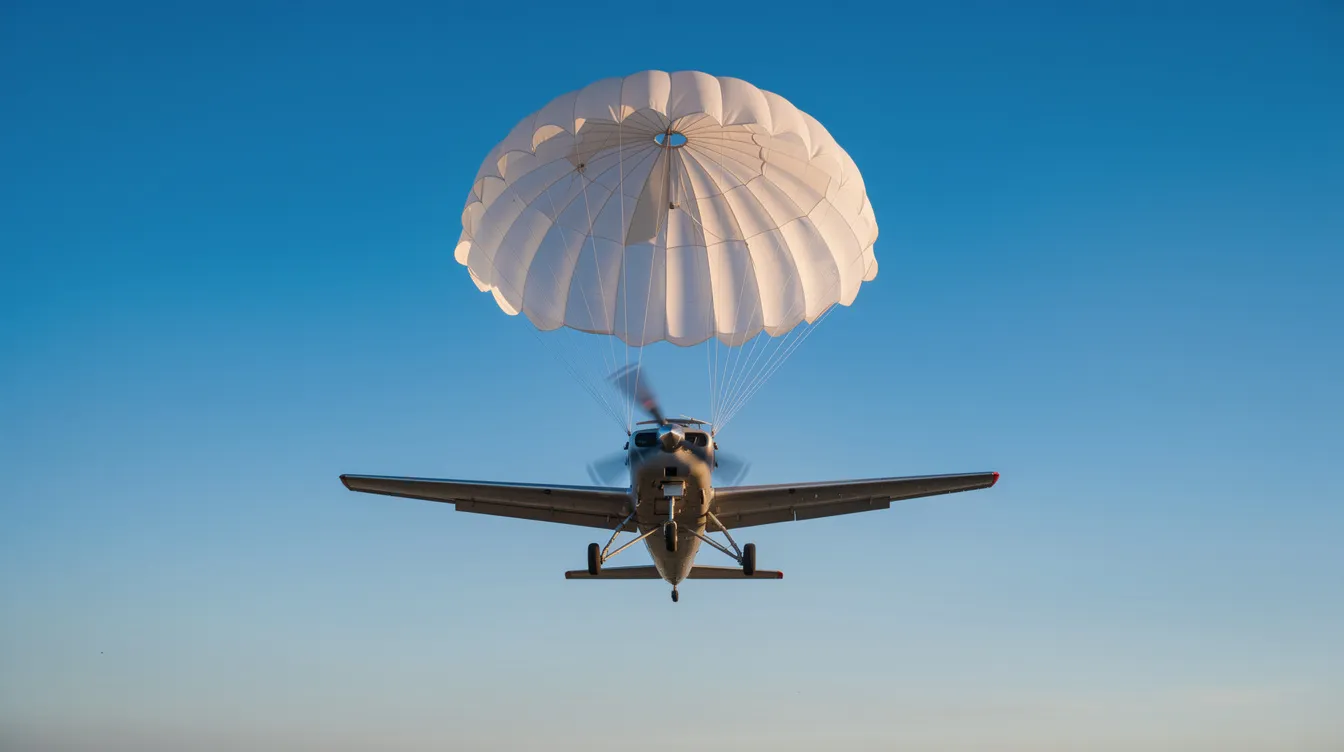
Cirrus aircraft feature the Cirrus Airframe Parachute System, a whole-airframe ballistic parachute that is standard equipment on every SR Series and Vision Jet aircraft. Cirrus was the first to receive FAA certification for ballistic parachutes, and the first manufacturer to make such a system standard across its entire product line. CAPS is among the company's greatest achievement in safety innovation.
How CAPS works: a rocket-deployed canopy fires from the airframe, arrests forward velocity in approximately eight seconds, and lowers the aircraft under parachute at roughly 1,700 feet per minute. CAPS has saved over 250 lives since its introduction, with documented deployments in loss-of-control events, engine failures at altitude, and cases of pilot incapacitation. CAPS introduces an additional safety layer beyond traditional pilot skills, giving families, non-pilot spouses, and corporate risk managers confidence that a survivable outcome exists even in worst-case scenarios.
Beyond the parachute, Cirrus aircraft include 26G energy-absorbing seats for crashworthiness, dual alternators, dual batteries, and leading-edge wing cuffs that resist spin entry. For travelers evaluating the safest small plane options, this combination of passive and active safety systems sets Cirrus apart from every other manufacturer in the aviation community.
Safe Return: emergency autoland and the future of personal aviation safety
Picture a family flight in summer: the pilot becomes incapacitated at 20,000 feet. A non-pilot spouse reaches forward and presses a single illuminated button on the overhead panel. The aircraft takes over.
That button activates Safe Return, the emergency autoland system Cirrus developed with Garmin. The Safe Return autoland system was certified in August 2020 for the Vision Jet. In 2025, Cirrus extended Safe Return to the SR Series G7+, making it the first piston aircraft certified with full autoland capability.
What Safe Return does after activation:
Communicates automatically with ATC on appropriate frequencies.
Analyzes terrain, weather, and runway databases to select a suitable airport.
Manages descent, configures flaps, deploys landing gear, and executes approach and landing.
Brakes to a full stop on the runway.
Technical requirements include runway lengths of approximately 5,800 feet, current terrain and obstacle mapping, and full integration with Garmin Perspective+ avionics. The system parallels automotive driver-assist technology but operates at higher stakes and with greater autonomy.
For BlackJet clients who fly larger jets through a Jet Card, Safe Return represents the kind of technology-forward, risk-mitigated thinking that defines the future of personal aviation safety across the industry.
Flight training and the Cirrus Approach to proficiency
Cirrus Approach is the company's proprietary training program. It covers private pilot certification, instrument rating, take-off and landing modules, recurrent training each week or on custom schedules, and transition courses for new SR or Vision Jet owners. Training blends simulator time with scenario-based instruction, including CAPS deployment procedures.
The TRAC10 is designed specifically for professional flight training, and many universities and academies have adopted SR20 or TRAC variants for primary and instrument curricula. Pilots trained on these aircraft build proficiency with modern glass cockpits, electronic flight systems, and safety automation that transfer directly to larger jet operations.
This training philosophy aligns with BlackJet's safety pillars: standardized procedures, continuous proficiency checks, and crew training that goes beyond minimum FAA requirements. The result is a community of pilots and travelers who accept fewer compromises on competence and preparedness.
Service, support, and the Cirrus Life ownership experience
Cirrus Life is the lifestyle identity that connects aircraft ownership to travel freedom, social community, and personal expression. The company operates factory service centers and authorized service centers in 31+ countries, staffed by factory-trained technicians using genuine parts to help keep aircraft reliable for many years.
Cirrus offers 24/7 real-time flight support services. Real-time support is included in Cirrus's Jet Card programs, and Cirrus provides digital booking tools for real-time flight management. Digital booking tools enhance user experience in private jet services, whether an owner is scheduling maintenance in Knoxville or arranging a cross-border flight from Robert Mueller Municipal to a Caribbean destination.
The #CirrusLife community gathers at owner meetups, coastal approaches to the Bahamas, mountain strips near Aspen, and island getaways that turn each flight into an event covered on social media. This mirrors BlackJet's own promise: transportation as a curated experience rather than a commodity. Users can book private jets via mobile applications, keeping both ownership and charter access within a single room of control.
Customization, special missions, and the Xi design studio
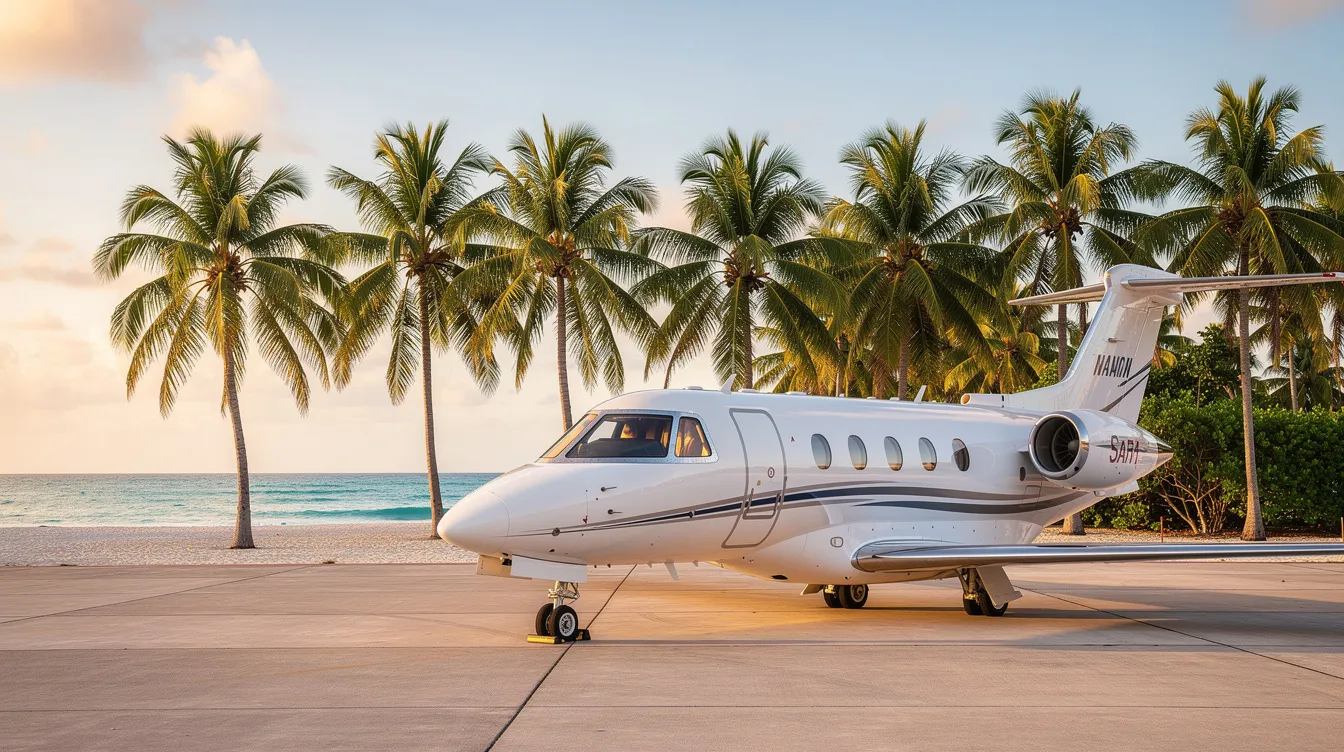
The Xi Design Studio is Cirrus's in-house customization experience. Owners work directly with a design team to select paint schemes, interior materials (leather, Alcantara, custom stitching), seat configurations, and color palettes that align with personal brands or corporate identity. Child-friendly seating layouts and pet accommodations are available for family travelers.
Beyond aesthetics, Cirrus builds special mission configurations:
Air ambulance: Vision Jets equipped for medevac operations.
Law enforcement and military training: SR Series with sensor packages and modified avionics.
Corporate shuttle and fleet operations: Standardized SR22T or Vision Jet fleets for companies that need consistent, repeatable regional transport.
These fleet configurations create opportunities for providers like BlackJet to use Cirrus aircraft as feeders or regional connectors into larger-cabin jets, building a multi-aircraft-category strategy that matches each mission to the right plane.
Frequently Asked Questions about Cirrus Design and Aircraft
What is the Cirrus President's role in the company?
The Cirrus President oversees innovation, operations, and strategic direction, ensuring that Cirrus Aircraft continues to lead in personal aviation safety, technology, and customer experience.
What were some key challenges Cirrus faced during development?
Cirrus encountered challenges including pioneering composite airframe manufacturing, integrating advanced safety systems like CAPS, and certifying new technologies such as the Safe Return autoland system.
How does the Cirrus Airframe Parachute System (CAPS) enhance safety?
CAPS is a whole-airframe ballistic parachute that can be deployed in emergencies to safely lower the entire aircraft to the ground, saving over 250 lives to date.
What makes the Vision Jet unique in personal aviation?
The Vision Jet is the world’s first single-engine personal jet featuring a V-tail design, pressurized cabin, and Safe Return emergency autoland, creating a new category of personal jets.
How does Cirrus contribute to sustainable aviation?
Cirrus uses advanced composite materials to reduce aircraft weight and fuel consumption, and offers carbon-neutral flight options through offsets, supporting environmentally responsible flying.
Can I customize my Cirrus aircraft?
Yes, the Xi Design Studio allows owners to personalize paint, interiors, seating, and other features to reflect personal or corporate branding.
What training programs does Cirrus offer?
Cirrus Approach provides comprehensive pilot training including private pilot certification, recurrent training, and transition courses tailored to Cirrus aircraft.
How does Cirrus integrate with private jet services like BlackJet?
Cirrus aircraft serve as efficient regional personal planes, while BlackJet’s Jet Card programs offer managed access to larger jets, combining flexibility, safety, and sustainability for diverse travel needs.
Cirrus aircraft in the wider private aviation ecosystem
Owning a private plane like an SR22T (~$1.1M acquisition) or a Vision Jet (~$3.5M) delivers full schedule control and the pride of piloting. A Jet Card offers managed, crewed travel with zero maintenance responsibilities. Jet cards offer prepaid access to private jets, with common jet card programs including 25-hour and 50-hour options. Jet cards provide access to multiple cabin types, and jet cards are popular among high-net-worth travelers who demand flexibility without the burdens of ownership.
Many sophisticated travelers blend both strategies: a personal Cirrus for regional U.S. travel or European hops, and jet card hours for long-haul international itineraries or larger groups. Jet card users benefit from 24/7 digital booking tools that make this combination practical on any given week.
Sustainability matters in this equation. Carbon-neutral flights are available in private aviation through offset programs like those BlackJet offers. Cirrus aircraft use composite materials for sustainability, producing lighter airframes that burn less fuel per mile. Right-sizing aircraft to mission, flying an SR22T for a 400 nm leg instead of chartering a midsize jet, reduces emissions per trip in concrete, measurable terms.
Cirrus design innovations (CAPS, Safe Return, SR Series, Vision Jet) and Jet Card models like BlackJet are complementary tools. One gives you the pioneering freedom to fly yourself. The other gives you managed access when the mission demands more range, more room, or more cabin. Together, they build an aviation portfolio calibrated to how you actually travel.
Discover how BlackJet's Jet Card programs can extend your reach. Join a community of travelers who value the same safety and innovation that define Cirrus. Explore premium jet access and find the program that fits your next flight.


 Sign up with google
 Sign up with Apple