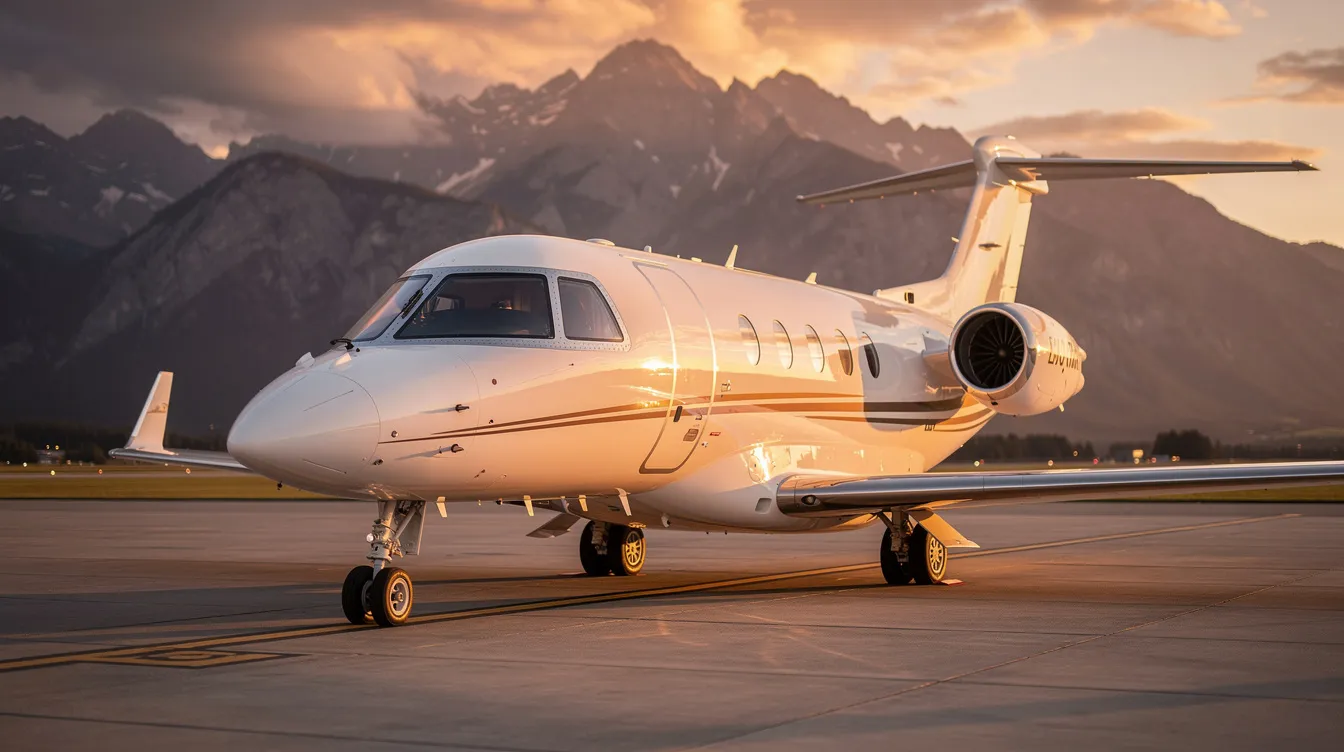
The single-engine private jet has quietly reshaped how discerning travelers think about regional mobility. What once required overnight stays and commercial connecting flights can now be accomplished before dinner, with hours to spare.
This comprehensive guide covers what single-engine private jets are, their advantages, key models like the Cirrus Vision Jet, safety features, costs, and how to access them through BlackJet. It is intended for business travelers, families, and anyone seeking efficient regional private jet travel. Whether you’re a corporate executive, an entrepreneur, or a family looking for seamless travel, this article will help you understand how single-engine jets can transform your travel experience.
Why Single-Engine Private Jets Matter for Serious Travelers
Consider a routine investor meeting in Nashville. Flying commercial from New York means navigating hub connections, airport security, and airline schedules that rarely align with yours. Door-to-door, you're looking at six to eight hours each way—often forcing an overnight stay. A single-engine private jet like the Cirrus Vision Jet departs from a private strip near your home, covers the roughly 860 nautical miles in under two hours, and puts you on the ground at a general aviation terminal with no lines, no layovers, and no wasted calendar days.
The math is straightforward: each leg on a private jet saves roughly three to four hours compared to commercial first class. On a multi-leg regional trip, that translates to five or six extra productive hours per travel day. For executives and business travelers whose time carries real economic weight, those hours compound fast.
The Cirrus Vision Jet stands as the world's first single-engine personal jet to receive FAA type certification, earning that distinction in October 2016. By 2026, its G3 model represents the benchmark for single-pilot jets in terms of safety technology, avionics sophistication, and cabin refinement. BlackJet doesn't manufacture aircraft—but our Jet Card members can request aircraft in this very light jet performance class, gaining the operational simplicity and time advantages of single-engine flight with full-service safety oversight from vetted operators as part of BlackJet’s premium private jet card programs.
What Is a Single-Engine Private Jet?
A single-engine private jet is powered by one jet engine. A single-engine private jet is powered by one jet engine—specifically, a single turbofan—and certified for private and business aviation missions. The Cirrus Vision Jet SF50 is the defining example, using a Williams FJ33-5A turbofan mounted above the fuselage.
Single-engine private aircraft include high-performance pistons and turboprops as well, but these operate at lower altitudes and slower speeds than jet aircraft. A single-engine piston aircraft like the Cirrus SR22T or Diamond DA50 RG is a capable piston aircraft, but it doesn't match the cruise speed or altitude capability of a jet. On the other end, twin-engine light jets such as the Cessna Citation Mustang or Embraer Phenom 100 offer engine redundancy but carry higher operating costs and greater complexity.
The FAA granted full type certification to the Vision Jet on October 28, 2016, making it the first jet aircraft certified with a whole-airframe parachute as standard equipment—an achievement in FAA certification that redefined the personal aviation conversation. Single-pilot jets typically accommodate 4 to 6 passengers, and single-pilot jets are designed for solo operation, meaning one qualified pilot can handle the entire flight.
Typical mission profiles include:
Miami to Nassau (~185 NM): approximately one hour direct, avoiding commercial connections through Fort Lauderdale
Dallas to Scottsdale (~870 NM): a same-day business trip that commercial schedules often stretch across two days
London to Geneva (~220 NM): using smaller airports without long ground transfers
These are the routes where single-engine jets deliver the clearest advantage—trips under roughly 1,300 NM with two to five passengers.
Key Aircraft in the Single-Engine Jet Space
In 2026, the Cirrus Vision Jet family effectively defines the certified single-engine jet category. Cirrus unveiled evolving generations—G1, G2, G2+, and G3—each advancing the platform's capability and appeal within the very light jet market and broader light jet category.
The original Vision Jet (G1, 2016) launched with a maximum range of 1,275 nautical miles, seating for up to seven passengers in its full configuration (five adults plus two children), and a cruise speed of around 300–311 knots. The Vision Jet's cruising speed is approximately 345 knots at max cruise in optimal conditions, placing it squarely in the very light jet performance envelope.
The Vision Jet G2 (2019) and G2+ (2021) brought meaningful improvements: increased service ceiling for higher-altitude cruise, enhanced takeoff performance for hot-and-high operations, auto throttle integration, in-flight wifi via Gogo, and the groundbreaking safe return emergency autoland system. The G2+ also introduced the Cirrus Perspective Touch+ flight deck with advanced avionics from Garmin.
The 2026 Vision Jet G3 is the latest evolution, featuring a redesigned spacious cabin with an expanded rear bench for two adults and a child, ATC datalink communications (CPDLC), Cirrus IQ app integration for aircraft health monitoring, and new "Cirrus Spectra" wingtips that provide an unmistakable presence on the ramp with integrated lighting.
For context, twin-engine competitors occupy a different cost profile. The Cessna Citation Mustang has a maximum speed of 390 mph and a range of 1,150 nautical miles. The Embraer Phenom 100 cruises at roughly 390 knots. The HondaJet has a maximum cruise speed of 422 knots and reaches impressive speeds for its class. The Embraer Phenom 300E accommodates up to nine passengers, stepping well beyond the small business jet segment into the light business jet tier. Each serves a different mission—but none match the Vision Jet's combination of efficient performance, lower costs, and single-engine simplicity.
Cirrus Aircraft, Vision Jet & the CAPS Story
Cirrus Aircraft, headquartered in Duluth, Minnesota, built its reputation on the SR Series piston line before extending into the personal jet space with the Cirrus Vision Jet. Central to every Cirrus aircraft is the Cirrus Airframe Parachute System—a whole-airframe ballistic parachute that deploys in emergencies to lower the entire aircraft under canopy.
The airframe parachute system, CAPS, has saved over 250 lives across the Cirrus fleet. CAPS provides a last-resort safety option during flight emergencies, and the Vision Jet's CAPS deployment covers various flight phases, from low-altitude scenarios to cruise. The Vision Jet became the first certified jet with an airframe parachute, fundamentally changing how aviation enthusiasts and Cirrus owners evaluate the risk profile of flying a single-engine aircraft.
As of late 2022, there had been two documented CAPS deployments in Vision Jets—including one near Kissimmee, Florida—both survivable. These real-world outcomes underscore that the airframe parachute is not theoretical safety theater but a proven system with measurable value for Vision Jet owners and their families.
Safety Tech: Why Single-Engine Doesn't Mean Single Point of Failure
Modern single-engine jets are highly reliable with advancements in engine technology, and single-engine jets can have advanced safety features like airframe parachutes that provide protection no twin-engine light jet in the light jet market currently matches.
The Cirrus Vision Jet layers multiple independent safety systems:
CAPS: whole-airframe parachute for loss-of-control or engine-failure scenarios
Safe Return emergency autoland: the Cirrus Vision Jet features the safe return autoland system—a passenger presses a single button, the emergency autoland system communicates with ATC, selects the nearest suitable runway, manages descent and approach, deploys gear and flaps, lands the aircraft, and brings it to a full stop, all without pilot input
Garmin Perspective Touch+ flight deck: an advanced cockpit with synthetic vision, weather radar, terrain awareness (TAWS-B), and envelope protection providing intuitive control
Auto radar and datalink weather: real-time meteorological data supporting safer flight planning and routing decisions
Known icing certification: the Vision Jet is certified for flight in known icing conditions, expanding its operational envelope in adverse weather
Consider a scenario: a pilot experiences sudden incapacitation at FL280. A passenger activates Safe Return. The autoland system takes command, contacts ATC, identifies the closest appropriate airport, flies a stabilized approach, and lands—all autonomously. Or picture unforecast icing during a winter transit: modern avionics warn the pilot, the auto radar adjusts routing, and if conditions deteriorate beyond recovery, CAPS stands ready.
Redundancy extends throughout the avionics architecture—dual or triple-redundant displays, multiple power sources, and robust engine maintenance programs ensure that turbofan failure rates remain extremely low in modern designs.
At BlackJet, our vetted partner operators must meet or exceed leading safety audit standards such as ARGUS and IS-BAO. We favor fleets equipped with Garmin avionics, autoland capability, and auto radar for missions in challenging weather—so our members benefit from these safety layers without managing any of the oversight themselves.
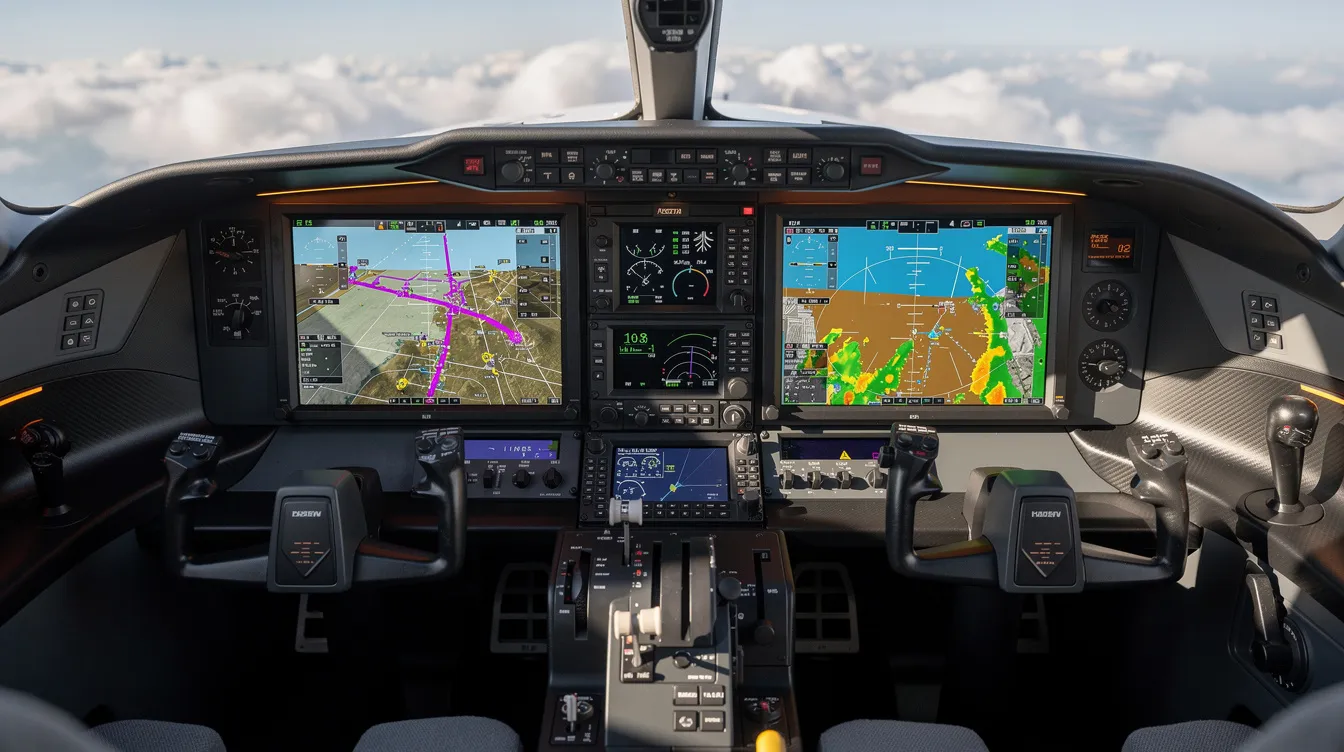
Performance & Cabin Experience vs Traditional Light Jets
The Vision Jet G2+ and G3 deliver a maximum range of 1,275 nautical miles with a max cruise of around 300–311 knots, RVSM capability up to FL310 on later models, and Vision Jet fuel consumption of 58–68 gallons per hour. The Cirrus Vision Jet has a range of 1,275 nautical miles—enough for nonstop coverage of most regional missions in the aircraft market.
Cabin Features and Comfort
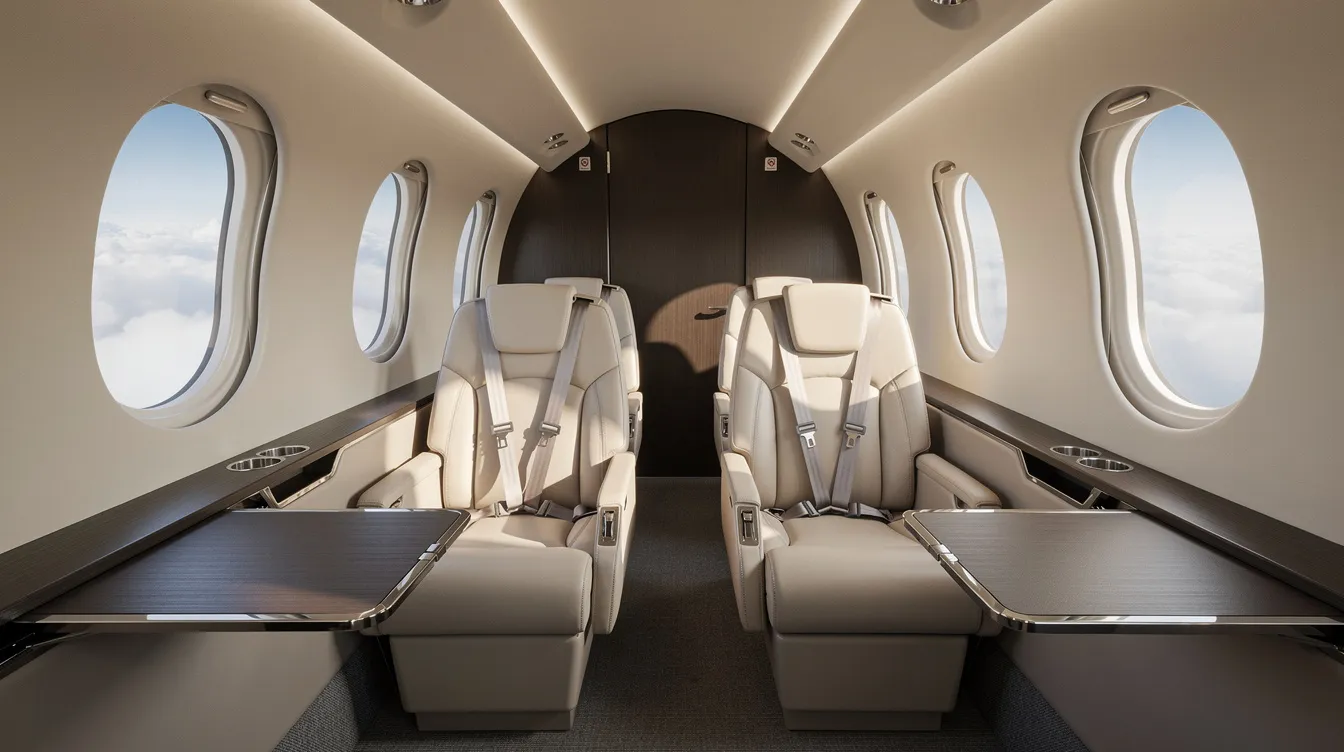
The cabin accommodates up to seven passengers in the G3's flexible configuration, with the largest cabin in its class featuring large panoramic windows, USB charging, in-flight Wi-Fi on G2+ and newer, and premium interior options like the Arrivée edition. The operating simplicity extends to ground handling—shorter turnaround times at smaller airports mean less waiting.
Executive scenario: A founder based in Chicago needs same-day investor meetings in Boston (~730 NM). Departing from a private strip at 7 AM, she arrives before 10 AM, works gate-to-gate in a private cabin, takes her meetings, and is home for dinner. Commercial itineraries on that route would require predawn departures, terminal waits, and likely a red-eye return—illustrating many of the time and cost factors discussed in our guide to chartering a small private plane.
Operating Costs Comparison
Where single-engine jets win against traditional light jets: lower hourly fuel burn, simpler maintenance (single-engine jets are simpler to maintain than twin-engine aircraft), shorter runway requirements, and easier single-pilot operation for owner pilots. Pilots do not need a multi-engine rating to fly single-engine jets, reducing training barriers for those entering personal aviation.
Feature | Vision Jet G3 | Cessna Citation Mustang | Phenom 100 |
|---|
Range (NM) | ~1,275 | ~1,150 | ~1,178 |
Cruise Speed (kt) | ~300–345 | ~340 | ~390 |
Typical Seats | 5–7 | 4–5 | 4–6 |
Est. Hourly Operating Cost | $650–$750 (owner) | ~$1,000 | ~$1,200 |
The Eclipse Jet 550 is known for its fuel efficiency and offers non-stop flights between cities as another option in this segment, with the Eclipse 500 operating costs ranging from $700 to $900 per hour.
Ownership vs Access: Why Most Clients Choose BlackJet Over Buying
Ownership Considerations
Buying a new Vision Jet G2+ or G3 is a multi-million-dollar commitment. Current list prices start around $3 million and climb with options, while annual fixed costs for the Vision Jet range from $450,000 to $750,000—covering hangar, insurance, mandatory inspections, engine programs, pilot training, and basic empty weight compliance checks. Single-engine jets typically have lower acquisition costs than twin-engine jets, but ownership still demands significant capital and ongoing management of max zero fuel weight limits, maximum takeoff weight compliance, maximum usable fuel calculations, and authorized service centers scheduling—considerations we explore in depth when comparing the best, cheapest single-pilot jets for budget-conscious buyers.
Single-engine jets typically have lower insurance costs than multi-engine jets, but even reduced insurance doesn't offset the total burden for someone flying 40–60 hours per year. The math favors access over ownership for most travelers in this flight-hour range.
Jet Card Access
With a BlackJet Jet Card, clients prepay 25 or 50 hours and gain guaranteed access to an appropriate aircraft class—Vision Jet, Cessna Citation, Phenom—without assuming depreciation, maintenance, or residual value risk, and our broader overview of jet card costs and pricing explains how these programs are structured across the industry.
Example: A client flying 50 hours per year across New York–Toronto, LA–Sun Valley, and Miami–Turks & Caicos gains predictable pricing and aircraft choice without capital investment. BlackJet sources the right very light jet or light jet for each mission, and our detailed breakdown of 50-hour jet card costs and value helps frequent flyers benchmark these programs.
Ownership pros:
Jet Card pros:
How BlackJet Jet Cards Work for Single-Engine–Class Missions
BlackJet offers tiered Jet Cards—including 25-hour and 50-hour programs—covering multiple cabin categories. The VLJ and light jet tiers are purpose-built for single-engine mission profiles, while the BlackJet 25+ Hour Jet Card extends similar fixed-rate flexibility into mid, super-mid, and large cabin categories.
Members specify preferences during booking through our 24/7 digital platform: request aircraft with modern avionics, Cirrus Perspective Touch-class flight decks, Wi-Fi, or specific seating configurations. Flight planning is handled by our team, not the client.
Real-time flight support includes route optimization, weather monitoring using auto radar and datalink information, and rapid aircraft substitution if an aircraft goes offline. All flights are arranged through audited operators, with BlackJet coordinating safety data, insurance verification, and crew currency. The result: you fly with the confidence of ownership and none of the overhead. For a deeper understanding of the economics, see our guide to jet card cost per hour alongside our complete primer on jet card pricing structures and benefits.
Costs: Hourly Rates, Operating Economics & When Single-Engine Makes Sense
Core cost drivers for any private jet include fuel burn, maintenance reserves, engine programs, crew costs, and airport handling fees. Single-engine jets are generally cheaper to operate than multi-engine jets across every one of these categories.
Operating costs for the Cirrus Vision Jet are around $650–750 per hour at the direct owner-operator level. When charter and management overhead are included, operating costs for the Vision Jet are $900–1,300 per hour, depending on the operator and market. Cessna Citation Mustang operating costs are about $1,000 per hour. Phenom 100 operating costs are approximately $1,200 per hour. Single-engine turboprops have operating costs that are generally 30–60% lower than twin-engine jets, placing the Vision Jet's economics closer to turboprop efficiency with jet-class performance—figures that fit within the broader private jet price landscape across aircraft categories and access models.
Jet Card and charter pricing wraps these underlying costs into an all-in hourly rate that also accounts for positioning, catering, and operator margin, and mirrors many of the drivers outlined in our guide to private jet charter pricing.
Use-case: A family doing six to eight regional round trips per year—roughly 40–60 flight hours—finds the single-engine or VLJ class economically optimal. Stepping up to midsize cabins only makes sense when passenger count, luggage requirements, or route distance exceed what a fuel-efficient light jet can accommodate.
Sustainability & Technology: Flying Smarter, Not Just Faster
Single-engine jets offer better fuel efficiency compared to twin-engine jets on comparable missions. Less engine weight, fewer systems, and leaner airframe structure mean lower per-trip emissions. The Vision Jet's fuel consumption of 58–68 gallons per hour is roughly half that of many twin-engine light jets covering similar distances, which is why it frequently appears in our analysis of top affordable private planes for efficiency-minded travelers.
Advanced avionics—including Garmin Perspective Touch+, synthetic vision, auto radar, and datalink weather—support more direct routings and efficient climb profiles, further improving fuel efficiency. These systems reduce holding patterns, weather diversions, and unnecessary fuel burn. For more on efficient aircraft, explore our overview of the most fuel-efficient airplanes in private aviation and our companion guide to the cheapest private jet options for cost-conscious flyers.
BlackJet's sustainability commitment means every member flight is carbon neutral through verified carbon offset or sustainable aviation fuel (SAF) initiatives—at no extra effort or cost to the client.
Connected services like Cirrus IQ and similar aircraft health monitoring tools improve maintenance planning and dispatch reliability, reducing wasted repositioning flights and cancellations. A three-person executive team flying via a single-engine-class jet on a 500 NM regional hop generates lower total emissions than the same team flying commercial business class plus regional connectors when accounting for ground transport, airport congestion, and indirect infrastructure emissions—especially with verified carbon offsets applied.
Who Single-Engine Private Jets Are Best For
The ideal candidates for single-engine or VLJ-class travel include:
Regional executives: A CFO visiting three manufacturing plants across the Midwest in a single day—a mission impossible on commercial schedules
Entrepreneurs: Commuting between hub cities and secondary markets (Dallas–Scottsdale, Salt Lake City–Boise), where commercial options are limited
Families: Reaching vacation homes 500–1,200 NM away without the friction of commercial terminals
Time-optimizers: High-net-worth individuals who treat every hour in transit as a cost, not a convenience
Ideal mission profiles for a Vision Jet-class aircraft:
Routes under ~1,300 NM
Groups of 2–5 passengers
Airports with shorter runways or limited commercial service
Trips where schedule flexibility outweighs marginal speed differences
Missions requiring max payload within the VLJ envelope
Edge cases where stepping up makes sense: mountain airports in winter (high density altitude reduces single-engine performance), over-water segments with specific regulatory requirements, or larger groups needing up to nine passengers capacity in a light business jet or midsize cabin—scenarios where the cheapest private aircraft options may still involve larger or multi-engine platforms.
BlackJet's flight advisors analyze each itinerary and recommend the right aircraft class—not the cheapest option, not the most glamorous, but the one that optimizes safety, economics, and time for your specific trip, whether that involves on-demand chartering of a small plane as outlined in our guide to charter costs for small aircraft or locking in predictable access via the best jet card programs for frequent flyers.

Frequently Asked Questions
Are single-engine private jets safe for my family?
Yes. The Cirrus Vision Jet includes the Cirrus Airframe Parachute System (CAPS), the safe return emergency autoland system, and a full suite of modern avionics, including synthetic vision, terrain awareness, and weather radar. Real-world CAPS deployments have resulted in survivable outcomes. Safety is layered across multiple independent systems—not reliant on engine redundancy alone, which is why many families pair single-engine operations with structured access through products like our 100-hour jet card cost framework when their annual flying justifies it.
How does the airframe parachute work on the Cirrus Vision Jet?
CAPS is a whole-airframe ballistic parachute. Pulling a handle fires a rocket motor that deploys a large canopy, lowering the entire aircraft to the ground. It's certified for deployment across various flight phases, including engine failure and loss of control. Across the Cirrus fleet, CAPS has saved over 250 lives.
Do BlackJet members know exactly which aircraft type they'll fly?
Members know the class—VLJ, light jet, midsize—and can request preferences like aircraft mock-up configurations, modern avionics, and cabin amenities. Specific tail numbers vary by availability, but every operator in our network meets rigorous safety and performance standards, including for emerging models that support private plane rideshare options where appropriate.
Can I request a Cirrus Vision Jet specifically?
You can express a preference, and BlackJet will source accordingly based on operator availability. Because Vision Jets are less common in charter fleets than twin-engine alternatives, we may also source comparable VLJ-class aircraft with similar performance characteristics. The first flight on any aircraft type is coordinated with a full briefing.
What's the difference between a Jet Card and an on-demand charter?
A Jet Card involves pre-purchasing hours at fixed or agreed-upon rates with guaranteed availability. On-demand charter is booked per trip with fluctuating pricing. Jet Cards eliminate peak surcharges, fuel escalators, and scheduling uncertainty; our comparison to NetJets jet card costs puts these structures in context against major market players.
How are flights kept carbon neutral?
Through verified carbon offset projects and sustainable aviation fuel, where available. BlackJet includes this at no additional administrative cost, so clients contribute to sustainability without managing the process—advantages that also appeal to travelers exploring alternatives like buying a single seat on a private jet rather than chartering an entire aircraft.
Do these jets have Wi-Fi and modern flight decks?
Later generations of the Vision Jet (G2+ and G3) include Gogo in-flight Wi-Fi, the Garmin Perspective Touch+ advanced cockpit, and enhanced cabin amenities. Twin-engine VLJs in our network feature similarly capable flight decks with Garmin G3000-class systems, comparable to what premium providers offer in programs such as Flexjet’s jet card options.
What pilot qualifications are required for jets like the Vision Jet?
The Vision Jet is certified for single-pilot operation. Pilots must hold a jet-type rating for the SF50, an instrument rating, and complete recurrent training per FAA requirements. Pilots do not need a multi-engine rating to fly single-engine jets. For the Cessna Citation Mustang or Phenom 100, type-specific ratings are also required. BlackJet's partner operators ensure all crew members meet or exceed these standards, just as they do when flying larger platforms like the best private jets for 20 passengers on group missions.
How to Access Single-Engine–Class Private Jet Travel with BlackJet
Single-engine private jets—led by the Cirrus Vision Jet—deliver serious time savings, sophisticated safety technology including CAPS and emergency autoland, and strong economics for regional missions. They represent the intersection of engineering precision and practical mobility for business travelers, families, and anyone who treats time as their most valuable asset. The first jet to carry a whole-airframe parachute has matured into a category-defining platform that continues to gain traction across the aircraft market and among general aviation professionals.
Getting started with BlackJet is straightforward:
Schedule a consultation to assess your typical travel patterns—routes, frequency, passenger count
Select a Jet Card tier (25-hour or 50-hour) that includes VLJ and light jet class availability
Book via our app or concierge, specifying preferences for aircraft with Vision Jet-class performance, modern avionics, and desired cabin features
Fly carbon-neutral with real-time support, safety oversight, and the flexibility to scale to larger cabins when your mission demands it.
No ownership risk. No maintenance management. No pilot hiring. Full safety vetting handled by BlackJet—and the freedom to move up or down in cabin class as each trip requires.
Discover how BlackJet can turn single-engine jet performance into your everyday advantage—explore our Jet Card programs and speak with our team today.


 Sign up with google
 Sign up with Apple