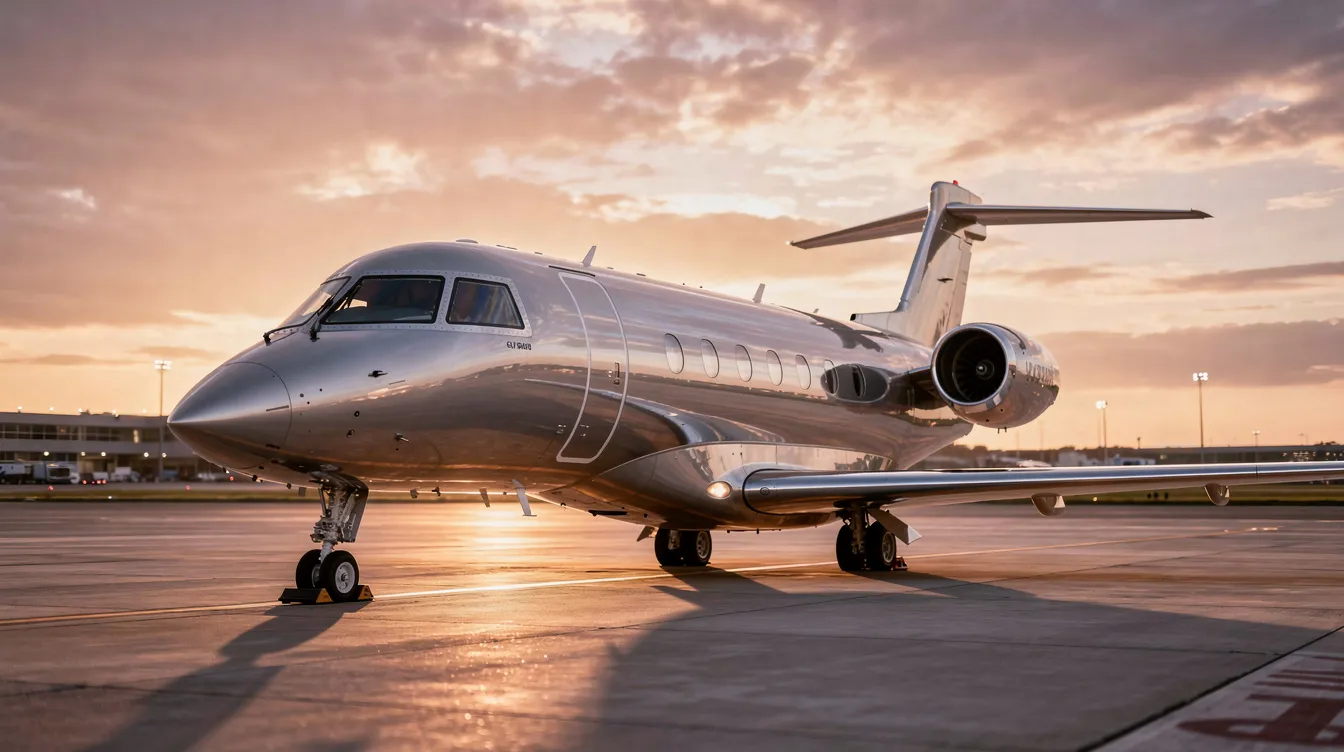
For discerning travelers who value time above almost everything else, the question is rarely whether to fly privately - it is how to fly privately in the most intelligent way.
Owning a Private Plane vs. Accessing One: Answering the Big Question Fast
Consider a same-day round trip from New York to Chicago. Flying commercially from JFK to O'Hare, you face two hours of airport procedures, a risk of connecting flights, crowded terminals, and a return that likely pushes into the next morning. Depart from Teterboro on a private jet, and you are wheels-up in minutes, in downtown Chicago by mid-morning, and home for dinner. That contrast - measured in hours recovered, meetings gained, and stress eliminated - is why high net worth individuals weigh private plane ownership against flexible access models every year.
But here is the critical distinction most first-time buyers overlook: outright aircraft ownership generally makes financial sense only when you consistently fly above roughly 200 to 300 hours per year. A CEO doing monthly New York–London rotations plus heavy domestic travel can accumulate those hours. Most travelers, however, land between 30 and 150 annual flight hours - a range where jet ownership rarely pencils out compared to jet cards or membership programs.
The numbers frame the decision clearly. A long-range private jet owner flying 300 hours annually might see a fully allocated cost of $5,000 to $8,000 or more per hour once acquisition, crew, maintenance, and depreciation are included. Chartering costs range from $2,000 to $14,000 per hour, depending on aircraft type. A Jet Card on a midsize or super midsize aircraft, by contrast, offers a fixed hourly rate with no capital at risk.
At BlackJet, we provide on-demand private jet access through premium private jet cards and membership - without the initial investment, operational costs, or management burden that come with full ownership. The sections below will help you determine which model fits your financial situation, your routes, and your priorities.
When Aircraft Ownership Makes Financial Sense
The central metric in any cost-benefit analysis of private aircraft ownership is simple: how many hours per year will the aircraft actually fly? Every fixed cost - hangar fees, insurance, crew salaries, management - divides across those hours. Fly too few, and the per-hour figure becomes punishing.
Here is a practical framework:
Annual Hours | Best-Fit Model |
|---|
Under 100 hours | Charter or on-demand booking |
100–200 hours | Jet cards or fractional ownership |
250–400+ hours | Outright ownership begins to make financial sense |
Full ownership may not be worthwhile for individuals flying fewer than 300 hours per year, yet owning a private jet makes sense for those flying 150 to 400 hours annually if they have the liquidity and mission consistency to justify it.
From an income and net worth perspective, private aviation in any form typically becomes feasible at roughly $2 million or more in annual income and $20 million or more in net worth. Jumping to whole aircraft ownership implies substantially higher liquidity - enough to absorb both the purchase price and years of operating costs without straining other financial goals.
Mission profile matters as much as hours. Short hops on a light jet - Los Angeles to Seattle, New York to Boston - burn less fuel and require smaller crews, keeping per-hour costs lower. Long-range transatlantic flights like New York to London or Miami to São Paulo demand ultra-long-range jets with three-pilot crews, higher fuel burn, ETOPS insurance, and dramatically larger fixed cost structures. The same 250 annual hours can look very different depending on whether they are spent shuttling regionally or crossing oceans.
To calculate your fully loaded hourly cost, sum: initial investment, amortization, fuel costs, crew salaries and training, scheduled and unscheduled maintenance reserves, hangar space, hull and liability insurance, navigation and landing fees, management company overhead, and the opportunity cost of capital tied up in a depreciating asset rather than deployed elsewhere.
Types of Private Aircraft: From Light Jets to Ultra Long Range
Selecting the right aircraft type is central to private jet ownership economics. Buying a large cabin jet when your missions are mostly regional is as wasteful as flying a very light jet on transcontinental routes. BlackJet members can sample multiple cabin classes without committing to a single airframe - but understanding the categories helps any traveler make smarter decisions.
Piston and Turboprop Aircraft Models like the Cirrus SR22 and Pilatus PC-12 seat four to eight passengers with ranges of around 500 to 1,000 nautical miles. These are the entry points for private flying - ideal for regional hops with lower fuel burn and smaller crews, and a good example of the best small private aircraft for varied missions.
Very Light Jets and Light Jets.s Very light jets, ts such as the Phenom 100, seat four to six passengers, and cover roughly 1,000 nautical miles. Light jets like the Phenom 300 and Citation CJ4 accommodate six to eight passengers and are ideal for business travel, with ranges of 1,500 to 2,200 nautical miles.
Midsize and Super Midsize Jets Aircraft like the Hawker 900XP and Challenger 350 seat eight to ten passengers, feature larger cabins and dedicated lavatories, and reach 3,000 to 4,500 nautical miles. These are workhorses for cross-country and shorter transatlantic missions.
Large Cabin and Ultra Long Range Jets The Gulfstream G500, Global 6000, and Gulfstream G700 seat up to fourteen or sixteen passengers, and large cabin aircraft in the widest configurations can accommodate up to 19 passengers. Ultra-long-range jets can cover distances up to 10,000 kilometers, enabling nonstop service between different cities like San Francisco and Tokyo without a fuel stop.
The cost impact across categories is significant. A light jet might burn 150 gallons per hour; an ultra-long-range jet can exceed 400. Crew size scales from two to three pilots. Hourly maintenance reserves, insurance, and hangar fees all climb accordingly. Understanding the different types of private jets for every traveler helps align these costs with your actual mission needs. A BlackJet Jet Card lets you fly a light jet for a short regional trip and step up to a long-range aircraft for an international journey - matching the aircraft to the mission every time.
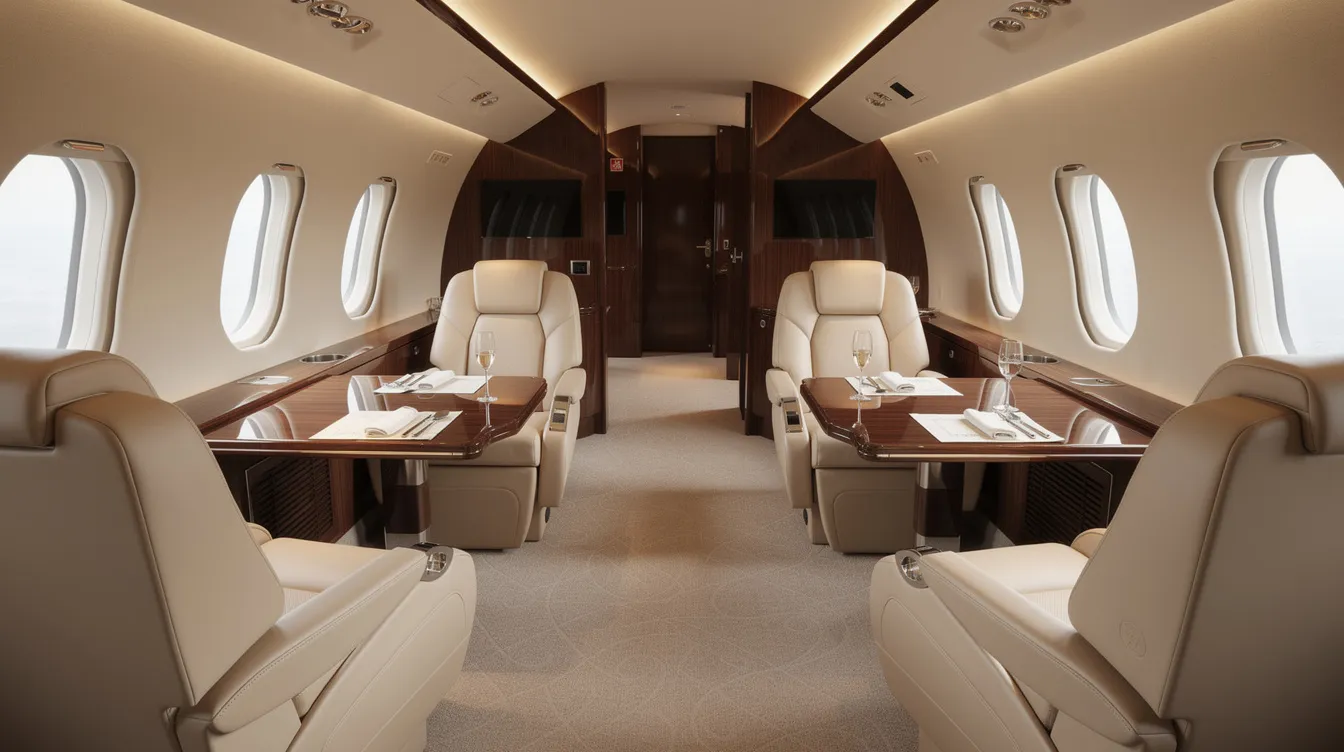
The Real Cost of Jet Ownership: Initial Investment and Ongoing Operational Costs
The purchase price is only the beginning. Private plane ownership involves high financial costs, including maintenance and insurance, that many prospective owners underestimate until they are already committed.
Initial Purchase Prices (2025–2026)
Aircraft Category | Typical Price Range |
|---|
Older light jets (pre-owned) | $2–4 million |
Pre-owned Citation XLS+ | $7–9 million |
New Gulfstream G700 | $70–80+ million |
Initial purchase prices range from $2 million to $100 million, depending on category, configuration, and whether you are buying new or pre-owned. Outright ownership requires a $3 million to $70 million investment for most business jets on the market today - a substantial initial investment by any measure, and a significant investment of capital that could otherwise be deployed, especially once you factor in the full private jet price list of acquisition and access options.
Core Operational Costs
Fuel: represents 25 to 35 percent of total operating costs. Fuel costs can vary widely based on aircraft type and local prices, but expect $200,000 or more annually for a light jet and substantially higher for large cabin or long-range aircraft.
Crew salaries and training: $150,000 to $500,000+ per year, depending on crew size.
Scheduled and unscheduled maintenance, engine reserve programs: often the least predictable line item.
Hangar fees can range from $1,500 to $20,000 per month, depending on aircraft size and airport location.
Insurance costs typically range from $30,000 to $50,000 annually for a light jet, scaling higher for larger aircraft.
Navigation, landing, and handling fees, plus other expenses tied to each mission.
Fixed annual costs include hangar fees, insurance, and crew salaries - they accrue whether the aircraft flies or not. Annual operating costs for private jets typically range from $500,000 to over $4 million, and annual operating expenses can reach 5 to 10 percent of the aircraft's value.
Depreciation and Opportunity Cost
Private aircraft depreciate over time, leading to a loss of investment value. A $10 million jet depreciating at 10 to 15 percent annually could lose $1 to $1.5 million in value per year. Over five to seven years, that erosion - combined with the opportunity cost of capital not invested elsewhere - represents a substantial financial implication that rarely appears in glossy ownership brochures.
From a cost perspective, BlackJet's model eliminates all of this: fixed Jet Card hourly rates, no capital expenditure, and predictable costs per flight hour without exposure to maintenance spikes, depreciation, or resale risk. When you understand jet card cost and private jet membership pricing, the overall cost becomes transparent before you ever board.
Ownership Models: Outright Ownership, Fractional Ownership, and Jet Card Alternatives
Aircraft ownership today spans a spectrum of ownership models, from whole aircraft ownership to fractional shares and flexible access solutions. Understanding where each model excels - and where it falls short - is essential to making a decision that aligns with your financial goals.
Outright Ownership One entity holds 100 percent of the aircraft, bearing all ownership costs and enjoying complete control over scheduling, configuration, and crew selection. This model suits corporate flight departments and ultra-high-net-worth families flying 300 to 600 hours per year with stable, predictable mission profiles. If you own aircraft outright, you can customize the cabin, choose your pilots, and depart on minimal notice - but you also absorb every dollar of the cost of ownership.
Fractional Ownership Fractional ownership typically involves shares from 1/16th to 1/4th of an aircraft. A 1/8th share of a midsize jet might provide roughly 100 flight hours annually, with an initial share cost of $500,000 to $1.2 million, monthly management fees of $9,000 to $25,000, and an hourly occupied rate paid when flying. It is a middle ground - shared financial burden, reliable access - but exit strategies and schedule coordination remain limitations. Understanding fractional jet ownership depreciation is also critical, and a deeper comparison of fractional jet ownership costs illustrates these trade-offs.
Co-Ownership and Partnerships Several individuals may purchase a jet together, splitting costs but still needing to coordinate schedules, maintenance decisions, and a management company to oversee operations. This is a variation of outright ownership with added complexity, and many of the tax benefits of fractional jet ownership do not apply as cleanly in informal partnerships.
Jet Card Programs Jet card programs offer prepaid flight hours without ownership commitment - the most flexible access model for travelers logging 25 to 150 hours per year. You secure guaranteed aircraft availability across multiple aircraft categories, with no asset on the balance sheet and a clear view of jet card pricing, costs, and benefits. A Jet Card versus fractional ownership analysis consistently shows that for moderate usage, jet cards deliver better financial and lifestyle balance.
On-Demand Charter For very occasional flyers - under 25 hours per year - pay-as-you-go charter remains the only option that avoids any prepaid commitment, and some of these travelers simply buy a single seat on a private jet via shared or semi-private services instead of chartering the whole aircraft.
Strategic Benefits of Private Plane Ownership: Time, Control, and Enhanced Privacy
Owning a private plane offers unmatched convenience and flexibility - but so does smart access. The real question is whether the strategic benefits require asset ownership or can be captured through a well-structured membership.
Time Efficiency: Private jets save significant travel time by enabling direct flights. Consider a founder visiting Dallas, Nashville, and Chicago in a single day on a light jet. Commercially, that itinerary consumes two to three days with connections, layovers, and overnight stays. Privately, it is a single day of productive travel with significant time savings on every segment. For frequent flyers comparing the best jet cards, this ability to compress multi-city trips into a single day is often the defining benefit. Private jet owners can access over 15,000 jets in the U.S., and private jets allow travel to smaller airports like Teterboro instead of Newark, or Van Nuys instead of LAX - smaller, less congested airports that cut ground transit and eliminate the chaos of major hubs.
Enhanced Privacy and Security: Private aviation offers enhanced privacy and security for travelers. A board meeting conducted on a Global 6500 between New York and London carries no risk of eavesdropping, no exposure to connecting flights crowds, and complete control over the passenger list and luggage. For executives handling sensitive transactions or public figures seeking discretion, this is not a luxury - it is a significant advantage.
Schedule Control and Customization Late-evening departures, last-minute itinerary changes, and the ability to reroute mid-trip - these define the private aviation experience. Owning a private jet provides a customizable travel experience,e from cabin temperature to catering to ground transportation coordination.
For BlackJet Jet Card members, this scheduling convenience and enhanced privacy come standard - without worrying about repositioning costs, crew duty limits on your own aircraft, or downtime during maintenance events. You simply book and fly.
The Burdens and Risks of Jet Ownership: Regulation, Safety, and Underutilization
With private jet ownership come regulatory, safety, and operational responsibilities that many travelers ultimately prefer to outsource. The freedom of having your own plane is real - but so is the management burden that comes with it.
Regulatory Burden Aircraft owners must adhere to FAA regulations (or EASA in Europe), maintain meticulous maintenance logs, respond to airworthiness directives, ensure crew currency, and manage aircraft registration required for ownership compliance. If an owner operates under Part 135 to charter the aircraft and offset costs, the regulatory compliance requirements multiply further. Aviation authorities impose strict oversight, and falling short carries serious consequences.
Safety Responsibility Owners bear ultimate responsibility for safety standards: selecting pilots, vetting maintenance providers, choosing a management company, and ensuring all parties meet recognized certification benchmarks. This is not a passive obligation - it demands ongoing attention and resources for risk mitigation.
Underutilization Jets depreciate whether they fly or not. Flying under 150 to 200 hours per year inflates per-hour costs well above what a well-structured Jet Card would charge. Underutilization is the silent killer of jet ownership economics - you own the asset, pay the fixed costs, and watch the per-hour math deteriorate, often undermining the appeal of even the cheapest private jet options aimed at budget-conscious buyers.
Lifestyle and Reputational Considerations Public scrutiny of private aviation emissions is intensifying. Tail numbers are increasingly visible through tracking databases, and owners face growing pressure to demonstrate a proactive maintenance schedule and sustainability strategy. This is a real consideration for executives and families conscious of their public profile.
Using a provider like BlackJet shifts these burdens - safety audits, regulatory compliance, fleet maintenance - to a specialized operator. The member simply books and flies.
Safety and Certification: What Owners Must Manage vs. What BlackJet Handles
Safety is non-negotiable in private aviation. Managing it well, however, is resource-intensive - and for individual owners, it often means building a miniature airline infrastructure around a single aircraft.
What Owners Must Oversee
Vetting and hiring flight crews with current type ratings
Ensuring simulator training currency (owners are responsible for ensuring crew training compliance)
Monitoring maintenance shops and tracking inspection intervals
Responding to service bulletins and airworthiness directives
Private jets must meet strict safety regulations set by aviation authorities
Regular audits are essential for maintaining high safety standards
Sophisticated owners rely on third-party certifications - ARGUS, Wyvern, IS-BAO - to benchmark their flight departments. These audits provide independent verification of safety performance, but arranging and maintaining them requires dedicated staff and budget.
BlackJet's Approach: We use proprietary safety vetting and partner only with operators that meet or exceed leading safety standards in jet card programs. Every flight booked through a BlackJet Jet Card carries consistent safety and service protocols - without the member needing to manage a single inspection interval or training record.
For many executives and families, delegating safety and compliance infrastructure to a trusted provider is not just convenient - it is the more prudent path.
Sustainability and Environmental Impact in Private Aviation
Private jets have a larger carbon footprint per passenger than commercial flights, making sustainability an increasingly important consideration for modern owners and users of private aviation. Ignoring this reality is no longer viable - either ethically or reputationally.
What Owners Can D:o: Investing in newer, fuel-efficient models (Praetor 500, Gulfstream G500) helps at the margins. Fuel-efficient technologies are being adopted to reduce emissions in private aviation, including next-generation engines and improved aerodynamics. Exploring the cheapest private aircraft and other budget-friendly options can also align cost control with more efficient, lower-emission platforms. Using sustainable aviation fuel where available can reduce lifecycle carbon emissions by up to 80 percent. High-quality carbon offset programs provide another layer of mitigation.
The European Commission has set ambitious emissions reduction targets for aviation, and private aviation is implementing carbon offset programs to mitigate environmental impact across the industry. Long-range aircraft and underutilized fleets generate disproportionate emissions relative to actual passenger miles flown - a challenge the industry is actively addressing.
BlackJet's Commitment We ensure every journey booked through our Jet Card programs is carbon neutral via verified offset projects, at no extra effort or cost to the member. Flexible access models also support more efficient fleet utilization, reducing per-seat emissions compared to individually owned aircraft that fly infrequently.
Jet Ownership vs. Jet Cards: Which Model Fits Your Travel Profile?
This is, ultimately, a strategic comparison: asset-heavy jet ownership versus asset-light jet access. Neither is universally superior - the right choice depends entirely on your travel profile.
When ownership or fractional makes more sense: You consistently fly 250 to 400 or more hours per year with predictable routes, require a specific cabin configuration, and have the liquidity to absorb depreciation and fixed costs. For business use at that volume, owning your own jet can be cost-effective, and curated marketplaces for a premium private jet for sale in the UK and beyond can help match you with the right airframe.
When a Jet Card is the smarter choice: You fly between 25 and 150 hours per year across varying routes and aircraft sizes. A Jet Card with predictable hourly rates and no capital risk almost always offers better financial and lifestyle balance. Understanding jet card pricing structures and programs like the BlackJet 25+ Hour Jet Card makes it easier to quantify that advantage. It simply makes more sense for the majority of frequent private flyers.
Ownership locks you into one aircraft's capabilities. A Jet Card like BlackJet's lets you select light jets for short-notice regional missions and super midsize or long-range aircraft for cross-country or transatlantic business trips - matching aircraft to mission with flexible access.
BlackJet's 24/7 digital booking platform, real-time flight support, and transparent pricing eliminate the complexity of dispatching and crewing your own jet. You get tailored solutions for each trip without the overhead of a flight department.
Use Cases: How High-Net-Worth Travelers Actually Use Private Jet Access
Theory only goes so far. Here is how the economics play out in practice.
Example 1: The New York Executive (80–100 hours/year) A finance executive flies from Teterboro to Miami, Toronto, and Chicago roughly weekly. A 50-hour Jet Card cost analysis shows that a 50-hour BlackJet Jet Card on midsize jets might cost $250,000 to $350,000 annually. Owning a light jet for the same missions would run $550,000 to $700,000 per year, including depreciation and all operating costs - plus the headache of managing crew, maintenance, and hangar space in the New York metro area. The Jet Card wins on both cost and simplicity.
Example 2: The European Family (50–70 hours/year) A London-based family splits time between a villa in Sardinia and a ski home in St. Moritz. They fly 50 to 70 hours per year on routes like London to Olbia and Paris to Samedan. Owning a single light jet means paying fixed costs year-round for seasonal use - and being locked into one aircraft's passenger capacity and range. A BlackJet membership provides cabin choice, airport flexibility, and no off-season carrying costs.
Example 3: The Technology Founder (300+ hours/year) A founder flies from San Francisco to Tokyo monthly,y plus domestic investor roadshows across multiple cities. At 300-plus annual hours with consistent long-range missions, evaluating fractional or outright ownership of an ultra-long-range jet becomes rational, especially when comparing the best private jet options for 15 passengers and similar large-cabin categories. The financial implications at this volume can favor ownership - but only after rigorous modeling of every line item, from avionics upgrades to crew training to depreciation.

FAQ: Key Questions About Owning a Private Plane vs. Using BlackJet
At what point does it become worth owning a plane for personal use?
Ownership generally becomes worth exploring when you consistently fly 250 to 300 or more hours per year with predictable routes and stable demand. Below that threshold, the per-hour economics of a Jet Card or charter are almost always more favorable. Your financial situation and mission profile matter as much as raw hours.
How do operational costs compare to Jet Card hourly rates?
Owner-direct operating costs for a light jet run roughly $2,100 to $2,800 per hour - but that excludes depreciation and opportunity cost. Charter rates for comparable aircraft range from $3,000 to $5,500 per hour. Jet cards fall between these ranges with the advantage of predictable pricing and zero fixed cost exposure.
What are the main differences between fractional ownership and jet cards?
Fractional ownership requires an upfront share purchase, monthly management fees, and a multi-year commitment to a specific aircraft. Jet cards require no asset purchase, provide access across multiple cabin classes, and can be renewed or adjusted as your needs evolve. For travelers flying under 150 hours per year, jet cards typically offer superior flexibility, and a detailed 100-hour Jet Card cost guide can clarify when stepping up in hours still beats fractional ownership economics.
How does BlackJet ensure safety on every flight?
BlackJet partners exclusively with operators meeting or exceeding industry-leading audit standards. Proprietary vetting covers crew qualifications, maintenance history, and operational protocols - so every flight carries consistent, verified safety performance.
Can I still enjoy long-range missions without owning a long-range jet?
Absolutely. BlackJet Jet Cards provide access to long-range private jets capable of nonstop transatlantic and transpacific missions. You book the aircraft category your mission requires - no need to own a $70 million airframe to fly nonstop from New York to London.
How does private jet usage impact my carbon footprint, and how does BlackJet address this?
Private aviation produces higher per-passenger emissions than commercial flights. BlackJet addresses this directly: every flight is carbon neutral through verified carbon offset programs, and we actively support sustainable aviation fuel adoption where available.
For most frequent but not ultra-frequent flyers, flexible access via BlackJet provides the strategic advantages of business aviation - significant time savings, enhanced privacy, access to smaller airports on short notice - without the complexity of whole aircraft ownership.
Conclusion: Choosing the Smartest Path to Private Jet Access
Owning a private plane delivers maximum control, but it ties up millions in capital, demands constant attention to operating costs, safety, and regulatory compliance, and only pencils out financially at very high utilization levels. For most travelers, the purchasing process and ongoing burden of jet ownership exceed the benefits.
BlackJet offers carbon-neutral, safety-vetted, technology-enabled jet access across multiple aircraft categories - giving most travelers the benefits of private aviation without the financial implications of private jet ownership. Learn more about our Jet Card programs to discover flexible, cost-effective private jet access.
Explore how a BlackJet Jet Card can deliver the freedom of private aviation - without ever needing to own the aircraft.


 Sign up with google
 Sign up with Apple