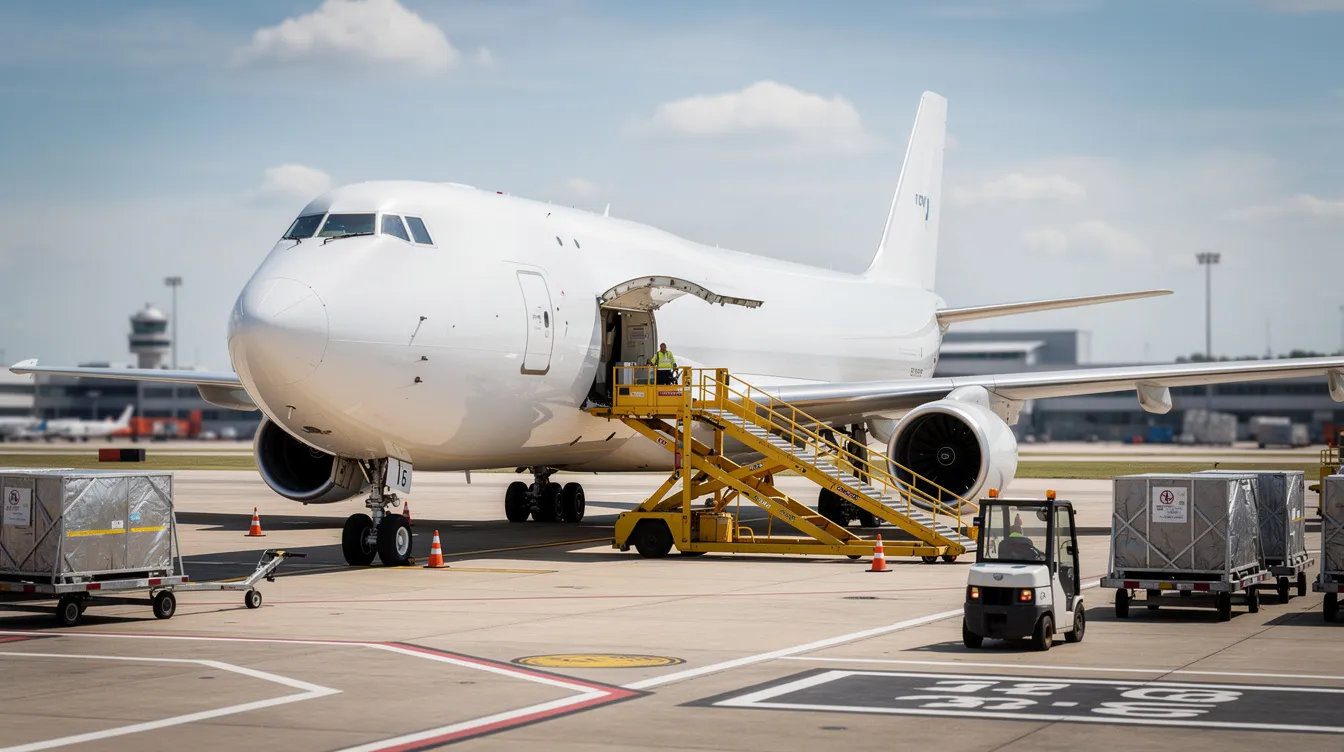
For logistics executives, OEMs, and high-net-worth clients who need to move race cars, prototypes, or medical supplies across continents, understanding cargo plane prices is not optional—it is a strategic advantage. The numbers vary enormously, and without context, even experienced buyers overpay.
This guide breaks down what cargo aircraft actually cost to purchase, operate, and charter in 2026, with real figures by aircraft type and mission profile.
Fast Answers: Typical Cargo Plane Prices In 2026
Cargo planes vary greatly in price depending on size and capacity. Whether you are evaluating a fleet purchase or a single urgent charter, the numbers below give you a working framework within thirty seconds.
Purchase price ranges (used/converted aircraft):
Used turboprop cargo aircraft (ATR 72F, converted Dash 8): $2–8 million
Narrow-body freighters (Boeing 737-800BCF, Airbus A321P2F): $18–35 million
Wide-body freighters (Boeing 767-300F, A330-200F): $35–90 million; factory Boeing 767-300F historically listed near $200 million new
Iconic types like the Boeing 747-8F or 777F: $90–200+ million depending on age
Large cargo aircraft cost significantly more than smaller regional planes, driven by payload capacity, range, and infrastructure demand.
Typical cargo plane charter hourly rates:
Small turboprops (up to ~2 tonnes payload): $3,000–$6,000/hr
Narrow-body jets (20–30 tonnes payload): $8,000–$20,000/hr
Large wide-body or heavy-lift freighters: $25,000–$80,000+/hr
All-in charter examples:
Moving ~10 tonnes within Europe on a narrow-body: approximately $80,000–$150,000 door-to-door
Moving ~80 tonnes trans-Pacific on a wide-body: $300,000–$800,000+ depending on routing and cargo type
BlackJet clients frequently interact with cargo aircraft indirectly—coordinating freighter charters for high-value freight while executives travel by private jet on a Jet Card. We unify both legs into a single, seamless operation.
What Is A Cargo Plane And How Does It Differ From A Private Jet?
A cargo plane, or freighter aircraft, is an aircraft designed with minimal or no passenger seating, featuring reinforced floors, large cargo doors, and palletized loading systems optimized for air cargo transport. Dedicated freighters are built specifically for cargo transport, while converted freighters are former passenger aircraft modified for freight with structural upgrades and cargo hold reconfiguration.
Configuration: Cargo aircraft prioritize payload capacity and easy loading and unloading through large cargo doors. Passenger aircraft and business jets prioritize cabin comfort, seating, and amenities.
Crew: Freighter operations often include loadmasters and dangerous-goods specialists alongside pilots. Private jets carry a smaller crew focused on passenger service.
Mission profile: Cargo flights handle everything from e commerce fulfillment to transporting outsized cargo like helicopters, machinery, and live animals. Private jets serve executive travel.
Examples: Cargo types include the Boeing 747 Freighter, Airbus A330-200F, and Cessna 408 SkyCourier. BlackJet's private jet fleet spans light jets, midsize, and large-cabin aircraft.
Larger aircraft capable of long-distance flights generally require more powerful engines, which directly influences both acquisition price and operating costs. Turboprop cargo planes are typically cost-effective for lighter freight operations, while wide-body jets command premium prices. Dedicated freighters have optimized cargo bays and loading systems, and special cargo modifications such as reinforced floors can increase aircraft pricing.
Buying A Cargo Plane: Market Prices By Aircraft Type
There is no single "cargo plane price" list. The price of a cargo aircraft depends on whether it is new or used, and values in 2026 shift based on aircraft age, maintenance history, and conversion quality. New cargo aircraft typically command higher prices due to modern technology and warranties, while used aircraft are generally much cheaper, depending on age and condition. The acquisition cost for freighters spans various categories based on their capabilities, and cargo aircraft valuations depend on cargo capacity and operational requirements, mirroring how buyers use airplane financing options and strategies to balance capital outlay and fleet flexibility.
Small turboprop freighters (Cessna 408 SkyCourier, ATR 72 Freighter, converted Dash 8): new price $8–24 million; 10–20-year-old converted aircraft $2–8 million
Narrow-body jets (Boeing 737-800BCF, Airbus A321P2F): late-model converted aircraft $18–35 million. Conversion costs for passenger aircraft to freighters can be substantial—an A300B4-200F conversion cost $5 million in 1996, while an A330-300 P2F conversion was estimated at $20 million in 2016
Wide-body freighters (Boeing 767-300F, Airbus A330-200F): used and converted $35–90 million; factory 767-300F near $200 million list
Specialized types (Ilyushin IL-76, Antonov An-124): trade on opaque markets influenced by geopolitics and availability rather than manufacturer list prices
Aircraft age heavily influences purchase price and operational costs. Maintenance history and airworthiness certification greatly affect aircraft pricing as well. Additional costs such as registration and legal fees should be incorporated in acquisition budgets. Buyers structure deals through cash purchase, dry lease, or ACMI (aircraft, crew, maintenance, insurance), each changing the apparent price without altering the underlying asset value. Insurance costs for cargo operations vary based on aircraft value and operational risks.
The global fleet of dedicated freighters is expected to rise by 45%, reflecting sustained demand across the market.
Boeing 747 Freighter And Other Wide-Body Icons: What They Cost Now
The Boeing 747 remains the iconic jumbo cargo plane, but Boeing ended production in 2023. In 2026, only used or converted aircraft remain available. The Boeing 747-8F has a payload capacity of approximately 137 tonnes and can carry outsized goods that other aircraft simply cannot accommodate.
747-400F and 747-400BCF: Acquisition cost for a Boeing 747-400F is under $20 million for many examples, depending on cycles, heavy-check status, and engine condition
747-8F (built 2011–2023): typically $90–160 million in private transactions, reflecting longer remaining life and better fuel burn
Alternatives among wide-body freighters:
Boeing 777F: mid-life airframes often valued at $130–200+ million in 2026, positioned as the twin-engine successor
Airbus A330-200F and A330P2F: generally $45–90 million, offering efficient twin-engine cargo transport
Niche heavy-lift types like the Antonov An-124 Ruslan operate in specialist charter markets. The Antonov An-225 Mriya, once the world's largest plane, was lost in 2022; if a second airframe were ever completed, its cost per flight hour and charter rate would be among the highest in the world
While jumbo freighters like the Boeing 747 can be cheaper to buy relative to new twins, their operating costs and fuel burn make them viable only for operators with dense global air cargo networks.
Operating Costs: What It Really Costs To Run A Cargo Aircraft
Acquisition price is only part of the equation. Long-term viability depends on operating costs per block hour and per tonne-kilometer. The total operating costs include crew salaries, fuel, maintenance, and airport fees. Aircraft that are modern and efficient often demonstrate lower lifetime operating expenses.
Fuel: The largest single expense for cargo aircraft operations, often 30–40%+ of direct costs. A Boeing 747-8F burns roughly 8,500–10,000 kg of fuel per flight hour, versus a Boeing 737-800BCF at around 2,500–3,000 kg per hour. Fuel efficiency in aircraft significantly impacts long-term operational costs and mirrors the range planning required for large private jets carrying up to 50 passengers.
Crew: Wide-body freighters require 2–3 pilots plus loadmasters. Training, recurrent simulator costs, and duty-time compliance add meaningfully.
Maintenance: C- and D-checks run into the millions for wide-bodies. Cost per hour rises significantly as aircraft age, with four-engine types requiring more inspections.
Navigation, landing, and handling fees: Scale with maximum takeoff weight and route complexity—trans-Atlantic versus regional flying produces vastly different fee structures.
Estimated direct operating costs (2026):
Small turboprop cargo aircraft: $1,500–$3,000/hr
Narrow-body freighters: $5,000–$10,000/hr depending on fuel price
Boeing 747-8F and similar heavy cargo aircraft: operating a Boeing 747-8F costs around $18,000 per flight hour, with all-in figures often reaching $15,000–$25,000/hr
Modern twins like the 777F and A330-200F often deliver lower cost per tonne-kilometer than aging quad-jets, directly influencing both cargo planes' prices and charter rates across the market.
Cargo Plane Charter: Typical Price Ranges And When It Makes Sense
A cargo plane charter means hiring an entire aircraft for a specific mission without long-term ownership commitment—ideal for urgent, one-off, or unusual freight that scheduled airlines cannot accommodate. Dedicated cargo aircraft can reduce trip costs by 20% compared to ad hoc solutions, and dedicated freighters provide a 20% reduction in trip costs through optimized routing and loading.
Small cargo aircraft (up to ~2,000 kg payload): $3,000–$6,000 per flight hour. Small domestic charters start around $3,000 to $15,000 total, comparable in many cases to chartering a private jet for about 15 passengers when schedules or routes are passenger-driven rather than freight-led.
Medium cargo aircraft (2,000–25,000 kg payload; ATR 72F, 737-300F): $8,000–$25,000 per hour, overlapping in some missions with private jets configured for around 30 passengers on the passenger side of the market
Heavy freighters (25,000+ kg payload; 747-400F, 777F, An-124): $25,000–$80,000+ per hour. Long-haul international heavy freighters can cost $300,000 to $800,000 all-in for multi-sector missions—a cost profile not unlike chartering a private aircraft for 100 passengers when large groups require bespoke routing and schedules.
Route example A: 10-ton urgent automotive parts from Frankfurt to Dubai on a narrow-body cargo aircraft—approximate door-to-door charter range in the low six figures, typically including fuel, crew, handling, and customs coordination.
Route example B: 80-ton mining equipment from Houston to Santiago, Chile, on a wide-body freighter—total cost driven by aircraft type, distance, and payload density, easily reaching $500,000–$800,000+.
Part-charter arrangements can reduce costs by 30 to 70% when cargo shares capacity with other shipments, and understanding what charter flights really mean and how they work helps buyers decide when full-freighter hire is justified versus alternative options. BlackJet can coordinate a cargo plane charter alongside private jet travel so executives and their freight arrive together, using a Jet Card for the passenger leg.
What Drives Cargo Plane Charter Pricing?
Even with aircraft type and distance known, cargo plane charter prices can vary 20–40% between quotes due to mission-specific operational details.
Positioning and repositioning: Flying the freighter empty to the departure airport or back to base can add 30–60% to total cost. Using an aircraft already near the departure airport saves tens of thousands of dollars.
Route structure: Overflight permissions, congested hubs versus regional airports, and night-curfew restrictions affect schedule flexibility and cost.
Cargo characteristics: Total cargo weight and volume, hazardous materials, temperature control for medical supplies, live animals, or outsized cargo requiring special equipment all influence pricing.
Ground handling and customs: Palletization, cranes, forklifts, special security, and brokerage services may or may not be included in a base quote.
Seasonality: Peak air cargo periods—pre-Christmas e-commerce surges, major product launches—tighten capacity and push up charter rates across the market.
Always verify what is included in the quote: aircraft, fuel, crew, insurance, handling, de-icing, and war-risk coverage. This mirrors how BlackJet highlights all-in pricing clarity for private jet charters.
Matching Aircraft Type To Cargo: How To Avoid Overpaying
Choosing the wrong aircraft type is one of the fastest ways to inflate cargo plane prices, especially on charters. Just as private travelers compare types of private jets for different missions, cargo operators need to align payload and route with the right freighter size. Cargo planes can transport oversized goods like helicopters and machinery, but that does not mean every shipment needs a wide-body.
Measure precisely: Document cargo weight and dimensions so the broker can determine if a turboprop or narrow-body is sufficient rather than a heavy wide-body
Consider range versus payload: Some older 737 freighters may require technical stops on long distances, changing cost and transit time
Understand airport limitations: Short or unpaved runways for remote operations may require STOL-capable aircraft rather than standard jets
Scenario: Moving 5 tonnes from Paris to Rome could be handled by a small freighter in 3–4 flight hours at a fraction of the cost of deploying a 767F, cutting charter cost by more than half.
BlackJet's flight experts apply similar optimization logic when matching Jet Card clients to the right private jet cabin class, drawing on the same principles found in guides to private jet sizes and cabin categories—expertise in aircraft choice and operating economics applies whether you are transporting goods or people.
Safety, Certification, And Sustainability In Cargo Operations
The cheapest cargo plane is not always the best option when high-value goods, brand reputation, and regulatory compliance are at stake.
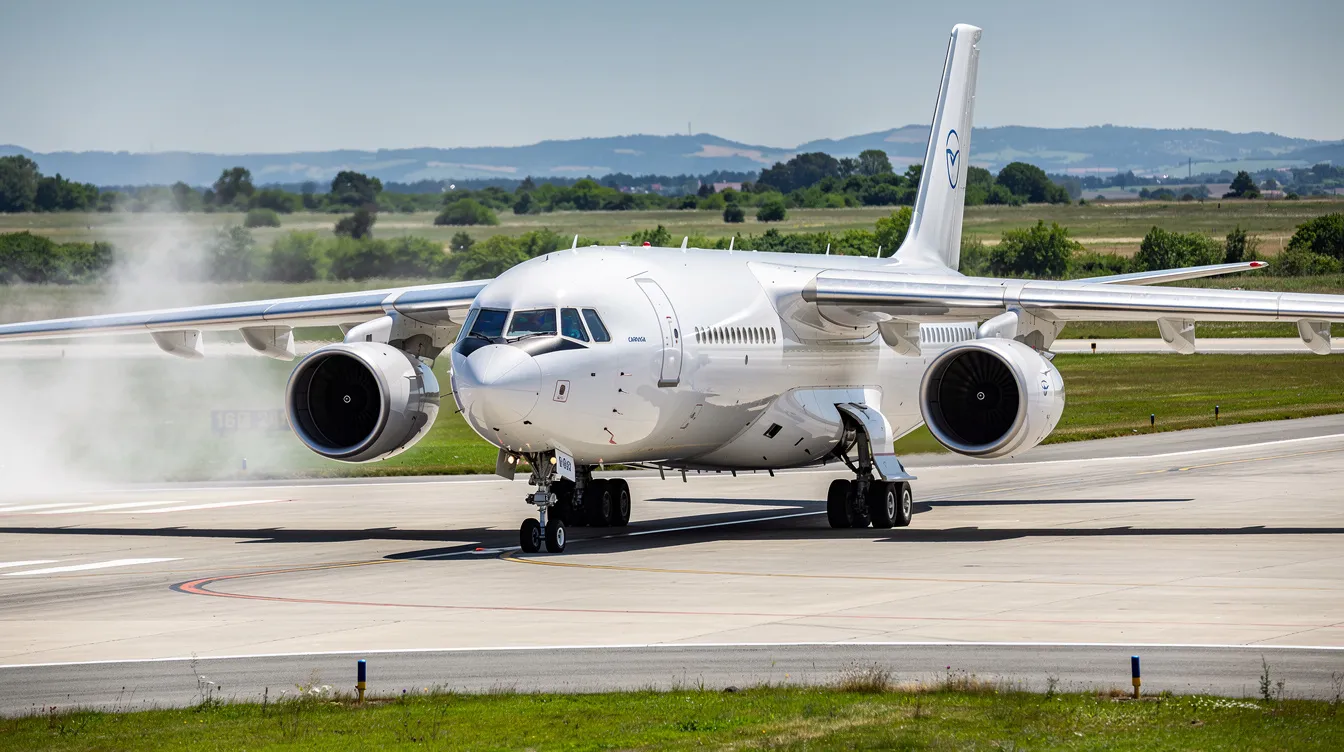
Operators should hold recognized safety accreditations (IOSA or equivalent cargo safety standards) with rigorous maintenance programs
Dangerous goods handling under IATA and ICAO rules requires specialized training and can impact pricing for certain shipments
Insurance and liability coverage levels matter-reputable operators with higher safety standards may quote slightly higher cargo charter prices but substantially reduce risk
Sustainability and the next generation:
Newer freighter aircraft like the Airbus A350F use advanced aerodynamics, composite materials, and efficient engines to cut fuel burn. The Airbus A350F has a payload capacity of 111 tonnes and a range of 4,700 nautical miles, meeting upcoming ICAO CO₂ standards after 2027
Many premium operators now offer carbon-neutral cargo flights through high-quality offsets and sustainable aviation fuel (SAF) programs
BlackJet ensures every private jet journey is carbon-neutral at no extra cost, and similar principles can be applied to coordinated cargo missions
A sophisticated buyer looks beyond headline price to total risk, sustainability posture, and operational reliability.
How BlackJet Clients Typically Use Cargo Plane Charter
BlackJet does not sell freighter aircraft, but we frequently help high-net-worth and corporate clients coordinate cargo plane charter in parallel with private jet travel through our 24/7 operations team.
Luxury automaker: Moving prototype vehicles from Stuttgart to Los Angeles on a dedicated freighter aircraft while executives fly a large-cabin private jet on a BlackJet Jet Card and private jet service. Synchronizing schedules and customs handling saves days compared with standard freight delivery.
Art collector: Shipping multi-million-dollar works to a fair in Hong Kong under tight deadlines, with BlackJet arranging both a secure freighter charter and a large-cabin private jet for 20 passengers for the curator and support team.
Technology firm: Air-lifting critical data-center equipment to Dubai on a narrow-body cargo plane to avoid contractual penalties, coordinated through BlackJet's digital booking tools and real-time support service—similar to how we manage private jet charters in Karachi and the wider region for executive teams.
Our platform gives clients single-point coordination across both passenger and freight legs-even though a separate specialized cargo operator physically provides the aircraft, just as we orchestrate private jet charter services in hubs like Lahore with local airport expertise.
Explore how BlackJet can align your executive travel and cargo logistics into one seamless, carbon-neutral plan.
FAQs About Cargo Planes Price, Charter, And Private Access
How much does it cost to buy a cargo plane?
Ranges span from $2–8 million for used turboprops to $18–35 million for narrow-body converted freighters to $35–200+ million for wide-bodies. Most deals are private, and price bands are approximate, much like the broader private jet price lists and ownership options in business aviation.
What is the hourly cost to charter a cargo aircraft in 2026?
Small cargo aircraft cost $3,000 to $6,000 per hour, medium cargo aircraft cost $8,000 to $25,000 per hour, and heavy freighters cost $25,000 to $80,000+ per hour, following many of the same pricing drivers explained in private jet charter pricing guides.
Is it cheaper to ship by scheduled air cargo or charter a whole cargo plane?
Scheduled air cargo has lower per-kg cost but constraints on schedule, routing, and size. Charter is more expensive per kg but justified for urgency, control, time-sensitive goods, or unusual freight that airlines cannot accept—the same trade-offs seen when evaluating the cost to charter a small private plane for passengers.
Can private jets carry meaningful cargo instead of chartering a freighter?
Private jets handle limited baggage and small valuables but are not a replacement for pallets or containers. For anything above small volume or cargo weight thresholds, dedicated freighters are necessary, and understanding the main types of private jets clarifies where their payload limits sit.
How far in advance should I book a cargo plane charter?
For urgent flights, 24–72 hours is often sufficient. Complex or oversize missions producing unusual supply chain requirements benefit from days to weeks of lead time.
Can cargo plane flights be carbon-neutral?
Yes—through SAF blending and verified carbon offsets. BlackJet already guarantees carbon-neutral private jet travel, even on the most economical private aircraft options; the same principles extend to coordinated cargo missions.
Why do some converted freighters cost nearly as much as new ones?
When the donor frame is young with low cycles, excellent engine health, and a comprehensive conversion scope, total capital outlay can approach half the new-build price—especially in tight market conditions where demand outpaces supply, similar to how buyers may deploy cryptocurrency to purchase private jets quickly when attractive airframes appear on the market.
Conclusion of cargo plane pricing
Underplane pricing—across purchase, operation, charter—allows sophisticated travelers and businesses to align their freight strategy with executive travel, including tools like Jet Card pricing and membership structures on the passenger side.
Contact BlackJet to discuss how we can integrate your cargo logistics and private jet access into one streamlined, carbon-neutral operation.


 Sign up with google
 Sign up with Apple