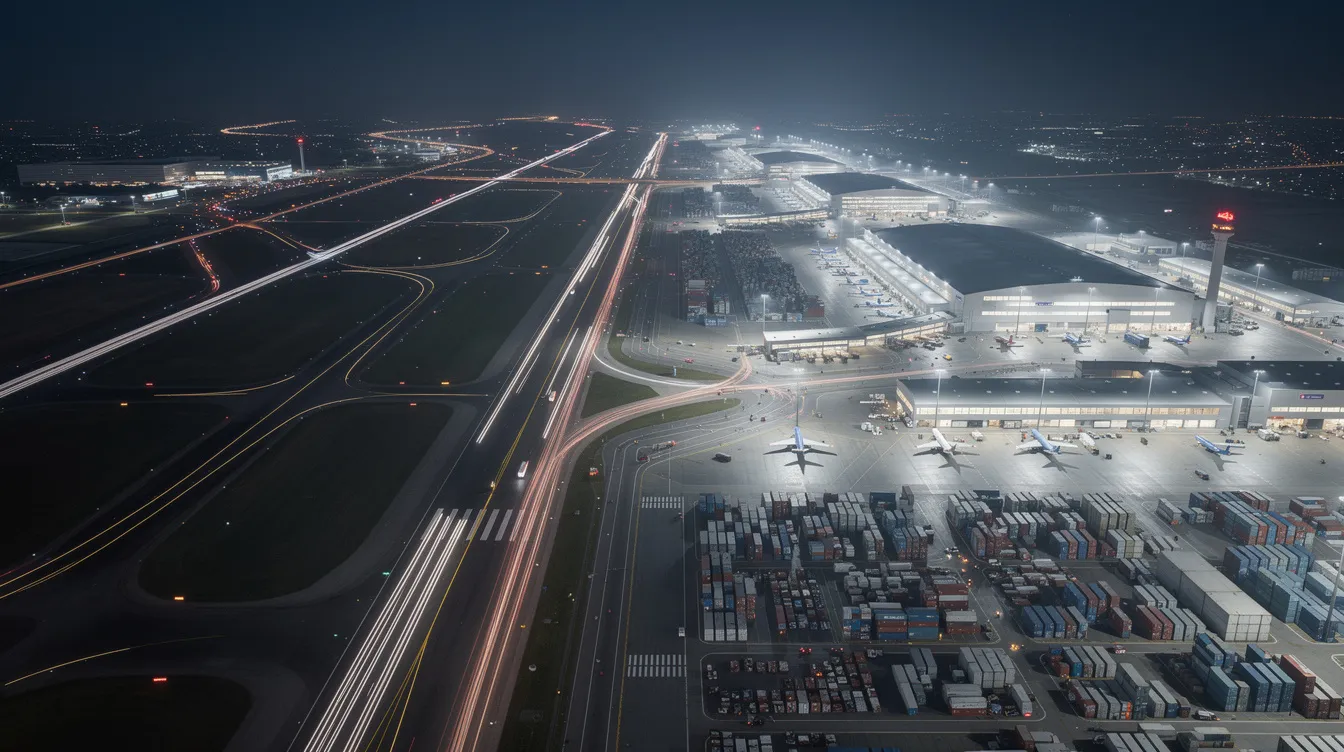
In the world of aviation, some aircraft move people across continents in luxury cabins, and others move the goods that keep global commerce running. The Boeing 777F is a dedicated, long-range, twin-engine freighter derived from the 777-200LR, built to carry roughly 226,800 pounds of cargo for nearly 5,000 nautical miles, and it has become a backbone of intercontinental air freight. For BlackJet members, corporate flight departments, and high-net-worth travelers who rely on private aviation, understanding the aircraft behind global cargo flows offers useful context for the logistics, aviation technology, and operating reliability that support international business and premium travel. This guide examines the 777F’s design, specifications, cargo capability, role in supply chains, environmental profile, and safety certification, then connects those freight operations to private jet travel and how BlackJet’s Jet Card model fits into a broader global mobility network.
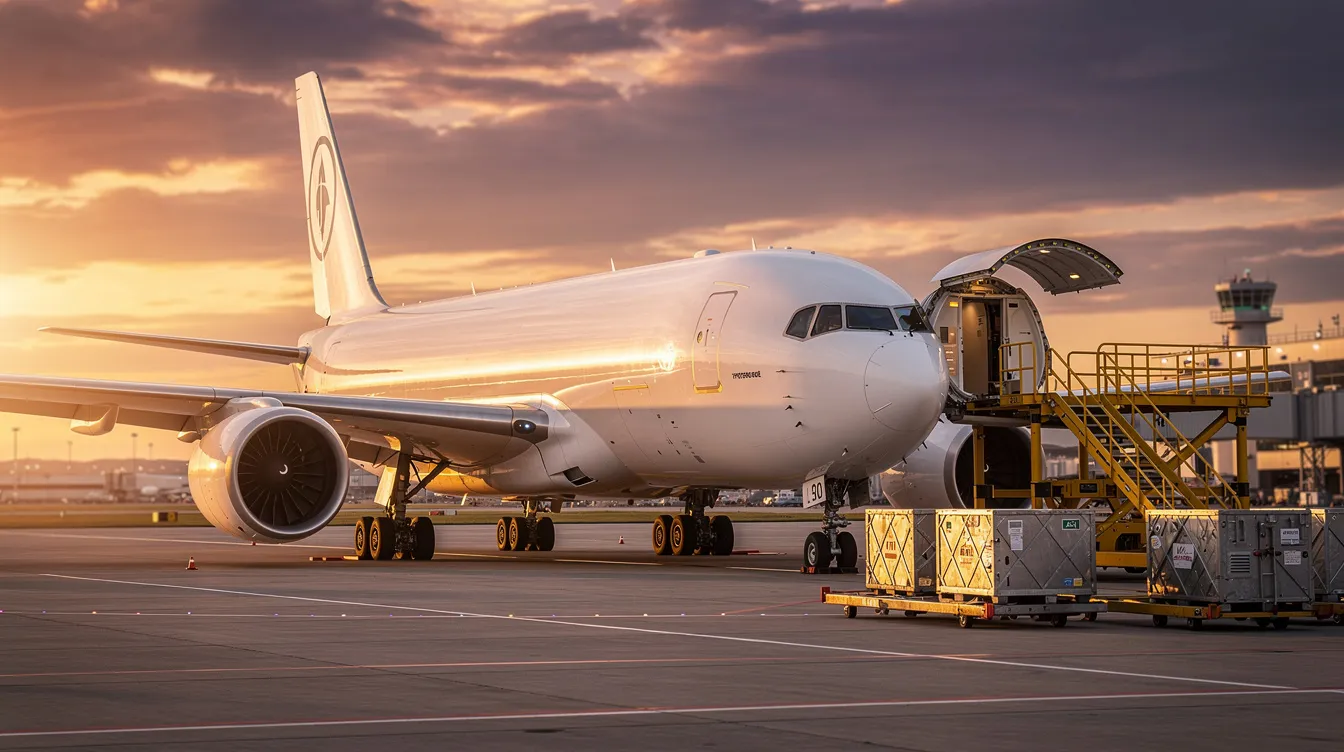
Answering the Core Question: What is the Boeing 777F (777 Freighter)?
The Boeing 777F is a dedicated, long-range, twin-engine cargo aircraft built by Boeing Commercial Airplanes. It is derived structurally from the 777-200LR-the ultra-long-range passenger variant of the 777 family-but engineered from the ground up as an all-cargo version of the Boeing 777 family.
When you see "777F" and "777 freighter," they refer to the same airplane: Boeing's factory-built freighter, not a converted passenger aircraft. Unlike the passenger 777s that airlines operate in premium cabins across the world, the 777F has no passenger windows, no seats, and no cabin amenities. Every square meter is optimized around payload and range.
The Boeing 777F entered commercial service in 2009, with first delivery to Air France in February of that year.
It replaced less efficient tri-jet and quad-jet freighters like the MD-11F and 747-200F on many intercontinental routes.
As of the mid-2020s, the 777F remains the dominant long-haul freighter in global cargo fleets, operated by airlines and integrators on every major trade lane.
The 777F has a payload capacity of 226,800 pounds, enabling it to carry heavy industrial cargo, pharmaceuticals, automotive components, and time-sensitive freight across continents.
Key Specifications of the 777F Freighter
For aviation-savvy readers and logistics professionals, these are the technical highlights that define the Boeing 777F as a class leader among Boeing freighters.
Maximum payload: Approximately 102 to 112 tonnes (226,800 lb), depending on configuration and fuel load, with the max figure tied to payload-fuel tradeoffs.
Maximum takeoff weight: 347,450 kg (approximately 766,000 lb), reflecting the structural strength inherited from longer-range models in the 777 family.
Range capability: Approximately 4,880–4,970 nautical miles at full payload. It has a range exceeding 9,000 km at full load, enabling nonstop service on most major intercontinental routes.
Engines: The aircraft is powered by two GE90 turbofan engines (GE90-110B1 variant), each capable of producing thrust comparable to the 777-300ER's maximum thrust of 115,300 lbf. The GE engine family has accumulated over 130 million flight hours with dispatch reliability around 99.98%.
Cruise speed: Approximately Mach 0.84 at typical operating altitudes.
Fuselage length: Approximately 63.7 m (209 ft 1 in).
Wingspan: 64.8 m (212 ft 7 in), featuring raked wingtips for aerodynamic efficiency-inherited from the 777-200LR's wings.
Total cargo volume: 653 m³, distributed across the main deck and lower deck compartments.
Main deck pallet positions: The aircraft features 27 standard pallet positions on the main deck.
Design and Cargo Door Layout of the 777F
The 777F is engineered around freight from nose to tail, and that engineering starts with the main deck cargo door-the defining structural feature that separates this freighter from its passenger siblings.
The Boeing 777F has a main-deck side cargo door located on the left-hand (port) side aft of the wing. This door is sized to accept standard pallets and outsized containers, enabling rapid loading of everything from automotive parts to medical equipment.
The main deck of the Boeing 777F can accommodate 3-meter tall pallets, giving operators flexibility for bulky or irregularly shaped freight.
Additional lower hold cargo doors-forward and aft-handle Unit Load Devices and bulk cargo on the lower deck, adding significant volume beyond what the main deck alone provides.
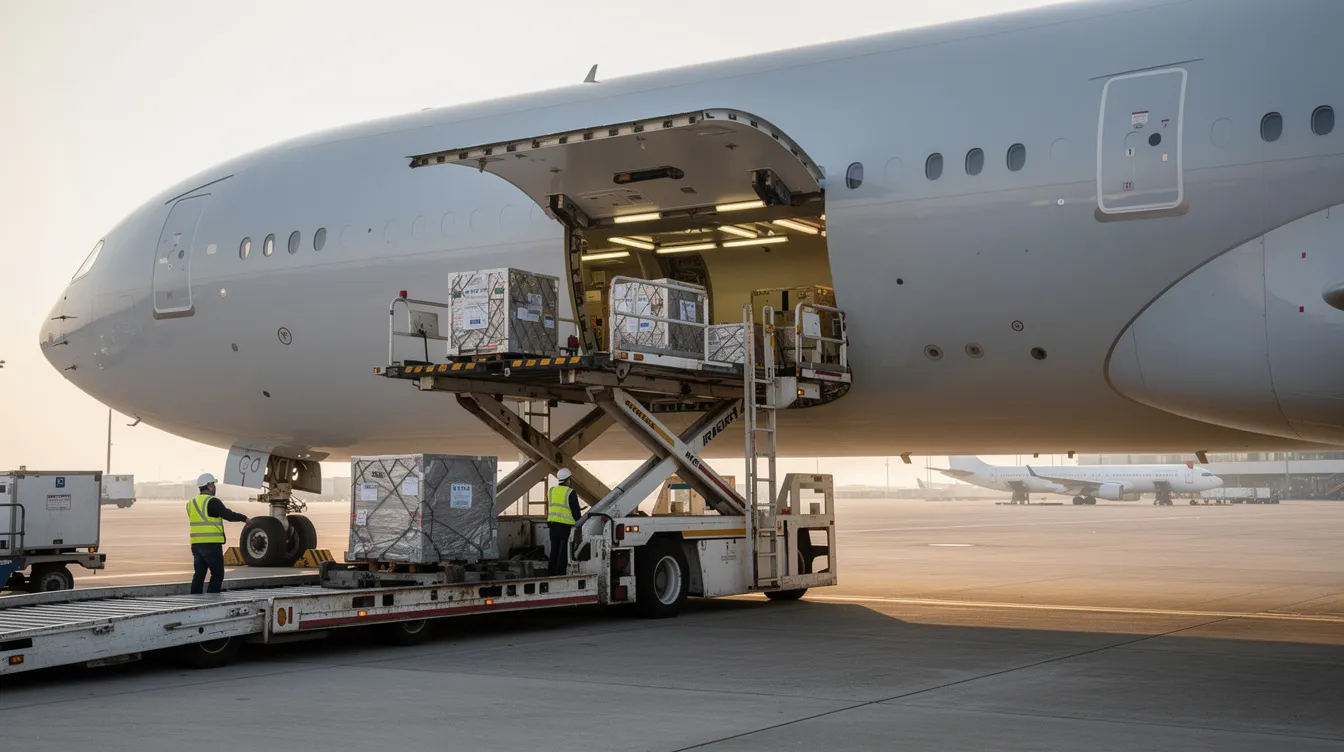
The flat, strengthened main deck floor incorporates powered roller conveyors and cargo restraint systems that speed up loading and unloading, directly reducing ground turnaround times.
The aircraft's design allows for transportation of heavy industrial cargo, high-value goods, and time-critical shipments that demand secure containment and efficient handling on the ground.
Development History: From 777-200LR to 777F
The 777 freighter did not emerge in isolation. It sits atop decades of 777 program development that began with final assembly in January 1993 and first flight in June 1994.
The 777F is based structurally on the ultra-long-range 777-200LR, which has a maximum design range of 8,555 nautical miles. Boeing leveraged the -200LR's strengthened wing, landing gear, and fuel system to create a freighter with extended range and heavy-lift capability.
Rollout of the first 777F took place on May 23, 2008, followed by its maiden flight on July 14, 2008.
The FAA granted type certification in early February 2009, with EASA validation on February 6, 2009. First delivery to Air France followed on February 19, 2009.
Boeing's rationale was clear: airlines and integrators-FedEx, Lufthansa Cargo, Qatar Airways Cargo, Emirates SkyCargo-needed an efficient freighter to replace aging 747-200F and MD-11F aircraft. The 777F promised twin-engine fuel efficiency, fewer maintenance stops, and lower operating costs per tonne.
Flight test campaigns validated the airplane's range, maximum payload, and ETOPS capabilities for global cargo routes, confirming the type could serve high-demand lanes from Asia to North America and Europe to the Middle East without intermediate stops.
777F in the Boeing 777 Family Lineup
The Boeing 777 family includes six models on the passenger side-the 777-200, -200ER, -300, -300ER, -200LR, and the upcoming 777X variants-plus the dedicated 777 freighter.
The Boeing 777 offers six passenger models. The passenger "Classics" (-200, -200ER, -300) entered service in the mid- to late-1990s. The 777-200ER was delivered first to British Airways on February 6, 1997, and has a range of 7,065 nautical miles. The 777-300 has a maximum capacity of 550 passengers in an all-economy configuration.
The 777-300ER can carry 392 passengers in a two-class layout and became the family's commercial workhorse on long-haul routes, while the 777-200LR has a maximum range of 8,555 nautical miles-the longest of any passenger aircraft in the lineup.
The 777F combines the airframe of the 777-200LR with structural and systems changes optimized for heavy freight: reinforced floors, the main deck cargo door, environmental controls for cargo rather than passengers, and no windows or cabin furnishings. This commonality with the passenger fleet gives operators maintenance and parts advantages.
The 777F bridges the gap between smaller narrowbody freighters (737F, A321P2F) and larger, more expensive very heavy freighters (747-400F, 747-8F). Its cargo capacity and range make it the preferred choice on intercontinental routes where a 747 would fly half-empty and a narrowbody simply cannot reach.
Performance: Range, Payload, and Fuel Efficiency
The 777F's market dominance rests on a compelling combination: long range with high payload, delivered by an efficient freighter architecture that costs less to fly per tonne-kilometer than its predecessors.
Typical long-haul routes the 777F can operate nonstop at or near maximum structural payload include Hong Kong–Los Angeles, Shanghai–Paris, and Doha–São Paulo-city pairs that define the flow of global trade.
On routes beyond full mission profiles, operators may offload some weight to extend range, a standard trade-off in cargo aviation that fleet planners manage through careful load optimization.
Fuel efficiency per ton-kilometer is dramatically better than older freighters. Lufthansa Cargo reports that 777Fs consume up to 30% less fuel and emit correspondingly less CO₂ than the older freighters they replaced.
The operational efficiency of the Boeing 777F is enhanced by its two-engine design, advanced aerodynamics with raked wingtips, and GE90 engines that maintain exceptional reliability across millions of flight hours.
The 777F is considered a benchmark in the air cargo industry, handling approximately 37% of all large widebody freighters in operation globally.
Lower operating costs translate directly into more competitive freight rates and more frequent service on high-demand routes, benefiting customers across industries.
Cabin and Cargo Handling Environment
While passenger 777s are known for spacious cabins and premium class seating, the 777F's "cabin" is a controlled cargo environment designed for freight safety-not passenger comfort.
The main deck cargo compartments can be configured with temperature-controlled zones for pharmaceuticals, perishables, and high-value electronics. The aircraft helps maintain cold-chain integrity for sensitive medical supplies-a capability that proved indispensable during global vaccine distribution efforts.
Environmental systems include pressurization across the entire cargo volume, temperature control ranges compatible with diverse freight types, and smoke detection and fire suppression systems optimized for freight safety in both the main deck and lower deck compartments.
Standardized Unit Load Devices, pallets, and containers are arranged across the 27 main deck positions plus lower hold compartments, allowing operators to maintain fast turnaround times with trained ground handling teams.
A small crew rest area, galley, and avionics space occupy the forward section-only essential flight crew (typically two pilots) travel aboard. There are no passengers, no cabin crew, and no amenities beyond what the cockpit requires.
The total cargo volume of 653 m³ gives operators significant capacity to carry bulk and unitized freight in a single flight, maximizing revenue per departure.
777F and Global Supply Chains
Since entering service in 2009, the 777F has become the strategic asset at the center of e-commerce logistics, just-in-time manufacturing, and intercontinental supply chain management.
Integrators like FedEx, UPS, and DHL operate large 777F fleets on overnight trunk routes. Combination carriers-Lufthansa Cargo, Qatar Airways Cargo, Cathay Pacific Cargo, and Emirates SkyCargo-deploy the type on key lanes connecting production hubs in Asia with consumer markets in Europe and North America.
The Boeing 777F supports various cargo applications including e-commerce and healthcare. Overnight Asia–Europe electronics shipments, pharmaceutical deliveries between Europe and North America, and automotive parts movements to South America all rely on 777F nonstop capability.
It is used to transport high-value automotive and aerospace components where delivery windows are measured in hours, not days.
The Boeing 777F provides time-critical supply chain solutions for urgent shipments. The aircraft supports high-value and time-sensitive freight across intercontinental routes, allowing companies to synchronize manufacturing and retail operations across continents.
Even private aviation clients indirectly rely on 777 freighters for time-critical shipments like event equipment, race team logistics, automotive spares, or luxury goods destined for exhibitions and seasonal retail launches.
Safety, Certification, and Operational Reliability
The 777 family's safety record is among the strongest in commercial aviation history, and the 777F inherits every layer of that engineering discipline.
The FAA awarded ETOPS-180 certification to the 777 program on May 30, 1995, establishing twin-engine long-over-water credibility from the outset. The Boeing 777 fleet has a dispatch reliability above 99 percent-a figure that has held consistently across decades of operation.
The 777F inherits the same fly-by-wire flight controls, triple-redundant systems, and ETOPS capability as long-range passenger 777s. Boeing quotes rigorous fatigue testing of 120,000 cycles, well beyond the design service objective.
777F operators must meet stringent regulations from the FAA, EASA, and other civil aviation authorities for cargo operations, including fire suppression systems, dangerous goods handling protocols, weight and balance compliance, and environmental controls.
As of the mid-2020s, the 777 program has experienced a relatively low number of hull losses compared with its fleet size and flight hours. The fleet has carried over 3.9 billion passengers on 15.9 million revenue flights across all variants.
At BlackJet, we understand that safety is the foundation of every flight. Our partner operators and logistics collaborators favor aircraft types with proven safety and reliability records-the 777F included when freight operations intersect with our members' travel.
Environmental Impact and the "Efficient Freighter" Narrative
Air freight carries a carbon footprint, but aircraft like the 777F represent a meaningful step forward in emissions per tonne-kilometer compared to previous generations.
The 777F's fuel burn per tonne of cargo compares favorably to older 747-200F or MD-11F aircraft, driven by modern engines, lighter materials, and advanced aerodynamics. Boeing aims for a 2% improvement in fuel efficiency for 777-300ER aircraft through ongoing operational and design refinements, and similar efficiencies carry over to the freighter variant.
Airlines enhance 777F efficiency through operational measures: optimized flight planning, maximizing load factors, and routing adjustments that reduce fuel consumption per shipment.
Boeing's ecoDemonstrator program tests technologies to reduce aviation's environmental impact-and the 777 platform has been central to those efforts. The first commercial flights using 100% sustainable aviation fuel occurred in 2018, with a FedEx 777F serving as the test platform. DHL Express has procured SAF blends of 35–40% for its 777F operations at Singapore Changi.
BlackJet, while focused on private passenger travel, commits to carbon-neutral flights and values partnerships with cargo providers that share a focus on efficiency and green aviation practices.
Challenges remain: SAF feedstock supply is limited, the purchase price of sustainable fuel exceeds conventional jet fuel, and regulatory frameworks for 100% SAF adoption are still evolving.
How 777F Operations Intersect with Private Jet Travel
High-net-worth and corporate travelers rarely think about cargo aircraft-until the moment their business depends on both people and goods arriving at the same place, on time.
Consider a scenario: a BlackJet Jet Card member flies privately from New York to London for a product launch. Simultaneously, exhibition pieces and prototype inventory travel on a 777 freighter from a production facility in Asia to the same European hub. Synchronized scheduling between private passenger flights and freight operations ensures everything converges seamlessly. Private jet charters offer flexible travel options that make this kind of coordination possible. Chartering a private jet can save time on travel, and chartered flights can be customized for passenger needs-departure times, airports, and routing all adapt to the member's agenda.
Private jets can access over 5,000 airports worldwide, meaning members can land closer to final destinations while freight arrives at major cargo hubs nearby.
Private jet charters provide privacy and comfort during flights, allowing executives to prepare for events while logistics teams manage cargo arrivals independently.
The reliability and global reach of the 777F network underpins many of the seamless experiences that premium travelers expect. When the supply chain works, the private jet booking is the final, elegant piece of the puzzle.
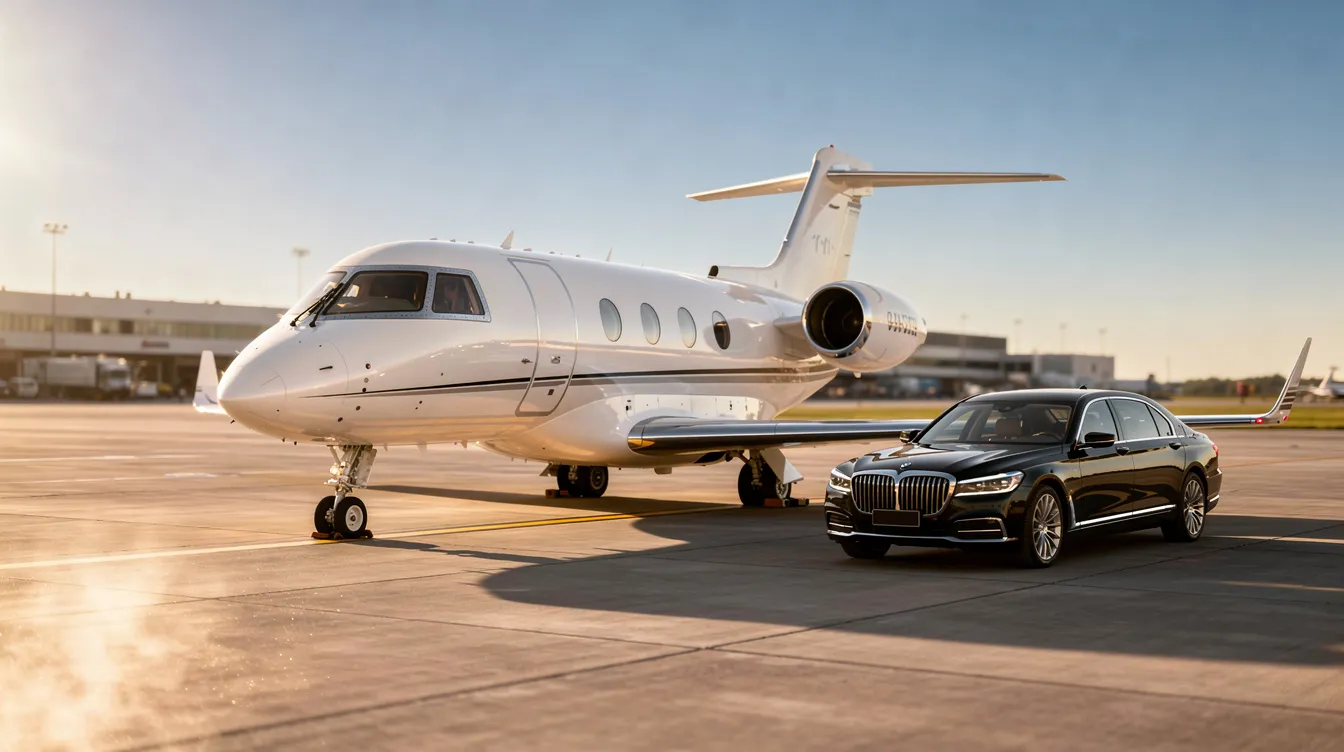
BlackJet's Jet Card Model vs. Owning a Cargo-Capable Aircraft
While airlines operate 777Fs to move freight across the world, private individuals rarely own or charter large cargo jets directly. The economics simply do not support it for most use cases.
Owning a large aircraft-whether a passenger 777 or a business jet with a cargo-friendly cabin-involves capital expenditure in the tens or hundreds of millions, plus ongoing maintenance, crew salaries, hangar costs, insurance, and landing fees at every airport. The cost structure is prohibitive for all but the largest corporations.
Jet cards offer prepaid access to private jets without any of these ownership burdens. A 25-hour or 50-hour BlackJet Jet Card provides on-demand access to light, midsize, super-midsize, and large-cabin jets. Programs typically include options like 25-hour or 50-hour cards, with jet cards providing access to multiple cabin types through a single membership.
For members who frequently move goods alongside their travel-quarterly Europe–US product tours, for example-BlackJet's team can coordinate with cargo carriers that operate efficient freighters such as the 777F, rather than the client bearing ownership costs for a dedicated cargo airplane.
The Jet Card model delivers convenience, cost predictability, and strategic flexibility. You fly on your schedule; your freight moves on the world's most capable cargo networks. Both arrive when and where they need to, and you manage neither fleet nor crew.
Technology and Real-Time Coordination with Cargo Flights
Digital platforms have transformed both private jet booking and cargo tracking, creating opportunities for coordination that were impossible a decade ago.
Real-time flight support is available 24/7 through BlackJet's technology platform. Real-time flight support includes digital booking tools that allow members to adjust itineraries as cargo schedules shift. Real-time support enhances safety and efficiency in private aviation by keeping members informed of weather, slot changes, and connection windows.
Mobile booking platforms enable 24/7 access to jet services. Users can book private jets directly from their smartphones, and mobile platforms streamline the booking process for private aviation. Real-time updates are available through mobile booking platforms, and mobile booking enhances user experience for private jet travelers-especially when synchronizing with cargo arrival windows.
Jet card users benefit from 24/7 digital booking tools, and real-time support is included with jet card programs-meaning a member can verify that cargo has cleared customs at Frankfurt before confirming a private departure to a nearby FBO.
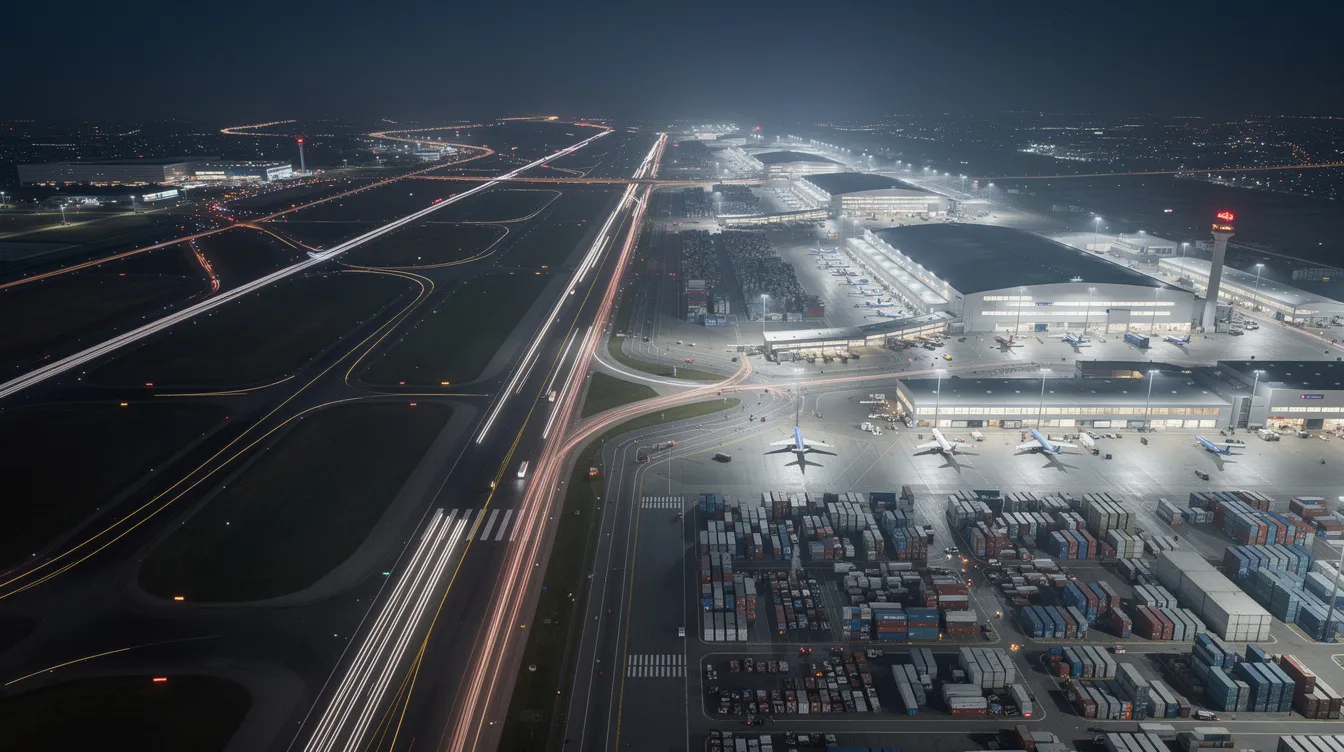
Many major cargo hubs-Frankfurt, Doha, Hong Kong, Louisville-see regular 777F operations and have FBOs nearby for seamless private transfers between cargo terminals and private aircraft.
Comparing 777F with Legacy and Next-Generation Freighters
For readers interested in how the 777F stacks up in the cargo market, here is a high-level comparison across the models that matter.
MD-11F: A tri-jet freighter with shorter range and higher fuel burn per tonne-kilometer. The 777F offers lower operating costs and fewer maintenance events, which is why carriers like Lufthansa Cargo have phased out MD-11Fs in favor of 777Fs.
747-400F: A capable quad-jet with more volume but four engines to feed and maintain. On routes where full 747 cargo capacity is not needed, the 777F wins on economics.
747-8F: Boeing's newest four-engine freighter, produced in limited numbers. It offers more payload than the 777F but at higher fuel and maintenance cost per flight hour.
777-300ER conversions: Several conversion programs now transform retired passenger 777-300ERs into freighters, offering operators a lower purchase price alternative to new-build 777Fs. These converted models expand market capacity but carry initial conversion risk and lead times.
777-8F (777X family): Boeing's planned next-generation freighter with GE9X engines and new composite wings for improved fuel efficiency. Boeing's 777X features new composite wings for improved fuel efficiency, and the 777-8F is projected for deliveries around 2028–2030. Until then, the 777F remains the production standard.
Future Outlook: 777F in the Late 2020s and 2030s
Despite new freighter programs on the horizon, the 777F is projected to remain a mainstay of long-haul cargo fleets well into the next decade.
As of February 2026, Boeing has logged 362 total orders for the 777F, with 317 delivered. Production extensions have been requested beyond December 2027.
The global freighter fleet is projected to grow by 67% in 20 years, driven by e-commerce demand and supply chain diversification. The 777F and its successors will absorb a significant share of that growth.
Fleet planners may continue ordering or converting 777 variants, including anticipated 777-300ER freighter conversions through approximately 2030, maintaining hundreds of 777-family freighters in global service.
For BlackJet clients, this translates into a reliable backdrop of long-haul freight capacity supporting global private travel lifestyles and businesses. The infrastructure that moves your goods is not shrinking-it is expanding.
Key trends to watch: broader SAF adoption, digital cargo tracking integration, and more tightly coordinated passenger-cargo logistics chains that bring private jet schedules and freight timelines closer together.
Private Aviation, Safety Standards, and How They Relate to 777F Operations
Safety is non-negotiable-whether in a 347-tonne freighter crossing the Pacific or a light jet carrying two passengers from Teterboro to Palm Beach.
BlackJet requires partner operators to maintain top-tier safety certifications and audits (ARGUS, Wyvern, or equivalent), paralleling the rigorous standards that airlines follow for their 777 fleets. These certifications verify pilot experience, maintenance programs, and operational oversight.
The robust regulatory environment governing 777F cargo operations-FAA and EASA oversight, fire suppression regulations, dangerous goods protocols-reflects the same culture of safety that BlackJet insists upon for its aircraft categories and operator network.
While BlackJet members may never step onto a 777 freighter, the safety culture that governs such aircraft influences the broader aviation ecosystem they rely on. Maintenance standards for engines, airframes, and avionics are shaped by the same regulatory bodies and the same demand for zero-compromise operations.
Every layer of aviation safety-from 777F cargo hold fire suppression to BlackJet's operator vetting process-exists to ensure that people, goods, and aircraft arrive safely, every time.
FAQ: 777F, Cargo Flights, and BlackJet Members
Can private individuals charter a Boeing 777F for their own cargo? It is possible but rare. Chartering a 777 freighter typically requires specialized cargo charter brokers and is generally reserved for governments, large corporations, or humanitarian organizations moving outsized shipments. The cost per flight hour is substantial, reflecting the airplane's size, fuel consumption, crew requirements, and landing fees.
Does BlackJet operate 777Fs directly? No. BlackJet focuses exclusively on private passenger jets-light, midsize, super-midsize, and large-cabin aircraft. When members need freight coordination, BlackJet collaborates with cargo partners who operate efficient freighters, including the 777F.
How does a 777F cargo flight coordinate with a BlackJet private jet itinerary? Consider a member attending an automotive exhibition in Geneva. Exhibition materials ship from Shanghai on a 777 freighter, arriving at a European cargo hub 48 hours before the event. The member's BlackJet private flight from New York is timed to arrive the morning after cargo clears customs-ensuring both the executive and the materials are in place without unnecessary waiting.
Is air cargo on 777 freighters carbon-neutral? Not universally, but many cargo operators are expanding SAF usage and carbon offset programs. BlackJet ensures that its own passenger flights are carbon-neutral through verified offsets at no extra cost to members. Cargo carriers are moving in a similar direction, though full carbon neutrality in air freight remains a work in progress.
What's the advantage of 777 freighters versus smaller cargo aircraft? Range and payload. The 777F can carry over 100 tonnes of freight nonstop across oceans-a capability that smaller narrowbody freighters simply cannot match. For intercontinental shipments of high-value, time-sensitive goods, the 777F's combination of cargo capacity, range capability, and fuel efficiency makes it the clear choice.
What Pratt & Whitney engines are compatible with the 777F? The 777F is powered exclusively by GE90-series engines. While Pratt & Whitney engines power other Boeing widebodies, the 777F is not compatible with Pratt variants-a detail worth noting for those comparing across the broader market of Boeing commercial airplanes and freighter models.
How BlackJet Elevates Travel Beyond the Capabilities of Any 777 Freighter
The 777F moves goods with remarkable efficiency across every continent. But BlackJet's mission is different: we move people with precision, privacy, and control.
Our Jet Card model delivers guaranteed access, predictable hourly pricing, and multiple cabin categories for trips that often align with global freight flows. Whether you are heading to a board meeting in London, a product launch in Dubai, or a family retreat in the Mediterranean, your travel adapts to you-not the other way around.
Safety, sustainability, and technology define every BlackJet journey. Carbon-neutral flights come standard. 24/7 real-time support ensures that schedule changes, weather disruptions, and customs delays are managed before you notice them. And our mobile platform puts booking, tracking, and communication in your hands from anywhere in the world.
The 777F keeps your business supplied. BlackJet keeps you ahead of it.
Explore how a BlackJet Jet Card can complement your global lifestyle-where your cargo arrives on schedule and so do you.


 Sign up with google
 Sign up with Apple