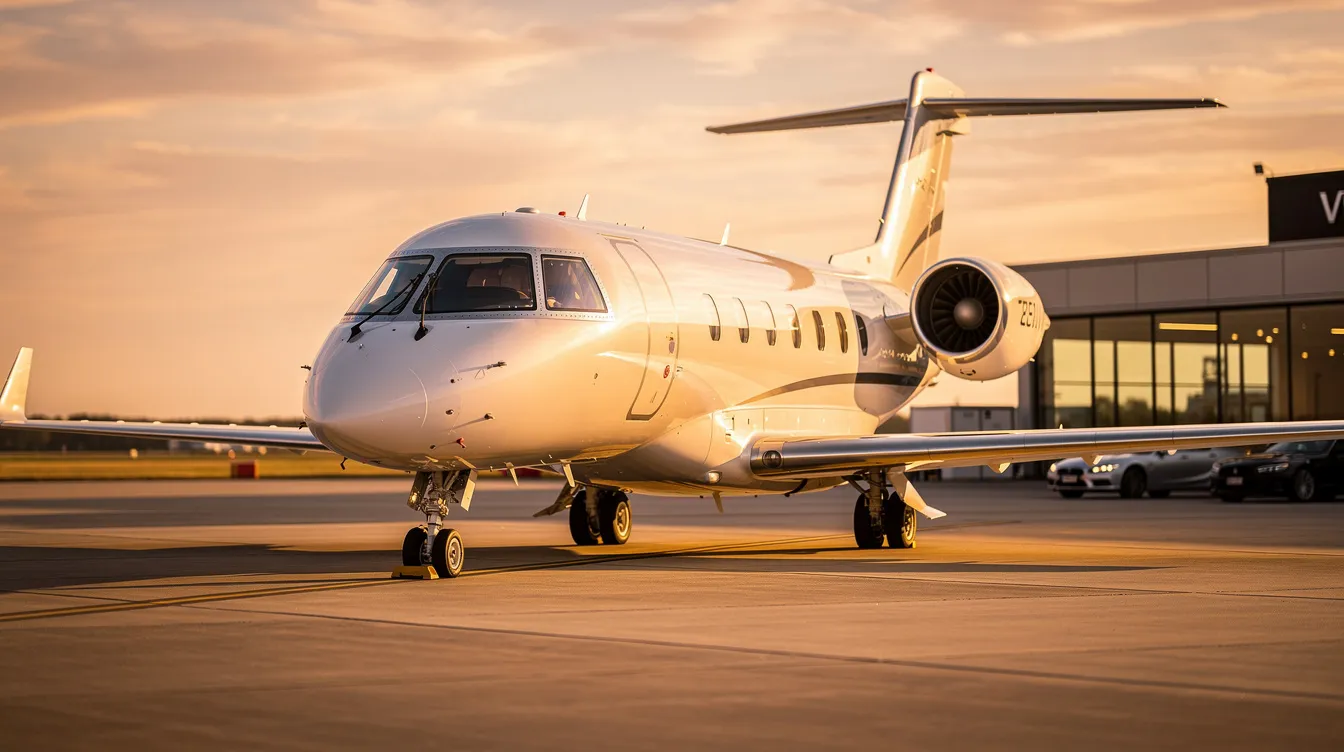
Private aviation is no longer judged on cabin size and schedule flexibility alone. Fuel efficiency now separates the operators who deliver real value from those who simply sell hours in the sky. This guide breaks down the mechanics, economics, and strategic implications of jet fuel efficiency for BlackJet Jet Card members.
Jet Fuel Efficiency at a Glance: Why It Matters for Private Flyers
Fuel is the single largest variable cost in business jet operations. Depending on aircraft category and fuel prices, jet fuel typically represents 35% to 45% of direct operating costs for large-cabin business jets. For context, fuel efficiency accounts for 25 to 30% of airline expenses in commercial aviation and is often discussed as average fuel economy, where higher seating density and passenger load factor spread the cost. In private aviation, with fewer seats filled, the per-passenger burden of fuel consumption is far greater than in economy class cabins, where more seats distribute fuel use across more travelers.
Consider a one-way New York to Miami flight, roughly 950 nautical miles. A heavy jet burning 400 to 500 gallons per hour needs about 2.5 hours and consumes 1,000 to 1,250 gallons. At $6.50 per gallon (a common 2026 US FBO price), that is $6,500 to $8,125 in fuel cost for one direction. A fuel-efficient light jet burning 80 to 120 GPH covers the same route using 200 to 300 gallons, costing $1,300 to $2,000. That gap, $5,000 or more per leg, repeats on every trip.
A large commercial aircraft can consume 5,000 to 12,000 gallons per hour, but it carries 150 to 400 passengers. The private flyer absorbs most of the fuel burn personally. This is why BlackJet members benefit directly when more fuel-efficient aircraft enter the fleet: hourly Jet Card rates become more predictable, fuel surcharges shrink, and the carbon offsets required per flight drop in both volume and cost.
Metric | Light Jet (~100 GPH) | Heavy Jet (~450 GPH) |
|---|
Fuel burn, NY to Miami | ~250 gallons | ~1,125 gallons |
Fuel cost at $6.50/gal | ~$1,625 | ~$7,300 |
Approximate CO₂ per flight | ~2.4 tonnes | ~11 tonnes |
What Fuel Efficiency Means in Aviation
Jet fuel efficiency measures how effectively an aircraft converts fuel energy into useful work: moving passengers or cargo across a given distance. High fuel efficiency means burning fewer pounds or gallons of fuel per unit of transport work.
Several metrics capture this, and fuel efficiency is typically measured with metrics such as gallons per hour, nautical miles per gallon, and fuel flow. Gallons per hour (GPH) is the most common in private aviation; it tells you the raw fuel burn rate at a given flight stage. Nautical miles per gallon (nm/gal) adds a distance dimension: how far the aircraft travels on each gallon. Specific range, the distance an aircraft travels per unit of fuel consumed, is the technical term for this same idea. Fuel flow, measured in pounds per hour or kilograms per hour, is the rate at which an engine consumes fuel and is what pilots monitor on cockpit gauges.
For benchmarking across the aviation industry, aircraft fuel burn is also compared across operators and aircraft types using metrics such as kg/RTK (revenue tonne-kilometer) and kg/RPK (revenue passenger-kilometer). Payload-range efficiency is the industry standard for commercial airline economics and environmental tracking. Thrust specific fuel consumption (TSFC) indicates how much fuel an engine needs to produce a unit of thrust, and it measures how efficiently an engine generates thrust relative to the fuel burned.
The distinction between fuel efficiency and fuel economy matters. Efficiency is technical: can the aircraft cover more distance per gallon? Economy is operational: what did the trip actually cost per mile or per passenger, including routing, load, and speed decisions? An efficient aircraft flown poorly (wrong altitude, excess weight, indirect routing) can deliver poor fuel economy.
Understanding Aircraft Fuel Consumption: From Takeoff to Cruise
Aircraft burn fuel at different rates across flight phases. Takeoff and initial climb demand the highest fuel intensity per minute because the engines operate near maximum thrust while the aircraft is at or near its heaviest weight. Once at cruising altitude, consumption drops; the aircraft settles into a regime where thinner air reduces aerodynamic drag, allowing engines to operate more efficiently. Descent and approach consume the least fuel, especially when managed with continuous descent procedures.
Jet fuel consumption depends on aircraft weight, cruising altitude, engine technology, aerodynamics, and flight planning. Aircraft weight affects fuel burn since heavier aircraft require higher thrust to maintain altitude and speed. Higher cruising altitudes reduce aerodynamic drag, and jet engines generally become more fuel-efficient at high altitudes due to thinner air. Altitude affects jet fuel efficiency as air density decreases with altitude, reducing both parasitic drag and the thrust required for level flight.
Consumption ranges vary widely by class. A light jet like the Embraer Phenom 100 uses roughly 90 to 110 GPH at cruise. A heavy jet burns 350 to 500 GPH on long-haul flights. To understand how much fuel a private jet uses, consider two missions:
A 900-mile New York to Miami leg on a light jet at 110 GPH takes about 2.5 hours and uses roughly 275 gallons.
The same route on a heavy jet at 450 GPH consumes about 1,125 gallons.
A 3,000-mile New York to Los Angeles leg requires a midsize or heavy jet for nonstop capability. If a light jet must stop mid-route, the extra takeoff and climb cycle adds 5 to 15% to the total fuel burn because the aircraft repeats the most fuel-intensive phases.
A strong headwind increases the time and fuel required to cover a distance, sometimes adding 10% or more to the fuel needed on a westbound transcontinental flight.
Flight Efficiency Theory: Why Some Aircraft Are Naturally More Fuel Efficient
Flight efficiency theory begins with a single ratio: lift to drag. An aircraft with a high lift-to-drag ratio needs less thrust to maintain flight, which translates directly into lower fuel burn at cruise. Two types of drag determine this ratio. Parasitic drag (skin friction, form drag from the fuselage shape, and interference between components) increases with speed. Induced drag arises from generating lift itself and dominates at lower speeds and during climb. Reducing both through advanced aerodynamics is the primary path to a more fuel-efficient aircraft.
Wingtip devices, including blended winglets and Sharklet-style tips, reduce induced drag by controlling the vortex that forms at the wing tip. Wingtip devices improve the lift-to-drag ratio and reduce fuel burn; on long flights, they can cut fuel burn by 3.5%. The Airbus A321 equipped with Sharklet wingtip devices consumes only 2.2 liters of fuel per 100 kilometers per passenger, setting a high standard in commercial aviation.
Modern aircraft are 80% more fuel-efficient than those from 50 years ago, a gain driven by aerodynamic refinement, lightweight materials like carbon fiber composites, and engine improvements. In business aviation, many newer aircraft in BlackJet's network use carbon-fiber structures and winglet-equipped wings to reduce drag and aircraft weight. A 1% weight reduction leads to a 0.75% fuel consumption decrease, so lighter materials compound savings flight after flight. These advances in modern planes close the gap between luxury air travel and environmental responsibility.
Propulsive Efficiency and Engine Technology
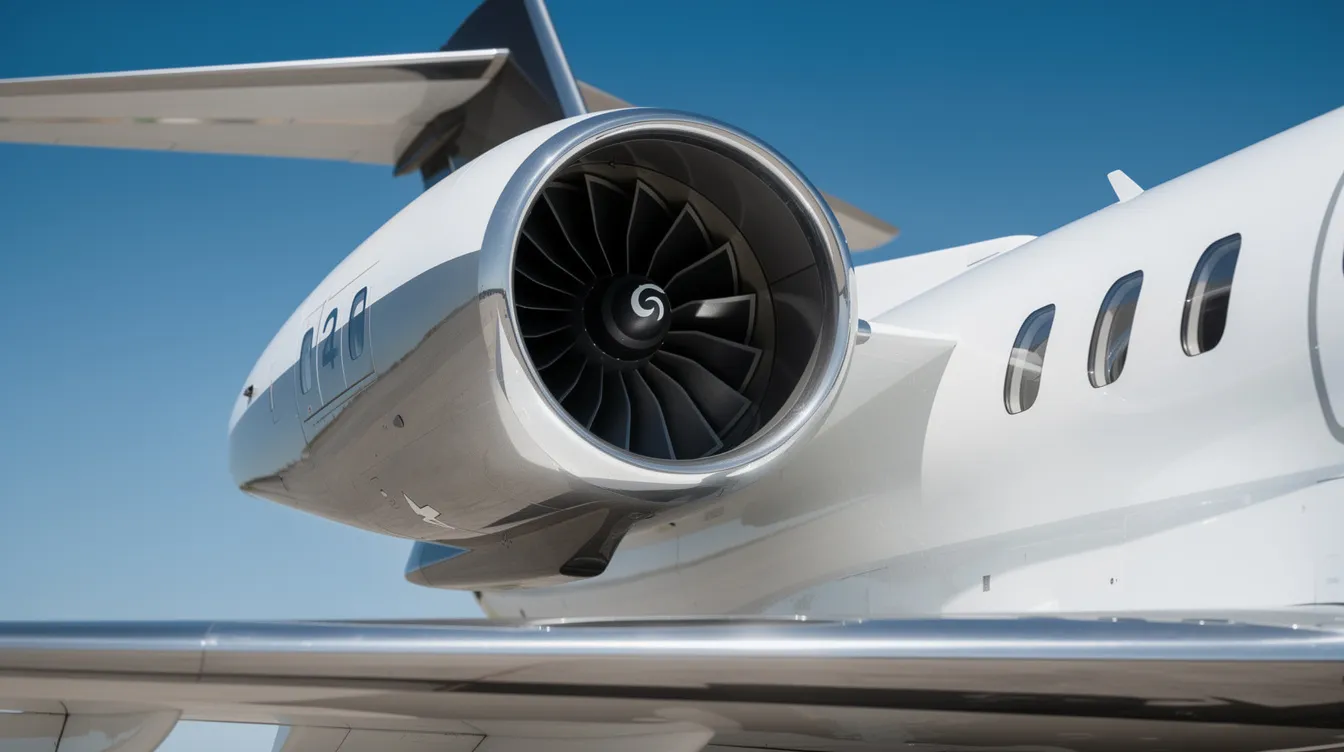
Propulsive efficiency, also called thrust efficiency, describes how well an engine converts fuel energy into forward motion. The measure that captures this is thrust-specific fuel consumption (TSFC): the lower the TSFC, the less fuel is needed per unit of thrust. Modern high-bypass turbofan engines improve TSFC compared to older turbojet designs by moving a larger mass of air at a lower exhaust velocity, which is inherently more efficient.
High-bypass turbofan engines, the standard powerplant on advanced engines fitted to aircraft like the Gulfstream G500/G600, use fuel more efficiently than older models. These newer aircraft deliver 15 to 20% better fuel economy than previous-generation aircraft in the same size class. The Boeing 787 Dreamliner, which shares engine technology lineage with some business jet platforms, is 20% more fuel-efficient than its predecessors.
Turboprop engines take a different approach. Subsonic turboprop aircraft can save 21% in fuel compared to jets on regional routes below 460 mph, because the propeller is efficient at moving large air volumes at lower speeds. This makes turboprop private planes ideal for short hops where maximum speed is not the priority.
Industry benchmarks illustrate the progress. In 2018, US airlines had an average fuel consumption of 4.06 L/100 km per passenger. In 2017, average airline fuel consumption in Europe was 3.4 L/100 km per passenger. In 2016, Aeroflot Group's fuel consumption stood at 22.9 g/ASK. BlackJet evaluates engine type and age when selecting aircraft partners, prioritizing fleets with modern powerplants and predictive maintenance programs that keep jet turbine efficiency close to factory-new levels.
Key Factors That Impact Jet Fuel Efficiency on Every Flight
Fuel efficiency is not a fixed number on a spec sheet. It shifts from flight to flight based on decisions made before and during each mission.
The key drivers:
Aircraft weight. Every kilogram counts. Passengers, baggage, catering, and the fuel load itself all add weight. A 1% weight reduction leads to a 0.75% fuel consumption decrease; conversely, loading a heavy jet with excess fuel reserves for a short leg wastes fuel carrying fuel.
Cruise speed. Flying at Mach 0.78 instead of Mach 0.80 on a 2.5-hour mission can trim fuel consumption by 3 to 5% with only a few minutes added to arrival time.
Cruising altitude. Operating at optimal altitude, where air density is low enough to reduce drag but high enough for engine efficiency, can cut average fuel burn per mile.
Routing. Direct routes and optimized flight paths save fuel during flights. Multi-leg trips add repeated climb and descent cycles, each consuming more fuel per mile than cruise.
Weather. Headwinds, temperature deviations, and turbulence all increase fuel use.
Maintenance condition. Clean aerodynamic surfaces and well-maintained engines with low TSFC degradation keep the aircraft burn rate close to published figures.
A concrete example: four passengers flying a 600-mile regional trip. Dispatching a 6-seat light jet at 110 GPH instead of a 14-seat heavy jet at 450 GPH cuts fuel burn by over 75%. Per passenger, the difference is even steeper. Fuel-efficient aircraft reduce operating costs and carbon footprint on every such mission, which is why right-sizing the aircraft matters more than simply having access to the largest cabin.
Most Fuel-Efficient Aircraft Types in Private Aviation
"Fuel-efficient aircraft" is not a single model; it is a spectrum, and the most fuel-efficient airplanes depend on the mission. Modern turboprops are often the most fuel-efficient aircraft class, burning 60 to 150 GPH and excelling on sub-600-mile routes. Light jets, at 80 to 200 GPH, handle 500 to 1,500-mile legs with true jet speed. Midsize jets, at 200 to 360 GPH, cover transcontinental US routes nonstop. Heavy and ultra-long-range jets burn 350 to 500+ GPH but can be fuel efficient per passenger on intercontinental sectors with 10 to 14 occupants.
BlackJet's aircraft selection considers real-world efficiency improvements, not brochure numbers. The platform matches cabin class to route length and passenger count so that a two-person weekend trip does not burn the fuel budget of a transatlantic crossing. This is the core logic behind Jet Card pricing stability: sending the right, efficient aircraft on every leg keeps the most fuel-efficient planes in rotation for the missions they were designed to fly.
Fuel-Efficient Turboprops: Regional Travel with Minimal Fuel Burn
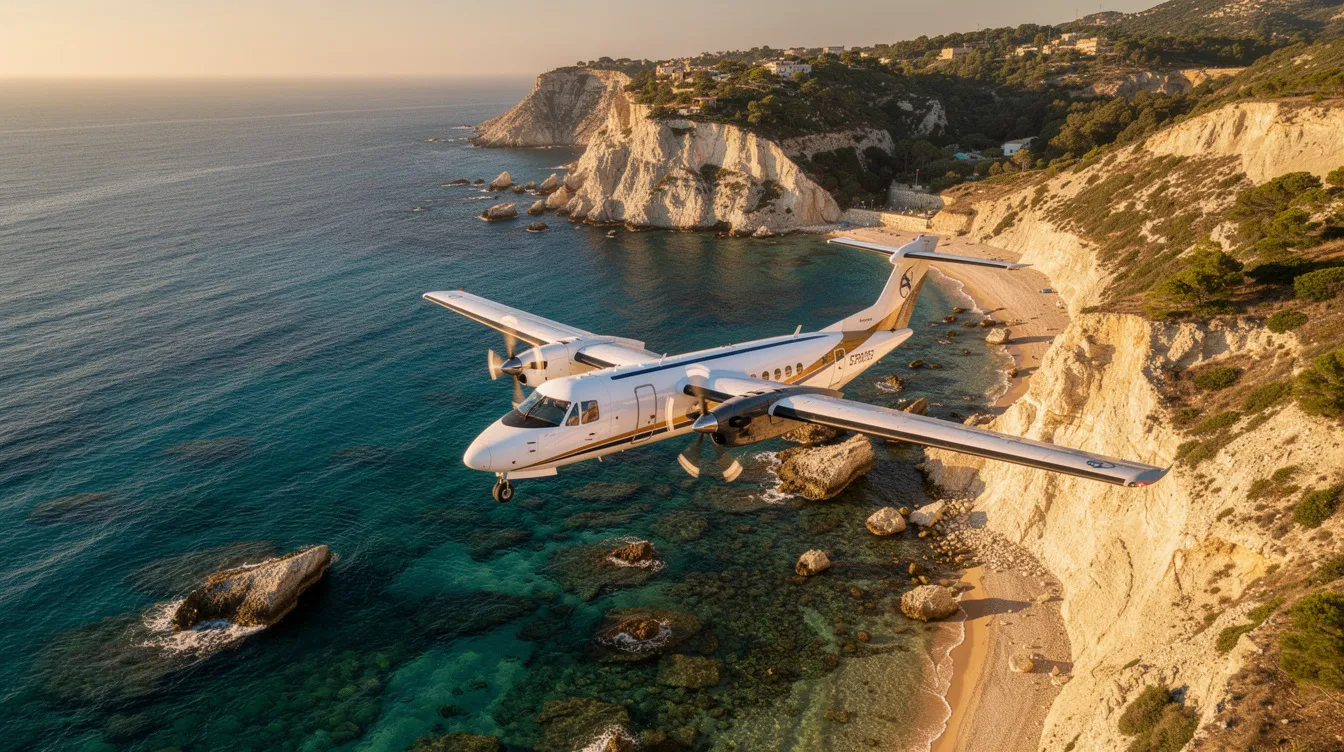
Turboprops combine low fuel burn with short-runway capability, making them ideal for regional business routes and weekend leisure destinations where ground time to and from large airports often exceeds flight time.
Performance benchmarks for this class:
Pilatus PC-12 NG/NGX. The Pilatus PC-12 burns just 66 gallons per hour, carries up to 9 passengers, and accesses strips as short as 2,500 feet. Range reaches roughly 1,800 nautical miles.
Daher TBM 940. Cruise speeds approach 330 knots with fuel burn around 150 GPH at high power settings; a fast option for missions where speed and economy both matter.
King Air 350. Burns approximately 100 GPH, carries more baggage, and serves as a regional workhorse with flexible airport access.
Ideal BlackJet use cases include Boston to Nantucket weekends, Zurich to Cannes business trips, or any route under 600 miles where a larger jet's fuel burn cannot be justified. The trade-off is modest: cruise speeds are lower than jet alternatives, and cabins are smaller. But fuel economy per seat on these missions is unmatched, and access to secondary airports often shortens total door-to-door time.
Fuel-Efficient Light Jets: Balancing Speed, Comfort, and Fuel Economy
Light jets are the core of many Jet Card fleets. They deliver true jet speed at a fuel burn rate that keeps per-hour costs in reach for frequent travelers.
Typical specs: 4 to 7 passengers, cruise speeds around 400 to 430 knots, fuel burn between 80 and 200 GPH depending on model, load, and conditions. Maximum range runs 900 to 1,600 nautical miles.
Three fuel-efficient planes in this class:
HondaJet HA-420 Elite. Burns roughly 110 to 120 GPH in cruise, with a distinctive over-the-wing engine mount that reduces drag and cabin noise.
Embraer Phenom 100. The Embraer Phenom 100 has a second-hour fuel burn of 77 gallons, making it one of the most economical jets once at cruise altitude.
Cessna Citation M2 / CJ3+. Solid cabin comfort and moderate burn rates for the class, covering popular routes like Los Angeles to Vail or New York to Miami.
BlackJet dispatches light jets for Jet Card members flying frequent 500- to 1,200-mile trips because this class delivers the optimal blend of cabin comfort, cost per hour, and lower environmental impact for passenger transport on those segments.
Fuel-Efficient Midsize and Heavy Jets: Long-Range Efficiency and the "Right-Size" Decision
Midsize and heavy jets burn much fuel per hour, but on the right mission, they can be the most efficient choice per passenger.
Midsize jets cruise at ranges of 2,000 to 3,000 nautical miles with burns of 180 to 260 GPH and 6 to 9 seats. The Gulfstream G200 averages 233 gallons per hour in fuel burn and covers nonstop legs like New York to Aspen or London to Marrakesh without refueling. The Dassault Falcon 900LX burns an average of 260 gallons per hour and pairs long-range capability with a three-engine design that permits access to shorter runways.
For intercontinental missions, heavy jets are often the only option. The Gulfstream G550 has a second-hour fuel burn of 447 gallons, but its 6,750-nautical-mile maximum range covers Chicago to Geneva or London to Dubai nonstop. In commercial aviation, the Boeing 777-300 becomes more fuel-efficient at distances over 3,000 nautical miles because the fuel weight penalty of a shorter leg offsets the aircraft's cruise optimization; a similar principle applies to large aircraft in business aviation.
BlackJet uses passenger count, baggage requirements, and nonstop distance to determine when a heavy jet is the most efficient choice. Flying four passengers on a 700-mile leg in a heavy jet wastes fuel; flying twelve passengers on a 4,000-mile transatlantic crossing in a heavy jet is the definition of right-sizing. The operating cost of a private jet drops per passenger when the aircraft matches the mission.
Operational Efficiency: How BlackJet Reduces Real-World Fuel Consumption
Operators can increase fuel efficiency through better planning and flight execution. How a flight is planned and flown determines whether published fuel burn rates become real savings or wasted potential.
BlackJet's operational approach targets fuel reduction at every stage:
Route optimization. Direct routings, step-climbs to optimal cruising altitude as weight decreases, and smart departure times that avoid congested airspace and holding patterns to cut fuel use in real-world operations.
Pilot best practices. Single-engine taxi where safe, reduced auxiliary power unit (APU) runtime, and continuous descent approaches that minimize fuel use in the approach phase.
Real-time weather integration. Tailwind-seeking altitude adjustments and routing shifts that avoid headwinds; on a westbound transcontinental leg, a 30-knot tailwind at a different flight level can save 5% or more in fuel.
Weight discipline. Fuel planning with calculated reserves rather than blanket over-fueling. Every pound of unnecessary fuel is itself a source of drag and burn.
Maintenance standards. Engines and airframes are kept to tight maintenance intervals so that TSFC stays close to new-engine specs and aerodynamic surfaces remain clean.
On a typical 2- to 3-hour light jet mission, these practices collectively reduce fuel consumption by 3 to 8%. Over a 50-hour Jet Card, that translates into hundreds of gallons saved and a measurably smaller carbon footprint.
Environmental Impact, Sustainable Aviation Fuel, and Carbon-Neutral Flights
Aviation contributes to greenhouse gas emissions at a scale that private flyers cannot ignore. In 2018, carbon dioxide emissions from aviation totaled 918 million tonnes globally. Private aviation alone emitted at least 15.6 million tonnes of CO₂ in 2023, averaging roughly 3.6 tonnes per flight. Each gallon of jet fuel burned releases approximately 9.75 kg of carbon dioxide. Airlines aim for net-zero CO₂ emissions by 2050, and private aviation faces the same trajectory.
Improving fuel efficiency reduces CO₂ emissions directly: every gallon not burned is 9.75 kg of CO₂ that never enters the atmosphere. But efficiency alone cannot close the gap. Sustainable aviation fuels offer the next layer of emissions reduction. SAF is a drop-in replacement for conventional Jet A, produced from waste feedstocks, biomass, or captured CO₂. Sustainable aviation fuels reduce lifecycle emissions by up to 80% compared with conventional fuel. US SAF purchases rose from roughly 16 million gallons in 2022 to 26 million in 2023, a 64% year-over-year increase, with business aviation consuming a disproportionate share relative to its fuel use.
BlackJet's approach combines both: reduce emissions through efficient aircraft and smart operations, then offset remaining carbon dioxide to deliver carbon-neutral flights as standard for Jet Card members. Because the baseline fuel consumption is already lower, the cost and volume of offsets shrink. Members get a credible environmental position without paying inflated premiums.
Jet Cards, Cost Control, and the Strategic Value of Fuel-Efficient Aircraft
Fuel prices are volatile. Jet-A at US FBOs fluctuates between $6.50 and $8.50 per gallon; European prices run 15 to 25% higher. For Jet Card members flying prepaid hours, this volatility feeds directly into hourly rates and fuel surcharges.
Here is the math. A member flying 50 hours per year on a light jet burning 180 GPH at $6.50 per gallon pays $58,500 in fuel. The same 50 hours on an older heavy jet burning 450 GPH costs $146,250 in fuel alone. That $87,750 annual difference buys more flights, covers offset costs, or simply stays in the member's pocket.
BlackJet's multi-cabin Jet Card model gives members access to the right cabin class for each trip. A four-passenger hop from Boston to Washington does not require the same aircraft as a twelve-person London to Dubai crossing. By matching fuel-efficient aircraft to mission profiles, BlackJet controls operating expenses for members across all cabin classes, turning fuel economy into a tangible financial advantage rather than a technical afterthought.
Future Trends in Jet Fuel Efficiency and What They Mean for BlackJet Members
Hybrid-electric propulsion is being explored for short-haul aircraft, with several prototypes targeting 30 to 50% fuel burn reduction on regional segments under 500 nautical miles. Full certification and fleet integration are expected between 2028 and 2035. Ultra-high bypass engines and next-generation cores under development by Pratt & Whitney, Rolls-Royce, and GE aim for further efficiency improvements over current powerplants.
Aerodynamic innovation continues. NASA's blended wing body research and laminar flow wing programs target up to 50 to 60% fuel consumption reduction on medium-haul routes by 2030 to 2035. Advanced aerodynamics at this scale would reshape the economics of private passenger transport.
AI can optimize flight paths, reducing fuel burn by analyzing weather patterns, traffic density, and aircraft performance in real time. Predictive maintenance algorithms keep engines operating near peak TSFC, preventing the gradual efficiency degradation that accumulates between overhauls. As the International Civil Aviation Organization tightens emissions standards and SAF blending mandates expand, the operating cost of inefficient aircraft will rise.
BlackJet is positioned to adopt these improvements as they enter certified business aviation fleets. Members who value fuel efficiency today will see compound benefits as each generation of modern aircraft, engine technology, and operational tooling enters the network.
Choosing Fuel-Efficient Aircraft as a Smart Private Aviation Strategy
Fuel efficiency ties together three things that every private flyer cares about: cost, performance, and environmental impact. The numbers are concrete: the difference between a light jet and a heavy jet on the same route can exceed $5,000 in fuel per leg and 8 tonnes of CO� per flight. Across a year of Jet Card travel, those gaps multiply into six-figure cost differences and measurable reductions in greenhouse gas emissions.
BlackJet's model, spanning multi-aircraft access, data-driven aircraft selection, and carbon-neutral flights as standard, helps members minimize fuel consumption without compromising safety, comfort, or schedule control. Selecting the right fuel-efficient aircraft for each mission is a smarter strategy than defaulting to the largest or fastest jet in the fleet.
Explore BlackJet's Jet Card programs to see how right-sized aircraft, real-time flight support, and a commitment to sustainability can reshape your private travel. Learn more about carbon-neutral flights and how BlackJet offsets emissions. Understand the operating cost of a private jet and how fuel efficiency impacts it. Discover details on turboprop private planes as fuel-efficient options. Finally, explore jet turbine efficiency and engine technology that enhances fuel economy.


 Sign up with google
 Sign up with Apple