The way you fly shapes every aspect of your journey—from the moment you leave home to the instant you arrive at your final destination. Yet most travelers rarely consider that the airline industry is not a monolith. It is a layered ecosystem where different types of airlines serve fundamentally different purposes, and understanding those differences is the key to making smarter travel decisions.
For the discerning business person travelling between cities on a packed schedule, or the high-net-worth family planning a multi-generational vacation, the choice between a full-service carrier, a low-cost airline, a charter operator, or a private jet is not simply a matter of price. It is a calculation of time, privacy, flexibility, and control. Consider: a commercial flight from New York to a secondary market like Teterboro-adjacent destinations might involve two hours at the terminal, a connection through a major airline hub, and door-to-door travel time exceeding seven hours. A private jet covering the same distance can cut that to under three.
The scale of the global airline industry underscores why these distinctions matter. In 2023, the passenger airline industry alone was valued at approximately US$785 billion, recovering strongly after the pandemic years, and up dramatically from the $754 billion the airline industry generated in revenue in 2017. Revenue-passenger-kilometers grew roughly 37% year-over-year in 2023, reaching about 94% of 2019 levels. Within this vast aviation sector, BlackJet operates in the premium private aviation segment—complementing, not competing with, commercial airlines by offering Jet Card programs and private charter access for travelers who demand more from every flight.
This article covers the main airline types you should understand:
International (major) airlines with global route networks
National airlines focused on domestic and regional markets
Regional airlines connecting smaller cities to hubs
Full-service carriers offering premium cabin classes
Low-cost and ultra-low-cost carriers built on minimal fares
Charter airlines operating non-scheduled flights on demand
Cargo airlines transporting freight worldwide
Private jet operators and jet card providers like BlackJet
What Is an Airline? And How It Fits into the Aviation Industry
An airline, at its core, is an air carrier that provides air transport services for passengers, cargo, or both—in exchange for payment. Airlines operate under two broad frameworks: scheduled operations, where flights run on published timetables with fixed routes, and non-scheduled operations, where flights are arranged on demand without recurring public schedules.
The distinction between the airline industry and the broader aviation industry is important. The aviation industry encompasses everything from aircraft manufacturing and airport operations to air traffic control, maintenance, repair organizations (MROs), regulatory bodies like the FAA and EASA, and business aviation. The airline industry is one segment within that larger ecosystem—focused specifically on the carriers themselves.
A practical example clarifies this: Delta Air Lines is a scheduled airline operating thousands of daily flights on published routes. An on-demand charter operator, by contrast, flies when and where a client requests—no published schedule, no fixed routes. Both are part of the aviation industry, but they operate under different rules and serve different markets.
Private jet providers like BlackJet sit within business aviation. They are certificated air carriers—not traditional scheduled airlines—offering jet card programs and charter flights rather than mass-market scheduled services. Understanding these categories matters because airlines are categorized by their business models, service levels, and operational routes, and each category offers distinct trade-offs in cost, convenience, and experience.
Main Types of Airlines by Operational Scale
Airlines are categorized into major, national, and regional types—a framework used by the U.S. Department of Transportation, IATA, and aviation analysts worldwide. These categories are defined primarily by annual operating revenues, fleet size, and the geographic scope of route networks.
Definitions of Main Airline Types
Major (International) Airlines: The largest carriers, generating over $1 billion in annual revenue and operating expansive global route networks. They typically offer both domestic and international flights and serve as the backbone of long-haul and intercontinental travel.
National Airlines: Carriers focused primarily on a single country's domestic market, with selective international or regional routes. Their annual revenues range between $100 million and $1 billion.
Regional Airlines: Smaller carriers that connect smaller cities to larger airport hubs. Regional airlines often operate under capacity-purchase or codeshare agreements with major airlines, feeding passengers into the larger network.
Charter Airlines: Airlines that operate non-scheduled flights based on demand, serving tour operators, corporate groups, sports teams, and ad-hoc travel needs. Unlike scheduled airlines, their routes and schedules are determined by client contracts.
Cargo Airlines: Airlines that focus primarily on transporting freight, not passengers. They operate dedicated freighter aircraft and sometimes converted passenger jets, forming the backbone of global supply chains.
Relationships Between Airline Types
Regional airlines often operate as affiliates or partners of major airlines, connecting smaller airports to major hubs and enabling passengers to transfer to long-haul flights.
Charter airlines serve a different market segment, providing flexible, on-demand service for groups or organizations, while scheduled airlines operate on fixed timetables.
Cargo airlines differ fundamentally from passenger airlines by focusing exclusively on freight, though some passenger airlines also operate cargo divisions.
While exact revenue thresholds can shift slightly by region and regulatory body, the general framework is consistent: major carriers sit at the top with the largest revenue and global reach, national carriers occupy the middle tier with domestic and limited international service, and regional airlines fill the bottom tier by connecting smaller markets to larger hubs. These categories describe commercial scheduled passenger airlines and operate separately from private charter and jet card providers like BlackJet.
Airline Types Comparison Table
Airline Type | Annual Revenue Range | Fleet Size & Aircraft Types | Route Network | Service Model | Examples |
|---|
Major (International) | Over $1 billion | Large mixed fleets: widebody (Boeing 777, Airbus A350), narrowbody jets | Global: domestic & international | Full-service with multiple cabin classes, alliances, and frequent flyer programs | Delta Air Lines, British Airways, Emirates |
National | $100 million to $1 billion | Mostly narrowbody jets (Boeing 737, Airbus A320 family) | Domestic focus, some international | Full-service or hybrid; fewer cabin classes | JetBlue, Alaska Airlines, Qantas (domestic) |
Regional | Under $100 million | Small aircraft: turboprops (ATR 72), regional jets (Embraer E175) | Local/regional, feeder to hubs | Limited service, often codeshare partners | American Eagle, Horizon Air, HOP! |
Charter | Varies, on-demand | Varies from small jets to large aircraft | Non-scheduled, client-driven | Customized, non-scheduled flights | TUI Airways (charters), private jet charters |
Cargo | Varies | Dedicated freighters (Boeing 747F, 777F) | Global freight routes | Freight-only, integrated logistics | FedEx Express, UPS Airlines, DHL Aviation |
International (Major) Airlines
International or major airlines are the largest carriers in the world, generating over $1 billion in annual revenue and operating expansive global route networks. These are the airlines most travelers encounter on long-distance routes and intercontinental travel.
Examples and hubs: Delta Air Lines (Atlanta), American Airlines (Dallas/Fort Worth), United Airlines (Chicago O'Hare, Newark), British Airways (London Heathrow), Emirates (Dubai), China Southern Airlines (Guangzhou), Korean Air (Seoul Incheon)
Fleet composition: Large mixed fleets of widebody aircraft (Boeing 777, 787 Dreamliner, Airbus A350, A380) for long-haul international routes and narrowbody jets (Boeing 737 MAX, Airbus A321neo) for domestic and medium-haul service
Cabin classes: Economy, premium economy, business class (often with lie-flat seats), and first class on select routes
Business model features: Hub-and-spoke networks, membership in airline alliances (SkyTeam, oneworld, Star Alliance), complex revenue management systems, frequent flyer programs, and substantial cargo operations alongside passenger service
Major airlines dominate international destinations and carry passengers across oceans and continents. For executives and frequent travelers, these carriers excel on long-haul trunk routes—but the connections, layovers, and airport dwell time at either end often consume hours that private aviation eliminates. That is why many corporate travelers combine a major airline for the transatlantic or transpacific leg with a private jet for regional connections at origin or destination, creating a seamless city-to-city itinerary.
National Airlines
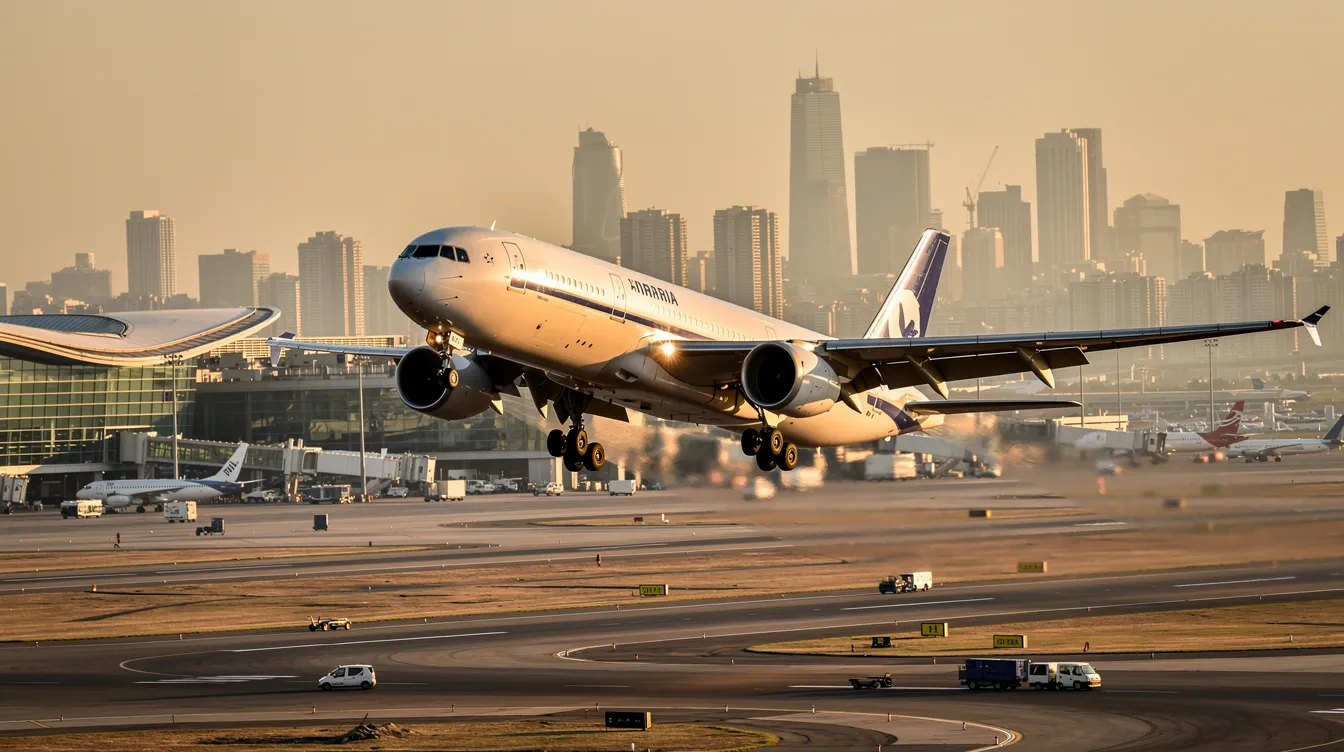
National airlines have annual revenues between $100 million and $1 billion, focusing primarily on one country's domestic market with selective international or regional routes. They are often the carriers travelers rely on for medium-haul point-to-point service.
Examples: JetBlue and Alaska Airlines in the United States, Qantas domestic operations in Australia, Vueling in Spain (short- and medium-haul within Europe), and various carriers across Latin America and Asia
Fleet: Predominantly narrowbody jets—Boeing 737 variants, Airbus A320 family—with limited or no widebody aircraft
Route focus: Connecting secondary cities to major airports, serving particular regions or country-specific demand, sometimes branded as national airways or flag carriers at a domestic level
National airlines typically offer fewer cabin classes than global network carriers—often just economy and a premium or business cabin. Their point-to-point focus means less reliance on complex hub structures, which can translate to more direct routing for domestic travelers. However, for destinations overseas or connections beyond national borders, passengers frequently transfer to major and national airlines operating international service.
Regional Airlines
Definition: Regional airlines are smaller carriers that connect smaller cities to larger airport hubs, often operating under the brand or codeshare of a major airline. Their primary role is to feed passengers from less-populated areas into the networks of major and national airlines.
Examples: American Eagle (operated by Envoy Air and PSA Airlines for American Airlines), Horizon Air (for Alaska Airlines), HOP! (for Air France), and dozens of commuter airlines serving rural or underserved communities
Aircraft: Turboprops like the ATR 72, regional jets like the Embraer E175, Bombardier CRJ series—they typically operate smaller aircraft with fewer than 61 seats, though some regional jets seat up to 76 or even 100
Operational model: Capacity-purchase agreements or codeshare partnerships where the regional carrier flies under a larger airline's brand and flight code
Regional airlines can be classified into large, medium, and small categories based on fleet size and revenue. They often act as affiliates for major airlines, feeding traffic into hub airports where passengers connect to long-haul flights. Network connectivity is achieved through alliances between mainline and regional airlines, making smaller markets accessible within the global air transport network.
The trade-off is clear: regional flights prioritize frequency over luxury, connecting smaller airports to hubs on tight schedules. Private jets, by contrast, bypass this hub structure entirely—flying directly between secondary airports and eliminating the need for connections altogether.
Airline Industry Business Models: How Carriers Compete
Beyond operational scale, air carriers differ significantly in their airline business models and target markets. The main types of airlines include full-service carriers and low-cost carriers, but the landscape also encompasses charter operators and dedicated cargo airlines.
Definitions of Airline Business Models
Full-Service Carrier (FSC): A scheduled airline that offers multiple cabin classes, including amenities (such as in-flight meals, entertainment, checked baggage, and seat selection), and global connectivity. These airlines target travelers who value comfort, loyalty programs, and seamless connections.
Low-Cost Carrier (LCC): Airlines that operate with simplified business models to reduce costs, typically charging for checked baggage and meals, and offering lower base fares. They focus on price-sensitive travelers and maximize efficiency through high aircraft utilization and point-to-point routes.
Ultra-Low-Cost Carrier (ULCC): Airlines that provide the lowest possible base fare with minimal services included. Every additional service, from seat selection to carry-on bags, is priced separately, and the business model is built around maximizing ancillary revenue.
Charter Airline: Airlines that operate non-scheduled flights based on demand, serving groups, tour operators, or organizations. Their routes and schedules are determined by client contracts rather than published timetables.
Cargo Airline: Airlines that focus primarily on transporting freight, not passengers. They operate dedicated freighter aircraft and are essential for global logistics and supply chains.
Relationships Between Airline Types
Full-service carriers and low-cost carriers may compete on similar routes but differ in service levels and pricing strategies.
Charter airlines serve group or specialized travel needs, distinct from the mass-market focus of scheduled carriers.
Cargo airlines operate separately from passenger airlines, though some passenger airlines have cargo divisions.
Since the Airline Deregulation Act of 1978 in the United States—and subsequent liberalization across Europe and Asia—rising fuel costs, labor pressures, and shifting passenger expectations have pushed airlines to refine and hybridize their business models continuously. Legacy carriers have added basic economy fares. Budget airlines have experimented with premium cabins. Hybrid models blur the lines further.
Here, we examine the four core airline business models that define how carriers compete in the modern aviation industry.
Full Service Carriers (FSC)
Definition: Full-service carriers are scheduled airlines that provide multiple cabin classes, including amenities, and global connectivity. They target travelers who value comfort, loyalty programs, and seamless connections.
Full service carriers offer multiple cabin classes, included amenities, and global connectivity—targeting travelers who value comfort, loyalty programs, and seamless connections. Full-service airlines often provide multiple service classes on flights, typically including economy, premium economy, business, and first class, with varying levels of in-flight services.
Examples: Lufthansa, Air France, Qatar Airways, Singapore Airlines, American Airlines mainline operations, British Airways
Service inclusions: Full-service carriers offer in-flight meals and entertainment, checked baggage allowances, seat selection, and, in many cases, offer lounge services at major airports
Network: Hub-and-spoke routing through major airports, alliance membership for global reach, frequent flyer programs that reward loyalty with upgrades, lounge access, and priority boarding—yet even premium cabins cannot always match the time savings highlighted in analyses of whether chartering a private jet is worth it
Revenue mix: Base ticket sales plus ancillary revenue from upgrades, premium seats, corporate contracts, and cargo transportation
Full-service airlines usually have higher operating costs than low-cost carriers due to their multi-class cabin configurations, extensive ground services, alliance infrastructure, and larger staffing requirements. They compensate through premium pricing on business and first class cabins, where yields per seat are dramatically higher.
For travelers comparing options, both full-service airlines and private jet providers like BlackJet target premium travelers—but through fundamentally different models. FSCs offer a premium cabin within a larger aircraft shared with hundreds of other passengers; jet card programs offer entire-aircraft access, complete privacy, and schedule control.
Low-Cost Carriers (LCC) and Ultra-Low-Cost Carriers (ULCC)
Definition (LCC): Low-cost carriers operate with simplified business models to reduce costs, typically charging for checked baggage and meals, and offering lower base fares. They focus on price-sensitive travelers and maximize efficiency through high aircraft utilization and point-to-point routes.
Definition (ULCC): Ultra-low-cost carriers provide the lowest possible base fare with minimal services included. Every additional service, from seat selection to carry-on bags, is priced separately, and the business model is built around maximizing ancillary revenue.
Low-cost carriers and ultra-low-cost carriers are built around simplified operations and stripped-down services designed to minimize fares. Low-cost carriers operate with simplified business models to reduce costs, passing savings to price-sensitive travelers.
LCC examples: Southwest Airlines (one of the original U.S. low-cost carriers, operating an all-Boeing 737 fleet), Ryanair (Europe's largest LCC), easyJet, JetBlue
ULCC examples: Spirit Airlines, Frontier Airlines, Allegiant Air, Wizz Air—carriers that provide the lowest possible base fare with minimal services included
Cost levers: Single aircraft type (e.g., all Boeing 737 or all Airbus aircraft from the A320 family), high aircraft utilization rates, point-to-point routes avoiding expensive hub infrastructure, secondary airports with lower landing fees, rapid turnaround times
Revenue model: Low base fares generate ticket sales volume, while substantial ancillary revenue comes from checked baggage fees, seat selection charges, in-flight meals, priority boarding, and even printed boarding passes on some ULCCs
Low-cost carriers typically charge for checked baggage and meals that full-service carriers include in the fare. Ultra low cost carriers push this further—base fares may cover only the seat itself, with every additional service priced separately.
The contrast with private aviation is structural: low-cost airlines optimize price per seat, packing more passengers into each aircraft and maximizing seat density. Private jets optimize time, privacy, and control—offering the entire aircraft to one client or group, with departure times driven by the traveler's schedule rather than a published timetable.
Charter Airlines and Group Charter Carriers
Definition: Charter airlines operate non-scheduled flights based on demand, serving tour operators, corporate groups, sports teams, and ad-hoc travel needs. Their routes and schedules are determined by client contracts rather than published timetables.
Charter airlines operate non-scheduled flights based on demand, serving tour operators, corporate groups, sports teams, and ad-hoc travel needs. They represent a distinct segment within the air transportation ecosystem.
Examples: TUI Airways (operating holiday charters across Europe to Mediterranean and Caribbean resorts), seasonal charter carriers flying from UK or German cities to vacation destinations
Typical arrangement: A tour operator or organization contracts an entire aircraft or a block of seats, bundles the flights into packages, and sells through travel agents or direct channels
Key distinction: Charter carriers provide non-scheduled service where routes, timing, and capacity are determined by client contracts rather than published flight schedules
It is important to distinguish between group charter airlines—which fill large aircraft with dozens or hundreds of passengers under a tour contract—and on-demand private jet charter, where a single client controls the schedule, route, and passenger manifest for an entire aircraft.
BlackJet's private jet charter service offers the flexibility of charter operations—custom timing, custom routing—combined with premium, small-cabin aircraft and personalized service. Unlike group charters, every detail is tailored to the individual traveler or small party.
Cargo Airlines and Integrated Freight Carriers
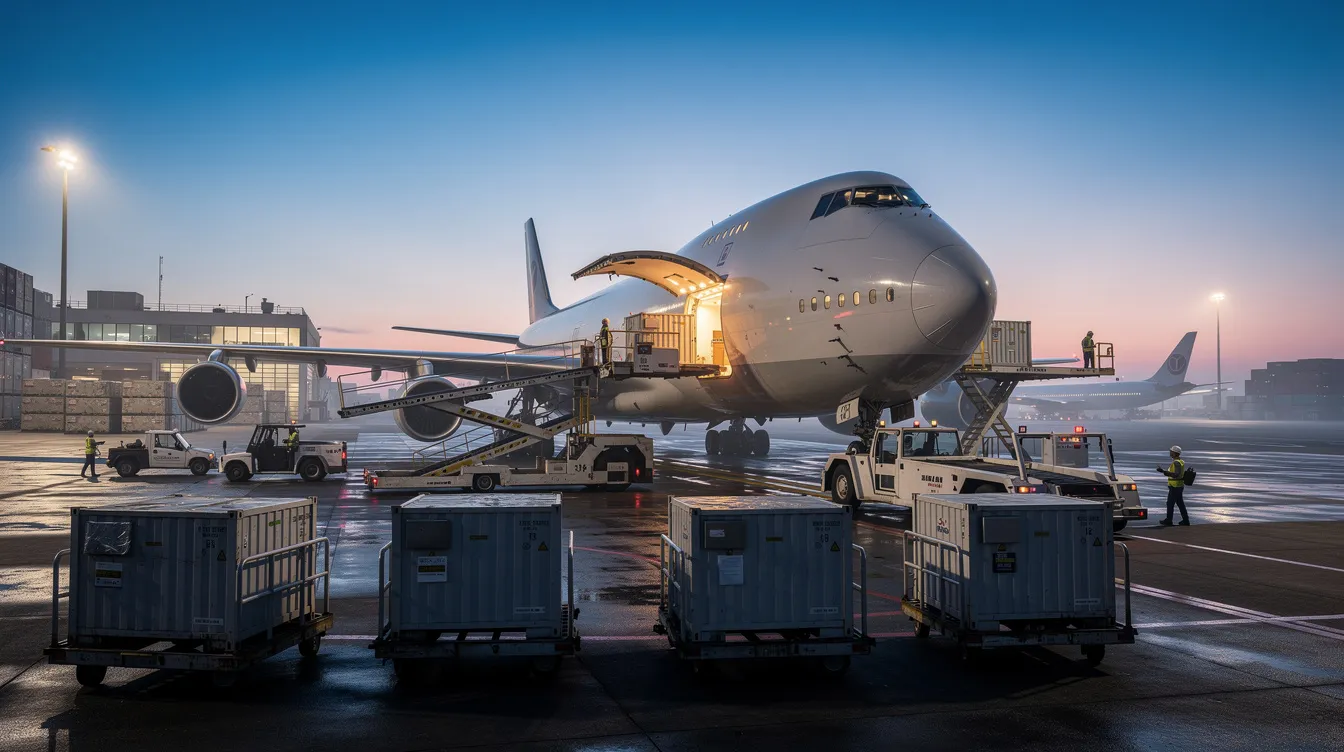
Definition: Cargo airlines focus primarily on transporting freight, not passengers. They operate dedicated freighter aircraft and sometimes converted passenger jets, forming the backbone of global supply chains.
Cargo airlines focus primarily on transporting freight, not passengers. Cargo carriers primarily transport freight and do not carry passengers, operating dedicated freighter aircraft and sometimes converted passenger jets.
Examples: FedEx Express (hub: Memphis), UPS Airlines (hub: Louisville), DHL Aviation, and passenger-airline subsidiaries like Emirates SkyCargo and Lufthansa Cargo
Aircraft: Dedicated freighters such as Boeing 747F, 767F, 777F, and converted narrowbody aircraft for regional cargo flights
Integrated model: Carriers like FedEx and UPS control door-to-door logistics—from ground trucks and sorting hubs to aircraft—maximizing speed for time-sensitive cargo transportation
Cargo airlines share airspace, air traffic control services, and airport infrastructure with passenger airlines, which can impact slot availability, runway scheduling, and terminal capacity at busy airports. Their operations are a reminder that the aviation sector extends far beyond transporting passengers—it is the backbone of global supply chains and overnight logistics.
Beyond Commercial Airlines: Private Jets and Business Aviation
Business aviation represents the segment of the aviation sector focused on non-scheduled, privately arranged flights for corporations, ultra-high-net-worth individuals, government entities, and time-sensitive travelers. While private operators are not "airlines" in the traditional scheduled sense, they are certificated air carriers under regulations such as FAA Part 135 in the United States.
The main access models in private aviation include:
Full ownership: Purchasing and maintaining an aircraft outright, with a dedicated crew and hangar—the highest capital commitment, maximum control
Fractional ownership: Buying a share of an aircraft (typically 1/16th to 1/2), gaining guaranteed access proportional to the share, with management handled by the fractional provider
On-demand charter: Booking individual flights as needed, with pricing based on aircraft type, route, and availability—ideal for travelers evaluating the cost to charter a small plane
Jet card membership: Prepaid hours across multiple aircraft categories—combining the flexibility of charter with the predictability and guaranteed availability of ownership
Private aviation complements commercial airline networks rather than replacing them. It provides nonstop access between smaller city pairs, bypasses congested hub airports, and allows departure from secondary airports and FBOs closer to a traveler's home or office. For the executive who flies commercial first class from London to New York, a private jet from Teterboro to a final meeting location in Hartford or Richmond eliminates the second flight, the layover, and the two hours of airport process.
The differences versus commercial flights are tangible, especially when you compare the full spectrum of types of private jets for every traveler:
Flexibility: Depart when you are ready, not when the schedule dictates
Privacy: The cabin is exclusively yours—conduct confidential calls, hold meetings, or rest without interruption
Time efficiency: Skip check-in queues, security lines, boarding processes, and baggage carousels
Airport access: Use thousands of smaller airports unavailable to scheduled carriers, often minutes from your destination, by selecting from a range of private jet sizes tailored to each mission
How Airline Types Impact Route Networks and Airports
The type of airline determines which airports it uses, how routes are structured, and how passengers move through the air transport system.
Full service and major airlines build hub-and-spoke networks around primary airports, while large group travel may instead rely on private solutions that reflect the charter plane 100 passengers cost for bespoke routing. Delta Air Lines dominates Atlanta Hartsfield-Jackson; American Airlines anchors Dallas/Fort Worth; British Airways operates primarily from London Heathrow; US Airways historically used Charlotte and Philadelphia before merging into American. These hubs serve as collection points where passengers from dozens of feeder routes connect to long-haul flights to international destinations.
Regional airlines feed passengers from smaller cities into these hubs, often operating from connecting smaller airports with limited terminal infrastructure. A traveler flying from a mid-sized city like Raleigh or Knoxville typically connects through a major airline hub before reaching their final destination—adding hours and connection risk.
Low-cost carriers prefer secondary airports to lower fees and speed turnarounds, while travelers exploring entry-level private options may weigh the cheapest private aircraft against commercial fares. Ryanair uses London Stansted rather than Heathrow; Allegiant serves smaller leisure markets from secondary fields; Southwest Airlines historically built its network around airports like Chicago Midway and Dallas Love Field rather than the larger airports dominated by legacy carriers.
Private jets operate from an entirely different layer, whether serving dense business corridors in North America or offering bespoke private jet charters in Karachi and other global cities. In the United States alone, there are over 5,000 airports accessible to private aviation—compared to roughly 500 served by commercial scheduled airlines. This means a BlackJet member can depart from a quiet FBO minutes from their office, land at an airport steps from their meeting, and avoid the congestion, delays, and terminal complexity of major airports entirely.
Service Levels and Passenger Experience Across Airline Types
Full Service Carrier Experience
Full-service carriers deliver the most comprehensive commercial experience. On a London–New York route, airlines like British Airways and American Airlines offer lie-flat business class seats, multi-course in-flight meals curated by guest chefs, premium entertainment systems, and lounge access at departure and arrival. Some carriers still operate dedicated first-class cabins with enclosed suites, turndown service, and onboard showers. Checked baggage, seat selection, and priority boarding are typically included in premium fares.
Low-Cost Carrier Experience
Low-cost airlines operate with a fundamentally different philosophy on similar routes. Seat pitch is tighter, recline is limited, and services are unbundled. Norwegian Air and other airlines service budget-conscious travelers on long-haul routes with a base fare that covers the seat—and little else. On short-haul flights, carriers like Southwest Airlines include two free checked bags (unusual among low-cost carriers), while most other airlines in the segment charge for everything beyond a personal item.
Charter Airline Experience
Charter airlines fall somewhere in between, with service levels dictated by the contracting tour operator or client. Aircraft age, cabin configuration, and catering standards vary widely between charter carriers.
Private Jet Experience
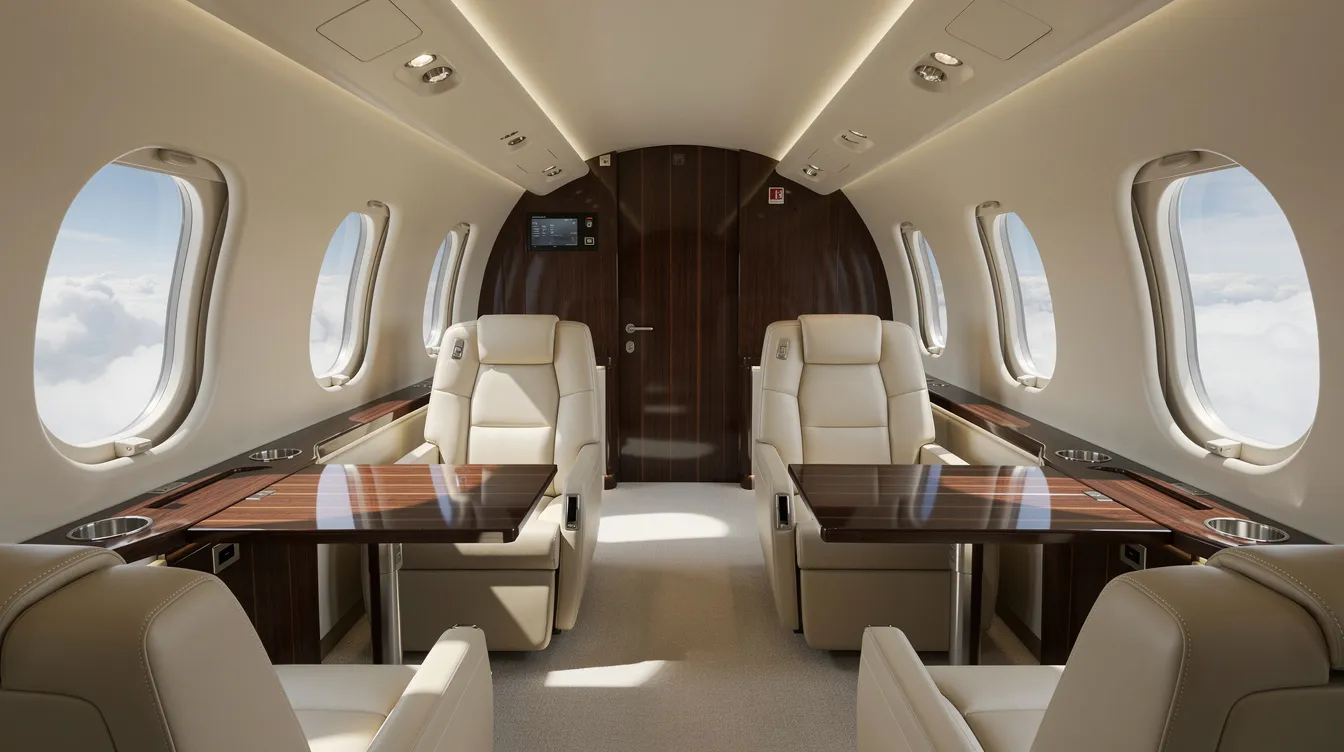
Private jet passengers experience something altogether different. Through a BlackJet Jet Card, members enjoy personalized catering requests, bespoke departure times, direct ramp access through FBOs with no security lines, and the ability to work or rest with complete privacy—benefits shared by many of the best jet cards for frequent flyers. Cabin standards are consistent across BlackJet's curated operator network—whether flying a light jet for a short regional hop or a super-mid jet for longer missions, or evaluating other options among the best small private aircraft—with 24/7 support from a dedicated flight team.
Safety, Certification, and Sustainability Across Airline Models
Safety Standards by Airline Type
All commercial air carriers must meet strict regulatory safety standards, but the depth of compliance, oversight, and voluntary safety culture varies by airline type and jurisdiction.
Major and full-service airlines maintain large in-house aircraft maintenance organizations, dedicated safety departments, and robust incident-reporting systems overseen by national regulators. These larger airlines invest heavily in training programs, simulator hours, and fleet modernization—newer aircraft like the Boeing 787 and Airbus A350 families offer both improved fuel efficiency and advanced safety systems.
For charter and private jet operators, the regulatory baseline is equally serious. In the United States, any operator conducting non-scheduled passenger flights must hold FAA Part 135 certification, which governs pilot licensing, maintenance programs, and operational oversight. But meeting Part 135 is the minimum, not the differentiator.
The most reputable private aviation providers pursue voluntary third-party safety audits that exceed regulatory requirements:
ARGUS: Tiered ratings (Gold, Platinum, Platinum Elite) evaluating operational history, safety management, insurance, and pilot qualifications
WYVERN: Wingman and Wingman PRO designations assessing organizational safety culture, crew training, and maintenance protocols
IS-BAO: International Standard for Business Aircraft Operations, with Stage 1 through Stage 3 maturity levels indicating progressively embedded safety management systems
BlackJet partners exclusively with operators meeting rigorous safety and certification standards, ensuring that every flight operates under crews with verified experience and aircraft maintained to the highest benchmarks, while its transparent jet card pricing structure helps travelers understand the full cost picture.
Sustainability Initiatives
On sustainability, the entire aviation industry is under pressure to reduce emissions. Scheduled carriers are investing in sustainable aviation fuel (SAF), fleet modernization, and operational efficiencies like optimized routing and improved load factors. Private aviation faces sharper scrutiny due to higher per-passenger emissions, but leading providers are responding. BlackJet ensures every jet card and charter flight is carbon neutral through verified offset programs—integrated automatically into membership at no additional cost to the traveler—making even the cheapest private jet access options more sustainable when paired with responsible offsetting.
Choosing Between Airline Types: Use Cases for Different Travelers
Understanding the types of airlines is most valuable when applied to real travel decisions. Here are four scenarios that illustrate when each option delivers the highest return.
The London–New York Executive A managing director flies this route monthly. For the long-haul leg, a major airline's business class—lie-flat seat, lounge access, direct service—makes strong economic sense at around $5,000–$8,000 round-trip. But the last mile matters: rather than connecting commercially from JFK to a final meeting in Greenwich or White Plains, she uses her BlackJet Jet Card to fly a midsize jet from Teterboro, saving two hours and arriving rested. The competitive advantage is time recovered, not money saved.
The Multi-City Corporate Trip A technology CEO needs to visit three cities in two days—Dallas, Nashville, and Charlotte—none connected by convenient nonstop commercial flights. Scheduling this commercially means three separate bookings, two connections, and at least fourteen hours of travel and airport time, prompting comparisons with alternatives like the Flexjet jet card cost. A private jet completes the circuit in under eight hours of flight time, with departures timed to his meeting schedule. For multi-stop business trips, private aviation's ROI becomes measurable in deals closed and meetings attended.
The Family Vacation to the Caribbean. A family of six, spanning three generations, is heading to St. Barts and might even consider larger-cabin options from guides to the best private jet for 15 passengers for future trips with extended family. A full-service carrier handles the trunk route from New York to St. Maarten comfortably in economy or premium economy. From St. Maarten, commercial options to St. Barts are limited—small propeller aircraft with constrained schedules. A private charter from St. Maarten, arranged through a jet card program, handles the final hop on the family's timeline, with luggage and comfort intact.
The Price-Sensitive Short-Haul Traveler A graduate student flying from Chicago to Denver has a straightforward decision: a low-cost or ultra-low-cost carrier offers flight tickets under $100 each way, far below even entry-level options like the cheapest private aircraft. The trade-off—no checked bag, no meal, tight seat pitch—is acceptable for a three-hour flight. For purely price-driven, short-haul travel by individuals without time constraints, low-cost airlines remain the most efficient option.
The pattern is clear: the right airline type depends on the mission. And for travelers who fly frequently across multiple mission types, combining commercial and private aviation is not a luxury—it is a strategy.
Where BlackJet Fits in the Airline and Aviation Landscape
BlackJet is not a scheduled commercial airline. It is a premium private aviation provider offering Jet Card programs that give members prepaid access to private jets across multiple aircraft categories—without the capital commitment, crew management, or operational complexity of aircraft ownership.
How the Jet Card works:
Members purchase blocks of flight hours—typically 25-hour or 50-hour programs, whose economics resemble those outlined in guides to 50-hour jet card cost—at fixed hourly rates
Hours can be used across light, midsize, super-midsize, and heavy cabin jets, depending on the mission profile
Guaranteed availability ensures members can book flights with confidence, even during peak travel periods
A digital booking platform and 24/7 flight support team handle every detail, from scheduling and catering to ground transportation coordination.
Safety as a foundation: BlackJet works only with operators meeting top-tier audit standards—ARGUS, WYVERN, IS-BAO—and verifies pilot experience, maintenance records, and insurance coverage before any operator joins the network. This goes well beyond the Part 135 baseline that all charter operators must meet.
Sustainability built in: Every BlackJet flight is carbon neutral through verified carbon offset programs, integrated automatically into every Jet Card membership. There is no opt-in, no surcharge—it is simply how BlackJet operates.
For travelers already comfortable with commercial airlines but seeking more control, privacy, and time efficiency on select routes, a BlackJet Jet Card is designed to complement—not replace—your existing travel strategy.
Frequently Asked Questions About Airline Types and Private Jets
What is the difference between the airline industry and the aviation industry?
The airline industry refers specifically to air carriers that carry passengers and cargo on scheduled or non-scheduled flights—companies like Delta Air Lines, Southwest Airlines, or Emirates. The aviation industry is broader, encompassing airlines plus aircraft manufacturing, airport operations, air traffic control, MRO providers, business aviation, and regulators like the FAA and EASA.
What does "full service carrier" actually mean?
A full-service carrier is a scheduled airline that includes multiple cabin classes, in-flight meals and entertainment, checked baggage, seat selection, and often lounge access in the ticket price—particularly in premium cabins. Examples include Lufthansa, Singapore Airlines, and Qatar Airways. These airlines typically have higher operating costs but generate revenue through premium fares, frequent flyer programs, and corporate contracts.
How do charter airlines differ from private jet providers?
Charter airlines typically operate larger aircraft on non-scheduled flights contracted by tour operators or groups—think holiday flights to resort destinations or corporate trips on the best private jet for 20 passengers. Private jet providers like BlackJet offer on-demand access to smaller, premium aircraft where one client controls the schedule, route, and passenger list. The experience, aircraft size, and level of personalization are fundamentally different.
Are jet cards more cost-effective than owning a private jet?
For most travelers flying fewer than 200–300 hours per year, yes. Full aircraft ownership involves acquisition costs, crew salaries, hangar fees, insurance, maintenance, and depreciation. A jet card program eliminates all of those fixed costs, providing access to private aviation at a predictable hourly rate with no long-term asset risk.
How is safety regulated for private jet operators?
In the United States, all private charter operators must hold FAA Part 135 certification. Beyond this baseline, the most safety-conscious providers also maintain third-party audit ratings from organizations like ARGUS (Platinum or Platinum Elite), WYVERN (Wingman PRO), and IS-BAO (Stage 3). BlackJet partners only with operators that meet these elevated standards.
How do carbon-neutral private flights work?
Carbon-neutral flights are achieved by calculating the carbon emissions of each flight and purchasing verified carbon offset credits equivalent to those emissions. At BlackJet, this process is built into every Jet Card membership automatically—no additional cost or action required from the member.
Can I combine commercial and private aviation in a single trip?
Absolutely, and many experienced travelers do exactly this. A common approach is to fly a major airline in business class for the long-haul international leg and then use a BlackJet Jet Card for regional connections or multi-city segments where commercial options are limited or time-consuming. This hybrid strategy maximizes both value and efficiency.
What types of aircraft do private jet providers offer?
Private aviation fleets span several categories: light jets for short regional flights (range ~1,100–1,900 nautical miles), midsize jets for medium-range missions, super-midsize jets combining cabin space with range, and heavy or ultra-long-range jets for transcontinental and international travel. BlackJet provides access across all of these aircraft categories through its Jet Card programs.
Conclusion: Reshaping Your Travel Strategy with the Right Air Carrier Mix
The global air transport ecosystem is not one-size-fits-all. Major airlines, national carriers, regional feeders, low-cost airlines, charter operators, cargo airlines, and private jet providers each occupy a distinct role in moving people and goods around the world. Understanding how these airline types differ—in scale, in business models, in service, and in the experience they deliver—empowers you to build a travel strategy calibrated to your actual priorities rather than default habits.
For travelers who already rely on commercial airlines for long-haul service but find themselves losing hours to connections, airport queues, and rigid flight schedules on shorter or multi-city segments, the addition of private jet access is not a luxury. It is a strategic upgrade that recovers your most valuable asset: time. When that private access comes with guaranteed availability, rigorous safety standards, and carbon-neutral operations built into every flight, the decision becomes even clearer.
Explore BlackJet Jet Card membership and discover how private aviation can reshape your next business itinerary—seamlessly, safely, and sustainably.


 Sign up with google
 Sign up with Apple