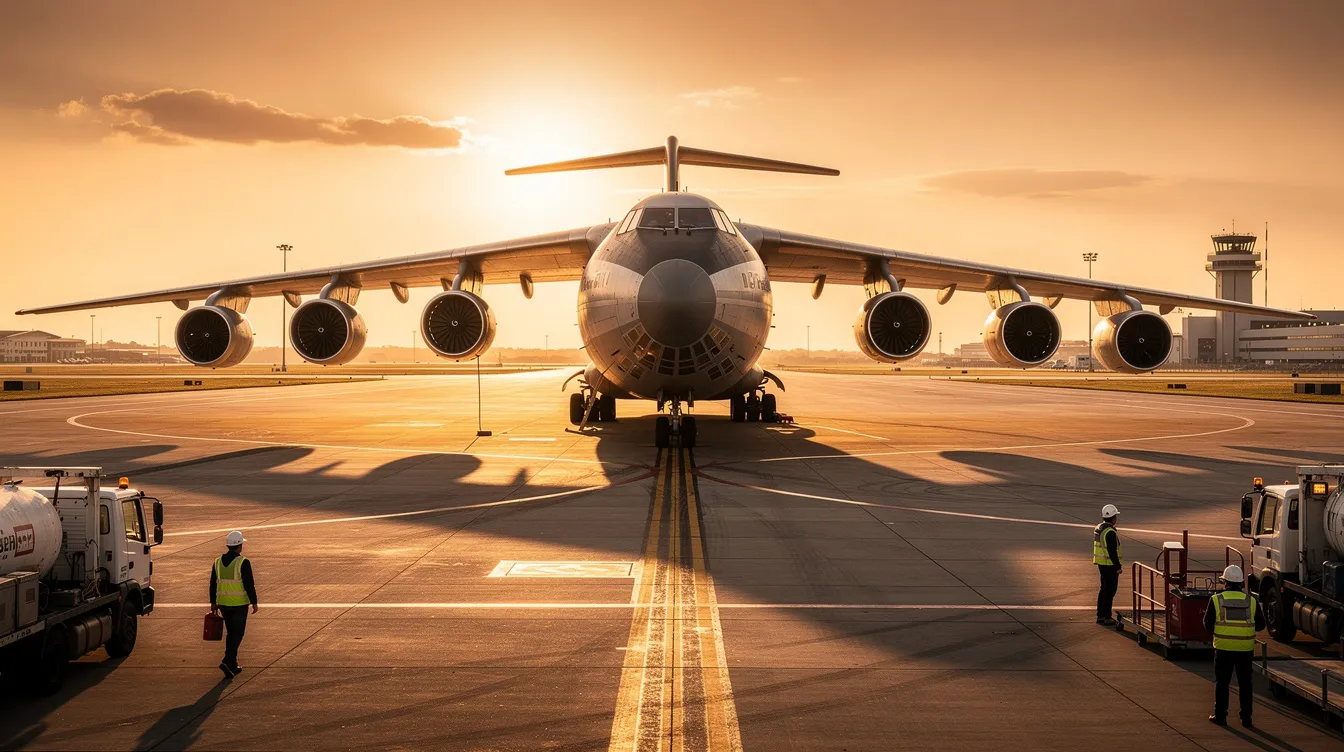
From the legendary Antonov An-225 Mriya to the double-decked Airbus A380, the world's largest aircraft have reshaped aviation history, redefined what cargo and passenger transport can achieve, and pushed the boundaries of engineering ambition. These aircraft in the world represent decades of innovation, yet for the modern traveler, they also reveal a fundamental tension between scale and flexibility.
Consider a London-to-Dubai route on an A380. The flight itself takes roughly seven hours, but factor in check-in queues, security, terminal transfers, and customs, and door-to-door time stretches to ten or twelve hours. A private jet departure from a regional London airfield, customs handled on the tarmac, direct routing, and arrival at a private terminal can shave two to four hours off that same journey, often more. The largest airplane captures the imagination; the private jet captures the clock.
At BlackJet, we understand both worlds. As a premium jet card and private jet charter provider, we give members flexible, prepaid access to light, midsize, and large-cabin aircraft without the constraints of operating the world's largest planes. This article explores what the largest aircraft is, how the largest cargo aircraft differ from passenger giants, and what lessons their technology, safety standards, and sustainability innovations bring into modern private aviation. Whether you are an executive optimizing weekly schedules or a discerning traveler who values privacy and precision, the story of these giants matters-because it shapes the flight you take next.
What Is the World's Largest Aircraft Today?
Defining the largest aircraft depends entirely on which metric you prioritize-wingspan, fuselage length, maximum takeoff weight, passenger capacity, or cargo volume. One plane may dominate in one category and trail in another. Here is where the leading contenders stand:
By maximum takeoff weight, the Antonov An-225 Mriya remains the largest aircraft ever built, with a maximum takeoff weight of 640 tonnes, even after its destruction in February 2022. The Antonov An-225 Mriya could lift over 1.4 million pounds, making it unrivaled in heavy-lift capability.
By wingspan, the Scaled Composites Stratolaunch ROC is the largest aircraft currently flying. Built by Stratolaunch Systems, its wingspan measures 117.3meters, or 38 feet, dwarfing every other aircraft that has taken to the sky. The Stratolaunch Roc has a wingspan of 385 feet, connecting two fuselages beneath a single enormous wing.
By passenger capacity, the Airbus A380-800 is the world's largest passenger aircraft in regular commercial service, featuring full-length passenger decks and a certified capacity of up to 853 passengers in a single-class configuration.
Each of these aircraft represents a different philosophy of scale-heavy-lift freight, air-launch platform, and mass passenger transport, and each has reshaped how the aviation industry thinks about what is possible.
Comparison Table of the World's Largest Aircraft
Aircraft | Role | Length (m) | Wingspan (m) | Max Takeoff Weight (tonnes) | Passenger Capacity | Notes |
|---|
Antonov An-225 Mriya | Cargo | 84 | 88.4 | 640 | N/A | Largest by MTOW; destroyed in 2022 |
Stratolaunch ROC | Air-launch platform | 73 | 117.3 | ~590 | N/A | Largest wingspan; twin fuselage design |
Airbus A380-800 | Passenger | 73 | 79.8 | 575 | Up to 853 | Largest passenger aircraft in service |
Antonov An-124 Ruslan | Cargo | 69 | 73.3 | 405 | N/A | Heavy cargo transport; still operational |
Lockheed C-5 Galaxy | Military cargo | 75 | 68 | 381 | N/A | U.S. strategic airlift |
Boeing 747-8 | Passenger/Cargo | 76 | 68.4 | 447 | ~467 (passenger) | Iconic "Queen of the Skies" |
Airbus BelugaXL | Cargo | 56 | 44.8 | 155 | N/A | Large cargo volume; Airbus component transport |
Antonov An-225 Mriya: The Largest Cargo Aircraft Ever Built
The Antonov An-225 Mriya was not merely the largest cargo plane in existence-it was a symbol of engineering audacity. With a maximum takeoff weight of 640 tonnes, the An-225 stood alone as the heaviest aircraft ever to fly. The An-225 was 84 meters long and had an 88.4-meter wingspan, powered by six Ivchenko-Progress D-18T turbofan engines that generated roughly 229.5 kN of thrust each.
Originally built by the Antonov Design Bureau in the 1980s, the aircraft was designed to serve the Soviet space program, specifically to carry the Buran space shuttle and Energia rocket components on its back, supporting missions that aimed to reach low Earth orbit. Its cargo hold measured approximately 43 meters long, large enough to fit roughly three tennis courts end to end, with a cargo capacity of up to 250 tons internally and the ability to carry oversized external loads.
The aircraft's first flight took place on 21 December 1988. After the collapse of the Soviet Union and the end of the space shuttle program it supported, the An-225 entered storage through much of the 1990s before being reactivated in the early 2000s for commercial cargo operations. It served disaster relief missions, transported industrial equipment, and moved outsized cargo that no other aircraft could handle. It set 240 world records during its operational history, including a record payload of 189,980 kg. Only one An-225 was ever completed and operational.
The An-225 featured a 32-wheel landing gear system and a distinctive nose gear arrangement that allowed the forward fuselage to tilt upward for direct cargo loading-a unique design shared with its smaller sibling, the An-124. When fully loaded, the range dropped to approximately 4,000 km, but the aircraft's cruise speed of around 800 km/h and maximum speed near 850 km/h kept transit times competitive for heavy-lift missions.
The An-225 was destroyed during the Russian invasion of Ukraine in 2022, at Hostomel Airport, sometimes referred to as Antonov Airport, near Kyiv, while the aircraft was undergoing maintenance. Ukrainian authorities and the Antonov company have since discussed rebuilding, with cost estimates ranging from US$500 million to over US$3 billion depending on scope, though sourcing Soviet-era components remains a significant obstacle.
The Antonov An-225 is no longer available for cargo charter. Heavy and outsized freight demand has shifted to other large aircraft like the Antonov An-124 Ruslan and the Airbus Beluga fleet, while the broader logistics chain continues to rely on 747 freighters and other workhorse cargo aircraft. For personnel transport alongside such missions, agile private aviation solutions, like BlackJet's Jet Card programs, complement these giants by moving people where and when commercial schedules cannot.
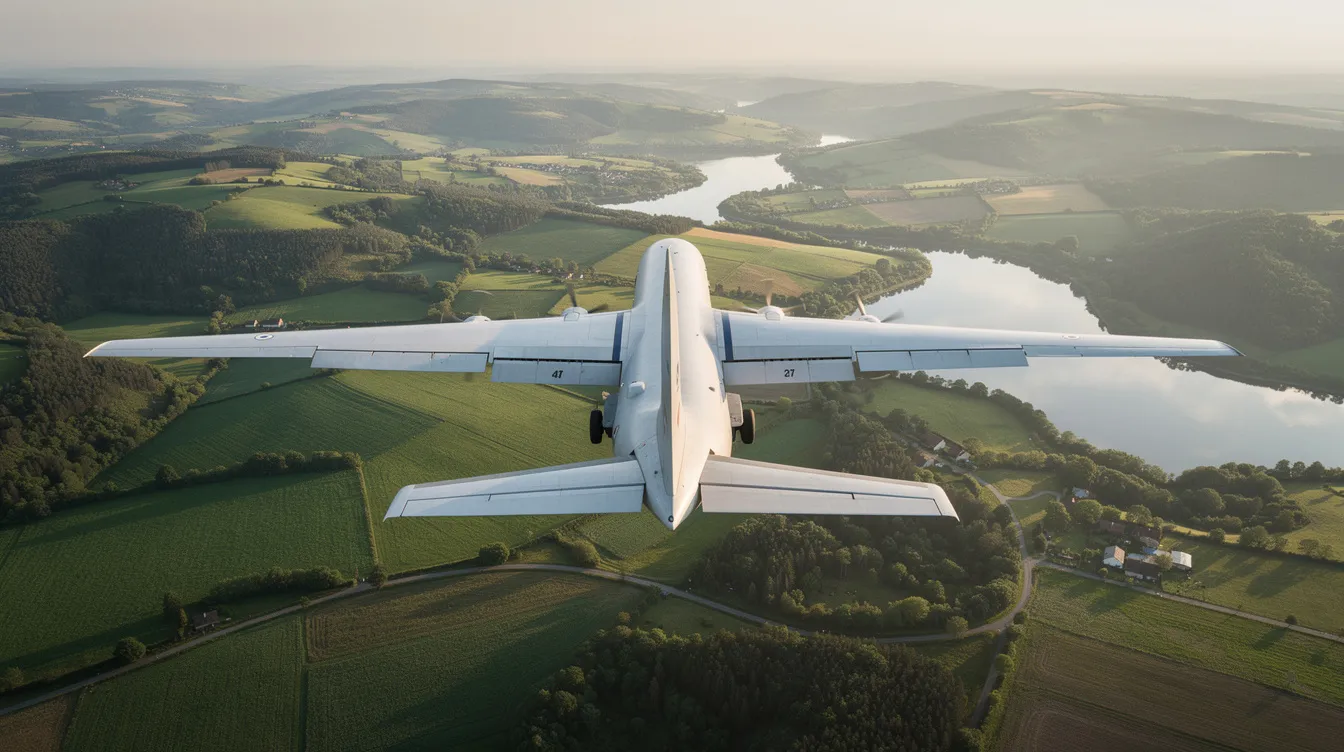
Inside the Giants: Design, Cargo Capacity, and Passenger Experience
The word "largest" creates vastly different experiences depending on whether you are standing inside a cavernous cargo deck or settling into a first-class suite. Understanding what these aircraft actually offer-and what they do not-clarifies why private aviation exists as their natural counterpart.
The An-225's cargo hold stretched approximately 43 meters in length, 6.4 meters wide, and 4.4 meters tall, with a space equivalent to roughly three tennis courts laid end to end. Internal cranes and a forward-loading nose ramp allowed the aircraft to self-load containers, vehicles, and industrial components without specialized airport infrastructure. When the aircraft operated at full capacity, it could carry items no other plane on Earth could accommodate.
The Airbus Beluga and BelugaXL take a different approach. Purpose-built for Airbus logistics, the BelugaXL's bulging fuselage can swallow entire A350 wing sets or fuselage sections, prioritizing volume over raw tonnage. Six BelugaXLs now serve Airbus's European production line, replacing the older BelugaST fleet with roughly 30% more cargo volume per flight.
The Airbus A380's passenger interior inverts the equation entirely. As the world's largest passenger airliner, the A380 typically carries 525 to 550 passengers in three- or four-class layouts across its upper deck and main deck. At full capacity in a single-class configuration, that number reaches 853. Cabin features include taller ceilings, wider seats than most widebodies, quiet engines designed for long-haul flights, and, on select airlines, showers, onboard lounges, and enclosed first-class suites.
Yet even the most lavish A380 cabin remains a mass-transport environment. Private jets, like those available through BlackJet Jet Cards, invert the equation: far fewer passengers, typically two to ten, but vastly greater space, privacy, and control per traveler, with different private jet sizes tailored to each mission. The giant moves hundreds; the private jet moves the individual.
Other Contenders: A380, Beluga, C-5, An-124 and More Large Aircraft
Aviation history includes a remarkable family of large aircraft serving passenger, military, industrial, and even experimental roles well beyond the An-225.
The Airbus A380-800 is recognized as the largest passenger plane ever built. The Airbus A380 is 73 meters long with a wingspan of approximately 79.8 meters-roughly 261 to 262 feet-and a length of 238 to 240 feet tip to tail. It has a maximum takeoff weight of 575,000 kg and a range of 14,800 kilometers, making it a dominant force on long haul flights between major hubs. The A380's maiden flight took place on 27 April 2005, followed by its entry into commercial service on 25 October 2007 with Singapore Airlines. Airbus delivered 251 A380s to 14 customers before the production line closed in 2021, though roughly 250 remain in active commercial service or storage. The A380 was mass-produced at a scale no other aircraft of comparable size has matched, and its low fuel consumption per seat-kilometer, approximately 3.1 litres per 100 passenger-kilometer, when full set benchmarks for efficiency in commercial flight.
The Airbus Beluga and BelugaXL are purpose-built large cargo aircraft with a distinctive "smiling" nose and oversized fuselage optimized for transporting Airbus wings and fuselage sections across European factories. The BelugaXL, which entered service in January 2020, offers approximately 30 percent more volume than its predecessor and can carry two A350 XWB wings simultaneously-a feat no other aircraft in the world can replicate.
The Antonov An-124 Ruslan is a slightly smaller cousin of the An-225, with a max takeoff weight of approximately 405,000 kg and payload capacity of 120 to 150 tonnes. Its nose tilts upward for direct loading, and it can operate on unprepared runways-a capability that makes it invaluable for humanitarian missions and industrial deliveries to remote locations. It remains one of the most important active cargo aircraft globally, operated by carriers like Volga-Dnepr.
The Lockheed C-5 Galaxy serves as the backbone of U.S. strategic airlift, with a maximum take-off weight exceeding 381 tonnes and a massive cargo floor spanning both a lower freight deck and an upper deck for troops or passengers. The modernized C-5M Super Galaxy variant extends the aircraft's service life into the 2040s with improved engines and avionics, much as the Airbus A380 has inspired concepts for ultra-luxurious private A380 configurations aimed at a tiny group of elite travelers.
The Boeing 747, once the world's largest passenger aircraft before the A380 claimed that title, remains deeply relevant in its freighter variants. The 747-8F continues to serve as a long-range cargo workhorse for global aviation, bridging the gap between specialized giants like the An-124 and standard commercial freighters, while its VIP counterparts sit alongside the largest private jets for sale that offer widebody-level space for business and government leaders.
The Stratolaunch ROC, developed by Stratolaunch Systems, holds the record for the longest wingspan of any aircraft ever flown. Its two fuselages are joined by a single wing spanning 117.3 meters, and the aircraft serves as an aerial launch platform for hypersonic vehicles and potentially orbital payloads-a role that places it at the intersection of aviation and space. Its test flights have demonstrated a new category of mission for large aircraft.
For historical context, aviation enthusiasts often recall other outsized machines: the Hughes H-4 Hercules, better known as the Spruce Goose, flew only once in 1947 but held the wingspan record for decades, while the Soviet-era Caspian Sea Monster, a ground-effect vehicle measuring 92 meters in length, blurred the line between aircraft design and marine engineering. Even earlier, large airships like the Hindenburg carried passengers across oceans before fixed-wing giants took over. Each represents a different chapter in humanity's pursuit of scale in flight.
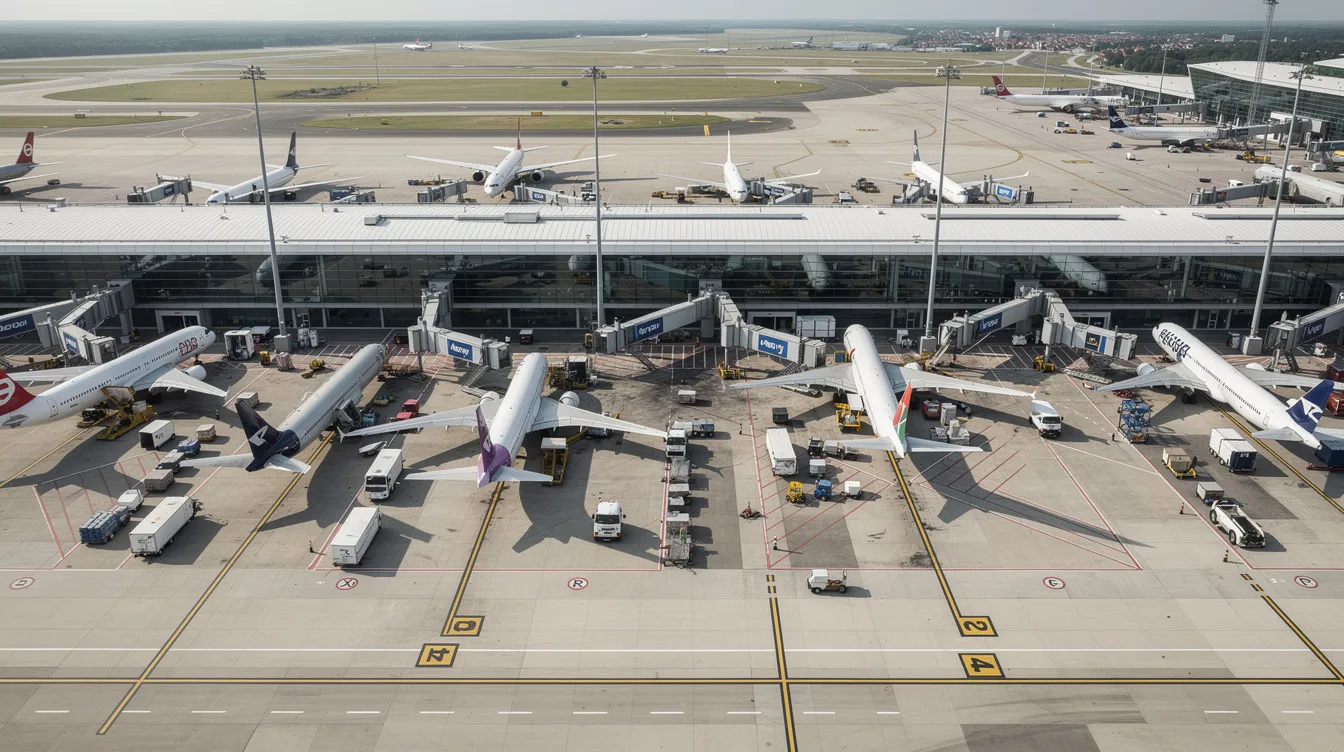
From Giants to Business Jets: What Large Aircraft Have Taught Private Aviation
Engineering breakthroughs born inside the world's largest planes do not stay there. They migrate into the business jets and charter fleets that serve private travelers every day.
Materials and aerodynamics provide the clearest example. The A380 program advanced the use of carbon-fiber-reinforced polymers in wings and tail structures, reducing weight while increasing strength. Those same composite technologies now appear in modern super-midsize and large-cabin business jets from manufacturers like Gulfstream and Bombardier—many of which feature among the top private jets in the world—extending range and improving fuel efficiency across every sector. These innovations are particularly visible in the newest flagship private jets that push speed, comfort, and sustainability even further. Advanced winglet designs, supercritical wing profiles, and noise-suppression techniques all trace their lineage back to large-aircraft programs.
Safety and certification standards offer an equally important transfer. Large commercial and cargo aircraft undergo thousands of hours of fatigue testing, redundant system validation, and regulatory scrutiny from bodies like the FAA and EASA. Reputable private aviation operators-including BlackJet's vetted partners-must meet or exceed analogous frameworks, from Wyvern Wingman audits to FAA Part 135 compliance. Insights from the top private jet companies show how leading providers differentiate on safety, fleet quality, and service. The rigor that certifies a 575-tonne passenger aircraft also underpins the standards behind a ten-seat charter jet.
Sustainability lessons are equally direct. The A380's emphasis on fuel burn per passenger drove engine manufacturers toward more efficient turbofans-advances that now appear in next-generation business jet powerplants. Private aviation faces legitimate scrutiny on emissions, and the response draws on the same engineering philosophy: lighter airframes, more efficient engines, and operational tools like carbon-neutral flight programs that calculate and offset emissions on every sector, all of which must be weighed alongside jet card pricing structures to understand the full cost of responsible private flying.
For the high-net-worth or corporate traveler, the strategic advantage is not flying on the largest aircraft but combining airline networks with agile private jets that use the same airspace, navigation technology, and safety infrastructure. Evaluating jet card cost per hour becomes essential to making that flexibility predictable and sustainable. Consider a BlackJet member holding a 25-hour Jet Card: after arriving at a European hub on a long-haul commercial flight, they step off the jetway and, within the hour, board a private aircraft to a smaller regional city with no direct airline service. The giant brought them across the ocean; the private jet delivered them to the meeting.
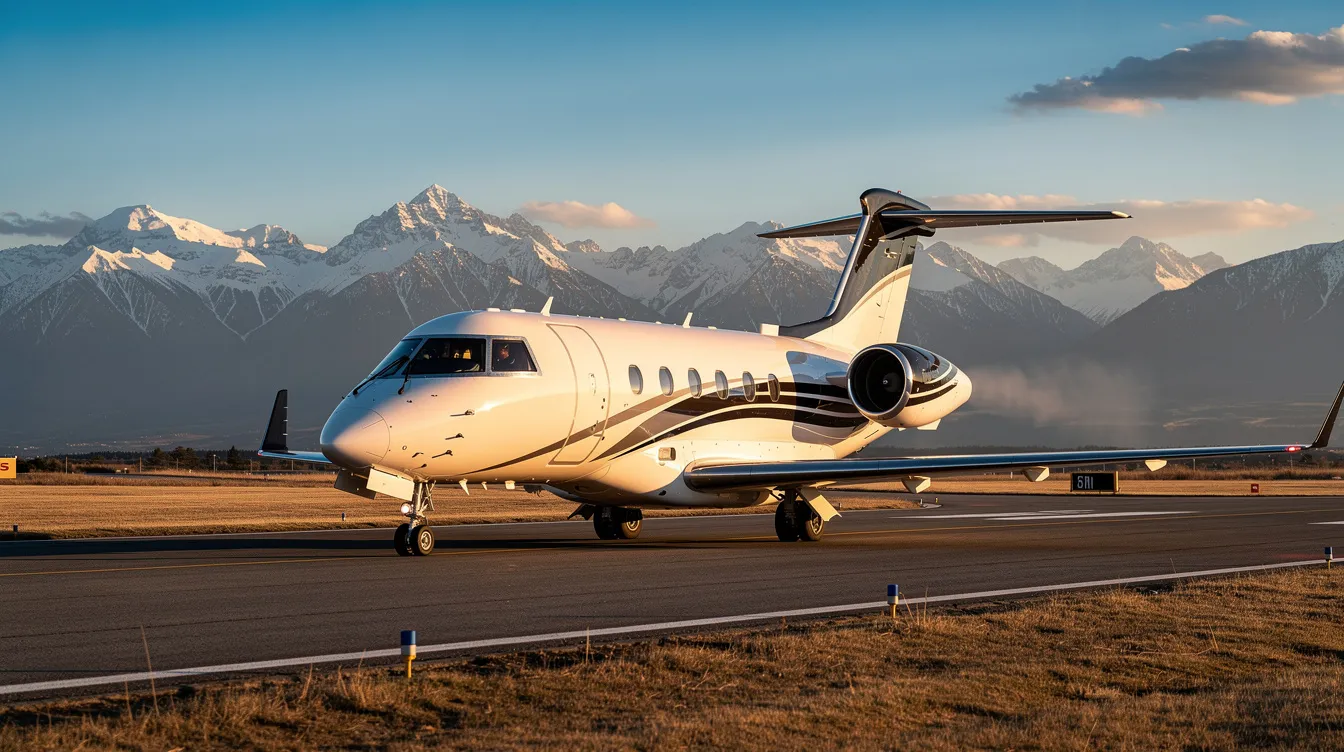
How BlackJet Members Actually Travel vs. the World's Largest Aircraft
While mega airliners and cargo giants capture headlines, the reality of high-value travel is fundamentally different. Most executive and leisure trips involve two to ten passengers, precise timing, and destinations that the world's largest planes simply cannot reach, though private aviation also supports group flights of around 20 passengers when needed. A 640-tonne freighter needs 3,500 meters of heavy-duty runway. A midsize business jet needs 1,500 meters and a regional airfield, and for some clients the solution is long-term ownership via a premium UK private jet for sale rather than on-demand charter alone.
BlackJet's Jet Card model is built around this reality. Members purchase prepaid 25- or 50-hour blocks across multiple aircraft categories-light, midsize, super-midsize, large cabin-at fixed hourly rates, and can benchmark these against a broader 50 hour Jet Card cost guide. There are no ownership burdens, no positioning-fee surprises, and 24/7 digital booking with real-time support. The result is predictability and speed in a format designed for people who fly frequently and cannot afford to waste time, especially when paired with independent insights into the best jet cards for frequent flyers and a clear view of overall jet card pricing.
The contrast with even the finest A380 cabin is structural, not merely cosmetic. A380 first class-think Emirates suites with showers and onboard lounges-is genuinely luxurious, but passengers remain bound by airline schedules, busy terminals, security queues, and the operational constraints of aircraft that only serve major hubs. Private jets offer direct routing through private FBO terminals, departure times set by the traveler, and landing at thousands of airports that the largest passenger aircraft will never visit.
Safety remains paramount. BlackJet partners with audited, safety-certified operators whose professional crews and modern fleets meet the rigorous standards that govern global aviation standards shaped, in part, by the certification regimes behind the world's largest aircraft. The newest generation of private jets further enhances these standards with advanced safety, wellness, and sustainability technologies. Every flight also carries BlackJet's commitment to carbon-neutral travel: emissions from each private jet sector are calculated and offset at no extra cost to the member, ensuring that efficiency and responsible travel go hand in hand—even for travelers starting with the most affordable private jet options before upgrading into more extensive programs.
Consider an executive flying from New York to Frankfurt on a commercial flight, a roughly eight-hour crossing. Upon landing, they need to reach Zurich for a midday meeting. A commercial connection adds three to four hours of layover and transfer. A BlackJet charter, pre-positioned at Frankfurt, delivers them to Zurich in under an hour, door-to-door—an approach that mirrors the efficiencies promised by unlimited private jet flight memberships for frequent travelers. The large aircraft covered the ocean; the private jet closed the final, decisive gap.
Discover how a BlackJet Jet Card can reshape the way you travel, combining the reach of global aviation with the precision and privacy that only private access provides, while our in-depth guide to jet card cost helps you understand pricing and value.
Frequently Asked Questions About the World's Largest Aircraft
What is the largest aircraft ever built?
By maximum takeoff weight and overall dimensions, the Antonov An-225 Mriya is the largest aircraft ever built. With a maximum takeoff weight of 640 tonnes, a length of 84 meters, and a wingspan of 88.4 meters, it was the only aircraft of its kind ever completed and operational. The Antonov An-225 Mriya set numerous world records for size and payload capacity across its career.
What is the world's largest passenger aircraft?
The Airbus A380-800 holds the title of world's largest passenger aircraft. It features two full-length passenger decks, can carry up to 853 passengers in a single-class layout, and typically seats 525 to 550 in mixed-class configurations. It remains the largest passenger aircraft in regular commercial service today.
What happened to the Antonov An-225 in February 2022?
The An-225 was destroyed at Hostomel Airport near Kyiv during the Russian invasion of Ukraine while undergoing maintenance. Ukrainian authorities and the Antonov company have discussed rebuilding the aircraft, with cost estimates varying from hundreds of millions to over three billion US dollars. Sourcing original Soviet-era components and securing funding remain major challenges.
Is the Airbus Beluga the largest aircraft?
The Airbus Beluga and BelugaXL are among the largest aircraft by internal cargo volume, but they are not the largest by maximum takeoff weight or passenger capacity. They are specialized transport aircraft designed to carry oversized Airbus components-wings, fuselage sections, and tail assemblies-between production facilities across Europe.
Can I charter the world's largest aircraft?
The An-225 is no longer available for any charter service. For heavy or outsized cargo, other aircraft such as the An-124 Ruslan and Boeing 747 freighters remain available through specialized cargo operators. For passenger transport, no ultra-large aircraft like the A380 is typically available for private charter. Most travelers and businesses turn to private jets for flexible, on-demand travel.
Why choose a private jet instead of flying on the largest airliner?
Private jets offer schedule flexibility, direct routing, access to thousands of smaller airports, and privacy that even the finest first-class cabin on the world's largest passenger plane cannot match. For frequent travelers, a Jet Card membership converts unpredictable travel logistics into prepaid, seamless access without the constraints of airline timetables, crowded terminals, or the operational limitations of the world's largest planes. The giants move the masses; private aviation moves the individual.
Conclusion: The Strategic Role of Aviation Giants in Modern Travel
The world's largest aircraft, from the Antonov An-225 Mriya to the Airbus A380 and Stratolaunch ROC, embody human ingenuity and the pursuit of scale in aviation. These giants have transformed cargo logistics, mass passenger transport, and aerospace capabilities, setting benchmarks in engineering, safety, and efficiency. Yet, for the discerning traveler or executive, their immense size often translates to operational constraints—limited airport access, fixed schedules, and complex ground procedures.
Modern private aviation, exemplified by BlackJet's Jet Card programs, complements these giants by delivering unparalleled flexibility, privacy, and precision. Leveraging advances pioneered by large aircraft—such as composite materials, safety certification, and sustainable technologies—private jets offer strategic advantages that matter most to high-net-worth and corporate travelers: time savings, tailored routing, and carbon-neutral journeys.
In essence, while the largest aeroplanes capture the imagination and serve critical industrial and commercial roles, the future of elite travel lies in agile, technology-driven private aviation that adapts to the evolving needs of those who value every moment and every mile. Discover how BlackJet can elevate your travel experience by combining the legacy of aviation giants with the bespoke service of private jet access.


 Sign up with google
 Sign up with Apple