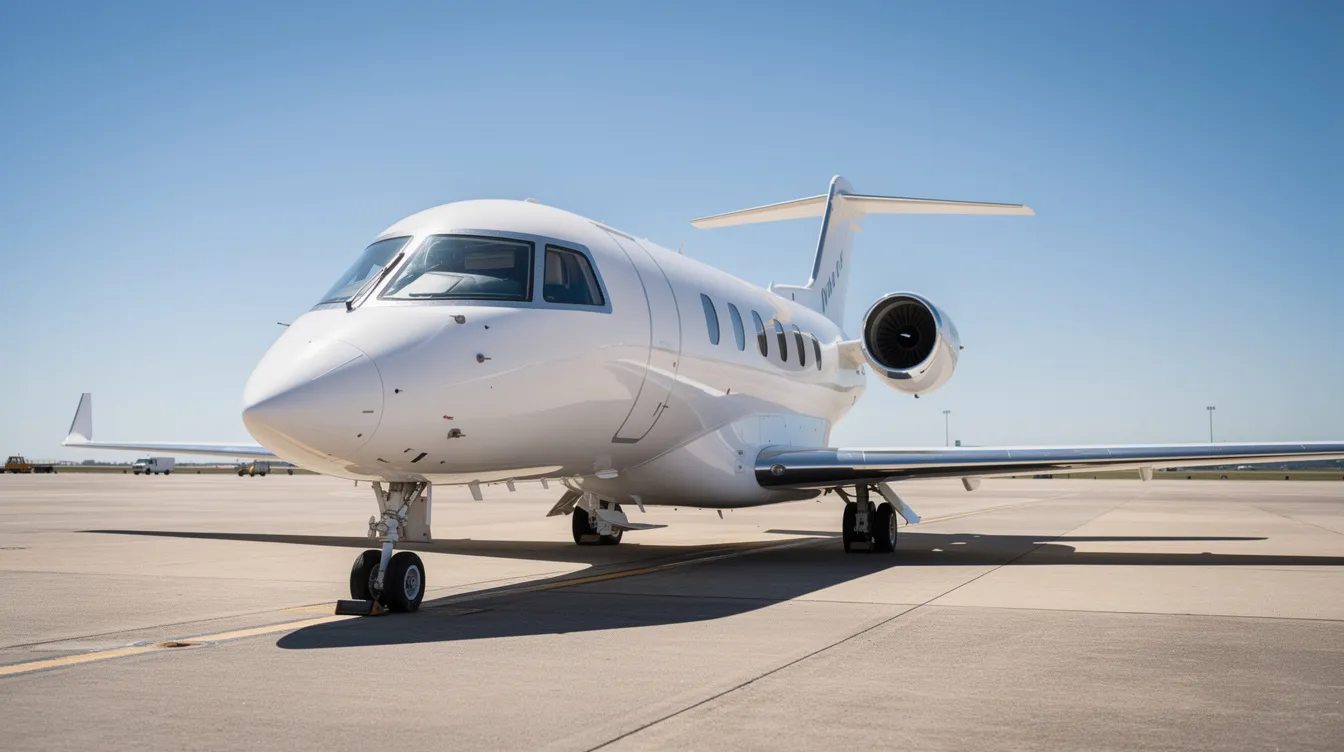
Private jet travel in 2026 is no longer just about luxury—it's about strategy. This guide is intended for executives, family offices, and discerning travelers considering private jet charter options. For those who measure their time in thousands of dollars per hour, a private charter eliminates the friction of commercial aviation and converts dead travel hours into productive ones. Understanding the true costs of private jet charter is essential for making informed travel decisions and maximizing value. This guide breaks down exactly what you'll pay, why prices vary so dramatically, and how to structure your flying to get the most value from every dollar spent.
Private charter flight costs at a glance
The question most people ask first is straightforward: how much does it cost to charter a private jet? The honest answer is that it depends on three things—aircraft class, flight distance, and the fees wrapped around the base price. But here are the 2026 ballpark figures that frame the rest of this conversation.
Typical hourly rates for a full-aircraft private jet charter in 2026:
Turboprops: US$2,000–$3,000 per hour
Light jets: US$3,000–$5,000 per hour
Midsize jets: US$5,000–$8,000 per hour
Super-midsize jets: US$7,000–$10,000 per hour
Heavy and ultra-long-range jets: US$10,000–$14,000+ per hour
These are rates for the entire aircraft, not per seat. That distinction matters enormously when you're splitting the cost to charter across four, eight, or twelve passengers. Real-world trip totals—from wheels-up to wheels-down, including all operational fees—typically land between US$8,000 for a short regional hop and US$120,000 or more for nonstop intercontinental missions on heavy jets.
All pricing throughout this article is quoted before the 7.5% U.S. federal excise tax on domestic charters. Segment fees, handling, and other surcharges can add 10–20% on top of the base charter price, which is why understanding the complete cost structure matters so much.
The rest of this guide is designed as a decision-making resource. We'll walk through what drives private jet charter costs, break down hourly rates by aircraft class with real trip examples, map the taxes and fees that inflate the final invoice, compare charter against ownership and jet card programs, and share practical strategies to reduce your spend—all while weighing the safety, sustainability, and technology factors that separate a premium private jet service from the rest.
What drives the cost of a private jet charter?
Private jet pricing is not a single number—it's a formula built from aircraft type, total flight time, and a stack of operational fees layered on top, so estimating a private jet flight means accounting for each variable instead of chasing a single quote. Understanding these inputs is the fastest way to move from sticker shock to strategic budgeting when you charter a private jet.
Costs for charter flights are primarily calculated based on billable flight time. Billable flight time refers to the total time for which you are charged, which may include positioning flights and minimum hour requirements, not just the time spent in the air as a passenger.
Here are the primary cost drivers:
Aircraft category: The spectrum runs from very light jets and turboprops through light, midsize, super-midsize, heavy, and ultra-long-range. Each step up adds seats, range, speed, cabin size, and fuel burn—along with higher crew requirements and maintenance reserves. Larger aircraft also tend to come with higher minimum flight commitments and greater fuel capacity, both of which raise charter costs. Aircraft type alone can shift your hourly rate by a factor of five.
Flight distance and duration: Fuel is the highest variable cost, and it scales with distance. But the relationship isn't perfectly linear—takeoff and climb burn disproportionate fuel, which is why short legs are expensive per mile. Smaller private jets can be cost-effective on short routes but lose efficiency on longer trips if fuel stops are required. Flight time also determines whether you need crew overnights, daily minimums, and second-day charges.
Route and airports: Landing fees, ramp charges, and FBO handling costs vary widely by airport. Operations into congested hubs or remote mountain strips carry premium pricing. Fuel prices also fluctuate by region and airport.
Seasonality and demand: Winter ski-season flights, holiday weekends, and major conference dates inflate both hourly rates and fuel surcharges. Last-minute bookings during peak windows can cost 20–30% more than trips booked weeks in advance.
Onboard and additional services: Catering, deicing, special handling, Wi-Fi, and flight attendants are all extras that appear on the invoice.
One critical concept: charter companies bill by the billable flight hour, which includes more than just passenger time aloft. Aircraft positioning—moving the plane from its base to your departure airport—is a direct cost passed to you. Many operators also impose a daily minimum of 1.0–2.0 flight hours, meaning a 35-minute hop can be billed as a full hour or more. Billable flight time, not clock time, is the number that matters.
Short regional flights are disproportionately expensive for this reason. High fuel burn during takeoff and landing cycles, minimum-hour billing, and positioning costs can make a 30-minute flight nearly as costly as a 90-minute leg on the same aircraft.
Technology is increasingly smoothing these friction points. A private jet charter pricing estimator available through online platforms can show dynamic pricing in real time, while routing optimization and fleet-tracking tools help brokers minimize empty repositioning legs. Membership and jet card programs often lock in fixed hourly rates, shielding clients from demand-driven volatility.
Private jet hourly rates by aircraft class
Most private jet charter prices are quoted as an hourly aircraft rate plus taxes and fees. Choosing the right aircraft class for your mission—matching passenger count, range, and comfort to actual need—is the single fastest lever for controlling cost. Here's what each category looks like in 2026, with concrete aircraft examples and sample trip estimates.
Turboprops and very light jets
Turboprops and very light jets represent the entry point for flying private. They're purpose-built for short regional flights of one to two hours, often into smaller regional airports with shorter runways that larger jets can't reach.
2026 hourly rates:
Turboprops (e.g., Pilatus PC-12, King Air 350): US$2,000–$3,000/hr
Very light jets (e.g., Embraer Phenom 100, Cessna Citation M2): US$2,500–$3,500/hr
Seat counts range from four to eight passengers depending on the model.
Sample trips:
New York (Westchester)–Boston in a Pilatus PC-12:
Flight time: approximately 1.0 hour each way
Billable hours: 3–4 (with daily minimums and positioning)
Hourly rate: US$2,500/hr
Base cost: US$7,500–$10,000
Add-ons: Federal excise tax, segment fees, and handling
All-in estimate: US$9,000–$12,000 for a same-day round trip
Split across four passengers, that's US$2,250–$3,000 per seat—comparable to last-minute business class fares on a peak travel day.
Dallas–Houston in a VLJ:
Flight time: approximately 0.7 hours each way
Total charter cost: US$6,000–$9,000 all-in for a day trip
The trade-offs are real: turboprops cruise slower than jets (250–300 knots versus 400+), and cabin noise is higher. But the lower private jet cost and ability to land on runways as short as 3,000 feet—often at airports just minutes from your final destination rather than an hour from a major commercial airport—make them exceptionally efficient for lean corporate teams running frequent regional meetings. For many travelers flying domestic flights under 500 miles, this category delivers the strongest ROI versus both larger private jets and commercial airlines.
Light and super-light jets
Light jets are the workhorses of the private jet charter market for groups of up to six to eight passengers on flights of two to three hours. They combine meaningful speed with manageable operating costs, making them the default choice for most U.S. domestic private jet charter flights.
2026 hourly rates:
Light jets: US$3,000–$5,000/hr
Super light jet variants: US$4,000–$6,000/hr
Representative aircraft include the Cessna Citation CJ3+, Embraer Phenom 300/300E, and the Learjet 75 Liberty.
Sample trip:
Compare that to six first-class airline tickets from Los Angeles to Aspen via a connecting hub, plus ground transportation on both ends: you'd spend US$12,000–$18,000 on airfare alone, lose four to six hours to connections and transfers, and arrive with far less flexibility.
A super light jet often delivers slightly more range and cabin comfort for a modest cost premium. On routes like Chicago–Denver, a super light jet can complete the trip nonstop, potentially avoiding a fuel stop that a smaller light jet might require. That fuel stop adds 30–45 minutes of flight duration and additional airport fees.
Light jets start to lose efficiency beyond roughly 1,200–1,500 miles. At that point, fuel stops and cumulative time erodes the value proposition, and stepping up to a midsize jet usually makes more financial and operational sense.
Midsize and super-midsize jets
The midsize jet is the category most corporate travel programs and family offices default to. It handles flights of three to five hours comfortably for four to nine passengers—routes like New York–Dallas, Los Angeles–Chicago, or Miami–Denver—with stand-up cabins, real luggage capacity, and consistent performance in challenging weather.
Super-midsize jets extend that range to true transcontinental capability, bridging the gap between a comfortable business jet and the heavy iron needed for international flight.
2026 hourly rates:
Midsize: US$5,000–$8,000/hr (e.g., Citation XLS+, Hawker 800XP)
Super-midsize: US$7,000–$10,000/hr (e.g., Challenger 350, Gulfstream G280)
Sample itineraries:
New York–Miami round trip on a midsize jet:
Flight time: roughly 2.5 hours each way
Billable hours: approximately 5.5–6.5 (with positioning)
Hourly rate: US$6,500/hr
Base cost: US$35,750–$42,250
Add-ons: Taxes, landing fees, crew overnight, and handling
All-in estimate: US$42,000–$52,000
For eight passengers, that's approximately US$5,250–$6,500 per seat—often within range of peak-season commercial business class tickets on the same route.
Los Angeles–New York on a super-midsize jet:
Flight time: approximately 5.0–5.5 hours nonstop
Billable hours: positioning adds perhaps one hour
Hourly rate: US$9,000/hr
Base cost: US$54,000–$58,500
All-in estimate: US$65,000–$75,000
For ten travelers, that's US$6,500–$7,500 per seat.
The advantages go beyond price per seat. Stand-up cabins, enclosed lavatories, better in-flight connectivity, and significantly more luggage space make these jets practical for longer missions. Per-seat economics for six to eight travelers frequently beat booking multiple commercial business class seats, especially during peak conference or holiday seasons when commercial airlines charge premium fares ,and availability is scarce.
For frequent private flyers, the midsize and super-midsize category is the sweet spot—enough range and comfort for most missions without the operating costs of large jets, while those who need nonstop intercontinental reach may look instead at the best long-range private jet for sale when evaluating ownership or high-end access options.
Heavy and ultra-long-range jets
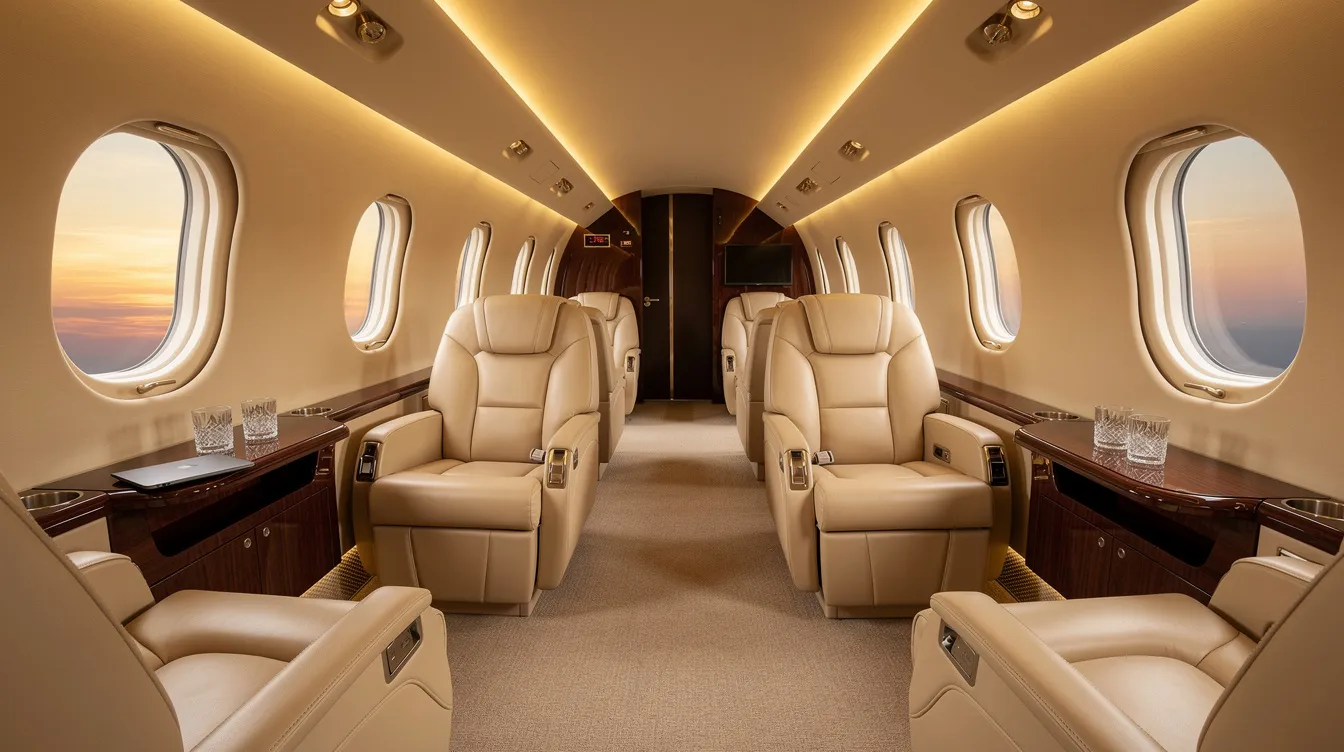
Heavy jets and ultra-long-range jets exist to do what no smaller private plane can: fly nonstop across continents and oceans with ten to sixteen passengers in a cabin large enough for separate work, dining, and rest zones.
2026 hourly rates:
Heavy jets: US$8,000–$12,000/hr (e.g., Gulfstream G450, Bombardier Challenger 604)
Ultra long range: US$10,000–$14,000+/hr (e.g., Gulfstream G550/G650, Bombardier Global 6500/7500, Dassault Falcon 8X)
For reference, a Boeing Business Jet—the private conversion of a commercial airframe—commands rates well above this range, often exceeding US$18,000/hr, and caters to heads of state, ultra-high-net-worth families, and delegations requiring conference-room-sized cabins.
Sample trips:
New York–London (one-way) on an ultra-long-range jet:
Flight time: approximately 6.5–7.0 hours eastbound
Hourly rate: US$13,000/hr
Base cost: US$84,500–$91,000
Add-ons: International handling, customs, positioning, crew overnight in London, and taxes
All-in estimate: US$100,000–$130,000
For twelve passengers, that's US$8,300–$10,800 per seat. Compared to twelve round-trip business class tickets on commercial flights during a major financial event—easily US$10,000–$15,000 per seat—the private option begins to look strategically rational, especially when you factor in the ability to hold confidential meetings in-flight.
Los Angeles–Tokyo on a Global 7500:
For a delegation of fourteen, the per-seat math can approach ultra-premium commercial fares while eliminating a full day of connection layovers.
Cabin features on these aircraft include lie-flat bedding, full galleys staffed by flight attendants, satellite communications, and often a dedicated crew rest area. These are the aircraft chosen for long-haul flights where passengers need to arrive rested for morning meetings in a different time zone.
For frequent transatlantic or transpacific travelers, these ultra-long-range jets paired with a structured jet card or membership program often deliver better cost certainty than one-off quotes on the spot market.
Taxes, fees, and the "true" cost of flying private
The hourly rate you see advertised is only the starting point. Understanding the taxes, airport fees, and operational charges layered on top is what separates an informed buyer from someone blindsided by the final invoice.
Major add-ons to expect:
U.S. federal excise tax: 7.5% of the base transportation charge on domestic Part 135 charters
Domestic segment fees: approximately US$4.50–$5.30 per passenger per segment (each takeoff-landing pair counts as one segment)
Landing fees: US$100–$1,500 per landing, varying with aircraft weight and airport
Ramp and handling fees: US$100–$500+ per stop at most FBOs, significantly more at congested or premium locations
Deicing: US$1,500–$15,000+ depending on aircraft size and severity of winter conditions
Crew overnights and per diem: US$200–$800 per crew member per night
International permits, customs, and handling: US$500–$5,000+ depending on destination
Example: Suppose a light jet charter for a two-day business trip carries a base flight-hour cost of US$30,000. The cost breakdown might look like this:
Cost Component | Amount |
|---|
Base flight-hour cost | US$30,000 |
7.5% Federal excise tax | US$2,250 |
Segment fees (2 pax, 4 segs) | US$40 |
Landing and handling (2 ap) | US$1,500 |
Crew overnight (2 crew) | US$1,200 |
Winter deicing | US$2,000 |
Total | US$37,000 |
This is about 23% above the base rate. This pattern is consistent across the market: all-in private jet charter costs typically run 15–40% above the quoted hourly rate depending on itinerary complexity, a range that aligns with most comprehensive private jet price list benchmarks for 2026.
Reputable providers quote these additional costs transparently up front, using technology and detailed itineraries to minimize unnecessary surcharges like redundant aircraft positioning or avoidable hangar fees.
Federal excise tax and government surcharges
The U.S. federal excise tax is a 7.5% levy applied to the base transportation amount on most domestic private jet flights operated under FAR Part 135. It appears as a line item on your charter invoice and is a government-mandated charge, not a provider markup.
In addition to the FET, domestic segment fees—currently around US$4.50–$5.30 per passenger per flight segment—apply each time a passenger boards for a takeoff-and-landing pair. For multi-leg itineraries, this accumulates quickly. International head taxes also apply for flights departing from or arriving at destinations outside the United States, with current rates varying by country.
These taxes are non-negotiable and must be factored into any serious private jet cost comparison. Special cases exist: purely international flights that neither depart from nor arrive in the U.S. may carry different tax structures, and repositioning segments without passengers aboard may be taxed differently than revenue legs.
A practical tip: always ask whether the quoted price is "all-in, including federal excise tax and segment fees" before approving a trip. Quotes that exclude government charges can appear 8–10% lower than they actually are.
Operational and seasonal fees
Beyond taxes, the operational extras can substantially shift your final bill. Here's where the volatility lives:
Crew hotels and per diems: US$200–$600 per crew member per night for standard overnights. International destinations or high-cost cities push this higher. Most charters require two crew members, so overnight costs add US$400–$1,200 per night minimum.
Hangar fees: If your aircraft sits overnight in winter conditions, expect US$500–$1,500 per night to keep it hangared and protected from ice.
Minimum charges: Many operators enforce a 1.0–2.0 hour daily minimum even for a 35-minute hop. This means you may pay for flight hours you don't use.
Peak-period surcharges: Thanksgiving, Christmas–New Year, and major global events (World Economic Forum, Super Bowl, major golf tournaments) can increase both core hourly rates and ancillary charges by 15–30%, especially at popular resort and business destinations.
Experienced charter advisors mitigate these costs by optimizing scheduling, choosing less congested airports, and consolidating legs to reduce repositioning. For shorter trips, understanding exactly how much it costs to charter a small plane helps set realistic expectations about these operational fees. Well-structured jet card programs often shield clients from the most volatile seasonal pricing elements, providing more predictable private jet costs throughout the year.
Sample private charter scenarios and what they really cost
Numbers in isolation only go so far. The following scenarios show how private jet charter prices translate into real trips—with real billable hours, real taxes, and real comparisons to the commercial alternative, mirroring the type of practical analysis you’d use when deciding if chartering a private jet is worth it for a specific mission.
Short-haul business day trip
Scenario: A four-person executive team flies same-day New York (Teterboro)–Boston for a morning meeting, returning by early evening.
Cost Component | Amount |
|---|
Aircraft | Turboprop or VLJ |
Flight time | 0.7–1.0 hours each way |
Billable hours | 3.0–3.5 |
Hourly rate | US$3,000/hr |
Base cost | US$9,000–$10,500 |
Federal excise tax | ~US$700 |
Segment fees | ~US$40 |
Handling and landing | ~US$800 |
All-in estimate | US$10,500–$12,500 |
Compare this to four last-minute business class shuttle tickets (US$600–$1,200 each) plus ground transportation to and from JFK or LaGuardia, security and boarding time, and potential delays. The commercial option costs US$3,500–$6,000 in hard dollars but consumes five to seven hours per person. The private flight compresses the entire trip into about four hours door-to-door. Flying from Teterboro instead of a major commercial airport saves one to two hours of ground time alone—a non-monetary benefit that often tips the calculation for executives whose private flight schedule is measured in meetings per day, not flights per year.
Weekend leisure trip to a resort destination
Scenario: A family of six flies Friday afternoon from Los Angeles to Aspen for a weekend ski trip, returning Sunday evening.
Cost Component | Amount |
|---|
Aircraft | Light jet (Phenom 300E) |
Flight time | 1.8–2.2 hours each way |
Billable hours | 5.5–6.5 |
Hourly rate | US$4,500/hr |
Base cost | US$24,750–$29,250 |
FET | ~US$2,000 |
Landing/handling | ~US$1,500 |
Crew overnight (2 nts) | ~US$2,400 |
Winter deicing | ~US$3,000 |
Catering | ~US$600 |
All-in estimate | US$33,000–$40,000 |
The commercial alternative: six peak-season first-class tickets from Los Angeles to Aspen (often requiring connections through Denver) run US$1,500–$3,000 each, totaling US$9,000–$18,000. Add checked ski gear fees, ground transportation from the Denver connecting flight, and hotel-lobby wait time, and the gap narrows—while the private option delivers the family directly to Aspen's Sardy Field, minutes from the slopes.
Flying into regional airports close to the resort, rather than routing through a distant commercial airport hub, is one of the core value propositions of flying private for leisure.

Transcontinental and transatlantic missions
Scenario A: New York–Los Angeles on a super-midsize jet (Challenger 350), eight passengers. While this guide focuses on small-group missions, similar principles apply when evaluating the charter plane cost for 100 passengers for large corporate or event movements.
Cost Component | Amount |
|---|
Flight time | 5.0–5.5 hours nonstop |
Billable hours | 6.0–6.5 |
Hourly rate | US$9,000/hr |
Base cost | US$54,000–$58,500 |
All-in estimate | US$65,000–$78,000 (includes FET, handling at both ends, and crew overnight) |
For eight passengers, that's roughly US$8,100–$9,750 per seat. During peak conference season, eight last-minute coast-to-coast business class tickets on commercial airlines can easily exceed US$5,000–$7,000 per seat. Factor in the value of five hours of confidential meeting time in a private cabin versus five hours in an airline seat, and the private jet charter becomes a tool, not an indulgence.
Scenario B: New York–London on an ultra-long-range jet (Global 6500), twelve passengers.
Cost Component | Amount |
|---|
Flight time | 6.5–7.0 hours eastbound |
Billable hours | 7.5–8.5 |
Hourly rate | US$13,000/hr |
Base cost | US$97,500–$110,500 |
All-in estimate | US$115,000–$140,000 (includes international handling, customs, crew hotel in London, fuel surcharges, and applicable taxes) |
Per seat for twelve passengers: US$9,600–$11,700. During major financial events in London, round-trip business class fares from New York can hit US$12,000–$18,000 per person—making the private option financially competitive while compressing what might be a three-to-four-day commercial itinerary into a 36-hour mission.
Overnight international flight on a heavy or ultra-long-range jet—with lie-flat beds, full galley, and a quiet cabin—lets the team arrive rested for morning meetings, then depart the same evening if needed. That schedule compression is where the strategic value of private jet travel becomes undeniable for frequent international travelers.
For those flying transatlantic regularly, jet card programs with fixed hourly rates for international flight legs often provide substantially more cost certainty than one-off on-demand quotes.
Is it cheaper to own a jet, use a jet card, or charter on-demand?
The right model depends on how much you fly. Here's the simplified framework:
Full ownership: Financially rational only if you consistently fly roughly 200–300+ flight hours per year. Below that threshold, the fixed costs—acquisition, crew salaries, maintenance, insurance, hangar fees—crush the per-hour economics, especially when you consider the advanced amenities and operating profile of a 20 million dollar private jet.
Jet card programs and memberships: Ideal for 25–100 hours per year. You prepay blocks of hours at fixed or capped rates, gaining scheduling certainty and often shielding yourself from repositioning and peak-season volatility; a solid grasp of jet card cost structures is essential here.
On-demand charter: Maximum flexibility for infrequent or unpredictable travel. You pay only for trips you take, but you're exposed to market-rate pricing and aircraft availability constraints, so understanding how much to rent a private jet on a per-trip basis becomes critical.
When does buying a private jet make sense?
Ownership pencils out at scale—and only at scale. For a light or midsize jet, annual fixed costs (crew salaries for two pilots, maintenance reserves, insurance, hangar, and management) typically run US$1.2–$2.0 million per year before you fly a single hour. Add acquisition financing or depreciation on a US$10–$25 million asset, private jet pilot cost considerations, and other operating expenses, and the annual carrying cost can reach US$2.5–$4.0 million.
Spread those fixed costs over 300+ flight hours, and the effective per-hour rate (fixed plus variable) drops to a level that can compete with or undercut charter pricing. At 100 hours per year, however, the math breaks badly: you're paying US$20,000–$40,000 per hour in effective cost for a smaller private jet that charters at US$5,000–$8,000/hr.
Even owners regularly charter supplemental aircraft for missions that don't match their owned tail's range or capacity—and many place their aircraft on the charter market to offset some of the direct cost burden.
A practical starting point for anyone considering ownership: analyze your last 12–24 months of actual travel patterns. If you're consistently logging fewer than 200 hours on routes and aircraft types that match a single airframe, a hybrid approach—limited ownership or fractional share combined with charter or jet cards—usually delivers better value.
How jet cards and memberships affect cost
Jet card programs lock in hourly rates for specific aircraft classes, often including or capping repositioning fees and simplifying tax calculations across multiple trips. A clear view of overall jet card pricing helps you decide which structure best aligns with your flying pattern. The typical benefits include:
Guaranteed aircraft availability on peak days with sufficient advance notice
Fixed one-way pricing between common city pairs, eliminating the return-leg premium
Consolidated billing that eliminates per-trip negotiation and invoice surprises
Access to curated aircraft options and vetted operators
While card hourly rates may appear slightly higher than the cheapest one-off on-demand charters, they often yield a lower effective private jet rental cost once you account for surcharges, peak-day premiums, and repositioning that inflate spot-market quotes.
Example: A business leader flying three to four domestic flights per month—roughly 35–50 hours annually—purchases a 50-hour jet card on a light jet at a fixed rate of US$4,800/hr. Annual flight spends: approximately US$240,000, with predictable monthly billing and no surprise fuel surcharges or positioning fees; this aligns with the kind of analysis you’d see in a detailed 50-hour jet card cost breakdown. The same flying pattern purchased as individual on-demand charters might total US$260,000–$300,000 when peak-period markups and repositioning add up.
Technology-enabled membership programs optimize aircraft selection and routing across a network, quietly passing efficiency gains back to members in the form of stable private jet rental prices and reduced waste; products like the BlackJet 25+ Hour Jet Card are built around this model.
How to reduce your private charter flight costs
Flying private will always carry a premium over commercial flight. But intelligent decisions around aircraft selection, scheduling, and routing can reduce your total spend by 10–40% without compromising safety or comfort.
Key levers: understanding jet card cost per hour versus ad hoc charter rates is one of the most effective ways to benchmark whether you’re truly saving when you optimize these variables.
Right-size the aircraft: Don't fly a heavy jet when a super-midsize handles the route and passenger count. The savings per billable flight hour can be US$3,000–$5,000.
Be flexible on airports: Departing from or arriving at secondary or smaller regional airports often reduces landing fees, ramp charges, and ground time. It also shortens repositioning if the aircraft is based nearby.
Avoid peak windows: Holiday weekends and resort-season travel inflate everything. Shifting departure by a day or two can save money in meaningful amounts.
Consolidate trips: Grouping meetings or destinations into a single multi-leg itinerary reduces the number of positioning flights and daily minimums.
Use empty legs and one-way pricing: Empty leg flights can offer 25–60% discounts off standard charter rates, though with schedule and routing constraints; for very frequent flyers, pairing these with a structured 100-hour jet card cost program can drive even greater savings and predictability.
Empty legs, one-ways, and flexible routing
An "empty leg" is a repositioning flight where the aircraft is flying without passengers—typically returning to base after dropping off a client or heading to pick up the next booking. Operators offer these leg flights at steep discounts to recoup at least some of their operating costs.
Typical savings on empty leg flights run 25–60% off standard private jet charter prices, but the trade-offs are real: routes are fixed, schedules can shift with little notice, and you may have limited control over the exact aircraft type.
One-way pricing is a related concept. Some providers offer true one-way rates on select routes without requiring a return commitment, lowering the effective cost for travelers who only need transport in one direction—common for events, seasonal relocations, or multi-city business tours.
Example: An empty leg from London Luton to Geneva becomes available for a Thursday departure, priced at US$8,000 versus a standard bespoke charter of US$18,000–$22,000 for the same route. For a family heading to the Alps for a ski weekend, that's a 55–65% discount that makes the private flight competitive with four to six premium economy tickets on commercial flights, while delivering the time savings and convenience of a private charter.
Tech platforms and proactive account managers can alert clients to attractive empty legs that align with their travel calendar—turning what would otherwise be wasted aircraft positioning into a cost-saving opportunity.
Right-sizing your aircraft and itinerary
Over-specifying the aircraft—booking a heavy jet for three passengers on a 90-minute domestic hop—is one of the fastest ways to overspend in the private jet industry. The fix is straightforward: select the smallest aircraft class that comfortably meets your passenger count, luggage requirements, and range needs.
Practical reminders:
Golf trips and ski weekends with bulky equipment often require more baggage space than passenger count alone would suggest—a super light jet may not cut it even for four travelers.
Grouping two or three meetings in nearby cities into a single multi-leg day trip eliminates multiple repositioning flights, sometimes turning three separate charters into one efficient itinerary.
Switching from a heavy jet to a super-midsize for a U.S. transcontinental route can trim US$15,000–$30,000 per trip for a frequent traveler, with only a modest difference in cabin size for smaller groups.
Experienced charter advisors use performance data, airport constraints, and aircraft availability to suggest alternatives—a nearby airport with lower fees, a different departure time that avoids peak-slot charges, or a smaller private jet that still handles the mission. For travelers flying 50+ hours per year, these marginal adjustments compound into substantial annual savings without requiring any sacrifice in safety or reliability, especially when coordinated with the best jet cards for frequent flyers to lock in favorable terms.
Safety, sustainability, and technology: non-price factors that still affect value
Most clients begin with "How much does it cost?" But the travelers who get the most long-term value from private aviation are the ones who evaluate safety, sustainability, and technology alongside hourly rates. These factors don't just reduce risk—they often reduce cost over time by preventing disruptions, delays, and reputational exposure, particularly for ultra-wealthy travelers tracking broader billionaire private jet price trends and access models.
Why safety protocols matter in private aviation
Safety in private aviation is not a commodity. The differences between operators are significant, and they show up in audit results, crew qualifications, and operational discipline—factors that feature prominently when comparing top private jet charter companies in the USA.
Key safety markers to look for in any private jet operator:
Third-party audits: ARGUS Gold or Platinum ratings, Wyvern Wingman or Registered status, and IS-BAO certification indicate that an operator has submitted to independent safety reviews beyond FAA minimums.
Pilot experience: Ask about minimum total flight hours, type-specific hours, and recurrent training programs. The best operators set minimums well above regulatory requirements.
Maintenance standards: Proactive maintenance programs that exceed manufacturer-recommended intervals reduce in-service failures and cancellations.
Operational control: Does the operator have a dedicated dispatch and flight-following operation? This impacts everything from weather-related rerouting to crew duty-time compliance.
Safety culture also affects scheduling. Operators who avoid tight turnarounds, respect crew duty-time limits, and maintain reserve aircraft may not always be the cheapest—but they consistently deliver more reliable private jet flights with fewer last-minute cancellations.
For corporate and high-profile travelers, marginal savings should never come at the expense of flight safety or regulatory compliance. Ask providers for safety documentation alongside pricing when evaluating quotes.
Sustainability in private jet charters
Sustainability in the private jet industry has moved from aspiration to operational reality. Three developments are shaping the landscape:
Sustainable Aviation Fuel (SAF): Blended SAF is increasingly available at major FBOs, offering lifecycle emissions reductions of up to 80% compared to conventional jet fuel. Availability remains uneven, but adoption is accelerating.
Fleet modernization: Newer aircraft—the Global 7500, Gulfstream G700, and latest Praetor variants—feature more fuel-efficient engines that reduce per-hour fuel burn. Over hundreds of hours, this translates to both lower emissions and lower operating costs.
Carbon offset programs: Some providers offer carbon-neutral private jet flights through verified offset programs, automatically neutralizing the emissions from each trip at no additional or minimal cost to the client.
Corporate travel policies are increasingly requiring providers who can document emissions and offsets on a per-trip basis. This is no longer a niche concern—it's becoming a procurement criterion for Fortune 500 companies and family offices with ESG mandates.
Sustainable private flying is increasingly possible without compromising flexibility, comfort, or schedule. The providers leading on this front treat sustainability as a core offering, not an afterthought.
Frequently asked questions about private charter flight costs
How much does it cost to charter a private jet for a 2-hour flight? On a light jet at typical 2026 rates (US$3,500–$5,000/hr), a two-hour domestic flight runs US$7,000–$10,000 before taxes and fees. All-in, expect approximately US$9,000–$13,000 depending on airports, positioning, and seasonal factors.
Is flying private ever cheaper than commercial first class? For groups of four to ten passengers, yes—particularly on routes where commercial first-class inventory is limited or priced at a premium (holiday periods, major events). Once you factor in schedule flexibility, ground transportation savings, and time value, private often wins on a total-cost-of-travel basis even when the ticket price appears higher, even compared with some of the most expensive private jet options for luxury travel in the market.
What hidden fees should I watch for? The most common surprises:
Minimum billable hours per day
Repositioning or deadhead legs billed at full rate
Landing and ramp fees at premium airports
Crew overnight charges
Deicing in winter
Customs and permit fees for international flights
Fuel surcharges that fluctuate with fuel prices
How far in advance should I book to get the best rate? For domestic flights, two to four weeks of lead time typically secures competitive pricing. Peak-season resort or holiday travel should be booked months ahead. Last-minute charters can carry a 20–30% premium, though jet card holders with guaranteed availability are often insulated from this markup.
Can pets fly on private jets, and how does it affect cost? Yes, pets fly on most domestic private jet charters without restriction. Expect cleaning fees of US$250–$500, and for international trips, veterinary documentation and customs processing may add US$500–$1,000. Most providers simply require advance notice.
Are crew tips and catering included in quotes? Catering is almost always an additional line item, ranging from light snacks (US$200–$500) to full multi-course service (US$1,500+). Tipping crew members is discretionary but customary for high-end service—typically US$100–$200 per crew member for standard trips. Neither is usually included in base quotes.
How do I get a firm, all-in quote? Provide exact dates and times, origin and destination airports, number of passengers, luggage requirements, and any special requests (pets, catering, Wi-Fi, ground transportation at destination). Ask specifically for a line-item quote that includes taxes, fees, positioning, crew overnight, and any seasonal surcharges. Reputable providers using an air charter service platform can typically return a firm all-in quote within hours, and if you’re comparing against branded options, it’s useful to understand NetJets jet card cost and similar programs as a benchmark.
Choosing the right charter company and next steps
Cost matters, but it's only one dimension of the decision. The charter company or membership program you choose should deliver transparent pricing, proven safety credentials, and the operational sophistication to handle complexity without drama.
Your evaluation checklist:
Transparent, line-item pricing: Every quote should break out base hourly rate, fuel, taxes (including federal excise tax and segment fees), repositioning, crew overnight, handling, and any additional costs. If a provider bundles everything into a single opaque number, ask why. Learn more about private charter flight costs.
Verified safety credentials: Request third-party audit status, pilot qualification minimums, and maintenance program details. A credible private jet operator will share these willingly. See our section on private aviation safety for key markers.
Responsive, 24/7 support: Private jet charter services operate outside business hours. Your provider should, too.
Sustainability commitment: Can the provider document per-trip emissions? Do they offer SAF or verified offsets? For corporate accounts and family offices with ESG mandates, this is non-negotiable. Explore sustainability in private aviation for more details.
Technology: How quickly can you get a quote? Is there a digital platform for tracking aircraft availability, viewing empty legs, and managing your account? Does the charter service leverage data to optimize routing and reduce waste? Check out private jet cost estimator tools to understand this better.
Before your next trip, consider building an annual private aviation plan. Estimate your likely flight hours, frequent routes, peak travel periods, and typical group sizes. Share this with your provider so they can recommend whether an on-demand charter, a jet card, or a hybrid approach will deliver the most predictable cost and the best experience.
The right private aviation partner doesn't just quote a price—they engineer a travel experience that respects your time, your standards, and your values. Whether you're evaluating your first private charter or restructuring an existing program, the goal is the same: predictable private jet costs, uncompromising safety, and the freedom to travel on your terms.
Discover how a technology-enabled, safety-first approach to private jet access can reshape the way you travel.


 Sign up with google
 Sign up with Apple