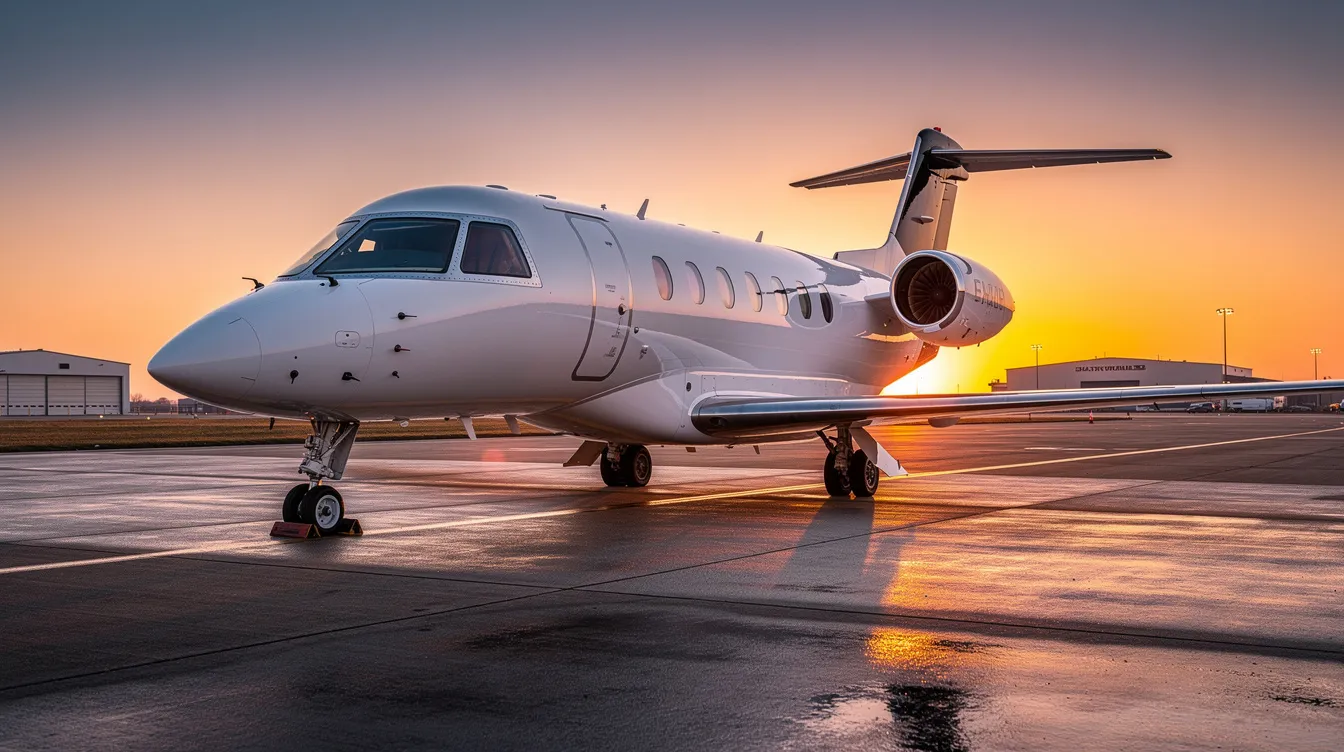
Earning a Vision Jet type rating is more than a regulatory formality. A type rating is a specific certification required by the FAA for all turbojet aircraft, including the Vision Jet. It is a strategic credential that separates casual aviation enthusiasts from serious owner-pilots capable of commanding one of the most advanced personal aircraft ever built. This guide breaks down every phase of the process—from prerequisites and training structure to costs, insurance, and how the SF50 fits into a broader private aviation strategy.
Why the Cirrus Vision Jet Type Rating Matters for Serious Aviators
The Cirrus Vision Jet represents a category of one: the world's first FAA-certified single-engine personal jet. For the high-net-worth traveler or business executive who values control over schedule and route, holding an SF50 type rating means the freedom to operate this airplane as pilot-in-command without relying on hired crew for regional missions.
Jet Speed and Mission Flexibility
But this freedom demands preparation. The Cirrus SF50 cruises at flight levels between FL280 and FL310, reaching a max cruise of approximately 311 KTAS—a jet speed environment that requires disciplined systems management, IFR proficiency, and rapid decision-making. With an NBAA IFR range near 950 nm, the Vision Jet handles missions that were previously the exclusive domain of multi-crew light jets.
Owner-Pilot Advantages
Consider the comparison: flying your own Cirrus Vision Jet on a 700 nm hop from Dallas to Nashville puts you in command, with total scheduling flexibility and access to shorter runways near your destination. For longer or more complex legs—say, New York to London or a multi-city investor roadshow—a crewed private jet through a Jet Card program delivers larger cabin comfort and professional dispatch. The most strategic approach often combines both.
Safety and Standardization
The rigor behind the SF50 type rating course mirrors the same safety, technology, and standardization philosophy that defines premium private aviation. Whether you fly yourself or fly as a passenger, the standard should never waver.

Do You Need a Type Rating for the Cirrus Vision Jet SF50?
Yes. A type rating is required for the Vision Jet. Despite the SF50's modest maximum takeoff weight of approximately 6,000 lbs—well under the 12,500 lb threshold for many other certifications—the FAA mandates a type rating because the aircraft is powered by a turbine engine. Specifically, 14 CFR § 61.31(a)(2) requires a type rating for any turbojet-powered aircraft, and type ratings are required for all turbojet-powered aircraft regardless of weight class. The Williams FJ33-5A turbofan that powers the SF50 falls squarely into this category.
A valid Private Pilot License is a prerequisite for a Vision Jet type rating, along with a current instrument rating due to the high-altitude IFR operations the Vision Jet routinely conducts. Many training providers and insurance underwriters strongly prefer candidates who hold a Commercial certificate with substantial time in Cirrus aircraft, particularly the SR22 or SR22T.
It is important to understand that a type rating does not automatically confer privileges for flying other jet types. The SF50 endorsement is specific to this aircraft. However, the Vision Jet type rating allows for single-pilot operation as pilot-in-command—a distinction that underscores the airplane's design as a personal transportation solution.
For international owners, EASA and Transport Canada typically require local validations or endorsements of the FAA SF50 type rating. And even if you plan to hire a pilot, most insurers require any pilot flying your specific aircraft under your policy to hold the same type rating and maintain recurrent training.
Cirrus SF50 Vision Jet: Aircraft Overview and Unique Safety Systems
The Cirrus Vision Jet occupies a unique position in aviation—bridging the gap between high-performance pistons like the SR22T and light jets such as the Citation CJ3+ or Phenom 300. As a single-engine private jet, it offers pressurized jet comfort for up to five adults and two children, with a service ceiling near FL310 and approximately 1,846 lb of thrust from its single Williams FJ33-5A engine.
CAPS: The Airframe Parachute
Safe Return Autoland
Electronic Stability and Protection (ESP)
These aircraft systems fundamentally shape the training profile. Type rating syllabi devote substantial time to CAPS deployment decision-making, Safe Return operation, and automation management—skills that go well beyond basic stick-and-rudder proficiency. This safety-first Cirrus approach aligns closely with the standards BlackJet applies when selecting operators for its fleet.
Regulatory Framework: How the SF50 Type Rating is Classified
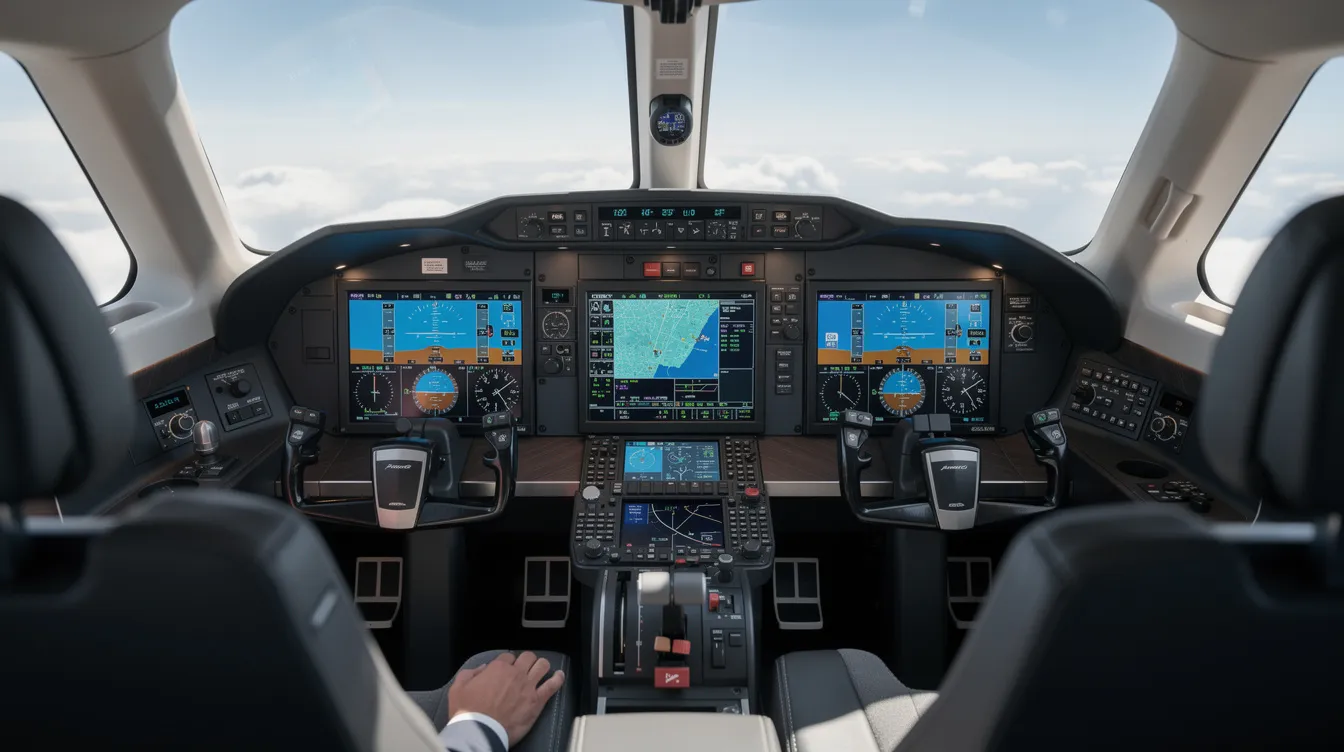
The SF50 type rating appears on an FAA pilot certificate as a specific aircraft endorsement—typically designated "SF50" with a single-pilot authorization. It sits alongside other jet type codes on your certificate, but it only authorizes you to operate this specific aircraft type.
Typical FAA Add-On Path
The typical FAA add-on path follows a structured progression:
Private or Commercial certificate with instrument rating
Cirrus Approach training courses (avionics, systems familiarization)
Cirrus Jetstream program (turbine transition preparation)
Formal type rating course under Part 142 standards
Successful completion of a practical test (check ride)
Training programs must meet Air Transport Pilot specifications, meaning the practical test is evaluated against ATP standards for precision approaches, missed approaches, holding patterns, steep turns, and systems management under pressure.
In some cases, limitations may be placed on the certificate—such as "SIC-required" or "VFR only"—particularly for lower-time pilots. Supervised operating experience removes these PIC restrictions for single-pilot turbine operations. Recurrent training and proficiency checks, typically annual, are standard for Vision Jet pilots and almost universally mandated by insurance providers.
Where to Train: Vision Center, Third-Party Providers, and In-Aircraft Options
The Cirrus Vision Center in Knoxville, Tennessee—often referred to as the center in Knoxville—is the primary factory-authorized training hub. The Vision Center campus features full-motion simulators, avionics labs, and a standardized curriculum built around the latest SF50 configurations. Instructors are Cirrus-standardized, and the facility offers integrated housing options nearby, making the immersive training experience as seamless as possible.
Third-Party Training Providers
Third-party providers offer alternatives:
Provider | Location | Approach | | Approximate Initial Cost |
|---|
Cirrus Vision Center | Knoxville, TN | Simulator-based, Part 142 | ~$31,000 | |
Aero City Jets | Flexible | Aircraft + ground trainer | ~$34,000 | |
Berichi Aviation | South Florida | In-aircraft, no SOE limitation | Contact for pricing | |
Simulator training required by some insurance carriers for type ratings means many new owners default to the factory program. The simulator allows instructors to safely replicate emergency procedures like engine failures, pressurization loss, and complete avionics failures—scenarios that cannot be responsibly trained in the actual airplane.
For BlackJet clients who also own an SF50, factory-based simulator training is often the most efficient path to gain and maintain competence in your personal plane while relying on premium private jet card programs and Jet Card access for longer or multi-leg missions.
Prerequisites and Recommended Experience Before Starting SF50 Training
Concrete prerequisites for SF50 type rating training include:
A valid Private Pilot License (Commercial preferred)
A current instrument rating
A current FAA Medical Certificate appropriate to the intended level of operation
Minimum total flight time of 250–500+ hours (insurer requirements vary; many underwriters prefer 500–1,000 hours)
Recent IFR proficiency and high-performance experience, ideally in Cirrus SR22/SR22T aircraft
Prior experience in glass cockpit Cirrus aircraft significantly reduces the learning curve. Pilots already familiar with Garmin Perspective Touch+ avionics and CAPS decision-making arrive at the type rating course with a foundation that piston pilots transitioning directly from conventional aircraft often lack.
Recommended Staged Progression
The recommended staged progression looks like this:
This path builds habits and knowledge incrementally, so the transition from piston to turbine aviation feels deliberate rather than overwhelming.
Vision Jet training is designed to ease the transition from piston to turbine aviation, but candidates should be honest about their workload tolerance at jet speed and high altitudes. A realistic self-assessment—combined with a current medical certificate and solid IFR currency—is the foundation for success. For more on pilot qualifications across private aviation, BlackJet maintains detailed guidance.
Inside the SF50 Type Rating Syllabus: Ground School and Simulator Training
Training for the Vision Jet includes ground and simulator training over 9 to 10 days of intensive, structured curriculum. Here is what candidates encounter:
Ground School Covers
Detailed aircraft systems: turbine engine operation, fuel system architecture, electrical and pressurization systems, ice protection
Normal and abnormal checklists, performance planning charts, and high-altitude physiology
Oxygen rules, emergency procedures for cabin depressurization, and fire protocols
Memorization of critical memory items—immediate-action emergency procedures that must be recalled without reference to a checklist
Type rating training includes memorization of emergency procedures as a core requirement. Candidates must demonstrate command of QRH flow patterns and immediate-action responses for engine failures, avionics anomalies, and pressurization emergencies.
Simulator Training Focuses On
Start-up, taxi, and normal departure/arrival flows
Single-pilot CRM and workload management
Engine failure scenarios including failures after V1
Approach-to-stall recognition and upset recovery
Abnormal and emergency scenarios not safely trainable in the actual SF50
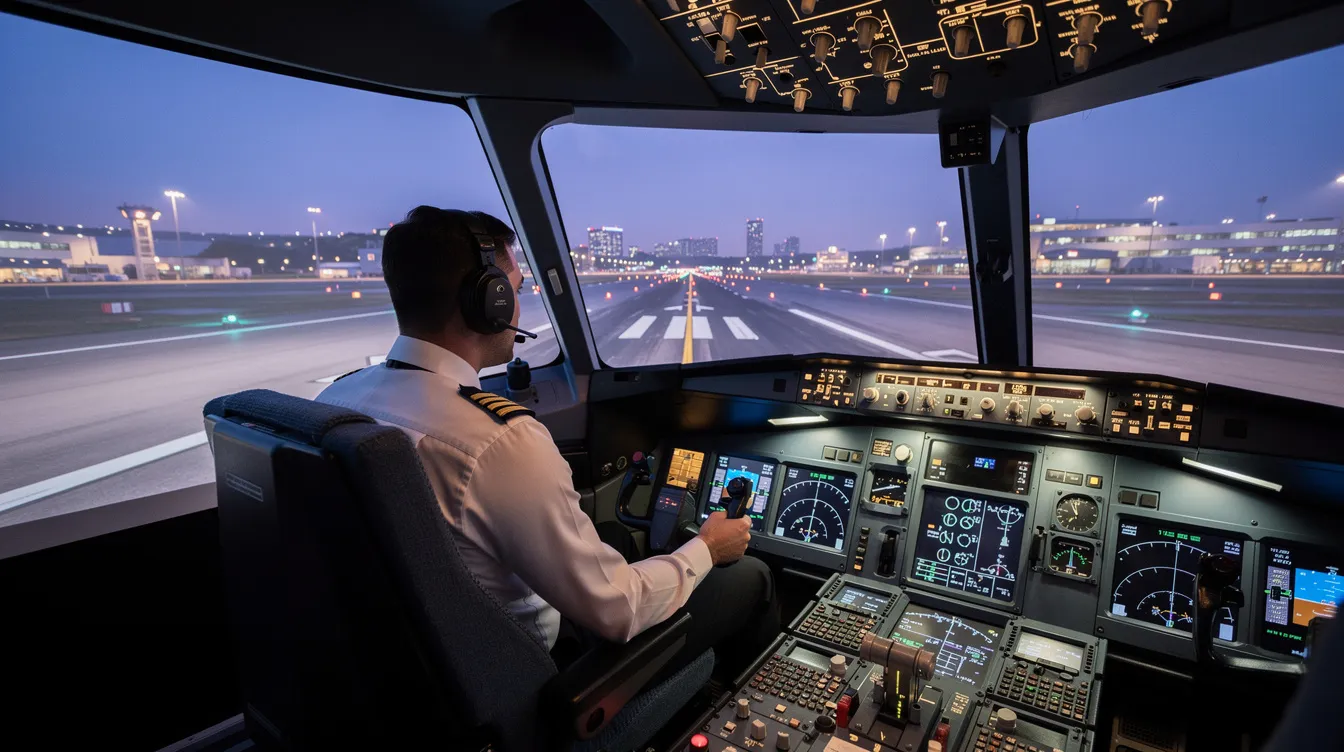
The Vision Jet type training emphasizes turbine operation and high-altitude flight throughout both phases. The training uses advanced simulators and instructor-led scenarios to replicate real-life conditions, including handling scenarios like engine failures and high-workload operations. The SF50 check ride profile is aligned with ATP standards: precision approaches, missed approaches, holding, steep turns, and systems management under time pressure.
Cirrus Jetstream and Cirrus Approach: Preparing Before You Arrive
The Cirrus jet ecosystem includes two pre-training pathways that dramatically improve outcomes at the Vision Center.
Jetstream Program
The Jetstream program is a structured pre-type-rating pipeline that transitions experienced SR pilots into turbine operations. It includes webinars, online modules, and scenario-based study designed to build turbine-specific knowledge before candidates set foot in Knoxville.
Cirrus Approach
Cirrus Approach is the broader training ecosystem—online courses, 3D animations, interactive avionics walkthroughs—that Vision Jet owners and prospective candidates often complete months in advance. The Vision Jet Learning Portal uses 3D graphics and custom animations to illustrate systems operations: fuel routing, bleed air, CAPS deployment sequence, and Safe Return logic.
Pilots should prepare 30 to 60 days before their type rating course begins. For executives with a busy schedule, this remote preparation preserves valuable work days and makes the on-site course substantially more efficient. Much of the foundational knowledge—systems, procedures, performance planning—can be absorbed at your own pace before the intensive in-residence phase begins.
This philosophy extends naturally to private jet travel planning: combine home-based preparation (mission analysis, aircraft selection via the BlackJet app) with concentrated on-site action for maximum efficiency.
Cost, Duration, and Insurance: What to Expect Financially
The type rating costs around $31,000 for the Vision Jet at the Cirrus Vision Center, inclusive of materials, simulator sessions, and examiner fees. Third-party providers like Aero City Jets price full initial packages at approximately $34,000. Training duration is nearly two consecutive weeks for a well-prepared pilot, with flexibility for additional sessions before the practical test if needed.
Recurrent training—typically required annually—runs approximately $9,800 for a 2–3 day program.
Insurance Considerations
Insurance considerations add another layer of cost and obligation. Underwriters commonly require:
Simulator-based initial training at an approved Part 142 facility
Documented supervised operating experience with a mentor pilot
Annual or semi-annual recurrent training with proof of recent PIC hours
Minimum total flight time thresholds before granting full single-pilot privileges
When you compare the annual costs of maintaining SF50 proficiency—training, insurance, maintenance, hangar, fuel—against the alternative of using a Jet Card program, the calculus becomes clear for many owners. The most capital-efficient strategy often blends both: self-fly the SF50 for sub-1,000 nm family trips and day-business hops, and rely on BlackJet's multi-aircraft fleet for longer, multi-city, or international missions where a crewed jet and larger cabin offer better value. For a deeper look at the costs and risks of aircraft ownership and how they compare to 12-seat private jet acquisition and charter costs, BlackJet's ownership guide provides useful context.
Supervised Operating Experience (SOE) and Building Real-World Proficiency
The learning curve does not end with the check ride. Pilots must complete supervised operating experience after type rating to build proficiency in real-world conditions. Supervised operating experience is required if the practical test is done in a simulator, which is the case for most factory-trained graduates.
Typical SOE Structure
Typical SOE structure involves a fixed number of hours or flight legs flown with a Cirrus-standardized mentor pilot, covering:
IFR departures and arrivals into busy Class B airspace
Cross-country missions with realistic fuel and reserve planning at jet speed
Winter operations, adverse weather decision-making, and diversion strategies
CAPS usage decision frameworks and Safe Return activation procedures
Insurers often require documented SOE to remove restrictions on single-pilot PIC operations, especially for lower-time turbine pilots transitioning from pistons. This is where real-life proficiency is forged—where textbook knowledge meets actual runway conditions, live ATC communications, and the unpredictable workload of operating a new jet in the national airspace system.
Owner-Pilot vs. Jet Card Missions
The contrast is worth noting: in the Vision Jet, you are the decision-maker for every phase of flight. On a Jet Card mission with BlackJet, a professional two-pilot crew and dispatch team carry that burden, allowing you to focus on work, rest, or simply enjoy the flight while capturing many of the same time and flexibility advantages discussed in private jet charter value comparisons.
Comparing Vision Jet Ownership to Jet Card Access with BlackJet
When does holding a type rating and owning a Cirrus Vision Jet make strategic sense, and when is a Jet Card the better tool?
SF50 Ownership Excels For
Frequent regional travel within 800–1,000 nm
Same-day out-and-back trips with total schedule control
Access to shorter runways near second homes or smaller communities
Pilots who genuinely enjoy the act of flying
BlackJet Jet Card Excels For
The other thing to consider: forcing every trip into a single-aircraft solution is rarely optimal. BlackJet's multi-cabin access complements your SF50 by letting you choose the best jet type per mission. A 500 nm hop to Santa Fe? Fly yourself. A coast-to-coast board meeting with four executives? Book a super-midsize through BlackJet, or consider private jets configured for up to 50 passengers when your travel involves much larger groups.
Both paths operate on the same pillars: safety, technology, and sustainability.
Safety, Technology, and Sustainability in the Vision Jet Era
Modern safety technologies in the Cirrus Vision Jet—CAPS, Safe Return Autoland, envelope protection, synthetic vision—have fundamentally reshaped expectations for what personal transportation by air can offer. The type rating training program devotes meaningful time to using these systems intelligently: when CAPS is appropriate, when Safe Return should be activated, and how to avoid over-reliance on automation while maintaining the skills for a safe landing in degraded conditions.
From a sustainability perspective, the SF50's modern turbofan engine and advanced avionics contribute to more predictable fuel planning and potentially lower per-mile emissions compared to older legacy jets. When paired with sustainable aviation fuel or carbon offsets, the environmental profile improves further.
BlackJet takes a parallel approach at the fleet level: selecting modern, fuel-efficient aircraft types where possible, enforcing rigorous safety audits, and offsetting all client flights to ensure carbon-neutral operations, even on large group charter flights for 100 passengers. Whether you operate your own SF50 or fly as a passenger on a BlackJet mission, you can align performance, jet comfort, and sustainability in a single travel strategy.
Frequently Asked Questions About the Vision Jet Type Rating
How long does it take to earn an SF50 type rating?
Training for the Vision Jet type rating takes nearly two weeks. The core ground school and simulator phases span 9 to 10 days, with the practical test typically scheduled at the end. Plan for approximately 10–14 consecutive days to complete the full course and obtain your rating.
Is an instrument rating required?
Yes. An instrument rating is required due to the high-altitude IFR operations of the Vision Jet. You also need a current FAA Medical Certificate to obtain a Vision Jet type rating.
Can I complete the type rating in my own Cirrus Vision Jet?
Some third-party providers like Berichi Aviation offer in-aircraft training programs. However, many insurers prefer or require simulator-based Part 142 training for initial qualification. Check with your underwriter before committing to a training path for your specific aircraft.
How often do I need recurrent training?
Most insurance policies and safety programs mandate annual recurrent training, typically a 2–3 day course covering emergency procedures, simulator scenarios, and performance review.
Do I need separate training for Safe Return Autoland?
No. Safe Return training is integrated into the standard ground school and simulator curricula for equipped G2+ aircraft. It is not a separate course.
How is CAPS integrated into training?
CAPS decision-making is woven into ground school, emergency procedures training, and the check ride itself. You will practice the decision heuristics and deployment sequence in both classroom and simulator settings.
If I already have Jet Card access, is Vision Jet ownership still worth it?
Absolutely—if your travel pattern includes frequent regional flights under 1,000 nm. The SF50 and a Jet Card serve different missions. Think of the Vision Jet as your advance tool for flexible, pilot-in-command regional access, and the Jet Card as your plan for everything larger, longer, or crew-served.
Does a multi engine rating help?
While a multi-engine rating reflects broader piloting skills, it is not a prerequisite for the SF50 type rating. The Vision Jet is a single-engine jet, and the training focus is on turbine-specific knowledge and single-pilot CRM.
How BlackJet Fits Into Your Vision Jet and Private Aviation Strategy
Everything covered in this guide—the rigor of the SF50 type rating, the responsibilities of being PIC in a Cirrus SF50, the investment in training and proficiency—points to a pilot who takes aviation seriously. That same mindset should extend to every flight you take, whether you are at the controls or in the cabin, and even when you evaluate premium private jets for sale in the UK or other markets as part of a broader aviation strategy.
Consider a scenario: an owner-pilot based in Dallas uses their Vision Jet for quick 500–800 nm hops—Dallas to Santa Fe, Dallas to Nashville—missions where the SF50's jet convenience and short-field access shine. For a Dallas–New York–London itinerary with colleagues, that same owner books through BlackJet, accessing a large-cabin jet with a professional two-pilot crew, real-time digital booking, and 24/7 support, similar in cabin scale and mission profile to Boeing 737 private ownership and operations.
BlackJet's real-time scheduling platform, vetted operators, and BlackJet Certified safety standards extend the same safety-first mindset taught in SF50 training into every chartered mission, while its curated best jet card programs for frequent flyers help align your charter strategy with how often and how far you fly. The combination ensures that no trip is forced into the wrong aircraft, and every flight meets the standard you have been prepared to expect.
If you are considering the Vision Jet type rating—or already hold one—speak with a BlackJet advisor to align aircraft ownership, Jet Card hours, and travel patterns so that every asset in your aviation portfolio is fully utilized, including options like the BlackJet 25+ Hour Jet Card.
Explore how BlackJet can complement your Cirrus Vision Jet ownership with seamless, carbon-neutral jet access for every mission your SF50 can't—or shouldn't—fly.


 Sign up with google
 Sign up with Apple