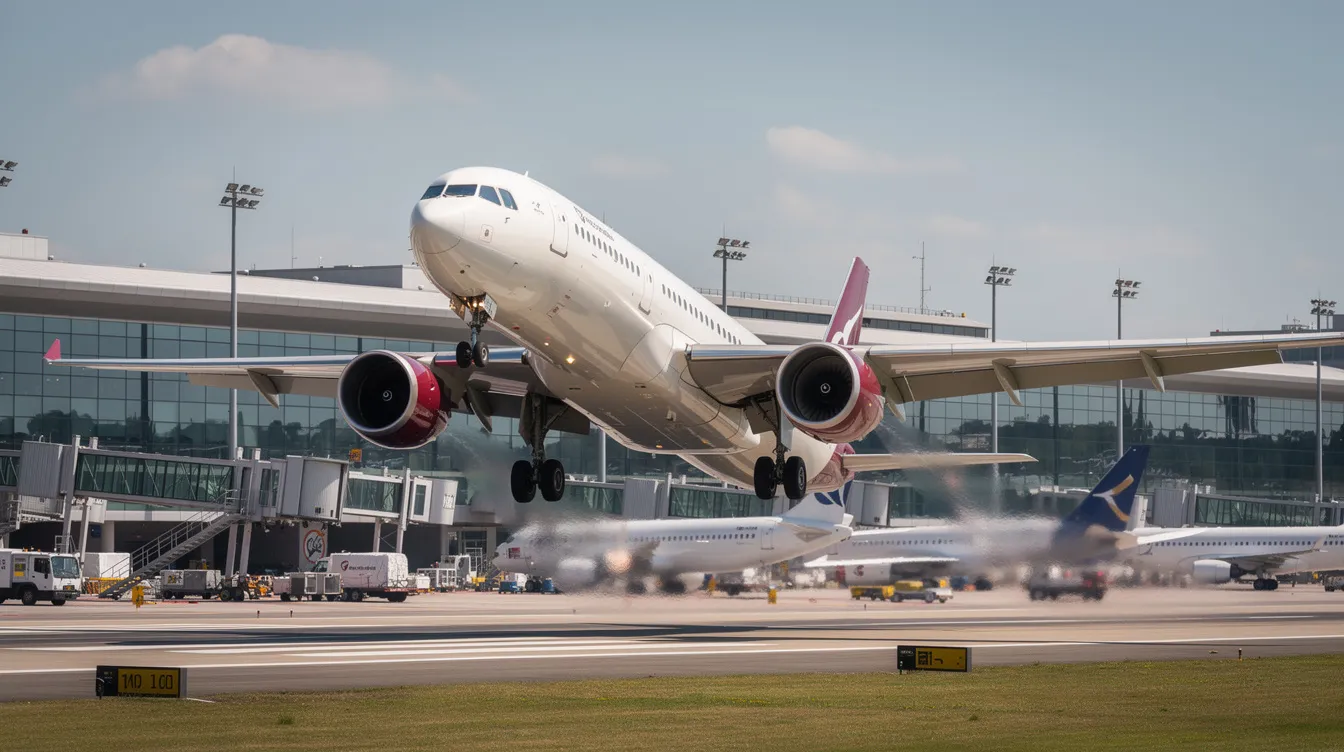
If you're searching for the most comfortable airline in economy class, this guide will help you find the best options for 2026. It's for travelers who value comfort whether flying domestically or internationally. With airlines cutting amenities and shrinking seats, knowing which carriers offer the best comfort is more important than ever. This guide breaks down which airlines deliver the best economy experience in 2026—domestically and internationally—then explores when even the best commercial seat simply isn't enough.
Quick Answer: The Most Comfortable Airlines in 2026
For economy passengers seeking the most comfortable economy seats on long-haul flights, Asian and Middle Eastern carriers consistently rank higher than their Western counterparts. On domestic flights within the USA, a handful of US airlines stand apart from the pack. Passenger experience often varies significantly between domestic and international flights, so knowing which airline excels in each context matters.
Here are the top comfortable airlines for economy class in 2026:
Japan Airlines (JAL) — Up to 34 inches of legroom and 19-inch seat width on long-haul aircraft; Skytrax's reigning economy seat champion.
All Nippon Airways (ANA) — Generous 34-inch pitch on many transpacific routes with well-padded seats and top-notch cabin cleanliness.
Singapore Airlines — 32 inches of legroom and up to 19-inch seat width on A380 and A350 fleets; exceptional service.
Emirates — Up to 34-inch pitch on A380 economy with industry-leading in-flight entertainment.
Qatar Airways — Consistent 31–32-inch pitch, 18-inch width, and globally recognized service quality.
Cathay Pacific — Quiet A350 cabins with thoughtful cushioning and ergonomic headrests.
Delta Air Lines — The overall winner among major US airlines for balancing seat comfort, entertainment, and reliability.
JetBlue Airways — The widest and most spacious seats in US domestic economy, with free Wi-Fi on every flight.
Hawaiian Airlines — Relaxed onboard atmosphere with comfortable seat dimensions and the lowest cancellation rate of any US carrier.
Qantas — 32-inch pitch on 787-9 long-haul routes with sleep-friendly cabin design.
For US domestic flights, JetBlue, Delta, Hawaiian Airlines, and Alaska Airlines lead. For international flights and long-haul routes, Singapore Airlines, ANA, JAL, Emirates, Qatar Airways, Cathay Pacific, Qantas, and Swiss dominate.
Even so, the most comfortable airlines in economy class still mean security lines, shared cabins, middle seats, and boarding queues. For travelers who expect more, private jet access through programs like BlackJet represents a fundamentally different level of comfort—one we'll explore later.
How We Define "Most Comfortable" Airlines
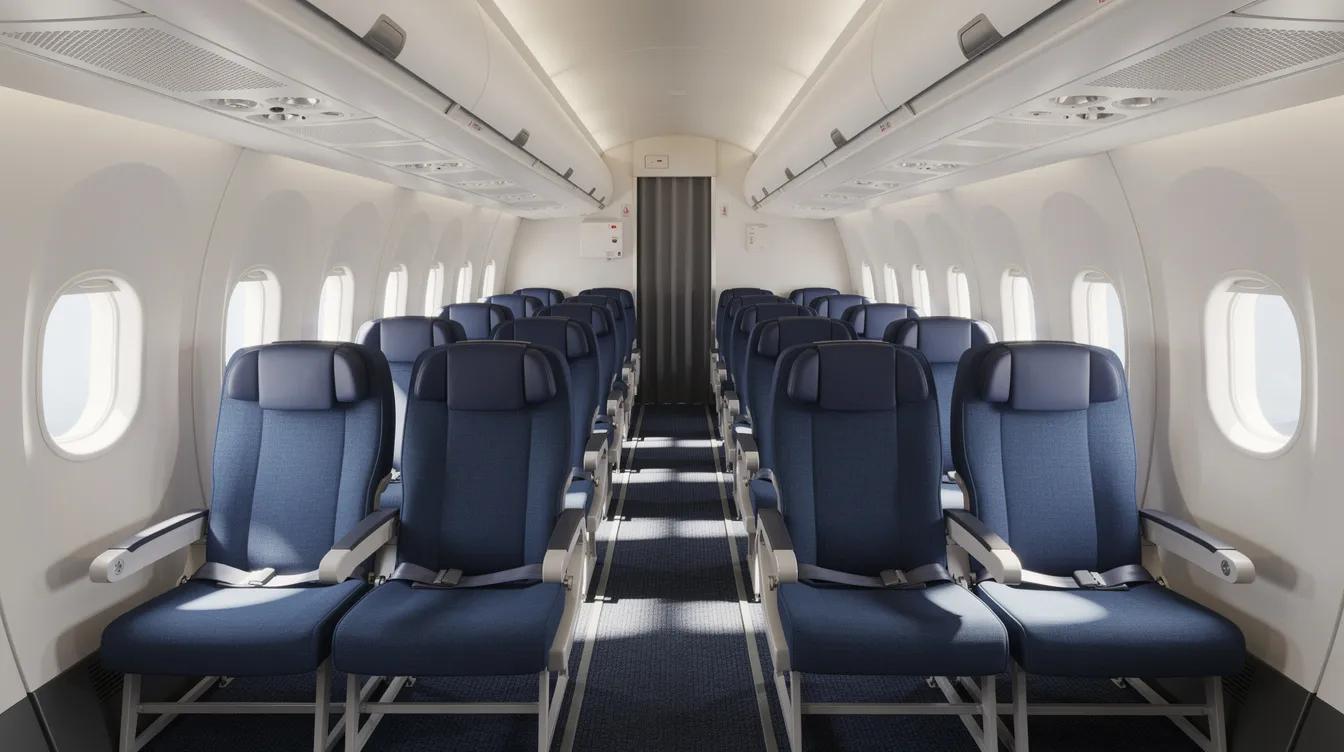
Comfort is determined by seat pitch, seat width, service, and amenities. Seat comfort is dictated by seat pitch and seat width, while factors influencing airline comfort include seating, service, and amenities. Airlines can be grouped into tiers based on seat pitch, cabin service, and overall amenities. Comfort also varies immensely based on whether traveling in Economy, Premium Economy, or Business Class.
Seat Pitch and Width
Seat pitch is the distance between your seat and the one ahead; it is commonly used to describe legroom. Typical economy ranges from 30 to 32 inches; generous economy pitch often ranges from 32 to 34 inches, which makes a meaningful difference on long-haul flights of six hours or more. The tightest seat pitch in the industry ranges from 28 to 30 inches, common on budget airlines.
Seat width measures the space across the seat. Most US economy seats hover around 17 inches. Airlines offering 18 to 19 inches give noticeably more shoulder and hip room, especially on overnight flights.
Cabin Layout and Seat Design
Configurations like 2-4-2 (common on A330s) mean fewer middle seats and more aisle access. Dense 3-4-3 layouts on 777s can feel cramped even when pitch numbers look acceptable.
Deeper recline, molded seatbacks with lumbar support, adjustable headrests with side wings, and footrests all affect perceived space across 8–12 hour flights.
Amenities
Seatback screens, Wi-Fi policies (free vs. paid), power outlets, blankets, and pillows vary enormously—especially on long-haul routes. These amenities can make a substantial difference during overnight and long-distance journeys.
Service and Reliability
On-time performance, friendly crews, and a consistent experience across the fleet define whether an airline feels comfortable or merely adequate. Service quality can differentiate the flying experience from routine transportation to a pleasant journey.
BlackJet uses similar objective criteria—space per passenger, noise levels, and total wait time—when contrasting commercial comfort with private jet cabins and explaining how higher cruising altitudes on private jets reduce turbulence and shorten flight times.
With these comfort factors in mind, the following sections compare airline options by route type, starting with international flights.
Most Comfortable Economy Seats on International Flights
True comfort gaps emerge on long-haul and ultra-long-haul international flights. A two-inch difference in legroom barely registers on a short flight from New York to Boston, but over 12 hours to Tokyo, it becomes the difference between arriving rested and arriving wrecked.
Leading International Airlines
Singapore Airlines: Economy class on the A380 and A350 delivers around 32 inches of pitch and up to 19 inches of width. Airlines like Singapore Airlines and Qatar Airways are known for high-quality service, and Singapore's catering in economy consistently outperforms other airlines.
All Nippon Airways (ANA): Boeing 787-9 and 777 economy layouts offer roughly 34-inch pitch on many long-haul routes. Footrests, well-padded coach seats, and high marks for cabin cleanliness make ANA a frequent top pick.
Japan Airlines (JAL): JAL offers 34 inches of legroom in economy class with seat width reaching 19 inches on A350-1000 configurations. Large 13-inch 4K IFE screens and generous recline are designed for long-haul comfort.
Emirates: A380 and 777 economy configurations have roughly 32–34 inches of pitch and an award-winning entertainment system spanning hundreds of channels. Nonstop routes from major US hubs to Dubai and beyond serve as gateways to Asia and Africa.
Qatar Airways and Cathay Pacific: Both airlines offer economy seats around 31–32-inch pitch and 18-inch width on A350 and 777 fleets. Quiet, modern cabins with attentive crews earn consistently strong reviews.
Swiss and Qantas: Swiss A350 economy features updated "Senses" seats with up to approximately 19.5-inch width. Qantas 787-9 economy provides 32-inch pitch with footrests for better leg support on long-haul flights between the US and Australia.
Airline | Economy seat details mentioned in this guide |
|---|
Japan Airlines (JAL) | Up to 34-inch pitch and 19-inch width on A350-1000 configurations |
All Nippon Airways (ANA) | Roughly 34-inch pitch on many long-haul routes |
Singapore Airlines | Around 32-inch pitch and up to 19-inch width on A380 and A350 |
Emirates | Roughly 32–34-inch pitch on A380 and 777 configurations |
Qatar Airways and Cathay Pacific | Around 31–32-inch pitch and 18-inch width on A350 and 777 fleets |
Qantas | 32-inch pitch on 787-9 long-haul routes |
Even this top tier of economy comfort still means sharing a cabin with 200+ passengers. On a private jet, every seat is effectively lie-flat business class or better, with no middle seats, no strangers, and far fewer passengers, especially on 16-seat large-cabin private jets built specifically for premium group travel.
Now let's look at how these comfort factors play out on US domestic flights.
Most Comfortable Economy Class on US Domestic Flights
On domestic flights, comfort criteria shift. Flight times are shorter, but frequent flyer travelers who fly weekly care deeply about consistency, Wi-Fi quality, and whether they'll actually get a comfortable seat without having to pay extra.
Leading US Domestic Airlines
Delta Air Lines: Delta seats are typically 30 to 32 inches in pitch, with seat width ranging from 17.2 to 18.5 inches depending on aircraft model. Delta provides complimentary snacks on flights over 350 miles, offers solid in-flight entertainment, and has rolled out free Wi-Fi for SkyMiles members on many routes.
JetBlue Airways: JetBlue offers the widest economy seats at 17.8 to 18.4 inches—the most spacious seats in US domestic economy. Legroom reaches about 32 to 34 inches of pitch. JetBlue offers free Wi-Fi on every flight and maintains a strong snack selection,n including free snacks and drinks.
Hawaiian Airlines: A330 and A321neo aircraft serving routes to and from Hawaii feature economy seats with 31-inch pitch and width ranging from 16.8 to 18 inches. Hawaiian Airlines offers free Wi-Fi for Atmos Rewards members and creates a relaxed onboard atmosphere tailored to vacation travelers.
Alaska Airlines: Approximately 31-inch pitch and 17-inch width in economy with friendly service and decent streaming entertainment on most mainline jets. Alaska Airlines had a 79.2% on-time arrival rate in 2025.
American Airlines and United Airlines: While seat dimensions hover around industry averages (30–32-inch pitch), United Airlines has economy seats with a width of 16 to 17.3 inches in denser configurations. American Airlines has Wi-Fi on 90% of its fleet. United Airlines provides free non-alcoholic drinks on all flights. Newer aircraft and premium-heavy configurations can feel more comfortable than older narrow-body jets.
Southwest Airlines: Open seating with generally around 31–33-inch pitch and 17.5-inch width. Comfort largely comes from legroom and no change fees. Southwest Airlines has a low cancellation rate of 1.3%.
Even on the best US airlines, total trip time—including security, boarding, and delays—often dwarfs actual flight time. That's where BlackJet's private jet centers and minimal wait times transform overall comfort.
The airline is only part of the equation: the aircraft model and its seating configuration can change the experience significantly.
Airlines with the Most Comfortable Economy Seats: Model-by-Model
Comfort can vary more by aircraft model and configuration than by airline brand alone. The same carrier might fly a cramped 737 on one route and a spacious A350 on another. Here's what to expect from today's most common airplanes:
Airbus A350: Newer widebody aircraft generally offer quieter cabins and better air filtration, and the A350 exemplifies this. Higher humidity, larger windows, and LED mood lighting reduce fatigue. Cathay Pacific, Qatar Airways, Finnair, and Swiss all operate well-rated A350 economy seats.
Boeing 787 Dreamliner: Typical 3-3-3 layout means seat width can be slightly narrower, but the quieter cabin and higher humidity noticeably improve long-haul comfort. ANA, JAL, Qantas, and American Airlines fly 787s on select international routes.
Airbus A380: The wide fuselage and high ceilings create a feeling of spaciousness unmatched by other airplanes. Emirates and Singapore Airlines use the A380 to deliver some of the most comfortable economy class experiences on long-haul flights, but discerning travelers may also compare it with different private jet sizes to match cabin space precisely to their group.
Standout configurations: JetBlue's A321 economy seats with approximately 32-inch pitch and modern IFE; JAL A350-1000 economy with 34-inch pitch and 13-inch 4K screens; Emirates A380 economy seats with up to 34-inch pitch.
Aircraft age matters: Newer NEO and MAX variants offer better cabin pressure and lighting, positively affecting perceived comfort even when seat dimensions are similar to older models, while BlackJet’s premium private jet card programs curate modern aircraft with consistently high onboard standards.
BlackJet sidesteps this complexity entirely. Cabin class is determined by aircraft category—light jet, midsize, super midsize, or large cabin—each curated for ample personal space rather than maximizing seat count.
Aircraft and configuration matter, but so does the cabin class you choose. Here's how economy compares with premium economy and business class.
Comparing Economy Class, Premium Economy, and Business Class Comfort
Comfort varies immensely based on whether you're traveling in Economy, Premium Economy, or Business Class. Here's how the tiers compare, especially on long-haul flights:
Economy class: Typical seat dimensions of 30–32-inch pitch and approximately 17-inch width. Limited recline and crowded cabins mean the least amount of personal space, especially on full flights.
Premium economy: Premium economy cabins typically offer additional legroom and better meal options compared to economy. Many comfortable airlines—Delta, American Airlines, Singapore Airlines, ANA, British Airways—now offer around 37–38 inches of pitch, 18.5–19.5-inch width, upgraded complimentary meals, and priority boarding. Airlines often provide luxury amenity kits in premium cabins on long-haul flights.
Business class: Lie-flat seats, direct aisle access on top carriers, and privacy features. This is the commercial standard frequent flyer elites aim for on long-haul flights.
Cost and flexibility: Premium economy and business class fares can run 2–5x economy, especially when bought last-minute. For small groups of 4–8 passengers, BlackJet's Jet Card model can become cost-competitive with buying multiple business class tickets.
Private jets function as an ultra-premium cabin where every seat has more space than most first-class products, with fully personalized schedules and no need to compete for upgrades.
On long-haul and ultra-long-haul journeys, even small differences between these cabin options can compound over many hours.
Most Comfortable Airlines for Long Haul & Ultra Long Haul Flights
A "long haul" flight runs 6–10 hours; "ultra long haul" exceeds 10. Small comfort differences compound dramatically over time—what feels fine at hour two becomes unbearable at hour fourteen.
Singapore Airlines, Qatar Airways, and Emirates stand out on ultra-long-haul routes such as Singapore–New York, Doha–Los Angeles, and Dubai–San Francisco. Seat comfort, amenities, and service combine to make these flights as tolerable as economy can be.
ANA, JAL, and Cathay Pacific on transpacific routes (US–Tokyo, US–Hong Kong) offer generous economy pitch around 32–34 inches, thoughtful seat ergonomics, and quiet, well-run cabins.
Qantas on routes like Dallas–Sydney or Los Angeles–Melbourne pays attention to sleep-friendly lighting, self-serve snack areas, and footrest design in economy.
European comfortable airlines such as Swiss and Finnair emphasize newer A350 and A330 cabins optimized for 8–12 hour flights between North America and Europe.
For planning, choose the most direct long-haul flight available—even if the seat is only marginally more comfortable—to reduce total journey time and overall fatigue.
BlackJet's typical mission profile covers 2–7 hour flights where private cabins and custom departure times keep even long days of travel feeling effortless. For those interested in how carbon-neutral private flights work on these routes, BlackJet offsets every journey by default.
With long-haul choices covered, the next section ranks US airlines by the comfort factors travelers can compare across domestic flights.
Most Comfortable US Airlines Ranked for 2026 (Economy Focus)
Rankings for top US airlines combine seat comfort, amenities, reliability, and Wi-Fi policies. Airlines are grouped into tiers based on seat pitch, cabin service, and overall amenities. In-flight entertainment quality varies significantly between airlines. Here's how major US airlines stack up:
Rank | Airline | Key Strength |
|---|
1 | Delta Air Lines | Balanced comfort, strong IFE, 80.9% on-time arrival rate |
2 | JetBlue Airways | Best legroom and widest seats in economy |
3 | Hawaiian Airlines | Lowest cancellation rate (0.7%), never had a fatal accident |
4 | Alaska Airlines | Strong safety record, friendly service |
5 | American Airlines | Wi-Fi on 90% of fleet, improving configurations |
6 | United Airlines | Free drinks on all flights, growing premium focus |
7 | Southwest | Low cancellation rate, generous legroom |
8 | Frontier / Allegiant | Lowest fares, least comfort |
Delta Air Lines often ranks first among major US airlines because it balances comfortable seat dimensions with strong in-flight entertainment and complimentary refreshments. Delta Air Lines has maintained a clean safety record for over 30 years, and Delta Air Lines had an 80.9% on-time arrival rate in 2025.
JetBlue leads for pure legroom and seat width in economy class but comes with trade-offs: JetBlue has a cancellation rate of 5%, the highest among major US airlines. JetBlue canceled 5% of flights within a week before departure.
Hawaiian Airlines and Alaska Airlines are particularly strong in safety. Alaska Airlines, Delta, and American Airlines are among the safest US airlines. Hawaiian Airlines had the lowest cancellation rate at 0.7%.
Ultra-low-cost carriers like Frontier and Allegiant offer the least amount of comfort in exchange for the cheapest fares—reduced pitch, no free Wi-Fi, and a la carte pricing for amenities are common among these budget carriers. Frontier Airlines had the lowest on-time performance at 72.14%.
High-frequency business travelers might combine a top-ranked comfortable airline for routine domestic flights with BlackJet's Jet Card programs for critical trips where time, privacy, and guaranteed comfort matter most.
Rankings offer a useful overview, but your personal experience often comes down to seat size, cabin layout, and the details of a specific aircraft.
How Seat Size, Legroom, and Layout Change Your Experience
Two airlines can feel radically different even if they both advertise "31-inch pitch." Cushioning quality, seat shape, and cabin layout create the real difference passengers feel.
Seat pitch in plain terms: The industry standard sits at 30–32 inches. Comfort improves noticeably above 32 inches. At or below 30 inches, expect discomfort on most flights longer than 3 hours.
Seat width differences: US carriers like American Airlines and United Airlines can dip to around 16 inches on dense configurations, while JetBlue and some international airlines offer closer to 18–19 inches.
Cabin layouts: A 2-4-2 configuration (common on A330s) offers more window and aisle pairs and fewer middle seats, often feeling more comfortable despite similar seat dimensions to a 3-4-3 plane; groups who routinely travel together may instead opt for large-cabin private jets for 20 passengers to guarantee both space and privacy.
Soft elements matter: Padding thickness, adjustable headrests with side wings, footrests, and lumbar support can make one airline feel substantially more comfortable than another with identical published dimensions. High passenger satisfaction scores are linked to attentive and warm cabin crew service—a factor no seat measurement captures, and one that is also central to private jet safety and service standards.
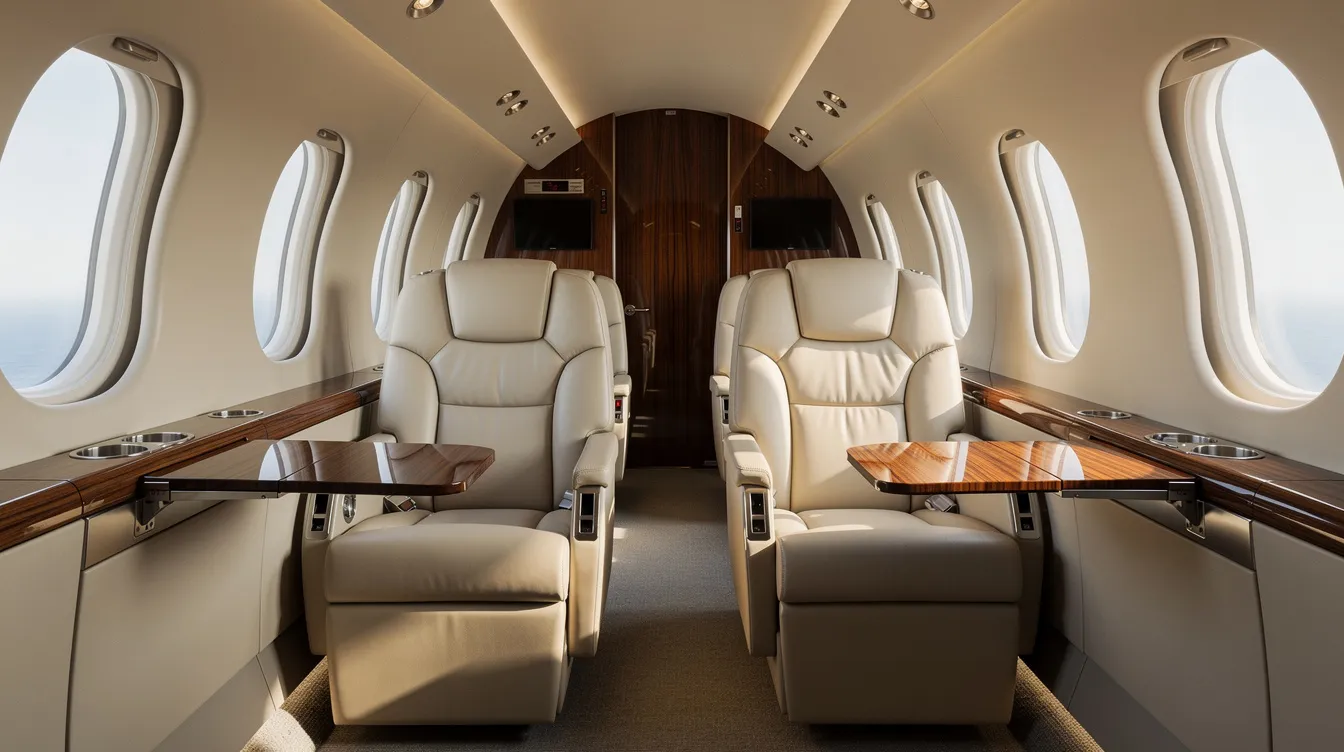
In BlackJet's typical midsize and super midsize cabins, legroom isn't measured in inches between rows because there are no rows. Seats and divans are arranged spaciously with the ability to move about freely.
Seat measurements are only one part of comfort, however. The overall journey—from airport experience to service and connectivity—matters too.
Beyond Seats: What Makes an Airline Truly Comfortable?
The most comfortable airline isn't defined solely by economy seats. It's the entire travel journey—from the moment you leave home to the moment you arrive at your destination.
Airport Experience
Time spent in check-in lines, bag drop, security, and boarding adds hours to every trip. Premium lanes and priority boarding can help, but they don't eliminate the process. That's why many travelers look at budget-friendly private aircraft options when overall time and comfort become more important than flying the absolute cheapest commercial fare.
In-Flight Environment and Service
Noise levels, cabin pressure, air quality, and temperature management vary by aircraft. Newer models like the A350 and 787 are measurably superior in these areas. Cabin cleanliness is a key factor in passenger comfort and satisfaction, just as it is on the best private jets in the world, where cabin design is optimized for quiet, low-fatigue travel.
Proactive crews and efficient handling of disruptions define a stress-free experience even in standard economy class.
Food, Connectivity, and Entertainment
The gap between free snacks and paid-only models is significant on a long day of travel. Delta, JetBlue, Hawaiian Airlines, and international flag carriers still offer complimentary meals and drinks in economy on qualifying routes, while frequent private flyers often bake catering preferences into their jet card cost structures for predictable, upgraded service.
Free vs. paid Wi-Fi, power outlet availability, and quality of seatback or streaming in-flight entertainment are especially important on long-haul and red-eye flights, and they’re also key perks highlighted in many of the best jet card programs for frequent flyers.
Private aviation redefines every one of these factors: no security queues, private terminals, tailored catering, and the ability to control departure times. That's where BlackJet positions itself as the most comfortable airline alternative for discerning travelers.
When commercial comfort and the full airport-to-arrival experience still fall short, private jet travel is another option to consider.
When Commercial Comfort Isn't Enough: Private Jet Alternatives with BlackJet
Private jet travel isn't mere luxury—it's a strategic upgrade for frequent flyer executives, entrepreneurs, and high-net-worth families when time, privacy, or health are priorities. When even the best commercial seat can't deliver what your schedule demands, the equation changes.
Jet Cards and the Commercial Comparison
What is a Jet Card? Prepaid blocks of flight hours—such as 25 hours or 50 hours—that give guaranteed access to private aircraft across multiple cabin classes without owning a jet, using BlackJet's membership model, with jet card pricing structured around predictable hourly rates and membership fees.
BlackJet vs. business class: Similar or better seat comfort than international business class, but with dedicated cabins, no strangers onboard, and fully custom departure times; many travelers compare this experience directly with the overall private jet price spectrum before deciding how to access private aviation.
Time Savings, Safety, and Sustainability
On a New York–Miami or Los Angeles–Seattle trip, private jet travelers typically arrive 20–30 minutes before departure, avoid TSA lines, and can land at closer regional airports. Total door-to-door time savings often exceed two hours each way, which is why many compare top private jet companies and shared or per-seat options when upgrading from commercial business class.
BlackJet works only with rigorously vetted operators and aircraft meeting top-tier safety certifications, often exceeding commercial requirements, with experienced crews and consistent safety protocols.
BlackJet offers carbon-neutral flights by default through high-quality carbon offset and SAF initiatives—comfort without abandoning environmental responsibility, even as it helps travelers evaluate the cheapest private jet options that balance cost, efficiency, and emissions.
Booking Technology and Next Steps
A digital booking platform with real-time flight support and 24/7 concierge lets members request, confirm, and manage flights from their phone, replacing the need to navigate multiple airline apps and frequent flyer programs. It also streamlines access to private jets for sale under 10 million dollars for buyers exploring ownership alongside charter or jet cards.
Ready to move beyond simply choosing the most comfortable economy seats? Explore BlackJet's Jet Card programs and refine your understanding of private aviation value by comparing 10 million dollar private jet options and NetJets jet card costs before choosing the mix of comfort, ownership, and flexibility that fits your travel profile.
FAQ: Choosing the Most Comfortable Airline for Your Next Trip
These are the questions travelers most frequently ask when balancing comfort, cost, and time on domestic flights and international flights.
Which airline has the most comfortable economy seats overall?
For US domestic, JetBlue and Delta Air Lines consistently lead. For long-haul international, Singapore Airlines, ANA, and Japan Airlines offer the most comfortable economy seats, though comfort can vary by aircraft type—always check before booking.
What's the most comfortable US airline for long-haul international flights?
Delta performs well on transatlantic and transpacific routes. Hawaiian Airlines covers US mainland–Hawaii–Asia. JetBlue's transatlantic A321neo routes to Europe offer competitive legroom. Seat selection and aircraft model matter as much as the airline brand.
Is premium economy worth it compared to standard economy class?
On flights over 6 hours, the extra legroom, wider economy seats, and better food in premium economy make a substantial difference. It's often worth the cost for travelers who don't want to pay full business class fares.
Can I get close to private jet comfort on commercial airlines?
International business class and first class come closest, but even they cannot match the privacy, schedule control, and time savings of BlackJet-style private travel.
How do I get the most comfortable economy seat without paying more?
Choose bulkhead or exit rows when permitted.
Avoid last rows near galleys and lavatories.
Check seating charts on SeatGuru before booking.
Fly at off-peak times to increase the chance of an empty middle seat.
When does a private jet make more sense than business class?
Multi-city business trips in one day, team travel of 4–8 passengers, and situations where delays or missed connections would be extremely costly all tilt the equation toward private aviation.
If your travel volume and expectations for comfort consistently exceed what even the most comfortable airlines provide, it may be time to explore a different approach altogether.
Conclusion: Choosing Comfort That Fits Your Journey
The most comfortable airline depends on your route, aircraft, and priorities. JetBlue and Delta are strong choices for many domestic travelers, while Japan Airlines, ANA, Singapore Airlines, and other leading international carriers offer appealing economy cabins on long-haul routes. Compare seat pitch and width, cabin layout, amenities, and reliability for the specific flight—not just the airline name.
For frequent travelers, though, comfort is only one part of the journey. Airport queues, fixed schedules, connections, and crowded cabins can outweigh the benefits of even a well-designed economy seat. When time, privacy, or a tailored itinerary matters more, private jet access offers a different proposition: choose a departure time, travel with your group, and reach airports closer to your destination. BlackJet Jet Cards provide prepaid access to multiple aircraft categories without the responsibilities of ownership, alongside digital booking and real-time flight support, rigorous private aviation safety standards, and carbon-neutral flights.
Whether you choose a top-rated commercial cabin or private aviation, match the travel experience to the journey ahead. For business trips with tight schedules, family travel, or multi-city itineraries, explore BlackJet’s Jet Card programs as a flexible alternative to commercial first class or aircraft ownership.
Elevate your travel—effortlessly. With BlackJet, private flight isn't reserved for a few. It's accessible on your terms through Jet Card programs built around rigorous safety, carbon-neutral performance, and unmatched flexibility. Discover how refined travel becomes your new standard.


 Sign up with google
 Sign up with Apple