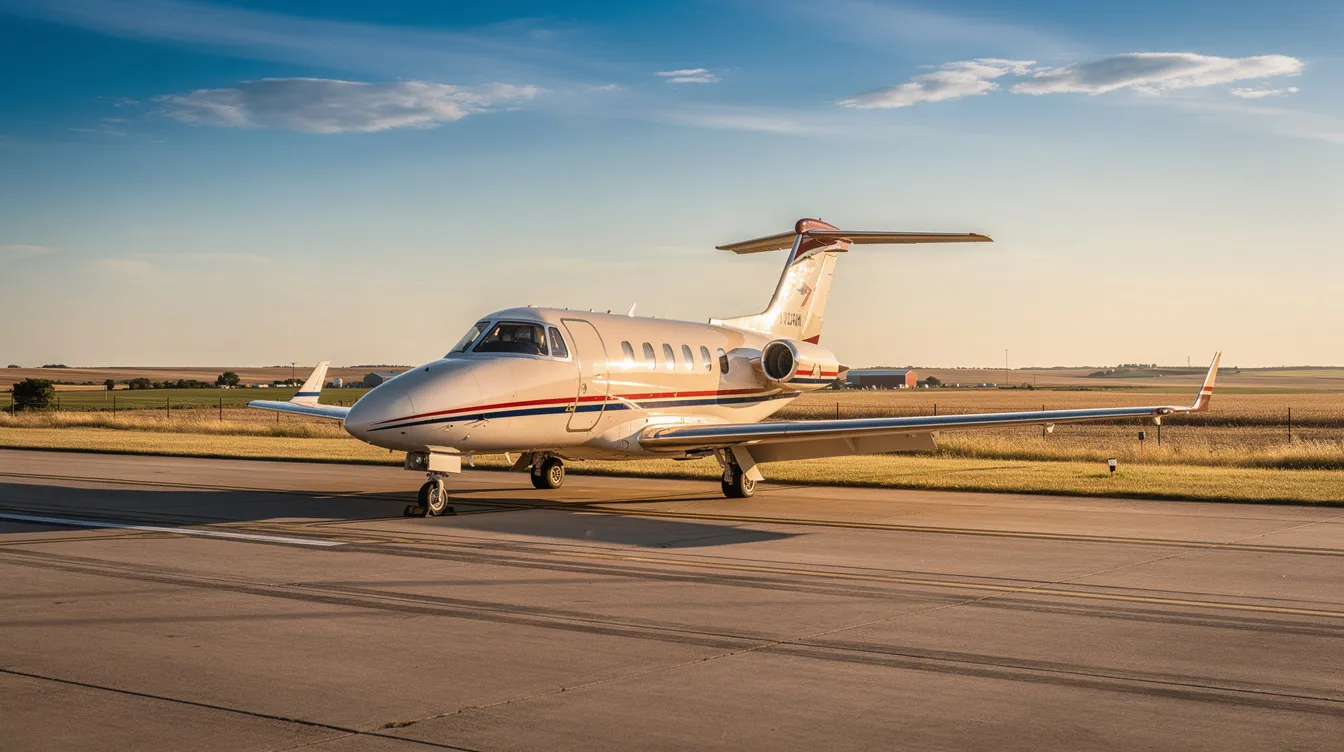
Private aviation is not merely a luxury—it is a strategic advantage. Few names illustrate that truth better than Learjet, the manufacturer whose story reads like a table of contents of modern business jet history itself.
Overview of Learjet and Its Role in the Business Jet Industry
“Learjet Wikipedia” most commonly refers to the Wikipedia page and related reference content on Learjet—the American business jet manufacturer whose history, aircraft models, and industry legacy span from the early 1960s to the end of production in 2022. Learjet is an iconic brand of American-designed multi-role business jets that reshaped executive travel from Wichita, Kansas, onward; later acquired by Canadian aerospace giant Bombardier, the company produced high-performance aircraft for six decades. The name “Lear Jet” became a generic term for private and corporate luxury jets—much the way “Xerox” stands for photocopying—and the Learjet brand still signals wealth and luxury in popular culture.
For frequent business travelers, high-net-worth leisure flyers, aviation enthusiasts, and professionals comparing private jet access, Learjet is more than aviation history. Its aircraft established the template for light and midsize business jets: efficient point-to-point travel, access to short runways and secondary airports, faster regional trips than commercial first class, and complete privacy. This article examines Learjet’s history, aircraft families and specifications, design innovations, corporate transitions, operating roles, and the brand’s significance in business aviation after production ended. At BlackJet, many aircraft accessible through our jet card and charter programs sit in the same categories Learjet helped define, aligning closely with the broader types of private jets for every traveler, so understanding that lineage helps you better assess modern private travel options and what you are actually buying when you invest in private jet access.
Founding of Learjet (Lear Jet) and Early Development
Learjet was founded by William P. Lear in the early 1960s. Already celebrated for inventions in avionics and audio technology, Lear saw a gap: no small, fast business jet existed for corporate travelers who needed speed without the overhead of airline-sized equipment.
Learjet was influenced by the Swiss military aircraft design FFA P-16, particularly its wing and structural concepts. Lear adapted those fighter-derived principles into a civilian airframe. The company relocated to Wichita, Kansas, in 1962 to leverage local aviation expertise—the city's skilled aerospace workforce and municipal industrial revenue bond support made it the primary stage for production.
The first Learjet model, the Model 23, flew in 1963. Specifically, the Learjet 23 made its maiden flight on October 7, 1963, with FAA certification following in July 1964. Learjets were particularly known for their impressive climb rates and jet-like performance, reaching altitudes above 40,000 feet and cruise speeds exceeding 500 mph-even in that inaugural design. These early attributes set the standard for every business jet that followed.
Corporate Evolution: From Gates to Bombardier
Learjet's ownership changed several times, each chapter expanding its reach and product line. In April 1967, Bill Lear sold roughly 60 percent of his stake to Gates Rubber Company for approximately $27 million, forming Gates Learjet. A 1969 merger with Gates Aviation created Gates Learjet Corporation, allowing the company to scale production and marketing during the 1970s business jet boom.
Key milestones from that era tell the story of rapid growth:
1974: The Learjet fleet surpassed one million flight hours worldwide.
1975: The 500th aircraft rolled off the line.
Late 1976: Wichita production reached roughly ten aircraft per month.
After a 1987 acquisition by Integrated Acquisition and a 1988 name change back to Learjet Corporation, the company consolidated production in Wichita with around 1,250 employees. The defining date came in 1990 when Bombardier Aerospace acquired Learjet. Bombardier Learjet became part of a family alongside Challenger and Global lines, with continued investment in modern avionics, cabin upgrades, and global marketing—retaining the performance-focused identity that business aviation clients valued.
Learjet Aircraft Families and Notable Models
Learjet 23–36: The Early Years
Multiple generations of Learjet aircraft evolved from compact, hot-rod light jets into sophisticated platforms with greater range and cabin capacity. Here is a concise overview using both company designations and general characteristics:
Learjet Model | First Flight | Number Built (approx.) | Passengers / Seats | Range (NM) | Key Distinction |
|---|
23 | Oct 7, 1963 | ~101 | 4–6 | ~1,500–1,700 | Original business jet; defined the class |
24 | Jan 24, 1966 | ~259 | 6 | Extended vs. 23 | First business jet certified under demanding U.S. transport-category requirements |
25 | Aug 12, 1966 | ~369 | Up to 8 | Increased | Stretched fuselage; military designations applied by several air forces |
35/36 | 1973 | 600+ | 6–8 | ~2,000+ | Most delivered model in the company's history; powered by two Garrett TFE731 turbofans using less fuel |
Learjet 45 and 45XR: Modernization
| 45 | Oct 7, 1995 | 500+ delivered by Nov 2010 | 6–9 | 1,971 | First clean-sheet design since 1963; flat-floor cabin for headroom | | 60 | Oct 10, 1990 | ~430 | 6–9 | ~2,400 | Mid-size with improved cabin volume; competitor to other aircraft in its weight class |
The Learjet 45 was announced in September 1992 and received FAA certification in September 1997. With a maximum cruise speed of Mach 0.81 and a range of 1,971 nautical miles, it bridged the gap between smaller Learjets and larger mid-cabin aircraft. The Learjet 45XR can take off from 4,000-foot runways, with a max takeoff weight of 20,000 pounds—performance that grants access to hundreds of regional airports. Meanwhile, the Learjet Model 70 was dropped from the line in 2015, leaving the Learjet 75 as the final production variant.
Learjet 75: The Final Evolution
| 75 | First delivered 2012 | 100+ | Six seats typical | 2,040 | Canted winglets; state-of-the-art carbon brake system; Garmin G5000 avionics |
The introduction of winglets with the Learjet 28's first flight in 1977 was a watershed moment—the first winglets on any production aircraft-improving cruise efficiency and range by roughly 6.5 percent and influencing designs across the world of aviation.
Design, Technology, Max Takeoff Weight, and Performance Innovations
Aerodynamics and Structure
Learjets have been known for high performance and distinctive styling, combining fighter-like capability with business jet utility. For many buyers, understanding where Learjet-class aircraft sit relative to the cheapest private aircraft and budget-friendly options is key to matching performance with budget. Learjet's designs have influenced general aviation safety standards and winglet technology across the industry.
The Learjet 75 features new canted winglets for improved aerodynamics, reducing induced drag and improving fuel efficiency. High wing loading and swept-wing design deliver stable, high-speed cruise even at the aircraft's service ceiling of 51,000 feet-allowing corporate travelers to fly above adverse weather and commercial air traffic.
Cabin Evolution
Early cabins were compact. The Learjet 45 introduced a flat-floor cabin design for headroom, with club seating and foldout tables suited to in-flight work. The Learjet 75 refined this further with an advanced galley, optional microwave, and pocket door for noise and privacy control—a configuration often arranged around six seats.
Performance Data
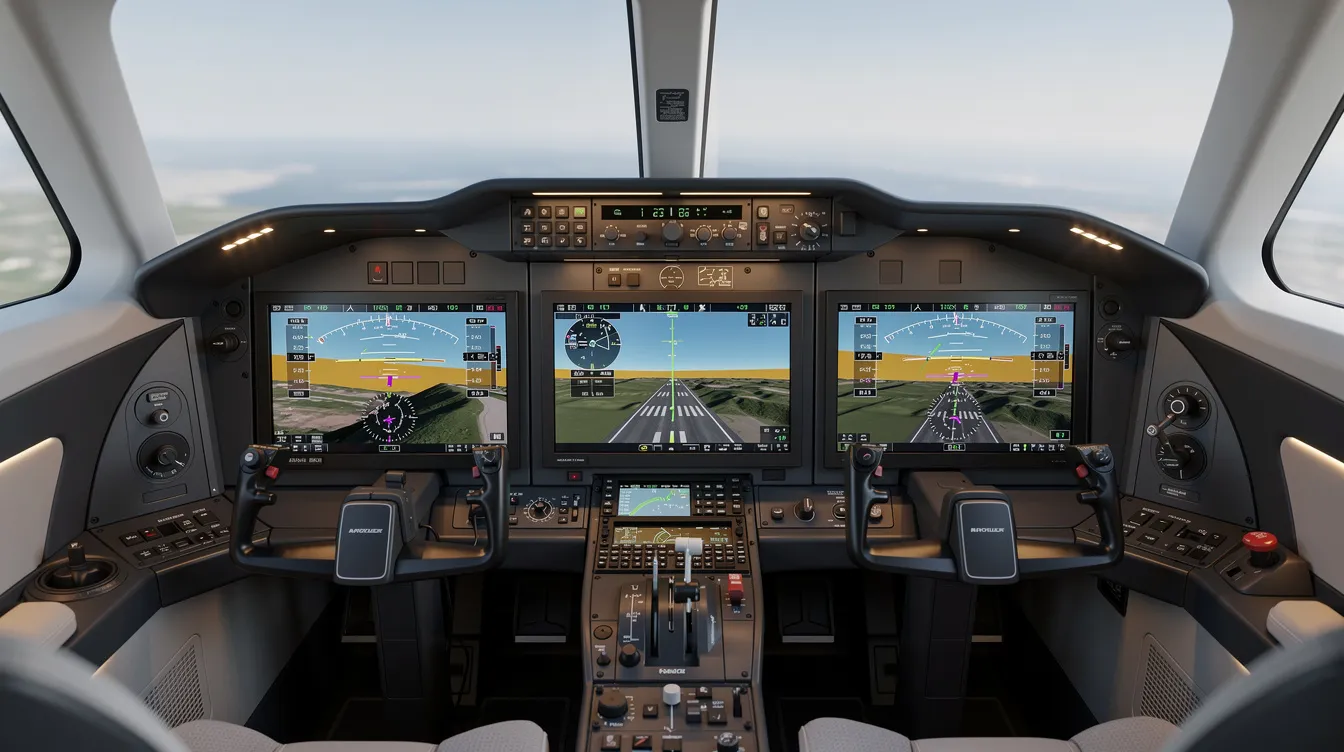
The Learjet 75 cruises at Mach 0.81, or 860 km h, with a range of 2,040 nautical miles-supporting nonstop routes like New York to Dallas or Chicago to Los Angeles, routes often used as benchmarks when analyzing how much it costs to rent a private jet. It can take off from a 4,440-foot runway and includes a state-of-the-art carbon brake system for shorter landing distances, even in snow or wet conditions. The Learjet 70 and 75 featured modern avionics and efficient engine technologies, including the Garmin G5000 flight deck with three 14-inch displays, Synthetic Vision, and weather/terrain awareness—each powered by two Honeywell TFE731-40BR engines producing reliable kN thrust for consistent climb performance. These systems reduce pilot workload, a priority for safety-conscious jet card members.
Key Programs, Cancellations, and End of Production
Learjet 85 and End of Production
Learjet's history includes ambitious programs—some triumphant, others ultimately canceled due to shifting market conditions.
The Learjet 85, launched in 2007, was intended as the first FAR Part 25 all-composite Learjet. It targeted larger midsize competition with advanced wing area optimization and efficiency gains. But cost overruns and Bombardier's strategic pivot toward Challenger and Global families led to the program's cancellation in 2015.
In February 2021, Bombardier announced the end of new Learjet production entirely. The final Learjet 75 was delivered in March 2022. Over 3,000 Learjets were built over six decades before production ended—a number built that few competitor programs in the light jet charter segment can match, even among the largest private jets for sale and charter.
Bombardier committed to ongoing maintenance, parts, and upgrade programs for the existing fleet. Initiatives like the Learjet RACER re-manufacturing concept extend aircraft life for current owners. Safety and regulatory enhancements—such as inspection directives following the 2008 Learjet 60 incident near Columbia, Missouri—have continually improved ground handling procedures and maintenance standards fleet-wide.
Learjet in Service: Business, Military, and Charter Use
Learjet in Civilian and Special Mission Roles
Learjet aircraft have served corporations, private owners, militaries, and government agencies across the world, becoming a reference point in many private jet price lists and cost comparisons. The Learjet family has been utilized for medical evacuations and special mission roles, demonstrating the adaptability of the basic airframe for surveillance, calibration, and liaison duties.
In civilian operations, Learjet-class jets remain a primary choice for 2–4 hour missions between business hubs, balancing cruise speed, operating cost, and access to smaller airports, whether on transcontinental routes or in regional markets like private jet charter services in Lahore. Travelers evaluating these options often start by understanding jet card cost and private jet membership pricing. As of August 2026, a significant portion of the 2,000-plus active Learjets continue to operate in charter and jet card fleets, often embedded within the best jet card programs for frequent flyers.
Consider this scenario: a BlackJet member based in New York needs a same-day round trip to the Midwest for a board meeting, comparing options that range from standard charter quotes—guided by resources on how much to rent a private jet—to the cheapest private jet options for entry-level travelers. Using a light jet comparable to a Learjet 75, the member departs from a secondary airport minutes from the office, arrives in under two hours, conducts the meeting, and returns by evening—saving four to five hours versus commercial connections and maintaining complete privacy at every stage, with emerging private plane rideshare options adding even more flexibility for certain route patterns. The empty weight advantage of light jets also means lower operating costs per hour, making jet card programs with 25-hour jet card features and costs or 50-hour allocations especially practical.
Frequently Asked Questions (FAQs) about Learjet
What makes Learjet aircraft iconic in business aviation?
Learjet aircraft are iconic for their high performance, distinctive styling, and pioneering role in defining the light and midsize business jet categories. Their fast climb rates, ability to fly above adverse weather, and access to short runways set industry standards.
When was the first Learjet model introduced?
The first Learjet model, the Model 23, made its maiden flight on October 7, 1963, and received FAA certification in July 1964.
What are the key differences between the Learjet 45 and Learjet 75?
The Learjet 45 was the first clean-sheet design since 1963, featuring a flat-floor cabin and cruising at Mach 0.81 with a range of 1,971 nautical miles. The Learjet 75, introduced in 2012, offers modern avionics, canted winglets for improved aerodynamics, a state-of-the-art carbon brake system, and a slightly longer range of 2,040 nautical miles.
Can Learjet aircraft operate from short runways?
Yes, models like the Learjet 45XR can take off from runways as short as 4,000 feet, while the Learjet 75 requires about 4,440 feet, allowing access to many regional airports.
What happened to the Learjet 85 program?
The Learjet 85 was an ambitious composite aircraft program launched in 2007 but was canceled in 2015 due to cost overruns and Bombardier's strategic focus shift toward their Challenger and Global jet families.
Is Learjet production still ongoing?
No, Bombardier announced the end of new Learjet production in February 2021, with the final Learjet 75 delivered in March 2022. However, maintenance and upgrade programs continue for existing aircraft.
How does Learjet compare to commercial first-class travel?
Learjet offers faster regional and transcontinental travel with full privacy, access to secondary airports, and the ability to fly on your own schedule, saving significant time compared to commercial first-class flights.
Are Learjet flights safe?
Learjet aircraft meet rigorous FAA certification standards, including FAR Part 25 for newer models, and incorporate advanced avionics and safety features. Ongoing maintenance and regulatory enhancements ensure high safety standards.
How can I access Learjet aircraft for travel?
Learjet aircraft are available through private jet charter services and jet card programs like BlackJet, which offer prepaid access to a fleet including Learjet-class jets with carbon-neutral flights and 24/7 support.
What is the typical passenger capacity of Learjet aircraft?
Learjet cabins typically accommodate between 4 and 9 passengers, depending on the model and configuration, with seating arrangements optimized for comfort and productivity.
Legacy, Category Structure, and External Links on Wikipedia
Learjet helped define the modern business jet category. Its influence extends from winglet aerodynamics to the very expectation that executives can travel privately, efficiently, and on their own schedule.
On Wikipedia, the Learjet Wikipedia page was last edited on 22 September 2024, and the platform organizes content with a main "Learjet" article for general information and company history. A "Category:Learjet aircraft" groups pages by specific model; toggle the table of contents to navigate between the Learjet 23, 35, 45, 60, or 75. Subcategories cover design, operators, and hidden categories for maintenance. Wikimedia Commons has media related to Learjet aircraft, offering photos of cockpits, cabins, and airframes. External links on those pages typically point to manufacturer sites, aviation international news sources, and type clubs.
While Wikipedia provides a neutral overview, operators like BlackJet translate those technical capabilities—speed, range, performance—into curated, real-world travel solutions. If the Learjet story has sharpened your understanding of what a business jet can deliver, explore how BlackJet's jet card programs offer that same standard of performance through a modern, carbon-neutral, and safety-certified service model.
Discover how BlackJet can reshape your travel.


 Sign up with google
 Sign up with Apple