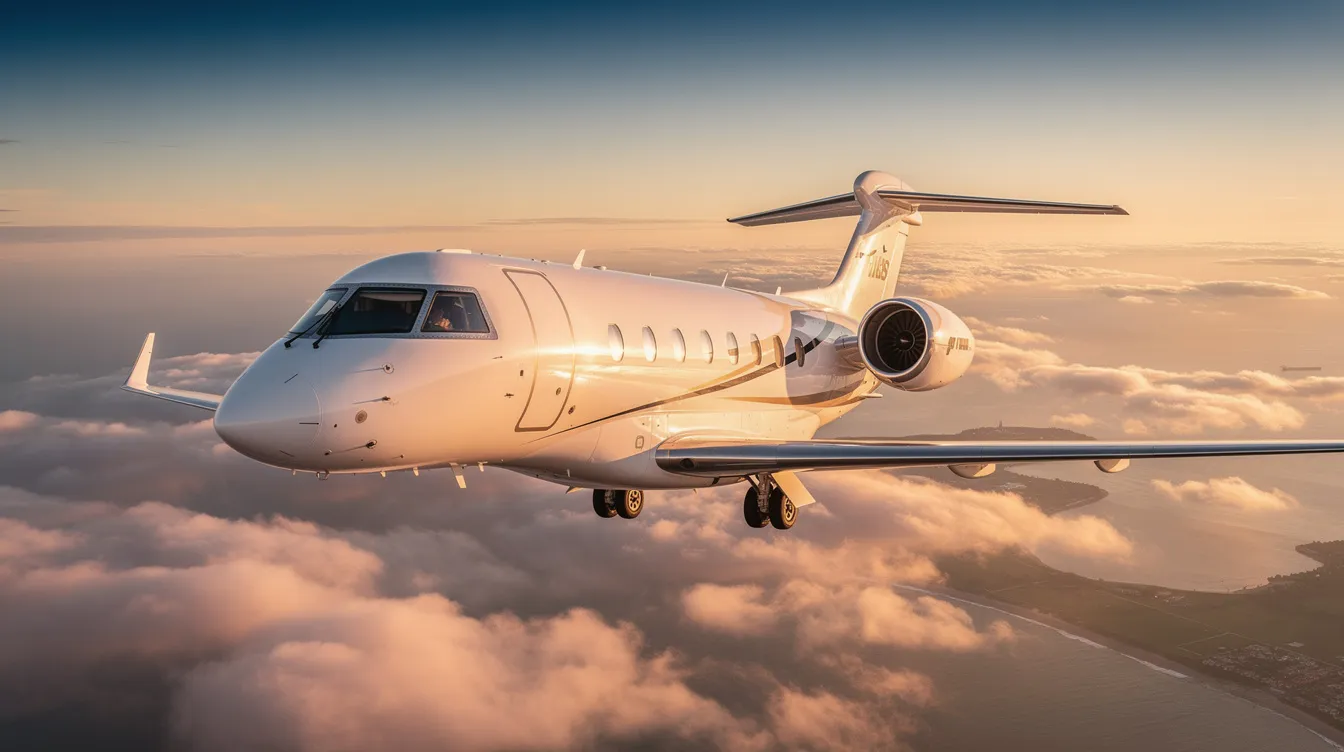
Bombardier Aviation, a global leader in business aircraft manufacturing, has a rich history marked by its evolution through the acquisition of various aerospace companies and a strong focus on aviation technology. With a diverse product range that includes the renowned Learjet, Challenger, and Global series, Bombardier Aviation is recognized for its innovation and industry status as a premier provider of business jets worldwide.
The Learjet 75 is a high-performance light-to-midsize business jet model within the Learjet family, produced by Bombardier Aviation from 2013 to 2022. This model represents Bombardier’s modernized evolution of the Learjet 45XR, positioned firmly in the super-light to small midsize business jet category. For travelers who demand speed, efficiency, and a true 8-seat cabin without escalating into midsize pricing tiers, the Learjet 75 delivers a compelling package that continues to shape private aviation standards.
Bombardier launched the Learjet 75 program in the early 2010s, achieving FAA certification in November 2013 and EASA certification in September 2014. The Learjet 75 and its Liberty variant are two key variants of this model, each offering unique features for different market needs. While production concluded in early 2022—marking the end of new Learjet manufacturing—the Learjet 75 and its Liberty variant remain highly sought-after in private jet charter and jet card fleets, including networks partnered with BlackJet.
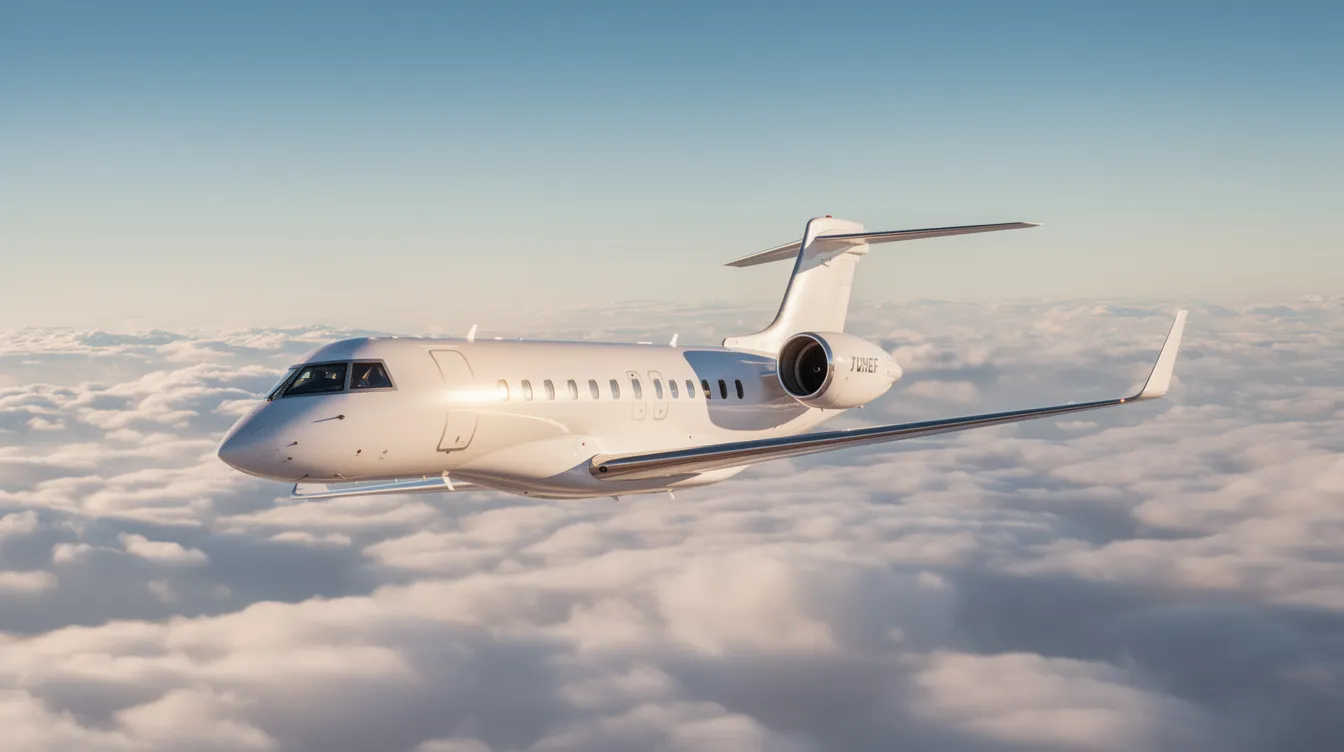
Introduction to the Learjet 75
The Learjet 75 model serves business executives and high-end leisure travelers seeking high cruise speed capabilities up to Mach 0.79, a maximum range of around 2,000 nautical miles, and operational access to shorter runways. This combination distinguishes the model in a private aviation landscape where time-sensitive missions demand performance over pure cabin volume.
Despite the cessation of production, the Learjet 75 model persists in popularity within private jet charter markets and jet card fleets due to high dispatch reliability, consistent cabin standards, and stabilized pre-owned values post-2022. As of May 2022, approximately 32% of Learjet 75 aircraft were purchased pre-owned, with market prices ranging from $5.5 million to $6.5 million, indicating a significant market for used models among qualified buyers and operators.
The Learjet 75 model positions itself as a bridge between light jets and midsize options, appealing to operators who value Learjet’s heritage of responsive handling and efficiency on sub-2,000 nm regional and transcontinental trips, including those comparing OEM-branded jet cards such as NetJets jet card programs with open-network solutions.
Learjet 75 Development & Program History
The Bombardier Learjet 75 was derived directly from the Learjet 45XR around 2012-2013. During development, two of the planned five flight test aircraft were already flown by a certain date, demonstrating Bombardier's organized approach to certification. The development introduced several key upgrades: Honeywell TFE731-40BR upgraded engines for enhanced thrust and better fuel efficiency, the Garmin G5000 avionics suite for modern flight deck integration with touchscreen controls that enhance pilot interface and operational efficiency, redesigned new canted winglets borrowed from Bombardier Global 7500/8000 technology that reduce drag and improve fuel efficiency, and an upgraded interior featuring a flat-floor design.
Design goals centered on improving fuel efficiency by approximately 4% via the winglets, boosting high-speed cruise to Mach 0.79, extending range to 2,000-2,080 nm with four passengers under NBAA IFR reserves, and enhancing cabin quietness without significantly raising operating costs.
The program timeline moved efficiently: the first flight occurred in 2012, and the Learjet 75 received its FAA type certificate on November 14, 2013, with initial customer deliveries beginning shortly thereafter. By the end of production in 2022, a total of 137 units had been built. Bombardier announced surpassing 100 deliveries by mid-2017, with the fleet size reaching 142 aircraft by the end of 2021. Bombardier launched the Learjet 75 Liberty variant in June 2019, a lower-cost variant featuring reduced passenger capacity and fewer standard amenities to achieve a price point under $10 million. The first delivery of the Learjet 75 Liberty occurred in October 2020, marking a significant milestone for the family of Learjet 75 variants.
In 2021, Bombardier announced the decision to discontinue Learjet production to refocus on higher-volume Challenger and Global families, aircraft that also feature prominently in competitors’ Flexjet jet card offerings. The final aircraft was delivered in January 2022. However, the company committed to ongoing OEM support, including parts availability and maintenance programs—stabilizing resale values rather than crashing them.
Design, Airframe & Wing Technology
The Learjet 75 employs a conventional aluminum low-wing, T-tail airframe evolved from its predecessor, the 45XR. Structural refinements accommodate higher gross weights—max takeoff weight reaches 21,500 lb (9,752 kg)—while aerodynamic tweaks optimize performance.
The standout design feature is the canted winglets angled at approximately 45 degrees, inspired by Bombardier Global 7500/8000 designs. These winglets reduce induced drag by optimizing vortex flow, improve climb rates, enhance cruise efficiency by 4%, and contribute to achieving the 51,000 ft service ceiling and an extended range of approximately 2,026 nautical miles with four passengers.
Key external dimensions include:
Dimension | Measurement |
|---|
Overall Length | 58 ft 0 in (17.7 m) |
Wingspan | 50 ft 10-11 in (15.5 m) |
Height | 14 ft 1 in (4.3 m) |
Wing Area | 311.6 sq ft |
The wing planform features a swept leading edge with high aspect ratio, paired with trailing-edge flaps enabling impressive short-field capability. Takeoff distance measures 4,440 ft at sea level ISA at max takeoff weight, while landing distance reaches just 2,338-2,350 ft at maximum landing weight (19,200 lb). This performance opens access to thousands of smaller airports that runway-limited peers cannot reach, including busy regional markets where private jet charters in Karachi and similar cities rely on efficient, high-performance aircraft.
Compared to competitors like the Citation XLS+ (wingspan 60 ft 9 in, length 60 ft 9 in) or Phenom 300 (wingspan 52 ft 2 in, length 53 ft 5 in), the Learjet 75 remains compact while delivering superior high-altitude performance for routing above convective weather and RVSM airspace traffic.
Engines & Performance
The Learjet 75 features upgraded Honeywell TFE731-40BR engines, each providing 3,850 pounds of thrust. This upgrade delivers improved fuel efficiency and performance compared to its predecessor, the Learjet 45, with FADEC control for optimized power management. The engines, part of the proven TFE731 family with over 13,000 units delivered, boast dispatch reliability exceeding 99.9%.
Core performance metrics include:
High speed cruise: Mach 0.79 / 464 ktas
Typical cruise speed: Mach 0.76 / 451-465 ktas
Long-range cruise: 437 ktas
Maximum range: 2,026-2,080 nm with 4 passengers and NBAA IFR reserves
Service ceiling: 51,000 ft
Fuel burn: approximately 1,000 pounds per hour at FL410 and Mach .78 (about 199 gallons per hour)
These numbers translate to real-world capability for nonstops such as New York (Teterboro) to Dallas (Love Field) at approximately 1,450 nm, Los Angeles-Burbank to Chicago Midway at roughly 1,740 nm, London Luton to Athens at about 1,570 nm, or Dubai to Mumbai covering 970 nm in favorable conditions.
The operational runway performance—4,440 ft takeoff distance and 2,350 ft landing distance—opens access to 80% more airports than runway-limited peers, significantly reducing ground transport times and improving overall door-to-door efficiency.
Cabin Layout, Comfort & Passenger Experience
The Learjet 75’s flat-floor cabin measures approximately 19 ft 8-10 in (5.38-6.05 m) in length, 5 ft 1 in (1.55 m) wide, and 4 ft 10-11 in (1.5 m) high, yielding 415 cubic feet of volume. The baggage capacity includes a 50 cubic feet (1.4 m3) external heated baggage hold and an additional 15 cubic feet (0.4 m3) of internal storage accessible during flight, offering ample space for luggage and personal items.
The typical configuration accommodates 8-9 passengers (including an optional belted lavatory seat) plus 2 crew. The standard double-club executive layout features facing seats offering 6-7 ft of legroom with swiveling and tracking mechanisms, plus foldout tables for productivity or dining. The forward cabin area provides easy galley access for crew service.
A unique privacy pocket door separates the forward galley from the seating area, significantly reducing noise and increasing privacy for passengers—a rare feature in this class that enhances the onboard experience.
Cabin amenities include:
Lufthansa Technik cabin management system with touchscreen controls
LED lighting with customizable settings
Large oval windows (8 per side)
Pop-up seat monitors with moving maps and in-flight entertainment
High-speed Wi-Fi (when equipped)
Quiet cabin maintaining altitude below 8,000 ft at FL450-510
Forward galley with microwave and dual ice drawers
Enclosed lavatory
65 cu ft total baggage compartment (50 cu ft external heated, 15 cu ft internal accessible in-flight)
This setup suits small executive teams on multi-stop roadshows, families on leisure trips needing six seats or more, and mixed business-and-leisure itineraries where passengers can accommodate work and relaxation in a single journey.
Learjet 75 Liberty Variant
Bombardier launched the Learjet 75 Liberty model in June 2019, with first deliveries in 2020. The Learjet 75 Liberty is a lower-cost variant of the Learjet 75, designed to achieve a price point under $10 million (list price $9.9 million USD versus approximately $13.8 million for the standard 75) by featuring a reduced passenger capacity and fewer standard amenities.
The key cabin change involves reducing forward seating from 8 to 6-7 passengers by creating a private suite configuration with two facing seats, two fold-down ottomans, and sidewall tables for extended legroom and workspace. Optional cost-saving deletions include omitting the standard APU and lavatory sink to cut weight, acquisition cost, and certain operating expenses.
The Liberty retains core performance: 2,080 nm range, 464 ktas max cruise, 21,500 lb max takeoff weight, 51,000 ft ceiling, and the same Garmin G5000 Vision cockpit. Maximum payload reaches 2,910 lb (1,320 kg), certified under FAR Part 25.
Operators value the Liberty for reduced hourly costs without sacrificing altitude capability or short-field access—ideal for 4-6 passenger missions where suite privacy enhances business utility while consuming less fuel.
Avionics & Flight Deck: Garmin G5000 Vision Cockpit
The flight deck centers on Bombardier’s Vision system, integrating the Garmin G5000 avionics suite with touchscreen controls for navigation, communication, and flight management systems. Pilots work with three 14-inch high-resolution landscape displays, dual touchscreen controllers, and synthetic vision technology providing 3D terrain and weather awareness.
Key capabilities include intuitive graphical flight planning, advanced flight management system integration, WAAS/LPV approaches offering precision to 200 ft, ADS-B Out compliance, and options for TCAS II, weather radar, and runway overrun awareness. The improved avionics suite enables single-point programmable navigation, auto-throttles, and coupled VNAV for optimized profiles.
For passengers, this translates to smoother rides with fewer deviations, on-time performance in instrument meteorological conditions, and access to weather-limited airports—critical for BlackJet charters where minimal delays preserve productivity.
Technical Specifications & Dimensions
As a twin-engine business jet in the super-light/small midsize category, the Learjet 75 aircraft accommodates 8-9 passengers with 2 crew in a single-aisle flat-floor cabin.
Category | Specification |
|---|
Length | 58 ft 0 in (17.7 m) |
Wingspan | 50 ft 10-11 in (15.5 m) |
Height | 14 ft 1-13 in (4.3 m) |
Cabin Length | 19 ft 8-10 in (6.0 m) |
Cabin Width | 5 ft 1 in (1.55 m) |
Cabin Height | 4 ft 10-11 in (1.5 m) |
Max Takeoff Weight | 21,500 lb (9,752 kg) |
Ramp Weight | 21,750 lb (9,866 kg) |
Max Landing Weight | 19,200 lb (8,709 kg) |
Empty Weight | 13,890-14,050 lb |
Useful Load | ~7,450-7,610 lb |
Range | 1,850-2,080 nm |
Cruise Speed | 451-465 ktas (Mach 0.79) |
Ceiling | 51,000 ft |
Takeoff Distance | 4,440 ft |
Landing Distance | 2,338 ft |
Operating Economics & Market Values
Annual fixed costs for Learjet 75 operation typically exceed $500,000, including crew salaries (approximately $300,000 for two captains or captain/FO), hangar fees ($50,000-100,000), insurance ($50,000-80,000), and training ($50,000).
Variable costs run approximately $3,200 per flight hour, including an average maintenance cost of about $1,190 per flight hour based on a five-year average. The total variable costs for operating a Learjet 75, based on 300 flight hours per year, amount to approximately $962,916 annually.
Despite higher annual fixed costs, the Learjet 75 has a lower operating cost per mile compared to competitors like the Citation XLS+ on a typical 1,000 nm mission, making it a cost-effective choice for operators prioritizing speed and efficiency.
Pre-owned market values for 2013-2021 production aircraft range from $5.5 million to $6.5 million USD, with values stabilizing after production ended—dynamics that mirror broader premium private jets for sale in mature markets.
Jet cards like BlackJet’s offer 25-hour jet card and 25-50 hour blocks with transparent pricing—approximately $100,000 deposit for a 25-hour card at roughly $6,000/hour all-in—avoiding capital outlay, depreciation risk, and maintenance surprises that come with ownership.
Learjet 75 in Charter, Jet Cards & Business Use
Common charter use cases include executive shuttles between hubs (New York-Chicago at 740 nm covering 2 hours, London-Frankfurt at 400 nm in 1 hour) and multi-leg roadshows spanning multiple cities in a single day, whether booking the whole aircraft or simply buying a seat on a private jet as an entry-level option for private travel.

The Learjet 75 fits well in jet card programs due to its predictable operating profile, efficient fuel burn for 1,500-2,000 nm trips, 99%+ dispatch reliability, and consistent 8-seat club configuration, particularly for members analyzing overall jet card cost and value. BlackJet integrates this class in super-light and midsize offerings with 25-50 hour cards, 10-90 minute booking notice, and approximately $5,500-7,000/hour loaded rates including fuel, maintenance, and crew—structure that mirrors broader jet card pricing models.
Business benefits include productivity via work tables and power outlets, rested arrivals thanks to low cabin altitude, FBO direct-to-tarmac access avoiding commercial terminal hassles, and same-day returns versus commercial overnights.
Comparison with Similar Private Jets
The Learjet 75 competes directly with several aircraft in the super-light and small midsize segment:
Aircraft | Max Cruise | Range | Takeoff Dist. | Cabin Width |
|---|
Learjet 75 | 464 ktas | 2,080 nm | 4,440 ft | 5 ft 1 in |
Phenom 300E | 465 ktas | 2,010 nm | 4,200 ft | 5 ft 7 in |
Citation XLS+ | 441 ktas | 2,120 nm | 3,232 ft | 5 ft 9 in |
Citation CJ4 | 451 ktas | 2,165 nm | 3,410 ft | 4 ft 10 in |
The Learjet excels in cruise speed and ceiling (51,000 ft versus 45,000 ft for some competitors), offering faster trip times on sub-2,000 nm missions—potentially 30 minutes faster on routes like New York to Dallas compared to slower alternatives.
Trade-offs include a slightly narrower cabin cross-section than some midsize jets, though the aircraft remains lighter and faster for typical regional missions—important context for travelers weighing Learjet performance against more budget-friendly private aircraft options. Charter clients and jet card members typically think in terms of mission profile—range, number of passengers, luggage requirements, runway length—rather than brand alone. BlackJet advisors match travelers with aircraft like the Learjet 75 when the profile fits, or larger solutions such as charter jets for around 100 passengers when group size demands a different class of aircraft.
Sustainability, Safety & Regulatory Considerations
The Learjet 75 holds FAA and EASA certification under Part 25 standards, with Part 135 charter operations mandating 1,500-hour PIC time and recurrent training. Maintenance follows Bombardier and Lufthansa Technik programs with A/B/C/D checks and engine overhauls at 5,000 hours.
Top-tier fleets hold ARGUS and Wyvern Platinum ratings, representing the top 10% of operators. BlackJet partners exclusively with operators meeting these standards, ensuring aircraft like the Learjet 75 operate under rigorous safety oversight.
Fuel burn of approximately 214 GPH produces roughly 1.5-2 tons of CO2 per hour. BlackJet offers carbon-offset and carbon-neutral flight options through sustainable aviation fuel partnerships, helping members reduce their environmental footprint while enjoying Learjet performance.
Should You Choose a Learjet 75 for Your Next Private Flight?
The Learjet 75 excels for travelers prioritizing speed (460+ ktas), range around 2,000 nm, flat-floor cabin comfort for up to 8 passengers, 51,000 ft operating ceiling, and proven dispatch reliability.
Ideal user profiles include regional executives shuttling between hubs, entrepreneurs visiting multiple sites in a single day, and families needing a nonstop vacation flight within 3-4 hours of flying time, especially those comparing Learjet 75 access with the broader cost to charter a small plane. The aircraft shines on time-sensitive missions where every minute counts, including regional routes similar to those served by private jet charters in Lahore and other major business hubs.
Consider alternatives when your mission requires more than 2,000 nm range (intercontinental flights), more than 8 passengers, or a stand-up cabin height over speed. For travelers focused primarily on budget, it may also be worth evaluating the cheapest private jet options. For these scenarios, midsize or super-midsize jets provide better fits, and very large groups may even require private jets configured for up to 50 passengers.
BlackJet advisors help members weigh these factors, recommending whether a Learjet 75, light jet, or larger aircraft best serves a specific itinerary and budget, and when a structured BlackJet 25+ Hour Jet Card delivers better long-term value than ad hoc charter.
How BlackJet Connects You with Aircraft Like the Learjet 75
BlackJet’s membership and jet card programs provide prepaid access to a curated network of private jets across multiple cabin classes, including super-light and midsize aircraft matching the Learjet 75’s performance profile, for flyers who might ultimately progress to a larger 100-hour jet card commitment.
The booking experience features 24/7 digital and mobile tools, real-time support, and the ability to request specific performance profiles—speed, range, cabin size—that often match the Learjet 75 or similar aircraft. Members benefit from predictable hourly rates, guaranteed availability within defined notice windows, and consolidated billing, avoiding ownership complexity, similar to the structure of a 50-hour jet card program.
BlackJet focuses exclusively on safety-certified operators and can arrange carbon-neutral flights, aligning Learjet 75 performance with modern expectations for both safety and sustainability while also advising clients comparing on-demand charter, private jet leasing arrangements, and jet card solutions.
Conclusion & Call to Action
The Learjet 75 combines Learjet’s legacy of speed and responsive handling with a modern Garmin G5000 cockpit, efficient Honeywell engines, and a comfortable business-ready cabin. Although new production ended in 2022, the aircraft remains a powerful tool for fast regional and transcontinental trips within approximately 2,000 nautical miles.
For travelers who value time savings, productivity aloft, and access to smaller airports that commercial aviation cannot reach, the Learjet 75 delivers measurable advantages over alternative travel options, particularly when compared with owning or operating the cheapest small planes for longer, business-critical missions.
If you’re considering flying on a Learjet 75—or any similar high-performance jet—explore BlackJet’s jet card and membership options as a smarter alternative to outright ownership or complex charter shopping. Visit BlackJet today for personalized quotes, membership details, and direct access to a private aviation specialist who can match you with the right aircraft for your next mission.


 Sign up with google
 Sign up with Apple