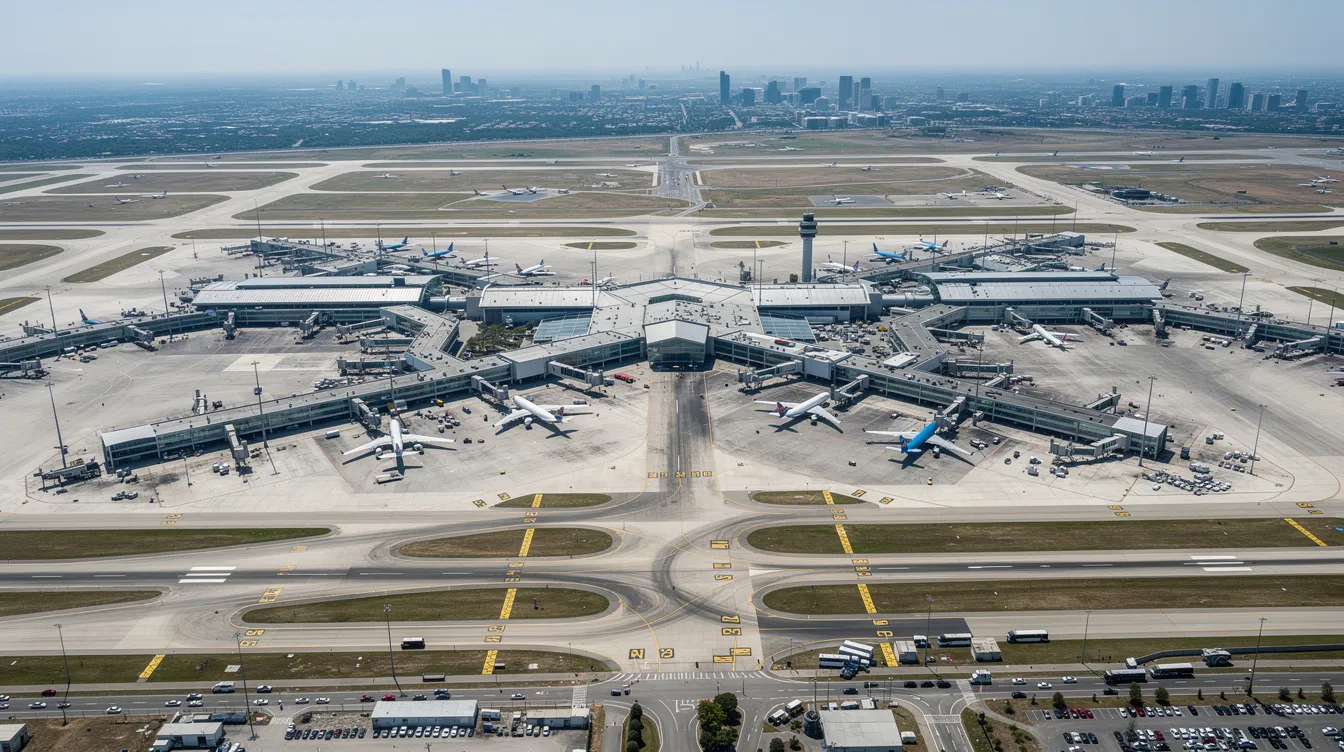
Right now, as you read this sentence, thousands of aircraft are crossing continents, climbing through cloud layers, and threading through some of the busiest corridors on the planet. The question of how many airplanes are flying right now is more than a curiosity-it reveals the extraordinary scale of modern aviation and, for those who fly private, underscores why the way you access the sky matters as much as the destination itself.
Below, we break down the real numbers, explain the tracking systems behind them, and show what all of this means for travelers who refuse to leave their time, safety, or comfort to chance.

How Many Planes Are in the Air Right Now?
At any given moment, there are typically between 11,000 and 20,000 airplanes in the sky worldwide. That range is wide for a reason: the number of airborne aircraft changes constantly as planes take off and land across every time zone. During a quiet early-morning window over the Atlantic, you might see closer to 8,000. During peak hours-when business centers in Europe and North America share daylight-over 20,000 to 24,000+ aircraft have been recorded in the sky simultaneously. One notable count from AirNav Radar logged 24,115 aircraft airborne at once during a peak global overlap.
Air traffic varies significantly with the time of day due to different time zones. Air traffic peaks during daytime hours at major global hubs-think London Heathrow, JFK, Dubai, and Singapore-and then eases as those regions move into night. Passengers in the air can number in the millions across global routes at any point during the busiest windows.
Daily, the picture is even more striking. Flight trackers monitor well over 150,000 total commercial flights daily, while typically 160,000 to 200,000 planes land each day across the world's airports. Summer months and major holidays see higher air traffic volumes: in 2024, July alone had 788,520 flights worldwide, making it one of the most congested months in aviation history.
What's Actually Up There?
Not every aircraft overhead is carrying vacationers to the coast. Here is how the airborne population breaks down:
Commercial airlines make up the lion's share. Commercial flights account for about two-thirds of airborne planes, and approximately half of the aircraft in the air at any time are commercial passenger jets serving scheduled routes.
Business and private aviation is a significant and growing segment. Business aviation is up 16 percent compared to pre-COVID levels, with VOLO Insights tracking roughly 8,500 business jet departures per day globally-about 76 percent of which originate in North America.
Cargo, general aviation, and military aircraft round out the balance. Military aircraft and state flights are often excluded from public tracking for security reasons, which means consumer maps always undercount the true total.
There are roughly 12,000 to 14,000 planes in the sky at a given moment during standard daytime hours across the globe.
Daily Traffic Volumes by Region
Region | Estimated Daily Flights | Business Jet Share |
|---|
North America | ~45,000+ | ~76% of global biz jet departures |
Europe | ~30,000+ | ~12% of global biz jet departures |
Asia-Pacific | ~25,000+ | Growing rapidly, particularly light jets |
Rest of World | ~10,000+ | ~12% combined |
The takeaway? The sky is shared by an enormous community of operators. For private travelers, flying amid many planes means that congestion, delays, and irregular operations on the commercial side become someone else's problem-if you have the right access.
How We Know: Real-Time Flight Tracking, ADS-B, and Historical Data
A generation ago, tracking aircraft meant watching a green sweep on a radar screen inside a control tower. Today, real-time tracking systems have moved from the domain of air traffic controllers to anyone with a browser or a smartphone-and the technology behind it is worth understanding, because it shapes what we see, what remains hidden, and how informed flyers can use this information to their advantage.
ADS-B: The Backbone of Modern Flight Tracking
ADS-B-Automatic Dependent Surveillance–Broadcast-is the technology that has transformed how we watch the sky. ADS-B technology relays aircraft location and speed data by continuously broadcasting GPS-derived position, altitude, heading, and identification from an onboard transponder. Tracking networks rely on transponder signals collected via ground receivers and satellites, which then feed that data into public and professional platforms.
Unlike older radar, ADS-B does not require a ground station to "ping" the aircraft. The airplane broadcasts on its own, making coverage far denser and more precise-particularly at cruising altitude over populated areas. Over remote oceanic and polar terrain, satellite-based ADS-B receivers have expanded coverage significantly, though gaps persist.
Consumer Platforms: Seeing the Sky in Real Time
Live flight-tracking sources report various numbers of aircraft airborne at any time, depending on their receiver networks and filtering:
Flightradar24 provides an interactive live map showing thousands of aircraft in real time. Flightradar24 and Plane Finder also offer flight tracking apps for mobile devices, making it easy to watch traffic from anywhere.
FlightAware tracks 12,000 to 14,000 planes daily, supported by 40,000 ADS-B flight feeders worldwide. FlightAware allows real-time flight tracking and custom alerts, and also offers real-time flight tracking via its app-useful for monitoring arrivals or planning ground transport.
ADS-B Exchange is a raw flight-tracking platform that relies on crowdsourced receivers, offering data without commercial filtering.
Airplanes. live provides unfiltered aircraft tracking data and shows unfiltered aircraft data in real time, making it particularly popular among aviation enthusiasts who want to see everything the network captures.
Resources for tracking airborne aircraft include live maps and numerical counts, giving any user with an online connection a window into global aviation activity.
What Trackers Don't Show
No public map captures the complete picture. Some flights are deliberately hidden:
Privacy programs: Private aircraft owners in the U.S. can request tail-number blocking through the FAA's LADD program, removing identifying data from public display.
Military and state flights: These are routinely excluded from civilian tracking for security reasons.
Coverage gaps: Small general aviation aircraft flying at low altitude or in remote areas may operate outside ADS-B coverage. Satellite-based systems are closing these gaps, but not every location is fully covered yet.
The Power of Historical Data
Beyond the live map, months and years of recorded ADS-B data enable analysts to track traffic trends, route popularity, and seasonal patterns. Historical data has documented the post-2020 surge in business jet movements across Europe and the U.S., the rise in aircraft in the sky during summer peaks, and the growing utilization of ultra-long-range cabins. This data informs everything from route planning to carbon measurement-a subject we return to below.
What This Means for Private Flyers and Jet Card Members
Knowing how many planes fill the sky at any moment is interesting. Knowing how to navigate that sky without friction is a strategic advantage.
For the high-net-worth traveler or executive managing a demanding schedule, the distinction between flying commercial and flying private sharpens when the airspace is at its busiest. Here is where that distinction creates real, measurable value.
Time Saved vs. Commercial
Consider a common scenario: a Friday afternoon flight from New York to Miami. Commercial airlines funnel thousands of passengers through JFK or LaGuardia, where ATC flow restrictions during peak Eastern U.S. hours routinely push delays past 30 minutes-sometimes much longer. Add security lines, boarding, and the taxi to the departure airport, and you are looking at a four-to-five-hour commitment for a flight that covers roughly 1,100 miles.
A private flight on the same route departs from a secondary airport like Teterboro or Westchester, bypasses the terminal entirely, and lands at locations commercial carriers do not serve-Opa-locka Executive or Fort Lauderdale Executive, for example. Door to door, the trip takes under three hours. The difference is not marginal; it is transformational, especially when repeated across dozens of trips per year.
For a deeper look at how these two worlds compare, see our guide to commercial flight vs. private flight.
How Jet Cards Differ from Ad-Hoc Charter
Ad-hoc charter means sourcing a new aircraft, operator, and price for every trip-a process that introduces variability in quality, cost, and availability. A Jet Card program converts that complexity into something predictable:
Prepaid hours (e.g., 25-hour or 50-hour programs) lock in access across multiple aircraft type categories-from light jets for short regional hops to midsize jets and large-cabin aircraft for longer routes.
Transparent pricing eliminates the negotiation cycle. You know the cost before you click to book.
24/7 digital booking tools and real-time support from BlackJet's operations team mean you can find availability, confirm, and manage trips from your phone-day or night.
To understand how Jet Cards work and why they differ from fractional ownership or traditional charter, read what a Jet Card is.
Safety When the Skies Are Crowded
With thousands of aircraft sharing the same air at any given moment, rigorous safety protocols are not a luxury-they are a prerequisite. Every BlackJet flight is operated by partners meeting top-tier safety standards, including FAA Part 135 certification and independent third-party audits. Professional dispatch teams monitor weather, ATC restrictions, and airspace density in real time, adjusting routes and altitude profiles to maintain the widest possible safety margin.
Higher traffic density makes disciplined safety management and professional dispatch even more critical. Learn more about the safety standards that govern private aviation and why they matter.
Sustainability: Carbon-Neutral by Design
More flights in the sky mean a greater environmental footprint-unless operators take deliberate action. BlackJet ensures every flight is carbon neutral by pairing precise fuel-burn data with verified carbon offset projects, at no extra cost to the traveler. This data-driven approach depends on accurate operational and historical flying data: route distance, aircraft size, cruising level, and actual consumption figures.
For travelers who care about the environmental impact of flying, this is not a marketing gesture-it is a measurable commitment. Explore how green private jet initiatives work and why sustainable aviation fuel is part of the conversation.
How BlackJet Uses Airspace Data to Your Advantage
BlackJet's operations team does not rely on the same public apps available to any user. Professional-grade systems aggregate ADS-B feeds, weather models, ATC flow data, and airport slot information to:
Plan flights around congestion windows and optimize cruising levels for comfort and efficiency.
Anticipate ATC flow constraints before they reach the traveler.
Reroute around storms or airspace restrictions with minimal disruption.
Coordinate ground transport so transitions between car and aircraft feel seamless.
This operational intelligence is what separates a premium Jet Card experience from simply hiring a plane.
How to See It Yourself: Using Real-Time Trackers (and When to Rely on BlackJet)
Curious how many airplanes are flying right now? You can see it for yourself in under a minute.
Step-by-Step: Watching the Sky Live
Open a flight-tracking website or application. Flightradar24, FlightAware, or Airplanes. All work in any modern browser-Chrome, Firefox, Safari, or Edge. No software needs to be installed.
Explore the map. The home screen typically displays a live world map with thousands of aircraft icons. Each icon represents a tracked flight; click or tap any one to see its date of departure, route, altitude, speed, and aircraft type.
Zoom into a region. Try the North Atlantic corridor, the Eastern U.S. seaboard, or European airspace between London and Paris. The density of traffic shown during peak windows-roughly 7–10 a.m. and 4–8 p.m. local time at major business centers-is striking.
Check the tab or sidebar for total counts. Many platforms display how many planes are currently tracked. Of course, these numbers change by the second.
Use mobile apps for on-the-go tracking. FlightAware and Flightradar24 both offer dedicated apps that provide the same live data on your phone, complete with push notifications and custom alerts.
What You Will and Won't See
Visible: Most commercial airlines, many business jets, cargo operators, and general aviation aircraft broadcasting ADS-B.
Not visible: Aircraft enrolled in privacy-blocking programs, military aircraft on sensitive missions, and some flights in areas with limited ground receiver or satellite coverage. The public number will always be slightly lower than reality.
Practical Tips for Private Flyers
Airport pickups: Use a tracker to watch your arriving guest's flight in real time and coordinate ground transport to their exact arrival time.
Delay anticipation: When weather systems or ATC restrictions create visible congestion patterns on the map-clusters of holding aircraft near a major hub, for example-you can anticipate delays before they are officially announced.
Route awareness: Understanding jet stream patterns and where planes fly helps you appreciate why certain routes take longer and how private operators optimize for wind and weather.
Public Tools vs. BlackJet's Operations Platform
Consumer trackers are powerful for general awareness, but they are not operational tools. BlackJet's team uses professional-grade systems that integrate ADS-B with proprietary data, real-time weather overlays, ATC slot availability, airport ground conditions, and fleet positioning to manage every stage of your flight. The result is not just visibility, but control: proactive rerouting, real-time communication, and seamless coordination from your front door to your destination.
Explore What the Busy Sky Means for You
The sky has never been more crowded-and that makes how you navigate it more important than ever. With BlackJet, the complexity of a world filled with many planes becomes your advantage: predictable, private, and carbon-neutral.
Elevate your travel-effortlessly. BlackJet's Jet Card programs offer prepaid access across multiple aircraft categories, rigorous safety certification, carbon-neutral performance, and the flexibility to fly on your terms. Whether your next trip is a regional hop or an international journey, discover how refined, data-driven private travel becomes your new standard.

Frequently Asked Questions
How many airplanes are flying right now?
Typically, between 11,000 and 20,000 airplanes are airborne worldwide at any given time. The number changes constantly with time zones, weather, and daily schedules; during peak periods, trackers have recorded more than 24,000 aircraft in the sky.
Which app can I use to see planes flying in real time?
Flightradar24, FlightAware, Plane Finder, and AirplanesTheyy offer live flight-tracking tools. Their maps may show different totals because their receiver coverage and filtering policies vary. Public trackers do not display every aircraft, including some military flights and aircraft protected by privacy programs.
How do flight-tracking websites locate aircraft?
Many tracking networks collect signals from aircraft transponders using ground-based receivers and satellites. ADS-B broadcasts information such as an aircraft’s location, altitude, and speed. A computer or mobile device can then display the data on a live map, although coverage gaps and privacy restrictions mean the picture is not complete.
Why does the number of aircraft in the sky increase at certain times?
Air traffic rises and falls with time zones, airline schedules, seasons, and travel demand. Daytime overlap across major hubs can create global peaks, while summer and holiday periods often bring higher flight volumes. The number also changes second by second as aircraft take off and land.
Does flying privately mean avoiding crowded airspace?
No. Private aircraft share controlled airspace with commercial, cargo, and other flights. Private travel can offer more flexibility in departure airports and scheduling, but all flights remain subject to air traffic control, weather, and safety requirements. BlackJet’s operations team monitors conditions and coordinates with certified operators to support safe, informed travel.
How does a Jet Card differ from chartering a private jet?
A Jet Card provides prepaid access to private flight hours across eligible aircraft categories, while ad-hoc charter involves arranging and pricing each trip separately. BlackJet Jet Card members can use digital booking tools and real-time support without owning an aircraft. Availability, terms, and aircraft options depend on the program.
Are BlackJet flights carbon neutral?
BlackJet states that its flights are carbon neutral through verified carbon-offset projects, with no extra cost to the traveler. Offsets address emissions through supported projects; they do not eliminate the fuel burned during a flight. Ask BlackJet for details about its current accounting and offset methodology.
What safety standards apply to private jet flights?
Private charter operations in the United States generally operate under FAA Part 135 rules. BlackJet works with operators that meet safety standards and undergo independent third-party audits. Travelers can ask about an operator’s certifications, aircraft, and safety oversight when booking.
Conclusion: Make the Busy Sky Work for You
The answer to “how many airplanes are flying right now?” is always changing: typically, 11,000 to 20,000 aircraft are airborne worldwide, with higher counts during peak periods. Live trackers offer a fascinating view of that activity, but their numbers are estimates shaped by receiver coverage, privacy settings, and filtering—not a complete count of every aircraft.
For frequent travelers, the larger lesson is practical. Busy airspace makes expert planning, reliable safety standards, and responsive operational support essential. BlackJet’s Jet Card programs provide prepaid access across aircraft categories, supported by digital booking, real-time assistance, and carbon-neutral flights—without the commitments of aircraft ownership. Whether you are planning a regional business trip or a longer journey, explore BlackJet’s Jet Card options and discover a more flexible way to navigate the skies.


 Sign up with google
 Sign up with Apple