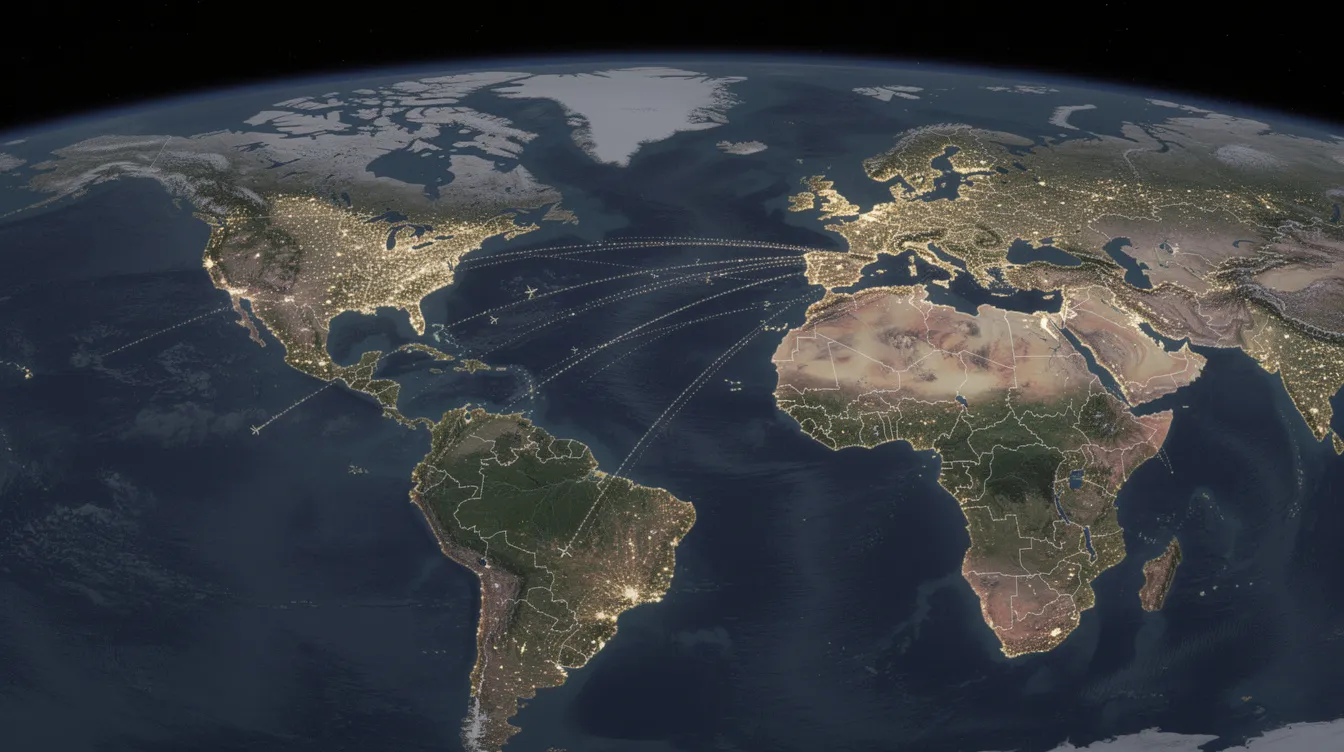
Look up on any given morning, afternoon, or evening—day or night—and the sky above you is working: at any given moment, roughly 12,000 to 14,000 commercial planes are in the air, and once you add private, cargo, and military traffic, the true number of aircraft in the sky is far higher. Thousands of aircraft are cruising at altitude right now, from narrow-body airliners carrying hundreds of passengers to business jets tailored for a single executive's schedule, with private jets representing a smaller share of total traffic but a critical option for travelers who value speed, privacy, and schedule control.
For frequent business travelers, executives, and high-net-worth leisure flyers who travel regionally or internationally multiple times a year, understanding that mix is more than a curiosity. This guide looks at how aircraft are counted and tracked, the main categories in the sky—including private jets—how flight-tracking technology and apps work, and how safety, sustainability, and BlackJet's Jet Card programs fit into smarter air travel decisions. Understanding the number, the technology, and the strategic role of private aviation in this aerial ecosystem is the first step toward taking control of the most finite resource any traveler has: time.
How Many Planes Are in the Sky Right Now?
At any single moment, there are 12,000 to 14,000 commercial planes in the sky daily, broadcasting their positions as they carry people and cargo across every continent. Add general aviation, business jets, cargo haulers, and military operations, and the true number climbs significantly higher. Commercial traffic accounts for roughly two-thirds of all airborne aircraft at a typical hour; the remainder is a mix of private, cargo, and government flights.
Air travel numbers in 2024 exceeded pre-pandemic records. In fact, 2019 was the busiest year for air travel before the pandemic, yet the world has now surpassed those benchmarks. Business aviation alone is up 16 percent in 2024, reflecting a structural change in how executives and high-net-worth travelers move. Private jet travel increased by 16 percent in 2024 as well, underscoring demand that shows no sign of retreating.
Traffic is not constant throughout the year. Global flight volumes peak during July and August and around major holidays, then dip to their lowest in late January and February. In 2024, July had 788,520 flights, the busiest month on record, while February 2024 had the fewest flights at 658,630. Up to 200,000 planes land daily across the world's airports, a staggering load on ground infrastructure, air traffic control, and fuel supply chains.
Commercial Flights
Here is how the major categories break down, and how they relate to the global fleet of roughly 23,000 private jets, which represents only a small fraction of all aircraft in the sky:
Cargo Aircraft
Military Aircraft
General Aviation and Private Jets
General aviation and private jets - general aviation aircraft are used for private transport, flight training, and aerial photography, while business jets are tailored for corporate travel and private charter flights. This segment is smaller in raw numbers but delivers an outsized share of premium, time-sensitive travel.
Some of the busiest corridors in the world illustrate just how crowded the sky can be. Dublin to London averaged roughly 91 daily flights in 2024, making it Europe's busiest city pair. Amsterdam to London followed at about 84 daily flights, while the transatlantic line between London and New York averaged 65 flights per day. In the United States, the Los Angeles–Las Vegas corridor is one of the most active private jet routes, with thousands of empty-leg repositioning flights each year.
Private jets occupy a small share of total aircraft in the sky, yet they serve a disproportionately important role: enabling executives to visit multiple cities in a single day, reach remote locations without commercial service, and maintain confidentiality during travel through premium private jet services and Jet Card programs. As Honeywell's latest forecast projects demand for 8,500 new business jets over the next decade—valued at roughly $280 billion—it is clear the premium segment of the sky is growing faster than the rest.
How Aircraft Are Tracked Over Our Heads
Modern airplanes are rarely "off the grid." A combination of ADS-B transponders, radar, and satellite links means that virtually every commercial and private flight is tracked from takeoff to landing. The technology behind this system is both elegant and layered.
ADS-B and GPS
ADS-B (Automatic Dependent Surveillance–Broadcast) is the backbone. Most planes constantly broadcast their position, altitude, speed, and identification data once per second or more. The Global Positioning System (GPS) is heavily relied upon for aircraft navigation, and GNSS and GPS provide the accurate position and altitude data that feeds each ADS-B transmission. The FAA mandated ADS-B Out for aircraft operating in controlled airspace from 1 January 2020; Europe followed with similar requirements by mid-2023.
Modern Navigation Tools
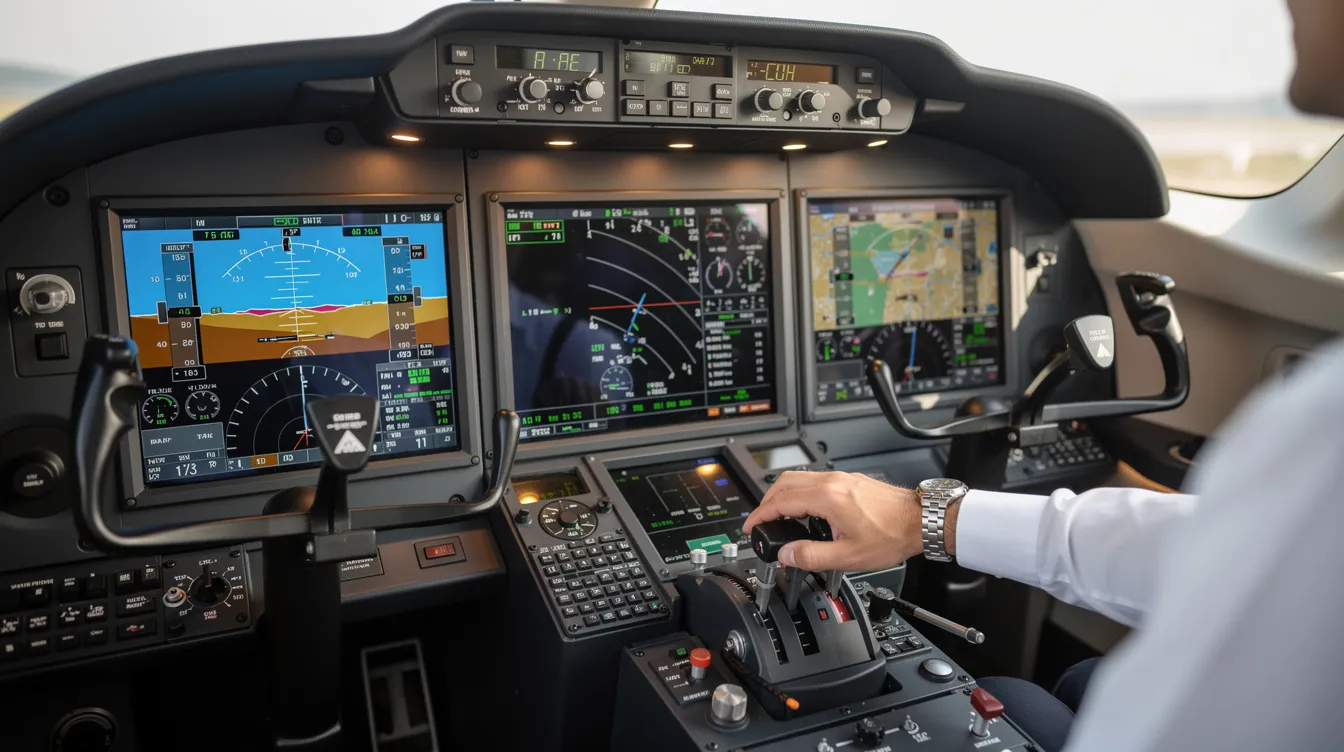
Modern navigation relies on a combination of satellite, radio, and visual tools. Beyond GPS, Inertial Navigation Systems allow aircraft to navigate independently from external signals—critical over oceans, deserts, and mountains where ground-based radio aids are sparse. The Flight Management System in the cockpit integrates all navigation data to guide the aircraft automatically along its planned route. The Flight Management System integrates navigation data to guide the aircraft automatically.
Air Traffic Control and Airways
Aircraft follow designated invisible highways in the sky called airways. Airways are predefined corridors in the sky that aircraft use to travel safely and efficiently between destinations. Air traffic control manages aircraft traffic flow and assigns specific routes to keep planes safely separated. Air traffic control also separates aircraft using specific altitudes and speed restrictions. Area Navigation (RNAV) allows aircraft to fly direct paths between waypoints, reducing fuel burn and cutting flight time compared to older, zigzagging airway structures.
Flight-Tracking Services
Global flight-tracking services capture ADS-B signals through networks of over 40,000 ground-based receivers. Over oceans and remote terrain, satellite-based ADS-B relays fill the gaps, ensuring flights remain visible even thousands of miles from land.
Privacy and Hidden Flights
Not every aircraft is publicly visible. Many military flights, some government planes, and privately operated aircraft whose owners opt out via FAA privacy programs (such as PIA and LADD) are hidden or masked in public feeds. Owners can request alternate identification codes to protect their movements from public scrutiny.
Operator Internal Tracking
Commercial airlines, cargo operators, and private jet providers maintain richer internal information beyond simple position data—flight plans, crew status, maintenance logs, weather routing, and slot reservations. BlackJet's 24/7 operations team uses certified tracking and dispatch software to monitor every private jet flight in real time, proactively managing weather diversions, slot times, and connections for members. This is the difference between passive tracking and active flight management.
Flight-Tracking Apps You Can Use at Home
Anyone with a smartphone can visualize the invisible sky overhead using consumer apps that tap into the same ADS-B data airlines rely on. These tools have transformed the way people understand air traffic and, alongside modern booking platforms that let you buy a seat on a private jet, have made the private side of the sky more accessible than ever.
FlightAware – one of the most widely used platforms, offering free real-time maps, delay predictions, and historical flight data. Filter by airline, aircraft type, or airport.
Flightradar24 – powered by over 40,000 ADS-B receivers worldwide, it provides granular detail including aircraft model, registration, altitude, and speed. You can tap any plane on the map and see its full route.
Plane Finder – a clean, intuitive alternative with augmented-reality features that let you point your phone at a jet overhead and identify it instantly.
Concrete use cases make these apps more than a novelty:
Track a family member's inbound plane to know exactly when to leave for the airport, and seeing where the incoming aircraft is can help you adjust pickup timing or make a schedule change if needed.
Check whether an early-morning business flight is departing on time before heading to the gate; tracking the inbound aircraft may reveal a delay before gate agents or airport screens update, giving you time to change plans if needed.
Identify the airliner cruising 35,000 feet above your house, including its origin and destination.
Flight tip:
Look up your flight's tail number or callsign before departure.
Follow that specific aircraft in a jet locator app.
You will often get faster, more accurate updates than airport monitors provide.
For BlackJet members, tracking goes further. Members can monitor their assigned aircraft to coordinate chauffeured ground transfers, board at the optimal time, and minimize unnecessary waiting in the FBO lounge. When your plane is tracked in real time by a dedicated operations team, comments like "we're not sure when you'll depart" simply don't happen.
It is worth noting that the sky is not limited to manned aircraft. Drones are used for mapping, inspection, and delivery research, and drones can be used for aerial photography and agricultural monitoring. While they occupy different airspace than jets, their growing number adds another layer to the picture of what is flying above us on any given day.
Types of Aircraft and Plane Models You'll See in the Sky (From Airliners to Private Jets)
The planes in the sky are far from identical. They range from 50-seat regional jets connecting small cities to long-range private aircraft capable of nonstop flights between New York and Dubai. Aerodynamic designs differentiate between various types of aircraft like jets and propellers, and each category exists to solve a specific transportation problem.
Narrow-body Airliners
Narrow-body airliners – the Boeing 737 and Airbus A320 family dominate this segment, making up roughly 60 percent of the global active commercial fleet of approximately 30,300 aircraft. They handle short- to medium-haul routes and cruise at around Mach 0.78–0.80, and they sit alongside a wide range of private aircraft whose economics are outlined in our private jet price list and cost overview.
Wide-body Airliners
Wide-body airliners – aircraft like the Boeing 777-200ER and Airbus A350 serve transatlantic, transpacific, and high-capacity routes, cruising near Mach 0.84–0.85. These are the planes you see on the New York–London or Los Angeles–Tokyo line.
Regional Jets and Turboprops
Helicopters
Helicopters – helicopters can hover and take off vertically, making them suitable for various services. Helicopters are widely used for emergency medical services and short-haul transport, particularly in areas where runways are impractical, and they complement the wider spectrum of private jet sizes and cabin categories available to travelers.
Private Jet Categories
For private aviation, the fleet segmentation is more nuanced—and more directly relevant to how BlackJet structures its Jet Card programs. Understanding the different types of private jets for every traveler helps match each mission to the right cabin class:
Light jets (e.g., Citation CJ3+) – ideal for routes like New York–Chicago, with fast climb rates and access to smaller airports commercial traffic cannot reach.
Midsize jets (e.g., Hawker 900XP) – longer range and more cabin space; perfect for Los Angeles–Houston nonstop.
Super-midsize jets (e.g., Challenger 350) – fly routes like New York–Miami or Denver–San Francisco with room for productive work and a full-size cabin.
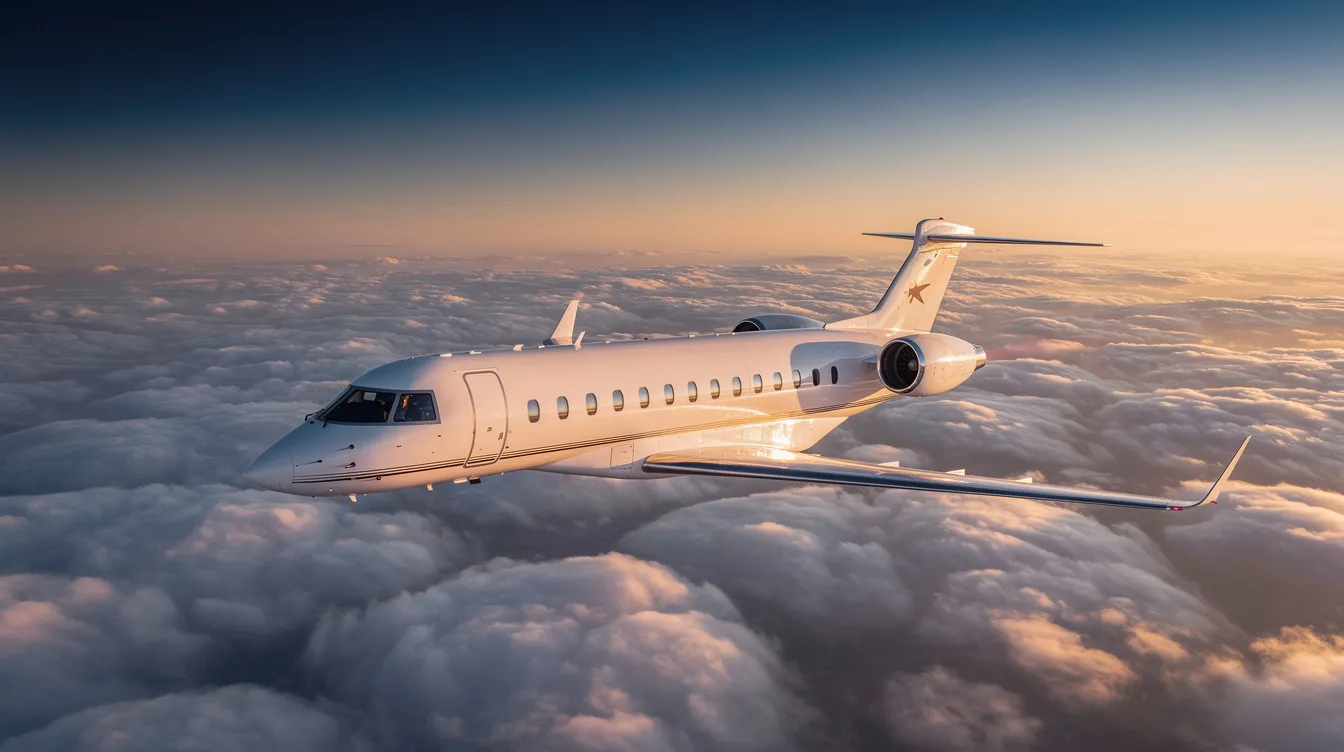
Large-cabin / long-range jets (e.g., Gulfstream G550, Global 6000) – capable of New York–London or Los Angeles–Honolulu nonstop, at speeds and altitudes that rival or exceed commercial wide-bodies.
Aircraft performance influences optimal cruising altitude during flight. Most commercial flights cruise between FL300 and FL410 (approximately 30,000 to 41,000 feet), with the optimal corridor around 35,000–39,000 feet where thinner air reduces drag and improves engine efficiency. Business jets, being lighter, often cruise higher—above the weather, above congestion, in smoother air that translates into a more comfortable ride.
Aircraft flight paths are planned considering safety, efficiency, and environmental factors. Great Circle Routes are the shortest paths between two points on the globe, and pilots along with dispatch teams, use them as the starting framework for every route. Weather conditions affect aircraft flight paths due to jet streams or severe storms, which is why fuel efficiency drives airlines to optimize flight paths based on wind patterns. Companies use flight planning software to calculate the most cost-effective flight path, factoring in winds aloft, restricted airspace, and fuel reserves. Aircraft also need to avoid prohibited or restricted airspace during flight, adding another variable to every routing decision.
Research and experimental aircraft operate in specialized atmospheric layers above typical cruise altitudes. NASA's high-altitude ER-2, for instance, flies at FL600 and above—well into the stratosphere—gathering climate data. Low-noise supersonic demonstrators are being tested at altitudes and speeds that could one day change the way the world thinks about long-haul travel, just as large-cabin jets designed as the best private jets for around 20 passengers have redefined how groups approach premium long-haul trips today.
BlackJet matches members with the right aircraft type for specific missions—short regional hops on a light jet, same-day multi-city business trips on a super-midsize, or overnight transoceanic flights on a large-cabin platform—to optimize both cost and comfort for every hour in the air.
Safety, Certification, and Sustainable Skies
In a sky filled with thousands of planes, the defining factor is not only the number overhead but the quality of safety standards and environmental stewardship behind each flight. Every aircraft you see has been through a certification process that most people never think about.
Regulatory certification – modern airliners and private jets undergo rigorous certification by authorities such as the FAA and EASA. This includes structural testing, engine redundancy validation, avionics checks, and exhaustive documentation before a single passenger ever boards. Noise abatement procedures are used to reduce noise pollution near populated airports, adding another layer of compliance that operators must meet.
Third-party safety audits in private aviation – programs like ARGUS, Wyvern, and IS-BAO assess operators on maintenance standards, operational procedures, crew training, and safety culture. These audits go beyond regulatory minimums to evaluate real-world operational discipline and underscore why private jets are considered very safe compared with broader general aviation.
Crew standards – pilots flying private jets under the highest safety programs must meet minimum flight-hour thresholds, complete recurrent simulator training, and adhere to strict duty-time rules that prevent fatigue. This is not a lot of hand-waving; it is documented, auditable, and verifiable.
BlackJet's approach – BlackJet exclusively partners with operators that meet or exceed leading third-party safety ratings. Each flight is checked against a proprietary safety checklist before release, covering weather, mechanical status, crew readiness, and airspace conditions.
Sustainability is no longer a secondary concern. It is central to how responsible aviation operators plan for the next decade, even as they explore more affordable private jet options that broaden access without compromising environmental goals:
More efficient aircraft – newer airframes use composite materials and advanced wing designs that reduce weight and drag, cutting fuel consumption per passenger-mile.
Sustainable Aviation Fuel (SAF) – blended fuels reduce CO₂ and particulate emissions. Adoption is accelerating, though supply remains limited relative to demand.
Data-driven routing – optimized climb and descent profiles, efficient airspace utilization, and minimized holding patterns all reduce fuel burn.
BlackJet's carbon-neutral commitment – every Jet Card hour flown is automatically offset through verified carbon projects, including reforestation and clean-energy initiatives, at no extra charge to members. This is not an add-on; it is built into every flight.
Private Jets Above the Clouds: How Jet Cards Reshape Time in the Sky
For executives and discerning travelers, the real power of aircraft in the sky is the ability to control time—departing on your schedule, from the airport closest to you, with service built around your needs rather than an airline's operational constraints. A Jet Card makes this possible without the capital commitment of owning a plane.
What is a Jet Card?
What a Jet Card is, in concrete terms: prepaid access to a curated fleet of private planes across multiple cabin classes, with fixed hourly rates and guaranteed availability. BlackJet offers 25-hour and 50-hour programs, each covering light through large-cabin jets so members can match the aircraft to the mission, and its dedicated 25+ Hour Jet Card program is designed for travelers who want consistent, premium access without owning an aircraft.
Jet Card Scenarios
A specific scenario:
A BlackJet member based in New York uses a 25-hour Jet Card to fly from Teterboro to Miami on a super-midsize Challenger 350 on Friday morning. No TSA line, no gate change, no delays caused by connecting passengers.
On Sunday, the same member books a light jet from Miami to Nassau via the BlackJet mobile app, confirmed in minutes.
Two flights, two days, zero wasted time.
Time Efficiency
Time efficiency versus commercial first class: Even the finest commercial cabin requires arriving at a major airport like JFK or LAX at least 90 minutes before departure, navigating security, and walking to a distant gate. Private jet members board directly from a private lounge at smaller regional airports—Teterboro instead of JFK, Van Nuys instead of LAX—where the walk from car to cockpit takes under five minutes. Same-day multi-city itineraries (New York–Boston–Washington, D.C.) become routine rather than logistically impossible. People who fly this way rarely go back, which is why comparisons of the best Jet Cards for frequent flyers focus so heavily on time savings, not just cabin comfort.
Digital and Operational Support
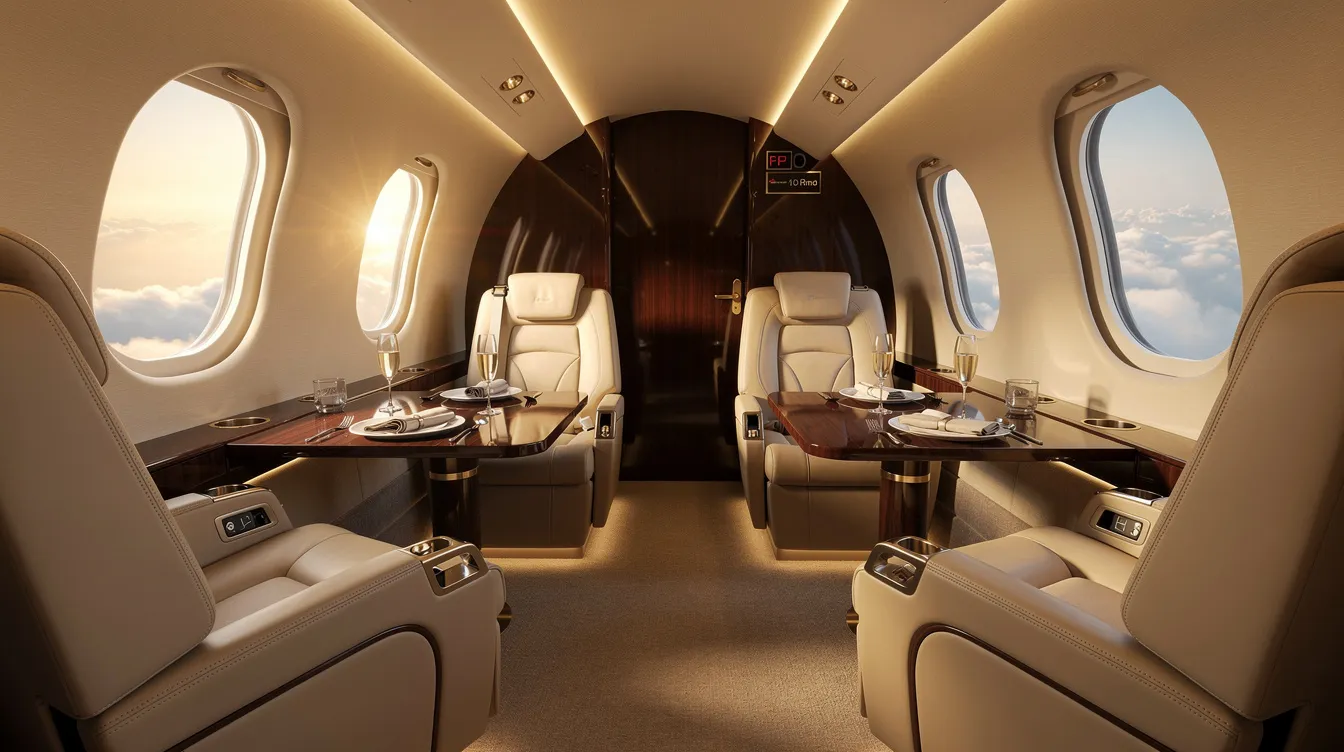
Digital and operational support: BlackJet provides 24/7 mobile booking, real-time flight support, proactive rerouting around storms, ground transfer coordination, and in-flight customization including catering, Wi-Fi, and seating layouts. Every piece of information a member needs is available in-app, updated in real time by the operations team working behind the scenes.
Strategic Value
Carbon Neutrality
The carbon question, resolved: Every hour flown on a BlackJet Jet Card is automatically carbon neutral. Verified offset projects—reforestation, renewable energy, and carbon capture—are funded as part of the program cost. Members do not pay extra, and they do not need to opt in. It simply happens, and for many business flyers, understanding how to maximize jet card tax deductions is just as important as the environmental impact.
If you routinely spend dozens of hours a year in the sky, that time is either an asset or a liability. A Jet Card turns it into something you control—carbon neutral, precisely scheduled, and built around the way you work and live. For those comparing options, a guide to overall Jet Card costs and benefits can clarify where Jet Cards fit alongside ownership and on-demand charter. Explore how BlackJet's Jet Card programs can reshape your time above the clouds.
The sky has never been busier. Understanding how many planes are flying, how they are tracked, and what separates a commercial seat from a private jet membership is not trivia—it is the foundation for making better decisions about how you travel, including how Jet Card cost per hour compares with charter or ownership for your specific flying pattern. For those ready to elevate their time in the air from a compromise into a competitive advantage, the path forward starts with a conversation—and, for very frequent flyers, with understanding whether a 100-hour Jet Card program aligns with their annual travel needs.
Frequently Asked Questions (FAQs)
How many planes are typically in the sky at one time?
At any given moment, there are approximately 12,000 to 14,000 commercial planes airborne globally. Including private jets, cargo, and military aircraft, the total number is significantly higher.
How are aircraft tracked during flight?
Aircraft are tracked using technologies like ADS-B (Automatic Dependent Surveillance–Broadcast), radar, and satellite systems. These allow real-time monitoring of position, altitude, and speed.
What distinguishes private jets from commercial flights?
Private jets offer tailored schedules, privacy, and access to smaller airports, enabling faster, more flexible travel compared to commercial airlines,s which operate on fixed routes and times.
What is a Jet Card and how does it work?
A Jet Card provides prepaid access to a fleet of private jets across various cabin sizes with fixed hourly rates and guaranteed availability, allowing travelers to book private flights without owning an aircraft.
How does BlackJet ensure safety in private aviation?
BlackJet partners exclusively with operators meeting rigorous third-party safety certifications such as ARGUS and Wyvern, with flights checked against proprietary safety checklists covering weather, mechanical status, and crew readiness.
Are private jet flights carbon neutral?
Yes. Every hour flown on a BlackJet Jet Card is automatically offset through verified carbon projects including reforestation and renewable energy, at no additional cost to members.
Can I track my private jet flight in real time?
BlackJet provides real-time flight tracking and operational support, allowing members to monitor their aircraft, coordinate ground transfers, and minimize wait times.
What types of aircraft are available through Jet Card programs?
Jet Card programs offer access to a range of aircraft including light jets, midsize, super-midsize, and large-cabin long-range jets, matched to specific travel needs and mission profiles.
How does private jet travel compare in time savings to commercial first class?
Private jet travel significantly reduces airport wait times, allows departures from regional airports closer to your location, and enables same-day multi-city trips, offering unparalleled time efficiency.
What are the busiest flight corridors for private jets?
Popular private jet routes include Los Angeles to Las Vegas and transatlantic flights like London to New York, with heavy traffic on these corridors supporting frequent, flexible business travel needs.
Conclusion: Mastering the Sky for Strategic Travel
The sky above is a complex, dynamic network of thousands of aircraft, each serving distinct roles—from commercial airliners to private jets that redefine convenience and control. For executives and discerning travelers, understanding this aerial ecosystem is more than knowledge; it is a strategic advantage. Private jet access through BlackJet's Jet Card programs transforms travel from a logistical challenge into a seamless extension of your lifestyle and business needs.
By leveraging cutting-edge tracking technology, rigorous safety standards, and a commitment to sustainability, BlackJet ensures every journey is not only efficient and luxurious but also responsible. Whether navigating the busiest corridors or reaching remote destinations, the ability to customize your flight experience, save precious time, and reduce your carbon footprint sets private aviation apart.
Embrace the future of air travel with BlackJet—where every flight is a calculated step toward greater productivity, privacy, and peace of mind. Discover how our premium Jet Card programs can elevate your time in the sky from a mere commute to a competitive edge. Explore premium jet access today and unlock the true potential of your travel.


 Sign up with google
 Sign up with Apple