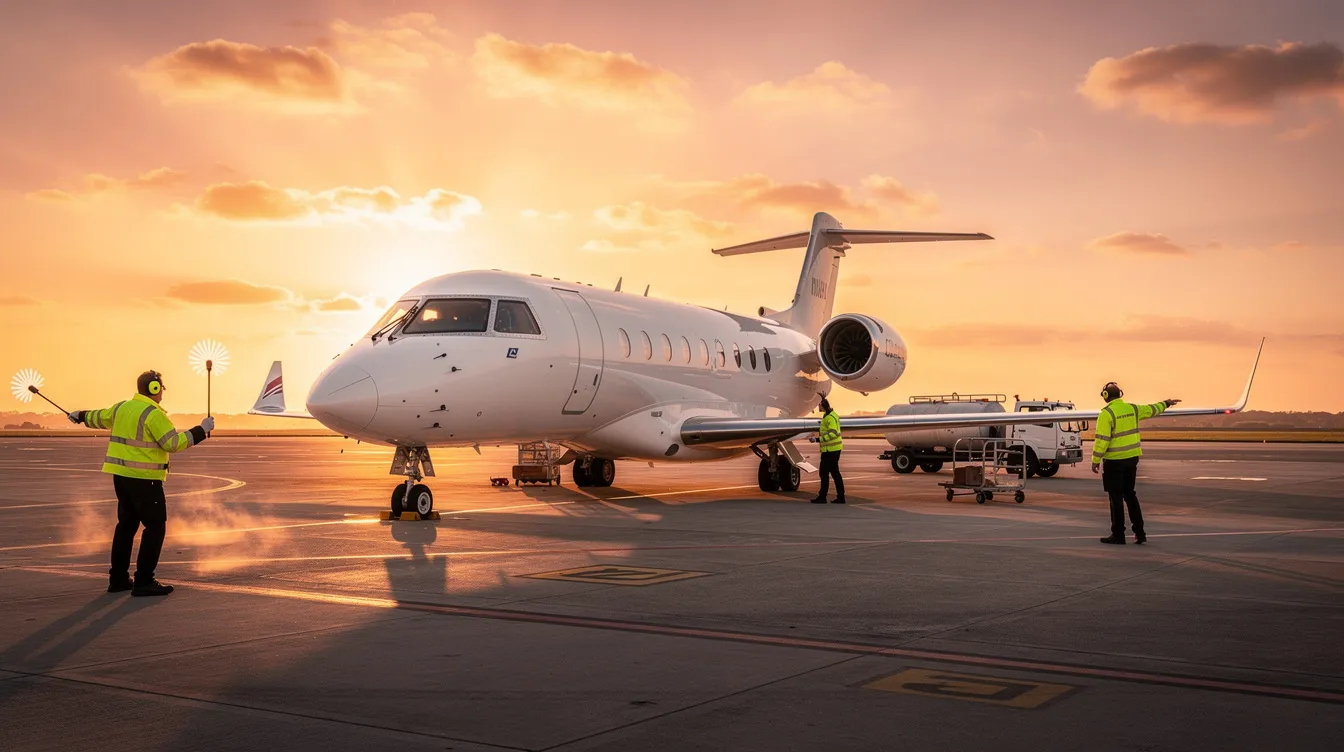
For travelers who treat time as a non-renewable resource, understanding which aircraft deliver the strongest safety profiles is more than trivia—it's a strategic advantage. This guide is for frequent travelers, business executives, and anyone who wants to make informed decisions about air travel safety. Whether you're boarding a commercial widebody or stepping onto a private jet, the planes you choose and the operators behind them shape the level of protection surrounding every mile of your journey. Here's what the data actually says about the safest passenger planes flying today.
Quick answer: Which are the safest passenger planes today?
The safest passenger planes in operation include modern wide-body and narrow-body jets such as the Airbus A350, Boeing 777, and Boeing 787 Dreamliner. All modern commercial aircraft meet rigorous certification standards, but certain aircraft stand out for achieving zero fatalities or extraordinarily low accident rates across decades of service. Based on publicly available safety data through mid-2026, these models lead the field:
Boeing 717 - entered service in 1999, approximately 155 built. No fatal passenger accidents and no hull losses in commercial operations. Operated primarily by Delta Air Lines and Hawaiian Airlines on short-haul routes.
Airbus A340 - introduced in 1993, a four-engine long-haul workhorse. More than 2.5 million flights have been completed without a fatal passenger accident across its operational history.
Airbus A380 - over 800,000 flights since 2007. No passenger fatalities despite being the world's largest passenger aircraft. Flown by Emirates, Singapore Airlines, Qatar Airways, and Lufthansa, among others.
Boeing 747-8 - the final and most advanced Boeing 747 variant. No fatal passenger accidents before production ended in 2022. Operated by Lufthansa and Korean Air.
Boeing 777-300ER/200LR - one of the most successful widebodies ever built, with a fatal accident rate among the lowest for any large commercial aircraft.
Boeing 787 Dreamliner - over 1,100 in service by mid-2025. One fatal hull-loss event was recorded (Air India Flight 171, June 2025); the overall record remains very strong across millions of flight hours.
Airbus A350 - zero fatal passenger accidents as of 2026, with more than 700 aircraft delivered and advanced safety systems throughout.
Embraer ERJ-135/140/145 - over 1,200 delivered since 1997, with zero fatal passenger or crew fatalities in scheduled airline service.
One critical clarification: "safest" in aviation safety is measured statistically, by the fatal accident rate per million departures or per million flight hours, not by brand loyalty or media perception.
For private aviation travelers, BlackJet's network operates under similarly strict safety oversight and typically flies younger aircraft than many commercial fleets. Safety isn't a selling point—it’s the foundation.
What does "safe" really mean for a passenger plane?
Aviation safety, in practical terms, describes an aircraft's ability to prevent, withstand, and recover from failures while protecting every passenger and crew member on board.
Technical safety: Aircraft design, engine reliability, fly-by-wire controls, structural redundancy, and the exhaustive certification testing required before any plane model carries a single paying passenger.
Operational safety: Airline maintenance standards, pilot training, route planning, and weather decisions—factors that vary enormously between operators, even on the same aircraft type.
Modern aircraft like the Boeing 787 and Airbus A350 are designed to fly safely after an engine failure or major system fault. ETOPS certifications confirm that twin-engine jets can operate for hundreds of minutes from the nearest diversion airport with full confidence.
Most fatal accidents on modern aircraft are linked more to human factors, weather, or operational decisions than to structural or design flaws. The airplane itself is rarely the weak link.
Key safety metrics—fatalities, fatal accident rate, hull-loss rate, and service time—provide the quantitative backbone for comparing models, and we'll unpack those below.
BlackJet applies this same layered philosophy to private aviation: the aircraft, the crew, the procedures, and the real-time safety monitoring all work together within its premium private jet card programs.
How experts measure the safety of commercial aircraft
Independent databases like the Aviation Safety Network and official regulators provide decades of data that underpin any serious safety analysis.
Key Safety Metrics
A fatal accident means at least one passenger or crew member fatality aboard during the event. An incident is a safety-relevant occurrence that does not meet accident criteria. A hull loss means the aircraft is destroyed or damaged beyond economic repair, but may involve zero fatalities.
The fatal accident rate is the number of fatal accidents per million departures or per million flight hours. The hull-loss rate refers to the number of aircraft destroyed or damaged beyond economic repair per million departures. Safety rankings combine accident rates and maintenance records.
Comparing Aircraft by Exposure
Service time factors in fleet size, years in operation, and cumulative flight cycles. A type with 1,200 airplanes flying for 25 years accumulates far more exposure than a newer model with 200 units, and that difference must be accounted for.
Serious comparative studies typically include only models with at least roughly 50 aircraft built and significant fleets in regular commercial service (post-1969, starting with the first Boeing 747).
Statistically, the differences between top-tier models—Boeing 777, Airbus A350, Boeing 787—are very small and often within margins of error. The takeaway: air travel on any of these types is far safer than driving to the airport.
BlackJet applies this same layered philosophy to private aviation: the aircraft, the crew, the procedures, and the real-time safety monitoring all work together.
The safest passenger jets with exemplary records
Several aircraft families have built safety records that stand apart, even among an already safe fleet of modern aircraft. Here are the standouts based on data through mid-2026.
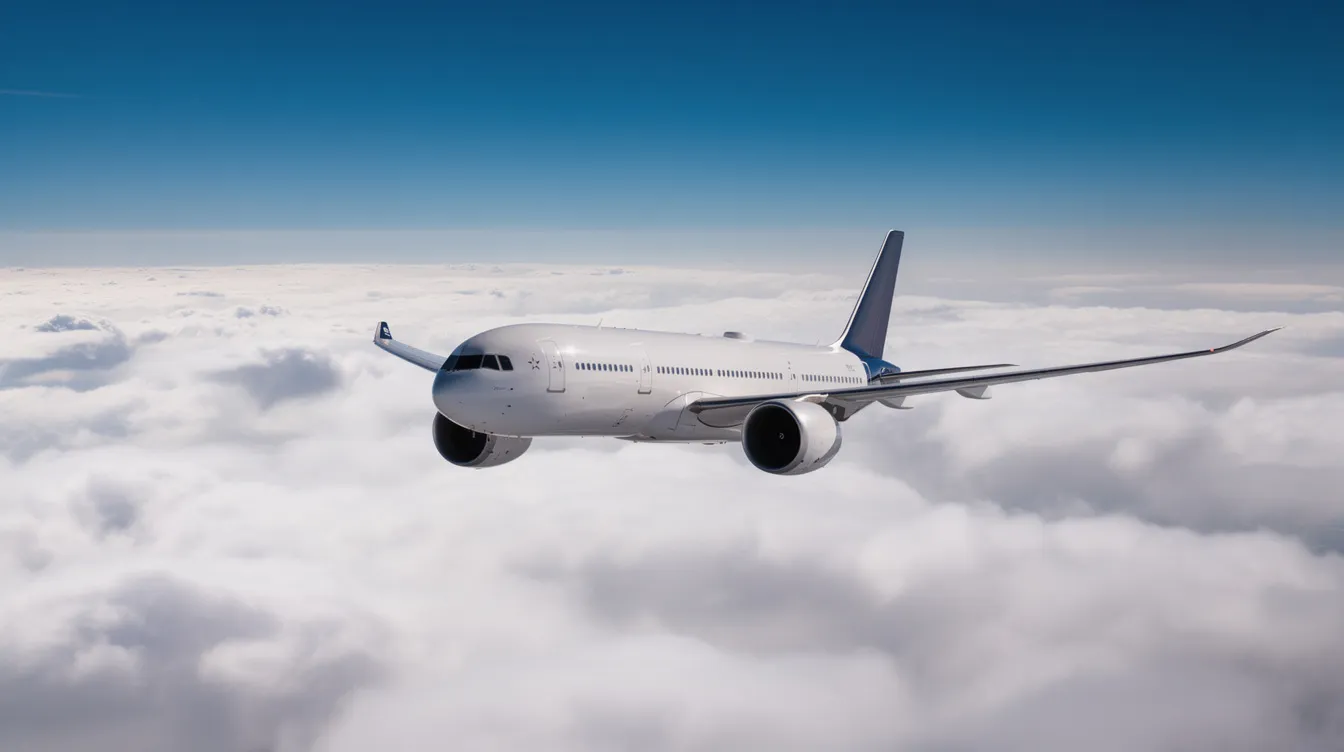
Boeing 717
The Boeing 717 entered service in 1999, with production ending in 2006 after around 155 units. It holds what many analysts call a perfect safety record: zero fatal passenger accidents, zero hull losses. Hawaiian Airlines and Delta Air Lines operated the type extensively on short-haul domestic and island routes, with millions of cycles and an unblemished safety record.
Airbus A340
First flown commercially in 1993, the four-engine A340 amassed over 2.5 million flights and carried hundreds of millions of passengers without a single fatal passenger accident. Its fly-by-wire system and Airbus safety philosophy, derived from the A320 family, contributed to an impressive safety record across intercontinental routes for major carriers like Lufthansa, Cathay Pacific, and South African Airways.
Airbus A380
The world's largest passenger aircraft entered service in the mid-2000s and, as of 2026, has no fatal passenger accident history despite extremely high seat counts and long-haul sectors. The Qantas Flight 32 incident in 2010—an uncontained engine failure that damaged multiple systems—demonstrated the A380's extraordinary redundancy. The crew landed safely with zero fatalities. Operators like Emirates, Singapore Airlines, and British Airways have flown the type on some of the world's busiest routes.
Embraer ERJ Regional Jets
The ERJ-135, ERJ-140, and ERJ-145 family has been a regional airline workhorse since 1997, with over 1,200 units delivered. Despite 11 hull losses across various incidents, the family has recorded zero fatal passenger or crew fatalities in scheduled airline service. Major airlines and regional airlines like SkyWest and American Eagle have relied on these jets for millions of short-haul flights.
Boeing 747-8
The final Boeing 747 variant brought updated wings, GEnx engines, and advanced avionics to a legendary airframe. Introduced in the early 2010s with production ending in 2022, the 747-8 saw passenger operations by Lufthansa, Korean Air, and Air China, all without a fatal passenger accident.
Older 747 variants (747-100, 747-200, 747-400) have recorded fatal accidents over their long histories, but their fatal accident rate remains low when adjusted for decades of service time, enormous fleet sizes, and high seat counts.
Modern wide-body leaders: A350, 787 and 777
Long-haul travel today is shaped by three ultra-modern widebodies, each with a strong reputation built on rigorous engineering and extensive operational data.
Airbus A350
The Airbus A350 entered service in 2015, featuring composite structures, advanced aerodynamics, and comprehensive flight envelope protection. Its fly-by-wire system includes Automated Emergency Descent for rapid response to cabin depressurization. As of 2026, no fatal passenger accident has been recorded on the A350. The JAL Flight 516 runway collision in January 2024 destroyed the airframe, but every passenger and crew member aboard the Japan Airlines A350 evacuated safely, a testament to its crashworthiness design.
Boeing 787 Dreamliner
The Boeing 787 began commercial service in 2011 and has seen more than 1,100 deliveries by mid-2025. Early battery incidents led to a temporary grounding and redesigned enclosures, and the June 2025 Air India Flight 171 crash became the type's first fatal hull-loss event. Still, across millions of flight hours, the 787's overall fatal accident rate remains among the safest commercial aircraft in the world. Redundancy in flight control computers, modern avionics, and advanced composite materials defines its safety profile.
Boeing 777-300ER/200LR
The Boeing 777 family entered service in 1995 and has become one of the most successful widebodies ever built, with more than 2,300 ordered by 2025. A small number of high-profile events—MH370's disappearance, MH17's shoot-down—were not caused by structural design flaws or airframe failures. Statistically, the 777's fatal accident rate remains exceptionally low for any large commercial aircraft.
Passengers choosing these models on airlines like Qatar Airways, Cathay Pacific, Singapore Airlines, and Lufthansa fly on aircraft with some of the strongest aviation safety profiles in the airline industry.
Many safety innovations proven in these widebodies—advanced avionics, flight envelope protection, real-time data monitoring—cascade into newer business jets available through programs like BlackJet's Jet Card and the BlackJet 25+ Hour Jet Card.
How seat count, service time, and accident rate shape "safest plane" rankings
Raw numbers of fatalities can be deeply misleading without context. Understanding three variables—service time, seat count, and accident rate—separates informed analysis from headlines.
Key Variables in Safety Rankings
Service time: Older types like early Boeing 747 variants and classic Airbus A320s have accumulated hundreds of thousands of cycles and thousands of combined fleet-years. More exposure inevitably increases the probability of rare events, even if the plane model is not inherently less safe.
Seat count: A large aircraft like the Airbus A380 (up to 840 seats in some configurations) has higher potential fatalities per event than a smaller regional jet. This does not make large airplanes more dangerous—it changes the consequence profile, not the probability.
Fatal accident rate: A fairer comparison normalizes by exposure: fatalities ÷ (seats × service time) yields a "risk per passenger seat-year" metric. By this measure, newer models like the Airbus A350 or Boeing 787 show extremely low figures, while turboprops like the ATR-42 can show higher rates, partly due to smaller size and more challenging operating environments.
Two notable examples illustrate the limits of simple rankings:
Aircraft | Context |
|---|
Boeing 737-8 MAX | Two early disasters produced a high fatal accident rate relative to limited service time, prompting a worldwide grounding and software redesign. The incidents exposed a design flaw in the MCAS system and gaps in pilot training. |
Comac C919 | Zero fatalities to date, but very low deliveries and limited operational data make statistical conclusions premature. |
The safest passenger planes list should focus on models with both low accident rates and a substantial track record, not just newer models with small fleets.
Fly-by-wire, redundancy, and technology that keep you safe
Modern aircraft safety depends not only on structural strength but on sophisticated flight control systems and layered automation that happen between the pilot's hand and the control surfaces.
Redundancy and Automation in Modern Jets
Fly-by-wire replaced mechanical linkages with electronic signals: Airbus pioneered full fly-by-wire on the A320 in the late 1980s; Boeing followed on the 777 in 1995. Pilot inputs pass through computers that command control surfaces within safe limits, providing protection against stalls, overspeeds, and excessive bank angles.
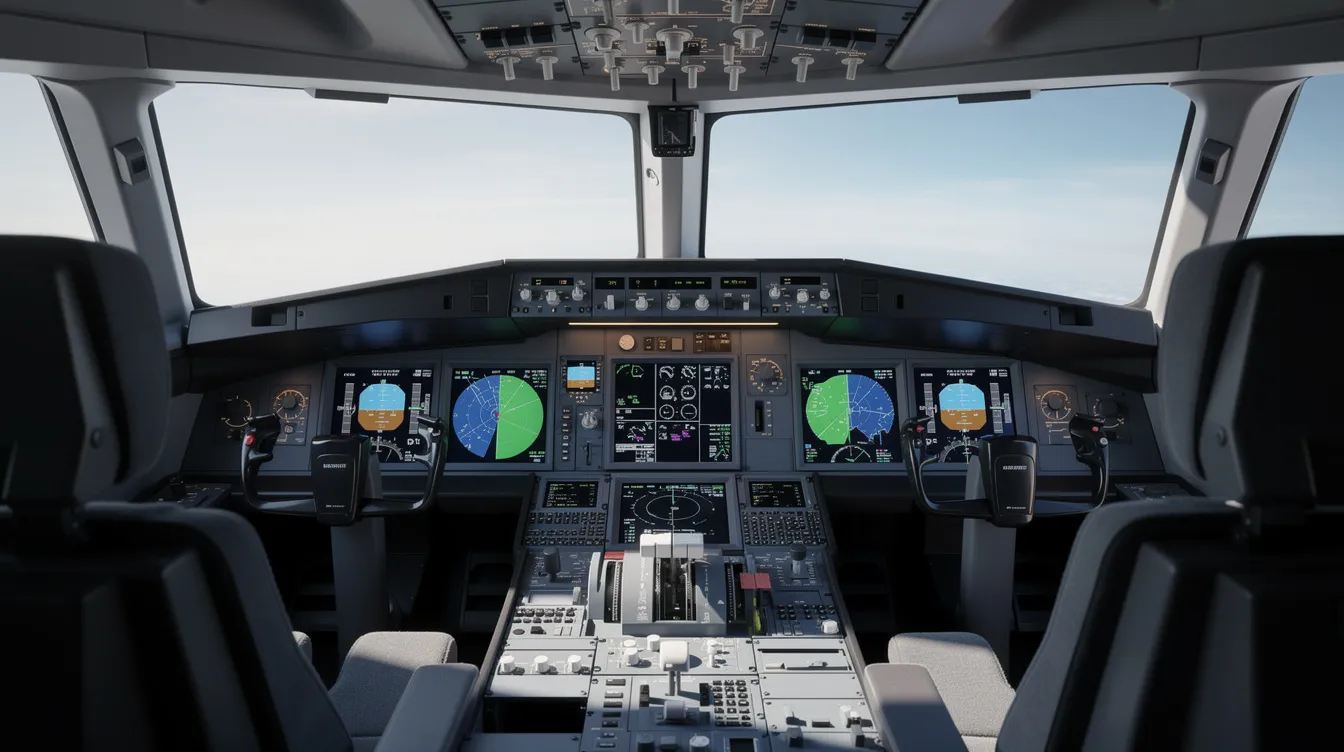
Glass cockpit avionics integrate flight management, weather radar, terrain awareness (EGPWS), and traffic collision avoidance (TCAS) into a unified system. The result: reduced pilot workload, better situational awareness, and more precise control from takeoff through landing gear touchdown.
Lessons learned: The Boeing 737-8 MAX MCAS issue demonstrated that software design, pilot training, and transparent system behavior must be aligned. Automation is only as safe as the human understanding wrapped around it. Every such event drives continuous improvement across the airline industry.
Redundancy architecture: Critical systems, such as hydraulics, electrics, flight control computers, and navigation, are duplicated or triplicated on aircraft like the Boeing 787, Airbus A350, and Airbus A380. During the Qantas Flight 32 engine failure, the A380's redundant systems allowed the crew to maintain control despite damage to multiple hydraulic and electrical circuits.
BlackJet's partner operators prioritize aircraft with modern avionics, rigorous maintenance tracking, and real-time operational support, mirroring the layered technology seen in leading commercial fleets.
Manufacturer track records: Airbus, Boeing, Embraer, and others
Manufacturer reputation matters, but airline operations and regulatory oversight carry equal weight. No manufacturer, however strong its engineering, can guarantee safe operations if an operator cuts corners.
Embraer consistently ranks at or near the top in regional jet safety analyses, with fatal accident rates around 0.01 per thousand years of fleet service time. Its ERJ and E-Jet families are among the world's safest aircraft in the regional category, much like how different private jet sizes serve distinct mission profiles in business aviation.
Airbus and Boeing: Large multi-year studies have not found statistically significant safety differences between the two manufacturers overall. Boeing commercial airplanes were affected reputationally by 737 MAX accidents and later incidents, but redesigned systems and intensified regulatory scrutiny have restored high standards. Boeing's statistical summary and Airbus's published hull-loss data both show declining rates across newer generations, just as the best private jets in the world showcase how cutting-edge design and technology translate into both safety and comfort.
Other manufacturers: Bombardier's CRJ series carries a strong reputation with no fatal hull-loss accidents in typical regional airline service. ATR turboprops and some regional types show higher combined accident rates in certain regions, often linked to challenging operating environments and infrastructure rather than airframe deficiencies.
Airlines like Cathay Pacific, Alaska Airlines, Emirates, and Japan Airlines maintain a strong focus on safety practices by pairing reliable aircraft families with high maintenance and training standards. The safest airplane is only as safe as the system around it.
BlackJet does not operate its own commercial jets but carefully vets partner operators and aircraft types using proprietary safety criteria that go beyond manufacturers alone, in much the same way that travelers compare the top private jet companies on safety culture and service standards.
How commercial jet safety compares with private jets and single-engine aircraft
Most "safest passenger planes" discussions center on large commercial aircraft, but discerning travelers often rely on private jets for flexibility and time savings. How do the two worlds compare?
Large commercial airliners like the Airbus A380, Boeing 787, and Airbus A350 benefit from enormous data sets, strict airline oversight, and standardized training programs across major airlines. These aircraft typically cruise in the high 30,000s of feet, while private jets often fly higher than commercial flights, taking advantage of thinner traffic and smoother air. These factors contribute to hull losses and fatal accident rates that are historically low.
Modern business jets—particularly twin-engine types used in private charter—are certified under similarly stringent regulations. When maintained to corporate or charter standards, they can meet or exceed minimum regulatory requirements. The fleet of newer models from Gulfstream, Bombardier, and Dassault incorporates many of the same safety technologies found in leading commercial aircraft, and their higher cruising altitudes help pilots manage turbulence on private jets as effectively as on large airliners.
Turboprops and single-engine airplanes carry different statistical risk profiles, especially in less-regulated environments. Many commercial jet airplane accidents in aggregate statistics are skewed by non-airline operations, private owners, instruction flights, bush flying, rather than professionally crewed charter operations, even though there are budget-friendly private aircraft options that can be operated to high safety standards.
BlackJet's Jet Card members fly on multi-engine, professionally crewed business jets meeting industry-leading safety standards, with predictable jet card membership pricing. Third-party safety audits (ARGUS, Wyvern, IS-BAO) form part of the baseline BlackJet expects from partner operators.
A well-run private aviation program can deliver risk profiles comparable to premium airline travel, while saving substantial time and adding complete privacy, especially when you understand the full private jet price list and access options.
How BlackJet evaluates aircraft and operators for member safety
For BlackJet members, the question isn't simply "What is the safest passenger plane?" It's: Which aircraft and operator combination gives my family or team the strongest protection on each trip?
Aircraft selection: BlackJet prioritizes modern jets with strong global safety records—late-generation Gulfstream, Bombardier, and Dassault models equipped with avionics on par with leading commercial aircraft. Manufacturer-approved maintenance schedules and current airworthiness directives are non-negotiable.
Crew standards: Two-pilot crews on most missions, with type-rated captains and first officers. Minimum flight-hour requirements and recurrent simulator training cover engine failures, system failures, and approach-and-landing scenarios—the same scenarios that define safe operations at major carriers.
Safety Management Systems: BlackJet expects partner operators to maintain formal SMS programs comparable to those used by top commercial airlines. Confidential reporting, trend monitoring, and continuous improvement are embedded, not optional.
Sustainability without compromise: BlackJet's carbon-neutral policy layers environmental responsibility on top of core safety investments, never instead of them. Newer, fuel-efficient aircraft often bring the latest safety improvements to members' missions.
Sample scenario: A business executive books a New York-to-London trip via a BlackJet Jet Card, structured similarly to a 25-hour jet card program. Before the passenger reaches the private terminal, BlackJet's team has reviewed aircraft type, crew qualifications, routing options, and real-time weather data. The jet departs on schedule with a safety profile that matches or exceeds what that executive would experience in the front cabin of any major airline.
FAQ: safest planes, airlines, and smarter ways to fly
Common questions from travelers comparing aircraft types, airlines, and private options like BlackJet.
What is the single safest passenger plane model in history?
There is no consensus winner. Contenders include the Embraer ERJ family, Airbus A340, and Boeing 717, all with zero fatal passenger accidents and substantial service histories. At the opposite end of the spectrum, some travelers look at ultra-large options like a private jet Airbus A380 experience, where safety engineering meets extreme luxury. Each qualifies as the safest commercial aircraft in its category, but crowning a single champion depends on which metric you prioritize.
Are new airplanes like the Airbus A350 and Boeing 787 always safer than older ones?
In design and technology, generally, newer models carry a better safety record by generation. But a well-maintained older aircraft under a strong airline with rigorous safety practices can be just as safe in daily operations.
Which airlines are known for strong safety cultures?
Recognized leaders include Air New Zealand, Qantas, Cathay Pacific, Emirates, Singapore Airlines, EVA Air, Japan Airlines, and Lufthansa. Many regional carriers also meet high standards—the world's safest airlines aren't exclusively the largest, just as discerning travelers compare NetJets jet card costs and similar programs when choosing a private aviation partner.
How did the Alaska Airlines 2024 door event affect safety?
The January 2024 door-plug incident on a Boeing 737-9 MAX prompted immediate groundings, industry-wide inspections, and manufacturing process reviews. Each such event drives structural and procedural improvements that reduce risk going forward. Crashes and dangerous incidents, while alarming, consistently trigger reforms that make the system safer.
Is sitting over the wing or in a specific row really safer?
Statistics show small variations—seats near exits and over strong wing structures may have marginal advantages—but fastening your seatbelt and following crew instructions matters far more than seat choice.
How does a BlackJet Jet Card make travel safer than an ad-hoc booking?
Consistent access to vetted operators, standardized aircraft and safety criteria, and central oversight by BlackJet's team eliminates the last-minute compromises that can happen when chartering through unfamiliar brokers. Whether you prefer a 25- or 50-hour jet card structure, predictable terms can be a key part of your safety strategy. Learn more about how Jet Cards work.
Conclusion: Elevating Safety in Every Flight with BlackJet
Choosing the safest passenger planes is a foundational step toward secure and seamless air travel, but true safety emerges from the integration of advanced aircraft, expert crews, rigorous maintenance, and proactive operational oversight. BlackJet’s commitment to these pillars ensures that every journey not only meets but exceeds the highest industry standards. Whether flying on a modern wide-body commercial jet or a meticulously maintained private aircraft from BlackJet’s exclusive Jet Card program, travelers gain access to unmatched safety, reliability, and peace of mind.
In today’s fast-paced world, where time is invaluable, BlackJet transforms private aviation into a strategic advantage—offering not just convenience and luxury but an uncompromising dedication to safety and sustainability. Whether you’re comparing jet card pricing structures, exploring affordable private jet options, or simply looking to buy a seat on a private jet for a specific route, such as private jet charters in Karachi, the same safety-first mindset should guide every decision. Discover how BlackJet’s proprietary safety protocols, certified operators, and cutting-edge technology converge to redefine what it means to fly confidently. Elevate your travel experience by choosing a partner that places your security at the forefront every mile of the way.


 Sign up with google
 Sign up with Apple