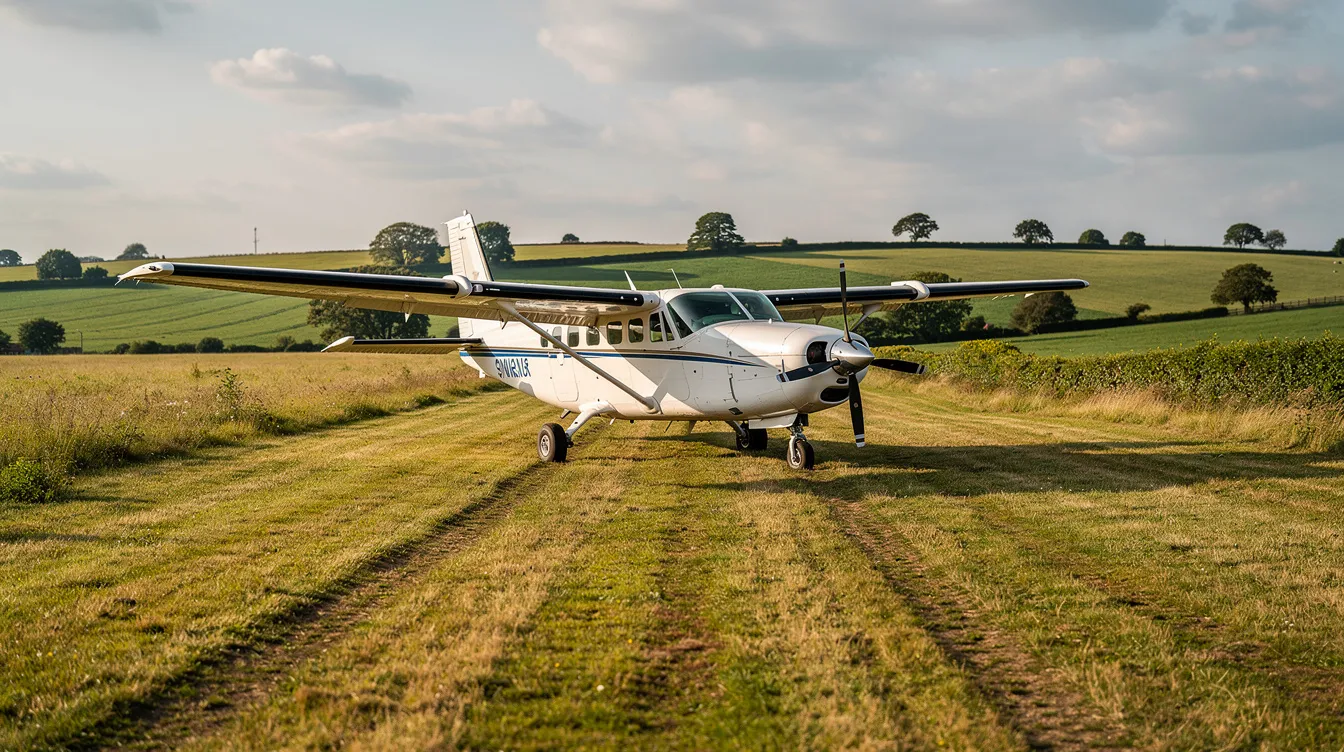
The cessna sale market in 2026 offers buyers and travelers three distinct paths: purchase an aircraft outright, charter on demand, or prepay for flexible access through a jet card program. Each path carries different capital requirements, risk profiles, and scheduling trade-offs. This guide breaks down what cessna aircraft are selling for, which models hold value, how to evaluate a listing, and when flexible access through a provider like BlackJet delivers better economics than ownership. If you're searching for a Cessna sale or evaluating your options for buying, chartering, or accessing Cessna aircraft in 2026, this guide will help you understand the market, pricing, and best strategies.
This guide is designed for business travelers, private pilots, and aviation enthusiasts considering a Cessna sale or exploring flexible access options. Understanding the Cessna market in 2026 is crucial for making informed decisions about ownership, charter, or jet card programs.
Why Elite Travelers Look At Cessna Sales Instead Of Airline Schedules
A typical business trip from Teterboro to Chicago to Dallas and back on commercial airlines consumes six or more hours door-to-door once you factor in check-in lead times, boarding, layovers, and ground transfers. The same routing on a Cessna Citation CJ3 through a jet card or charter model compresses to two to three hours of actual air time, with departures from smaller airfields closer to home and office.
Here is what a single business day looks like under each model:
Commercial business class: Arrive 90 minutes early at a major hub, connect through Chicago O'Hare, wait 75 minutes for a connection to Dallas Love Field, then reverse the process. Total door-to-door: 8+ hours. No control over schedule, limited privacy.
Cessna charter or jet card: Depart Teterboro at 7:00 AM, land at Chicago Midway by 9:15 AM, depart for Dallas by 11:00 AM, land by 12:45 PM. Return that evening. Total air time: under 5 hours. Full privacy, onboard work capability.
Cessna ownership: Same routing flexibility as charter, but the owner covers hangar, insurance, crew, and maintenance whether flying or not.
Many buyers begin their search with terms like "cessna sale" or "cessna 182t skylane for sale," expecting to buy an aircraft. A substantial share of those buyers ultimately discover that flexible access models deliver 80 to 90 percent of the convenience of owning, with far less capital at risk.
Access Model | Capital Outlay | Schedule Control | Privacy | Best For |
|---|
Commercial Business Class | Ticket cost only | Low | Moderate | 1-2 trips/week, major hubs |
Cessna Charter / Jet Card | Pay per hour, no ownership costs | High | High | Variable regional travel |
Cessna Ownership | $350K-$12M+ purchase, plus fixed annual costs | Very high | Very high | 200-300+ hrs/year, specialized missions |
Overview Of The Cessna Market In 2026
Cessna was founded in 1927 by Clyde Cessna in Wichita, Kansas. The company survived the great depression, grew into the world's largest general aviation manufacturer, and has produced over 192,000 aircraft throughout its history. Cessna was acquired by General Dynamics in 1985; Textron acquired Cessna from General Dynamics in 1992, folding it into what is now textron aviation.
From 2023 through 2025, resale values of piston singles rose due to pilot training demand and regional charter growth. Production and deliveries of Cessna piston models have increased steadily during this period. The general aviation market for cessna aircraft transitioned to a more balanced phase by mid-2026, with inventory levels stabilizing across piston and turboprop segments.
Under Textron Aviation, the portfolio also includes Beechcraft, and it anchors three major segments:
Piston singles: 172 Skyhawk, cessna 182t skylane, 206/210 series
Utility turboprops: Caravan, Grand Caravan EX, SkyCourier
Citation jets: M2, CJ3, CJ3+, CJ4, and newer Gen2/Gen3 variants
Geographic hotspots for cessna sales in 2025-2026 include texas (georgetown, TX), Florida, the Midwest (springfield, OH), germany, england (leeds, wiltshire), Brazil, and South Africa (johannesburg, gauteng). Listings appear from as far as quebec, canada to bismarck, North Dakota, and from tulsa to columbia, South Carolina.
Price corridors by segment:
Piston singles (182T, 206): US$350,000 to US$800,000
Utility turboprops (Caravan EX, SkyCourier): US$2.5M to US$10M new
Citation jets (CJ3, CJ4): US$5M to US$12M depending on age and avionics
Cessna's Grand Caravan EX is priced around $2.75 million for a well-equipped late-model example. A clean 2023 cessna 182t skylane lists near $629,000 to $699,000, while 1980s piston twins trade in the $300,000 to $550,000 range.
Key Cessna Categories: Piston, Utility Turboprop, And Citation Jets
Cessna's lineup spans the full spectrum of general aviation, from student trainers to transcontinental business jets. Cessna introduced the 172 model in 1956, and it became the most produced airplane in history. Cessna's Skyhawk model has 45,000 deliveries worldwide.
Piston aircraft include the Cessna 172SP Skyhawk, 182T Skylane, and 206H/T206H Stationair HD. These serve training, owner-flown business trips, and family leisure. Variable operating costs for a 182T run approximately $180 to $210 per hour in 2026, covering fuel, parts, and routine maintenance. Current asking prices for Cessna 172 aircraft range from approximately $45,000 to $600,000, depending on year, hours, and avionics. For a deeper look at Skyhawk economics, see Cessna 172 Costs in 2026.
The utility turboprop segment centers on the Caravan and Grand Caravan EX, plus the SkyCourier. These aircraft dominate short-haul regional lift: cargo, commuter services, remote resort access, and island operations. They fly into strips that jets cannot reach.
Cessna's first business jet, the Citation I, launched in 1969. Since then, Cessna's citation jets have delivered over 7,500 units globally. The current lineup includes the M2 Gen3, CJ3 Gen3, and CJ4 Gen3, covering 400 to 1,500 nm legs at cruise speeds up to 417 KTAS. For a detailed model comparison, see Cessna Citation: Exploring the Best Models for Business Travel.
A quick mission-profile guide: piston aircraft fit 2-4 seats and legs under 500 nm; turboprops carry 9-14 passengers on 900-1,100 nm missions with short-field access; citation jets seat 6-9 and cover 1,800+ nm at speeds above 400 knots.
Iconic Cessna 182T Skylane And Other In-Demand Models
The cessna 182t has become a 2020s market favorite for owner-pilots who need useful load, cruise speed around 145 KTAS, and modern avionics. Late-model 2022 to 2024 examples equipped with G1000 NXi, WAAS, svt, Flight Stream 510, active traffic, and ads b In/Out list between $579,500 and $699,000. Cessna 182T Skylane models are available for $629,000 at the median. Extremely clean examples with low total time and recent paint command the upper end of that range.
Modern avionics can add significant value to an aircraft. An older 182 with a basic six-pack panel may list at $180,000, while the same airframe upgraded with a Garmin G600 and GFC 600 autopilot can fetch $280,000 or more.
The T206H Stationair and Turbo Stationair HD serve as the "SUV" of piston aircraft. A 2006 Turbo 206H based in texas lists near $595,000; 2018 to 2022 Stationair HD models appear from Brazil and Florida. Some owners add flint tip tanks for extended range on ferry and cross-country flights. For specifications on the 206 line, see Essential Insights on the Cessna U206F.
Sought-after older models with upgrades include:
1998 182S with glass panel retrofits
2004 172SP with G1000 upgrade
1974 210 Centurion with overhauled engine
1980-1984 twins: 340A, 414A, and 421C Golden Eagle
Older Cessna models can range in value from $18,000 to over $500,000 depending on condition, engine time remaining, and avionics generation.
New Versus Pre-Owned Cessna: What 2026 Buyers Need To Know
Most cessna transactions in 2024 to 2026 involve pre-owned aircraft, but new production of the 182T Skylane, Grand Caravan EX, and SkyCourier still carries waiting lists in some configurations. The CJ3 Gen2 received FAA type certification in October 2025, with first deliveries around late 2025 at a list price near $11 million.
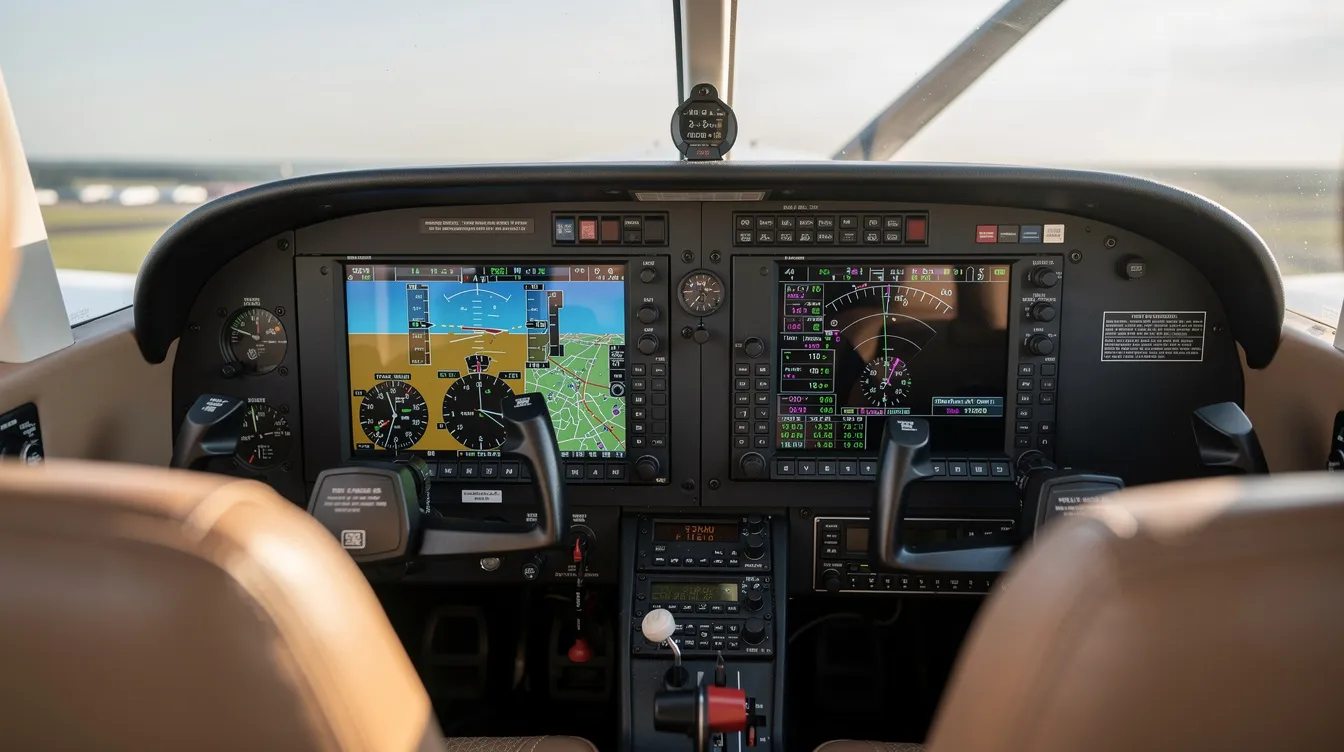
New aircraft advantages: factory warranties, zero-time engines, latest interior options (Lunar, Obsidian, Saddle Sport trims on Grand Caravan EX), full integration with textron aviation support, and Garmin G1000 NXi standard across the piston line.
Pre-owned advantages: lower capital outlay, faster availability (no backlog), and the possibility that avionics are already upgraded. Many pre-owned 182Ts now carry G600 panels, GFC600 autopilots, ads b compliance, and interior refurbishments completed between 2021 and 2024.
Firm pricing exists in the pre-owned business jet market for Cessna, particularly in the Citation CJ3 and CJ4 segments where inventory dropped roughly 38 percent from early 2025 levels.
Total cost of ownership extends well beyond the sticker price. A cessna 182t operating 100 hours per year typically incurs $25,000 to $40,000 annually in fixed costs: insurance, hangar, and scheduled inspections. Add variable costs for fuel (roughly $80 to $100 per hour at current 100LL prices), propeller overhaul reserves, engine reserves, and periodic interior and exterior refresh cycles.
How To Evaluate A Cessna For Sale
A well-evaluated cessna can fly safely and productively for decades. A poorly reviewed aircraft can consume capital faster than it creates value. Navigating the general aviation market requires careful due diligence, and buyers are increasingly scrutinizing logbooks and maintenance pedigree before making offers.
Time metrics and compliance: Due diligence includes examining engine hours and airframe time. Verify total times and compliance with Airworthiness Directives. A 2005 CJ3 listed at roughly $5 million with 3,219 total time, engines at 3,219 hours since new, and 2,651 cycles represents a well-documented example. Check compliance with Cessna Supplemental Inspection Documents (SIDs) on older models. Checking applicable Airworthiness Directives is essential for compliance; missed ADs can ground an aircraft or void insurance.
Avionics and safety technology: Ensure avionics meet current regulations. Look for Garmin G1000 or G1000 NXi, G600 panels, GFC700 or GFC600 autopilots, ads b In/Out (GTX-345R or equivalent), traffic and weather systems, and terrain awareness. Appraising an aircraft involves considering engine time and maintenance status alongside avionics fit.
Cosmetic and structural condition: Inspect for corrosion and complete logbooks prior to purchase. Check factory paint versus recent repaint, interior condition (a CJ3 with a 2024 cabin refurbishment trades far better than one last refreshed in 2012), and hangar history. Inspect for hard landings or undocumented repairs; both show up in logbook gaps or structural discrepancies found during inspection.
Pre-purchase inspection: Hire an independent mechanic for pre-buy inspections. This should include NDT testing on critical components, logbook verification, and confirmation that the aircraft's capabilities match your mission. Define your typical mission to determine the right aircraft: runway length requirements, typical weather, payload profile, and range needs. Buyers should consider maintenance history over asking price; a lower-priced aircraft with deferred maintenance often costs more in the first year than a higher-priced one with everything current.
Financing, Insurance, And Risk Management For Cessna Purchases
Even high-net-worth buyers often use specialist aviation finance rather than paying cash, preserving liquidity for other investments. Bonus depreciation has been pulling buyers forward in the market, particularly for aircraft placed into business use.
Financing: Cessna financing options are available through specialized aviation finance companies. A typical structure for a $600,000 Skylane requires 15 to 20 percent down over a 15 to 20 year term; recent rates run near 6.46 percent. Cessna offers expert guidance throughout the financing process, and financing can help secure loans tailored to your budget whether you are buying a piston single or a $2.75M Grand Caravan EX; a broader guide to aircraft financing options and strategies can help you structure the right deal.
Insurance: Cessna insurance options include liability and hull coverage. Premiums for piston aircraft depend on pilot experience, instrument ratings, and annual flight hours. For jets and turboprops, crew certification and avionics safety systems (TCAS, TAWS) affect rates. Cessna insurance can include personal accident and passenger liability. Insurance brokers can help find tailored coverage for cessna aircraft across all categories.
Risk mitigation: Some dealers offer limited guarantees on pre-owned aircraft, such as 30-day/30-hour or 365-day/100-hour engine and component guarantees. Compare this risk profile to charter or jet card models, where the operator carries maintenance and insurance risk. For a breakdown of jet card pricing structures, see Understanding Jet Card Pricing and deeper analyses of jet card cost per hour and 100-hour jet card costs.
Before signing a purchase agreement, have financing pre-approval in hand, insurance quotes from at least two brokers, a completed pre-buy inspection report, and a clear picture of your first-year operating budget.
Buying A Cessna Versus Using A Jet Card Or On-Demand Charter
Many BlackJet clients who initially plan to buy a cessna ultimately mix ownership with flexible access, or choose access instead of owning. The economics depend almost entirely on annual utilization, and products like the BlackJet 25+ Hour Jet Card are designed around predictable usage bands.
At fewer than 100 flight hours per year, ownership fixed costs (hangar at $500 to $2,000/month, insurance at $3,000 to $15,000/year, annual inspection, and engine reserves) stack up fast. A BlackJet 25-hour Jet Card or 50-hour Jet Card eliminates those fixed obligations entirely, giving you predictable jet card membership pricing.
Consider a European founder flying London to leeds to Munich twice a month. Owning a 182T based at Leeds Bradford Airport means covering UK hangar fees, CAA insurance, annual maintenance, and the limitation that a piston single cannot comfortably cover the Leeds-Munich leg (roughly 600 nm over water and terrain). Through BlackJet, the founder books a Citation CJ3 for the longer leg and a turboprop for shorter hops, paying only for hours flown, with no asset management overhead.
Ownership makes sense above 200 to 300 hours per year, or when mission-specific needs (specialized cargo, remote airstrip access, custom cabin equipment) demand a dedicated airframe, especially if you are also evaluating fractional jet ownership and depreciation as part of your strategy. Below that threshold, chartering flights or jet card access guided by a clear understanding of jet card cost per hour provides superior flexibility across multiple aircraft categories and routes.

How BlackJet Curates Cessna Aircraft Within Its Fleet Access
Not every cessna on the resale market meets BlackJet's standards, and the same selectivity applies to partners and advisors working in private jet sales careers. The company applies a safety-first vetting process to every partner operator and aircraft type before members can book flights.
Safety: Operators must hold current certifications under Part 135 or equivalent. Maintenance records, pilot training frequency (recurrent simulator sessions, type ratings), and accident history are reviewed before any aircraft enters the network.
Technology: Minimum avionics standards include ads b In/Out, modern autopilots, terrain awareness, and traffic systems. BlackJet's digital platform provides real-time quoting, aircraft type selection, and flight tracking for every booking.
Service: BlackJet members fly on Cessna Caravan, Grand Caravan EX, and Citation M2/CJ3/CJ4 aircraft through partner operators, with cabins configured for executive or high-density missions depending on the route, and supported onboard by highly trained private plane cabin crew professionals.
Sustainability: Every flight booked through BlackJet, including those on cessna aircraft, is carbon neutral via verified carbon offset programs built into the price of every trip.
Using Cessna Aircraft For Business: Practical Trip Scenarios
Cessna aircraft, from utility turboprop models to light jets, fill the gap where airlines are absent or inefficient, especially for travelers comparing whole-aircraft access with buying a seat on a private jet.
Venture capital portfolio review: A three-partner team based in San Francisco needs to visit portfolio companies at airfields in Reno, Elko (Nevada), and Bend (Oregon) in a single day. A Cessna Grand Caravan EX departs Reid-Hillview at 6:30 AM, lands at all three fields (two of which have no commercial service), and returns by 7:00 PM, illustrating the kind of bespoke routing also available in markets like Karachi private jet charters. The same itinerary on commercial flights would require three days and two hotel nights.
Law firm cross-border meetings: Two partners from a New York firm need to attend meetings in Toronto and Boston in the same day, handling privileged documents onboard. A Citation CJ3 on a BlackJet Jet Card departs Westchester at 7:00 AM, reaches Toronto Pearson by 8:30 AM, departs for Boston Logan at 1:00 PM, and returns the partners home by 6:00 PM. Confidentiality stays intact; no airport lounge eavesdroppers.
Texas rancher hybrid model: A family based near Austin owns a cessna 182t for weekend flights to ranch airstrips across west texas and into mexico. For longer legs (Austin to Aspen, or Austin to cisco, TX to Johannesburg for a business trip), they book Citation or midsize jets through BlackJet. The piston handles the short, rough-field missions; the jet card handles everything else.
Finding And Selling Cessna Aircraft: Marketplaces, Brokers, And Strategy
The cessna market is global, and it sits alongside a broader landscape of top-performing aircraft of 2026. Inventory moves between North America, Europe, and Latin America regularly. Cessna offers over 1,000 aircraft listings for sale at any given time across major platforms, and buyers focused on the UK market can also review premium private jets for sale in the UK. General aviation listings are available on a dedicated website like Trade-A-Plane, Controller, or AeroGurus, and buyers comparing listings often weigh them against affordable small aircraft options that keep ownership costs manageable. Buyers can use filters to narrow options by year, location, condition, or price. Serious buyers and sellers benefit from working with specialist brokers in markets like wichita, georgetown (tx), springfield (OH), johannesburg, Guilford, CT, and mexico.
When reading a listing, focus on: year, total time, engine and propeller time, avionics list, damage history, hangar status, location, and asking price, and request full details if the summary is incomplete. A 2016 Grand Caravan EX at $2,750,000 with clean logs and no damage history trades faster than a $2,500,000 example with a gear-up landing in its past.
For sellers, preparation matters. Completing a fresh annual inspection before listing removes a common buyer objection. Gathering complete logs, commissioning high-quality photographs showing the wing, tail, interior, and panel, and timing the listing for Q2 or Q3 (when North American buyers are most active) all accelerate the sale. Sellers in places like leeds, wiltshire, or gauteng should consider listing on both local and U.S. platforms to reach the widest pool of customers.
For clients who prefer not to own, BlackJet provides an alternative: placing selected aircraft with professional operators and accessing them through a private jet leasing and jet card framework, turning a potential asset-management headache into managed, on-demand lift. Those looking to sell can contact brokers who serve both the trade and retail market.
Safety, Training, And Simulation For Cessna Operations
Safety is non-negotiable whether the aircraft is a 1972 Cessna 182P or a 2025 Grand Caravan EX, and it is a core pillar of BlackJet’s premium private jet services. Buyers should budget for training alongside purchase price.
Formal training: Textron aviation operates pilot centers with approved programs for Caravan and Citation type ratings. Flight simulators for these aircraft types allow pilots to practice engine failures, icing scenarios, and unusual attitudes without risking the actual airframe. Insurers often require structured initial and recurrent training for both owner-pilots and professional crews.
Owner-pilot transitions: Moving from a C-172 to a high-performance cessna 182t or T206H introduces higher approach speeds, more complex weight-and-balance calculations, and mountain operations considerations. Transition training with an experienced CFI typically requires 10 to 15 hours of dual instruction.
BlackJet crew standards: All partner operators in BlackJet's network use crews that exceed minimum regulatory training standards. Recurrent simulator sessions, standardized operating procedures, and ongoing proficiency checks reduce risk for members flying on cessna aircraft across the piston, turboprop, and jet categories, and reflect broader private jet pilot cost and training dynamics along with typical private jet pilot salary ranges.
Choosing The Right Path: Own A Cessna, Fly Cessna, Or Do Both With BlackJet
Cessna aircraft, from the 182T Skylane to the Grand Caravan EX and Citation jets, provide extraordinary flexibility. But capital, utilization, and mission profile should drive the decision, not aspiration alone.
A simple decision framework: estimate your annual flight hours, typical route length, need for short or rough field access, desire for cabin services, and tolerance for asset management. From there, three archetypes emerge:
Ownership-focused: A rancher or regional business owner flying 200+ hours per year in a 182T or Stationair, with a home airstrip and a dedicated mechanic on call.
Access-focused: A global executive who needs different aircraft types on different routes; this page of the aviation playbook belongs to Jet Card programs that provide citation jets one week and turboprops the next, with many best jet cards for frequent flyers emphasizing guaranteed availability and transparent pricing.
Hybrid: An owner who keeps a piston for local flying and uses BlackJet for longer, international, or weather-challenged legs where a jet is the right tool.
Explore how BlackJet can build a tailored aviation strategy around your travel patterns. Whether you buy a cessna, fly one through on-demand access, or combine both approaches, the objective is the same: reclaim the hours that commercial aviation wastes and fly on your terms, with safety, technology, and carbon-neutral commitment built into every flight.


 Sign up with google
 Sign up with Apple