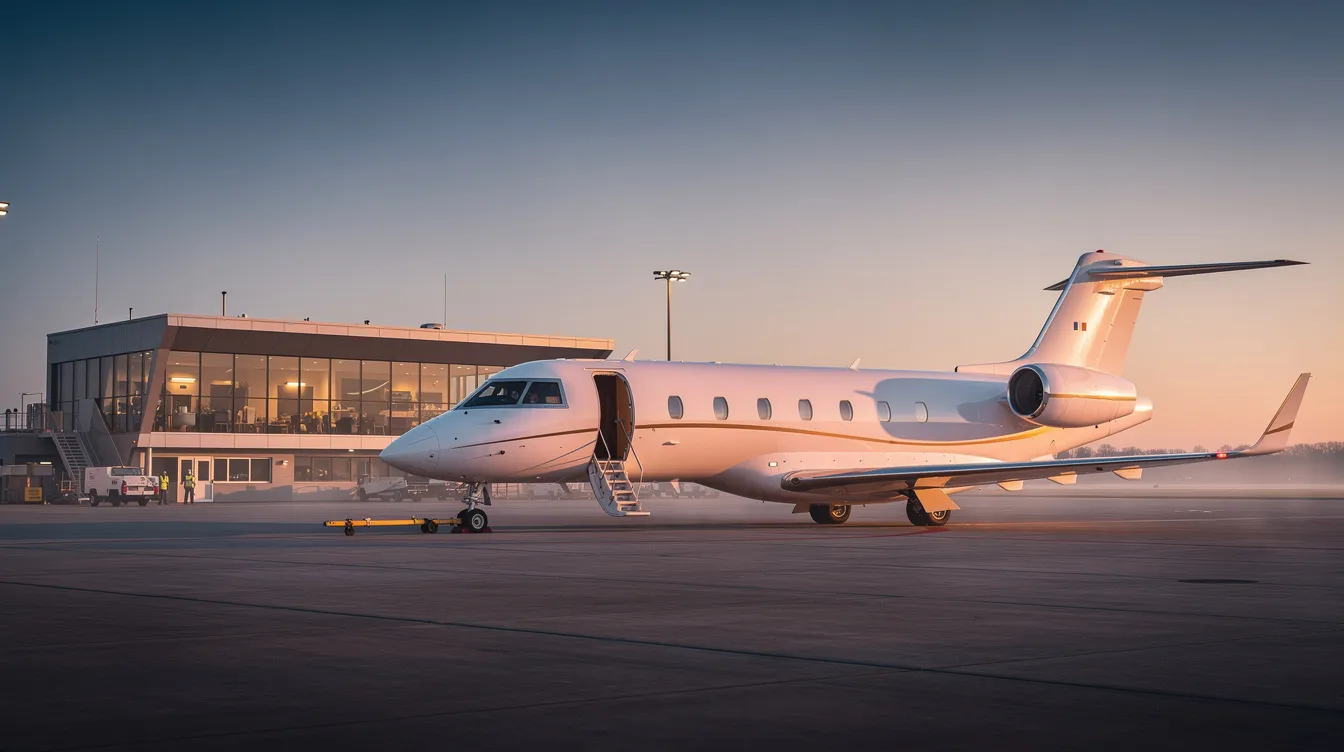
Private aviation is not simply a more comfortable way to fly. For executives, families, and high-net-worth travelers, it is a way to control time, reduce friction, and manage multiple destinations with precision.
The Cessna Citation family sits at the center of that advantage. From the compact Citation Mustang to the Citation Longitude, these aircraft deliver the mix of access, efficiency, and comfort that makes a Jet Card practical for real-world travel.
Why Cessna Citation Jets Matter for Strategic Private Travel
Commercial first class may improve the seat, but it rarely changes the system: fixed schedules, security lines, hub airports, missed connections, and ground transfers. By contrast, Cessna Citation jets can often depart from smaller airports closer to the traveler’s origin and destination, saving one to three hours each way on routes such as New York–Chicago or London–Geneva.
That time matters. Cessna Citation jets enable efficient management of multiple destinations within a day, turning a one-meeting commercial itinerary into two or three productive stops. Some Citation jets can operate from smaller airports that larger jets cannot access, and Citation jets are known for their ability to land at smaller airports.
From BlackJet’s perspective, Citation aircraft provide strategic private jet access across the light jet category, midsize missions, and super-midsize travel. For many missions, they compete directly with the best small private aircraft for tailored business and family travel. Citation jets provide a balance of comfort, performance, and operational flexibility, while Cessna Citation jets offer high performance without the premium cost of larger jets.
Core models such as Cessna Citation II, Citation Bravo, Cessna Citation Mustang, Citation CJ3, Cessna Citation CJ4, Cessna Citation Latitude, and Cessna Citation Longitude give Jet Card members options for short regional hops, cross-country business travel, and longer premium itineraries.
The Cessna Citation Family: An Overview of the Lineage
The Citation I was the first aircraft in the Citation line, introduced in 1972 and entered service in 1972, with 668 aircraft produced from 1971 to 1985. The Citation was produced from 1971 to 1985, and production ended in 1985, establishing a durable template: a practical business jet designed for owner-operators, companies, and charter fleets.
Cessna was acquired by Textron in 1992, becoming Textron Aviation. Today, Textron Aviation continues to support one of the most successful aircraft families in business aviation: the Cessna Citation family has over 8,000 aircraft delivered since 1972.
Cessna classifies its Citation family into several distinct lines, spanning very light jets, light jets, midsize jets, and larger intercontinental aircraft. The Citation series includes light jets to large intercontinental aircraft, though Cessna Citation jets are designed for short-to-mid-range flights as their core strength.
The lineage includes early straight-wing aircraft such as Citation II, Citation III, Citation VI, Citation VII, Citation Ultra, and Citation Encore; the CJ line; the Citation Excel and Citation XLS midsize family; and modern flagships such as Citation Latitude and Citation Longitude. For any aviation enthusiast, the key features are clear: proven engines, useful range, dependable avionics, and traveller-focused aircraft features.
Category | Example Citation model | Typical role | Seats |
|---|
VLJ | citation mustang | Short regional trips | 4 |
Light | citation m2, citation cj3, citation cj4 | Regional business travel | 6–10 |
Midsize | citation excel, citation xls | 3–5-hour missions | 7–9 |
Super-midsize | citation latitude, citation longitude | Longer premium travel | 8–12 |
The Citation III was introduced in 1983 and entered service in 1984, being produced until 1992. The Citation III has a range of 2,350 nautical miles, and the Citation III had a range of 2,348 nautical miles in commonly cited specifications. The Citation X, known for its speed, was produced from 1996 to 2012; the Citation X has a maximum cruise speed of 525 knots, and the Citation X had a maximum cruise speed of 525 knots, about 972 km h.
BlackJet Jet Card members may fly several Citation types across different missions without needing to own, staff, insure, or manage a specific tail number, while still benefiting from the predictable hourly rates and terms outlined in our guide to overall Jet Card cost and value.
The Pivotal Classics: Cessna Citation II and Citation Bravo
The Cessna Citation II defined the modern light business jet segment. The Citation II was produced from 1978 to 1995, typically offering seven to eight passengers, a private cabin, and a range of around 1,900–2,000 nautical miles for missions such as London–Madrid or Chicago–Dallas.
Powered by two Pratt & Whitney Canada JT15D-style engines, the Citation II gave travelers club seating, an enclosed lavatory, and a compact refreshment area. On a two- or three-hour flight, that means privacy, preparation time, and uninterrupted conversation.
The citation bravo followed as the refined successor, produced from 1997 to 2006 with PW530A engines, Honeywell Primus 1000 avionics, improved performance, better climb, and more efficient fuel burn. It remains useful for regional business trips, short-notice family travel, and secondary-airport access.
BlackJet may match shorter Jet Card missions to this class when the route, passengers, luggage, and runway profile make it the best cost-value fit, especially for travelers considering the flexibility of a 25-hour Jet Card structure and pricing.
The CitationJet & CJ Series: Efficient Light Business Jets
The CitationJet brought the Citation concept into a more modern light jet platform. Its first flight led to the Model 525 family, followed by CJ1, CJ2, Citation CJ3, and Citation CJ4 variants that became popular among owner-operators and charter companies.
Many Citation models are certified for single-pilot operation, and the single-pilot version of certain CJ aircraft helps private owners manage costs. BlackJet flights, however, use professional two-pilot crews and vetted operators, even where single-pilot certification exists, aligning with the safety and service benchmarks discussed in our overview of the top private jet companies for luxury travel.
The Cessna Citation CJ4 is the largest CJ-series jet. The Citation CJ4 has a maximum range of 1,918 nautical miles, the Citation CJ4 has a maximum cruise speed of 451 knots, and the Citation CJ4 Gen2 has the maximum operational range among Citation jets in the CJ-series context. The citation CJ4 can carry up to about 10 passengers in typical configurations.
Later, CJ aircraft use modern avionics such as GarminG300000, Pro Line 21, synthetic vision, WAAS/LPV approaches, and advanced autopilot tools. Modern Citation jets utilize advanced avionics like Garmin G3000 and G5000, improving situational awareness in busy airspace or challenging weather.
From Very Light to Versatile: Cessna Citation Mustang & M2
The Cessna Citation Mustang helped create a practical entry point into private jets. Produced from 2006 to 2017, the Citation Mustang sits in the VLJ category with a compact cabin, four-passenger club layout, Garmin G1000 cockpit, and a maximum takeoff weight of nearly 8,700 pounds.
The Citation Mustang is ideal for one- to two-hour trips, such as Los Angeles–Napa or London–Zurich, especially when speed through the airport matters more than a spacious cabin. Its luggage capacity and lavatory arrangements are modest, but its operating economics are strong, making it comparable to other efficient ways to buy a seat on a private jet for short hops.
The Citation M2 is the next step up, with six to seven seats, about 1,550 nautical miles of range, higher cruise speed, and a more capable cockpit. The Citation M2 features modern Garmin G3000 avionics, making it a strong fit for BlackJet members who want efficient regional private jet access without moving into a larger aircraft.
Midsize Excellence: Citation Excel, XLS+, and Ascend
The Citation Excel marked a major move from light jet practicality into midsize comfort. The Citation Excel has a maximum range of 2,100 nautical miles, combining a generous fuselage cross-section with relatively efficient operating costs.
The citation XLS and XLS+ added upgraded engines, refined systems, and more advanced avionics. These jets typically seat 7–9 passengers, offer a larger cabin width than light jets, and provide better baggage capacity for 3–5-hour trips, positioning them within the midsize tier in any comparison of private jet sizes and ideal use cases.
The Citation Sovereign has a range of 2,920 nautical miles, offering increased range over the Excel/XLS class for longer midsize missions. The new citation Ascend will enter service in 2025 as the latest evolution of this line, carrying its increased range and refinement forward with a flat-floor cabin, larger windows, and improved systems, even as some travelers consider moving up into the largest private jets for maximum space and range.
A BlackJet member flying a leadership team from New York to Dallas and back in a day on an XLS+ class aircraft can meet onboard, avoid overnight stays, and keep the day under their control.

Super-Midsize Flagships: Cessna Citation Latitude & Longitude
The Cessna Citation Latitude and Cessna Citation Longitude represent the modern flagship side of the Citation family. The Citation Latitude has a maximum range of 2,700 nautical miles, and the Citation Latitude features a flat floor and spacious cabin.
The citation latitude offers a flat floor, a stand-up cabin, a quiet environment, and typical 8–9 passenger seating. Its cabin stretches over smaller models, giving executives more room to work, rest, and move comfortably.
The citation longitude is a stretched version of the Latitude concept, adding a seat row, more range, and greater capability. The Citation Longitude has a maximum range of 3,500 nautical miles, giving it an impressive range for longer missions, and it can fly non-stop on many transcontinental routes, which is where accurate tools like a private jet flight time calculator for precise planning become especially useful.
The Citation Longitude can cruise at 483 knots and can accommodate up to 12 passengers, giving it the maximum passenger count of the current Citation flagship class. With powerful engines, Garmin G5000 avionics, autothrottles, advanced weather systems, and LINXUS diagnostics, the Longitude operates as a true airborne boardroom.
Compared with older large-cabin jets, the Latitude and Longitude use modern engines and aerodynamics to improve fuel efficiency on comparable missions.
How BlackJet Uses the Citation Family Within Our Jet Card Programs
BlackJet’s Jet Card programs and premium private jet services, including 25-hour and 50-hour options, give members prepaid access to private aviation without aircraft ownership. Specific tails are not guaranteed, but Citation aircraft frequently support light, midsize, and super midsize jet missions.
Common matches include:
Mustang/M2: Los Angeles–Napa, London–Zurich, Miami–Bahamas, typically covered under the transparent structures described in our guide to Jet Card pricing and fees.
CJ3/CJ4: New York–Atlanta, Houston–San Jose, Paris–Moscow-style regional legs.
Excel/XLS+: New York–Dallas, Chicago–Scottsdale, London–Madrid.
Latitude/Longitude: New York–Los Angeles, São Paulo–Lima, longer premium itineraries.
Members specify cabin class, timing, passengers, luggage, and trip requirements through BlackJet’s digital booking platform. Our operations team then matches the best available aircraft for safety, cost-efficiency, comfort, and schedule integrity.
Compared with owning an aircraft, a Jet Card built around reliable aircraft like Citation jets removes fixed costs such as crew, hangar, insurance, maintenance, downtime, and depreciation, which are outlined in any thorough private jet price list of ownership and charter options.
Safety, Certification, and Technology on Cessna Citation Jets
For BlackJet, comfort matters, but safety comes first. Citation aircraft have a long certification history, with redundancy in critical systems, certified performance data, and cockpit technology that supports professional decision-making—the same priorities that shape our recommendations on the best jet cards for frequent flyers.
Modern Citation jets utilize advanced avionics like Garmin G3000 and G5000, along with Pro Line 21, synthetic vision, terrain awareness, traffic systems, and advanced autopilot capability. You can see examples of Garmin’s integrated flight deck technology through Garmin Aviation.
BlackJet works with highly vetted operators, professional two-pilot crews, rigorous maintenance oversight, and recognized safety frameworks such as ARGUS, Wyvern, or IS-BAO-style standards where applicable. Travelers comparing providers, such as in our analysis of NetJets Jet Card cost and programs, will recognize similar emphases on safety and standards. Newer Citations use data-driven maintenance tools, including LINXUS diagnostics, to improve reliability.
For example, on a winter flight into a mountain airport, a Citation CJ4 or Latitude may use anti-ice systems, synthetic vision, LPV guidance, and real-time weather to preserve schedule integrity while maintaining conservative safety margins.
Sustainability and Efficiency: Citations in a Carbon-Neutral Framework
Efficiency is part of the Citation value proposition. Citations are designed for lower operating costs with fuel-efficient engines, especially on routes where a heavy jet would be unnecessary.
BlackJet integrates carbon-neutral flights into its Jet Card experience by tracking emissions and applying carbon offsets or sustainable aviation fuel programs where available. That means a member’s multi-city business tour on efficient Citation jets can align with corporate ESG targets without adding logistical burden, even when compared with ownership and other access paths evaluated in our overview of 10-million-dollar private jet options and strategies.
Models such as CJ3+, CJ4, Latitude, and Longitude benefit from modern engines, optimized avionics, and aerodynamic improvements. Citation models are designed for productivity with ergonomic seats and connectivity options, so efficiency does not require sacrificing the working environment on board.

Choosing the Right Cessna Citation Jet for Your Mission
Choosing the right Citation is about matching the aircraft to the mission, not simply choosing the largest cabin. Key factors include passenger count, route distance, runway length, luggage, connectivity needs, budget per hour, and desired cabin experience.
Use these profiles as a guide:
Mustang/M2: 2–4 passengers, sub-two-hour routes, limited luggage, fast access.
CJ3/CJ4: small teams, regional missions, more speed and range.
Excel/XLS+: 6–8 passengers, more baggage, more cabin comfort.
Latitude/Longitude: longer itineraries, premium cabins, stronger range, and more amenities, while larger groups may instead look to private jets configured for around 50 passengers.
BlackJet advisors help members compare the right citation model for each trip and determine whether higher-commitment options, such as a 100 hour Jet Card and its total cost profile, make sense for their flying. The breadth of the Cessna Citation family is what makes tailored private travel possible through one Jet Card relationship.
FAQs About Cessna Citation Jets and BlackJet Jet Cards
What is the difference between a Citation Latitude and a Citation Longitude for passengers?
The Citation Latitude has a maximum range of 2,700 nautical miles, a flat floor cabin, and typical seating for 8–9 passengers. The Citation Longitude offers a stretched cabin, up to 12 passengers, 483-knot cruise capability, and up to 3,500 nautical miles of range.
How does a Cessna Citation II compare to newer light jets like the Citation CJ3+?
The Citation II was produced from 1978 to 1995 and offers classic light-jet utility with seating for around seven passengers. A newer CJ3+ generally adds improved avionics, better fuel efficiency, quieter systems, and more modern passenger technology.
Are all Cessna Citation jets used by BlackJet carbon-neutral?
BlackJet’s Jet Card framework is designed to integrate carbon-neutral flights through emissions tracking, offsets, and SAF programs where available. The aircraft may vary, but the sustainability process is handled for the member.
Can I request a specific Citation model with my BlackJet Jet Card?
Members may express preferences, but BlackJet generally guarantees a category rather than a specific tail. This protects availability, safety planning, and cost efficiency while still matching the right cabin class.
How does safety oversight work when I fly on a Citation through BlackJet?
BlackJet uses vetted operators, two-pilot crews, maintenance oversight, and modern safety standards. Aircraft with advanced avionics, certified performance, and proactive diagnostics are prioritized where mission requirements call for them.
Elevate Your Travel with BlackJet and the Cessna Citation Family
The Citation family spans the practical classics, including Cessna Citation II and Citation Bravo, through the CJ series, Citation Mustang, Citation Latitude, and Citation Longitude. Across that range, travelers gain access to aircraft built for flexibility, productivity, and confident point-to-point travel.
BlackJet brings these advantages into a single Jet Card relationship: safety-first operations, technology-enabled booking, real-time support, and carbon-neutral business jet travel.
Explore BlackJet’s 25+ Hour Jet Card solutions to discover which Citation-based options best fit your travel profile. Schedule a consultation or request Jet Card details to make a private flight more seamless, strategic, and effortless.


 Sign up with google
 Sign up with Apple