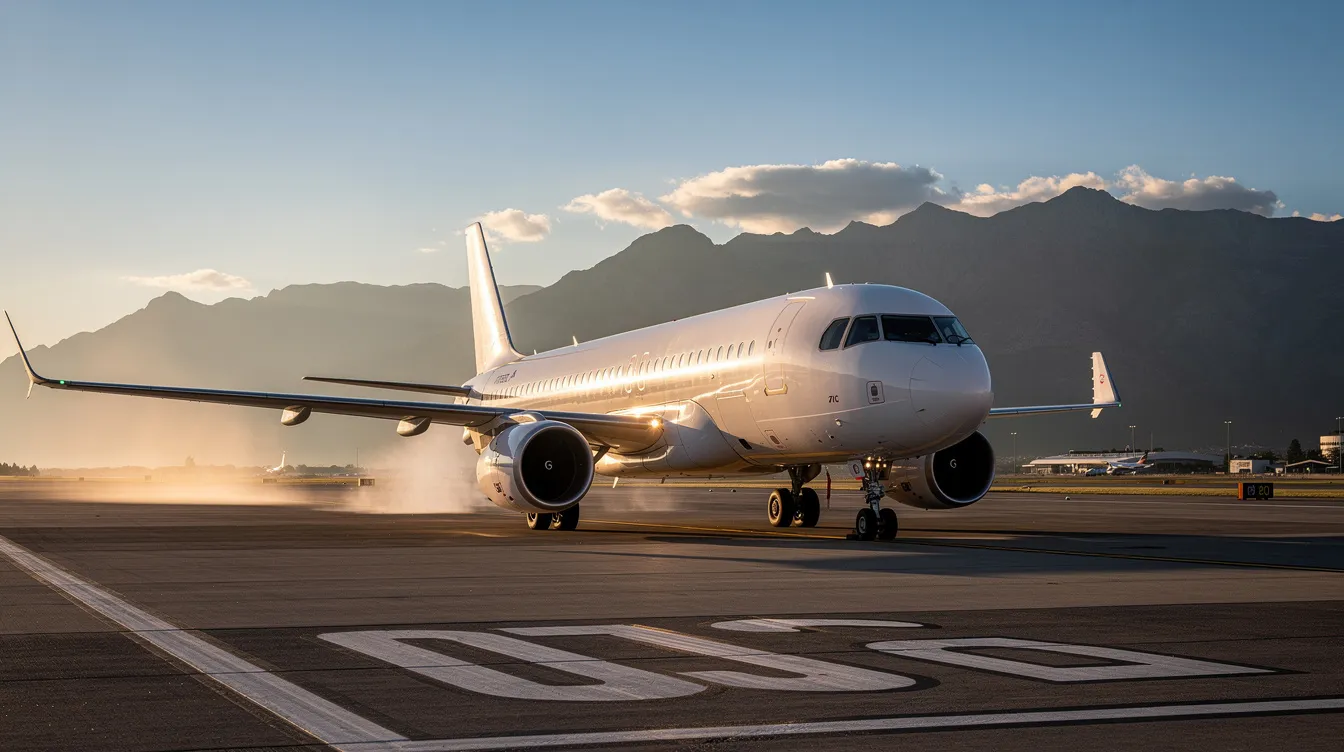
The Boeing 737‑9 MAX sits at a crossroads of engineering ambition, regulatory scrutiny, and evolving traveler expectations. For executives and frequent flyers who treat air travel as a strategic decision rather than a commodity, understanding this airplane—its strengths, its controversies, and the alternatives it inspires—is more than aviation trivia. It is a lens through which to evaluate how you fly, why you fly, and whether commercial aviation still serves your priorities.
Quick Overview of the Boeing 737‑9 MAX
The Boeing 737‑9 MAX (also referred to as the Boeing 737 MAX 9 or simply the MAX 9) is the stretched member of the 737 MAX family, a single-aisle, twin-engine narrow-body airliner that entered service in 2018 as an update to the aging 737‑900ER. Designed to compete directly with the Airbus A321neo on high-density medium-haul routes, the aircraft delivers improved fuel efficiency, lower emissions, and upgraded cabin amenities compared with earlier Boeing 737 generations.
Public perception of this airplane has been shaped by significant safety events:
The 2018–2019 MCAS-related crashes that grounded the entire 737 MAX fleet worldwide
The January 5, 2024 Alaska Airlines Flight 1282 incident involving a detached door plug panel
Both episodes reshaped regulatory oversight and how passengers—especially premium travelers—think about the equipment they fly on.
This article covers:
Aircraft features, technical specifications, and cabin experience
Safety and certification history, including crashes, groundings, and quality reforms
Operational use by major airlines around the world
How BlackJet private aviation offers a strategic alternative for discerning travelers who want full control over the aircraft they board
Position of the 737‑9 MAX within the Boeing 737 Family
The Boeing 737 lineage stretches back to the original 737‑100 in 1967, evolving through "Classic" (‑300/400/500), Next Generation (NG: 737‑600/700/800/900/900ER), and now the MAX generation. The MAX series was built on the legacy type certificate established in December 1967 and amended through each subsequent variant.
Boeing 737 MAX 9, Boeing 737‑9 MAX, and "MAX 9" all refer to the same variant. It effectively replaces or supplements routes previously flown by the 737‑900ER.
The MAX 7 targets regional and thin routes. The MAX 8 is the workhorse with the most deliveries. The high-density MAX 8 "MAX 200" serves specific low-cost operators. The MAX 10, a further stretch beyond the MAX 9, remains in the certification process.
Commonality across the 737 MAX family is a major advantage for airlines: identical pilot type ratings, shared spare parts, unified cockpit layout. All 737 MAX aircraft share a common flight deck design allowing for cross-training of pilots—a principle that private jet operators, including those offering Boeing Business Jets, also leverage for fleet efficiency.
Development Timeline and Certification of the 737‑9 MAX
Boeing launched the MAX program in 2011 as its answer to the Airbus A320neo family, targeting fuel burn reduction, emissions improvements, and lower cost per trip for airlines navigating rising demand.
Key Milestones
2011: MAX program launched
April 13, 2017: First flight of the Boeing 737 MAX 9 from Renton, Washington
February 2018: FAA certification of the MAX 9 as a derivative of the existing 737 type certificate
2018: First deliveries to Lion Air group, followed by Alaska Airlines and United Airlines
Flight Testing: Thousands of hours across multiple dedicated test aircraft, covering aerodynamic performance, systems reliability, and flight envelope validation
FAA Review: Included Joint Authority Technical Review (JATR) and Technical Advisory Board (TAB) oversight
The development timeline underscores how the Boeing 737‑9 was expected to be a straightforward evolution rather than a clean-sheet design—a decision that would later shape both its strengths and its vulnerabilities.
Core Aircraft Features and Passenger Experience
Engines and Fuel Efficiency
CFM International LEAP-1B engines deliver higher bypass ratios, composite fan blades, and measurably lower fuel burn and noise relative to the CFM56 engines on NG models
The 737 MAX family uses approximately 20% less fuel compared to the previous generation of aircraft
Updated wing design incorporates Boeing Advanced Technology winglets (split-tip winglets) that improve aerodynamics and reduce vortex drag
Cabin Amenities
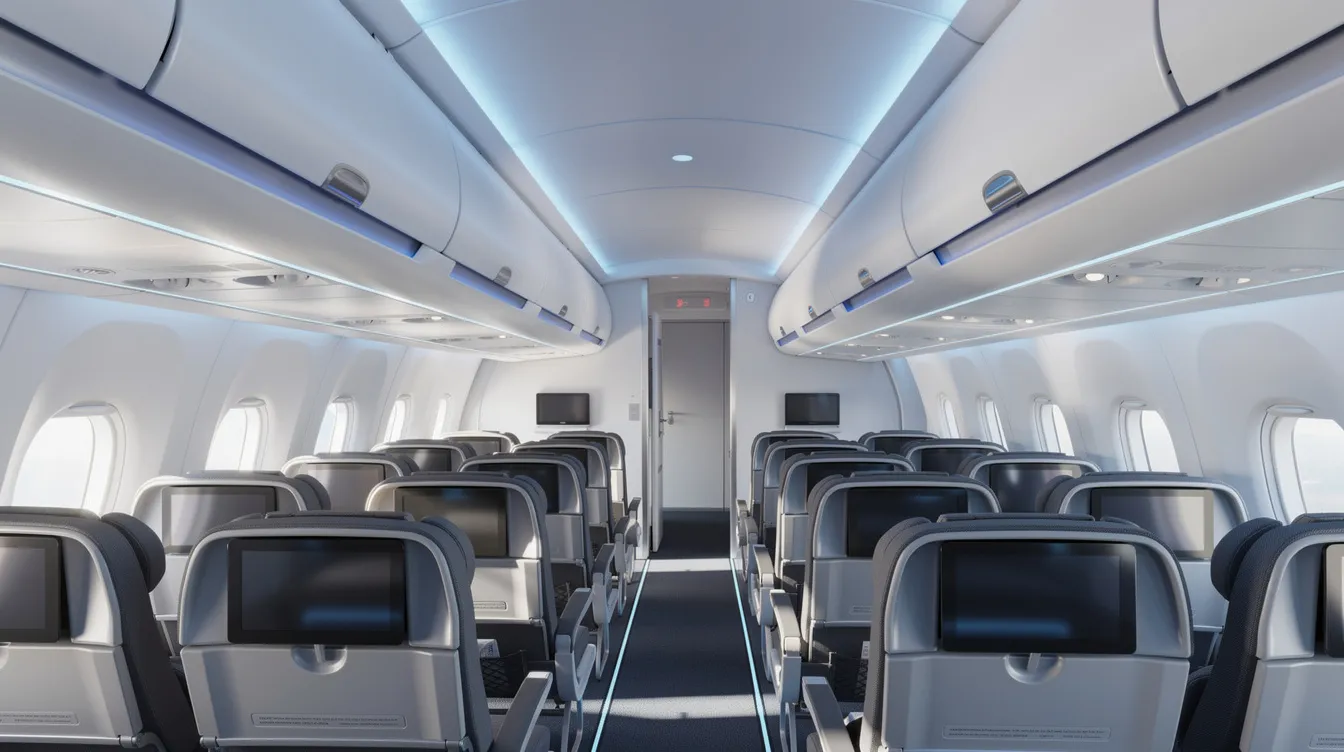
Boeing Sky Interior includes sculpted sidewalls, LED mood lighting, and pivoting overhead bins
Larger overhead storage bins and LED mood lighting contribute to a perception of a more spacious, premium environment
Cabin amenities commonly installed include leather seats, in-seat power outlets, USB ports, inflight Wi‑Fi, and streaming or seatback entertainment systems (availability varies by airline)
Seating Capacity
In a typical two-class configuration, airlines seat around 178 passengers
Maximum capacity: up to 220 passengers in a single-class configuration, depending on the operator's layout choices
Alaska Airlines configures its MAX 9 with 178 seats; United uses a 179-seat map
Technical Specifications of the Boeing 737‑9 MAX
Below is a quick-reference table of the Boeing 737‑9 MAX’s core specifications:
Specification | Value |
|---|
Length | 42.16 meters (138 feet 2 inches) |
Wingspan | 117 feet 10 inches (with advanced technology winglets) |
Height | 12.3 m (40 ft 4 in) |
Maximum Takeoff Weight (MTOW) | 88,313 kg (approx. 194,700 lb) |
Range | 3,550 nautical miles (max ~3,300 nm under certain payloads) |
Cruise Speed | ~530 mph (Mach 0.79–0.82) |
Propulsion | 2 × CFM International LEAP-1B engines |
Crew | 2 pilots (cabin crew varies by configuration) |
Seating Capacity | ~178 (two-class), up to 220 (all-economy) |
Aerodynamic and Structural Innovations on the 737 MAX
Boeing Advanced Technology winglets improve aerodynamics, minimizing drag and reducing fuel burn by roughly 1.5–2% on longer sectors
Larger LEAP-1B engines required the nose gear to be lengthened and engines to be mounted slightly higher and further forward on the wing, altering pitch behavior and necessitating MCAS
Structural reinforcements in landing gear, airframe, and fuselage near exit doors accommodate higher weights
The 737-9 incorporates a mid-cabin emergency exit door configuration, a design point central to scrutiny after the Flight 1282 incident
Advanced fly-by-wire electronics integrated into an updated glass cockpit with larger LCD displays, while maintaining 737NG cockpit commonality
Operational History, Airlines, and Route Profiles
Major Operators and Fleet Utilization
Alaska Airlines: ~80 MAX 9 aircraft (mid-2026), average fleet age ~3.6 years, >342,000 block hours in trailing-twelve-month utilization
United Airlines: ~79 MAX 9 aircraft, deployed on dense domestic routes including coast-to-coast city pairs
Copa Airlines: ~29 aircraft, used on routes within Central and South America
Aeroméxico: ~19 aircraft, deployed on U.S.–Mexico services
Other Operators: Turkish Airlines and other global carriers
Route Profiles and Reliability
Designed for higher-capacity routes with better economics, typically replacing 737‑900ER or 757 fleets on stages from 500 to over 3,000 nautical miles
Post-return-to-service dispatch reliability often exceeds 99% after software updates, maintenance changes, and enhanced training
Safety Challenges: Crashes, Grounding, and Lessons Learned
MCAS and the 2018–2019 Crashes
Lion Air Flight 610: Crashed into the Java Sea on October 29, 2018 (MAX 8)
Ethiopian Airlines Flight 302: Crashed on March 10, 2019 (MAX 8)
Combined death toll: 346
Root cause: MCAS (Maneuvering Characteristics Augmentation System) erroneously triggered by faulty angle-of-attack sensor data, causing repeated uncommanded nose-down trim inputs
System flaws: Relied on a single sensor, could activate repeatedly, and pilots had not been fully trained on its behavior or existence
FAA Grounding and Return to Service
March 2019: 737 MAX grounded worldwide after two fatal crashes
Grounding duration: Nearly 20 months
Return to service: Late 2020 after extensive software updates, hardware modifications, and mandatory pilot training changes
MCAS redesign: Uses both AoA sensors, limits activation to a single event cycle, and ensures pilots can always override the system manually
Ongoing Safety Reforms
Boeing fined over $2.5 billion for 737 MAX crashes (penalties, airline compensation, victim funds)
Increased FAA oversight, stricter Organization Designation Authorization (ODA) limitations, and intensified certification scrutiny on subsequent variants
Safety culture changes continue to ripple through Boeing's operations and the broader aviation regulatory landscape
Alaska Airlines Flight 1282 and the 737‑9 MAX Door Plug Issue
Incident Overview
Date: January 5, 2024
Flight: Alaska Airlines Flight 1282
Event: Uncontrolled decompression when a mid-cabin exit door plug panel detached shortly after departure from Portland, Oregon, at ~14,830 feet
Occupants: 171 passengers, 6 crew
Injuries: No fatalities, minor injuries to one flight attendant and seven passengers
Damage: Significant structural damage to the fuselage
Regulatory Response and Findings
January 6, 2024: FAA grounded 171 Boeing 737-9 MAX aircraft, issuing an emergency airworthiness directive
NTSB Preliminary Findings: Four key bolts securing the door plug were missing after factory rework—a manufacturing and quality control failure, not an inherent design flaw
FAA Review: Found multiple quality control issues in Boeing's manufacturing process, requiring a comprehensive Safety & Quality Plan and temporarily limiting production expansion
The incident drew global media attention and reinforced concerns among travelers already wary of the MAX brand—a dynamic that has driven some premium customers to explore alternatives outside the commercial airline ecosystem entirely.
Production, Orders, and Future of the 737‑9 MAX
Production and Orders
MAX 8 remains the most-ordered variant, but the 737‑9 MAX has secured firm orders from United, Alaska, and Copa
Alaska holds orders for approximately 80 MAX family aircraft through 2027
Production was suspended in early 2020 during the grounding; restart from mid-2020 onward was gradual
Production Constraints and Future Outlook
January 2024 door plug incident further constrained production expansion plans
FAA capped the Boeing 737 MAX production line output at 38 aircraft per month until quality improvements could be demonstrated
Boeing positions the 737‑9 MAX and forthcoming MAX 10 as long-body options in its single-aisle strategy against the Airbus A321neo and A321XLR
Enhanced features in development: improved AoA systems, engine anti-ice modifications, and a continued focus on quality and regulatory compliance
July 2026: FAA allowed Boeing to resume issuing its own airworthiness certificates for new MAX and 787 deliveries after months of safety review
Cabin Layouts, Seat Maps, and Passenger Comfort on the 737‑9 MAX
Typical Cabin Configurations
Two-class configuration: 16–20 First or Business Class seats, 24–36 extra-legroom Premium Economy rows, and over 120 standard Economy seats
High-density single-class layouts: up to 220 passengers
Airline Examples
Alaska Airlines: 178 seats (16 First Class, 24 Premium Class, 138 Main Cabin)
United Airlines: 179 seats (20 First, 45 Economy Plus, 114 Economy)
Amenities and Storage
Individual power outlets, USB ports, and inflight Wi‑Fi are common
Streaming entertainment is typical; seatback screens depend on airline investment
Overhead bins redesigned as pivot-style for more usable space
High-net-worth travelers and executives often evaluate different private jet sizes and cabin classes and specific aircraft types and seat maps when deciding whether to fly commercial or opt for a private jet experience. The incidents associated with the Boeing 737 MAX have made this data point more consequential than ever in the booking decision.
737 MAX 9 vs. Earlier Boeing 737 Generations
Key Comparisons
Fuel burn and emissions: MAX 9 offers a 14% increase in fuel efficiency over previous models, with some analyses citing up to 20% improvement per seat
Noise: Engine and pylon placement changes deliver a quieter footprint versus older CFM56-powered NG aircraft
Cockpit continuity: Pilots transitioning from 737NG to 737 MAX benefit from similar ergonomics and systems, but must now complete training on MCAS behavior and updated procedures
Passenger experience: Quieter cabin, smoother ride, modern LED lighting, and larger overhead bins; seat width remains constrained by the same fuselage cross-section as the NG
Maintenance and reliability: Lighter components, easier access panels, and integrated health-monitoring systems; post-Flight 1282 regimes now include more rigorous hardware inspections
737 MAX 9 and Boeing Business Jet (BBJ) Concepts
BBJ MAX Lineup
BBJ 737‑7, BBJ 737‑8, and BBJ 737‑9 variants
Widebody-scale interior within a narrow-body footprint, with almost three times the cabin space of large traditional business jets
Interior and Use Cases
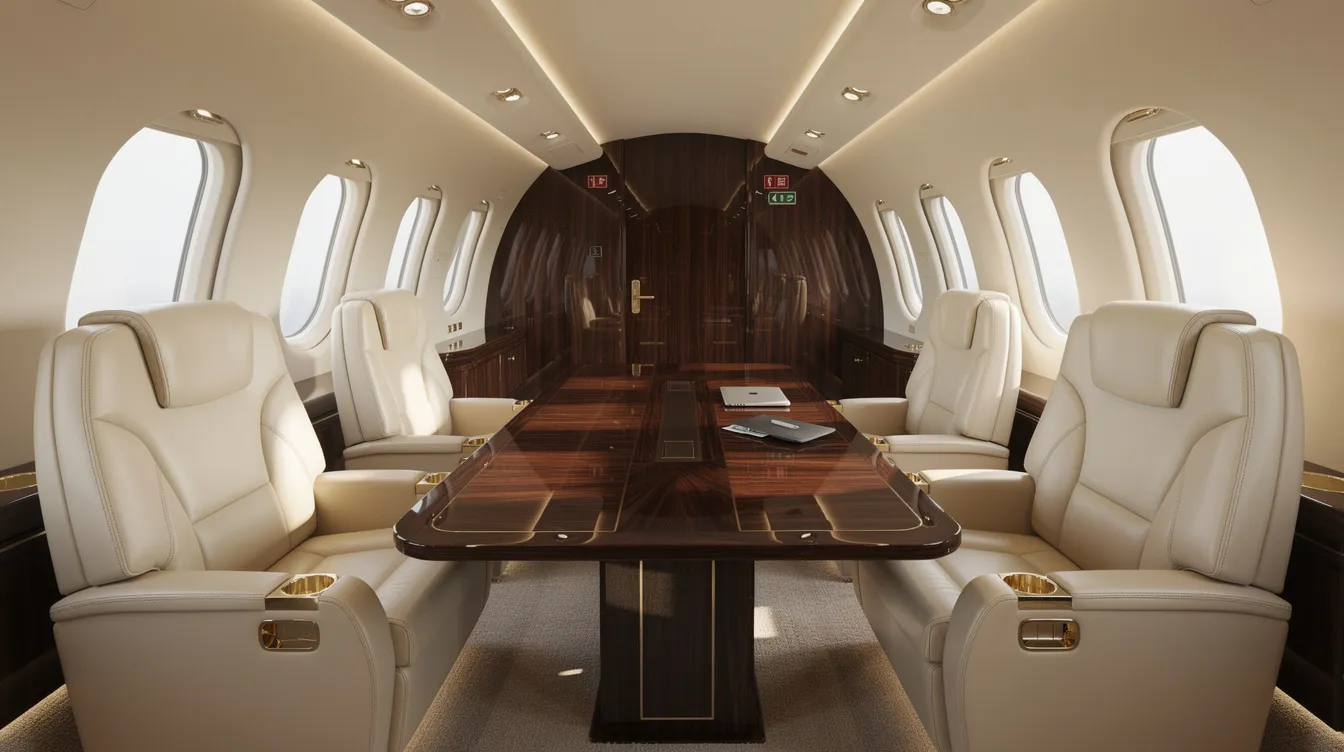
Multiple living zones: private suites, conference and dining rooms, lounges
Typical capacity: 20–40 passengers in extraordinary comfort
Innovations: lower cabin altitude systems (~6,500 ft at cruise), larger windows, bespoke design, tailored climate and air quality controls
Private Jet Alternatives
Why Many Premium Travelers Choose Private Jets Instead of Flying on the 737‑9 MAX
Motivations for Choosing Private Jets
After events like the Lion Air, Ethiopian Airlines, and Alaska Airlines Flight 1282 incidents, some travelers specifically filter out 737 MAX flights on booking sites
Others bypass the issue entirely by flying private, where they have complete visibility and control over aircraft type and operator
Private jet access through programs like BlackJet's Jet Cards and broader premium private jet card programs offers private terminals (FBOs), dedicated security, direct routing to secondary airports, and full control over departure times
Scenario Example
CEO previously flying commercial First Class on a Boeing 737‑9 MAX between Seattle and Los Angeles
With a 25-hour BlackJet Jet Card, she now accesses a super-midsize jet from a private FBO, departs on her schedule, avoids public terminals, and never needs to worry about which plane she is boarding
Total door-to-door time drops by hours, and the question of aircraft type selection disappears entirely
BlackJet Jet Cards vs. Owning or Chartering Large Aircraft Like the 737‑9 MAX
Ownership and Charter Considerations
Ownership of a BBJ-class aircraft entails tens of millions in acquisition cost, plus fixed overhead (crew salaries, maintenance, hangar parking, insurance, depreciation, regulatory compliance)
Ad-hoc charter of large aircraft like a BBJ involves high hourly rates, repositioning costs, crew constraints, and scheduling inflexibility
Jet Card Model Advantages
Jet Card model: prepaid 25-hour or 50-hour blocks gives members on-demand access across multiple aircraft categories without capital commitments
Select the right size aircraft per trip: a light jet for a short hop, a large-cabin jet for a transatlantic mission
Example: Executive team of 8 flying from New York to Dallas for quarterly board meetings can use BlackJet's large-cabin business jets instead of chartering a 737‑9 MAX
Cost per seat aligns competitively with commercial First Class once you factor in time, logistics, schedule flexibility, and comprehensive jet card pricing structures alongside hourly jet card pricing across aircraft types
Safety, Certification, and Quality: Boeing 737 MAX Learnings and BlackJet's Standards
Boeing’s Safety Reforms
Stricter FAA certification processes
Mandated MCAS redesign
Enhanced pilot training requirements
Ongoing quality audits at the Renton production facility
BlackJet’s Safety Philosophy
Safety Culture and Transparency
Sustainability: 737 MAX Efficiency vs. Carbon-Neutral Private Flights
Commercial vs. Private Jet Emissions
737 MAX family uses approximately 20% less fuel compared to the previous generation
On a per-seat basis at high load factors, a full MAX 9 is among the most carbon-efficient ways to fly commercially
Private jets often carry higher per-passenger emissions, especially smaller aircraft flying with fewer than full loads
Right-sized mid- or large-cabin jets reduce this gap significantly
BlackJet’s Green Commitment
Carbon-neutral flights: purchasing high-quality verified offsets, supporting environmental projects, and working with operators who invest in efficient aircraft and sustainable aviation fuel
Green private jet commitment ensures carbon cost is accounted for on every trip—at no extra cost to the member
For environmentally conscious executives, the comparison is nuanced: a crowded commercial 737‑9 MAX flight may have lower per-seat emissions, but a right-sized, carbon-offset private jet still aligns with climate goals while preserving schedule control, privacy, and productivity
Practical Travel Planning: Choosing Between a 737‑9 MAX Flight and a BlackJet Private Jet
Key Decision Factors
Schedule control: Commercial flights operate on fixed timetables; private jets depart when you are ready
Route flexibility: Airlines serve major airports; private jets access thousands of additional airfields
Aircraft type: Airline booking platforms may allow filters to exclude the 737 MAX, but these are often unreliable; BlackJet provides full transparency on aircraft type and operator, helping you choose among multiple types of private jets
Group size: For solo or paired travelers, commercial First Class may suffice; for groups of 4–12, a private jet frequently delivers better per-person value
Scenario Example
Family vacation from San Francisco to Cabo San Lucas
Commercial option: 737‑9 MAX with a fixed departure, a connection, security lines, and baggage uncertainty
Private alternative: Direct mid-size jet through BlackJet with tailored departure, FBO access, and arrival directly at your resort's nearest airfield—potentially structured as a 50-hour jet card commitment if you take similar trips several times a year
Think in terms of overall value—not just ticket price. Time saved, privacy maintained, security lines avoided, and the ability to work or rest without interruption on a private jet are all part of the equation, especially for frequent travelers who fly this distance regularly.
How to Work with BlackJet if You Prefer Avoiding Aircraft Like the 737‑9 MAX
Customizing Your Travel Experience
Discuss aircraft preferences directly with BlackJet advisors; members can request avoidance of particular commercial types such as the Boeing 737 MAX
Within BlackJet's private network, express preferences for particular manufacturers, cabin configurations, and aircraft categories
BlackJet's digital booking platform and real-time support team handle last-minute changes, reroutes, and aircraft substitutions with transparent communication about aircraft type and safety credentials
Carbon-neutral operations, top-tier safety standards, and schedule flexibility are built into the model, alongside transparent jet card cost and membership structures
For travelers ready to move beyond the constraints of commercial schedules and the uncertainties of flying on aircraft types they cannot choose, BlackJet Jet Cards offer a clear path forward. Explore how premium jet access can reshape the way you travel—on your terms, every time.


 Sign up with google
 Sign up with Apple