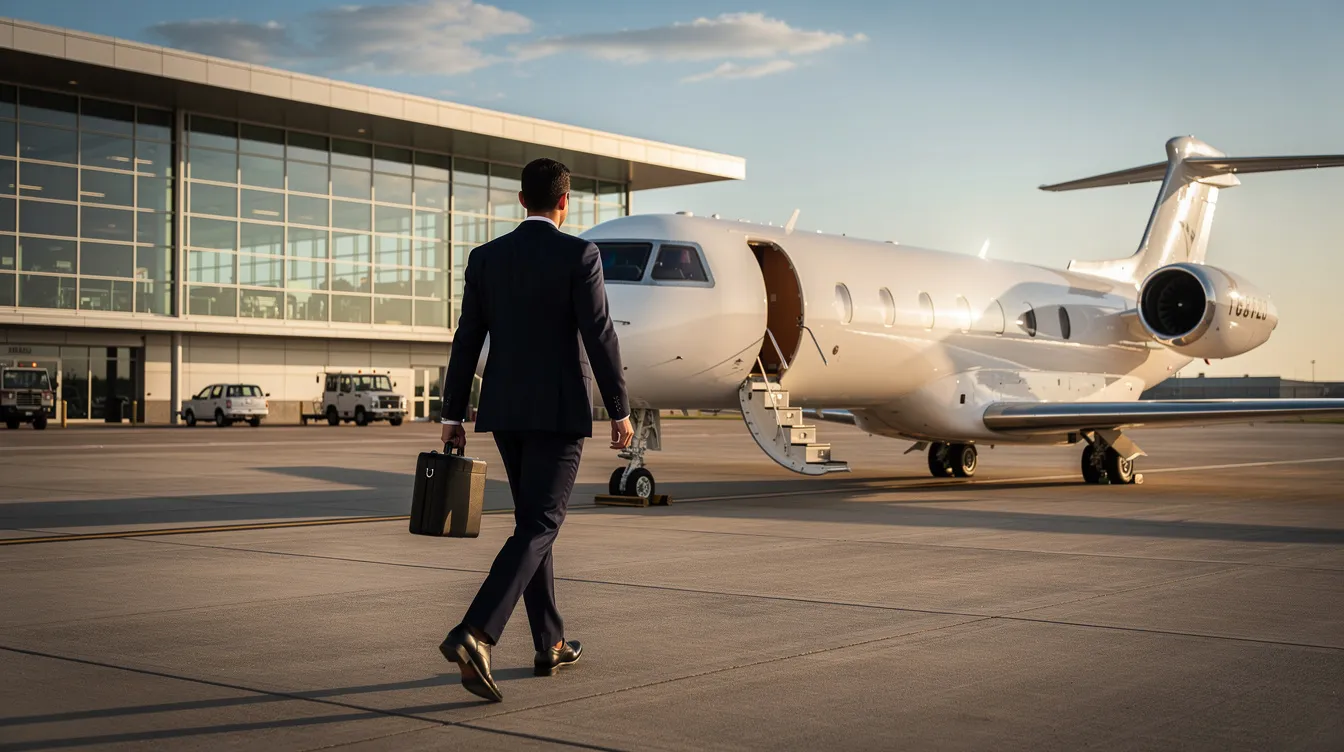
Are you curious about what first class seats on a plane really offer in 2026, and how they compare to the experience of flying on a private jet? This comprehensive guide is designed for luxury travelers, business travelers, and aviation enthusiasts who want to understand the evolving landscape of premium air travel. Whether you’re a frequent flyer seeking the best value, a corporate executive prioritizing time and privacy, or simply passionate about aviation, this article will help you navigate the choices between commercial first class, business class, and private jet options.
Understanding first-class seats on a plane matters more than ever in 2026. The premium travel market has transformed, with airlines and private aviation providers competing to deliver the highest levels of comfort, privacy, and efficiency. Knowing what first class includes—such as lie-flat seats, priority check-in, exclusive lounges, and gourmet dining—can help you make informed decisions about your next journey, especially as ticket prices for long-haul flights can exceed $10,000.
In this article, you’ll find a practical comparison of first-class seats on a plane, business class, and BlackJet Jet Card private jet access. We’ll cover what “first class” really means today, the differences between domestic and international first class, the world’s most iconic first class cabins, and when private jet travel becomes the smarter choice for true luxury and control.
Quick Summary: What Do First Class Seats on a Plane Include?
Lie-flat seats: First class cabins often feature lie-flat seats for maximum comfort on long flights, allowing passengers to sleep in a completely horizontal position.
Priority check-in and boarding: First class passengers enjoy expedited check-in and boarding processes, minimizing wait times at the airport.
Exclusive lounge access: Access to private lounges with complimentary premium meals and dedicated workspaces is standard for first-class travelers.
Premium meals and workspaces: High-end lounges and onboard service include gourmet meals, often designed by renowned chefs, and comfortable spaces for work or relaxation.
Higher baggage allowances: First class usually permits more checked and carry-on baggage without extra fees.
Meals designed by renowned chefs: Many airlines collaborate with top chefs to create multi-course menus for first-class passengers.
Ticket prices: First-class tickets for long-haul flights can exceed $10,000, reflecting the exclusivity and amenities provided.
Why first class seats matter for high-end travelers in 2026
After 2020, demand for space, privacy, and time-efficiency among high-net-worth and business travelers didn't just increase—it restructured the entire premium cabin market. Airlines responded by refreshing first-class cabins and expanding business-class products. Meanwhile, private aviation scaled up Jet Card programs to meet executives who decided that time is the only non-renewable resource worth protecting.
The numbers tell the story. A McKinsey analysis from mid-2026 found that premium cabins (first class, business class, and premium economy combined) now contribute a disproportionately large share of airline revenue relative to the seats they occupy. On many transatlantic routes, business class revenue alone approaches economy cabin revenue while using far fewer economy seats.
Yet commercial first class still forces trade-offs. A typical first-class ticket on American Airlines from JFK to LAX requires arriving two hours early, navigating public security, enduring boarding procedures, and then facing ground transport on the other end. Door-to-door, that's roughly 7–8 hours. A private jet from an FBO cuts that to approximately 5.5 hours by eliminating terminal time, public security lines, and rigid scheduling. That's 1.5–2.5 hours saved per leg.
This article is a practical guide: when does airline first class or business class still make sense, and when does a BlackJet Jet Card deliver more value and control? For travelers new to private aviation, exploring BlackJet's premium private jet cards and programs provides helpful context on membership options and aircraft access.
Dimension | Commercial First Class | Business Class | BlackJet Private Jet |
|---|
Privacy | High (suites with doors) | Moderate (open cabin) | Complete (entire aircraft) |
Schedule control | Fixed airline timetable | Fixed airline timetable | You set the departure time |
Ground time | 90–120 min pre-flight | 60–90 min pre-flight | 15–30 min at FBO |
Per-seat cost (long-haul) | $8,000–$25,000 one-way | $3,000–$10,000 one-way | Varies by aircraft; competitive for groups |
At the end of this section, we’ll dive into what “first class” really means today and how it compares to other premium travel options.
What "first class" really means today
Not all first class is created equal. On a Boeing 777-300ER operated by Emirates, first class means fully enclosed suites with floor-to-ceiling doors, a lie-flat bed, and a personalized service ratio that dwarfs anything in economy. On Air France's La Première (also on the 777-300ER), it means four suites in a single row with menus designed by Michelin-starred chefs and a private chauffeur transfer at Paris CDG. On Cathay Pacific's 777-300ER, first class delivers spacious seats in a more open layout with a premium soft product.
What Does "First Class" Typically Include?
For readers unfamiliar with airline terminology, first class typically includes:
Priority check-in and boarding: First-class passengers enjoy expedited check-in and boarding processes, minimizing wait times at the airport.
Higher baggage allowances: First class usually permits more checked and carry-on baggage without extra fees.
Exclusive lounge access: Access to private lounges with complimentary premium meals and dedicated workspaces is standard for first-class travelers.
Premium meals and workspaces: High-end lounges and onboard service include gourmet meals, often designed by renowned chefs, and comfortable spaces for work or relaxation.
First-class cabins feature lie-flat seats for comfort on long flights, and first-class suites on the best carriers go well beyond a simple flat bed. Business class, by contrast, offers lie-flat seats at a lower cost than first class on most flights but with less privacy and smaller personal space. Premium economy sits further down: more leg room than economy, but no lie-flat bed or enclosed privacy.
Many airlines have eliminated international first class, opting instead for enhanced business class with doors or partitions. Airlines still investing in true first class cabins include Emirates, Singapore Airlines, Japan Airlines, Air France, Lufthansa, ANA (All Nippon Airways, also known as All Nippon Airways first class in enthusiast circles), and Cathay Pacific. A two-class configuration—business and economy only—has become the default on widebody aircraft for various airlines, while a three-cabin aircraft with a dedicated first-class section is increasingly rare.
Typical Seat Types Across the Industry
Recliner: Upright or semi-reclined, common in domestic first class on narrow-body aircraft.
Angled lie-flat: Tilts back at an angle, found on older long-haul widebody aircraft.
Fully flat bed: Lies completely horizontal, standard in modern business and first class on international flights.
Enclosed suite: A class suite with doors or full curtains, separate from other passengers; the pinnacle of commercial cabin design.
BlackJet applies similar cabin logic across private jet categories—light jets for short hops, midsize for coast-to-coast, large-cabin jets for transcontinental missions—but every member gets first-class conditions by default, because the entire aircraft belongs to your party. Travelers can compare private jet sizes to find the right fit for their typical routes, group size, and comfort expectations.
As we move forward, let’s distinguish between domestic and long-haul international first class to see how the experience changes based on route and aircraft.
Domestic first class vs long-haul international first class
Here's a distinction that catches many travelers off guard: domestic first class in the U.S. is closer to premium economy or older domestic business class than to anything resembling Emirates first-class suites. The two experiences are not created equal.
On most flights operated by US airlines like American Airlines, Delta, and United on routes such as LAX–SFO or JFK–MIA, domestic first class means a wider recliner seat with more space, improved beverage service, and priority boarding. But there are no doors, no separate bed, and no enclosed privacy. Recliner seats may not be worth the premium price on domestic first-class tickets, particularly on flights under three hours. Flight duration is a key factor in the value of first-class seating—and short hops rarely justify the cost difference.
Special U.S. transcontinental flight routes tell a different story. On JFK–LAX, JFK–SFO, and BOS–LAX, some aircraft feature lie-flat seats branded as "Flagship First" by American Airlines or Polaris business–adjacent products by United. JetBlue's "Signature Class" also offers lie-flat seats on select single-aisle routes. But these remain the exception for domestic flights.
Long-haul international first class is an entirely different class experience. Consider New York–Dubai on Emirates: fully enclosed suites, Dom Pérignon, dine-on-demand menu service, and an onboard shower on the Airbus A380. Or Paris–New York on Air France La Première: four suites, Michelin-starred cuisine, and a private transfer to the aircraft. London–Tokyo on Japan Airlines or ANA delivers kaiseki menus, meticulous personalized service, and some of the quietest cabins in the sky. This is where a first-class ticket genuinely transforms a long-haul flight into something closer to a private experience.
Domestic first class: Recliner, 2–3-hour flights, limited privacy, shared class section, basic meal service.
Long-haul first class: Enclosed suites, full beds, 8–15 hour flights, dedicated flight attendants, multi-course fine dining, first class lounge access, ground transfers.
For travelers who move frequently between major U.S. business hubs, BlackJet replaces domestic first class entirely. Private jet flights between cities like New York, Dallas, Miami, and Chicago eliminate TSA, early boarding queues, and fixed schedules—all without stepping into a public terminal. Many of these missions are ideally served by small private jets for luxury short-haul travel, which balance speed, comfort, and cost.
Next, let's explore what sets the world's most iconic first-class cabins apart.
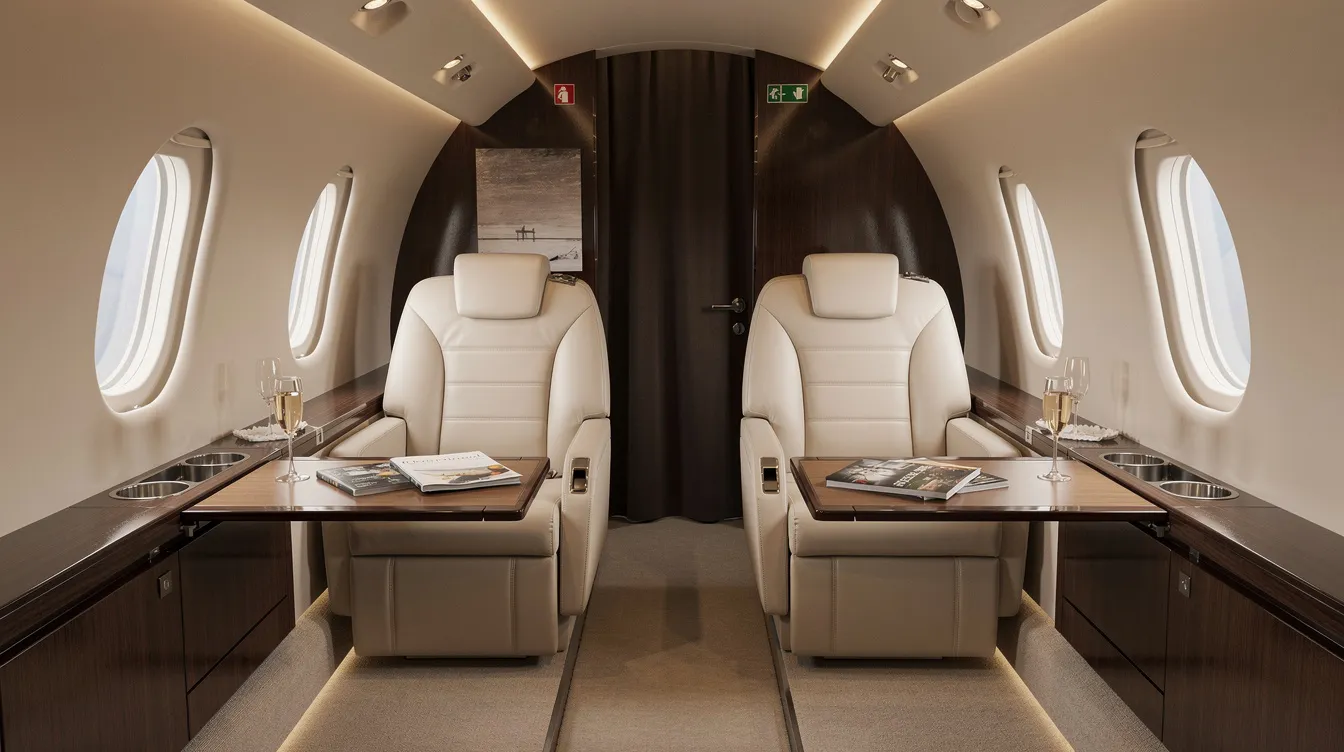
The world's most iconic first-class cabins (and what they actually offer)
These are the commercial first-class cabins that define the gold standard—the ones high-end travelers reference when they ask whether private jets are "worth it." Rankings are subjective, but hard product and soft product details are not.
Emirates first class on Boeing 777-300ER: Emirates offers fully enclosed first class suites on Boeing 777s—floor-to-ceiling doors, virtual windows for middle suites, a full meal service with caviar and Dom Pérignon, and a dine-on-demand menu that lets first class passengers eat whenever they choose. Only a limited number of 777-300ER aircraft carry the newest suite design. The upper deck of the Airbus A380 adds an onboard shower and a social bar area. Emirates first class remains many travelers' favorite first-class cabin.
Singapore Airlines Suites on the Airbus A380: Singapore Airlines' first-class suites measure 50 square feet each—among the most generous in commercial aviation. Each class suite features a separate bed and a seat that don't share the same surface, plus double suites for couples. The "Book the Cook" program allows pre-ordering of specialty meals up to 24 hours before a flight. These operate on selected long-haul routes from Singapore to cities like London and Sydney.
Japan Airlines first class on Airbus A350-1000: Japan Airlines' first class features a 43-inch TV screen—the largest in the sky—in a 1-1-1 configuration. The couch-style seating, Wi-Fi, and tailored Japanese menus make this a standout on routes such as Tokyo–New York and Tokyo–Dallas. The Nippon Airways first-class product (ANA "The Suite") takes a different approach with fully enclosed doors and a darker, more private aesthetic.
Air France La Première on Boeing 777-300ER: Four suites in a single row. Over 32 square feet per suite with a 6.5-foot lie-flat bed, privacy curtains, a wardrobe closet, and Air France collaborates with Michelin-starred chefs for its first-class menu. The flagship La Première lounge at Paris Charles de Gaulle offers sit-down dining, spa treatments, and private car transfers to the aircraft.
Other notable cabins: Lufthansa first class features a double-bedded suite on the A350 under its FOX (Future Onboard Experience) initiative with elevated tasting menus and BABOR amenity kits. ANA "The Suite" delivers fully enclosed privacy. Etihad's first class includes onboard showers on A380 flights plus apartment-style suites with a separate living area. Cathay Pacific first class favors an open-suite philosophy with generous width and a restrained, refined soft product.
These cabins approximate private-jet comfort on specific city pairs—but they're locked to rigid airline schedules, fixed routes, and the unpredictability of other airline operations.
To better understand the differences, let’s compare first-class, business-class, and private jet travel side by side.
First class vs business class vs private jet: what actually changes?
On many airlines, modern business class rivals old first class. A business class seat on a new Airbus A350 or Boeing 787 often includes a lie-flat bed, direct aisle access, upgraded meals, and an amenity kit. For a long-haul flight, this represents genuine comfort—and business class often provides lie-flat seats at a lower cost than first class.
Where first class still clearly wins over business class: a higher staff-to-passenger ratio means more attentive first class service. Better champagne (Krug, Dom Pérignon, or Cristal rather than mid-tier labels). Caviar as standard. More privacy with suites that have doors. Superior bedding. And often access to a first-class lounge that's a meaningful upgrade over the business class lounge—with restaurant-quality meals, spa treatments, and dedicated workspaces.
But both commercial cabins share the same constraint: you fly when the airline says so, from where the airline flies.
A BlackJet Jet Card changes those fundamentals. Custom departure times. Private terminals (FBOs) instead of crowded airports. No cabin "classes"—the entire aircraft is yours. The ability to land at smaller airports closer to your actual destination. No check-in lines, no seat belt sign politics with other passengers, no competing for overhead bins.
Comparison Table: Business Class vs First Class vs BlackJet Private Jet
Feature | Business Class | First Class | BlackJet Private Jet |
|---|
Comfort | Lie-flat, shared cabin | Suites with doors, more space | Total exclusivity, customizable |
Schedule Control | Fixed schedules | Fixed schedules | You choose when to depart |
Privacy | Shared | High within the cabin | Entire aircraft private |
Ground Experience | Priority check-in, lounge | Exclusive lounges, private transfer | FBO, minutes from car to aircraft |
Productivity | Some privacy, shared cabin | More privacy, dedicated workspace | Use the cabin as a meeting room, no interruptions |
For a small team of 4–8 travelers, the cost per person on a private jet for regional trips can approach or undercut last-minute first-class fares, especially during peak travel dates when commercial-class ticket prices spike.
Next, let’s take a closer look inside a first-class cabin to see what you actually get for the price.
Inside a first-class cabin: seat types, layouts, and amenities
The distinction between "hard product" (seat, layout, physical space) and "soft product" (food, service, bedding, amenities) defines every first-class cabin. The best carriers excel at both.
Definitions
Lie-flat seat: A seat that reclines to a completely horizontal position for sleeping, maximizing comfort on long flights.
Suite: An enclosed or semi-enclosed private space within the first class cabin, often featuring a door or curtain for privacy, a lie-flat bed, and additional amenities.
Hard product: Refers to the physical seat, cabin layout, and space—essentially, the tangible aspects of the first class experience.
Soft product: Includes food, service, bedding, amenities such as priority check-in, and other service-related features.
Seat Types
Open suites: Cathay Pacific first class offers spacious seats without full enclosures, prioritizing width and a sense of openness.
Fully enclosed suites with doors: Emirates first class on the 777-300ER and ANA "The Suite" close off completely; Emirates offers fully enclosed first class suites on Boeing 777-300ER aircraft for maximum privacy from class passengers nearby.
Room-style suites: Etihad A380 Apartments feature a separate bed, a living area, and a separate seat; Singapore Airlines' Suites provide 50 square feet of space with distinct sleeping and sitting zones.
Cabin Layouts
1-1-1: Japan Airlines' first class has a 1-1-1 seat configuration for maximum isolation.
1-2-1: Standard for Air France La Première and Lufthansa First.
1-1: On the upper deck of aircraft like the Airbus A380.
Specific aircraft models affect seat layout and selection, and spacing directly drives privacy and noise levels.
Amenities
Large TVs: 32–43 inches (Japan Airlines' first class features a 43-inch TV screen, the largest currently flying).
Lie-flat seats: Better for sleep on long-haul flights; first-class seats often feature lie-flat configurations with thick mattress pads and duvets.
Premium amenity kits: By brands like Sisley, BABOR, and Givenchy, plus pajamas and slippers.
Onboard showers: Emirates A380 and Etihad's first class feature onboard showers on Airbus A380.
Signature dining: Unlimited caviar on Emirates, Japanese kaiseki on JAL and ANA, French haute cuisine on Air France. First-class meals are often designed by renowned chefs with multi-course tasting menus. Some airlines allow pre-ordering specialty meals up to 24 hours before a flight through programs like Singapore's "Book the Cook".
On a midsize or large-cabin private jet, passengers enjoy similar or better levels of space per person when flying small groups—but with total cabin control, a dedicated crew, and custom catering rather than a shared first class section. For larger parties, top 16-seat private jet options deliver wide-cabin comfort that rivals or exceeds flagship first class suites.
Next, we’ll examine how the first class experience begins on the ground and why it matters for the overall journey.
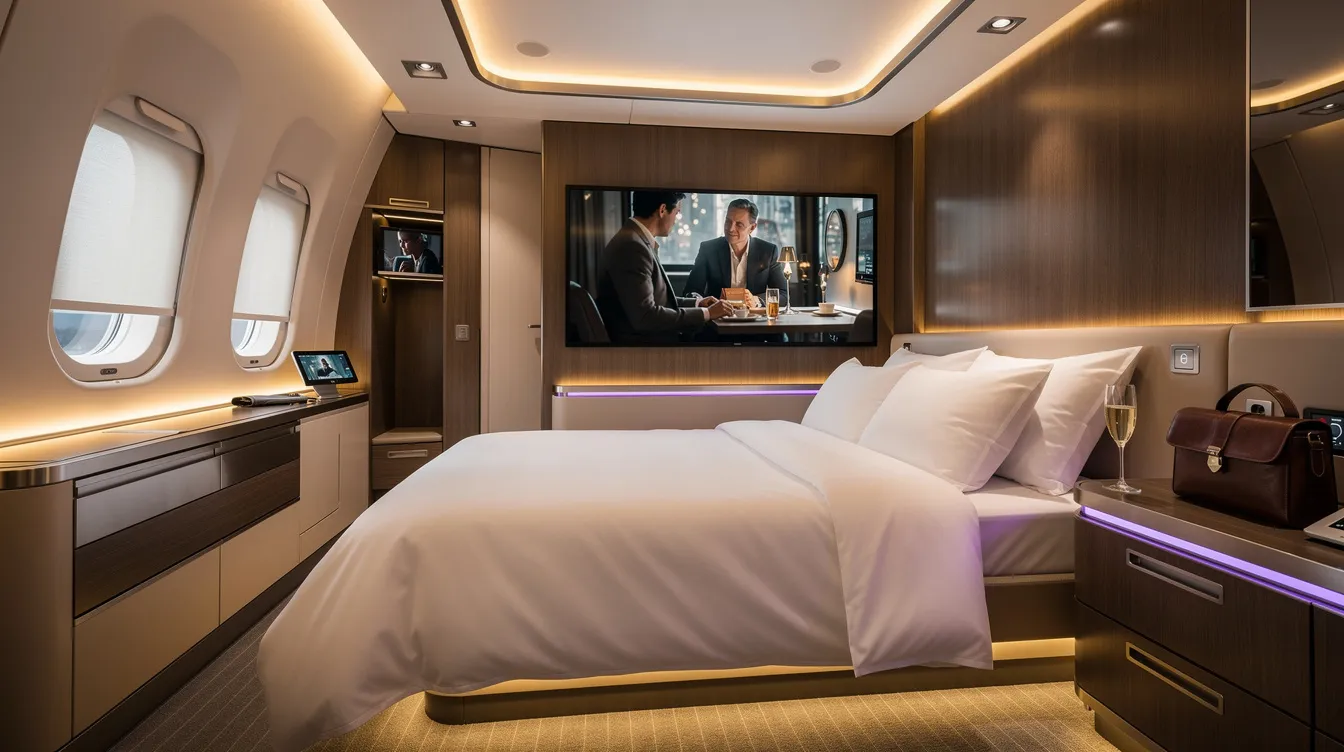
How the first-class experience begins on the ground
First class is defined as much by what happens before boarding as by the class seat itself. Evaluate onboard and ground perks against the price of first-class tickets, because the ground experience often justifies—or undermines—the premium.
Ground Perks and Lounge Access
Airlines offering top-tier first class typically provide:
Separate check-in counters
Fast-track security
Exclusive first-class lounge access
Priority check-in and boarding
Higher baggage allowances without extra fees
Complimentary premium meals and dedicated workspaces in lounges
Concrete examples bring this to life. Air France La Première offers a private lounge at Paris CDG with sit-down dining, spa treatments, and a chauffeur-driven car directly to the aircraft. Lufthansa's First Class Terminal in Frankfurt—a dedicated class terminal—features private security screening, a limousine or Porsche ride across the tarmac, and an exquisite lounge with spa facilities. Emirates' first-class area in Dubai provides à la carte dining and shower suites. High-end lounges offer complimentary premium meals and workspaces that rival boutique hotel lobbies.
Contrast this with most domestic first-class experiences in the U.S.: priority boarding, lounge access (sometimes), and maybe a shorter security line. No private transfers. No separated terminals.
BlackJet members experience something different entirely. Drive up to an FBO. Minimal security formalities. Board within minutes. No public terminals, no queues, no gate announcements. This ground flow can cut 60–90 minutes from each side of a trip compared to even the best commercial first class processes, while maintaining the rigorous protections outlined in analyses of private jet safety and risk.
Next, let’s consider how safety and sustainability compare between commercial first class and private aviation.
Safety and sustainability: commercial first class vs private aviation
Discerning travelers now weigh safety, certification, and sustainability alongside comfort—and they should.
Major airlines certify pilots and maintain aircraft under strict ICAO, FAA, and EASA regulations. First-class passengers benefit from the same underlying safety standards as every other passenger on the aircraft. Commercial aviation's safety record is exceptional.
BlackJet's safety framework mirrors this rigor through proprietary vetting of every charter operator, aircraft, and pilot. Certification benchmarks include ARG/US (Gold and Platinum ratings), Wyvern-style standards, and compliance with FAA Part 135 regulations. According to industry data, fewer than 35% of U.S. charter operators pass the most stringent third-party certification processes—BlackJet works exclusively with operators that meet or exceed these thresholds.
On sustainability: first-class tickets sit on the same aircraft as economy, sharing the fuel burden across all-class passengers. Private jets are more emission-intensive per passenger due to fewer people aboard. However, modern fleet selection, optimized routing, and Sustainable Aviation Fuel (SAF) reduce the gap. BlackJet provides carbon-neutral flights by default through verified carbon offset and SAF programs, at no extra cost to members.
Travelers comparing their environmental impact should consider aircraft type (newer models like the Airbus A350 and Boeing 787 are significantly more fuel-efficient), whether SAF is available, how offset programs are verified, and whether one-way or return flight emissions are accounted for. Evaluating a comprehensive private jet price list and access models alongside these sustainability factors helps clarify the true cost of premium travel.
Next, we’ll break down the cost considerations and when it makes sense to choose first class or go private.
Cost considerations: when first class is worth it, and when to go private
First-class tickets can exceed $10,000 for long-haul flights—and regularly do. On routes like New York–Dubai, London–Singapore, or Los Angeles–Tokyo, one-way first-class fares on leading airlines range from $8,000 to $25,000+ in 2026, depending on season and demand.
Domestic first-class fares are more volatile. A midweek class ticket from JFK to MIA might carry a modest premium over economy. But around holidays, major events, or for last-minute bookings, the same first-class seat can spike to several thousand dollars—a price that makes sense only if the return flight and full journey justify it.
The real calculation shifts when you travel in groups. Four first-class tickets from New York to Los Angeles might cost $6,000–$12,000 total. A midsize private jet charter for the same route might total $30,000–$45,000, but divided among four travelers, that's $7,500–$11,250 per person, approaching comparable cost with vastly more flexibility and privacy. Understanding the jet card cost per hour is key to benchmarking these scenarios against commercial fares.
BlackJet Jet Card programs—available in 25-hour and 50-hour blocks—allow travelers to pre-purchase flight time at fixed hourly rates, protecting against last-minute first-class price spikes and seasonal inflation. With rates spanning approximately $7,500–$12,500+ per hour, depending on aircraft category, and hours that never expire, the budgeting predictability alone makes sense for executives with recurring travel patterns. A broader guide to jet card costs and membership pricing can further clarify how these numbers compare across providers.
When commercial first class still wins: Solo or couple travel on long-haul routes with legendary first-class cabins (Emirates, Singapore Airlines, Air France) and strong loyalty program benefits.
When BlackJet is more strategic: Frequent regional business travel, multi-city itineraries in a single day, groups of executives, or high-value leisure trips where schedule control and privacy outweigh miles or status.
Next, let’s see how Jet Cards can turn every trip into a “first class” flight.
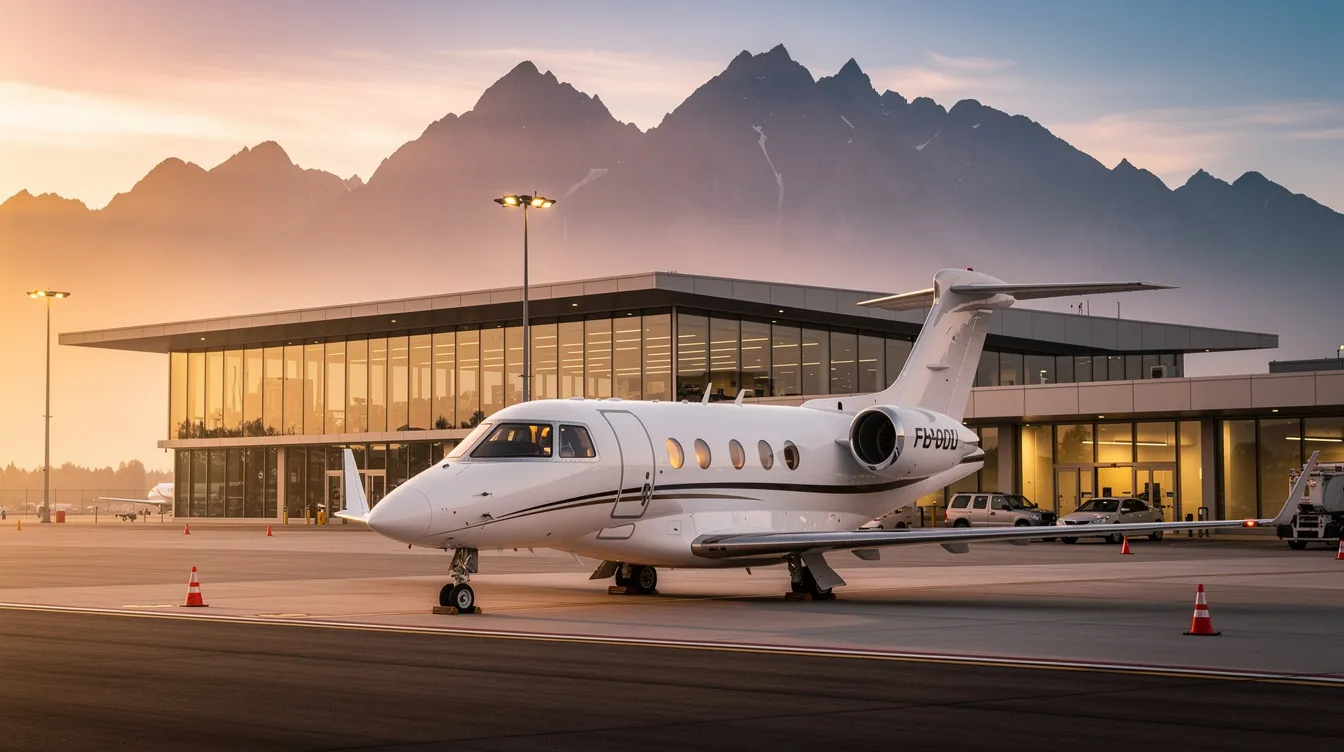
How Jet Cards turn every trip into a "first class" flight
A Jet Card is prepaid access to private jets across multiple aircraft categories with fixed hourly rates and priority availability. Think of it as buying a block of flight hours—typically 25 or 50 hours—that you draw down as you fly, without any aircraft ownership responsibilities. Among the best jet cards for frequent flyers, common themes include guaranteed availability, transparent pricing, and streamlined booking.
BlackJet's Jet Card structure provides access to light, midsize, and large-cabin jets across North America and selected international routes. Hours don't expire, carbon-neutral flights are included at no extra cost, and all-in pricing means no hidden surcharges. For ultra-frequent users, analyzing a 100-hour jet card cost breakdown can reveal when larger blocks of time start to outperform smaller programs on a per-hour basis.
The booking experience matters too. BlackJet offers a 24/7 digital booking platform with real-time flight support, transparent pricing before takeoff, and the ability to choose aircraft size based on passenger count and mission profile. This simplifies budgeting compared with ad-hoc private jet charter or fluctuating first-class fares, especially for companies with predictable travel patterns.
Use case 1: A CFO making quarterly trips from New York to Dallas to Chicago in a single day. Commercial connections would require overnight stays and early boarding calls. With a Jet Card, she departs New York at 7 AM, holds a morning meeting in Dallas, flies to Chicago for an afternoon session, and returns to New York by evening—all on her schedule.
Use case 2: A family flying from Los Angeles to Cabo for a long weekend with flexible dates, extra luggage, and a dog. No commercial terminal hassles, no checked bag limits, no pet cargo hold. They drive to an FBO, board, and go.
Unlike commercial first-class cabins, Jet Card travel always gives the entire aircraft to the cardholder and their guests. There is no class cabin to distinguish—everyone aboard flies at the highest level.
Next, let’s compare premium-class cabins across different aircraft types.
Comparing premium class cabins across aircraft types
First-class and business-class cabins vary meaningfully by widebody aircraft type. On a Boeing 777-300ER, airlines like Emirates and Air France install their flagship first-class products. On the Boeing 747-8, Lufthansa operates one of the few remaining first-class cabins with an intimate nose-section layout. The Airbus A380 hosts Singapore Airlines Suites and Emirates' showpiece cabin with the onboard shower. On the Airbus A350-900 and A350-1000, Japan Airlines and Lufthansa have introduced next-generation class product designs. The Boeing 787-9 is typically configured in a two-class configuration with business and economy, rarely featuring first class at all.
Seat width, cabin height, and noise levels differ across these widebody aircraft types. Upper deck cabins on the A380 tend to be quieter. Nose sections on 777s offer more space but can be noisier near galleys. These factors directly affect sleep quality on overnight flights—something any other airline cabin reviewer will confirm matters on a long-haul flight.
Private jet categories map differently. Light jets suit short hops of 2–3 hours. Midsize jets handle U.S. coast-to-coast missions. Large-cabin jets cover transatlantic and transcontinental distances with stand-up cabins, full galleys, and generous baggage capacity. The BlackJet 25+ Hour Jet Card is structured to give flexible access to these mid, super-mid-, and large-cabin categories at fixed rates.
Commercial First Class Cabin | Private Jet Equivalent | Best Use Case |
|---|
Air France La Première (B777) | Large-cabin / ultra-long-range jet | Intercontinental nonstop routes |
For corporate groups or extended families, evaluating the best private jet for 20 passengers helps determine when stepping up to very large-cabin aircraft makes more sense than booking multiple first-class tickets.
| Singapore Suites (A380) | Large-cabin jet (rare equivalent) | Long-haul couples travel | | Domestic first class (narrow-body) | Light or midsize jet | Short business-hub connections | | Business class (787 / A350) | Midsize to large-cabin jet | When schedule flexibility outweighs the fare gap | BlackJet advisors help members match each trip's distance, passenger count, and baggage needs to the right aircraft type—similar to choosing the right first class cabin, but with far more flexibility. When headcounts climb even higher, guides to the best private jet for 50 passengers and a structured private jet price list with larger-aircraft options become especially relevant.
FAQ: First-class seats on a plane vs BlackJet private jet access
What do first-class seats on a plane include?
First-class seats on a plane typically include:
Lie-flat seats: Seats that recline to a completely horizontal position for sleeping, maximizing comfort on long flights.
Priority check-in and boarding: Expedited airport processes to minimize wait times.
Exclusive lounge access: Entry to private lounges with complimentary premium meals and dedicated workspaces.
Premium meals and workspaces: Gourmet meals, often designed by renowned chefs, and comfortable spaces for work or relaxation.
Higher baggage allowances: More checked and carry-on baggage without extra fees.
Meals designed by renowned chefs: Multi-course menus created in collaboration with top culinary talent.
Ticket prices: For long-haul flights, first-class tickets can exceed $10,000.
Is domestic first class "worth it" compared with a Jet Card for frequent U.S. business travel?
If you're flying many short domestic legs between business hubs, Jet Card flights eliminate public terminal delays, give full schedule flexibility, and offer complete privacy. Domestic first class has limited soft product and no enclosed suites on most flights. Over time, the cost differential per trip often shrinks, especially for frequent travelers. Some ultra-frequent flyers may even compare Jet Cards with unlimited private jet membership models that bundle extensive flying into a single annual fee.
How do airline loyalty points and status compare to Jet Card benefits?
Airline status gives upgrades, lounge access, points accrual, and continuity with a single carrier. But Jet Cards deliver consistent availability, fixed hourly rates, and zero dependence on blackout dates or airline disruptions. For frequent users, the predictable cost and privacy often outweigh the value of points or status—and there's no wondering whether that upgrade will clear.
Are private jets as safe as flying first class on a major airline?
Yes, when you fly with a vetted provider. BlackJet uses proprietary certification standards that include operator vetting, pilot experience thresholds, aircraft maintenance audits, and compliance with FAA Part 135. Industry benchmarks like ARG/US Platinum and Wyvern Wingman further ensure that safety standards meet or exceed commercial norms, aligning closely with broader analyses of how safe private jets really are.
Is flying private worse for the environment than first class?
Per-passenger emissions are higher on private jets due to fewer passengers. However, using modern aircraft, optimized routing, SAF, and verified carbon offsets significantly reduces net impact. BlackJet includes carbon-neutral flights at no extra cost, making it possible to fly private while addressing environmental responsibility.
When should I choose airline first class vs BlackJet?
Choose airline first class for iconic long-haul routes where the soft product is world-leading—Emirates, Singapore Airlines, Air France, Cathay Pacific—and you're traveling solo or as a couple. Choose BlackJet when time, schedule control, privacy, or group travel are the priority, or when commercial first class fares spike and a Jet Card offers predictable, premium value. Travelers exploring alternatives may compare full-aircraft solutions with guidance on how to buy a seat on a private jet, survey the cheapest private jet options for cost-conscious missions, or study the best private jets in the world when ultimate performance and luxury are the goal.
Bottom line: redefining first class in the era of private jet access
The meaning of "first class" has evolved well beyond a class section at the front of a widebody aircraft. It's now a broader standard defined by privacy, control, and comfort—and commercial airlines no longer hold a monopoly on delivering it.
Airlines like Emirates, Air France, Singapore Airlines, and Cathay Pacific still offer extraordinary first-class experiences on specific long-haul routes. For those city pairs, their cabins remain among the finest ways to cross an ocean. But for frequent travelers, executives, and families who value flexibility, schedule control, and genuine privacy, BlackJet Jet Cards deliver a more consistent, personalized first-class experience—regardless of route, season, or last-minute changes.
If you're ready to explore what private jet access could look like for your travel patterns, discover how a BlackJet Jet Card can reshape the way you fly.
Conclusion: Elevate Your Travel with True First-Class Experience
First-class seats on a plane continue to represent the pinnacle of commercial aviation luxury, offering unparalleled comfort, gourmet dining, and exclusive ground services on select long-haul routes. Yet, as premium travelers increasingly prioritize privacy, flexibility, and time savings, private jet access through programs like BlackJet’s Jet Cards is redefining what first class means in 2026.
Whether you choose the iconic suites of Emirates and Singapore Airlines or the bespoke convenience of a private jet, the key is aligning your travel needs with the right solution. For solo travelers or couples on flagship international routes, commercial first class remains an extraordinary experience. For executives, families, and groups seeking total control, privacy, and seamless scheduling, private jet membership delivers a consistently premier journey that transcends traditional airline limitations.
In today’s evolving luxury travel landscape, true first class is about more than a seat—it’s about owning your time, space, and peace of mind. Explore how BlackJet’s private jet access can elevate your travel beyond expectations and make every trip a first-class flight from start to finish.


 Sign up with google
 Sign up with Apple