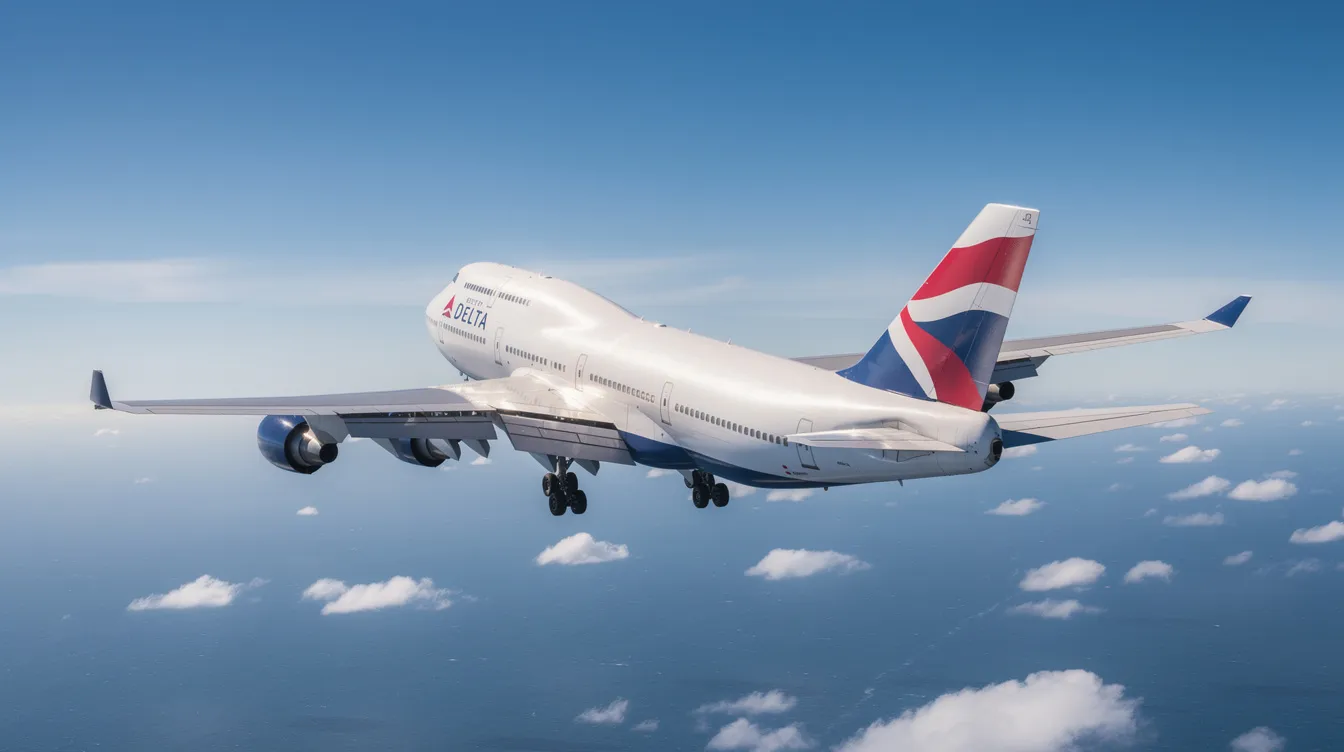
Executive Overview: Why the 747-400 Engine Still Matters Today
The Boeing 747-400 features four high-bypass turbofan engines, and airlines could select from three manufacturers: General Electric, Pratt & Whitney, and Rolls-Royce. Each 747 400 engine type delivered thrust in the range of approximately 56,000 to 63,000 lbf, powering one of the most commercially successful widebody aircraft ever built. From its service entry with Northwest Airlines in February 1989 through peak operations in the 2000s, the 747-400's propulsion choices shaped route economics on every major long-haul corridor.
For discerning travelers accustomed to private aviation, the contrast is striking. Where the 747-400 relies on four engines burning roughly 10–12 tonnes of fuel per hour in cruise, the twin-engine long-range business jets that BlackJet members typically access—aircraft like the Gulfstream G650 or Bombardier Global 7500—achieve comparable or greater range with only two highly efficient powerplants and a fraction of the fuel consumption.
747-400 engines vs. modern private jet engines at a glance:
Feature | Boeing 747-400 | Large-Cabin Business Jet |
|---|
Fuel burn per block hour | ~22,000–26,500 lb/hr | ~3,000–5,000 lb/hr |
Engine count | Four engines | Two engines |
Range flexibility | Excels at max range with full load | Trades payload for speed and access to smaller airports |
Emissions intensity | Higher per hour | Lower per traveler with carbon-offset programs |
This article serves as a practical, technically informed guide for readers who fly privately but want to understand how legacy widebody engines compare with today's business jet powerplants—and what that means for efficiency, sustainability, and the future of premium travel.
Development Timeline: From Concept to 747-400 Service Entry
Boeing's original 747-100, which first flew in 1969, relied on Pratt & Whitney JT9D engines—first-generation high-bypass turbofans that were groundbreaking but thirsty by later standards. Successive variants (the -200 and -300, the latter featuring a stretched upper deck) refined the airframe, yet the engines remained rooted in 1960s technology. By the mid-1980s, Boeing recognized that only a leap in propulsion would keep the 747 competitive against the Airbus A340 and emerging twin-engine widebodies.
Boeing announced the 747-400 program in October 1985, with Northwest Airlines placing the launch order on October 22 of that year; 1980s widebody engine competition also benefited from lower development costs, which made certification on the 747-400 more commercially feasible for multiple manufacturers. The company insisted on new-generation high-bypass turbofans—engines offering higher thrust, lower specific fuel consumption, improved reliability, and a quieter noise profile. The Boeing 747-400 engines provide improved thrust and fuel efficiency compared to earlier models, making the aircraft viable for another generation of transoceanic service. High-bypass turbofans are more fuel-efficient and quieter than low-bypass turbojets, a principle that drove every engine selection decision.
Final assembly of the first aircraft began in September 1987 at Boeing's Everett facility. The first 747-400 rolled out on January 26, 1988, fitted with PW engines from the PW4056 family. Its maiden flight followed on April 29, 1988. FAA certification was received on January 9, 1989, and Northwest Airlines took first delivery that same month, with service entry on February 9, 1989.
Key milestones in chronological order:
October 22, 1985 - Boeing launches the 747-400; Northwest Airlines signs as first customer
September 1987 - Final assembly of the first aircraft begins
January 26, 1988 - First aircraft rolls out with PW4056 engines installed
April 29, 1988 - 747-400 completes its first flight
January 9, 1989 - FAA certifies the type with PW4056 powerplants
February 9, 1989 - Northwest Airlines begins passenger service
May 1989 - GE CF6-80C2 receives certification for the 747-400
June 1989 - Rolls-Royce RB211-524G certified; the RB211-524H follows in May 1990
Engine Options on the 747-400: The Three Main Types
The Boeing 747-400 allows airlines to choose among three engine manufacturers, a feature that was central to the aircraft's global sales success. The 747-400 has three engine options: the PW4056, the CF6-80C2, and the RB211-524G. Each engine type offers different performance and maintenance characteristics, giving operators the freedom to align propulsion with their existing fleets and maintenance contracts.
The typical thrust range for each engine is approximately 56,000 to 63,000 lbf at take-off, though specific ratings varied by sub-variant and mission. The engine families for the 747-400 include General Electric, Pratt & Whitney, and Rolls-Royce—three of the world's most established aero-engine manufacturers.
Engine | Take-off Thrust | Key Features | Typical Operators |
|---|
Pratt & Whitney PW4056 / PW4062 | ~56,750 lbf (PW4056) to ~63,300 lbf (PW4062) | Two-spool, high-bypass, digital engine control | Northwest Airlines, United Airlines, some Pacific carriers |
General Electric CF6-80C2B1F | ~57,160 lbf | Robust reliability, competitive fuel burn, global MRO network | Lufthansa, KLM, Air France, U.S. operators |
Rolls-Royce RB211-524G/H | ~58,000 lbf (G) to ~60,600 lbf (H) | Three-spool, efficient cruise, smooth operation | British Airways, Qantas, Cathay Pacific |
Pratt & Whitney PW4000 on the 747-400
The PW4000 series is designed as a direct successor to the earlier JT9D engines that powered the original 747 variants. When the first aircraft left the Everett production line in January 1988, it carried PW4056 engines—making Pratt & Whitney the launch engine supplier for the entire 747-400 program. The PW4056 engine received FAA certification on January 10, 1989.
Architecture: Two-spool layout (low-pressure and high-pressure sections) with a high bypass ratio and electronic engine control (EEC) for precise fuel metering, health monitoring, and optimized thrust scheduling
Thrust: PW4056 at ~56,750 lbf; the higher-rated PW4062 reached ~63,300 lbf for extended-range and higher-weight configurations
Typical operators: Northwest Airlines (launch customer), United Airlines, Japan Airlines, and Korean Air—carriers that often had PW engines on their 767 or other widebody fleets, gaining savings in training, spares, and MRO infrastructure
Operational strengths: Excellent climb performance in hot and high-altitude conditions; competitive fuel consumption on long overwater segments across the Pacific and Atlantic; digital controls that represented a generational leap from the JT9D's analog systems
Trade-offs: Slightly heavier dry weight than the CF6; flat-rating performance could taper faster in extreme ambient temperatures
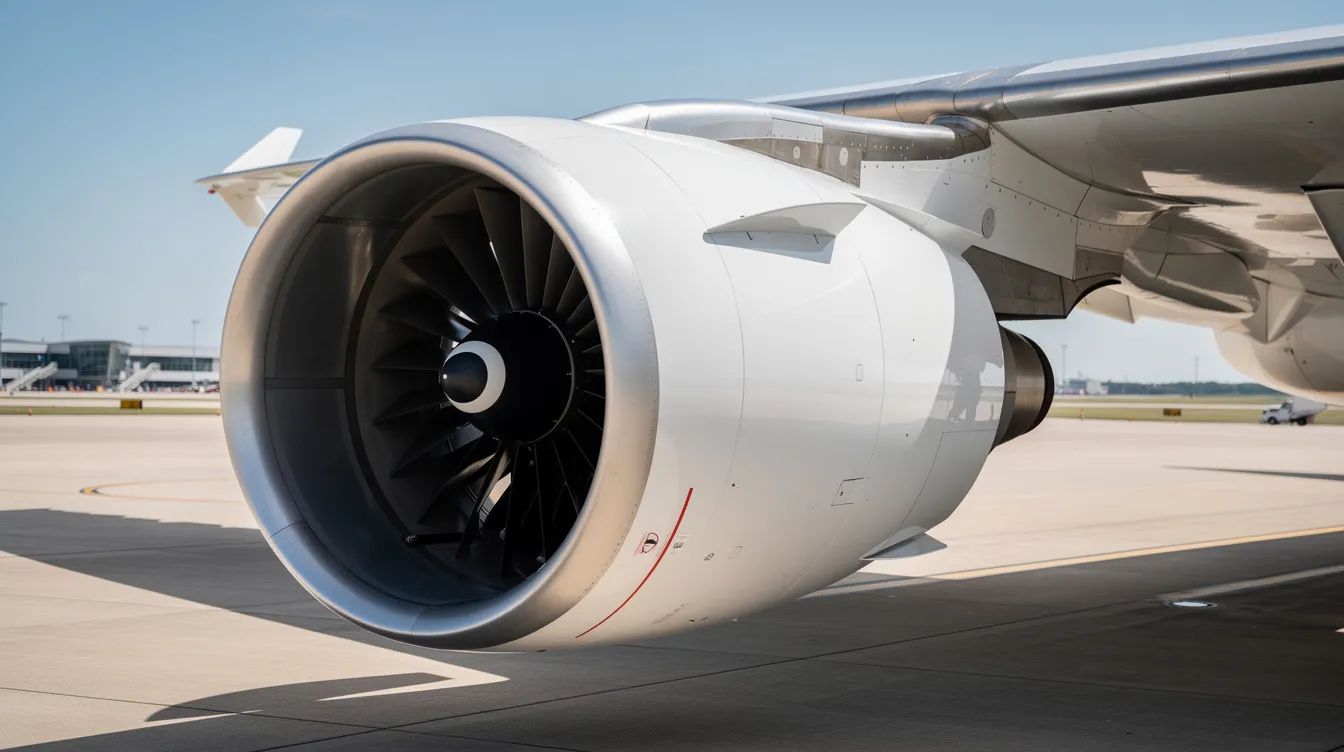
General Electric CF6-80C2 on the 747-400
The CF6-80C2B1F served as the General Electric option on the 747-400, and its lineage extended across multiple aircraft types—including the 767 and A330—making it one of the most widely deployed commercial turbofans in history. For airlines already invested in the CF6 ecosystem, selecting it for the 747-400 was a natural extension of existing infrastructure.
Design philosophy: The CF6-80C2 engine is known for its mechanical simplicity and reliability, with a two-spool architecture, proven hot-section materials, and straightforward maintenance access that kept shop visit turnaround times competitive
Visual and structural cues: Distinctive nacelle profile, a slightly different fan diameter compared to the PW4000, and an exhaust "lip" geometry recognizable to aviation enthusiasts scanning the starboard side or trailing edge of the engine nacelles
Airline adoption: Lufthansa, KLM, Air France, and several North American carriers selected the CF6 for its global spare-parts network, favorable time between overhauls, and robust performance in high-cycle operations
In-service reputation: Consistent dispatch reliability; strong residual value on the secondary market; competitive fuel burn that rivaled the PW4000 across most mission profiles; MRO accessibility in virtually every major aviation hub worldwide
Rolls-Royce RB211-524G/H on the 747-400
The RB211-524 engine uses a three-spool architecture for efficiency—a hallmark of Rolls-Royce design philosophy. Where the PW4000 and CF6 employ two spools (low and high pressure), the RB211 adds an intermediate-pressure spool, allowing each compressor stage to spin at its optimal speed. The result is higher overall pressure ratios (approaching 34.5:1), smoother operation, and refined fuel burn during cruise.
Operators: British Airways, Qantas, and Cathay Pacific were among the most prominent customers, often citing the engine's smoothness, reduced cabin vibration, and strong Rolls-Royce engineering support as decisive factors
Performance strengths: Excellent cruise-specific fuel consumption; long on-wing life between shop visits; well-suited for ultra-long-haul services such as London Heathrow to destinations across Asia-Pacific via intermediate stops
Trade-offs: Higher mechanical complexity translates to more expensive overhaul shop visits; heavier dry weight increases the aircraft's empty weight, which can reduce payload or shorten range margins compared to lighter engine options; acquisition and lifecycle costs were sometimes higher in markets where Rolls-Royce MRO facilities were less accessible
Perception: Some engineers and aviation enthusiasts consider the RB211 the "premium" choice for the 747-400, though cost-conscious operators sometimes favored the GE or PW alternatives
Why Boeing Offered Three Engine Types on the 747-400
Boeing's decision to certify three competing engine families on a single airframe was a deliberate commercial strategy, not an engineering afterthought. In the widebody market of the 1980s and 1990s, airlines had already invested heavily in tooling, simulators, spare-parts inventories, and trained personnel for specific engine brands. Asking a British Airways—deeply embedded in the Rolls-Royce ecosystem—to accept a GE-only aircraft would have been a non-starter.
Boeing's three-engine offering allows operators to select an engine supplier that aligns with existing maintenance and operational requirements. This flexibility reduced barriers to purchase, broadened the customer base, and positioned the 747-400 favorably against competitors tied to a single powerplant. The installation of engine options affects the aircraft's total thrust and operational capability, meaning airlines could tailor performance to their specific route networks—whether short, dense domestic hops or 7,000-nautical-mile transoceanic crossings.
Key commercial reasons behind multiple engine offerings:
Fleet commonality with existing aircraft (767, A330, MD-11) reduced total training and maintenance costs
Negotiation leverage: airlines could play OEMs against one another for favorable service agreements
Regional support alignment: Rolls-Royce dominated UK and Australasian maintenance networks; GE and PW had stronger footholds in North America and parts of Asia
Risk diversification in supply chain—avoiding dependence on a single manufacturer
This philosophy of choice resonates in modern private aviation. BlackJet curates its fleet across multiple OEMs and cabin classes, ensuring Jet Card members have access to the right aircraft for each mission rather than a one-size-fits-all solution through its premium private jet card programs.
Impact on Fuel Burn, Range, and Operating Economics
Engine-to-Engine Differences
On a typical 6,000–7,000 nautical mile sector, the gap in fuel burn between the CF6, PW4000, and RB211 was often only 1–4%, but at airline scale—burning millions of gallons annually—those percentage points translated to millions of dollars.
Engine | Typical Fuel Burn (lb/hr) | Notes |
|---|
PW4000 | ~22,000–26,500 | Slightly heavier, strong climb |
CF6-80C2 | ~22,000–26,500 | Reliable, competitive fuel burn |
RB211-524G/H | ~22,000–26,500 | Efficient cruise, higher complexity |
Max Range vs. Real-World Range
Published max range figures assumed ideal conditions.
In practice, payload, required fuel reserves, and air traffic routing reduced achievable range, making engine-specific fuel consumption even more critical for route planning.
Operating Cost Drivers
Direct operating cost per block hour reflected fuel burn plus maintenance intervals, overhaul costs, spare-parts pricing, and dispatch reliability.
An engine with lower fuel burn but higher overhaul costs might not deliver the best overall economics.
Business Jet Comparison
Aircraft | Engines | Fuel Burn (lb/hr) | Range |
|---|
Boeing 747-400 | 4 | ~22,000–26,500 | 6,000–7,000 nmi |
Gulfstream G650 | 2 | ~3,000–5,000 | Comparable or greater |
A long-range private jet like the Gulfstream G650 burns approximately 3,000–5,000 lb/hr while covering similar distances with two engines, offering dramatically lower fuel costs per flight hour—and far greater range per passenger when carrying a small group rather than 400+ travelers, especially when you look at ultra-long-range private jets for sale.
From Three-Crew to Two-Crew: Engines, Avionics, and the End of the Flight Engineer
Earlier 747 variants required a three-person flight deck: captain, first officer, and a flight engineer whose primary responsibility was monitoring and managing engine parameters, fuel systems, bleed air, and other systems from the flight engineer's position behind the pilots. This arrangement was standard across widebody operations through the 1970s and early 1980s.
The 747-400 changed the equation. Boeing paired its new engines with a two-crew glass cockpit—a fully digital flight deck featuring six CRT displays, automated engine monitoring, and digital fuel management. The integration of FADEC in engines enhances performance consistency and efficiency while reducing pilot workload, enabling the flight crew of just two pilots to oversee all systems that previously demanded a dedicated engineer.
What was eliminated: Manual monitoring of turbine inlet temperatures, compressor bleed schedules, and fuel transfer sequences; the flight engineer's station and associated instrumentation panels
What replaced it: Automated engine health monitoring, digital engine controls, sensor redundancy, and caution/advisory systems that alert pilots to anomalies requiring attention
Cost impact: Removing one crew member per flight reduced labor costs significantly across large fleets, simplified training pipelines, and aligned the 747-400 with emerging two-pilot standards in business aviation
Private aviation parallel: Today, even the most capable long-range business jets operate with two pilots and advanced avionics suites that trace their conceptual lineage directly to the glass cockpit revolution the 747-400 helped mainstream
Northwest Airlines, Service Entry, and Early 747-400 Operations
Northwest Airlines earned its place in aviation history as the 747-400's launch customer. The airline took first delivery on January 26, 1989—PW engines installed—and began passenger service on February 9, 1989, deploying the aircraft on its marquee transpacific routes.
Picture a late-1980s Northwest service from Minneapolis–Saint Paul to Tokyo Narita: a freshly delivered 747-400 climbing out over the Great Lakes, its four PW4056 engines pushing through 35,000 feet en route to a cruise altitude above 39,000 feet. With additional fuel tanks enabling nonstop capability across the Pacific, the aircraft offered Northwest a decisive competitive advantage on a corridor where range and payload were everything. The engine type mattered—PW's strong takeoff and climb performance at heavy weights suited these long overwater legs perfectly.
Other early adopters followed quickly. Singapore Airlines, Lufthansa, and British Airways each tailored their engine selections to match existing aircraft in their fleets. Japan Airlines split orders across engine families depending on variant and route. Air France and KLM, both heavy CF6 operators, naturally gravitated toward General Electric power for their 747-400s.
Launch milestones and key early operators:
Northwest Airlines - PW4056 engines; first delivery January 26, 1989; service entry February 9, 1989
Singapore Airlines - among the earliest Asian operators; deployed the aircraft on premium long-haul routes
British Airways - selected RB211-524G/H engines; aligned with existing Rolls-Royce support infrastructure at London Heathrow
Lufthansa - chose CF6-80C2; leveraged GE's European MRO network
China Airlines and other national airlines across Asia-Pacific - adopted the 747-400 to expand intercontinental networks
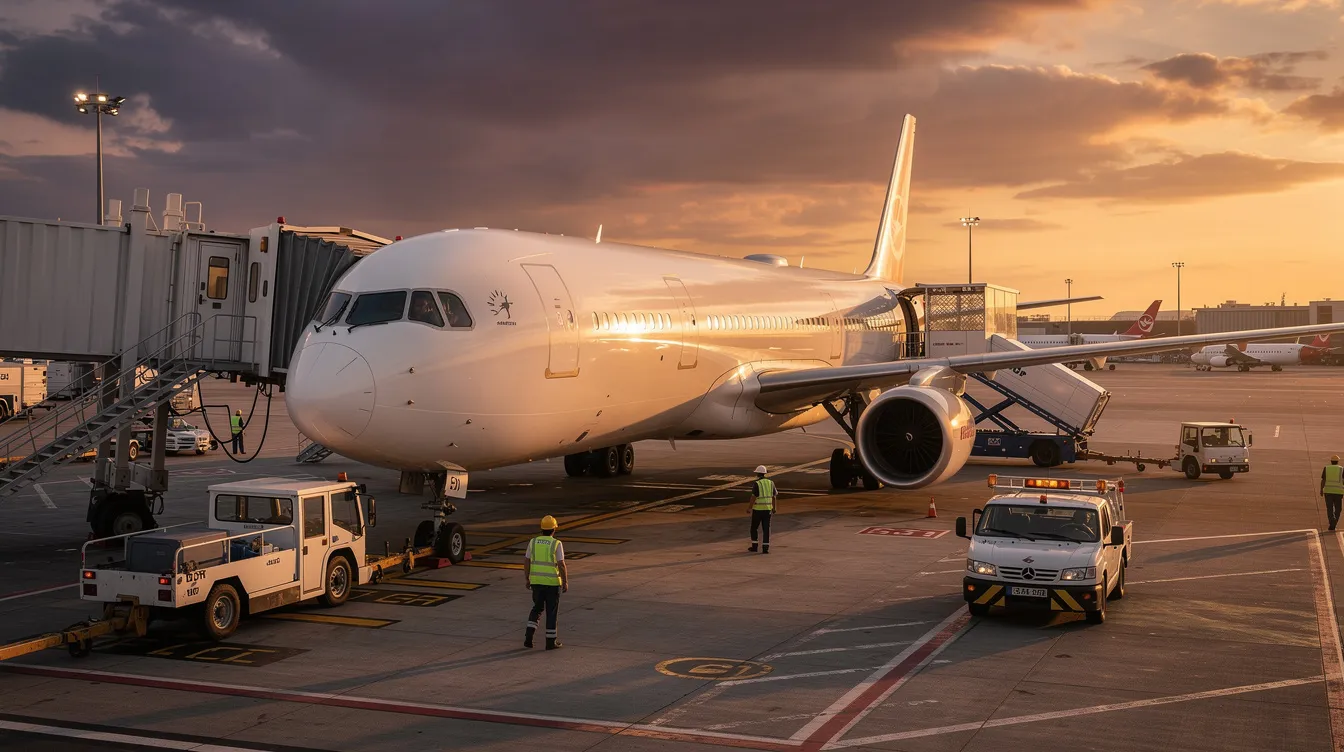
Signature Missions: Long-Range Demonstrations and Real-World Performance
The most iconic demonstration of 747-400 engine endurance came in August 1989, when Qantas flew a delivery flight from London to Sydney—approximately 9,720 nautical miles—in 20 hours and 9 minutes without stopping. The aircraft, powered by RB211 engines and carrying extra fuel but no commercial passengers, set a world record for the longest nonstop flight by a commercial aircraft at the time.
Distance: ~9,720 nmi (roughly 17,820 km)—far beyond normal revenue range
Duration: 20 hours 9 minutes of continuous engine operation
Engine type: Rolls-Royce RB211-524G
Fuel considerations: Special high-density fuel and no payload; the aircraft relied on its full fuel capacity and additional fuel tanks to achieve the distance
Context: This was a demonstration of potential, not a replicable revenue mission. Standard long-haul operations with payload, mandatory reserves, landing distance requirements, and air traffic constraints reduce achievable range significantly
For perspective, today's most fuel-efficient long-range business jets routinely connect city pairs like New York–Dubai or London–Singapore nonstop using just two engines and burning a fraction of the fuel—a testament to how far propulsion technology has advanced in fewer than four decades.
Engine Reliability, ETOPS, and Safety Culture
Before extended twin-engine operations (ETOPS) became standard regulatory practice, four-engine aircraft like the 747-400 held an inherent advantage: losing one engine still left three operating, and the aircraft could reach virtually any diversion airport within safe margins. This redundancy reassured airlines, regulators, and passengers alike across oceanic sectors where alternate airfields are hours apart.
By the mid-1990s, all three 747-400 engine families had achieved remarkably low in-flight shutdown rates—measured in single-digit events per million engine hours. Dispatch reliability exceeded 99% across mature fleets, and the safety record bolstered confidence in long-range operations regardless of whether an airline flew GE, PW, or Rolls-Royce power.
Four-engine redundancy: Allowed unrestricted overwater routing without ETOPS certification requirements
Reliability improvements: Advanced materials, digital monitoring, and rigorous maintenance programs drove failure rates to historic lows
Regulatory shift: As twin-engine reliability caught up—and in many cases surpassed—four-engine benchmarks, regulators granted ETOPS 180- and eventually 240-minute approvals to twinjets like the 777 and A350, fundamentally undermining the economic case for four-engine designs
Private aviation connection: BlackJet sources aircraft types with proven engine reliability records and robust maintenance oversight, applying the same safety rigor that once underpinned 747-400 operations to every flight in its network. Understanding how jet engines perform under demanding conditions is central to this commitment.
Environmental Considerations: Fuel Burn, Emissions, and Sustainability
A typical 747-400 long-haul flight burning 10–12 tonnes of fuel per hour generates roughly 30–36 tonnes of CO₂ per hour (applying the standard conversion factor of ~3.16 kg CO₂ per kg of jet fuel). On a 12-hour transpacific crossing, that amounts to over 360 tonnes of carbon dioxide from a single departure—a figure that underscores why four-engine widebodies have faced increasing environmental scrutiny.
In the late 2000s, airlines including Air New Zealand and Continental tested jatropha-based biofuel blends on existing aircraft, including 747 variants, as early experiments in sustainable aviation fuel. Those trials laid the groundwork for the broader SAF programs now gaining traction across the industry.
Per-hour emissions: 747-400 at cruise produces roughly 6–10× the CO₂ of a large-cabin business jet per flight hour
Per-passenger nuance: When fully loaded with commercial passengers in three classes, the 747-400's per-capita emissions are competitive; when carrying a small group privately, the math shifts dramatically in favor of smaller, newer aircraft
Modern approach: BlackJet ensures every member journey is carbon neutral—at no extra cost—through systematic carbon offsetting combined with fleet selection that prioritizes new engines with lower emissions profiles while still offering budget-friendly private aircraft options for cost-conscious flyers
Fuel burn context: Where the 747-400's four engines consume fuel at rates measured in tens of thousands of pounds per hour, modern business jets with optimized fuel consumption deliver comparable range on a fraction of the burn, particularly among the top private jets in the world
Engine Maintenance, Overhauls, and Lifecycle Economics
Two-Spool vs. Three-Spool Costs
The PW4000 and CF6 (both two-spool) generally had simpler overhaul processes and broader MRO network access.
The RB211's three-spool design, while efficient in cruise, demanded more complex teardowns and higher life-limited parts (LLP) costs.
On-Wing Intervals
Rolls-Royce engines often achieved impressive on-wing hours between shop visits, partially offsetting their higher per-visit cost.
GE and PW engines, with extensive global MRO footprints, could be serviced at more locations with shorter turnaround times.
Fleet Basing Implications
Private Aviation Parallel
Engine maintenance is a major driver of hourly operating cost in business aviation.
BlackJet's vetting process evaluates operator maintenance schedules, engine pedigree, and time-on-wing records to shield members from hidden cost exposure—learn more about how Jet Cards work, including typical jet card costs and pricing structures, and why fleet curation matters.
Comparing 747-400 Engines with Modern Private Jet Powerplants
Fuel Efficiency
A modern large-cabin business jet engine achieves specific fuel consumption figures that would have been aspirational targets for any 747-400 engine family.
Fewer engines compounding that advantage means total mission fuel is a fraction of the widebody equivalent.
Noise and Emissions
Today's powerplants meet Stage 4 and Stage 5 noise standards that did not exist when the 747-400's new engines were certified.
Reduced noise opens access to noise-sensitive airports and earlier departure windows.
Digital Integration
Where the 747-400 pioneered digital engine controls, modern business jets run full-authority digital engine control (FADEC) with predictive maintenance algorithms, real-time health telemetry, and automated trend monitoring that reduce unscheduled maintenance events.
Scenario Comparison
Route | Aircraft | Engines | Total Fuel Burn (lb) | Per Passenger Efficiency |
|---|
New York to London | Large-cabin business jet | 2 | 20,000–25,000 | High |
New York to London | Boeing 747-400 | 4 | 150,000–200,000 | Lower (for small groups) |
A BlackJet Jet Card member flying New York to London in a large-cabin business jet covers the route in approximately 6.5–7 hours, burning perhaps 20,000–25,000 pounds of total fuel. A 747-400 on the same sector—even with ideal routing—might consume 150,000–200,000 pounds. Per passenger with a small private group, the business jet wins decisively on both cost and carbon intensity, especially when you select the best private jet for 15 passengers for your group size.
Access Advantage
Two-engine business jets reach thousands of airports with shorter runway requirements and lower landing distance demands.
The 747-400's main gear configuration, wheel track, and weight limited it to major international hubs.
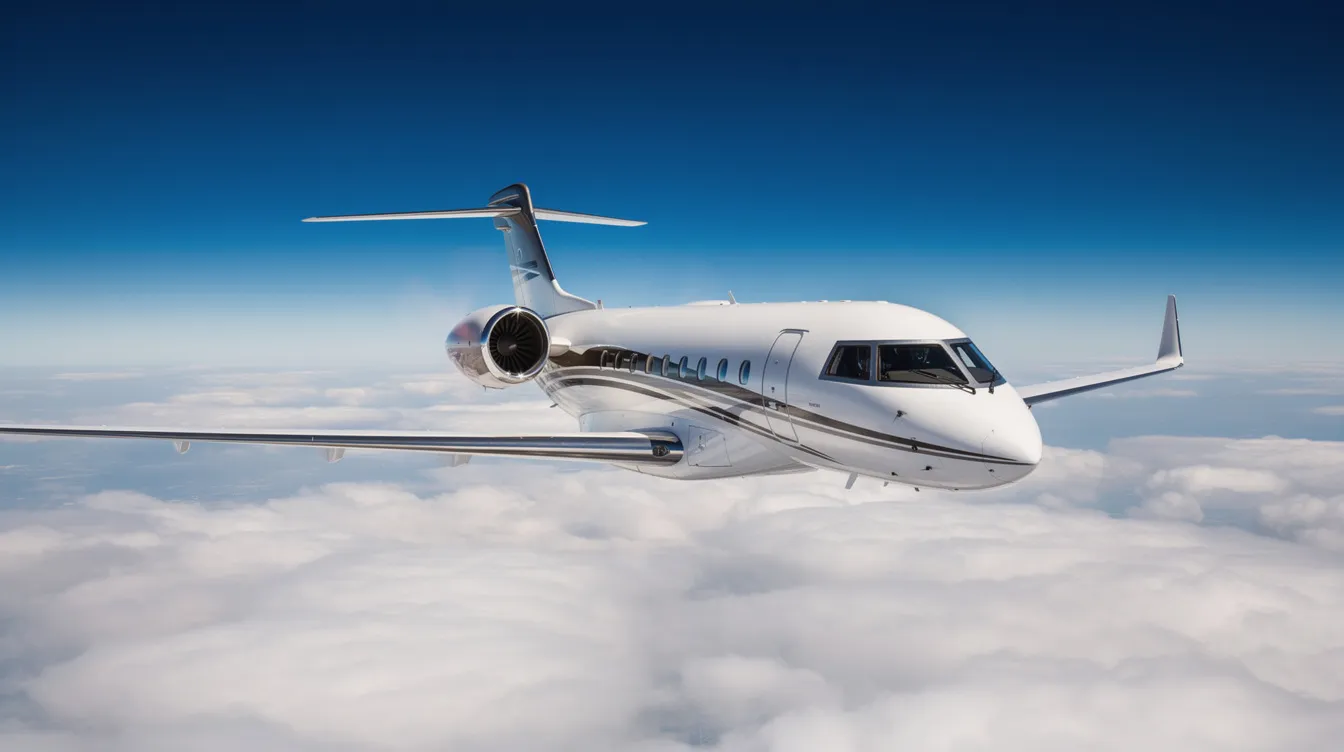
Engine Choice and Aircraft Variants: Passengers, Freighters, and Special Conversions
The three engine families powered a diverse range of 747-400 variants, each tailored to distinct mission profiles:
Passenger version (-400): The standard configuration, seating roughly 400–420 passengers in three classes across the main deck, upper deck, and lower deck compartments. All three engine options were available, with airline preference driving selection
Combi (-400M): The 747-400M was designed to carry both passengers and freight on the same main deck, split by a movable bulkhead. Engine choice followed the same three-way offering, with thrust requirements sized for mixed-load operations
Domestic (-400D): Optimized for short, high-density routes in Japan, the 747-400D can seat up to 660 passengers in a single class. Without the outer wing fuel tanks of long-range variants, engine selection prioritized take-off climb and high-cycle durability over ultra-long-range cruise efficiency. Japan Airlines operated these on dense domestic corridors
Freighter (-400F): Purpose-built for cargo with no upper deck passenger windows, the 747-400F has a maximum payload of 274,100 pounds. Boeing delivered 126 747-400F aircraft by November 2009, with operators like UPS, Atlas Air, and Cargolux running them on global freight networks. Engine nacelles on freighters endure punishing duty cycles
Extended Range (-400ER / -400ERF): The 747-400ER has a maximum takeoff weight of 910,000 pounds, and the 747-400ERF shares that same figure, with revised engines and additional fuel tanks enabling greater range or heavier payloads
Special conversions: The Dreamlifter (Large Cargo Freighter) adapted the 747-400 airframe for outsized cargo; other systems on these conversions were modified to handle unique structural loads
Across all variants, engine designs and thrust derates were adjusted to match specific maximum takeoff weights, runway performance requirements, and the operational profiles of each customer. The trailing edge flaps, wing chord dimensions, and landing gear configurations interacted with engine output to determine real-world performance at airports ranging from Schiphol Airport to high-altitude fields in Asia—considerations that also shape the choice of large private jets for 50 passengers on high-density charter missions.
Legacy, Retirement, and What Replaced the 747-400
Passenger Variant Retirement
Production of the passenger 747-400 ceased on March 15, 2007.
The last passenger 747-400 was delivered in April 2005.
Delta Air Lines retired its last 747-400 in December 2017, closing a chapter that began with Northwest Airlines' original order.
KLM retired its 747-400 fleet on October 25, 2020, with a final departure from Schiphol Airport.
British Airways retired its 747-400 fleet by February 2024, ending decades of Rolls-Royce-powered service from London Heathrow.
As of September 2021, only 42 passenger 747-400s remained operational worldwide—a fraction of the 694 built.
Freighter Variant Longevity
Cargo variants have proved more durable.
Freight operators continue flying 747-400F and converted freighter frames, though even these face competitive pressure from newer twin-engine freighters.
Lessons for Private Aviation
For BlackJet, this history reinforces a clear principle:
Prioritize aircraft whose engines offer the best blend of performance, fuel efficiency, and sustainability for premium private travel, rather than relying on sheer seat count or legacy prestige—even when evaluating the cheapest private jet options for more economical missions.
What Discerning Private Travelers Can Learn from the 747-400 Engine Story
The evolution of 747-400 propulsion holds four lessons directly applicable to anyone evaluating private jet options today:
Engine efficiency shapes every cost equation. The difference of even 1–2% in specific fuel consumption, scaled across thousands of flight hours, drove airline profitability—and the same logic applies to hourly rates on a Jet Card program and its underlying jet card pricing structure. Ask about the engine type on the aircraft you're booking.
OEM support and spare parts availability matter as much as raw performance. Airlines chose between GE, PW, and Rolls-Royce partly based on where maintenance could be performed quickly. For private travelers, operators with strong engine support networks mean fewer delays and more reliable scheduling.
Digital monitoring is a safety multiplier. The 747-400 pioneered automated engine health tracking; today's business jets extend that concept with predictive analytics that catch issues before they ground an aircraft. This is non-negotiable in modern private aviation.
Propulsion choices determine long-term aircraft viability. The 747-400's four-engine configuration, once its greatest asset, became its heaviest liability as twin-engine designs proved more economical and sustainable. Travelers benefit from platforms that continuously evaluate fleet technology rather than locking into aging assets.
BlackJet applies these principles through rigorous operator vetting, fleet curation across multiple OEMs and cabin classes, and a commitment to modern, efficient aircraft that serve members on every route—supported by best-in-class jet card options for frequent flyers.
FAQ: 747-400 Engines and Modern Private Jet Travel
Which engine types powered the Boeing 747-400?
The Boeing 747-400 was equipped with three certified engine families: the Pratt & Whitney PW4056/PW4062, the General Electric CF6-80C2B1F, and the Rolls-Royce RB211-524G/H. Airlines chose among these options based on factors such as fleet commonality, maintenance capabilities, and route demands—similar to how discerning travelers evaluate options like a 100-hour jet card cost guide when planning their flights. Airlines selected among these based on fleet commonality, maintenance infrastructure, and route requirements—just as savvy travelers compare options like a 100-hour jet card cost guide when planning their own flying.
How did 747-400 fuel burn compare with today's long-range private jets?
A 747-400 burns approximately 22,000–26,500 lb/hr in cruise. A modern large-cabin business jet burns roughly 3,000–5,000 lb/hr over similar distances. Per passenger for a small private group, the business jet is vastly more efficient—a dynamic that underpins many 50-hour jet card cost calculations.
Why did airlines choose different engine manufacturers on the same aircraft type?
Fleet commonality was the primary driver. An airline already operating GE engines on its 767 fleet, for instance, could reduce training, spare-parts, and MRO costs by selecting the CF6 for its 747-400s as well. Competitive bidding among OEMs also lowered ticket prices for engine support contracts—much like comparing NetJets jet card costs with other providers when choosing a membership.
Did the 747-400 still require a flight engineer?
No. The 747-400's glass cockpit and digital engine controls eliminated the flight engineer's position, reducing the flight crew to two pilots. This was a major advancement over earlier 747 variants that required three crew members on the flight deck, just as modern programs such as Flexjet jet cards reflect newer operational and staffing efficiencies.
Are any 747-400s still flying passengers or cargo today?
As of September 2021, only 42 passenger 747-400s remained operational. Cargo variants continue to fly with operators like Atlas Air and UPS, though their numbers are declining as newer twin-engine freighters enter service—much as many group travelers now favor large private jets for 20 passengers over legacy widebodies.
What should I look for in engine technology when choosing a private jet via a Jet Card program?
Prioritize aircraft with modern, FADEC-equipped engines from established OEMs, strong global MRO support, proven reliability records, and compliance with current noise and emissions standards. BlackJet's fleet options, including its flagship 25+ hour Jet Card, are curated with exactly these criteria in mind.
How does BlackJet address the environmental concerns raised by older engine technology?
BlackJet ensures carbon-neutral flights for every member journey through systematic carbon offsetting and by sourcing aircraft powered by the latest-generation engines with lower emissions profiles and improved fuel efficiency, all while helping clients interpret the broader private jet price list and cost landscape.
Next Steps: Applying These Insights with BlackJet
The journey from four 1980s-era turbofans on a 747-400 to two precision-engineered powerplants on a modern business jet represents one of aviation's most consequential leaps in efficiency, safety, and sustainability. For travelers who value that evolution—who understand that the engine beneath the wing shapes every dimension of their flight experience—BlackJet offers a direct path to the best of modern private aviation.
Explore BlackJet's Jet Card programs — including 25-hour and 50-hour options — to access aircraft powered by the latest, most efficient engines without the complexity of ownership or direct fleet management
Discover how BlackJet can reshape your long-haul travel by matching you with the right aircraft, cabin class, and route for every mission, backed by 24/7 digital booking and real-time support
Experience carbon-neutral private aviation where every flight reflects the propulsion lessons of the past—applied to the standards of the future


 Sign up with google
 Sign up with Apple