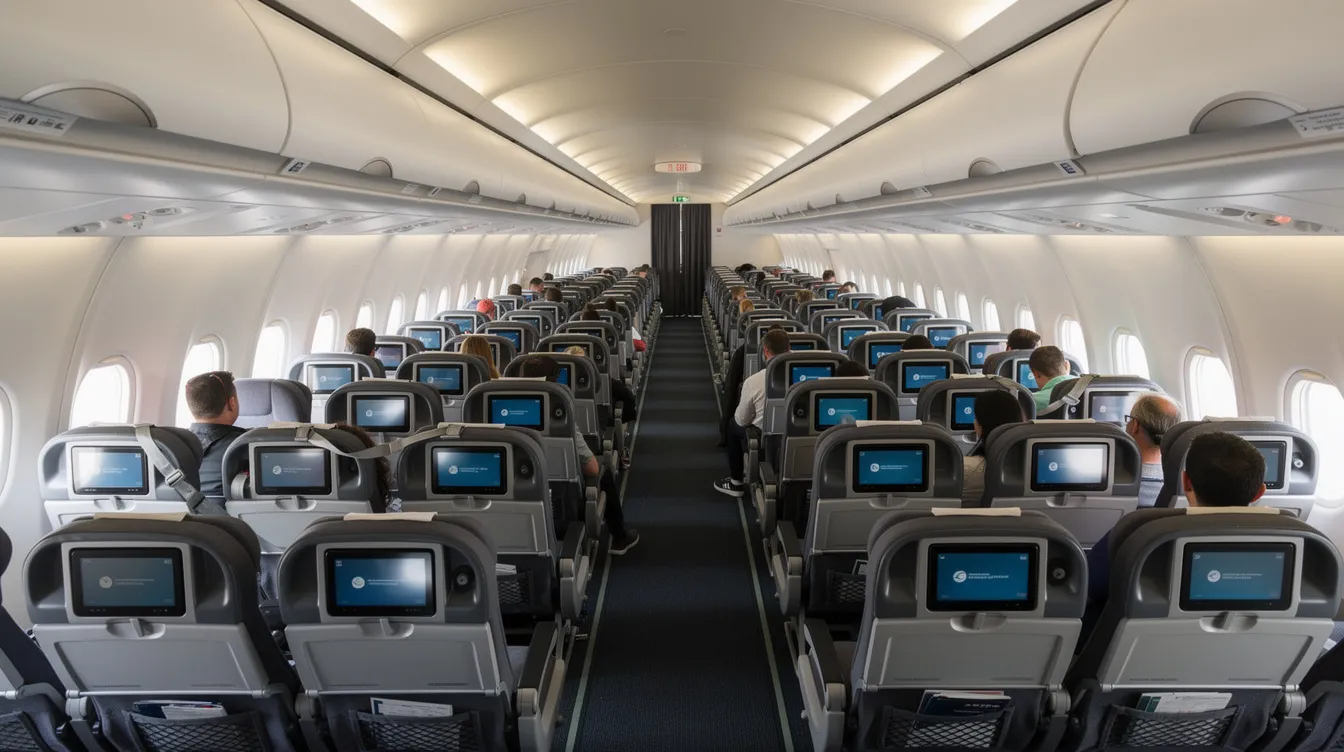
If you have ever scanned a seat map before booking a long-haul flight, you know the layout can make or break the trip. This guide is for travelers who prioritize comfort when booking long-haul flights. Choosing the right seat layout can significantly impact your in-flight experience. The difference between arriving rested and arriving exhausted often comes down to a single number: how many seats are packed into each row. Here is what you need to know about the 3-3-3 seating arrangement, which planes use it, and when it makes sense to leave the commercial cabin behind entirely.
Quick Answer: Which Planes Use 3-3-3 Seating In Economy Class?
A 3-3-3 seating configuration means nine seats across in economy class, arranged as three seats, an aisle, three seats, another aisle, and three more seats. It is a layout common on wide-body aircraft used for long-haul flights, and it generally allows wider individual seats than the denser 3-4-3 configuration found on the same airframe.
The Boeing 777 is the most prominent aircraft operated in a 3-3-3 configuration across economy, particularly the 777-200ER and 777-300ER variants still flown by a number of major carriers worldwide.
Aircraft typically featuring a 3-3-3 economy layout also include the Boeing 787 and select Airbus A350 variants, though the 777 remains the primary focus for this seat layout.
In a 3-3-3 cabin, seat width generally ranges from 18 to 19 inches versus roughly 17 inches in a 3-4-3 configuration, giving passengers noticeably more shoulder and elbow room.
Fewer middle seats in a 3-3-3 layout reduce the chances of being seated between two passengers, which matters significantly on flights over eight hours.
For BlackJet clients, the conversation moves beyond configuration entirely. With a private plane layout, there are no 3-3-3 or 3-4-3 rows at all - only full-cabin flexibility and seating designed exclusively for your party.
Understanding The 3-3-3 Seat Configuration
The 3-3-3 arrangement places nine seats per row across two aisles on large twin-aisle jets such as the Boeing 777. This differs fundamentally from other widebody layouts like 2-4-2 (common on the Airbus A330), 3-4-3 (ten-abreast on high-density 777s), and rarer 4-3 or 4-2 configurations seen on legacy planes.
Airlines choose between these layouts based on a strategic balance of capacity, yield per seat mile, and competitive positioning on comfort. A carrier focused on premium service keeps nine-abreast; one chasing volume adds the tenth seat.
The comfort impact is measurable. In a 3-3-3 configuration, no passenger is ever more than one seat away from an aisle. Two aisles in this configuration facilitate easier movement and access compared to single-aisle layouts. The maximum number of seats a passenger has to climb over is one if seated by the window.
Typical 3-3-3 seat width on a Boeing 777 sits around 18 to 19 inches, while seat pitch varies from 31 to 34 inches depending on the airline.
Boeing 777: The Main Aircraft With 3-3-3 Economy Class Seating
The Boeing 777 family - spanning the 777-200, 777-200ER, 777-300, and 777-300ER - is the primary long-haul aircraft offering 3-3-3 seating in economy. Boeing designed the 777's fuselage at approximately 19 feet, 3 inches of cabin width, providing enough room for either nine-abreast or ten-abreast layouts.
Earlier and comfort-focused operators kept the 777 configured in a 3-3-3 configuration, while many airlines migrated to 3-4-3 post-2010 to squeeze in extra revenue seats per flight. Cathay Pacific, for example, switched from 3-3-3 to higher-density ten-abreast on many of its routes.
Still, a meaningful number of carriers maintain the spacious nine-abreast cabin, particularly on routes to Europe, Asian destinations, North America, and the Middle East where the distance and flight time make every inch of seat width count.
On a typical 777-300ER with 3-3-3, expect around 244 to 300 economy seats, 18 to 19 inches of width, and 31 to 34 inches of seat pitch. These are the planes that operate 10- to 15-hour sectors - London to Singapore, New York to Hong Kong, Sydney to major hubs.
BlackJet clients who once flew these routes in the main cabin often transition to private jets as their travel demands grow, gaining premium time savings and privacy that no economy row can deliver.
Major Airlines That Still Offer 3-3-3 On The Boeing 777
Several full-service carriers continue to fly more spacious 3-3-3 economy class cabins on at least part of their Boeing 777 fleet. Seat specs vary, so checking airline websites and specific seat maps before booking remains essential. Here are the most notable airlines and their seat specs:
Japan Airlines
Singapore Airlines
Korean Air and Asiana
Korean Air:
Asiana Airlines:
Turkish Airlines
EVA Air
Garuda Indonesia
Air China
Other Airlines
Philippine Airlines: Has acquired two ex-Garuda Indonesia Boeing 777-300ER aircraft.
Biman Bangladesh Airlines, TAAG Angola Airlines, and other regional carriers: Run sub-fleets in 3-3-3, though some 777-200ER aircraft may use 3-4-3 for capacity.
Tip: Always confirm the specific seat configuration using tools like AeroLOPA or airline seat maps before booking, and consider the broader types of private jets for every traveler if you’re evaluating a shift away from commercial cabins, as fleets are constantly being retrofitted.
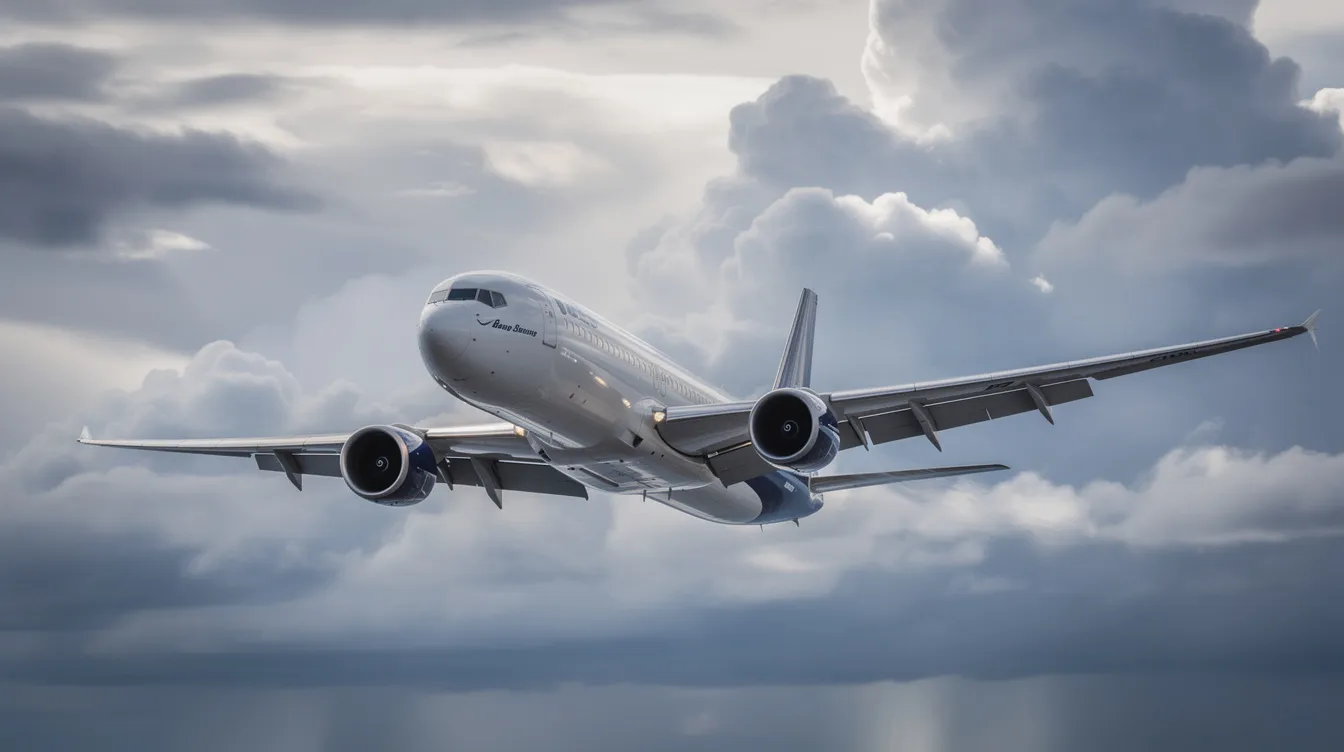
Other Widebody Seat Configurations: 3-4-3, 2-4-2, 3-4, 4-3, And 4-2
To put 3-3-3 in context, here are the most common alternative layouts on long-haul jets:
3-4-3
Ten-abreast on many high-density Boeing 777s.
Emirates, for example, packs ten seats per row on most of its 777 fleet, reducing width to about 17 inches.
2-4-2
Found on many Airbus A330 and some A340 aircraft.
This remains a comfort favorite in economy - fewer middle seats, easier aisle access.
3-3-3 or 3-4-3 on Boeing 787
The Boeing 787 cabin is about 19.5 feet wide, allowing for a 3-3-3 layout but with narrower seats than the 777.
The Airbus A350 fuselage is roughly 5 inches wider than the Boeing 787, giving airlines more room to work with.
4-3 and 4-2
Consider the weight of that extra seat: an A330 in 2-4-2 versus a 777 in 3-4-3 configuration can feel like a different class entirely on a 10-hour flight, even at the same ticket price.
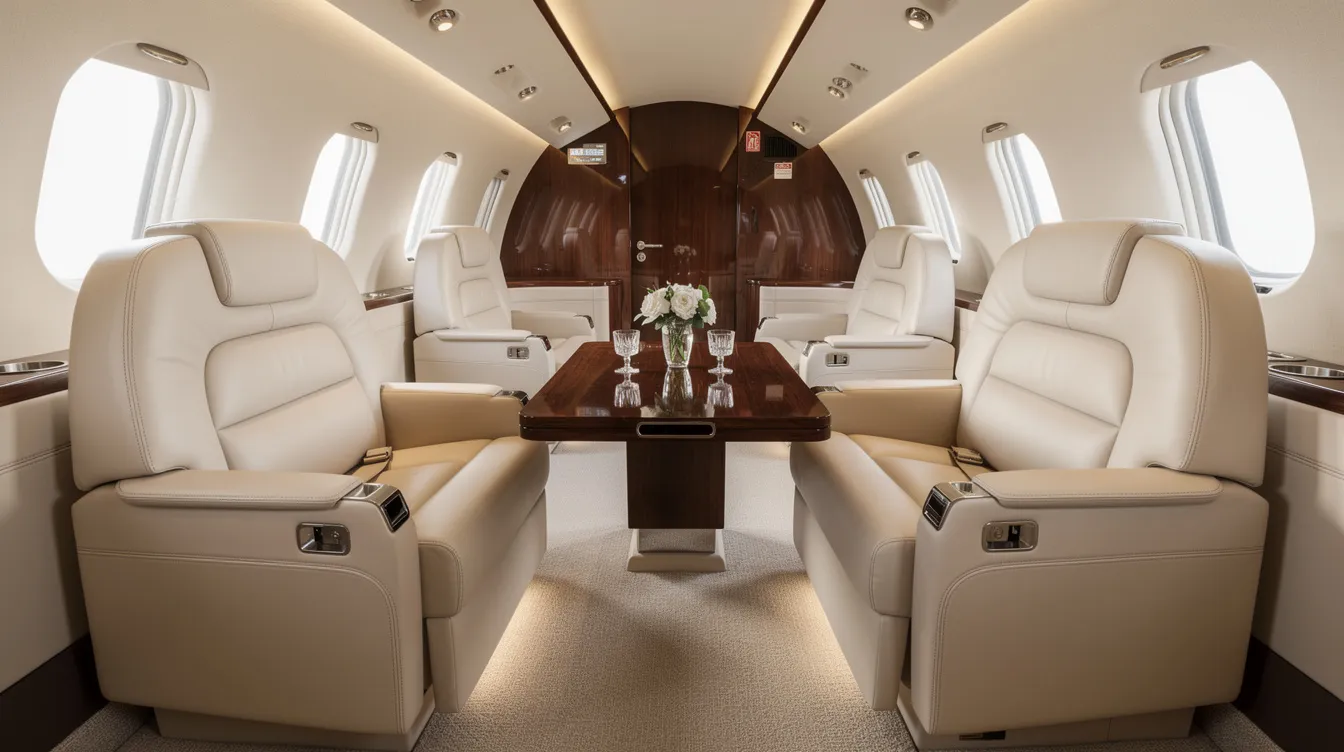
BlackJet clients effectively bypass the entire concept of seat configuration. Instead, they choose complete aircraft categories - light, midsize, super-midsize, or large cabin - guided by a clear understanding of private jet sizes and cabin types - with lounge-style seating and full-cabin control.
How Seat Configuration Affects Economy Class Comfort
Configuration is not just a number on a seat map - it determines how you sit, sleep, and work for the duration of your trip. Here is how it breaks down:
Seat Width Comparison
3-3-3: 18 to 19 inches
3-4-3: Roughly 17 inches
That inch and a half compounds over a 12-hour flight, affecting shoulders, recline comfort, and the ability to use a laptop.
Seat Pitch Comparison
Japan Airlines (3-3-3): 34 inches
Other carriers (3-3-3): 31 to 32 inches
Even within 3-3-3, the range matters. Check pitch alongside configuration when reviewing window seats, middle seats, or aisle options.
Perceived Crowding and Cabin Noise
Nine-abreast cabins generally feel less oppressive.
Older 3-3-3 cabins can still feel dated if in-flight entertainment has not been refreshed, while some 3-4-3 aircraft may feature newer amenities.
When choosing a commercial flight, look at both the aircraft type and the specific seat layout. Prioritize 3-3-3 for long-haul economy class whenever possible. Check comments and photo reviews on sites like SeatGuru for real-world impressions in September, October, and peak travel months.
With a BlackJet Jet Card and premium private jet programs, every passenger effectively has direct aisle access. Seats are larger, arranged in club layouts instead of tight rows. Work, sleep, and dining become effortless - a fundamentally different experience from any economy cabin, regardless of configuration.
From 3-3-3 To Private Jet: When Upgrading Your Travel Strategy Makes Sense
Picture this: a business executive flying quarterly from Frankfurt or London to Asian destinations - 12 to 14 hours in a 3-3-3 Boeing 777 main cabin. Even on a well-configured carrier like Japan Airlines or Garuda Indonesia, the hidden costs add up:
Productivity loss from limited privacy and cramped seating, even in a wider nine-abreast cabin
Hours lost in security lines, boarding queues, and hub connections
Inflexibility when meetings overrun or plans shift at short notice
A Jet Card program like BlackJet's reshapes this equation. Pre-purchasing hours across multiple aircraft categories gives you on-demand departure times from private terminals, full control over cabin layout, and carbon-neutral flights with rigorous safety certification as standard, all with predictable jet card membership pricing rather than fluctuating ticket costs.
A concrete example: a client shifting quarterly New York to London board meetings from overnight business class on a Boeing 777 to a super-midsize private jet via a 25-hour BlackJet Jet Card. Each trip gains extra work hours, privacy, and rest - benefits that compound over a handful of trips per year, especially when you understand jet card cost per hour versus premium cabin fares. While premium economy and business class ease some of the pain, private aviation gives unmatched control over schedule and onboard experience for frequent travelers.
FAQs About 3-3-3 Seating and Aircraft
What plane has 3-3-3 seating?
The Boeing 777 family, including the 777-200ER and 777-300ER, is the primary aircraft featuring 3-3-3 seating in economy class. The Boeing 787 and select Airbus A350 variants also use this layout.
Which airlines operate planes with 3-3-3 seating?
Major airlines operating 3-3-3 seating on Boeing 777s include Japan Airlines, Singapore Airlines, Turkish Airlines, Air China, Korean Air, Asiana Airlines, EVA Air, Garuda Indonesia, Biman Bangladesh Airlines, and TAAG Angola Airlines.
How does 3-3-3 seating compare to 3-4-3 in economy class?
3-3-3 seating offers wider seats (18-19 inches) and fewer middle seats compared to the denser 3-4-3 layout, which typically has narrower seats around 17 inches. This results in more comfort and easier aisle access.
What is the typical legroom in 3-3-3 seating?
Legroom varies by airline, with seat pitch ranging from 31 to 34 inches. For example, Japan Airlines offers 34 inches of legroom, Singapore Airlines 32 inches, and Air China 32 inches.
Why do some airlines choose 3-3-3 over 3-4-3 seating?
Airlines balance passenger comfort and revenue. Those focusing on premium service often keep 3-3-3 for better comfort, while others add an extra seat per row with 3-4-3 to increase capacity and revenue.
How can I confirm the seat configuration before booking?
Always check airline websites or trusted seat map tools like AeroLOPA. Seat configurations can vary within an airline’s fleet and even by route.
What are the benefits of private jet travel over 3-3-3 economy seating?
Private jets offer full cabin control, larger seats, privacy, flexible scheduling, and carbon-neutral flights. Unlike commercial 3-3-3 cabins, private jets eliminate cramped rows and provide direct aisle access for every passenger.
Does Air China operate planes with 3-3-3 seating?
Yes, Air China operates about 20 Boeing 777-300ERs with 3-3-3 seating, offering approximately 18 inches of seat width and 32 inches of legroom.
Choosing The Best Option For Your Next Long-Haul Flight
The Boeing 777 remains the primary aircraft with 3-3-3 seating, still offered by airlines like Japan Airlines, Singapore Airlines, Garuda Indonesia, Turkish Airlines, EVA Air, Air China, Korean Air, Asiana, Biman Bangladesh Airlines, and TAAG Angola Airlines on select routes across the world. A 3-3-3 layout generally offers better economy class comfort than 3-4-3, especially for shoulders and overall cabin feel. Alternatives like 2-4-2, 4-3, and 4-2 exist but are less common on modern flagship long-haul fleets.
If you must fly economy commercially, prioritize 3-3-3 Boeing 777 or 2-4-2 Airbus A330 layouts for the best balance of distance and comfort. If you value time, privacy, and control over your travel strategy, consider transitioning key trips to private jet solutions and review what it costs to rent a private jet compared to repeated long-haul economy tickets.
Discover how BlackJet's Jet Card program replaces the compromise of 3-3-3 economy class with tailor-made, carbon-neutral private flights - on your schedule, on your terms. Before upgrading, many travelers study a detailed private jet price list and access options to compare models, ownership structures, and charter versus jet card solutions. Explore our Jet Card offerings and experience what refined, meaningful travel looks like beyond row numbers and seat maps.


 Sign up with google
 Sign up with Apple