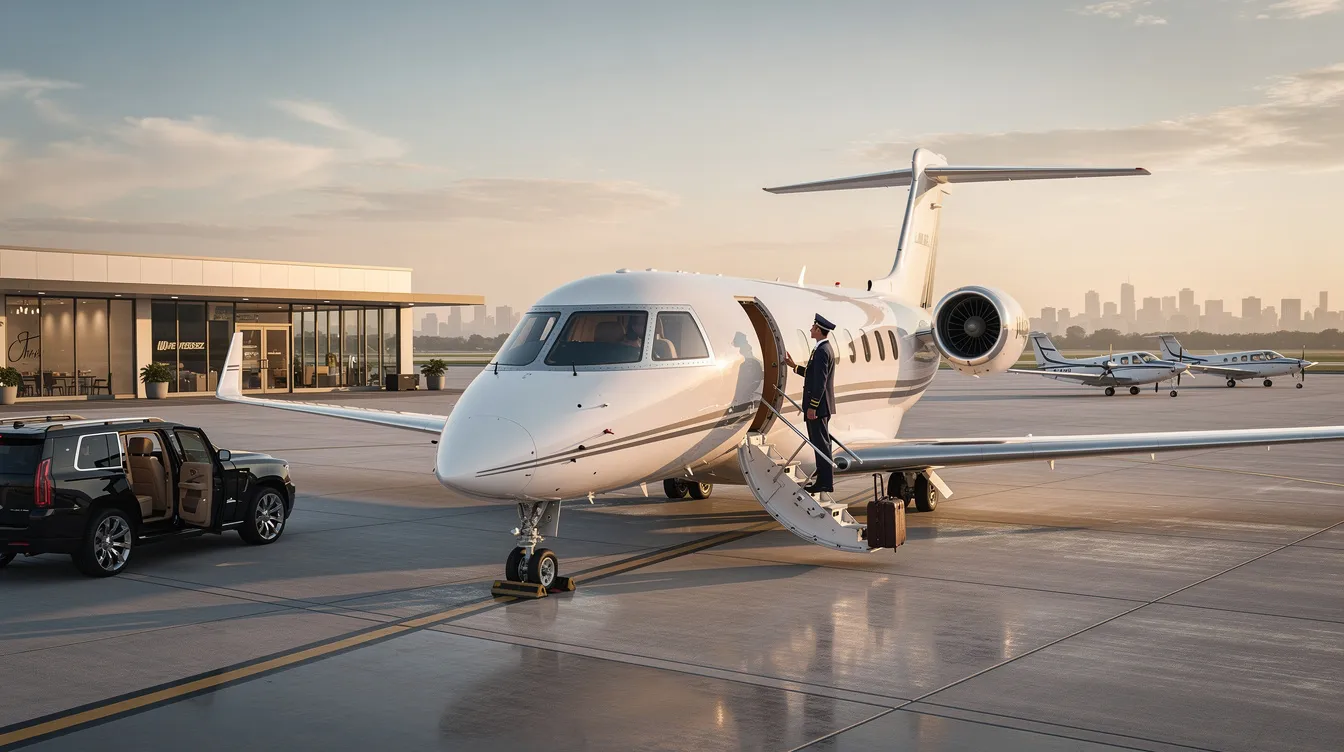
For executives and frequent flyers logging 200+ hours annually, a luxury private plane layout isn’t just a detail—it’s a strategic asset, offering exclusive customization and comfort tailored to your needs. This guide is designed for executives, frequent flyers, and anyone considering private aviation who wants to understand how cabin design impacts comfort, productivity, and travel experience. The cabin you select determines whether a transatlantic flight becomes productive work time, restful sleep, or frustrating compromise.
A private plane layout refers to how the interior of a private jet is organized into functional zones—such as work, relaxation, and dining areas—unlike commercial aircraft, which prioritize seating capacity. Private jet interiors are characterized by customization, often divided into functional 'zones' depending on the aircraft's size, and common configurations include club seating, divans, and dedicated workstations. These layouts are designed to maximize comfort and utility, featuring distinct zones for work, relaxation, and dining, unlike commercial aircraft, which prioritize capacity.
Unlike commercial aircraft, where first-class passengers share space with 150–300 others in fixed rows, private aviation offers full-cabin utilization for 4–14 passengers. A super midsize jet provides roughly 117 cubic feet per person compared to 52 cubic feet in commercial business class—a 2.2× space advantage that directly impacts how you work and rest.
With BlackJet 25+ Hour Jet Cards (25-hour or 50-hour programs), you select aircraft categories and cabin layouts tailored to each mission rather than being locked into a single owned aircraft. This article covers the essential layout themes: functional zones for work and rest, configurations by jet size, technology, and safety integration, and sustainable design choices that define modern private jets. Transform the way you fly with a luxury private plane layout.
Core Cabin Zones in a Private Plane Layout
Most private jets—from a Cessna Citation CJ3 to a Gulfstream G650—organize space into functional zones rather than airline-style rows. This zoning allows passengers to shift mindset and activity as the flight progresses.
Forward Zone
Immediately aft of the cockpit, featuring the main entry door, forward galley or refreshment centers, and crew briefing area. On light jets, this means a compact beverage station; on larger jets, full meal preparation capability.
Central Zone
The primary seating area, typically a club-four configuration with seats facing each other and fold-out tables. This space optimizes conversation, negotiation, and collaborative work with conference tables available on larger aircraft.
Aft Zone
Transitions to relaxation and privacy—divans that convert to beds, enclosed private lavatory facilities, and on large cabin jets, dedicated sleeping areas with full-sized beds and en-suite bathrooms.
Consider a 7-hour New York–London executive flight: work documents in the forward club seats (2 hours), conduct a video negotiation at the conference table (1.5 hours), then retreat to the aft stateroom for sleep (3 hours). BlackJet’s flight advisors match these zoning styles to each client’s mission—investor roadshows demand strong central meeting zones while family trips prioritize sleeping capacity aft.
Standard Private Plane Layout Configurations
Standard cabin configurations are manufacturer blueprints that balance certification requirements with passenger comfort. These layouts appear across charter and Jet Card fleets, becoming conventions that experienced travelers recognize.
The club-four layout remains the universal standard for light jets and midsize jets. Four individual seats arranged in facing pairs with two fold-out tables create an optimal meeting space for small groups. You’ll find this in the Embraer Phenom 300, Citation XLS+, and similar aircraft—ideal for intimate negotiations and maintaining eye contact during discussions.
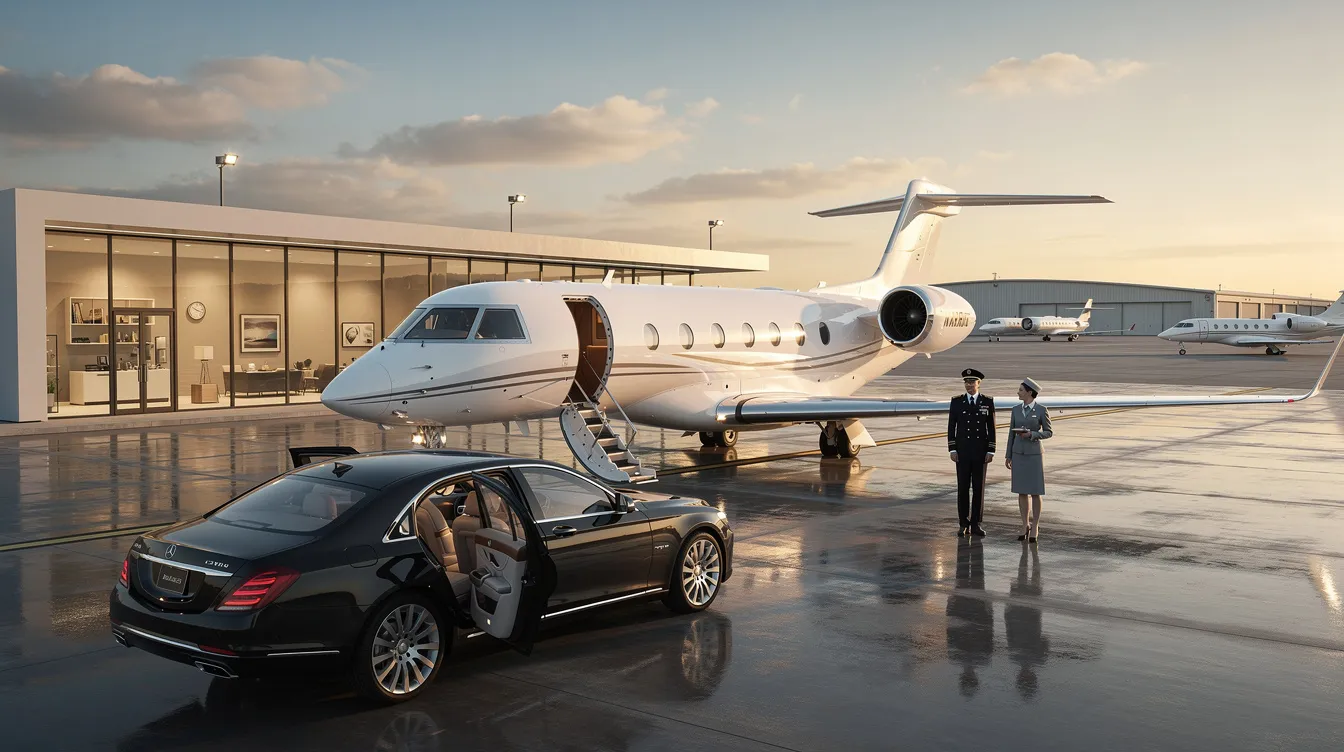
Mixed configurations pair club seating with an aft divan, typical in super midsize jets like the Bombardier Challenger 350 or Legacy 600. The forward club serves business functions while the aft section provides sleeping or relaxation options without forcing the entire cabin into rest mode.
Large-cabin layouts on aircraft like the Gulfstream G650 and Dassault Falcon 8X feature multiple distinct zones: forward galley and crew area, spacious seating in the main lounge, conference/dining zone with seating for 6–8, private bedroom, and en-suite bathroom with shower. These layouts are equipped with premium amenities such as fully reclining seats, advanced entertainment systems, galley kitchens, and other tailored features that enhance passenger comfort and deliver a truly luxurious, customizable in-flight experience. These configurations accommodate larger groups while maintaining the privacy that distinguishes private aviation from commercial travel.
Private Plane Layouts by Jet Size Category
BlackJet Jet Cards provide access to multiple cabin classes, making it essential to understand how different types of private jets affect available layouts.
Jet Size Category | Passenger Capacity | Cabin Features & Layout Highlights |
|---|
Light Jets | 4–8 | Compact, efficient single-zone cabins with club-style seating optimized for cozy gatherings or personal workspace. Higher ceilings and modular layouts enable seamless work-rest transitions. Compact galleys and comfortable lavatories. High-quality finishes include ergonomic leather seats, polished wood veneers, quiet closing cabinets, power outlets, advanced lighting, and hospital-grade air filtration. Ideal for short regional flights. |
Midsize Jets | 7–9 | Larger cabins (700–1,000 ft³) with separate work and relaxation zones, enclosed lavatories, and expanded galley areas. Seating combines club seating, divans, and dedicated workstations. Features fully reclining leather seats with massage functions, large HD monitors, personal touchscreens, customizable lighting, and advanced climate control. Suitable for medium-length domestic travel. |
Large Cabin & Ultra Long Range Jets | 8–16 | Multiple distinct zones for work, dining, and sleep with spacious cabins and higher ceilings. Includes private bedrooms with full-sized beds, en-suite bathrooms with marble countertops and standing showers, full galley kitchens with ovens, and lavatories resembling high-end hotel bathrooms. Seating features fully reclining swivel leather seats with massage functions. Advanced entertainment and connectivity systems, low cabin altitudes, and hospital-grade air filtration enhance wellness on long-haul flights. Ideal for international travel. |
Designing for Comfort: Seating, Materials, and Ambience
Layout choices translate directly into tangible comfort through seat pitch, recline capability, noise levels, and climate control. Many small private jets feature spacious seating that commercial flights simply cannot match.
Ergonomic Seating
Club seats in modern private jets feature swivel bases and articulated tracking systems, allowing passengers to rotate toward conversation partners or face forward for individual work. Lie flat seating appears in larger jets, while divans convert to sleeping surfaces within seconds. Private jet seating in aircraft like the Challenger 350 delivers comfort impossible in airline cabins.
Premium Materials
Hand-stitched leather, polished wood veneers, and high-density acoustic insulation define private jet interiors. These materials affect sound absorption, tactile comfort, and long-term durability—not merely aesthetics.
Ambience Controls
Variable LED mood lighting adjusts color temperature to support circadian rhythm—cool white (5000K) for work phases, warm amber (2700K) for rest. Gulfstream’s panoramic windows maximize natural daylight while maintaining acoustic isolation. Cabin noise in many private jets runs 75–80 dB versus 85+ dB on commercial aircraft—a significant difference over long flights.
Wellness Integration
Lower cabin pressure (equivalent to 6,000–8,000 feet versus 8,000+ feet commercial) and 100% fresh air exchange every 2–3 minutes reduce fatigue and dehydration. BlackJet’s partner operators maintain interiors to consistent standards through scheduled leather conditioning and deep cleaning between sectors.
Layout for Productivity: Turning the Cabin into a Mobile Office
For business leaders, a 4-hour flight represents a working block rather than downtime. The right private plane layout converts travel time into strategic advantage.
Meeting-Friendly Configurations
Club-four seating with fold-out tables accommodates 2–4 person negotiations. Larger jets feature mid-cabin dining/boardroom setups with seats facing each other across conference tables. Some operators provide movable partitions creating private meeting spaces mid-flight.
Connectivity Infrastructure
Modern cabin layouts integrate Ka-band or Ku-band onboard wi-fi with VPN capability, multiple power outlets, and USB-C ports at each seat, and secure communication systems. These aren’t afterthoughts—they’re built into side-ledges, credenzas, and bulkheads. Advanced entertainment systems and high-definition screens support presentations, while satellite phones enable secure communications.
Practical Scenario
A CEO boards a super midsize jet at 7 AM in Los Angeles, heading to Toronto for a 1 PM pitch. The first 90 minutes: presentation refinement in club seats via premium wi-fi. Next 2 hours: contract review at the conference table with in-house counsel. Final 30 minutes: quiet rest in the aft lounge. Landing refreshed and aligned—impossible on commercial flights.
BlackJet’s mobile booking platform, part of its broader premium private jet card programs, allows passengers to request specific arrangements in advance: a table pre-set for presentations, a quiet zone designated for sleep.
Specialized Layouts: Family, Medical, and VIP Missions
While many layouts follow standard configurations, private aviation allows targeted reconfiguration for special missions that maximize comfort for specific needs.
Family Travel
Layouts transform for multi-generational comfort. A large-cabin jet might feature forward club seating for adults, mid-cabin entertainment zone with in-flight entertainment options and surround sound for teenagers, and aft sleeping areas with convertible divans, and understanding private jet sizes helps match each family’s space needs. Pet-friendly configurations include secured carriers, washable textiles, and designated areas with ice machines and refreshment centers nearby. Family trips benefit from cabin space that keeps different generations comfortable without compromise.
Medical & MedEvac
Some aircraft accommodate stretchers, oxygen systems, and monitoring equipment in aft staterooms while retaining seating for family or medical staff. These configurations require coordination with aviation medical authorities but enable critical transfers, and understanding leading providers’ programs, such as NetJets jet cards, can help benchmark options.
VIP & Government
Ultra-VIP cabins feature private offices with secure communications, separate staff sections, and multiple lounges. A select few BlackJet partners offer similar privacy features through their large-cabin fleets and can even support 30-passenger private jet missions when VIP groups travel together.
Real-World Example
A family of 8 (grandparents, parents, teenagers) departs New York on a G650 for a 10-day European itinerary—London, Paris, Monaco, Barcelona. Night layouts emphasize dedicated sleeping areas; daytime configurations feature entertainment systems and dining zones for international travel with unmatched comfort, similar in philosophy to large-group 50-passenger private jet configurations used for corporate or event travel.
Technology, Safety, and Sustainability Built into the Layout
Physical cabin layouts must accommodate avionics, safety equipment, and sustainable design without compromising the in-flight experience or aesthetics.
Safety Integration
Dual-pilot operations, clearly marked emergency exits, strategically positioned oxygen masks, and accessible medical kits are mandatory. Cabin design leaves clear evacuation paths—no passenger sits more than a specified distance from an exit. Every fixture, from seats to divans, passes crashworthiness testing under 16g impact scenarios.
Certification Requirements
Layout changes require FAA/EASA approvals. Seating, divans, and fixtures undergo regular inspections ensuring continued airworthiness. This regulatory framework protects passengers while allowing meaningful customization within approved parameters.
Sustainability Features
Eco-conscious interiors increasingly specify FSC-certified wood veneers, low-VOC adhesives, and energy-efficient LED lighting, consuming 70–80% less energy than halogen alternatives. Smarter cabin systems reduce onboard energy demand, supporting fleet-wide efficiency.
BlackJet ensures every Jet Card hour flies carbon neutral through verified carbon offsets—at noadditional cost. Combined with a preference for newer, more efficient aircraft that can still accommodate 20-passenger private jet missions when needed, this commitment embeds sustainability into every flight.
How Much Space You Really Get: Dimensions and Capacity
Perceived cabin space combines actual dimensions with smart layout decisions. Average cabin space varies dramatically by category, affecting everything from leisure travel comfort to seating capacity for business teams.
Jet Category | Typical Length (ft) | Width (ft) | Cabin Volume (ft³) | Passenger Capacity | Typical Use |
|---|
Light Jets | 25–30 | 6–7 | 200–350 | 4–8 | Short regional trips |
Midsize / Super Midsize Jets | 30–50 | 7.5–8 | 700–1,000 | 7–10 | Medium-length domestic, transcontinental missions, including typical 12-seater private jet layouts |
Large Cabin / Ultra Long Range Jets | 50–70+ | 8–9 | 1,000–1,800+ | 8–16+ | Long-haul international flights in top 16-seat private jets |
Space Per Person
Seven passengers on a super midsize jet enjoy more personal space than 14 business-class passengers on a commercial widebody. This spacious cabin advantage compounds over long flights—the difference between arriving depleted or refreshed, especially when comparing layouts on the best small private aircraft for shorter missions.
Baggage Considerations
Light jets accommodate 60–100 ft³; larger jets reach 300+ ft³. Storage layout (side cabinets vs aft holds) impacts cabin feel. BlackJet members choose aircraft not just by passenger count but by cabin volume—crucial for taller passengers or those traveling with equipment. Smaller jets, including some of the cheapest private jet options, require thoughtful packing, while larger jets offer flexibility.
Choosing the Right Private Plane Layout for Your Trip
Layout selection is a strategic decision aligning flight duration, passenger mix, and purpose with the right cabin. Unique features of each aircraft category and the overall private jet price list serve different missions.
Scenario | Recommended Jet Type | Key Layout Features |
|---|
Short regional hop (2–4 hrs, 3–4 passengers) | Light jet | Club layout, cost-efficient, and meeting comfort |
Coast-to-coast US (5–7 hrs, 4–8 passengers) | Midsize or super midsize jet | Work + rest zones, enclosed lavatory, larger galley |
Overnight transatlantic (8–14 hrs) | Large cabin jet | Bedroom, lie-flat seating, ultimate comfort for arrival readiness |
Non-Obvious Factors
Privacy doors for sensitive negotiations, position of quietest seats, galley size for formal dining versus snacks, and pet/children considerations all influence the ideal choice.
BlackJet’s 24/7 team and digital platform filter options by layout features—conference table availability, enclosed lavatory, bed count, wi-fi category, and cargo space—matching your mission to the right cabin while benchmarking against top private jet companies across the industry.
FAQ: Private Plane Layouts, Jet Cards, and Cabin Options
Can I choose a specific cabin layout with a Jet Card?
Yes. BlackJet Jet Cards allow specifying layout preferences (conference table, sleeping capacity), and the matching algorithm prioritizes aircraft meeting those criteria.
How many people can sleep comfortably on a large-cabin jet?
A Gulfstream G650, one of the best private jets for 15 passengers, accommodates sleeping for 6–8 people: private master stateroom (2), guest stateroom (2–3), and aft divan (1–2).
What layouts work best for flying with children or pets?
Layouts featuring mid-cabin entertainment zones, convertible sleeping surfaces, and secured pet areas. Many jets accommodate families comfortably with proper advance coordination.
Do all layouts include Wi-Fi and conference tables?
For frequent flyers evaluating the best jet cards, onboard wi-fi is standard on most BlackJet fleet aircraft. Onboard wi-fi is standard on most BlackJet fleet aircraft. Conference tables appear on super midsize and large cabin jets; light jets use fold-out tables for meetings, and jet card pricing structures typically reflect these cabin capabilities.
How are safety exits integrated into the cabin?
Emergency exits are positioned to ensure no passenger exceeds specified distances from egress. Equipment integrates into ceilings, armrests, and door frames without consuming cabin space.
Does a more spacious layout increase environmental impact?
Not necessarily; as explored in our guide to jet card costs, larger aircraft carrying more passengers can reduce per-person fuel burn. Not necessarily. Larger aircraft carrying more passengers reduce per-person fuel burn. BlackJet offsets all emissions and prioritizes newer, efficient aircraft types—every flight flies carbon neutral.
Conclusion: Elevate Every Hour in the Air with the Right Layout
Thoughtful private plane layout converts travel time into strategic time—for work, sleep, or family connection. The difference between arriving depleted and arriving ready comes down to cabin design decisions made before departure.
BlackJet’s Jet Card model lets you move fluidly between cabin classes and layouts as your schedule demands, without ownership constraints. Safety, technology, and carbon-neutral commitments remain built into every cabin option we access on your behalf.
Explore BlackJet Jet Cards or speak with a BlackJet advisor to curate layouts for your next journey, or review how to buy a seat on a private jet if you’re exploring more flexible access models.


 Sign up with google
 Sign up with Apple