The question isn't new, but the answer has changed. As schedules tighten, commercial air travel grows more congested, and the value of every productive hour rises, more travelers are asking a pointed question: Is flying private worth it? This guide is designed for business travelers, families, and individuals evaluating whether the benefits of private aviation justify the cost in today's travel landscape. With increasing demand for private aviation and shifting travel priorities—such as flexibility, safety, and time savings—understanding the real-world cost–benefit equation is more important than ever. This guide delivers a clear, data-grounded answer and helps you decide where you fall on the spectrum.
Answer First: When Is Flying Private Actually "Worth It"?
Flying private is worth it when the time you save, the productivity you gain, and the flexibility you control materially outweigh the fare difference versus flying first class or business class on commercial airlines. That sounds simple because it is. The complexity lives in the details of your specific travel patterns, income, and priorities.
For frequent business travelers, families managing complex itineraries, and anyone based far from major airports, private aviation often makes clear financial sense when viewed as a business expense and a time multiplier. Busy executives who fly two or more round trips per month regularly find that the hours reclaimed—for deal flow, family, or rest—justify the premium. The same holds for a business owner visiting plants or clients in secondary cities where commercial flights require connections, layovers, and overnight stays that a single private flight eliminates entirely.
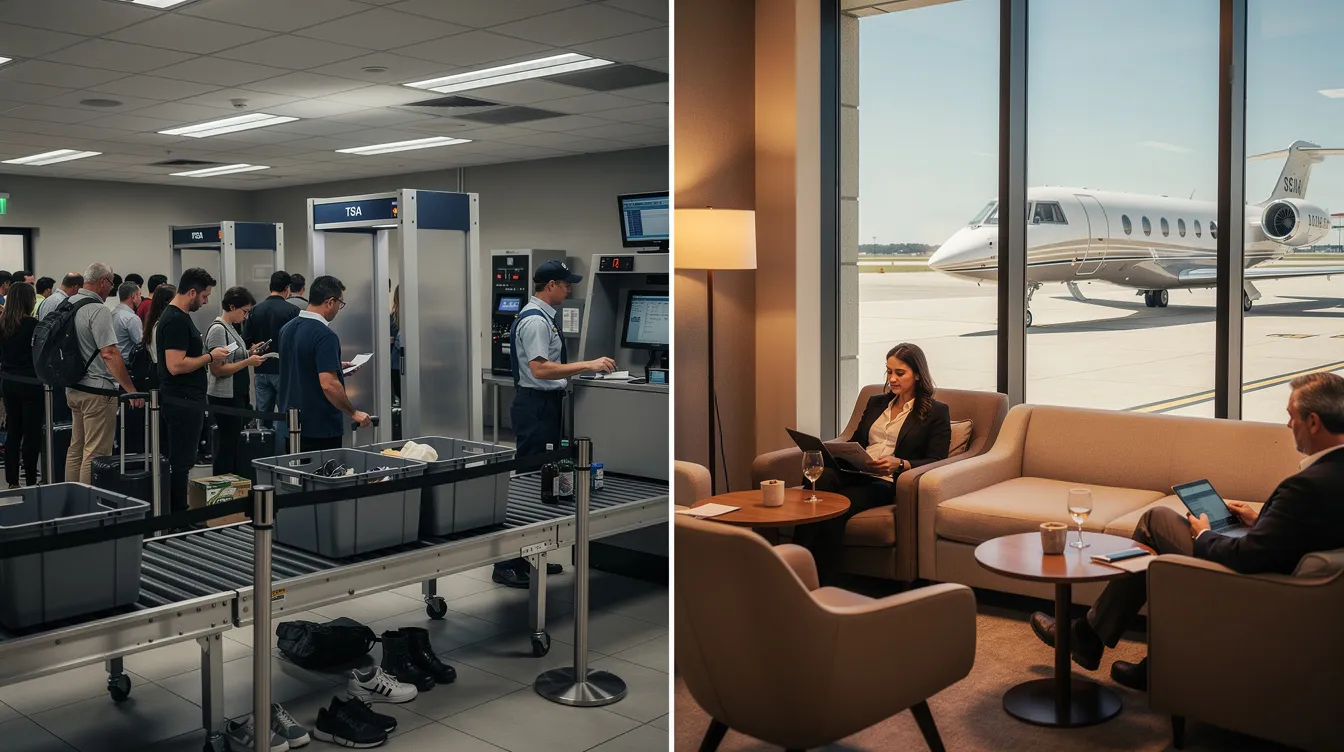
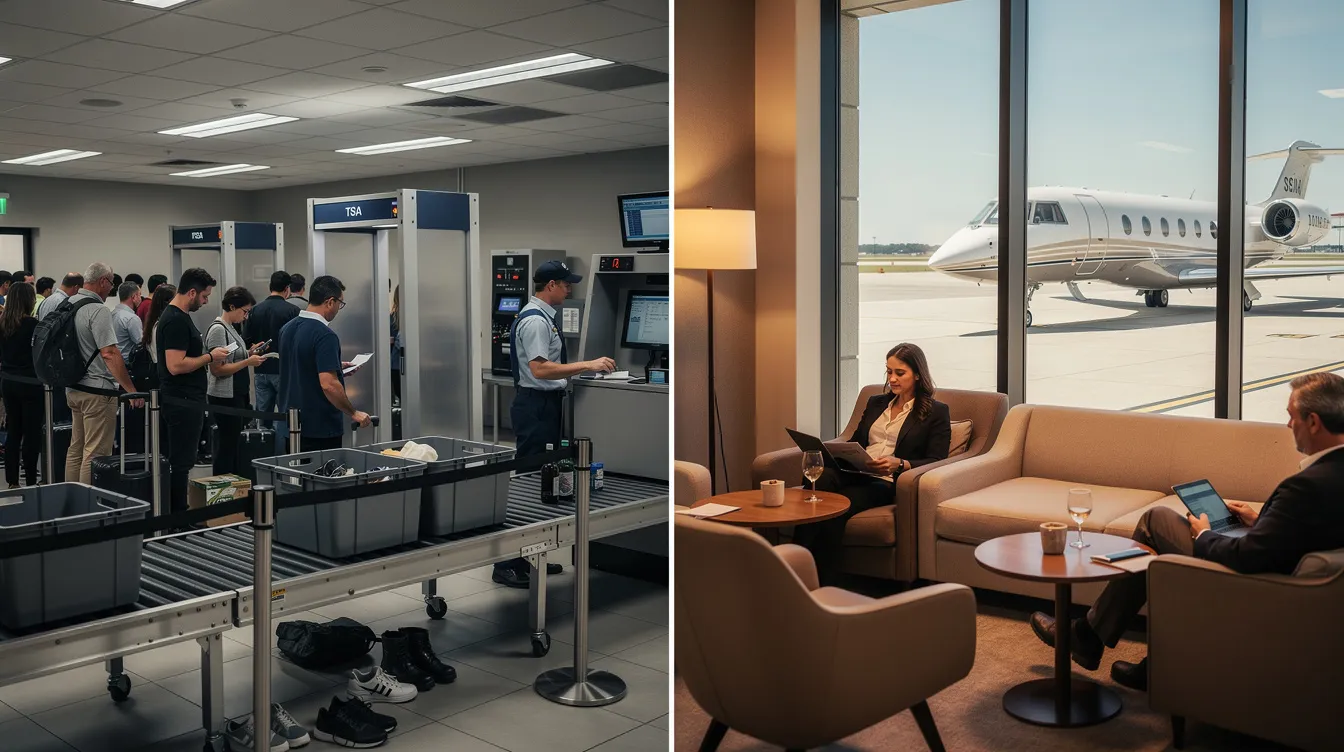
Consider a concrete comparison. A commercial flight from New York to Chicago takes roughly one hour in the air—but the door-to-door reality is different. Arriving two hours prior at a crowded airport terminal, clearing long security lines, boarding, deplaning, and transferring into the city stretches that into 4–5 hours each way. Flying private, you arrive 20–30 minutes before departure at a private terminal, fly direct, land at a convenient airport closer to your business meeting, and you're door-to-door in about two hours. That's 2–3 hours saved per direction—potentially a full working day recovered on a round trip.
For occasional leisure trips where your schedule is flexible and price sensitivity is high, commercial flying or flying first class is usually the better choice. There's no shame in that math.
BlackJet's jet card model is positioned exactly for travelers in the "worth it" zone: high-frequency, high-value trips where time and control are critical.
Flying Private vs Commercial Airlines: What Really Changes
Arrival and Boarding Process
The difference between commercial flying and private flying isn't just about comfort—it's about process. Below is a side-by-side comparison of the typical experience:
Commercial Airlines | Private Jet |
|---|
Arrive 90–120+ minutes before departure at a major airport | Arrive 15–30 minutes before departure at a private terminal (FBO) |
Navigate crowded terminals and long security lines | Skip security lines; minimal check-in at a quiet lounge |
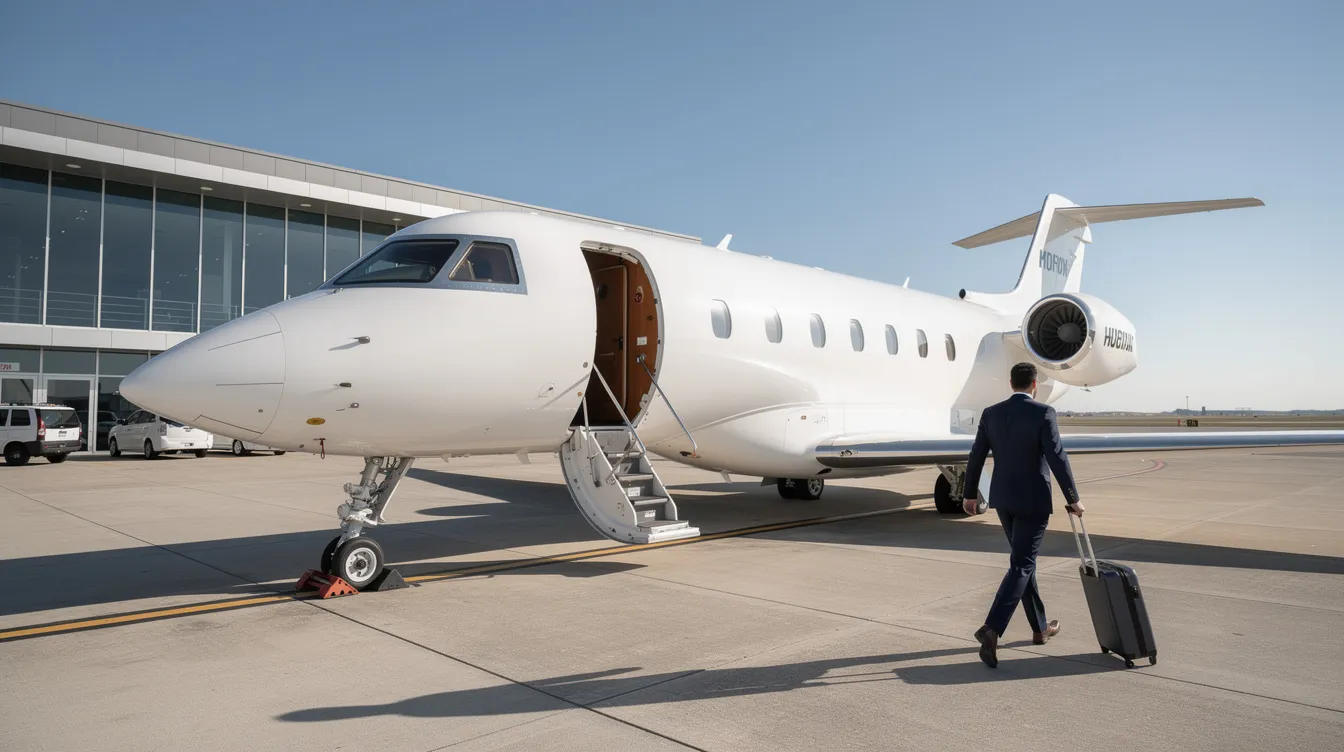
Wait at the gate, board in sequence with 200+ passengers | Walk from your car directly to the aircraft stairs in under two minutes |
Assigned seat, often next to strangers | Choose your seat; travel only with your group |
Bound by airline schedules and infrastructure | Control your own schedule and departure time |
Airport Access
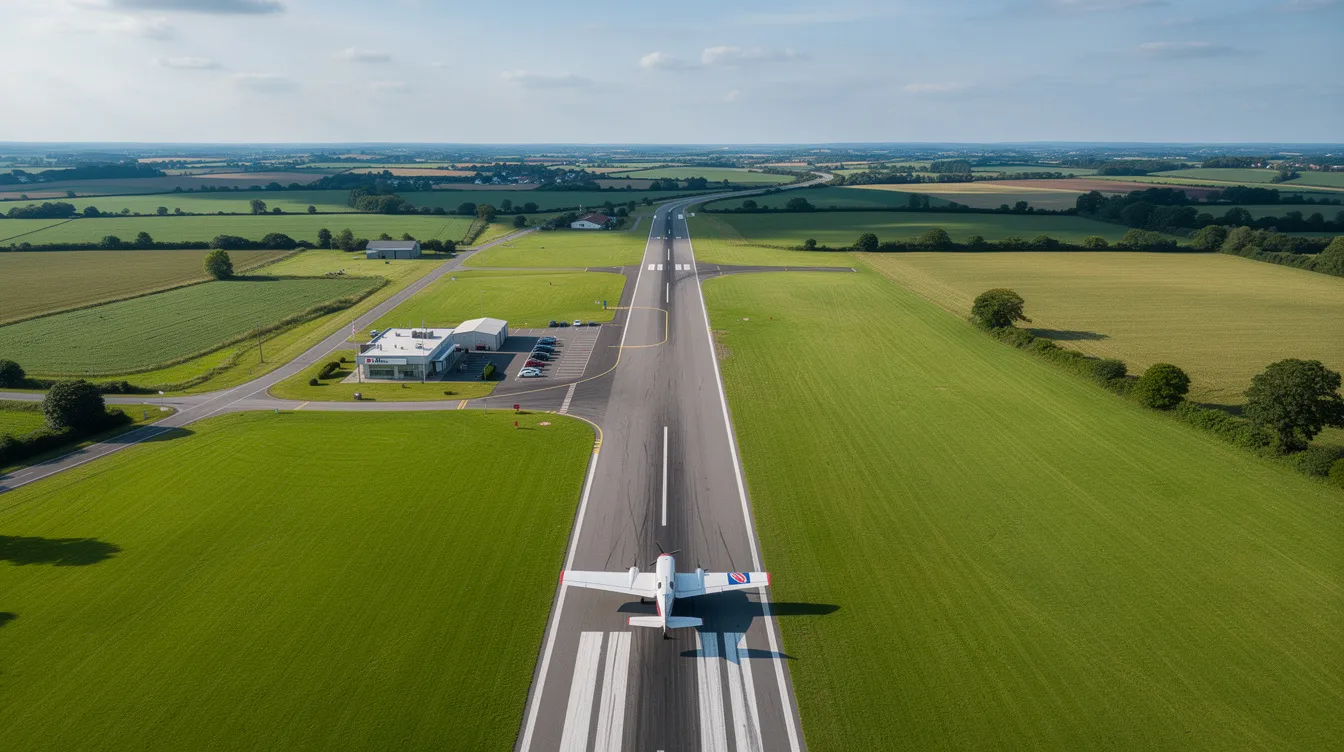
Private jets have access to over 5,000 airports across the U.S., significantly more than the approximately 500 served by commercial airlines. This structural gap means private flights can reach destinations with limited or no commercial service—resort towns, manufacturing hubs, island communities—without routing through a distant hub.
Consider a Boston-to-Nantucket weekend. Commercially, you're connecting through a regional carrier with limited frequencies, checked-bag complications, and weather-dependent delays. Privately, you're on a prop plane or light jet flying direct from a small aircraft-friendly field, touching down 35 minutes later. That difference makes all the difference for a family with a tight weekend window.
Time Is the Ultimate Luxury: Quantifying Time Savings
Private jets save an average of 127 minutes per flight compared with commercial alternatives. That figure accounts for the entire door-to-door experience—not just airtime—and it compounds dramatically over dozens of annual trips.
Typical Commercial Timeline
Arrive 2–3 hours early (domestic vs international flights)
Clear TSA security (15–45 minutes depending on the airport)
Walk to the gate, wait for boarding (30–60 minutes)
Board, taxi, fly
Deplane, walk to baggage claim, collect luggage (15–30 minutes)
Ground transfer from a major hub to your final destination (30–90 minutes)
Commercial flights often add 2–3 hours of waiting time on either side of the actual flight.
Typical Private Timeline
Arrive at the FBO 15–20 minutes before departure
You can be in the air within 15 minutes of arrival
Fly direct—no connections, no circling
Land at a smaller airport closer to your destination
Bags are handed directly to you or your car, which is parked steps away
For short trips, private flights can take 90 minutes total door-to-door on routes that would consume 4+ hours commercially. Take Los Angeles to Las Vegas—a one-hour flight commercially, but a 4-hour ordeal once you factor in LAX security, boarding, deplaning, and ground transport at both ends. Flying private from Van Nuys, the entire door-to-door trip shrinks to roughly 90 minutes.
For a traveler billing $500–$2,000+ per hour, saving 3–4 productive hours per round trip shifts the equation decisively. Research on S&P 500 CEOs found that each hour saved via private jet was valued at over $2,000 based on compensation—making the premium not just justifiable but economically rational.
Stress, Comfort, and Privacy: The Intangibles That Add Up
Privacy and Comfort Benefits
The flying private worth question isn't only about money. Reduced stress, privacy, and comfort have real value—especially for travelers who fly 20, 50, or 100+ times per year.
Private cabins eliminate the friction of commercial travel: no crowded boarding, no middle seats, no overhead bin anxiety, no noisy cabins. Even flying first class on a commercial flight doesn't eliminate the shared terminal experience, the gate announcements, or the stranger reclining into your space.
Private jets ensure complete privacy during flights. You can hold confidential meetings, take sensitive calls, review proprietary documents, or simply relax with family without strangers nearby. Flying private minimizes the risk of being recognized by others—a meaningful consideration for public figures, executives in competitive industries, or anyone who values discretion.
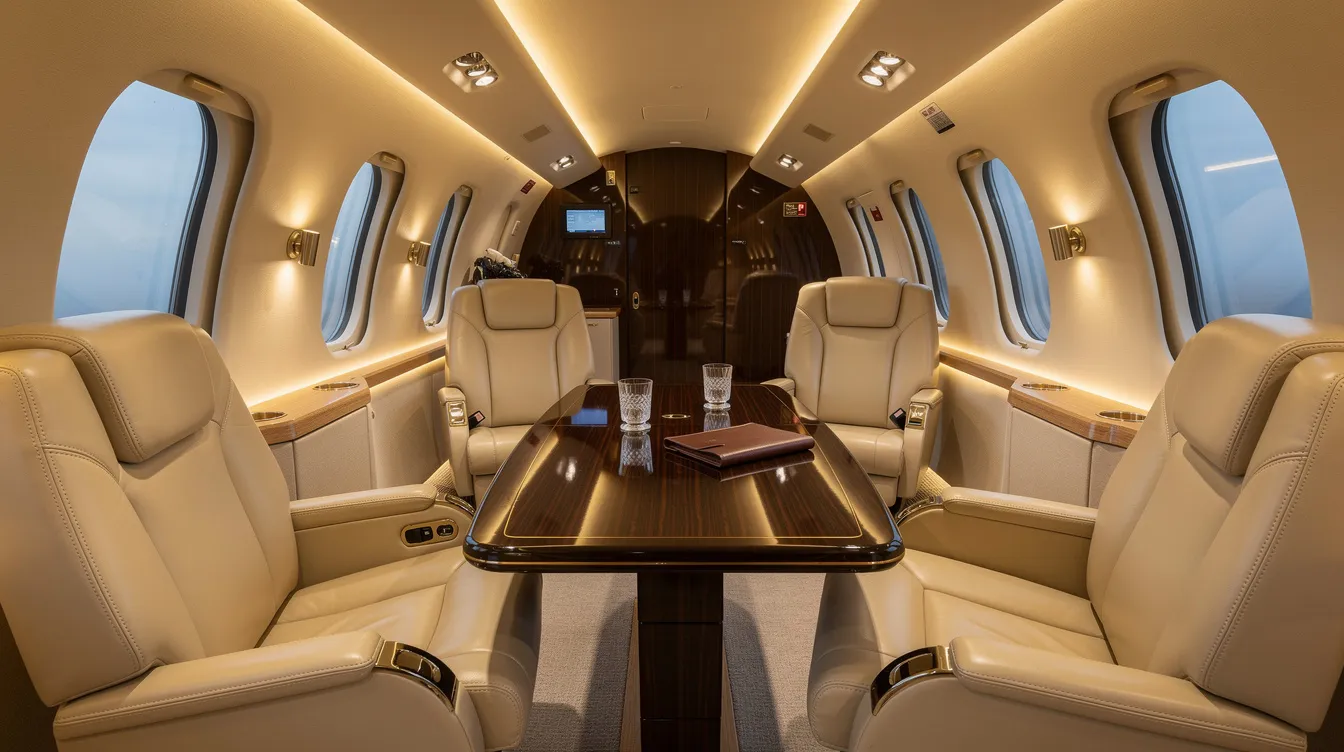
Typical private jet comforts include fully reclining club seats, whisper-quiet cabins, custom catering, and the ability to control lighting, temperature, and entertainment. BlackJet's safety and service standards—vetted crews, certified operators, consistent protocols—are designed to make this environment predictable and calm on every trip.
Work Efficiency and Using Flight Time Productively
For executives and entrepreneurs, the ability to use flight time productively is often the single biggest reason flying private makes financial sense. Private flights enable uninterrupted work during travel—no announcements interrupting your flow, no seatmates glancing at your screen, no Wi-Fi throttling from 200 simultaneous users.
Private jets provide a quiet environment for meetings. The cabin functions as an airborne office: generous table space, reliable connectivity, device charging at every seat, and the freedom to speak openly about deals, strategy, or personnel.
Consider a CEO using a 25-hour BlackJet Jet Card to visit three regional offices in a single day—Dallas to Houston to Austin. Between stops, the team reviews financials, aligns on quarterly targets, and conducts meetings without ever losing momentum to airport transfers or hotel check-ins. That kind of multi-city day is simply impossible when flying commercial.
Over the course of a year, someone flying private 50 hours gains roughly 100–150 productive hours compared with equivalent commercial travel. That's nearly four additional working weeks—a figure that reshapes any cost-benefit analysis.
Comfort, Luxury, and the In-Flight Experience
While luxury flying is not the only reason to choose a private plane, it is a tangible benefit that compounds over time—particularly versus even first-class commercial cabins.
What the cabin actually feels like:
Light jet (e.g., Citation CJ3): 6–7 seats, club configuration, comfortable for trips under 3 hours, quiet and efficient
Midsize jet (e.g., Citation Latitude, Praetor 500): stand-up cabin, 8–9 seats, full lavatory, generous legroom, ideal for 2–4-hour flights
Large cabin (e.g., Challenger 350, Gulfstream G450): 12–16 seats, full galley, separate zones for work and rest, intercontinental range
Service elements include curated catering from local restaurants, premium beverages, pre-set cabin preferences, and tailored amenities for children or pets. Contrast this with commercial flights—even international first class—where you're subject to set meal times, shared lavatories, and rigid service protocols on a fixed schedule.
Stepping from your car directly onto the stairway of a Citation XLS+ at a quiet FBO, coffee already prepared inside—that's the sensory reality of private jet travel. It's not a marketing image. It's Tuesday morning.
Flexibility and Control Over Your Schedule
Private jets can adapt to tight schedules and flexible itineraries in ways commercial aviation simply cannot. You choose your exact departure time. You can adjust the departure within the same day. You can often change destinations mid-itinerary if needed. Private jet charters and strategies to fly private more cheaply allow for last-minute travel flexibility that no airline rewards program can match.
Compare this with commercial flights: fixed routes, limited frequencies, change fees, and zero availability for last-minute changes during peak periods—even when flying first.
Real scenarios where this matters:
A deal closing that runs long in London, requiring a delayed departure to New York—your private aircraft waits for you
A family deciding to leave a ski resort early ahead of bad weather—departure shifts by two hours with a single call
A business meeting in San Francisco that wraps early, letting you add a same-day stop in Los Angeles
BlackJet Jet Card members can typically book or modify flights via mobile or web within hours, with 24/7 support to handle disruptions. This isn't luxury for its own sake—it's operational resilience.
Access to More Airports and Shorter Ground Transfers
Private jets can access over 5,000 airports in the U.S.—roughly ten times the number served by commercial airlines. Private jets can fly in and out of thousands of general aviation airports that commercial jets cannot use.
What does that mean in practice? Landing at Teterboro instead of JFK for Manhattan. Van Nuys instead of LAX for Los Angeles. Farnborough instead of Heathrow for London. Shorter ground transfers shave 30–90 minutes off each end of a trip.
This advantage is especially pronounced for global markets, including travelers evaluating private jet pricing in rupees for India, and for:
Resort towns (Aspen, Nantucket, Jackson Hole) where smaller airports sit minutes from accommodations
Manufacturing hubs and corporate campuses in secondary cities
Rural properties or second homes far from convenient airports served by commercial jets
Aircraft types like the Pilatus PC-12 or King Air can operate from shorter runways, grass strips, or secondary airports not viable for larger commercial jets—making a short trip to a remote destination efficient rather than exhausting, especially when you understand the cost to charter a small plane. A business owner visiting plants in three Midwest cities can complete the circuit in a single day only when flying privately through general aviation fields.
Flying Private with Family, Children, and Pets
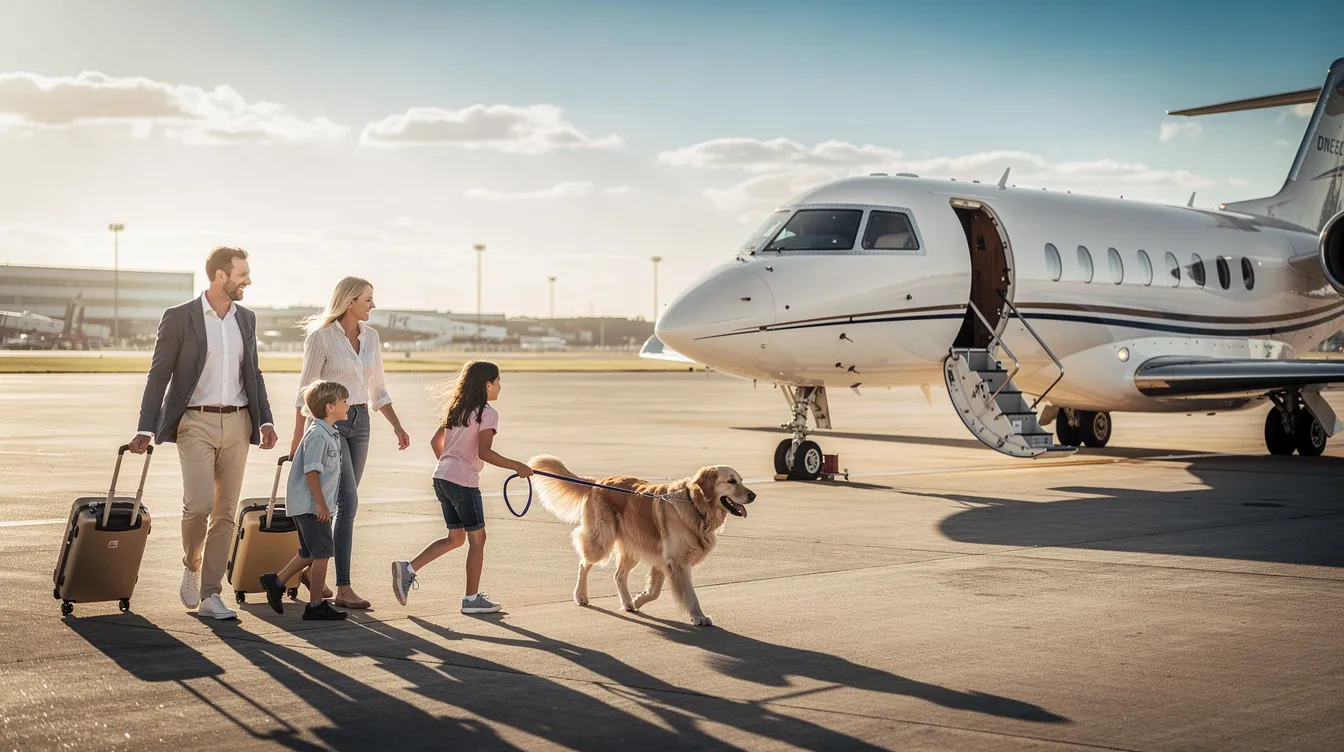
Private travel is ideal for passengers with pets or oversized gear. Most private operators, including BlackJet's network, welcome pets in the cabin—making them effectively VIPs rather than cargo, and newer private plane rideshare options can extend similar comforts to travelers booking individual seats.
For families with children, the experience changes fundamentally:
Board at your own pace—no rushing through long security lines with a stroller
Customize the schedule around nap times and feeding windows
Bring extra carry-on items (strollers, car seats, toys) without baggage limits
Avoid crowded commercial terminals on peak travel days and holidays
Private flying can save hours by avoiding TSA security lines and crowded terminals—a benefit that multiplies when you're managing small children or navigating airports with a large dog.
For multi-generational family trips with 6–8 travelers, the per-seat cost of a midsize jet can approach parity with first-class ticket prices for each person. At that point, the decision becomes less about money and more about sanity.
Cost Basics: What It Actually Costs to Fly Private
Transparency matters. Here are realistic hourly cost ranges for private jet charter in the current market, based on a practical cost comparison of chartering a private jet:
Aircraft Category | Hourly Rate Range | Typical Passengers | Best For |
|---|
Turboprop (King Air, PC-12) | $1,800–$3,000/hr | 4–8 | Short regional trips |
Light jet (Citation CJ3, Phenom 300) | $3,000–$6,000/hr | 5–7 | Domestic flights under 3 hrs |
Midsize jet (Citation XLS+, Praetor 500) | $5,500–$8,500/hr | 7–9 | Cross-country, stand-up cabin |
Heavy / Ultra-long-range | $8,000–$14,000+/hr | 10–16 | International flights, transcontinental |
Chartering a turboprop costs between $1,300 and $3,000 per hour. Renting a private jet can cost $1,300 to $13,000 per hour, depending on aircraft category. On average, chartering a private jet typically costs around $10,000 per hour for a comfortable midsize to heavy cabin experience.
Most charters carry a 1.0–2.0 flight hour minimum per leg. Additional costs beyond the headline rate include repositioning (the aircraft's empty trip to pick you up), fuel surcharges, landing fees, crew overnight costs, and catering—which can add 20–40% to the base price.
Sample trip estimates:
New York → Miami (~2.5 hours, midsize jet): approximately $15,000–$22,000 one-way. Split among 6 passengers, that's $2,500–$3,700 per person.
San Francisco → Aspen (~2 hours, light jet): approximately $8,000–$14,000 one-way. Per person with 4 passengers: $2,000–$3,500.
BlackJet Jet Card pricing typically offers fixed or capped hourly rates that include fuel, landing, and handling fees—removing the variability that makes ad hoc charter budgeting unpredictable and aligning with broader jet card pricing structures and benefits. For detailed pricing, see the BlackJet private jet price list.
Is Flying Private Worth It vs Flying First Class?
Many high-end travelers compare private travel directly against flying first class, not economy. Here's how that comparison plays out.
Per-seat cost comparison on popular routes (approximate):
Route | First Class (per seat) | Midsize Jet (6 pax, per person) |
|---|
New York → Los Angeles | $2,500–$5,000 | $3,500–$5,500 |
Los Angeles → Las Vegas | $400–$800 | $1,500–$2,500 |
New York → London | $5,000–$12,000 | $8,000–$15,000 |
The cost-effectiveness of private travel increases with larger group sizes. When 6–8 travelers share a midsize jet or heavy jet, per-person costs approach—and sometimes reach—the same price as a first-class commercial ticket on domestic routes.
Beyond price, the non-monetary factors tilt further toward private: complete schedule control, point-to-point access into smaller airports, privacy, baggage flexibility, and zero airport procedure time. On busy business routes with excellent commercial service, a first-class commercial business class seat may still be optimal for solo travelers with flexible timing. But as group size, time sensitivity, or privacy needs increase, private wins.
BlackJet positions its jet cards as a natural step up from consistently flying first class for clients whose schedules or group sizes have outgrown airline constraints.
Financial Sense: Income, Net Worth, and Business Use
"How rich do you have to be to fly private?" It's the question everyone asks but few answer directly.
Regular private flying is common among individuals with $1 million+ annual net income and $10 million+ net worth, with more consistent use often showing up once income reaches the low single-digit million-dollar range and wealth moves into eight figures. Private jet ownership requires a minimum net worth of roughly $25 million, given that annual costs for a fully owned private jet can reach millions of dollars in maintenance, crew, hangar, and insurance, although fractional structures can introduce significant tax benefits of fractional jet ownership. But you don't need to own a plane to fly private—not even close.
For high-net-worth individuals, flying private can justify financial expenses as an efficiency tool. The better question is whether the time savings, deal flow, or family value justifies the cost for your specific financial situation, especially once you consider ownership-side expenses like private jet pilot and crew costs.
Sample profiles:
$2M-income founder, traveling twice a month domestically: A 50-hour jet card or even a 100-hour jet card program covers most trips, with hourly costs offset by reclaimed productivity and eliminated overnight stays. After-tax cost drops further when flights serve business purposes and qualify as a legitimate business expense.
$400K-income professional, doing one special family trip per year: A single charter to a Caribbean island for a week with the family may cost $15,000–$25,000 round trip—meaningful but not unreasonable for a once-a-year experience flying private.
The economic value of private flights is higher for frequent travelers who compound time savings across dozens of annual trips. BlackJet does not offer tax advice, but many members coordinate with their advisors to structure private travel as part of their overall business and financial planning.
Cost–Benefit Analysis Beyond the Hourly Rate
A structured cost-benefit analysis helps you move past sticker shock and into clear-eyed decision-making.
Direct costs of private travel:
Hourly aircraft rate (or jet card rate)
Taxes (e.g., U.S. Federal Excise Tax ~7.5%)
Catering and ground transfers (if not included)
Indirect costs of commercial travel often overlooked:
Layovers and connections (1–4 hours per trip)
Risk of delays and cancellations (missed meetings, rebooking costs)
Forced overnight stays when connections don't align
Productivity lost in noisy terminals and cramped seats
Benefits to value:
Hours of work gained per trip (multiply by your hourly rate)
Additional meetings made possible by multi-city days
Reduced hotel and meal costs from same-day returns
Improved wellbeing and time with family
To run your own analysis: estimate your hourly value of time, multiply by hours saved per trip, multiply by trips per year, and compare that figure to the incremental cost of flying private over a business class ticket.
BlackJet jet cards simplify this analysis by turning variable charter pricing into a known hourly figure, making comparisons straightforward across your travel year.
Private Access Without Owning a Jet: Jet Cards, Charter, Fractional
You don't need to own a private jet to experience flying private. Three models dominate:
On-demand charter: Book individual flights as needed, with chartering giving you the entire aircraft for that trip. Chartering is the least committal way to fly private—ideal for testing the waters or flying once or twice a year without any commitment. Pricing varies by trip.
Jet cards: Pre-purchased blocks of hours (e.g., 25 or 50 hours) with guaranteed aircraft category, fixed hourly rates, and simplified booking. BlackJet's premium private jet card programs anchor this model—offering predictable costs, immediate access, and carbon-neutral flights.
Fractional ownership: Owning a share of a specific aircraft. Fractional ownership costs start around $300,000 to $1 million for an initial share, plus ongoing monthly management and hourly operating fees. Annual operating costs for a private jet can reach millions of dollars even in a fractional structure, and understanding fractional jet ownership depreciation is key to the financial picture. Best for travelers flying 100+ hours annually who want equity and guaranteed access to a specific aircraft type. For a deeper comparison, see Jet Card vs Fractional Ownership.
When each model tends to make sense:
Annual Flight Hours | Recommended Model |
|---|
Under 25 hours | Ad hoc charter or entry jet card |
25–100 hours | Jet card (25- or 50-hour blocks) |
100+ hours | Fractional ownership or dedicated aircraft |
For many travelers, a jet card is the natural entry point into business aviation when they decide the experience of flying private is worth it but don't want the complexity or capital commitment of owning a private jet or plane, and a clear view of jet card membership pricing helps frame that decision.
Safety, Certification, and Reliability in Private Aviation
Safety in private aviation is highly regulated. Reputable providers operate to stringent standards comparable to—and in many cases exceeding—those of commercial airlines.
Key safety concepts in plain terms:
Operator certification: In the U.S., charter operators must hold Part 135 certification from the FAA, requiring rigorous maintenance programs, pilot training standards, and operational procedures
Pilot requirements: Minimum flight hours, recurrent training, and type-specific ratings for each private aircraft operated
Maintenance standards: Scheduled inspections, component tracking, and airworthiness directives enforced by federal regulators
Audit programs: Third-party safety audits (e.g., ARGUS, Wyvern) that evaluate operator history, pilot records, and fleet condition
BlackJet partners exclusively with vetted operators using proprietary safety and certification criteria, providing transparency around aircraft and crew for each trip. Contingency planning—backup aircraft sourcing, mechanical issue protocols, and 24/7 operations teams monitoring flights in real time—ensures reliability that makes the premium of flying privately more justifiable, especially for corporate travel and family trips.
Sustainability and the Environmental Conversation
Honesty matters here. Private aviation generally produces higher emissions per passenger than commercial flights. Research published in Nature found that private aviation contributed approximately 15.6 million tonnes of CO₂ in 2023—up 46% since 2019—with nearly half of all private flights covering distances under 500 km.
Responsible private aviation today includes:
Carbon-neutral flights through verified offsets that account for both CO₂ and non-CO₂ climate effects
Use of Sustainable Aviation Fuel (SAF) where available
Selection of modern, fuel-efficient aircraft types with lower per-mile emissions
BlackJet ensures every flight is carbon neutral at no extra cost to members. Offsets are calculated per flight based on aircraft type, distance, and fuel burn, then sourced through verified programs meeting or exceeding industry standards.
The pragmatic position: fly private selectively for the trips where time, safety, or logistical benefits truly justify it, and continue using commercial flights when they serve you well.
Real-World Scenarios: When Flying Private Clearly Wins
Scenario 1: Executive team visiting three Midwest cities in one day
An M&A team needs to tour facilities in Indianapolis, Columbus, and Pittsburgh. Commercially, this requires two days, two hotels, and three separate flight bookings. Privately, they depart Indianapolis at 7:30 AM on a midsize jet, land in Columbus at 8:15, conduct meetings until noon, fly to Pittsburgh by 1:00 PM, finish by 4:00, and return home by 6:30. Total cost: roughly $18,000–$25,000 for the aircraft. Value: an entire saved hotel night, a full extra business day, and deal momentum preserved.
Scenario 2: Family with young children and a dog flying to the Caribbean
A family of five plus a golden retriever needs to reach a Caribbean island with limited commercial service from New York. Commercially: connecting through Miami, pet cargo arrangements, 10+ hours of travel stress. Privately: direct flight from Westchester on a midsize jet, dog in the cabin, toys spread across empty seats, landing at a small aircraft-capable strip 10 minutes from the resort. One trip like this and most parents understand the private jet worth proposition viscerally.
Scenario 3: Last-minute deal negotiation, London to New York
A managing partner learns at 3:00 PM London time that a signing meeting has been moved to 9:00 AM the next morning in New York. No commercial seat available on short notice. A BlackJet Jet Card booking secures a heavy jet departing Farnborough at 6:00 PM, arriving Teterboro at 9:30 PM local. The partner reviews documents in a quiet cabin during the long flight, sleeps at home, and arrives at the meeting rested.
In each case, the time savings and convenience of private travel aren't abstract—they're the difference between making something happen and missing it entirely.
When Commercial Flights (or First Class) Are Still the Better Choice
Flying private is not always the right call. Balance matters.
When commercial wins:
Solo traveler on a well-served route with flexible timing: New York to London with multiple daily nonstops in first class at $5,000–$8,000 versus $80,000+ for a private heavy jet? Commercial is rational.
Ultra-long-haul flights: On routes like New York to Singapore, the best first-class seats on a plane offer sleeping suites, multi-course dining, and 15+ hours of pampered service at a fraction of the cost of a comparable private jet.
Leisure trips with generous timelines: If you're heading to Las Vegas for a bachelor weekend and everyone has flexible schedules, splitting a few first-class commercial tickets is simpler and cheaper.
Routes with exceptional premium products: Certain Middle Eastern and Asian carriers deliver a first-class ticket experience that rivals private in comfort, if not in schedule control.
The perceived value of flying private depends on the traveler's priorities, such as time and convenience. When those priorities are low, commercial aviation serves beautifully.
BlackJet's goal is to complement, not replace, commercial flying—giving members a premium option when the equation clearly tilts in favor of private.
How BlackJet's Jet Card Model Shifts the Equation
BlackJet's Jet Card structure works simply: pre-purchase blocks of flight hours across multiple cabin categories, gain access to guaranteed aircraft availability, and fly at fixed hourly rates on carbon-neutral flights.
This model removes friction that makes ad hoc charter cumbersome:
No shopping multiple quotes for each trip
Simplified billing with predictable annual costs
Fixed or capped rates that include fuel, landing, and handling fees
Technology reinforces the experience: a mobile booking platform with instant availability checks, real-time flight support, and digital trip management tools for assistants and travel managers. Safety certification and sustainability are embedded—not add-ons.
BlackJet serves as the expert partner helping clients decide which trips justify private, and how to structure their 25+ Hour Jet Card blocks around their most important journeys.
FAQs: Making Sense of Flying Private vs Commercial Flying
How much does it cost to fly private on a 2-hour route? On a light jet, expect $6,000–$12,000 total for a 2-hour flight. A midsize jet runs $11,000–$17,000. These are total aircraft costs—split among 4–6 passengers; per-seat cost drops to $1,500–$4,000 per person, which can be cost-effective compared to last-minute business class tickets on certain routes.
Is flying private tax-deductible as a business expense? When flights are for documented business purposes, the costs may qualify as deductible business expenses. Tax treatment is complex and varies by jurisdiction. Most BlackJet members work with their tax advisors to optimize this—BlackJet does not provide tax guidance.
How does a jet card differ from an ad hoc charter? A jet card pre-purchases hours at locked rates with guaranteed availability. Charter is priced per trip with variable quotes. Jet cards offer predictability and speed; charter offers zero commitment. Learn more about how jet cards work.
Is flying first class ever a better value than flying private? Yes. For solo travelers on well-served routes with flexible schedules, a business class seat or first class ticket often delivers excellent value. Private wins as group size grows, time sensitivity increases, or the route involves smaller airports and secondary cities.
What about safety compared with commercial airlines? Private charter operators in the U.S. must hold FAA Part 135 certification with strict maintenance and crew requirements. BlackJet's proprietary vetting adds additional layers. Safety is not a trade-off when flying private with a reputable provider.
How does BlackJet handle carbon-neutral flights? Every BlackJet flight is offset at no additional cost, covering CO₂ and non-CO₂ climate effects through verified offset programs. The cost is built into the jet card rate.
Are short flights under 500 miles worth flying private? Often, yes—especially when commercial alternatives require connections or distant major airports. Private travel minimizes wasted time by avoiding long security lines, hub transfers, and ground transport. A 250-mile trip that takes 5 hours commercially may take 90 minutes privately.
What about long-haul or international flights? On ultra-long routes, the initial cost of a heavy or ultra-long-range jet is substantial. For solo travelers, commercial first class is typically better value. For groups of 4+ on time-sensitive international flights, private can be compelling—especially when landing at smaller airports near your final destination, provided you’ve accounted for the full cost of chartering a small or large plane.
Final Verdict: Is Flying Private Worth It for You?
For travelers with high time value, complex itineraries, privacy needs, or demanding family logistics, flying private—especially via a jet card—often delivers more value than the headline cost suggests. Private jets save an average of 127 minutes per flight. Over 25, 50, or 100 annual trips, those minutes become weeks. The math isn't complicated; it just requires honesty about what your time is actually worth.
For infrequent, flexible leisure trips, commercial airlines and flying first class remain perfectly rational choices. Flying private should be reserved for missions where time, control, and comfort matter most—not deployed indiscriminately.
Run your own simple cost-benefit analysis: take your hourly value of time, multiply by hours saved per trip, factor in your typical group size and annual flight hours, and compare against the incremental cost over commercial. The answer will be specific to your life—and it may surprise you.
Explore how a BlackJet Jet Card could reshape your most important journeys. Whether you're evaluating your first 25 hours or scaling to 100, BlackJet's team can help you build a travel strategy that matches the way you actually work and live.


 Sign up with google
 Sign up with Apple