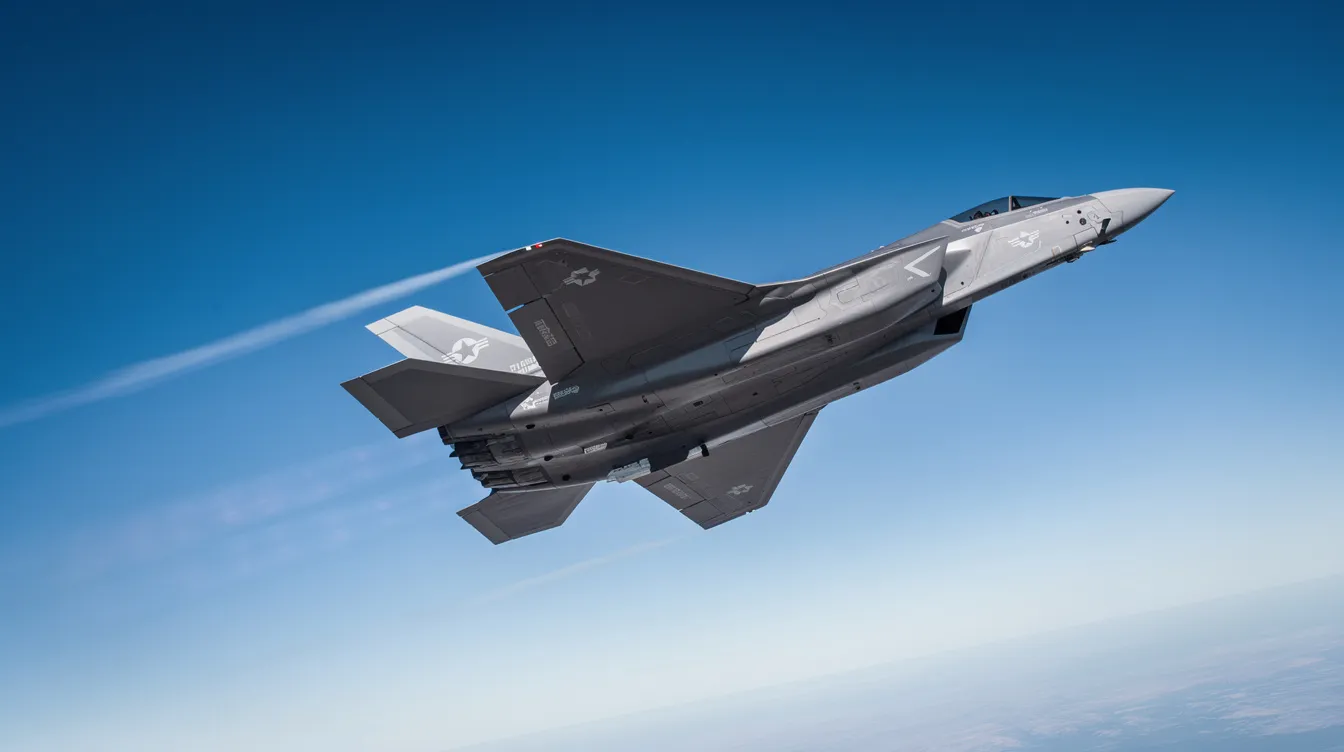
When the question arises, what is the best fighter plane in the world, the answer in 2026 points decisively to one aircraft: the Lockheed MartiF-3535 Lightning II. No other fighter aircraft in active service matches its combination of stealth, sensor fusion, multirole flexibility, and sheer global deployment. With the F-35 Lightning II now fielding over 880 units in active service across allied air forces, it has become the backbone of Western air power in modern history.
That said, no single aircraft dominates every dimension of aerial combat. The fF-22 Raptorremains the undisputed king of air superiority, a role it has held since the mid-2000s. China operates approximately 250 Chengdu J-20 fighter jets, making the J-20 Mighty Dragon a credible long-range stealth fighter in the Pacific. Russia's Sukhoi Su-57 Felon, though produced in only a handful of airframes, pushes the boundaries of kinematic performance. Meanwhile, proven 4.5-generation platforms like the Eurofighter Typhoon and the Dassault Rafale continue to offer combat-tested flexibility and strong export appeal among the best fighter jets in the world.
Defining the best fighter depends entirely on what you measure: stealth and survivability, air-to-air combat dominance, ground attack versatility, combat range, cost-effectiveness, or mass production volume. Defense analysts in 2025–2026 increasingly use composite scoring that blends all of these factors rather than fixating on a single spec like maximum speed. That is the framework used here for aviation enthusiasts, defense analysts, and frequent private or business travelers who want a clear ranking tied to real-world capability rather than marketing claims.
From there, this guide compares the aircraft that matter most-including the F-35, F-22, J-20, Su-57, Typhoon, and Rafale-and explains how stealth, sensor fusion, multirole use, and fleet scale shape the answer. For those of us who follow aviation from a different altitude-the world of business jets and premium private travel-the parallels are striking, especially when you look at the best aircraft of 2026 across military, commercial, and private aviation. The same advanced avionics, composite materials, and safety-first engineering that define fifth-generation fighter aircraft now shape the modern jets used in private aviation, which is why this topic also matters to travelers focused on safety, efficiency, and flexibility. At BlackJet's premium private jet card service, we see a direct line from fighter jet technology breakthroughs to the seamless, data-driven travel experience our Jet Card members expect on every flight.
Key Takeaways
The Lockheed Martin F-35 Lightning II is the best overall fighter jet in 2026, combining stealth, sensor fusion, multirole flexibility, and global deployment scale.
The F-22 Raptor remains the premier dedicated air superiority fighter with unmatched stealth, supercruise, and maneuverability, but is limited by production numbers and export restrictions.
Other top contenders include the Chinese Chengdu J-20, Russian Sukhoi Su-57, French Dassault Rafale, Eurofighter Typhoon, Boeing F-15EX Eagle II, and the versatile F-16 Fighting Falcon.
Modern air combat emphasizes stealth, sensor fusion, and network-centric warfare over traditional metrics like speed and dogfighting alone.
Fighter jet technologies such as advanced avionics, composite materials, and fly-by-wire controls have influenced private aviation, enhancing safety, efficiency, and passenger experience.
Choosing the best fighter or private jet depends on mission requirements, balancing factors like range, payload, stealth, and operational costs.
BlackJet’s Jet Card model offers a flexible, carbon-neutral private aviation solution inspired by the precision and technology of modern fighter aircraft.
How We Define the "Best" Fighter Jet
No single fighter dominates every category. An aircraft that excels in contested airspace penetration may lack the payload for sustained ground attack. A jet optimized for speed may sacrifice the stealth technology needed to survive against modern radar detection systems. That is why serious 2026 rankings rely on structured, multi-criteria evaluation rather than single-metric comparisons.
Here are the main evaluation criteria used by defense analysts today:
Stealth and survivability - radar cross section, heat signature management, and electronic warfare resistance in contested airspace
Air superiority performance - agility, thrust-to-weight, weapons systems integration, and radar capability; maneuverability and agility are critical performance metrics for fighter jets.
Multirole flexibility - capacity across air-to-air, strike, SEAD, ISR, and electronic warfare missions
Combat radius, range, and endurance - fuel capacity, aerial tankers compatibility, and loiter time
Operational history and production numbers - how many built, how many operators, lessons from real deployments
Program cost and unit cost - procurement price, sustainment expense, and cost per flight hour (how the expensive fighter jet factor shapes what nations can actually field)
Many 2026 assessments now use blended scores combining stealth, agility, weapons payload, speed, and real-world usage. This mirrors how discerning private travelers weigh multiple factors-safety certifications, range, cost, and availability-when choosing between a Jet Card membership and other access models.
Overall Winner: Lockheed Martin F‑35 Lightning II
The Lockheed Martin F-35 is widely regarded as the best fighter jet in the world in 2026. It earns that status not through any single superlative, but through an unmatched combination of stealth, sensor fusion, mission flexibility, and operational scale. Over 1,000 F-35s have been delivered globally to the United States Air Force, the Israeli Air Force, British forces, and more than a dozen other allied nations, making it the most widely deployed fifth-generation fighter on the planet.
The f 35 is a fifth-generation stealth aircraft designed around information dominance rather than raw speed. Its AN/APG-81 AESA radar, Distributed Aperture System, and Electro-Optical Targeting System create a fused picture of the battlespace that no other aircraft can match. Sensor fusion provides pilots with a comprehensive situational awareness picture, effectively turning this stealth fighter into a central node in a military network sharing targeting data with every friendly platform in the area. Advanced electronics are essential in modern fighter aircraft for situational awareness, and the F-35 exemplifies this principle more than any other aircraft in service.
The F-35 has a radar cross section equivalent to a golf ball-a figure that gives it a significant advantage in penetrating heavily defended airspace where low observability is critical. Advanced stealth technology minimizes radar cross section and heat signatures, allowing the F-35 to detect and engage enemy aircraft long before being seen. In stealth mode, the aircraft carries long-range missiles and precision munitions inside internal weapons bays. When air superiority is already established, "Beast Mode" allows it to carry up to roughly 22,000 lbs of ordnance externally, along with anti-ship missiles and other weapons systems for ground attack and maritime strike. This aircraft carries a mission set so broad that it functions as a true multirole fighter in every sense of the term.
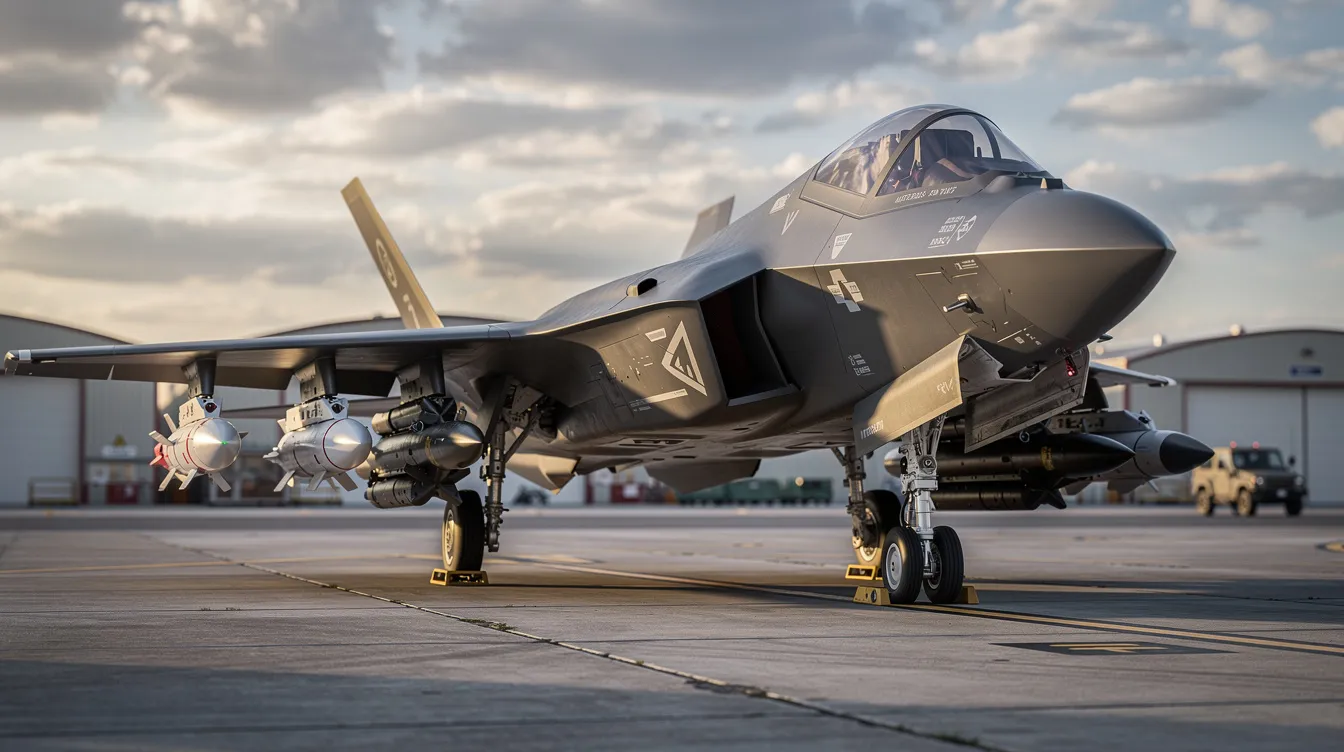
Why does the F-35 outrank dedicated air superiority platforms? Its stealth is second only to the F-22, but combined with a far broader mission profile-strike, SEAD, ISR, electronic warfare-and networked operations that make it a force multiplier for other aircraft like the Eurofighter Typhoon and F-15EX. Modern fighters act as central nodes in a military network sharing targeting data, and no platform does this better than the F-35. The paradigm of air combat has shifted to invisible electronic data warfare, and the F-35 was built for exactly that paradigm. Fifth-generation fighter planes feature stealth and sensor fusion capabilities that redefine what it means to control the sky, and fifth-generation fighter jets are designed for network-centric warfare-two principles the F-35 embodies completely.
The three variants serve distinct roles. The F-35A is the standard takeoff-and-landing model flown by the US Air Force, capable of 9g maneuvers and optimized for conventional runways; its fuel tanks provide the best combat range among the three variants. The F-35B uses a short-takeoff/vertical-landing system for Marines and certain navies, trading some fuel capacity and range for its lift system. The F-35C is the carrier variant, designed to launch from and recover on aircraft carriers, with larger folding wings and reinforced landing gear for arrested landings. Each variant reflects the same principle BlackJet applies to private aviation: matching the right aircraft to the right mission. Just as the F-35 uses advanced avionics and real-time data links, BlackJet leverages technology for 24/7 flight monitoring and real-time support-a direct descendant of the data-driven approach modern air forces use when operating F-35-class new aircraft.
The Pure Air Superiority Champion: F‑22 Raptor
While the F-35 is the best overall, the F-22 Raptor remains the world's premier dedicated air superiority fighter. It was the first operational fifth-generation fighter when it entered service in the mid-2000s, and it still defines what an air dominance fighter should be. Its radar cross section is often compared to a marble-so small that it can close within lethal range of virtually any threat before the adversary even knows it is there.
The F-22 Raptor has a top speed of Mach 2.25 and can supercruise-sustain supersonic flight-at Mach 1.5 without afterburners. That afterburning turbofan engines-powered supercruise capability allows it to cover distance faster than any other fighter while conserving fuel, giving it tactical flexibility no fourth-generation fighter can match. In air-to-air combat exercises against legacy platforms like the F-15 and the f 16 fighting falcon, the Raptor has demonstrated kill ratios frequently cited above 100:1. Maneuverability via thrust vectoring and high-angle-of-attack performance makes it devastating in aerial combat at any range.
The F-22's limitation is scale. The F-22 Raptor production ended with only 186 units built, and roughly 170 remain in active United States Air Force service. Export is banned by U.S. law, meaning this air superiority fighter serves exclusively with the US Air Force, constraining its presence in global jet rankings. Its narrower multirole capability and exceptional cost per flight hour keep it from claiming the overall crown. Still, no other fighter in modern history has held such dominance in the air superiority mission. The US Air Force plans a successor under the Next Generation Air Dominance program, which began as an experimental aircraft initiative, but that platform is not expected before the 2030s. Until then, the Raptor reigns supreme in its lane-and many a navy photo and air force photo captured at joint exercises confirm its intimidating silhouette.
Other Top Contenders Among the Best Fighter Jets
Beyond the F-35 and F-22, several other aircraft consistently rank among the best fighter jets globally. Each excels in a specific domain, and together they represent the diversity of air power strategies across competing nations.
The Chengdu J-20, China's mighty dragon, is a fifth-generation stealth fighter optimized for long-range air superiority and interception. The Chengdu J-20 entered service in 2016, with 250 units now operational in the PLAAF. The Chengdu J-20 can reach speeds of Mach 2, and reports suggest it can supercruise at Mach 2 without afterburners. Its combat radius and long-range missiles loadout make it a formidable interceptor over the Pacific, though most Western analysts assess its stealth and sensor fusion as less mature than the F-35 or F-22.
The Sukhoi Su-57 Felon is Russia's first fifth-generation design, emphasizing extreme agility and thrust-vectoring performance. The Su-57 can reach speeds of Mach 2.45, making it one of the fastest stealth-capable military aircraft flying today. However, the Sukhoi Su-57 has approximately 30 units in service as of 2026-only a handful compared to Western counterparts-with lingering engine and sensor maturity challenges limiting mass production. It remains more of an advanced fighter demonstrator at scale than a fleet-wide asset.
The Dassault Rafale is the French Air Force's premier "omnirole" fighter, a 4.5-generation platform with the advanced SPECTRA electronic warfare suite. The Rafale can track up to 40 targets simultaneously-a testament to its radar and sensor capability. Combat-proven across Africa and the Middle East, it has secured export contracts with India, Qatar, Greece, the UAE, and others. It excels in flexibility rather than sheer stealth, and its reliability and support infrastructure remain exceptional.
The Eurofighter Typhoon, originally designed as a Cold War-era air superiority platform, has evolved into a formidable multi-role aircraft with over 600 airframes built. It offers supercruise capability near Mach 1.5, excellent agility, and continuous upgrades that keep it relevant into the 2040s. Its variable sweep wings design philosophy traces back to earlier European programs, but the Typhoon's delta-canard configuration and modern radar make it a thoroughly modern aircraft.
The Boeing F-15EX Eagle II inherits the legendary F-15 airframe's raw performance. The F-15EX can carry nearly 30,000 lbs of weapons-the heaviest air-to-air and air-to-ground payload of any fighter aircraft in active service. Heavily armed and capable of Mach 2.5, it serves as a "missile truck" supporting stealthier platforms in less-contested environments. Weapons payload and versatility impact a fighter jet's operational capabilities, and no other fighter matches the Eagle II's sheer carrying power, including drop tanks for extended range.
The f 16 fighting falcon, originally designed by North American Aviation-era engineers at General Dynamics, remains the most widely used Western fighter. The F-16 Fighting Falcon has over 2,100 units in operation across dozens of nations-a testament to its cost-effectiveness and adaptability. Modernized "Viper" variants with AESA radar keep this fighting falcon relevant as a fourth-generation fighter workhorse, and its lineage stretches back through conflicts from North Vietnam-era lessons to modern deployments supporting nuclear deterrence missions.
Every aircraft above is the best fighter at something-whether that is dogfighting prowess, export appeal, payload, or value. The designation of the best fighter jets depends entirely on the mission at hand.
Fastest, Most Advanced, and Most Expensive Fighter Jets
Some readers are drawn to single superlatives-fastest, most technologically advanced, or most expensive fighter jet-rather than balanced multi-criteria rankings.
Fastest: Historically, the MiG-25 Foxbat achieved speeds above Mach 3 during the Cold War era, and its successor, the MiG-31, remains among the fastest military aircraft ever fielded. Modern air combat prioritizes stealth over traditional dogfighting metrics and maximum speed, which is why today's stealth-optimized designs trade top speed for signature control. The Su-57 at Mach 2.45 and the F-22 at Mach 2.25 remain the fastest current fifth-generation platforms. The F-15EX, a non-stealth design, still reaches Mach 2.5. Modern designs accept this trade-off because low observability is more survivable than raw velocity against today's radar detection and missile technologies.
Most Advanced Technology: The F-22 is often cited as having the most advanced stealth and air-to-air technology, but the F-35's newer software architecture, continuous Block 4 updates, and sensor fusion make it the more flexible advanced fighter. The J-20 is catching up on engine technology, though it is still perceived as lagging in mature sensors and signature management compared to Western peers. At the air show circuit and in classified exercises, the line between "most advanced" and "most capable" continues to blur.
Most Expensive: The F-35 program's estimated lifetime cost-development, procurement, operations, and modernization-exceeds $1.6 trillion through the 2070s, making it the most expensive fighter jet program in modern history. But exceptional cost does not automatically equal best performance. Many air forces choose less expensive 4.5-generation platforms because they can afford more airframes, fly more training hours, and maintain higher readiness rates. The calculus between cost and capability is remarkably similar to how private aviation customers evaluate their options: owning the most expensive jet is not always the smartest choice when a flexible Jet Card program can deliver the same mission outcomes at a fraction of the capital commitment, especially once you understand how Jet Card pricing structures and fees actually work.
From Military Air Superiority to Private Jet Superiority: What It Means for BlackJet Travelers
The fascination with air superiority and the world's best fighter jets reflects a deeper truth about aviation: the relentless pursuit of safety, reliability, range, and mission flexibility. These same principles define what truly matters for private flyers-and they are woven into every aspect of how BlackJet operates.
Technologies pioneered in fighter aircraft now enhance modern business jets in measurable ways, particularly in the world’s top private jets that blend luxury with cutting-edge performance. Fly-by-wire control systems, composite structures that reduce weight without sacrificing strength, and advanced avionics for navigation and situational awareness all trace their lineage to military programs. Just as the F-35's sensor fusion gives pilots a comprehensive picture of the battlespace, modern jets in the private aviation world give passengers and crew real-time weather routing, terrain awareness, and traffic collision avoidance systems that improve both safety and ride quality. BlackJet ensures every operator in its network meets the most rigorous safety certifications and audited maintenance standards-a discipline comparable to the stringent readiness requirements that keep an air force fleet mission-capable, and one reason private jets maintain such a strong overall safety record.
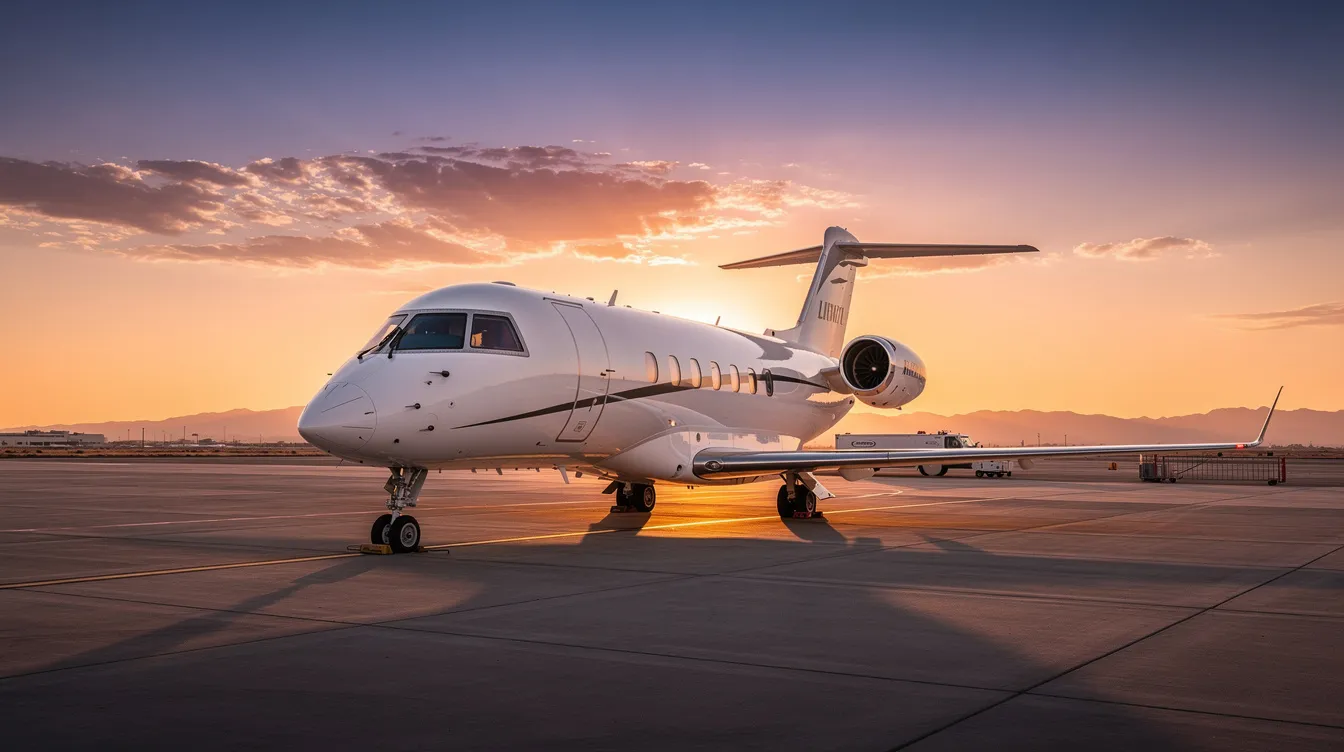
Consider a scenario: a BlackJet Jet Card member needs to fly from New York to London on 48 hours' notice. Via commercial first class, the journey involves airport queues, connections, and roughly 10–12 hours door-to-door. With BlackJet, a large-cabin long-range jet departs on the member's schedule, arriving in under eight hours with full privacy, workspace, and rest capability, often cruising higher than commercial traffic in the optimal private jet altitude band for speed and comfort. The booking happens through BlackJet's mobile platform with real-time support-no different in philosophy from the data-driven command systems modern air forces rely on.
And while fighter programs prioritize performance over emissions, BlackJet takes a different approach. Every flight is carbon neutral through verified carbon offsets and efficient fleet selection-because strategic advantage should not come at the environment's expense, even when clients are comparing options on a comprehensive private jet price list covering different categories and usage models.
Choosing the "Best" Aircraft for Your Mission: Fighter Jets vs Private Jets
Air forces match aircraft to missions with ruthless precision. They send an air superiority fighter into contested airspace, a heavily armed strike platform against ground targets, and reconnaissance assets where intelligence is the priority. They use aerial tankers to extend combat radius and deploy other aircraft from aircraft carriers when forward basing is unavailable. Every decision is mission-driven-and private travel should follow the same logic.
Just as an air force would not send an F-16 to do an F-22's job in dense air defenses, a frequent transatlantic traveler should not rely on an aircraft optimized only for short-range hops. Light jets serve regional routes efficiently. Midsize and super-midsize jets handle US transcontinental flights with the right balance of speed, comfort, and cost, while travelers focused on affordability may consider the cheapest private aircraft and other budget-friendly options. Large-cabin, long-range jets cover intercontinental routes-the private aviation equivalent of tanker-supported fighter operations spanning thousands of miles. BlackJet's Jet Card model offers precisely this kind of multirole flexibility across aircraft categories, without the capital burden of ownership, and the BlackJet 25+ Hour Jet Card in particular locks in fixed rates across mid, super-mid, and large-cabin jets.
Ownership grants total control but locks you into high fixed costs, depreciation, and management overhead-the aviation equivalent of buying a fleet of single-role fighter jets. On-demand charter offers flexibility but may limit availability during peak demand, a trade-off explored in depth when assessing whether chartering a private jet is really worth it. A Jet Card strikes the balance: prepaid hours, guaranteed access, vetted operators, and the ability to scale aircraft size up or down depending on the mission, which is why frequent flyers compare the best jet cards for benefits and costs before committing. Safety and certification underpin all of it. The best fighter jets are only as effective as their training, maintenance, and support ecosystems-and the same is true for private aviation, where Part 135 compliance and operator vetting are non-negotiable, especially when evaluating the top private jet companies competing on safety and service.
FAQ: Best Fighter Planes, Technology, and Private Jet Access
Is the F-35 really the best fighter jet in the world? Yes, when evaluated across stealth, sensor fusion, multirole capability, and global deployment scale. The F-35 Lightning II has over 880 units in service across more than a dozen nations, making it the most widely fielded fifth-generation fighter in history. For pure air superiority or close-range dogfighting, other fighter platforms like the F-22 may be preferred, but no single aircraft matches the F-35's breadth.
Why isn't the F-22 Raptor exported if it's so advanced? U.S. law prohibits export of the F-22 to protect its stealth technology and advanced sensor systems. The high unit cost and the strategic desire to maintain a technology edge also factor into this restriction.
What is the difference between an air superiority fighter and a multirole fighter? An air superiority fighter like the F-22 is optimized to control the sky: stealth, supercruise, high maneuverability, and air-to-air weapons systems. A multirole fighter like the F-35 or Rafale is designed to perform both air combat and ground attack, ISR, and electronic warfare missions, sacrificing some specialization for broader mission flexibility.
How does fighter jet technology influence private aviation? Advanced avionics, fly-by-wire controls, composite materials, and satellite data links all originated in military programs. These technologies now reduce weight, improve fuel efficiency, and enhance safety in modern aircraft used for business travel.
How safe is flying on a private jet compared to commercial airlines? Safety depends on operator certification, regulatory compliance, and maintenance standards. Reputable operators meet rigorous requirements including FAA Part 135, IS-BAO audits, and third-party safety ratings. BlackJet vets every operator for these standards before a single passenger boards, while also leveraging the operational advantages of cruising at higher private jet altitudes than most commercial flights.
What is a Jet Card and how is it different from owning a private jet? A Jet Card is a prepaid block of flight hours that gives you access to private jets without ownership, crew management, or maintenance responsibilities, and common entry points include 100-hour Jet Card commitments designed for very frequent travelers. Ownership demands significant capital and carries depreciation risk, which is why many compare it against established programs like NetJets’ jet card offerings and costs. A Jet Card offers flexibility and lower commitment-learn more in our complete guide to Jet Cards and how to compare Jet Card cost per hour across providers and aircraft types.
Can private jets be carbon neutral? Yes. Through verified carbon offset programs, sustainable aviation fuel usage, and efficient routing, private flights can achieve carbon neutrality. BlackJet ensures every journey is carbon neutral at no extra cost to its members, even on larger charter flights for around 100 passengers where efficiency and sustainability are paramount.
Conclusion: Air Superiority in the Sky, Strategic Advantage on Your Schedule
In 2026, the F-35 Lightning II stands as the best all-around fighter plane in the world—a stealth aircraft that redefined what modern air combat looks like. The F-22 Raptor holds the crown for pure air superiority. And platforms from the mighty dragon to the Eurofighter Typhoon to the Fighting Falcon prove that the best fighter is always the one matched to the mission.
That principle extends beyond military aircraft. Whether you are commanding contested airspace or commanding your schedule, the smartest strategy is the one that matches precision capability to your specific need—with safety, technology, and flexibility at its core. BlackJet applies exactly this philosophy to private aviation, delivering carbon-neutral access to a curated fleet through a membership model designed for those who refuse to compromise.
Discover how BlackJet's Jet Card can deliver your own form of air superiority—time saved, privacy secured, and every journey precisely matched to your mission.


 Sign up with google
 Sign up with Apple