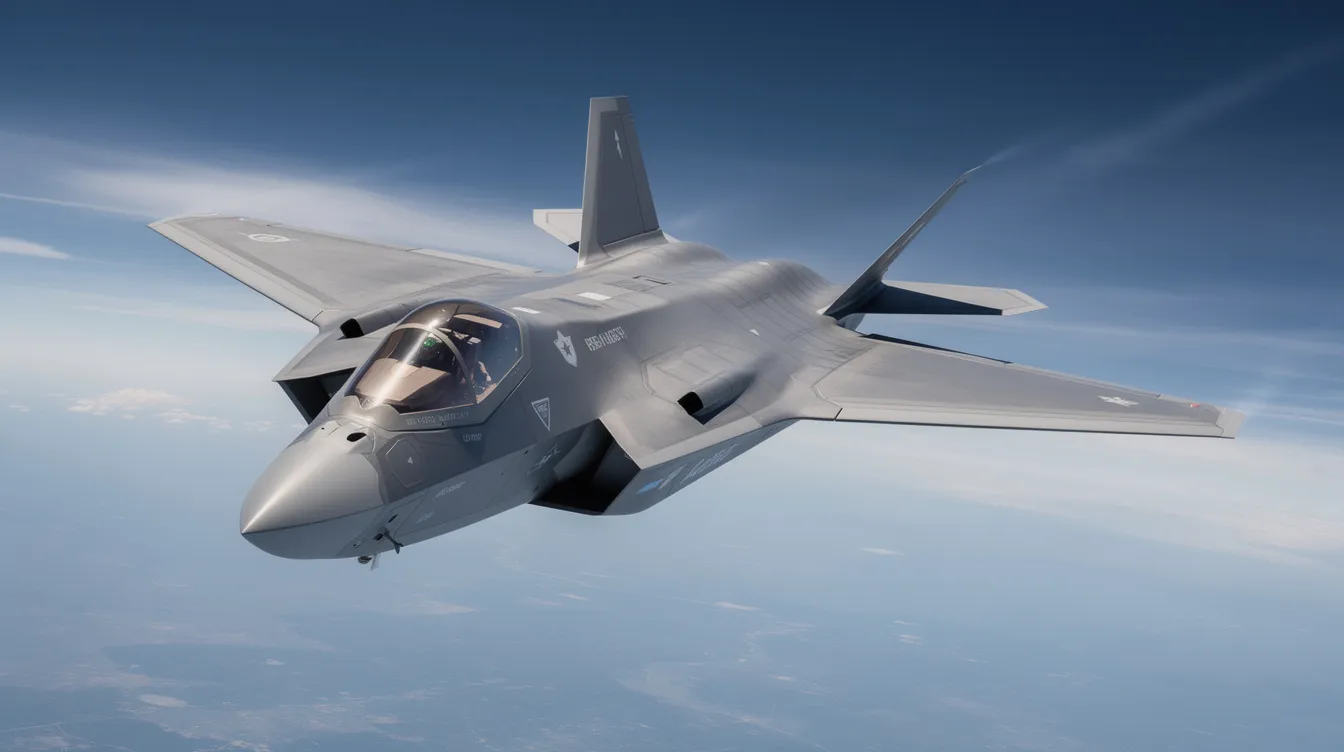
Private jet access is more than a luxury; for executives, founders, family offices, and discerning travelers, it is a strategic advantage. This article provides a comprehensive comparison of the top U.S. fighter jets in 2026—specifically the F-22 Raptor, F-35 Lightning II, and F-15EX—and explores how their cutting-edge technologies and operational philosophies influence private jet innovation. The scope covers both the military aviation landscape and its direct relevance to advancements in private jet access, safety, and efficiency.
Our target audience includes executives, founders, family offices, and discerning travelers who are interested in both military aviation and private jet access. Understanding the capabilities and innovations of top fighter jets matters for this audience because the same principles—speed, precision, security, and mission fit—directly inform the evolution of private aviation, impacting how elite travelers protect their time, privacy, and operational flexibility.
US Top Fighter Jet at a Glance (Answer First)
The F-22 Raptor is the U.S. ' top fighter jet for air superiority in 2026, while the Lockheed Martin F-35 Lightning II is the top multirole fighter and backbone of the modern U.S. and allied fleet. “Top” depends on mission requirements: the F-22 dominates air combat and contested airspace, the f 35 delivers unmatched multirole scale and networking, and the f 15ex brings speed, range, and weapons capacity where stealth is less critical.
In short: F-22 means stealth plus supercruise; F-35 means sensor fusion plus situational awareness; F-15EX means Mach 2.5, long range, and heavy payload. The United States military operates a formidable fleet of fighter jets as of mid-2026, and key capabilities of U.S. fighter jets include air dominance and precision strikes.
BlackJet brings that same mission-first mindset to private aviation. Through premium Jet Card programs, advanced avionics, real-time support, private aviation safety standards, and carbon-neutral flights, BlackJet helps travelers choose the right jet, aircraft category, and itinerary without the burden of ownership.
Comparison Table: US Top Fighter Jets in 2026
Feature | F-22 Raptor | F-35 Lightning II | F-15EX Eagle II |
|---|
Role | Air Superiority Fighter | Multirole Stealth Fighter | Heavy Payload, Fast Strike Jet |
Top Speed | Mach 2.25 | Mach 1.6 | Mach 2.5 |
Supercruise Speed | Mach 1.8 | No true supercruise | No supercruise |
Stealth Capability | Advanced | Advanced | Limited (Non-stealthy) |
Weapons Payload | ~8,000 lbs (internal bays) | Up to 22,000 lbs (external) | Nearly 30,000 lbs (external) |
Sensor Fusion | High | Very High | Moderate |
Operational Units | ~190 | 880+ | ~25 |
First Operational Year | 2005 | 2016 | 2021 (F-15EX) |
Export Availability | No | Yes | Yes |
Primary Users | USAF | USAF, USMC, USN, Allies | USAF |
Why Air Superiority Still Matters in a World of Private Jets
U.S. Air Force air superiority, secured by advanced fighters such as the F-22, underpins the stable air routes, protected airspace, and global connectivity that high-net-worth travelers and corporations rely on. A fighter controls the skies, responds to threats, and helps protect national security; a private jet gives travelers control over schedule, routing, privacy, and time, whether they are flying between U.S. hubs or arranging bespoke private jet charters in Karachi and other global financial centers.
Commercial aviation still depends on hub networks, airline schedules, congestion, and weather recovery. A Jet Card user can often fly point-to-point, depart from a private terminal, and avoid connections that turn a three-hour flight into a full-day itinerary. That is why private jet access is often less about indulgence and more about operational efficiency, whether you are choosing among the cheapest private aircraft options or ultra-long-range flagships.
Technologies first refined in military airplanes—composites, fly-by-wire control system design, advanced navigation, advanced avionics, and advanced sensors—now quietly shape the newest generation of business jets in BlackJet’s network. Even digital security has parallels: where a website may show performing security verification, security verification, verification successful, respond with a unique ID, or block malicious bots through a security service, aviation applies layered checks to protect passengers, data, and flight operations.
F-22 Raptor: The Benchmark US Air Superiority Fighter
Design and Capabilities
The F-22 Raptor is the premier U.S. air superiority fighter jet, designed for air superiority missions and optimized for first-look, first-shot, first-kill performance in contested air. Fifth-generation fighters can engage targets before being detected, and the F-22 remains the clearest American expression of that advantage.
Lockheed Martin is the prime contractor, with Boeing contributing major airframe work, and the f 22 combines advanced stealth, low observability, supercruise, and extreme agility. The F-22 has a maximum speed of approximately Mach 2.25, and the F-22 can supercruise at speeds of approximately Mach 1.8 without afterburner. Its AN/APG-77 AESA radar, refined sensor fusion, electronic warfare systems, and advanced sensors give the pilot superior situational awareness.
Design choices make the aircraft exceptional: internal weapons bays preserve stealth features, thrust-vectoring Pratt & Whitney F119 engines improve maneuverability, and stealth shaping keeps the radar cross-section extremely low compared with conventional aircraft. The fighter can also use external fuel tanks when ferry range matters, though doing so compromises low observability.
Only 195 F-22 Raptors were built by the end of production in 2012. Production was capped at fewer than 190 operationally retained jets because of high unit cost, post–Cold War budget pressure, and the decision to protect sensitive technology; U.S. law bans exports. Despite operational service beginning in 2005, continuous upgrades to software, sensors, radar, and electronic warfare keep the F-22 the reference point for pure air superiority today.
Operational History
The YF-22 won the Advanced Tactical Fighter competition in the early 1990s, beating rival prototypes and moving toward production aircraft.
The first production F-22 first flight occurred in 1997.
The F-22 Raptor achieved Initial Operational Capability (IOC) in December 2005.
The F-22 then moved into homeland defense patrols beginning in 2007.
Entered combat over Syria in 2014.
Became publicly visible again during high-profile intercept missions, including the 2023 balloon shoot-down.
Modernized variants and upgrade blocks added JDAM and Small Diameter Bomb capability, improved reconnaissance and mapping functions, new mission computers, and open-architecture development in the 2020s.
F-35 Lightning II: The Most Versatile US Fighter Jet
Multirole Flexibility
The Lockheed Martin F-35 Lightning II is the most widely deployed fifth-generation fighter jet and the core of U.S. and allied tactical airpower. The F-35 has over 880 units in active service, and the F-35 Lightning II has over 1,000 aircraft delivered worldwide, making it the most produced stealth aircraft of its generation.
The F-35 emphasizes multirole flexibility: air-to-air missions, strike, close air support, electronic warfare, ISR, and coalition networking. The F-35 has advanced sensor fusion capabilities for situational awareness, and fifth-generation fighters use software-defined systems for sensor fusion. That ability allows the aircraft to collect, interpret, and share information with other aircraft in ways older fighters cannot.
Compared with the F-22, the F-35 trades some raw speed and supercruise performance for superior mission systems, data links, and the ability to operate as a flying sensor node. Around Mach 1.6, it is slower than the F-22 and F-15 Eagle, but its long-range strike capability, stealth, and networking complement U.S. doctrine. The F-35 can carry up to 22,000 lbs of weaponry externally when stealth is not the priority, just as the most expensive private jets for luxury travel trade raw speed for unparalleled comfort, range, and onboard capability.
Global Reach and Competition
The F-35’s global reach includes Europe and Asia-Pacific operators such as South Korea, while rivals show why this competition matters: China’s J-20 entered service in March 2017, the Chengdu J-20 has a weapons payload of 24,000 lbs, and the Su-57 first flew on January 29, 2010. The Sukhoi Su-57 first flew on January 29, 2010, as Russia’s competing fifth-generation design, much as high-end private aviation sees its own race in billionaire private jet price trends and flagship fleet choices.
F-35 Variants and First Flights
Variant | Service Branch | Takeoff/Landing Type | First Flight |
|---|
F-35A | Air Force | Conventional | December 2006 |
F-35B | Marine Corps | Short Takeoff/Vertical Land | 2008 |
F-35C | Navy | Carrier-Based | 2010 |
U.S. service IOC milestones followed from 2015 to 2019, allowing the aircraft to enter service across the Marine Corps, USAF, and Navy communities.
Unlike the F-22, the F-35 was designed for export, shared training, common logistics, and coalition operations from the outset.
Stealth, Sensor Fusion, and Situational Awareness
The F-35’s stealth design uses angle-aligned surfaces, internal weapons bays, coatings, and careful shaping to reduce radar visibility. The F-35 has a radar cross-section equivalent to a golf ball, a commonly cited measure that explains why it is among the most advanced fighters in the world.
In plain language, sensor fusion means the plane combines radar, infrared, optical, and electronic data into one picture displayed to the pilot. Systems such as the AN/APG-81 AESA radar, Distributed Aperture System, Electro-Optical Targeting System, and secure data links such as MADL improve situational awareness and decision speed. BlackJet’s platform applies a civilian version of that logic by fusing aircraft availability, routing, pricing, and support into clear options for travelers.
F-15 Eagle and F-15EX: Speed, Payload, and Long-Range Punch
F-15 Family Overview
The F-15 family remains among the fastest U.S. fighter jets in active service. The F-15 Eagle can reach speeds of Mach 2.5, and its combination of speed, range, and payload still matters in modern combat, similar to how large private jets for up to 50 passengers balance speed, capacity, and range for complex itineraries.
Originally developed by McDonnell Douglas, later part of Boeing, the F-15 first flew in 1972, and the aircraft began to enter service in 1976. The F-15 has achieved over 100 air-to-air kills with zero losses, a record that gives the fighter enduring prestige. It has a maximum payload capacity of 23,000 lbs in classic configurations, whereas entry-level travelers might prioritize the cheapest private jet options over sheer capacity when stepping into private aviation.
The F-15E Strike Eagle is designed for all-weather, dual-role combat, giving the air force both air-to-air and precision strike capability.
F-15EX: Modern Upgrades
The F-15EX Eagle II is the most heavily armed U.S. fighter jet, incorporating advanced avionics, open mission systems, the APG-82 AESA radar, and the ability to carry nearly 30,000 lbs of weapons. There are currently about 25 F-15EXs in the USAF fleet. In private aviation, a parallel tier of top-performing private jets worldwide offers similar combinations of range, speed, and advanced technology for business travelers.
The F-15EX can carry large external loads, including 20+ air-to-air missiles in some configurations, making it a “missile truck” that supports stealth fighters like the F-35.
While the F-15 lacks stealth, its top speed, long range, weight capacity, and firepower remain vital where rapid response matters more than low observability.
It also shows how legacy airframes can be upgraded—just as business aviation keeps improving cabins, connectivity, and flight systems.
How the US Ranks Its Fighter Jets by Mission
Mission-Based Selection
The U.S. military does not rely on one “best” fighter jet. It selects aircraft by mission requirements:
Air Superiority: F-22, F-15C/EX
Stealth Multirole: F-35A/B/C
Carrier Operations: F-35C, Super Hornet
Long Range Strike: F-15E/EX, F-35
Reconnaissance: F-35, F-15E (with pods)
Close Air Support: F-35, A-10
Legacy Multirole Support: F-16 Fighting Falcon, F/A-18 Hornet
Carrier Operations and Specialized Roles
Carrier operations are crucial for naval power projection, especially when the navy must operate far from land bases. The F-16 Fighting Falcon is known for being a highly agile, low-cost multi-role fighter, and fourth-generation jets serve in specialized roles within the U.S. military.
This main article focuses on top U.S. fighters, but the wider point is mission fit. Modernization programs such as NGAD, F-15EX procurement, F-22 and F-35 software blocks, and new long-range missiles are changing what “top” means. The same logic applies to private travelers: a light jet, midsize jet, super-midsize jet, or large-cabin aircraft should be chosen based on passengers, route, luggage, privacy, and schedule, just as you would when reviewing the best small private aircraft for specific missions.
Future Programs: NGAD and Emerging Fighters
NGAD, the U.S. Next Generation Air Dominance program, is intended to replace the F-22 in the 2030s with adaptive engines, advanced stealth, improved networking, and unmanned teammate aircraft. In the second half of this decade and into the 2030s, sixth-generation concepts will focus less on one plane and more on connected systems.
Other nations are pursuing similar paths, including European FCAS, Japan-linked F-X work, and South Korea’s KF-21 Boramae. The result is a global competition around range, survivability, data, autonomy, and the ability to operate with or against advanced fighters. In private aviation, travelers face a similar evaluation of providers and programs, comparing offerings such as NetJets Jet Card costs and structures alongside alternatives.
From Fighter Jet Technology to Private Jet Excellence
Technology Transfer to Civil Aviation
Many fighter breakthroughs—stealth shaping, advanced engines, flight controls, and sensor integration—have filtered into civilian aviation in subtler ways. Composite materials reduce weight, aerodynamic refinements improve performance, and efficient turbofan systems help multi-million-dollar private jets fly farther with fewer stops.
Performance and Efficiency
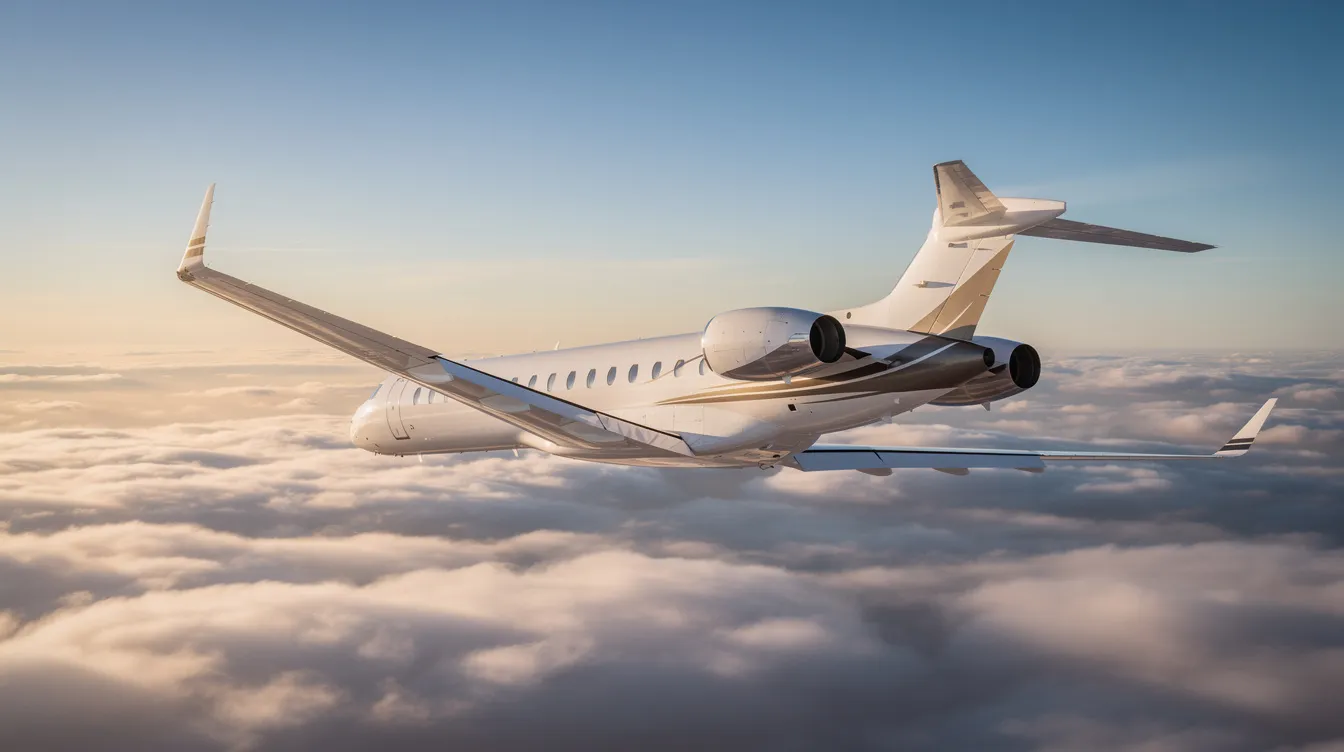
Modern private airplanes may cruise near Mach 0.90 and complete intercontinental legs that once required multiple stops. For a traveler, long range has the same strategic value it has in military aviation: fewer interruptions, more direct routing, and more control, especially when selecting large-cabin jets for 20 passengers on global routes.
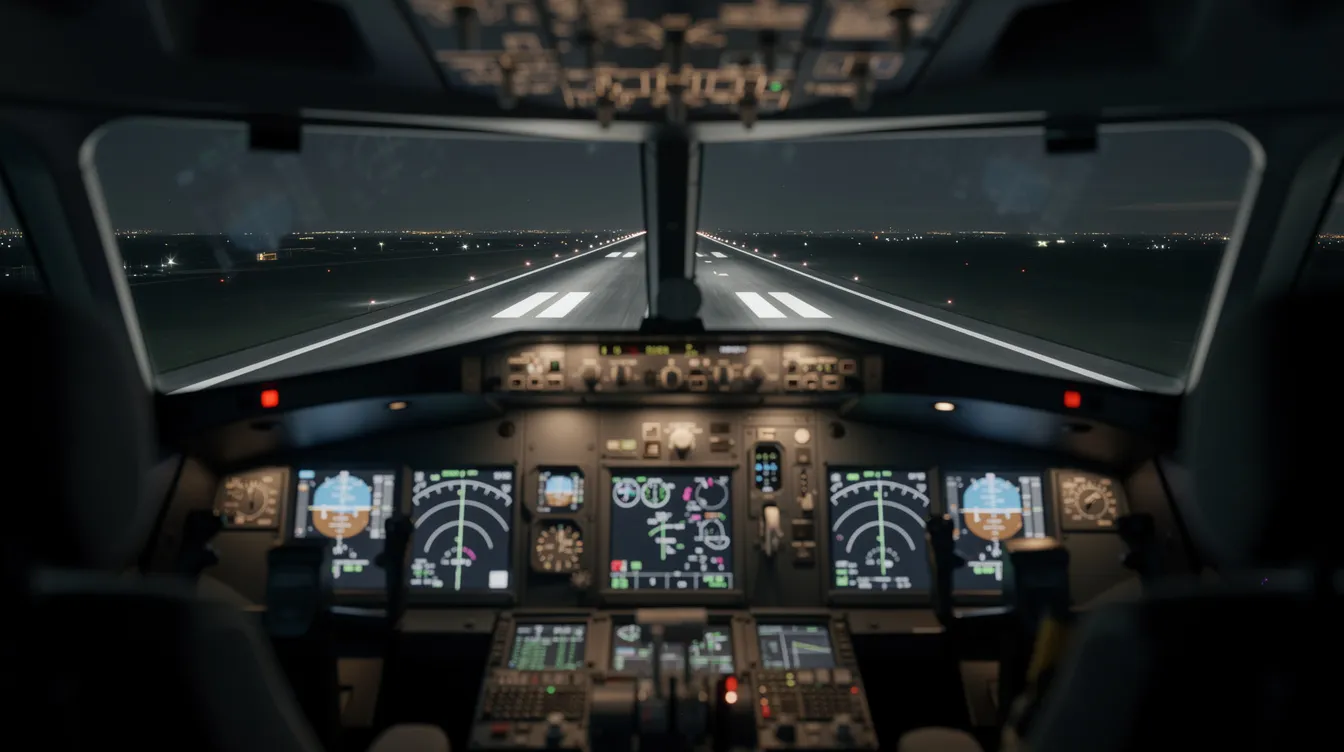
Software-defined avionics in fighters parallel digital flight management, satellite communications, weather radar, synthetic vision, and cockpit automation in private aircraft. Safety protocols and pilot training standards in business aviation also reflect decades of military discipline, redundancy, and procedural control. Understanding the full private jet price landscape helps travelers connect these technical advances with real-world cost, access, and ownership choices. You cannot charter an F-22 or F-35, but you can benefit from aerospace innovation through curated private jet access.
BlackJet: Applying Fighter-Grade Discipline to Private Aviation
Jet Card Model Overview
BlackJet operates a 25+ Hour Jet Card model with 25-hour and 50-hour programs, giving members prepaid access to multiple cabin classes without the capital commitment of owning a jet. Compared with an ad hoc charter or commercial first class, a Jet Card provides more predictable access, clear planning, and aircraft matched to your route.
Safety and Technology
Safety comes first. BlackJet emphasizes operator vetting, third-party safety ratings where applicable, standardized pilot experience requirements, and real-time flight support, comparable to the standards upheld by leading private jet companies worldwide. This is the civilian analogue of rigorous air force operational discipline.
Technology is equally central. BlackJet’s digital booking tools, data-driven aircraft selection, and real-time support work like traveler-focused sensor fusion: schedule, routing, fleet availability, and service expectations are brought into one clear interface, similar to how modern jet card programs for frequent flyers centralize access and pricing.
Sustainability
Sustainability is built in as well, with BlackJet ensuring carbon-neutral flights through verified offsets or sustainable aviation fuel partnerships where available.
Consider a New York executive using a 25-hour Jet Card to fly directly to Dallas for a morning meeting, then continue to Los Angeles for dinner. Commercial service could mean hub exposure, delays, and an overnight stay; BlackJet can turn the same journey into one private, efficient day by structuring trips around a 50-hour Jet Card cost and value framework. That is strategic aviation without owning an aircraft.
FAQ: US Top Fighter Jets and Private Jet Access
Is the F-22 still considered the top U.S. fighter jet?
Yes. The F-22 remains the top U.S. air superiority fighter because of stealth, supercruise near Mach 1.8, maximum speed around Mach 2.25, agility, and continuous upgrades that preserve its edge in air combat.
How does the F-35 compare to the F-22 as a “top” jet?
The F-35 is not as fast as the F-22, but it is more versatile, more widely delivered, and central to allied operations.
Its strength is sensor fusion, strike capability, electronic warfare, and networking with other aircraft.
Which U.S. fighter jet is the fastest today?
The F-15 Eagle and F-15EX can reach Mach 2.5, making the F-15 family faster than the F-22’s approximate Mach 2.25 and the F-35’s approximate Mach 1.6.
The F-15EX is also the heaviest-hitting U.S. fighter in service.
Why can’t civilians charter U.S. fighter jets?
Combat aircraft are military systems governed by export laws, security rules, weapons restrictions, and civil certification limits.
The F-22 is not exported, and fighters are not certified like civilian aircraft designed to carry private passengers.
How can private travelers benefit from fighter-derived technology?
Travelers benefit through safer materials, advanced avionics, navigation, cockpit automation, and more efficient aircraft.
BlackJet’s Jet Card is the practical way to access top jets for business or leisure: prepaid flight hours, multiple cabin classes, and fixed or capped rates depending on program structure, with Jet Card cost guides helping you compare options and pricing.

Conclusion: Air Superiority in the Sky, Strategic Advantage in Your Schedule
The F-22 remains the us top fighter jet for pure air superiority, the F-35 is the top multirole stealth platform with advanced sensor fusion, and the F-15EX is the fastest, most heavily armed U.S. fighter in operational use. The best fighter depends on the mission: air dominance, strike, carrier reach, payload, or networked combat.
That same mission-first thinking applies to private aviation. The right aircraft, cabin class, route, and support model can turn travel from a constraint into a strategic advantage.
BlackJet gives discerning travelers fighter-grade discipline in planning, safety, technology, and carbon-neutral performance—delivered through refined private jet journeys. Explore BlackJet’s Jet Card programs and discover how tailored private jet access can elevate the way you fly, work, and move through the world, starting with a clear view of Jet Card pricing structures and benefits.


 Sign up with google
 Sign up with Apple