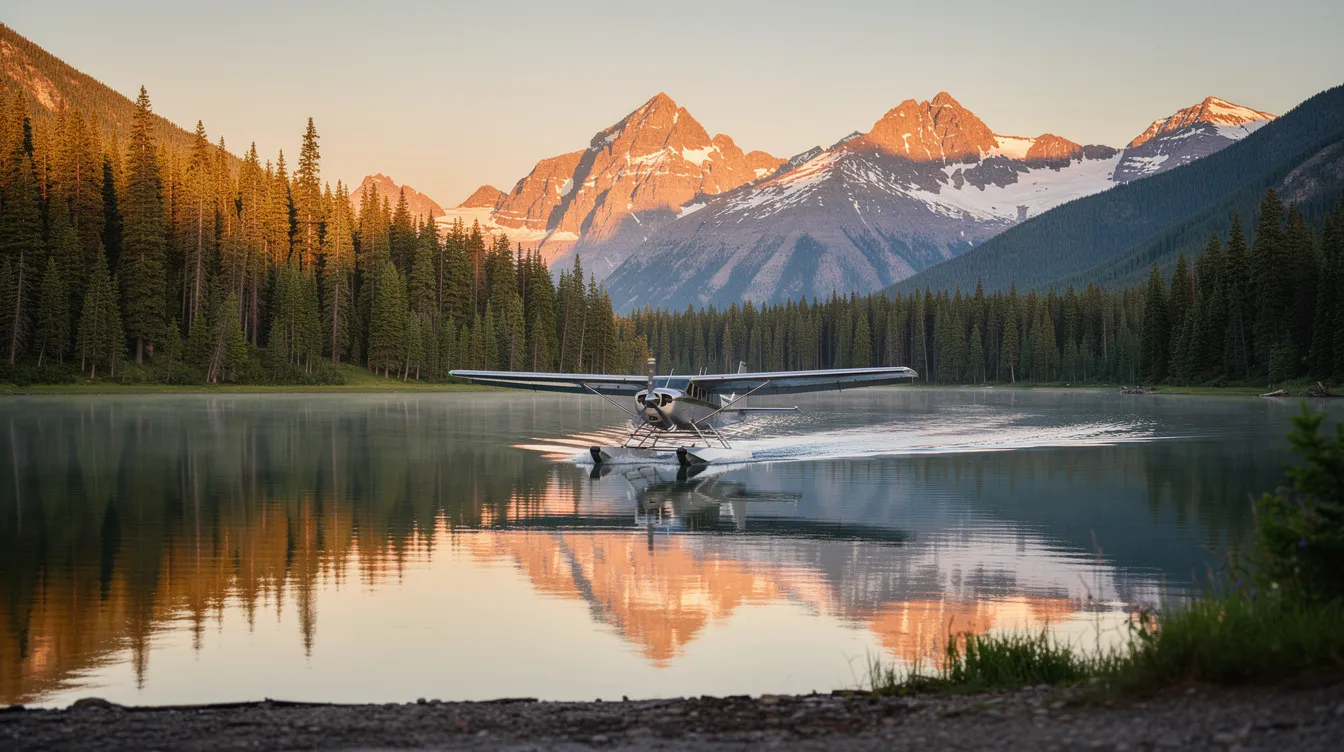
The most exclusive destinations on earth rarely sit beside a commercial terminal. They sit beside water. Water planes—seaplanes, float planes, and amphibious aircraft—are fixed-wing aircraft built to take off from, land on, and float on water, making them the missing link between a private jet and a waterfront lodge, a yacht anchorage, or an island resort that no paved runway can reach. This guide is intended for private jet travelers, luxury flyers, and business aviation clients seeking to understand how water planes extend access to exclusive destinations.
For the discerning business traveler or high-net-worth leisure flyer who values flexibility, privacy, safety, and luxury, water planes turn remote waterfront access into a seamless extension of private aviation. This guide looks at the main types of water planes, how they extend private jet travel to places traditional jets cannot reach, the history and design behind them, the safety and certification standards that govern them, how they fit into BlackJet charter and Jet Card pricing structures, and the sustainability efforts and practical itineraries shaping their role today.
Why Water Planes Matter for High-End Private Travel Today
Water planes let travelers land directly at islands, remote lake shores, and coastal retreats instead of circling back through distant airports, ferry terminals, and ground transfers. Consider the difference: a commercial itinerary to an Alaskan fishing lodge might involve a hub connection, a regional hop, and a two-hour boat ride. A private traveler can fly by jet to Anchorage and transfer to a float plane that touches down at the lodge dock within 45 minutes.
The same principle applies in the Maldives, the Greek Isles, British Columbia, and the Pacific Islands—anywhere the final destination sits on water rather than tarmac, and where understanding how to buy a seat on a private jet can unlock seamless door-to-dock itineraries. Floatplanes and flying boats allow jets to hand off passengers to aircraft capable of water landings for that last, critical leg. The result is a seamless journey from city to shoreline, measured in hours rather than half-days.
BlackJet is a carbon-neutral private jet provider that coordinates with vetted water-plane operators for precisely this kind of last-mile access. Through the Jet Card model, clients secure prepaid jet hours with BlackJet’s premium private jet services while BlackJet arranges supplemental seaplane connections—transparently priced, rigorously safety-checked, and managed within a single itinerary.
What Is a Water Plane? (Seaplanes, Float Planes, and Flying Boats)
A water plane is any fixed-wing aircraft designed to take off from, land on, and float on water surfaces. The term covers a broad family of aircraft that trade conventional wheeled landing gear for floats, hulls, or hybrid systems that work on liquid runways.
"Seaplane" is the umbrella term. It encompasses float planes (aircraft fitted with external pontoons beneath a standard fuselage), float planes use external pontoons for water landings, true flying boats (where the hull itself provides buoyancy like a boat), flying boats have hulls shaped like boats providing primary flotation, and amphibious aircraft that can operate on both water and traditional runways. Amphibious aircraft can operate from both water and land. All float planes are classified as seaplanes, but not every seaplane is a float plane.
Waterplanes differ from helicopters and land-based aircraft in fundamental ways. Helicopters can land almost anywhere with a flat surface, but they carry fewer passengers over shorter distances at a higher cost. Standard aircraft with wheels need prepared strips. Waterplanes occupy the middle ground: they need a suitable water surface but bypass the infrastructure that traditional airports demand. That flexibility makes them indispensable for reaching remote destinations that lack paved runways and infrastructure.
BlackJet works with operators flying modern seaplanes—turboprop amphibians, float-equipped Cessnas, and similar types—so clients arriving by jet can transition smoothly to a waterfront arrival while still leveraging budget-friendly private aircraft options when appropriate.
Types of Water Planes: Float Planes, Flying Boats, and Amphibious Aircraft
Three main categories define the water-plane world, and each carries different implications for comfort, access, cost, and mission profile. Understanding the distinctions helps travelers and operators select the right aircraft for the final leg of a journey.
Float planes are conventional aircraft mounted on external floats that replace standard wheels. Float planes use external pontoons for water landings, keeping the fuselage above the surface. They are common across Alaska, northern Canada, and Scandinavia for lodge transfers, supply runs, and scenic aerial tours in remote locations. The trade-off: floats add drag and empty weight, which means reduced payload capacity and slower cruise speeds compared to the same airframe on wheels.
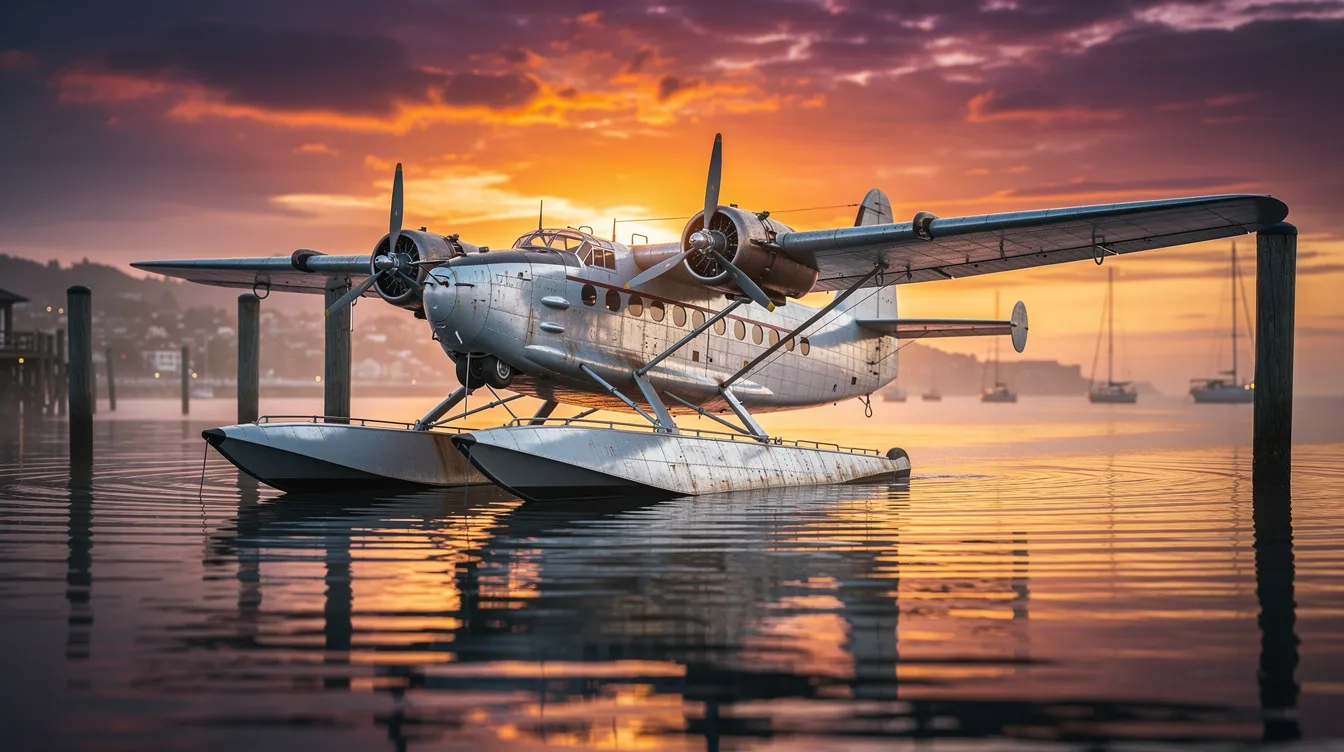
Flying boats feature a hull shaped like the bottom of a boat. Flying boats have hulls shaped like boats, providing primary flotation, often supplemented by sponsons or wingtip floats for lateral stability. These were the prestige liners of early long-distance flights—think Pan Am Clippers and Imperial Airways routes. Very few remain in regular air transport today, but their legacy endures in aviation history and niche sightseeing operations.
Amphibious aircraft combine water and land capability. Amphibious aircraft can take off from both water and paved runways, thanks to retractable wheeled landing gear integrated into floats or hulls. This makes them the most versatile option for luxury itineraries that mix runway arrivals with waterfront landings.
Float Planes in Detail: How They Land on Water
Float planes—sometimes written as "floatplane aircraft" — are the most common type used in remote tourism and bush logistics. Float planes are designed for stability and performance on water, using paired floats that distribute weight and provide buoyancy during taxi, takeoff, and landing.
The floats replace conventional landing gear entirely on "straight float" configurations, restricting operation to water only. Amphibious floats add retractable wheels inside the float structure, allowing the same aircraft to use runways as well. Straight floats are lighter and simpler to maintain, while amphibious floats offer greater flexibility at the cost of additional weight and mechanical complexity.
Float planes can operate in remote areas without runways, which is exactly why they dominate in regions like British Columbia's coastal inlets, Alaska's interior lakes, and northern Canada's roadless communities. Typical use cases include:
Lodge transfers from Vancouver to a remote lake in the BC interior
Fishing trips to Alaskan lakes inaccessible by road
Supply flights to remote communities in the Canadian Arctic
Scenic aerial tours over glaciers, fjords, and mountain ranges
Floatplanes are essential for accessing remote locations without runways, and they remain popular for scenic aerial tours in remote locations where no other aircraft type can practically operate, especially when paired with entry-level, more affordable private jets for the longer main segments. Floatplanes provide access to remote areas without runways—this single capability defines their value in private travel.
Flying Boats: Classic Icons of Water-Based Aviation
Flying boats are the most glamorous chapter in water-based aviation. Their hull-based design means the fuselage itself acts as a flotation device, sitting in the water rather than above it on external floats. Sponsons, or small stabilizing floats at the wingtips p, prevent the aircraft from rolling in swells.
Famous types shaped the era of transoceanic air travel:
The Curtiss Model America, developed by Glenn Curtiss and John Cyril Porte before World War I, pioneered hull "step" designs that broke water adhesion during takeoff and influenced every flying boat that followed.
The Short Empire (S.23) carried approximately 17 passengers plus mail and cargo at cruising speeds around 170 mph, serving Imperial Airways and Qantas Empire routes across Africa, Asia, and Australia in the late 1930s.
The PBY Catalina patrol flying boat, with a wingspan of 104 feet and range exceeding 2,500 miles, became one of the most versatile military aircraft of the twentieth century.
While large commercial flying boats are rare in modern private travel, they remain icons of aviation history. A handful serve in high-end sightseeing experiences, and their prestige continues to influence the narrative of water-based flight. The Hughes H-4 Hercules, the largest flying boat ever built, flew in 1947—a singular flight achievement that captured the world's imagination even as the era of the flying boat was ending.
Amphibious Aircraft: Ultimate Flexibility for Land and Water
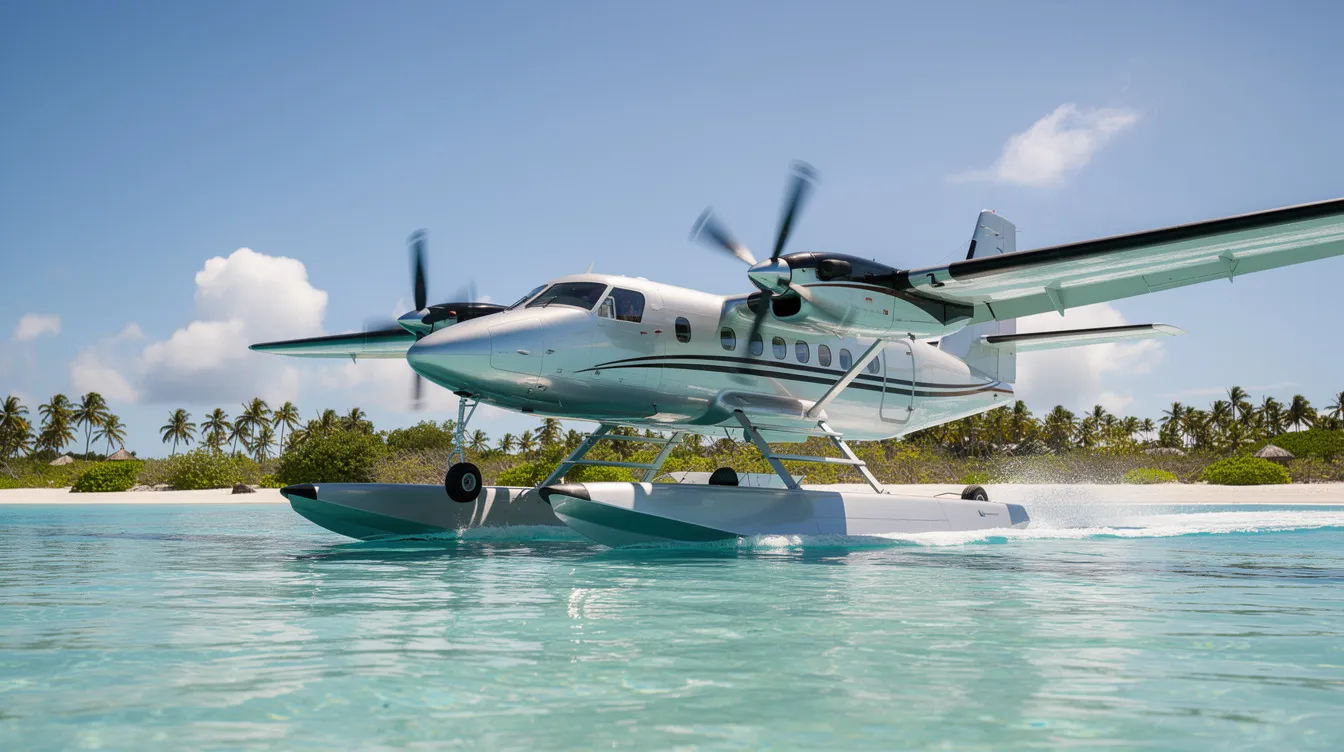
Amphibious aircraft represent the practical bridge between traditional jets and true water operations, making them ideal for upscale itineraries that span continents and coastlines where large, long-range private jets handle the main trunk route. Amphibious aircraft can operate from both water and land, switching between runways and rivers within the same flight.
This dual capability comes from integrated or retractable landing gear housed within the floats or hull, and it pairs well with programs that optimize Jet Card cost per hour across different aircraft sizes. A pilot and co-pilot can select "wheels down" for a runway or "wheels up" for a water arrival—a distinction that demands careful checklist discipline but delivers unmatched flexibility.
Concrete examples include:
Aircraft | Passengers | Typical Range | Configuration |
|---|
ICON A5 | 2 | ~379 nm | Light sport amphibian |
Cessna 206 on amphibious floats | 4–5 | ~500 nm | Highly modified Cessna with a beautifully upgraded panel |
DHC-2 Beaver | 5–6 | ~400 nm | Classic bush amphibian |
DHC-6 Twin Otter | 8–10 | ~700–945 nm | Turboprop workhorse |
Amphibious aircraft can carry 2 to 10 occupants depending on the type, which dovetails with flexible access models like a 100-hour Jet Card program for frequent flyers who need consistent availability. The range of amphibious aircraft spans 379 to 945 nautical miles, covering everything from short island hops to multi-hour coastal transits, much like how a 50-hour Jet Card program can bridge medium-frequency travel needs. They provide access to remote locations without runways—lodges, private islands, yacht anchorages—that would otherwise require lengthy boat transfers.
BlackJet clients can connect from jet arrivals at regional airports directly to amphibious aircraft for waterfront arrivals, with the entire itinerary managed through a single booking platform.
History of Waterplanes: From Pioneers to the Jet Age
Waterplanes emerged in an era when dense airport networks did not exist. Lakes, harbors, and rivers served as natural runways for the earliest aviators, and the ability to land on water opened possibilities that land-only flight could not match.
The first successful seaplane flight occurred in 1910, just seven years after the Wright Brothers' landmark powered flight at Kitty Hawk. From that point, water-plane development accelerated through two world wars, a golden age of transoceanic travel, and into the specialized roles these aircraft fill today.
Early mail routes, exploration flights, and passenger service relied on seaplanes long before modern runways were widespread. The story of waterplanes is, in many ways, the story of how aviation connected the world's coasts, islands, and isolated regions before concrete and asphalt caught up.
Birth of the Water-Plane Industry (Pre–World War I)
The 1913 Daily Mail prize of £10,000 for a non-stop aerial crossing of the Atlantic galvanized water-plane innovation. No landplane of the era had the range for such a feat, but a flying boat—capable of resting on the ocean surface for refueling-offered a plausible path.
Glenn Curtiss, already a pioneer of the first seaplane concepts, developed the flying fish-style hulls and collaborated with Royal Navy officer John Cyril Porte on refined hull designs for water takeoffs. Their joint work on the Curtiss Model America flying boat introduced the hull "step" that became standard for breaking suction during takeoff. The Curtiss NC-4 would later become the first aircraft to fly across the Atlantic in 1919, a landmark US flight achievement.
In January 1914, the Benoist XIV launched the world's first scheduled heavier-than-air airline passenger service between St. Petersburg and Tampa, Florida—a route conducted entirely over water. Meanwhile, in Britain, the Bat Boat proved that amphibious aircraft capable of landing on both water and land were feasible, foreshadowing the versatile designs that would follow.
Water Planes in World War I and the Interwar Era
World War I accelerated water-plane development dramatically. Coastal patrols, anti-submarine reconnaissance, and North Sea operations demanded seaplanes that could handle rough water and long endurance. The Felixstowe flying boats—F.2, F.3, and F.5 variants produced in several versions—improved hull design for open-ocean handling and became workhorses for maritime patrol. The Felixstowe F.2 flying boat was extensively used by the Royal Navy during WWI for coastal stations and convoy protection.
Italian Macchi and German Hansa-Brandenburg seaplanes expanded the global use of water-based military aircraft, demonstrating the military value of aircraft that needed no runway infrastructure. These wartime lessons proved the operational viability of waterplanes in demanding conditions.
In the interwar era, commercial operators seized on the technology. In 1923, the first successful commercial flying boat service was introduced, connecting cities across water routes that lacked airfields. Imperial Airways and Qantas Empire Airways operated Short Empire aircraft for long overwater routes linking Britain to Australia, Africa, and Asia, carrying passengers and mail across thousands of miles of ocean in a level of comfort that rivaled ocean liners.
World War II: Flying Boats and Float Planes at Their Peak
World War II marked the operational peak of large flying boats and float planes. Anti-submarine warfare, convoy escort, long-range patrol, and search and rescue missions drove production and innovation to unprecedented levels.
Over 2,661 PBY Catalinas were produced during WWII for military use, serving every major maritime theater from the Atlantic to the Pacific. The Short Sunderland patrolled the Atlantic approaches, while ship-launched floatplanes provided reconnaissance and gunfire adjustment for naval task forces. These water operations shaped doctrine that still influences modern search and rescue missions.
Water planes could land near survivors in open ocean—a capability no land based aircraft could match. This defined their role in rescue, and lessons from World War II operations continue to inform modern water-plane safety standards, crew training, and emergency procedures. The World War era proved that water planes were not just transport—they were a crucial lifeline.
Post-war Decline of Large Flying Boats and Rise of Specialist Roles
After 1945, the rapid expansion of land-based runways and the arrival of long-range jet airliners reduced demand for ocean-crossing flying boats. Jets offered greater speed, higher capacity, and lower operating costs per seat-mile, though smaller post-war float planes and amphibious aircraft remained viable in specialist markets because of their low operating costs. The era of the Pan Am Clipper was over.
But waterplanes did not disappear. They shifted toward smaller float planes and amphibious aircraft serving niche roles: bush flying, geological survey, remote tourism, and emergency response. Twenty-first-century developments have refined these missions further. The Canadair CL-415 is used for firefighting and maritime patrol, capable of scooping over 6,000 liters of water from a lake in seconds. The Beriev Be-200 and ShinMaywa US-2 serve amphibious utility and rescue roles for national government—a shift that maps directly to today's private travel model: private jets handle main routes at speed, while smaller water planes provide access to otherwise unreachable locations for the final leg-a structure that aligns closely with modern private jet price list frameworks spanning multiple aircraft categories. It is a partnership of scale and specialization.
Design Fundamentals: How Water Planes Take Off, Land, and Stay Stable
Water takeoffs involve three distinct hydrodynamic modes. At low speed, the aircraft is in displacementmode—floating like a boat. As power increases, it enters a plowing phase where water resistance peaks. Finally, the hull or floats reach planing speed, where hydrodynamic lift reduces drag on the surfaces, the aircraft rises onto the "step," and rotation into flight becomes possible.
This sequence demands specific hull or float geometry. The "step"—a sharp break in the hull's bottom surface—is critical for breaking water adhesion and transitioning from plowing to planing. Without it, water interference keeps the aircraft stuck in high-drag regimes.
Adding floats or a reinforced hull increases drag and weight compared to land-only aircraft. Studies show that an unfaired flying-boat hull can generate roughly 85% more drag than a conventional transport fuselage. Seaplanes have reduced fuel efficiency compared to land-based aircraft—typically 10–20% slower cruise speeds for the same powerplant. The empty weight of a float plane affects its operational performance, reducing useful payload and climb rate.
Pilot training covers glassy-water landings (where mirror-smooth surfaces eliminate depth perception), wave height judgment for safe touchdown, and docking techniques—all key safety factors for four-season flying.
Floats, Hull Design, Weight Distribution, and Stability
Float spacing, hull shape, and wingtip floats all contribute to lateral stability on water. Twin floats set wide beneath the fuselage prevent rolling; wingtip floats, or sponsons on flying boats, serve the same purpose. Hull flare and deadrise angle determine how well the aircraft handles chop and crosswinds during taxi.
Careful weight distribution of passengers, cargo, and fuel prevents nose-over events and wingtip dips during taxi and takeoff. A forward center of gravity risks plunging the nose into waves; too far aft, and directional control suffers. Operators serving high-end clients prioritize meticulous preflight inspections of floats, hulls, and water rudders.
Straight floats are structurally simpler—fewer moving parts, lighter, and cheaper to maintain. Amphibious floats add retractable gear mechanisms, hydraulic lines, and position indicators, increasing maintenance demands. Saltwater exposure accelerates corrosion in water planes, and seaplanes are more susceptible to corrosion than float planes operating exclusively in freshwater environments. Regular inspections for hull integrity, seal condition, and structural corrosion are non-negotiable.
Engine Placement, Avionics, and Safety Systems in Modern Water Planes
Engine placement is a crucial design choice in water planes. Propellers must stay clear of spray during taxi and takeoff to prevent water ingestion, blade erosion, and power loss. Small land aircraft converted to floats typically retain nose-mounted engines with spray deflectors, while purpose-built amphibians often use high-wing or pylon-mounted configurations.
The ICON A5 places its engine on a rear pylon above the fuselage. The Twin Otter uses high-mounted wings with engines well above the waterline. These configurations protect powerplants during water operations and reduce water interference with critical systems.
Modern seaplanes carry avionics suites—Garmin G1000 NXi, G500, or G3X systems—that provide situational awareness over remote water where radar coverage may be sparse. ADS-B Out transponders ensure air traffic visibility. Redundant communication and navigation systems are standard on commercial operations, and some light amphibians include whole-aircraft parachutes as an additional safety layer.
A highly modified Cessna with a beautifully upgraded panel, for instance, might feature synthetic vision, terrain awareness, and satellite communication capabilities that would have been unimaginable in the floatplane aircraft of a generation ago.
Regulation, Certification, and Pilot Training for Water Operations
Pilots need specialized training to operate water planes effectively. In the United States, a seaplane rating is required in addition to a standard pilot certificate, covering water takeoffs, landings, docking, and emergency procedures. Operating a seaplane can be affected by weather and water conditions, so training emphasizes judgment calls about wave height, wind direction, visibility, and surface conditions—including the challenge of judging altitude over a snow-covered lake or glassy surface.
Commercial water-plane operations fall under FAA Part 135 regulations (or international equivalents), governing maintenance schedules, pilot qualifications, operational control, and safety management systems. When on water, many jurisdictions classify seaplanes as vessels, subject to marine navigation and right-of-way rules—a dual regulatory framework unique to this category of aircraft.
The accident history of water operations shows that roughly 34% of seaplane accidents occur during the water-landing phase, a higher proportion than for land-based operations. This underscores the importance of operator vetting. BlackJet verifies that partner operators hold appropriate certificates, ratings, and documented water-operations experience before arranging client flights—applying the same safety standards used for jet segments.
Modern Uses of Water Planes: Tourism, Remote Access, and Special Missions
Today's water planes serve a range of missions well beyond luxury travel:
Upscale resort transfers: Maldives overwater villas, Greek island retreats, Caribbean private islands
Eco-tourism and lodge access: Alaska's Inside Passage, British Columbia's Great Bear Rainforest, Scandinavian lake country
Supply and connectivity: Float planes connect remote regions lacking paved runways and infrastructure, providing a crucial lifeline for remote communities in Canada, Alaska, and Southeast Asia
Firefighting: Water planes can perform aerial firefighting by scooping water from lakes and dropping it on wildland fires. The Canadair CL-415 remains a frontline asset across Europe and North America.
Maritime patrol and border surveillance: Government-operated amphibians and flying boats monitor coastlines and exclusive economic zones
Emergency response: Waterplanes are essential for emergency search-and-rescue operations, capable of landing beside capsized vessels or on flood-inundated terrain
Amphibious aircraft are used for firefighting and search-and-rescue across dozens of countries. Waterplanes are used for search and rescue operations in conditions where no other aircraft can land directly beside those in distress.
While BlackJet does not operate government or public-service missions, understanding these roles informs contingency and emergency planning for clients traveling to coastal or island destinations and evaluating alternatives like Flexjet’s Jet Card programs for specific fleet preferences.
How BlackJet Integrates Water Planes with Jet Card and Charter Travel
BlackJet's Jet Card model gives members prepaid hours on private jets with guaranteed access across cabin classes—from light jets to heavy, long-range aircraft — with options like the dedicated BlackJet 25+ Hour Jet Card for frequent travelers. The system is built for flexibility: book through a digital platform, receive 24/7 real-time support, and fly carbon-neutral on every jet segment—leveraging some of the best jet card options for frequent flyers to match each client’s profile.
When an itinerary requires a water-plane connection—say, a lodge on a remote lake or a Maldivian atoll—BlackJet arranges a connecting float plane or amphibious aircraft segment after the jet leg. The jet portion draws from Jet Card hours; the water-plane leg is coordinated as a supplemental, transparently priced charter with a vetted operator.
This means one point of contact, one itinerary, and consistent safety oversight across both segments. BlackJet's team verifies pilot qualifications, maintenance records, and operational certificates for water-plane partners with the same rigor applied to jet operators, whether clients are comparing NetJets Jet Card costs or other membership models. The result is a journey that feels seamless from wheels-up in Manhattan to floats-down at a wilderness lodge.
Sample Itineraries: Combining Jets, Float Planes, and Amphibious Aircraft
These examples illustrate how water planes finish what private jets start:
New York → British Columbia Fishing Lodge: Depart Teterboro on a super-midsize jet to Vancouver (5.5 hours). Transfer to a DHC-2 Beaver float plane for a 50-minute flight north to a remote lake lodge accessible only by water. Total door-to-dock: under 8 hours—versus 14+ hours with commercial connections and a long boat ride.
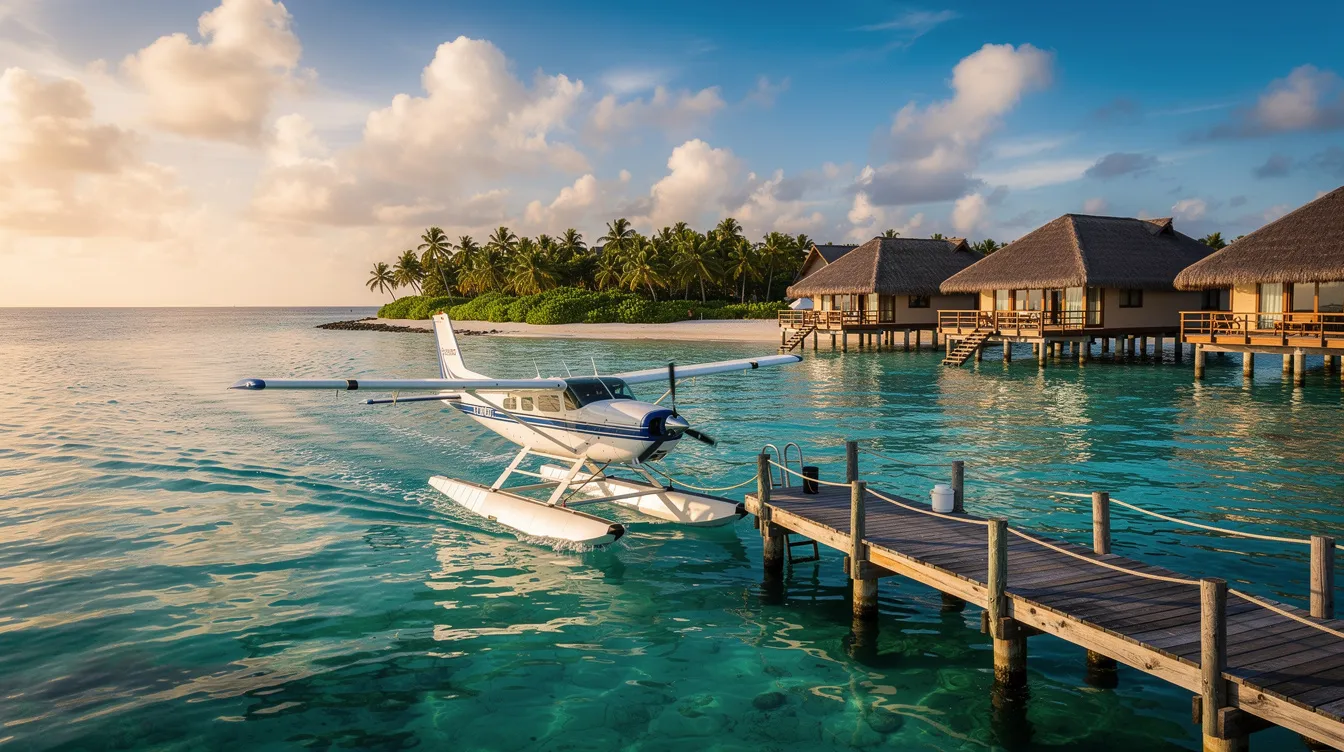
London → Maldives Overwater Villa: Fly by long-range private jet from Stansted to Malé (10 hours). Connect to a Twin Otter seaplane for a 35-minute transfer to an overwater villa at a private resort. No ferry, no domestic flight, no waiting.
Los Angeles → Alaskan Heli-Ski Camp Jet from Van Nuys to Anchorage (5 hours). Board a Cessna Caravan on amphibious floats for a 70-minute flight to a fjord-side camp with no runway but deep, sheltered water. The Caravan lands directly at the camp's floating dock.
Athens → Greek Island Estate: Depart by light jet from Athens International. Arrive at a private island estate via an amphibious aircraft that touches down in the sheltered cove beside the property, skipping ferry schedules entirely.
Sustainability: Twenty-First-Century Developments, and the Future of Water Planes
Short water-plane legs can actually reduce the total carbon footprint of a trip by eliminating diesel ferry transfers, extended ground transport, or additional regional flights. When the alternative to a 40-minute float plane hop is a three-hour boat ride burning marine diesel, the calculus shifts in the seaplane's favor.
Twenty-first-century developments in electrification are accelerating the trend. Harbour Air, the world's largest seaplane airline in British Columbia, has been converting DHC-2 Beaver floatplanes to electric power in partnership with MagniX and EPS-testing since 2019, with certification efforts ongoing. The Elfly Group's NOEMI project aims to build the world's first fully electric amphibious seaplane, now entering its prototype phase.
Modern turboprops like PT6-powered Caravans and Twin Otters already balance performance, reliability, and fuel efficiency for water operations. Research into composite materials, improved hull hydrodynamics, and hydrofoil-assisted takeoff promises further reductions in drag and fuel burn.
BlackJet delivers carbon-neutral jet flights through verified offsets at no extra cost to members and actively monitors emerging low-emission water-plane technologies for future adoption, even for complex large-group charter missions of around 100 passengers that may connect to water-plane segments. As electric and hybrid seaplanes reach certification, they will slot naturally into the kind of integrated itineraries BlackJet already manages.
FAQs: Water Planes, Safety, and Booking with BlackJet
What is the difference between a seaplane, a float plane, a flying boat, and an amphibious aircraft?
"Seaplane" is the umbrella term for any aircraft that can land on water. Float planes are seaplanes that use external floats (pontoons) beneath the fuselage for buoyancy. Flying boats have a hull that acts as a flotation device—the fuselage itself sits in the water. Amphibious aircraft can take off from both water and runways, using either amphibious floats with retractable wheels or hull-integrated landing gear. All can land on water, but only amphibious variants can also use traditional runways.
How safe are waterplanes compared to land-based aircraft?
Waterplanes have a strong safety record when operated by experienced, certified pilots and well-maintained fleets. Key factors include pilot training (specialized ratings for water operations), weather assessment, and water conditions. Roughly 34% of seaplane incidents occur during the landing phase, which is why pilot experience and preflight judgment are critical. BlackJet partners only with operators who meet stringent safety and certification standards.
What are the baggage limits on float planes compared to private jets?
Float planes typically have stricter weight limits than midsize or heavy jets. The empty weight of a float plane affects its operational performance directly—every kilogram of baggage reduces fuel capacity or passenger load. BlackJet advises clients on packing and weight requirements before the water-plane leg, ensuring a smooth transition from jet to seaplane without surprises at the dock.
Do Jet Card hours cover the water-plane leg of my trip?
Jet Card hours apply only to jet segments. Water-plane legs are quoted separately as supplemental charters, but the entire itinerary is managed within one booking through BlackJet's platform. Pricing for the water-plane portion is transparent and confirmed before departure.
What happens if water conditions prevent a landing?
Operating a seaplane can be affected by weather and water conditions—high waves, poor visibility, or crosswinds may make a water landing unsafe. In these cases, BlackJet's operations team arranges alternatives: rerouting to the nearest suitable runway (if the aircraft has amphibious capability), delaying departure until conditions improve, or coordinating ground or boat transfers as a backup. Client safety is never compromised for schedule convenience.
What types of aircraft are used for water-plane legs?
Common choices include the DHC-2 Beaver, DHC-6 Twin Otter, Cessna 208 Caravan on amphibious floats, and the ICON A5 for lighter missions. Selection depends on passenger count, baggage, distance, and whether the destination requires water-only or mixed-surface capability. Amphibious aircraft can carry 2 to 10 occupants depending on type.
Can water planes operate year-round?
Yes, in many regions. Floatplanes operate across four-season flying conditions—open water in summer, and in some cases landing on a snow-covered lake in winter using ski-float combinations, making them a natural complement to a 25-hour Jet Card solution for occasional but seasonal travelers. Seasonal and weather constraints vary by geography. BlackJet's team evaluates conditions for each itinerary and confirms operational feasibility before booking.
Are water planes relevant for complete restoration or private sightseeing flights?
Absolutely. Vintage flying boats and classic floatplanes that have undergone a complete restoration are available for heritage sightseeing and private charter in select markets. These flights offer a connection to the golden age of aviation, combining scenic aerial tours with the romance of water-based flight.
Conclusion: Elevating Private Travel with Waterplanes
Waterplanes—whether float planes, flying boats, or amphibious aircraft—are indispensable extensions of private jet travel for reaching the world’s most exclusive and remote waterfront destinations. They unlock access where traditional runways do not exist, transforming complex, multi-leg journeys into seamless, efficient experiences measured in hours rather than days.
For high-net-worth and corporate travelers, integrating water planes with private jets offers unmatched flexibility, privacy, and convenience. BlackJet’s curated Jet Card programs and vetted water-plane partnerships ensure every segment meets rigorous safety, certification, and sustainability standards, delivering a premium travel experience from city center to secluded shore.
As technology advances and electrification emerges, water planes will only grow in importance—reducing carbon footprints and expanding the reach of luxury travel. Whether accessing a remote lodge in British Columbia, a private island in the Maldives, or a hidden fjord in Alaska, seaplanes transform the final leg into a journey as elegant and effortless as the jet that brought you there.
Discover how BlackJet can reshape your next waterfront arrival. Explore premium jet access with seamless seaplane connections.


 Sign up with google
 Sign up with Apple