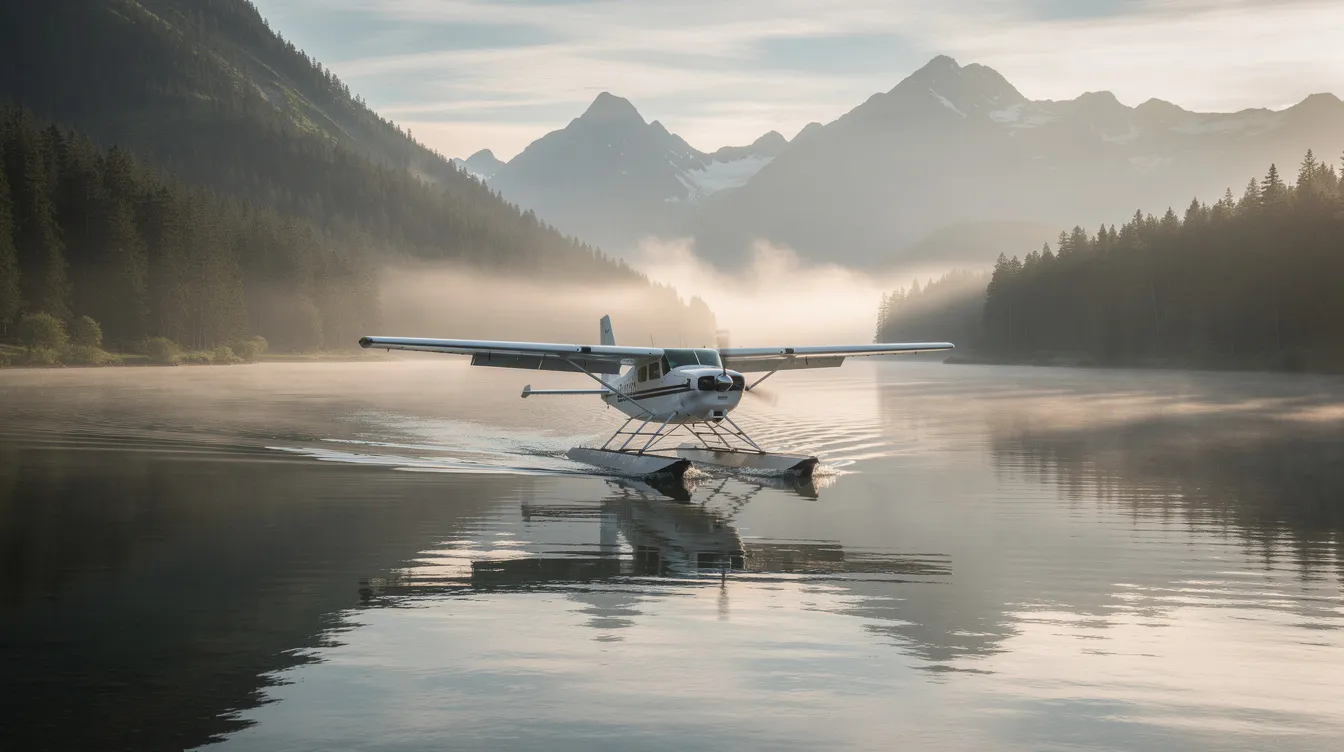
The ICON A5 is an amphibious light sport aircraft that has captured the imagination of affluent aviators since its first customer deliveries in 2016. Built by Icon Aircraft in Vacaville, California, this two-seat carbon fiber plane was designed not for business commuting or heavy freight but for something increasingly rare in aviation: pure, unapologetic fun.
Why the ICON A5 Matters for Private Aviators and Jet Card Travelers
The idea behind the A5 is straightforward. Take a modern, carbon fiber airframe, give it retractable landing gear and water-capable sponsons, and create an aircraft that can operate from lakes, rivers, and short runways with equal confidence, occupying a very different niche than traditional budget-friendly private aircraft focused on practical transportation. The estimated base price of the ICON A5 is $189,000, though the ICON A5 is priced at $400,000 according to some sources, depending on avionics, livery, and options. As of late 2025, the manufacturer had delivered 221 units worldwide.
What does it feel like to fly one? Imagine cruising at 85 knots over a chain of Adirondack lakes, 1,500 feet above the water, with a panoramic canopy giving you unobstructed views in every direction. You spot your dock, set up an approach, confirm gear up for water, and touch down on the lake surface in under 840 feet. That experience is what the A5 delivers, and it is genuinely amazing in a world where most general aviation aircraft are optimized for getting from point A to point B as efficiently as possible.
For private jet travelers and Jet Card members, the A5 fills a very specific gap. It does not replace a light jet for a business trip from New York to Miami. It complements that trip. A Jet Card covers the 1,000-mile leg at 400+ knots; the A5 handles the last 50 miles from a regional airport to a lakefront property that no runway can reach. Compared with commercial aviation plus a two-hour ground transport drive from the nearest airline airport, an A5 can cut that final segment to minutes.
BlackJet does not broker ICON A5 flights. But many of our members own or charter smaller aircraft for exactly this kind of last-mile leisure flying, and our operations team regularly helps coordinate multi-leg itineraries that blend jet access with seaplane, helicopter, or light aircraft connections, often advising on the cost to charter a small plane for specific routes.
ICON A5 Light Sport Aircraft Overview and Design Philosophy
The ICON A5 is a Special Light-Sport Aircraft (S-LSA) with a high-wing configuration, a carbon fiber airframe, and retractable undercarriage housed in Dornier-style sponsons that double as hydrodynamic stabilizers on water. The company incorporated many different design elements to make the plane approachable for newer pilots while still rewarding experienced aviators.
The target pilot is adventurous, possibly already holding a private pilot license, but often new to amphibious sport flying. ICON positions the A5 as a leisure activity aircraft, not a utility workhorse. The cockpit width is 46 inches, and the interior draws from automotive luxury, with BMW contributing design elements and material choices. At approximately 23 feet in length and under 9 feet in height, it is compact enough to trailer behind an SUV.
Designed for fun, not freight.
The wingspan of the ICON A5 is 34 ft 10 in, but the folding wings of the A5 allow for easy trailering and storage. The wings can fold from 34 ft 10 in to just 7.8 ft wide, with the wings folded aft against the fuselage. That engineering detail alone separates it from other airplanes in the amphibious category, where hangar or dock storage is often the only option.
Unlike traditional general aviation aircraft built for cross-country endurance or flight training fleets, the A5's design emphasizes ease of use and safety for recreational pilots. The A5 is designed to be forgiving and has an intuitive instrument panel, making it accessible to sport pilots who may fly only on weekends.
ICON A5 Specifications at a Glance
Specification | Detail |
|---|
Empty Weight | 1,080 lb |
Maximum Gross Weight | 1,510 lb |
Engine | 100 hp Rotax 912 iS |
Wingspan | 34 ft 10 in |
Cockpit Width | 46 inches |
Fuel Capacity | 20 gallons |
Cruise Speed | Approximately 97 mph (85 knots) |
Maximum Speed (VNE) | 120 KCAS |
Stall Speed (Clean) | ~45 KCAS |
Takeoff Distance (Water) | 840 feet |
Range | Up to 427 nautical miles |
Climb Rate | Over 500 feet per minute |
Seating Capacity | 2 |
Base Price | $189,000 - $400,000 (depending on options) |
Performance, Weight, and Fuel Capacity: What the Numbers Say
The A5 cruises at a speed of approximately 97 mph, or roughly 85 knots true airspeed at altitude. It can reach speeds up to 90 knots in certain configurations, with a VNE near 120 KCAS, placing it far below the cruise profiles of the cheapest private aircraft options that are still optimized for point-to-point travel rather than pure recreation. Stall speed drops into the low-40-knot range depending on flap setting, offering manageable stall recovery characteristics that keep less-experienced pilots out of trouble.
The relationship between empty weight, useful load, and gross weight is the critical equation for any A5 mission. The empty weight of the ICON A5 is 1,080 lb, and the ICON A5 has a maximum gross weight of 1,510 lb, leaving roughly 430 lb for pilot, passenger, fuel, and baggage. The A5 has a fuel capacity of 20 gallons. Fuel consumption runs approximately 3.8 gallons per hour at cruise power, which translates into practical endurance of around 5 hours with reserve. The A5 can cruise at 85 knots for 5 hours, giving a maximum range of up to 427 nautical miles under standard conditions at sea level.
What these numbers mean in practice: Two average adults carrying light bags on a warm day will consume most of that useful load, especially at higher weight configurations or elevated density altitudes. Weight management is not optional; it is fundamental. The A5 can take off and land on both traditional runways and water, with a takeoff distance on water of 840 feet at sea level standard conditions and shorter distances on paved runways.
By comparison, light jets in the BlackJet network offer ranges exceeding 1,000 nautical miles, carry six or more passengers, and cruise above 350 knots, fitting into the broader category of small private jets for flexible luxury travel. Different mission, different machine. The A5 exists for the point where speed yields to scenery.
Powerplant, Systems, and Safety Features
It is powered by a 100 hp Rotax 912 iS engine driving a pusher propeller mounted high behind the cockpit. This configuration protects the engine from water spray during takeoff and landing, while giving the pilot unobstructed forward visibility over water, a critical advantage when you need to spot debris or boats during taxi and approach.
The electrical system features dual alternators, a 12-volt battery, and electronic engine management, all designed to reduce pilot workload. The single fuselage-mounted fuel tank and simple fuel selector eliminate the complex multi-tank switching found in larger airplanes, keeping fuel management straightforward for newer pilots.
The A5's signature safety systems set it apart from nearly every aircraft in its category:
A spin-resistant airframe that prevents the aircraft from easily entering a spin, the leading cause of fatal accidents in light sport and general aviation
A prominent angle of attack indicator that gives real-time feedback on how close you are to a stall
A complete airframe parachute system (BRS-type) that serves as a last-resort recovery option
The A5 features a spin-resistant airframe for enhanced safety, and these protections collectively contributed to the A5's exemption from the FAA, allowing the A5 to operate at a higher weight than standard LSA amphibious limits. For readers accustomed to the safety standards in business aviation, think of these features as the sport aviation equivalent of ARGUS-rated operators, two-pilot crew requirements, and strict duty-time limits that BlackJet mandates across its fleet.
Flight Experience: From Takeoff to Water Landing
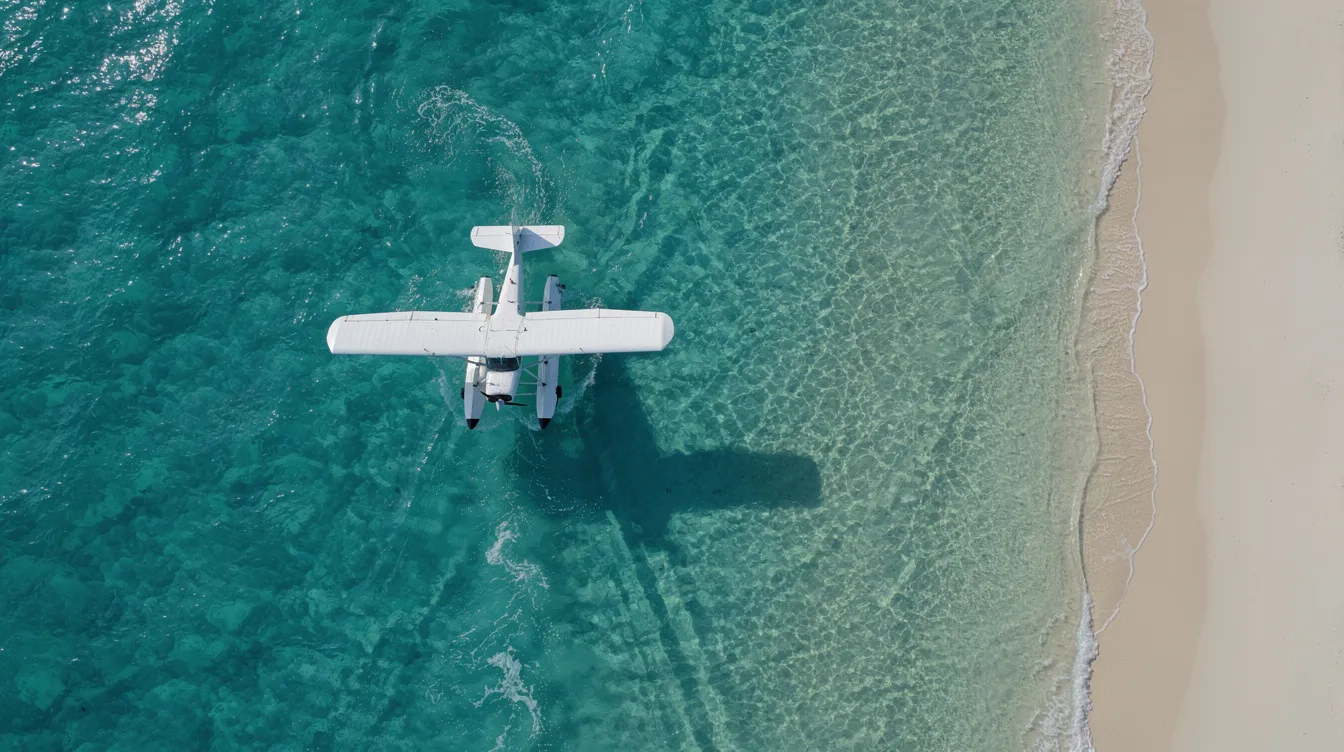
A typical sortie begins with a preflight walk-around, checking sponsons, control surfaces, and gear position. On land, the takeoff roll is measured in hundreds of feet, not thousands. The A5 has a climb rate of over 500 feet per minute at sea level, and within minutes you are at a comfortable sightseeing altitude with the world laid out beneath you, in stark contrast to the experience aboard 16-seat private jets designed for large groups.
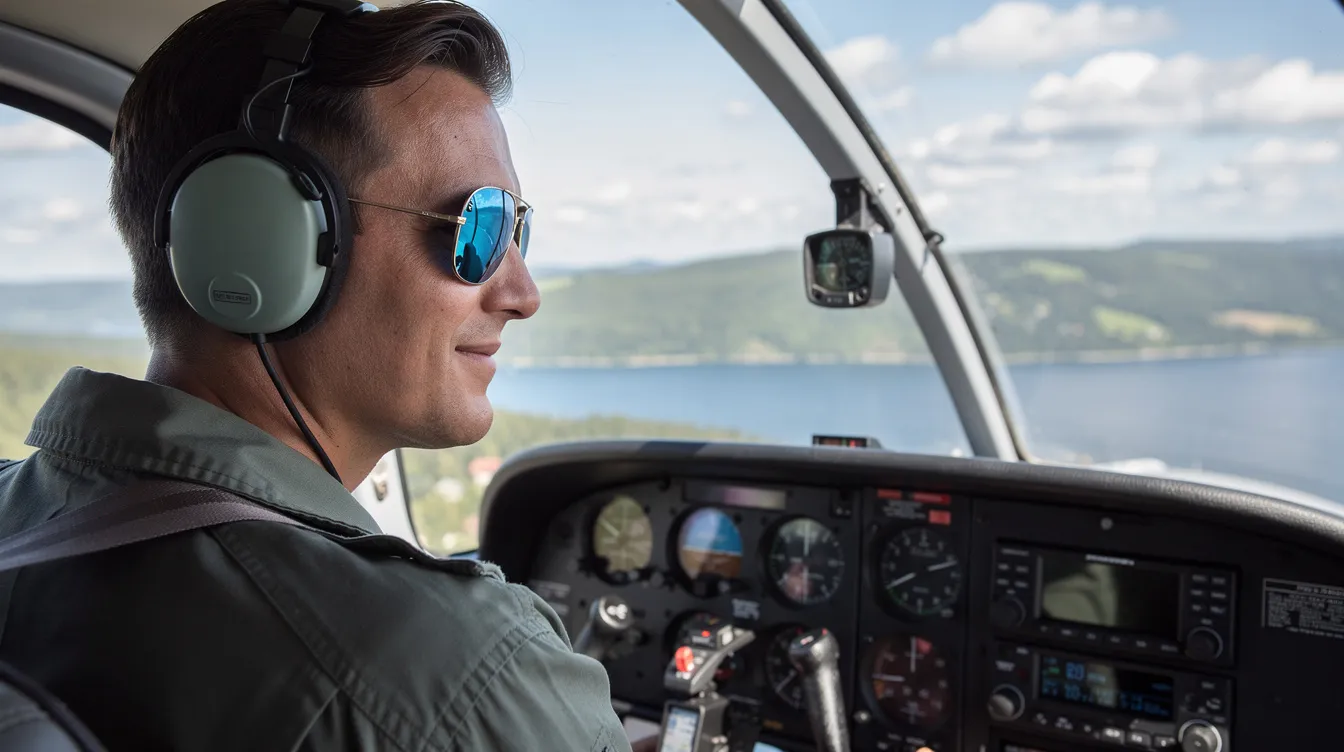
The cockpit feels more automotive than aeronautical. The 46-inch cabin width gives shoulder room comparable to a sports car, with an interior that reflects BMW's influence. Visibility through the panoramic canopy is exceptional. The analog-forward panel layout includes the AoA gauge front and center, a constant reminder of your energy state that even experienced private pilots find reassuring.
Stall characteristics are notably gentle. The aircraft offers manageable stall recovery thanks to its spin-resistant wing design; rather than a sharp break and wing drop, the nose pitches slightly, and aileron authority remains. The glide ratio is sufficient for comfortable dead-stick approaches if needed.
Water operations are where the A5 truly comes to life. You taxi on the step like a speedboat, rotate from the water surface, and land with gear up. The sight picture differs completely from paved-runway landings: judging height above a reflective surface, managing wind over open water, and maintaining discipline around the "gear up for water, gear down for land" checklist. It is thrilling, and it demands attention.
Consider this scenario: a BlackJet member flies from New York into a regional airport near Lake Placid on a light jet. At the FBO, their ICON A5 waits, preflighted by an instructor or ground crew. Within 30 minutes, they are airborne again, skimming the lake at low altitude, landing at a private dock that no car or taxi could reach efficiently. The jet handled the 250-mile leg; the A5 handled the last 80 miles of access to life at the lake.
Flight Training, Private Pilot License, and Who Can Fly the ICON A5
The A5 requires only a Sport Pilot License to fly, which demands a minimum of 20 hours of flight training. That is significantly less than the roughly 40 hours required for a standard private pilot license, though in practice, water operations and amphibious proficiency add time beyond the regulatory minimum.
ICON offers several training programs for the A5, operated from dedicated training centers, including their primary site in Vacaville, California near Lake Berryessa, and additional locations in Florida. Training includes Initial LSA-Land and Sea courses, covering everything from ground handling to water taxi technique, step turns, and emergency procedures,s including parachute deployment. A proficiency check is required for Sport Pilot additional ratings. Training materials include Sport Flying Academics and Operations manuals provided by the company.
Private pilots with a seaplane endorsement need only ICON's transition course. Those without a seaplane rating must complete the full transition plus a proficiency check with an authorized instructor. ICON mandates factory-approved instruction for all new customers, a requirement that ensures consistency and safety, even if it initially generated some sales friction.
The A5 is ideal for existing GA pilots wanting an amphibious toy, new sport pilots focused on weekend recreation, and owners who will continue to rely on Jet Card programs and other jet card options for frequent flyers for business or long-range travel. BlackJet's team can coordinate complex itineraries that position jet flights around personal aircraft segments, helping match each leg with the right type of private jet, though we do not sell or broker ICON training directly.
Ownership, Operating Costs, and How It Fits Into a Private Aviation Portfolio
Acquisition cost ranges from the mid-six figures to approximately $400,000 fully equipped, placing it well below many offerings in the premium private jets for sale market. The A5 competes with high-end jet skis priced around $150,000, positioning it as a step up from watercraft into aviation rather than a step down from traditional airplanes or pre-owned $5 million private jets. Hourly fuel burn is modest at roughly 3.8 gallons per hour, but fixed costs - hangar or storage, insurance, maintenance, recurrent training - add up, particularly for owners who fly infrequently.
Earlpurchaserss agreements drew criticism for mandatory training clauses, monitoring equipment, and restrictive terms. Those agreements have since been revised by the company in response to customer feedback and regulatory input. This is worth noting for context, though the current purchase experience is reportedly more straightforward.
Practical limitations are real: modest useful load, short-leg performance focus, VFR-only operation, and sensitivity to density altitude and weight. The A5 is not a replacement for a business jet, a four-seat cross-country plane, or possibly even a well-equipped turboprop; those roles are better filled by the best small private aircraft for varied missions. It is one asset within a broader private aviation strategy where a BlackJet 25+ Hour Jet Card covers regional and international missions in multiple cabin classes, while the A5 covers local weekend fun.
On sustainability: the A5 burns far less fuel than any jet, but it remains a fossil-fuel-powered machine. Environmentally conscious owners may want to balance their aviation footprint by pairing A5 flying with carbon-neutral jet travel through integrated offset programs like BlackJet's, which cover every flight at no additional cost to the member.
ICON A5 vs Other Ways to Fly: Seaplanes, Private Jets, and Commercial
Against traditional floatplanes - a Cessna 180 on floats, a de Havilland Beaver - the A5 offers a modern composite structure, spin-resistant wing, and a whole-airframe parachute that older piston seaplanes simply do not carry. But it sacrifices payload, range, and the ability to carry more than one passenger. Older seaplanes carry more and fly farther; the A5 flies more safely and looks better doing it.
Against chartering a turboprop or light jet via a Jet Card or traditional on-demand charter: chartering a private jet provides far higher speed and range, pressurization, IFR capability, multi-passenger capacity, and the ability to operate in weather that would ground an A5. But no jet lands on a lake, and no jet delivers the visceral, open-air thrill of low-altitude water flying.
Against commercial airlines, plus a boat or drive to a remote destination: the time lost in connections, check-in, security screening, and ground transfer is precisely what high-net-worth travelers seek to avoid. An A5 based at a lake property eliminates the last and often slowest segment of the journey, turning a three-hour drive from the nearest beach airport into a 40-minute flight.
The segmentation is clear. ICON A5 for experiential, low-altitude local flying. BlackJet Jet Card access for strategic, time-sensitive, multi-city business trips or family travel over hundreds or thousands of miles.
Safety, Technology, and Regulatory Status
The A5's spin-resistant airframe, certified stall behavior, and whole-airframe parachute form a layered safety system. The FAA granted Icon's exemption (No. 10829), allowing a higher gross weight than standard LSA amphibious limits specifically because of these protections. The retracted main landing gear and sponson design also reduce drag and improve hydrodynamic stability during water operations.
In the U.S., the A5 holds its S-LSA designation. ICON has also pursued FAA primary-category type certification, which opens certain international markets and different operational frameworks. The FAA's MOSAIC rule, published in July 2025, may further expand what light sport aircraft can do, potentially benefiting future ICON development.
Disciplined checklist use remains essential. There is no weight-on-wheels sensor to prevent a gear-down water landing or a gear-up runway arrival. Forgiving design does not eliminate pilot responsibility. The world of amphibious flying demands a thoughtful, trained pilot every time, just as safe private jet charter operations depend on disciplined crews and robust oversight.
It is noted that in November 2017, a fatal crash involving an A5 in the Gulf of Mexico was attributed by the NTSB to pilot impairment and improper low-altitude maneuvering, not to any aircraft deficiency. The incident underscored that safety culture and recurrent training are critical in both personal seaplanes and business jets. BlackJet applies this same principle across its fleet through audited operators, modern avionics, strict crew standards, and 24/7 operational monitoring, comparable to the rigorous frameworks used by top private jet companies worldwide.
FAQs: ICON A5 and Private Aviation Strategy
How much flight training do I need to fly the ICON A5?
ICON A5 requires 20 hours of flight training for a Sport Pilot License. Private pilots need ICON's transition course and, if they lack a seaplane endorsement, a proficiency check. ICON's factory-approved instruction is mandatory for all new owners.
What is the A5's typical fuel consumption?
Approximately 3.8 gallons per hour at cruise power, using auto-gas or 100LL aviation fuel.
Can I use the ICON A5 for business travel?
Practically, no. With two seats, limited load capacity, VFR-only operation, and a range under 427 nautical miles under ideal conditions, it is a recreational aircraft. Business travel is better served by structured solutions such as a 50-hour jet card program or on-demand charter.
How does its fuel capacity and range compare to a light jet?
The A5's 20-gallon fuel capacity supports up to 427 nm. A typical light jet carries 300+ gallons, covers 1,000–1,800 nm, and cruises three to four times faster.
If I own an ICON A5, why would I still need a Jet Card?
The A5 handles short recreational hops from water or short runways. A Jet Card provides long-range, all-weather, multi-passenger capability for business and family travel that the A5 cannot deliver, whether through BlackJet or established providers whose jet card costs and structures help define the market.
Can BlackJet help coordinate connections between jet flights and local aircraft segments?
Yes. Our operations team regularly builds multi-leg itineraries that integrate jet positioning with seaplane, helicopter, or light aircraft connections at the destination end.
What are the performance assumptions behind ICON's published specifications?
Published specs assume sea level, standard day conditions (15°C), maximum gross weight of 1,510 pounds, and a clean airframe. Performance degrades at higher altitudes, warmer temperatures, or heavier loading.
How can I balance A5 flying with environmental responsibility?
The A5 burns far less fuel per hour than a jet, but it is still powered by fossil fuel. Pairing personal A5 flying with carbon-neutral jet flights through BlackJet's integrated offset program is one way environmentally aware owners manage their overall aviation footprint.
How BlackJet Complements Personal Aircraft Like the ICON A5
The ICON A5 delivers something no business jet can: the visceral thrill of skimming a mountain lake at low altitude with water rushing beneath the sponsons. It is a sport aircraft optimized for weekend adventure, with specific performance and weight limits that define its world.
But most A5 owners also need to fly 1,000 miles for a board meeting, transport a family of four to a vacation, or reach a destination in weather that would ground any light sport aircraft, scenarios where understanding the cost of chartering a small private plane becomes highly relevant. That is where BlackJet's Jet Card and on-demand charter options, including the BlackJet 25+ Jet Card, provide the long-range, multi-passenger, all-weather capability that completes the picture.
Consider these scenarios:
Fly by jet from New York to Miami with BlackJet, then transition to a local seaplane or yacht for a weekend on the Keys
Use a Jet Card flight to reach a remote Canadian lake region where an A5 is based for summer flying
Land at a coastal FBO on a light jet, then launch an A5 for island-hopping along a beach shoreline that no runway serves
Safety, sustainability, and technology are the foundation of both experiences. The A5's AoA indicator, spin-resistant airframe, and parachute system reflect the same commitment to protection that BlackJet delivers through audited operators, modern avionics, and 24/7 real-time support.
The future of private aviation is not one aircraft or one solution. It is an integrated portfolio - the right machine for each leg of the journey.
Conclusion: The ICON A5's Unique Role in Private Aviation
The ICON A5 stands out as a pioneering amphibious light sport aircraft that redefines recreational flying for private aviators and Jet Card members alike. Its innovative design, combining carbon fiber construction, spin-resistant safety features, and amphibious versatility, offers an unmatched experience for those seeking adventure beyond traditional runways. While it is not a substitute for business jets or long-range travel, the A5 fills a strategic niche—enabling seamless last-mile access to remote lakes, waterfront properties, and hidden destinations that jets cannot reach. Learn more about how the ICON A5 fits into a comprehensive private aviation portfolio for discerning travelers.
For high-net-worth individuals and discerning travelers, the ICON A5 complements a broader private aviation portfolio, where speed, range, and luxury meet exhilaration and exploration. When paired with BlackJet’s Jet Card programs, the A5 becomes part of a seamless travel ecosystem that balances convenience, safety, and sustainability. Whether it’s a weekend escape to a secluded lake or a unique addition to an aviation lifestyle, the ICON A5 embodies the spirit of fun and freedom that private flying promises.
Discover how integrating the ICON A5 with premium private jet access can elevate your travel experiences—explore the possibilities with BlackJet today.


 Sign up with google
 Sign up with Apple