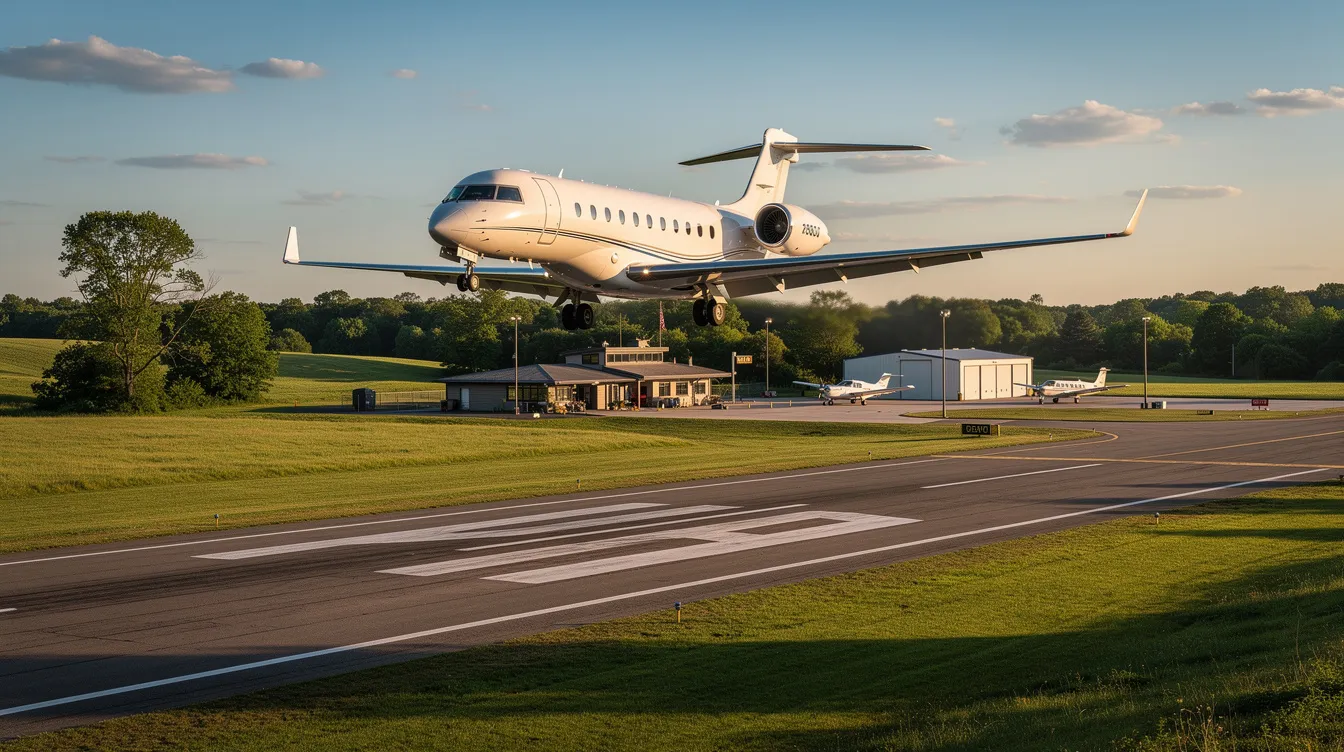
For years, flying United Airlines first class has represented the pinnacle of domestic air travel. Spacious seats, priority boarding, upgraded meals, and a quieter cabin have made it the go-to choice for frequent flyers who want more than the economy cabin can deliver. But the landscape is shifting.
Private jet access through Jet Card programs now competes directly for the same audience: executives, high-net-worth families, and business travelers who measure travel quality not just by seat comfort but by total time spent, schedule control, and privacy. The question is no longer simply whether United First is better than economy class-it's whether the entire commercial first class flight model still meets your needs.
Consider a typical New York–Los Angeles trip in 2025–2026. Flying United First from Newark means 60–90 minutes of ground transport, arriving 90 minutes early, navigating check-in and security, a six-hour flight, then 45–60 minutes to reach your final destination in LA. Total door-to-door: roughly nine to ten hours. With a BlackJet Jet Card departing from a nearby private terminal, the same journey compresses to about six to seven hours, saving you three to four hours of unproductive time. This article breaks down exactly where United First delivers, where it falls short, and when moving to private aviation becomes a strategic decision rather than a luxury indulgence.
What United First Class Actually Offers Today
United First Class is the airline's top cabin on most domestic routes and short-haul international flights within the U.S., Canada, and the Caribbean. It sits above premium plus and economy but below Polaris, which serves long-haul international flights. For domestic travelers, United First is the ceiling of commercial premium service on most flights.
Here's what the ticket includes:
Premier access includes priority check-in counters and premier access security lanes at major hubs
Two free checked bags per passenger, each up to 70 lbs, with priority baggage handling at arrival
One full-sized carry-on bag and one personal item
Wider first-class seats with more legroom-typically 37–40 inches of seat pitch and about 20–21 inches of width
Complimentary alcoholic beverages and free drinks throughout the flight
A pre-departure beverage before takeoff
Full meal service on flights over 900 miles; snacks on flights between 300 and 900 miles
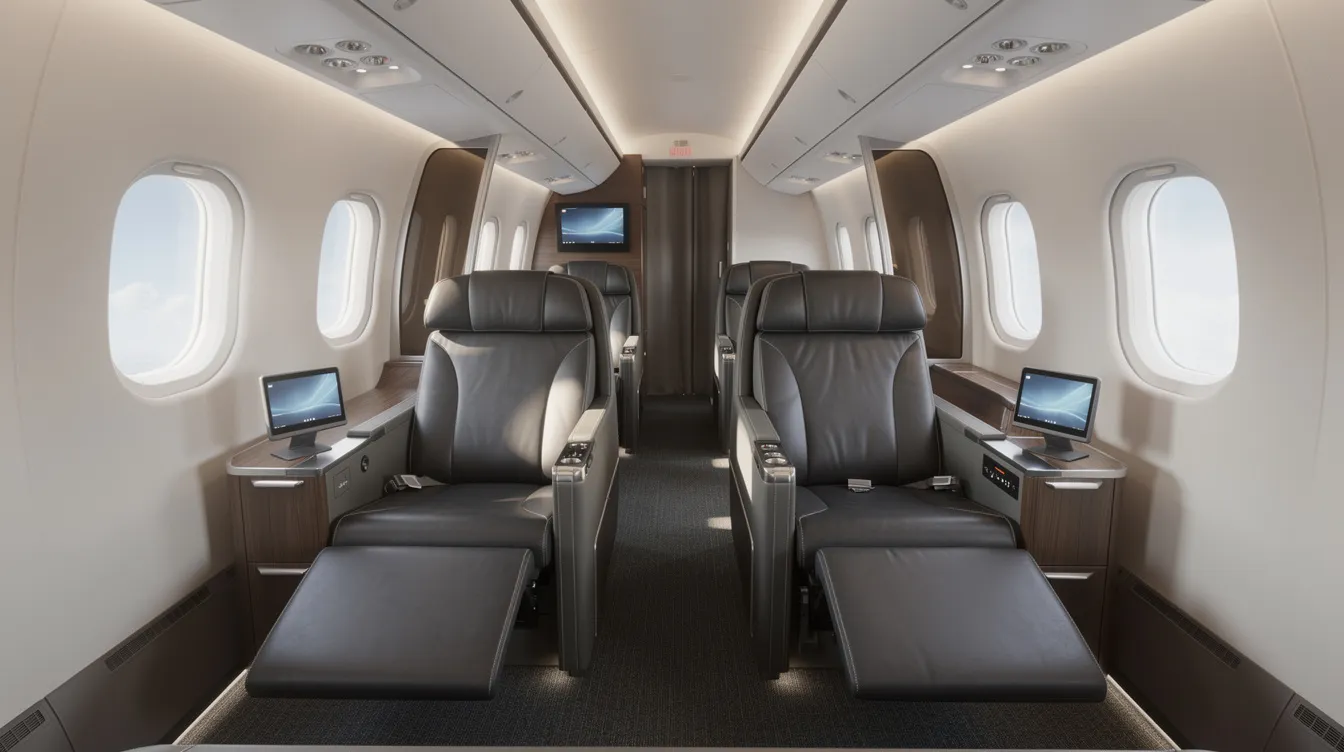
Typical United First Class seats are arranged in a 2–2 configuration on narrow-body aircraft like the Boeing 737 or Airbus A320 family, with roughly 12–16 First Class seats in the cabin. Routes such as Newark to San Francisco or Houston to Anchorage feature this standard domestic first-class layout. Critically, most United First seats do not lie flat; lie-flat seats are reserved primarily for Polaris on select aircraft and premium transcontinental flights. And domestic first class does not include automatic United Club access, which surprises many travelers purchasing first-class tickets for the first time.
United First Ground Experience: Priority, But Still Public
The ground experience in United First is a meaningful upgrade over United Economy, but it remains fundamentally a public-terminal operation. Passengers benefit from priority check-in at dedicated counters and dedicated security lanes at hubs like Newark, Chicago O'Hare, Houston Intercontinental, and San Francisco. United First passengers board in Group 1 for priority boarding, ensuring overhead bin space and a settled start.
Yet even with premier access, travelers still need to arrive 60–90 minutes before departure at major airports. Terminal navigation, parking or ride-share logistics, and gate transit consume time that priority services can only partially offset. United First does not include lounge access on domestic flights. Accessing the United Club lounge requires either a separate United Club membership or eligible international business class itineraries. The United Club itself is a paid perk, not a standard benefit of your domestic first-class seat.
The contrast with private aviation is stark. BlackJet members drive directly to private terminals-known as FBOs-and typically arrive just 20–30 minutes before departure. There are no crowds, no lengthy security queues, and no gate changes. According to BlackJet data, a private flight from New York to Miami takes roughly 2.5 hours door-to-door versus five or more hours via commercial first class, including check-in, security, and baggage claim.
The Onboard Experience in United First: Seats, Meals, and Entertainment
Many travelers upgrade to United First for a better first-class seat, improved class meals, and superior in-flight entertainment compared to the economy seat. The upgrade delivers tangible personal space improvements: each seat includes built-in power outlets, large tray tables, adjustable headrests, and noticeably more storage space than what's available in the economy cabin.
On newer aircraft type configurations-737 MAX and A321neo frames-mood lighting and refreshed cabin finishes elevate the atmosphere. In flight entertainment includes a large touchscreen and Bluetooth connectivity on many mainline aircraft, with streaming to a personal device via the united app available on older cabins. Wi-Fi is available for purchase, typically running $8–$10 per domestic flight, letting passengers watch movies or work en route.
Food and beverage service scales with route length. First-class customers receive complimentary alcoholic beverages onboard, and passengers can preorder meals starting five days before departure through the United app. Longer flights above 900 miles deliver a full meal service with hot entrées and dessert. Shorter hops offer snack baskets. First-class meals are generally better than those in economy, though the experience remains standardized-not tailored.
The limitation is shared space. Even in first class, you're seated with 12–20 other passengers, subject to PA announcements, flight attendant routines, and neighboring seatmates. For confidential work or true quiet, the cabin offers improvement but not isolation.
Where United First Ends and United Business / Polaris Begin
Frequent travelers often confuse United First, United Business, and United Polaris-three distinct premium products with different capabilities.
United First covers most domestic routes and some short-haul international flights. The class offers spacious seats, upgraded service, and priority perks, but seats are primarily recliners on most flights.
United Business appears on many U.S.–Latin America flights and select premium transcontinental routes. United Business offers lie-flat seats on premium transcontinental routes, with upgraded dining and sometimes better lounge access than standard domestic first class.
United Polaris is the highest level of service for long-haul flights, the airline's flagship international business class. United Polaris features fully lie-flat beds for enhanced comfort and private direct aisle access, with Saks Fifth Avenue bedding, Polaris lounges at hubs like Newark and Chicago, and multi-course dining. United Polaris is designed for long-haul international flights and offers lie-flat seating in a 1-2-1 reverse herringbone configuration.
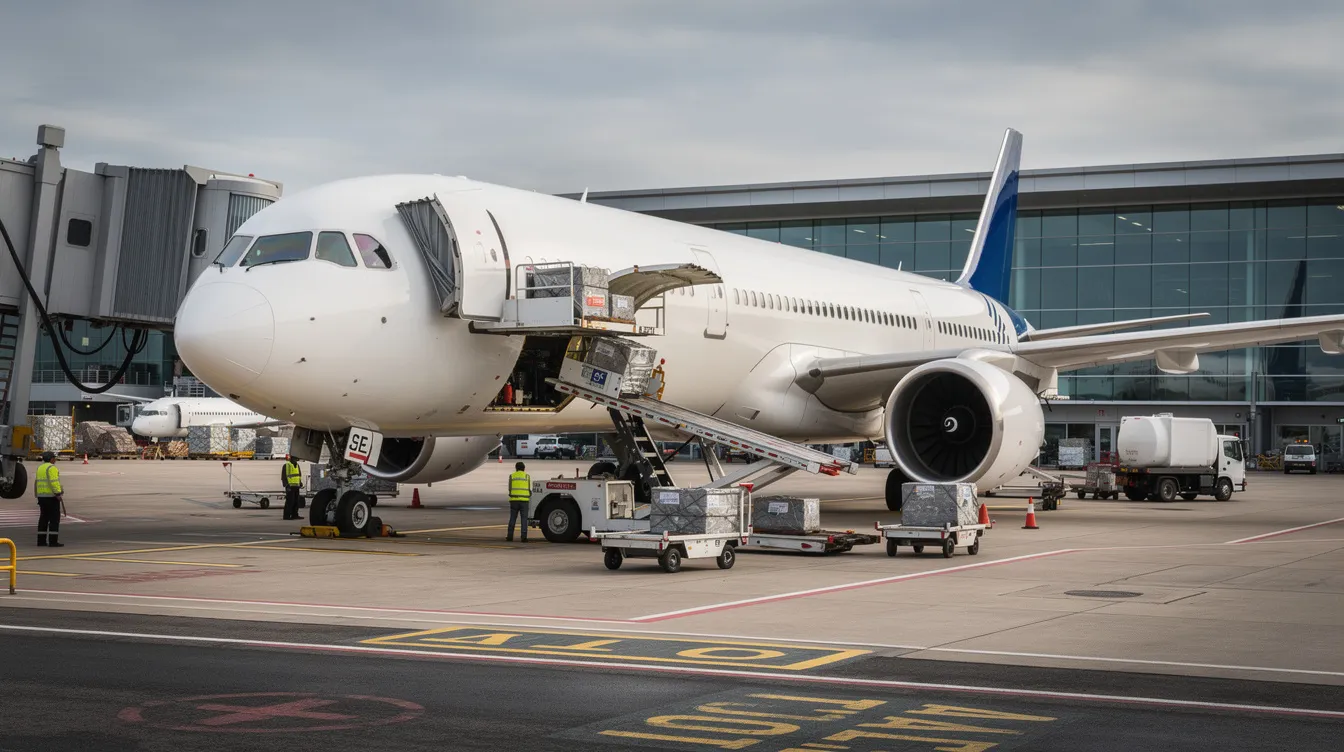
While Polaris approximates a "mini-suite" on select aircraft, a BlackJet Jet Card flight offers complete cabin privacy, a schedule built around the passenger, and consistent service regardless of route or aircraft type.
Baggage, Flexibility, and Upgrades on United First
United First Class allows two free checked bags up to 70 pounds each, with priority handling that typically means your bags arrive earlier at baggage claim. Passengers can also bring one full-sized carry-on bag and one personal item-standard across all classes but with more space to stow items in the first class overhead bins.
Flexibility has improved: United eliminated change fees on most premium domestic fares, including first-class fares. If you rebook to a cheaper class flight, you'll generally receive a travel credit. Cancellations on non-refundable tickets also yield future credits.
For upgrading to United First, several paths exist. You can use MileagePlus miles for United First upgrades, take advantage of complimentary Premier upgrades if you hold elite status, or purchase buy-up offers through the United app or at check-in. United first tickets can also be purchased directly when booking United through the website or app. A realistic example: upgrading a Chicago–San Diego class ticket at check-in might cost $120–$200 depending on cabin availability, though pricing varies by route and demand.
Limitations of United First for High-Value Travelers
United First is a notable step above United Economy, but it consistently falls short for executives and high-net-worth families whose travel demands extend beyond a better seat.
The constraints are structural. Fixed schedules mean you're locked into airline timetables. Delays, missed connections, and cancellations on many flights cannot be resolved quickly; recovery options are limited, and overnight stays become necessary. Boarding and deplaning at crowded hubs can consume 30–45 minutes alone. Even with a priority check, the airport experience at a major hub adds 90+ minutes of unproductive time.
The first-class seat, while larger than an economy seat with more space and pitch, remains a recliner on most domestic flights. United first class offers lie-flat seats on select aircraft-primarily Polaris-configured planes on transcontinental flights-but the standard domestic product does not include beds. You're still sharing the cabin with other passengers and contending with interruptions.
Privacy and productivity suffer. Confidential phone calls are impractical. Wi-Fi reliability varies. Service consistency on class meals depends on route length and aircraft type. For a big difference in travel quality, many high-value travelers find themselves looking beyond what even the best airlines' first-class product can deliver.
How Private Jets Reframe the "First Class Flight"
For many BlackJet clients, flying first class on a commercial carrier was once the top aspiration. Now private jet access has become the new baseline.
The differences start on the ground: no TSA lines, no terminal crowds, departure times aligned to your schedule. The aircraft waits for you-not the reverse. And routing flexibility means flying into secondary airports closer to your final destination: Teterboro instead of Newark, Van Nuys instead of LAX.
Onboard, the experience is another category entirely. True cabin privacy, configurable seating-club four arrangements, conference tables, divans-and often lie flat options even on midsize jets. Catering is custom-specified, not standardized class meals.
Consider a CEO based near Teterboro who needs to attend a same-day board meeting in Austin. A commercial United flight requires a connection, rigid departure windows, and likely an overnight hotel. A private jet departs the nearby FBO, flies direct, and returns the same evening. A two-day commercial itinerary becomes one efficient day-with hours of productive meeting time preserved.
Inside the BlackJet Jet Card: Structure, Safety, and Sustainability
BlackJet's Jet Card model offers an alternative to both aircraft ownership and relying solely on commercial first class or business class for premium travel.
The structure is straightforward: prepaid blocks of 25 hours or 50 hours at fixed hourly rates across multiple cabin categories-light, midsize, super-midsize, and large. No ownership obligations, no aircraft management headaches, and guaranteed availability windows typically within 24–48 hours.
Safety is non-negotiable. BlackJet operates a proprietary certification program requiring every partner operator to hold third-party safety audit credentials such as ARGUS Gold or Platinum, Wyvern Wingman, and IS-BAO Stage 2 or 3. Less than half of U.S. charter-certified operators meet this standard.
On sustainability, every BlackJet flight is carbon-neutral by default through verified offset programs aligned with the Gold Standard and Verified Carbon Standard-at no extra cost to members. Starting in 2026, BlackJet is also introducing Sustainable Aviation Fuel at select hubs to reduce direct emissions.
The technology layer ties it together: 24/7 digital booking via mobile and web, transparent pricing before confirmation, real-time flight updates, and dedicated flight advisor support.
United First vs BlackJet Jet Card: Time, Cost, and Control
This is the central comparison for readers who know United's premium cabins intimately and are evaluating whether private access delivers measurable returns.
Time: Skipping check-in lines, TSA, boarding queues, and baggage carousels saves 1.5–3 hours per trip versus a United First Class flight through a major hub. Over 20 annual trips, that's 30–60 hours reclaimed.
Cost: A first-class ticket from New York to Los Angeles runs roughly $1,200–$2,500 one way. A private jet hourly rate for a midsize aircraft typically ranges from $5,000–$8,000 per flight hour. The per-flight gap is real-but Jet Card members offset it by eliminating hotel nights, reducing unproductive hours, and consolidating team travel onto a single aircraft.
Control: Commercial schedules are fixed. Private jets adapt. Departure times align to meetings. Secondary airports cut ground transport. Itineraries flex in real time.
A concrete example: three executives flying from New York to Dallas to Houston and back to New York within 36 hours. On United First, that's six flight segments, possible connections, two hotel nights, and roughly $12,000–$18,000 in combined tickets, hotels, and ground transport. On a single BlackJet itinerary with direct legs, the team travels together, completes both meetings in one day, and returns home-often at comparable total cost when factoring in eliminated lodging and recovered productivity.
Using United First and BlackJet Together: When Each Makes Sense
This isn't about abandoning United entirely. Many BlackJet members maintain United miles, hold elite status, and select United when the fit is right.
When United First or Polaris works well: Solo leisure travel on well-served domestic routes, international flights where Polaris delivers lie-flat beds and lounge access, or trips where upgrading with United miles makes financial sense.
When BlackJet delivers more value: Multi-city itineraries in a single day, destinations with poor commercial connections, last-minute trips when first-class fares spike, or group travel with four to eight people where a single private aircraft replaces multiple commercial tickets.
Think in terms of a blended strategy:
Monthly board meetings across three cities → BlackJet
Weekend family ski trip to Aspen with gear → BlackJet
Routine solo flight from Chicago to New York on a Tuesday morning → United First
Investor roadshow hitting four cities in two days → BlackJet
The smartest travelers use Jet Card hours for mission-critical flights and maintain commercial account opening and status for routine routes where the schedule already fits.
FAQs: United First vs Private Jet Travel with BlackJet
Is United First class worth it for a 2-hour flight compared to chartering a private jet?
For flights of roughly 500–900 miles, United First provides meaningful comfort upgrades at a fraction of the private jet cost. If schedule flexibility and privacy aren't critical, it's often the pragmatic choice. But for executives who need to maximize every hour-or who value skipping terminal time on both ends-a light jet can make even short hops measurably more productive.
How does baggage work on private jets versus United First?
United First Class provides two complimentary checked bags up to 70 pounds each, along with an allowance for one carry-on and one personal item. Private jets offer far more flexibility-specialized equipment, oversized luggage, and heavier loads are standard without additional fees, subject to the aircraft's weight limits.
Can I earn or use airline miles if I switch many trips to private aviation?
Flying United continues to accrue MileagePlus miles. Private jet travel via Jet Cards generally does not earn airline miles unless the operator has a specific partnership. Switching most flights to private reduces mileage accumulation and may affect status qualification.
How safe are private jets compared to big commercial aircraft?
Commercial airlines operate under rigorous Part 121 oversight. Private jets fly under Part 135, which has similar safety frameworks. The variable is operator quality. BlackJet partners exclusively with operators holding ARGUS, Wyvern, or IS-BAO credentials-the safest private jet operators in the industry.
How do BlackJet's carbon-neutral flights actually work?
BlackJet calculates emissions per flight based on distance, aircraft fuel burn, and weight. Equivalent offset credits are purchased through Gold Standard and Verified Carbon Standard programs, funding verified environmental projects. This is included at no extra cost to Jet Card members.
What aircraft categories can I access with a BlackJet Jet Card?
Jet Card members access multiple cabin types: light jets for regional hops (4–6 passengers), midsize jets for coast-to-coast travel (6–8 passengers), super-midsize for larger groups or longer range, and large-cabin aircraft for transcontinental or international missions. Rates are locked in by category.
How to Decide If It's Time to Go Beyond United First
United First remains a strong premium product-particularly on well-served domestic routes where American Airlines and other carriers compete aggressively, keeping class offers sharp. But its limitations in schedule control, privacy, and productivity are material for travelers whose time carries a high dollar value.
Audit your last 10–20 trips. Tally the hours spent in lines, delays, overnight stays, and lost work time. Compare that against the cost of a Jet Card on those same routes. If the gap between what you're spending in time and what you're gaining in comfort no longer makes sense, the decision becomes clear.
The criteria are straightforward: annual trip count, typical party size, need for confidentiality, frequency of tight connections, and the value of same-day returns instead of overnight stays. If your travel profile consistently exceeds what commercial first class and business class can deliver, private aviation isn't a luxury-it's an operational upgrade.
Next Steps: Explore Jet Card Membership with BlackJet
If United First has been your ceiling, BlackJet Jet Card membership offers the next floor. Request a sample itinerary comparing one of your regular routes-a typical first-class flight you take monthly-with a tailored BlackJet alternative. See the time savings, cost structure, and experience side by side.
Every BlackJet journey is built on the same pillars: rigorous safety certification, carbon-neutral flights at no additional cost, 24/7 digital booking and dedicated flight support, and flexible access across light, midsize, super-midsize, and large aircraft classes. Discover how BlackJet can reshape the way you travel-not as an extravagance, but as the strategic advantage your schedule demands.
Conclusion: Elevate Your Travel Beyond United First
United First Class remains a solid choice for travelers seeking enhanced comfort and priority services within the commercial aviation framework. However, for those whose travel demands extend beyond spacious seats and upgraded meals—where time savings, privacy, flexibility, and personalized service are paramount—private jet access through BlackJet's Jet Card programs offers a transformative alternative. By reclaiming hours lost to airport procedures, customizing every aspect of the journey, and flying with uncompromising safety and sustainability standards, discerning travelers turn private aviation from luxury into a strategic asset. Whether balancing multi-city business trips or seeking seamless family travel, the decision to move beyond United First is about optimizing every minute of your journey. Discover the difference BlackJet can make and elevate your travel experience to new heights.


 Sign up with google
 Sign up with Apple