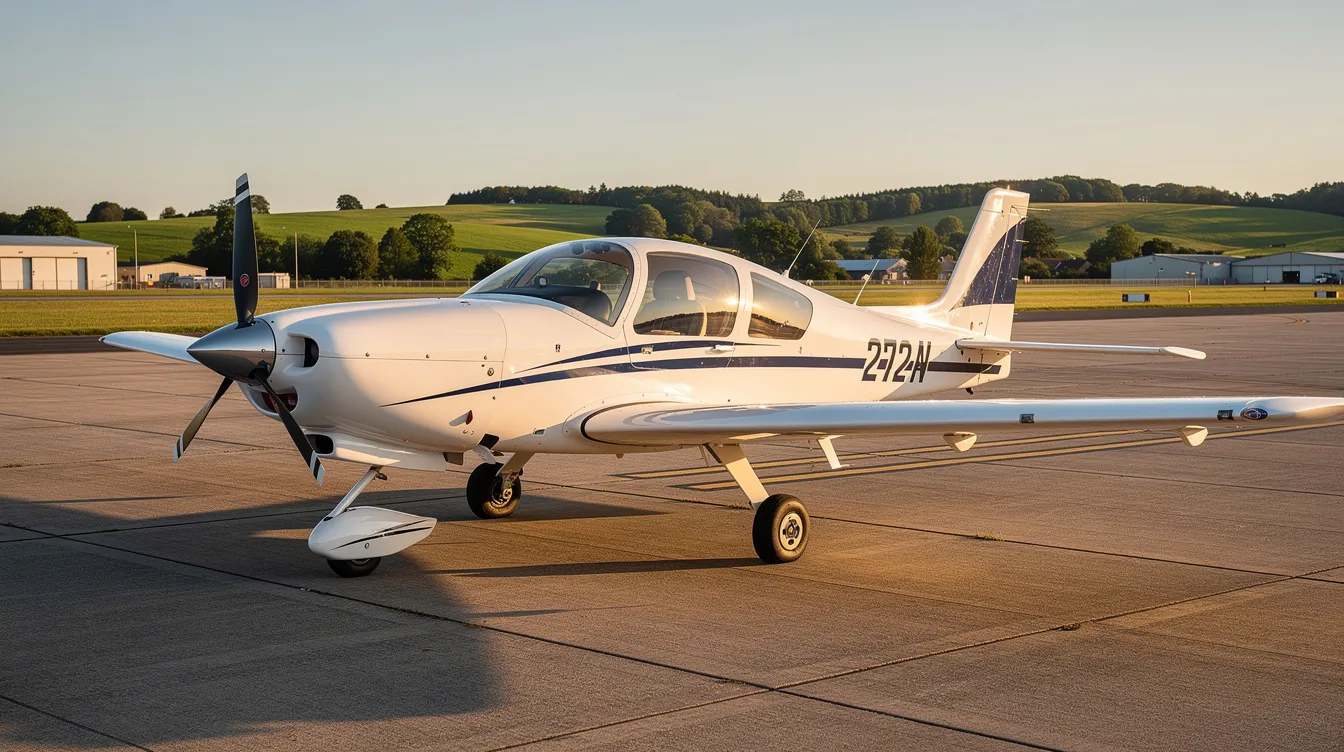
Single-engine low-wing aircraft are a cornerstone of general aviation, offering a unique blend of performance, ownership flexibility, and a practical pathway for pilots and travelers transitioning from flight training to private jet travel. This article explores the full scope of single-engine low-wing aircraft: their performance capabilities, the realities of ownership, and the decision points for stepping up to private jets.
The target audience includes owner pilots seeking to maximize their investment, business travelers looking for efficient regional travel, and first-time aircraft owners evaluating their entry into private aviation. Understanding single-engine low-wing aircraft matters because these airplanes serve as a practical bridge between basic flight training platforms and the world of turbine-powered private aviation. They combine the operational simplicity of a single powerplant with aerodynamic efficiency, delivering cruise speeds from 60 to 237 knots depending on the model. For many, they represent the most accessible and cost-effective way to experience point-to-point private travel, while also providing a foundation for those who may later transition to larger, crewed aircraft.
Executive Overview: Why Single Engine Low Wing Aircraft Matter in 2026
Single-engine aircraft account for most general aviation flight hours in the U.S., and the high-performance piston segment has never been more capable. Modern single-engine low-wing aircraft like the Cirrus SR22T, Cessna TTx, and Diamond DA50 RG now deliver performance metrics that overlap with entry-level turboprops on regional routes.
The Cirrus SR22T has a cruise speed of approximately 213 knots and a range exceeding 1,000 nautical miles, placing it within striking distance of turboprop territory for missions under 800 nm.
The Diamond DA50 RG offers roughly 750 nm of range on Jet A fuel, with a turbocharged engine burning about 10 gallons per hour at 60% power.
On a 500 nm business route, a direct flight in an SR22T takes roughly 2.5 hours gate-to-gate. The same trip on a commercial airline, factoring in security lines, boarding, connections, and ground transport, stretches to 4-5 hours.
Low-wing aircraft are favored for personal and recreational flying due to efficient cruise speeds, but they also serve as strategic tools for regional business travel where schedule control matters more than cabin size.
Single engine planes are easier to fly than multi-engine aircraft and carry lower operational costs, making them accessible to a wider range of pilots and travelers, especially those comparing the cheapest new plane and other affordable entry options.
Many BlackJet clients began as piston single owners before transitioning to premium private jet card access for longer legs, larger passenger counts, or weather-demanding routes where professional crews and pressurized cabins become the right choice.
What Defines a Single Engine Low Wing Aircraft?
A single-engine low-wing aircraft is powered by one engine, with the wings attached to the lower portion of the fuselage. The aircraft type can feature fixed or retractable gear, and airframes range from all-metal construction to advanced composites.
Low wing design creates less aerodynamic interference between the wing and fuselage compared to high-wing configurations, resulting in a clean aerodynamic design that supports efficient cruising performance and lower drag.
The configuration influences visibility and overall aircraft layout: low-wing aircraft provide exceptional upward and peripheral visibility for the pilot, though visibility is obstructed directly below the aircraft due to the wing position. This reduced downward visibility can be a disadvantage during certain maneuvers.
Ground effect during landing flare is more pronounced in low-wing aircraft, producing smooth landings that many pilots appreciate.
Wing-mounted fuel tanks on low-wing aircraft allow for easier refueling from the ground, though many low-wing aircraft require fuel pumps for fuel management since gravity alone does not feed fuel to the engine.
Single-engine low-wing aircraft designs often allow for easier passenger boarding, with the wing providing a natural step surface.
Cabin layouts range from 2-seat trainers to 4-6 seat touring platforms. Typical empty weight for modern composite and metal high performance aircraft falls between 1,700 and 2,600 lbs for fixed-gear models, rising above 3,000 lbs for retractable gear designs like the DA50 RG.
Typical missions include personal and business cross-country travel up to 1,200 nm, IFR operations, and light corporate use with 2-4 passengers plus baggage. Most cirrus aircraft and modern high performance piston aircraft fit this layout, and they sit alongside many of the cheapest private aircraft options for budget-conscious flyers.
Key Performance Metrics: Cruise Speed, Range, Fuel Capacity, and Payload
Four metrics govern what a single engine piston aircraft can do on any given mission: cruise speed, range, fuel capacity, and useful load.
Cruise speed determines trip duration. Single engine piston planes typically cruise at speeds between 110 and 220 knots, though the fastest models push above 235 KTAS. Typical cruise speeds for training aircraft like the Cessna 172 sit at 120-130 knots; a Cirrus SR22T at 213 knots covers the same distance in roughly 40% less time.
Range with reserves dictates whether a fuel stop is necessary. Single-engine piston aircraft can have ranges up to 1,100 nautical miles. The SR22T, for instance, delivers about 1,021 nm at 55% power with IFR reserves.
Fuel capacity for larger low-wing piston aircraft typically falls between 70 and 120 usable gallons. The SR22T carries about 81-90 usable gallons of avgas; the DA50 RG holds approximately 49 usable gallons of Jet A.
Useful load is what remains for passengers, baggage, and fuel after subtracting empty weight from maximum gross weight. The Cirrus SR22T carries about 1,238 lbs of useful load. On a 500 nm mission requiring roughly 60 gallons of fuel (~360 lbs), that leaves approximately 878 lbs for pilot, passengers, and baggage, enough for three adults and moderate luggage, which compares favorably with many of the best options for the cheapest plane in general aviation.
The average total time of single-engine piston aircraft in the fleet is 1,901 hours, a figure that reflects how actively these airframes serve their owners across training, personal, and business missions.
For executives accustomed to private jets, these performance metrics answer a simple question: can a piston single cover a regional route nonstop with the passenger capacity and cargo capacity the trip requires?
Flagship Low Wing Models: Cirrus SR22T, Cessna TTx, and Diamond DA50 RG
Three models define the modern benchmark for single engine low wing performance and technology. Each serves a distinct mission profile, and together they illustrate the range of what high performance piston aircraft deliver in 2026.
Cirrus SR22T: Powered by a turbocharged Continental TSIO-550-K producing 315 hp, the SR22T reaches a higher cruise speed of 213 KTAS with a range just over 1,000 nm. Cirrus aircraft feature the CAPS parachute system, a whole-airframe recovery chute that deploys in emergencies, and Perspective Touch+ avionics with synthetic vision, high resolution displays, spectra wingtip lighting, and touchscreen controllers. The G7+ models add the Cirrus Safe Return Autoland, which can autonomously land the aircraft if the pilot becomes incapacitated. The SR22T dominates owner-flown IFR business travel in North America.
Cessna TTx (Corvalis TTx): A composite low wing design powered by the turbocharged TSIO-550-C (~310 hp), the Cessna TTx can reach cruise speeds of 235 knots, making it one of the fastest fixed-gear piston singles ever built. Range with reserves sits near 830 nm with a fuel capacity of about 102 usable gallons. When comparing these two aircraft, similar published cruise numbers do not tell the full story without factoring in altitude and mission profile. Though production ended, demand on the used market remains strong among speed-focused pilots. Its useful load with full fuel is approximately 458 lbs, limiting passenger capacity on longer legs.
Diamond DA50 RG: The Diamond DA50 RG entered the U.S. market in 2024 with retractable gear and a Jet A-burning Continental CD-300 diesel turbocharged engine with FADEC. Cruise sits around 180-181 KTAS at maximum continuous power, with impressive fuel efficiency of roughly 8-10 GPH depending on power setting. The DA50 RG's useful load reaches approximately 1,232 lbs, and its five-seat cabin with enhanced comfort rivals small turboprops. Garmin G1000 NXi avionics enhance safety with active traffic displays, flight stream connectivity, and global connect capability.
Roles: The SR22T suits most pilots seeking IFR cross-country capability with a strong safety net. The TTx appeals to pilots who prioritize greater speed above all. The DA50 RG draws efficiency-conscious owners, European operators, and those seeking Jet A availability.
Other Notable Single Engine Low Wing Aircraft in 2026
Beyond the three flagships, several single engine planes fill important roles across general aviation.
Beechcraft Bonanza G36: A refined six-seat tourer with legendary durability, cruising at approximately 175-180 KTAS on a 300 hp IO-550B. Ferry range reaches about 920 nm. The Bonanza has been in continuous production longer than any other aircraft in history, and its useful load of roughly 1,197 lbs supports genuine six-seat utility.
Piper M350: The only pressurized aircraft in this class still in production, with a pressurized cabin altitude that keeps occupants comfortable at its 25,000-foot ceiling. The Piper M350 has a range of 1,343 nautical miles at a cruise speed near 213 KTAS. Annual operating costs at 200 hours run approximately $85,000. For executives who need cabin features approaching a turboprop, the M350 bridges that gap and sits alongside other top affordable private planes for aspiring owners.
Mooney M20V Acclaim Ultra: The Mooney Acclaim Ultra has a cruise speed of approximately 242 knots, making it the fastest piston single available. Higher insurance premiums and maintenance scrutiny reflect the demands this aircraft places on pilot proficiency, but for speed-focused flyers, nothing else in the piston performance category matches it.
Diamond DA40: A four-seat low wing trainer and touring aircraft with typical cruise speeds of 150-165 KTAS. Many flight schools use the DA40 for training operations, and it serves as a common stepping stone before pilots transition into high performance aircraft.
Piper Archer: Modest performance at 120-130 KTAS cruise, but low acquisition and operating costs make it a staple at flight schools and a useful reference point when comparing the cheapest single engine plane options for new pilots and other best cheapest planes for every budget. Single-engine piston aircraft are commonly used for flight training, and the Archer remains among the most popular platforms for building hours.
Low-wing aircraft are commonly used for business travel and for aerial photography and surveying due to favorable visibility characteristics. The low wing geometry also supports ground effect behavior training and go-around handling practice.
Avionics, ADS-B, and Safety Technology in Modern Low Wing Singles
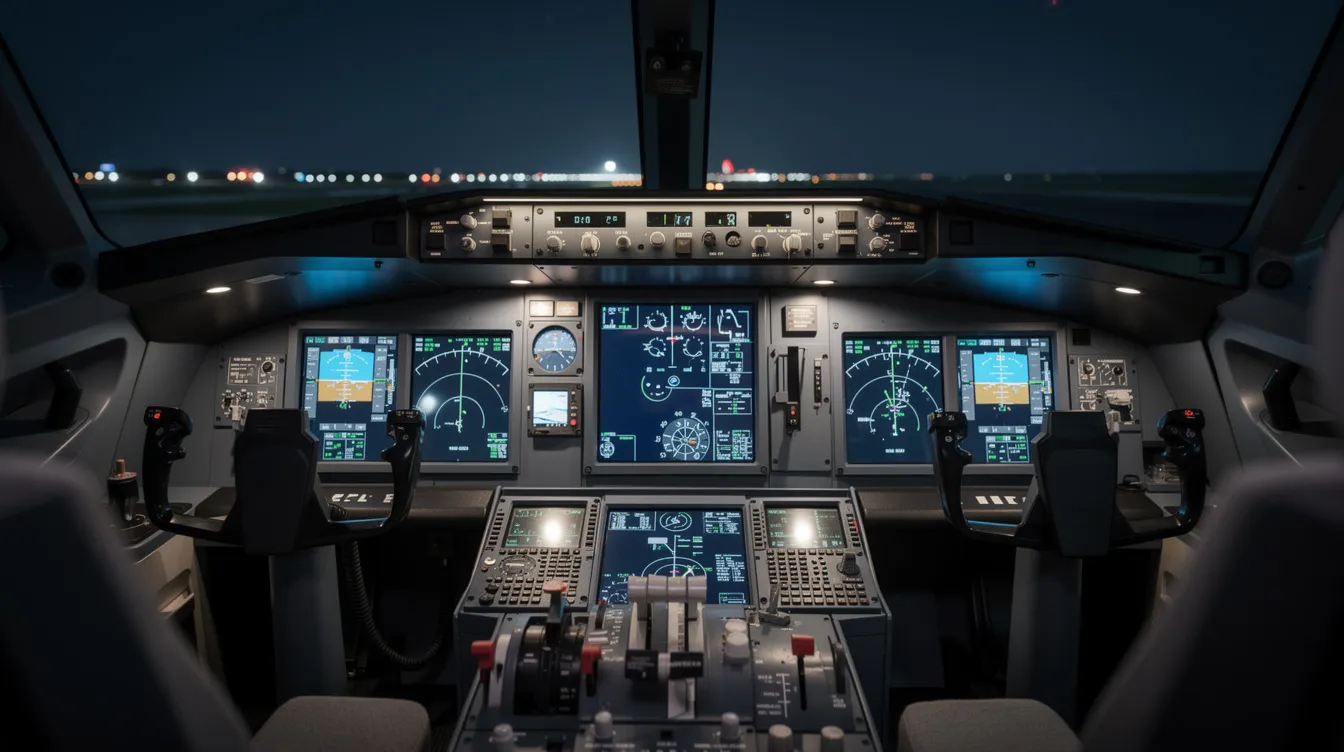
ADS-B Out compliance became mandatory in 2020 for U.S. airspace, reshaping the avionics baseline across all single engine aircraft. Older low-wing airframes that lacked ADS-B had to retrofit; most new production aircraft now include both ADS-B Out and ADS-B In for traffic and weather awareness as standard equipment.
Modern avionics suites include the Garmin G1000 NXi (standard in the Diamond DA40, DA50 RG, and Piper M350), Garmin Perspective+ in Cirrus aircraft, and the G2000 in the Cessna TTx. These platforms provide synthetic vision technology, WAAS GPS approaches, integrated autopilots with envelope protection, and terrain and traffic warning systems.
Modern single-engine aircraft often include synthetic vision technology that displays terrain, obstacles, and flight path markers on high resolution displays, replicating much of the situational awareness found in light jet cockpits.
Safety-specific systems include Electronic Stability Protection (ESP), underspeed protection, and hypoxia detection. The CAPS parachute in Cirrus aircraft adds an additional safety layer found in no other production piston single. The Cirrus Safe Return Autoland can autonomously land the aircraft in the event of pilot incapacitation.
A single-engine aircraft means no engine redundancy in case of failure. This reality makes cutting edge features like envelope protection, automated descent modes, and active traffic awareness critical risk mitigators rather than luxuries.
These avionics bring cockpit situational awareness close to what light jets offer, easing the transition for owners who later move into professionally crewed aircraft through programs like BlackJet's Jet Card.
Ownership Costs vs Access Models: Buy, Rent, or Fly by Jet Card?
Owning a high performance piston low wing aircraft involves a layered cost structure that extends well beyond aircraft purchases.
Acquisition: A new Cirrus SR22T lists at approximately $1,069,900 in 2026. The DA50 RG runs about $1.15-1.25 million. A near-new Piper M350 lists around $1.19 million. Late-model used examples start around $400,000-$650,000 depending on condition and maintenance history.
Annual fixed costs: Hangar fees typically cost $3,000 to $8,000 annually. Insurance premiums for single-engine planes can exceed $8,000, varying by pilot experience and aircraft type. Avionics subscriptions, annual inspections, and database updates add further fixed expenses. Annual ownership costs range from $20,000 to $40,000+ before variable expenses.
Variable costs: Routine maintenance costs range from $3,000 to $10,000 per year. Engine overhaul reserves, which fund the eventual $30,000-$50,000 engine rebuild, typically cost $3,000 to $6,000 annually in engine reserves set aside per flying hour. Fuel at 17 GPH and $7+ per gallon adds roughly $120 per hour of flight, a useful benchmark when you later evaluate how much it costs to charter a small plane instead of owning.
Total ownership: For an SR22T flown 100 hours per year, total operating costs before financing run approximately $44,000 annually. Adding financing on a used airframe pushes the figure toward $98,000 per year, a figure that invites comparison with the best small private aircraft for different mission profiles and with the broader private jet price list across categories and access models.
Rental or club access: For pilots flying 30-60 hours per year, renting consolidates maintenance and insurance into a wet hourly rate, but limits aircraft choice and immediate delivery flexibility.
BlackJet Jet Card: For travelers whose missions outgrow single engine piston performance, Jet Card programs eliminate capital tie-up, shift maintenance and crew management to professionals, and provide access to multiple cabin classes. Understanding jet card cost per hour and comparing the best jet cards for frequent flyers helps quantify when time sensitivity and passenger comfort make the economics of prepaid jet hours outperform ownership.
When a Single Engine Low Wing Makes Sense vs Turboprops and Private Jets
The ideal envelope for a high-performance piston single centers on 2-4 passengers, 300-800 nm legs, flexible timing, and access to smaller airports with IFR infrastructure.
Single-engine aircraft have simpler operational systems than multi-engine planes, and single-engine planes typically consume less fuel than multi-engine alternatives. On a 500 nm leg like Dallas to Denver, a Cirrus SR22T at 213 KTAS completes the trip in about 2.5 hours, burning roughly 45 gallons. The same route in a single-engine turboprop like a TBM 960 takes under 2 hours at 330 KTAS but burns 50+ gallons of Jet A at higher cost.
Pressurized aircraft like the Piper M350 handle high-altitude routes over mountainous terrain (e.g., crossing the Rockies) where unpressurized piston singles face turbulence and oxygen limitations, foreshadowing some of the best aircraft of 2026 and their advanced capabilities.
For a route like London to Zurich (~500 nm), a piston single works in fair weather, but Alpine terrain, icing conditions, and passenger comfort in an unpressurized cabin argue for a turboprop or light jet, especially when you consider today’s top affordable private planes across jets and single engines and the range of small private jets that offer flexible luxury travel.
The strategic decision: flying yourself in a high performance aircraft offers control and a rewarding flying experience. Delegating to professional crews via a Jet Card preserves attention for business and family. Single engine planes are generally more fuel-efficient than multi-engine aircraft, but when climb performance, pressurization, or passenger capacity demands increase, stepping up is the rational move.
Flight Training and Transition: From Flight Schools to High Performance Low Wing Aircraft
Many pilots start in high-wing trainers like the Cessna 172, which typically cruises at 120-130 knots, or entry-level low-wing aircraft like the Piper Archer and Diamond DA20/DA40 at flight schools.
Transitioning to high performance aircraft (over 200 hp) requires additional endorsements under FAA regulations. Complex aircraft endorsements cover retractable gear and controllable-pitch propellers; pressurized aircraft like the M350 require additional training on cabin pressurization systems and high-altitude operations.
Structured transition training programs reduce risk and lower insurance premiums. Cirrus offers embark transition training for pilots new to the SR22T, covering turbo operation, oxygen use, CAPS deployment, and automation management. Similar programs exist for the Mooney Acclaim Ultra and Cessna TTx, complementing the pathways described for cheap light aircraft that support budget-friendly flying adventures.
Training operations at flight schools increasingly use low-wing single engine piston airplanes because the low wing design teaches ground effect management, go-around techniques, and crosswind handling that transfer directly to faster, heavier models.
Many BlackJet clients are former owner pilots who retain aviation literacy but prefer outsourcing flight operations to professional crews for time-critical trips, sometimes starting with simply buying a seat on a private jet before moving into structured programs. The knowledge of performance metrics, aerodynamic efficiency, and operational simplicity earned through piston ownership makes them informed consumers of private jet services.
Sustainability and Efficiency: Fuel Burn, Engine Types, and Carbon Neutral Options
Single engine piston planes consume less fuel than multi-engine or turbine alternatives on a per-hour basis, but per-passenger-mile efficiency depends on load factor and mission distance, just as it does when comparing the cheapest private aircraft categories from single engines to light jets.
Case Studies: How Owners and Travelers Actually Use Low Wing Singles
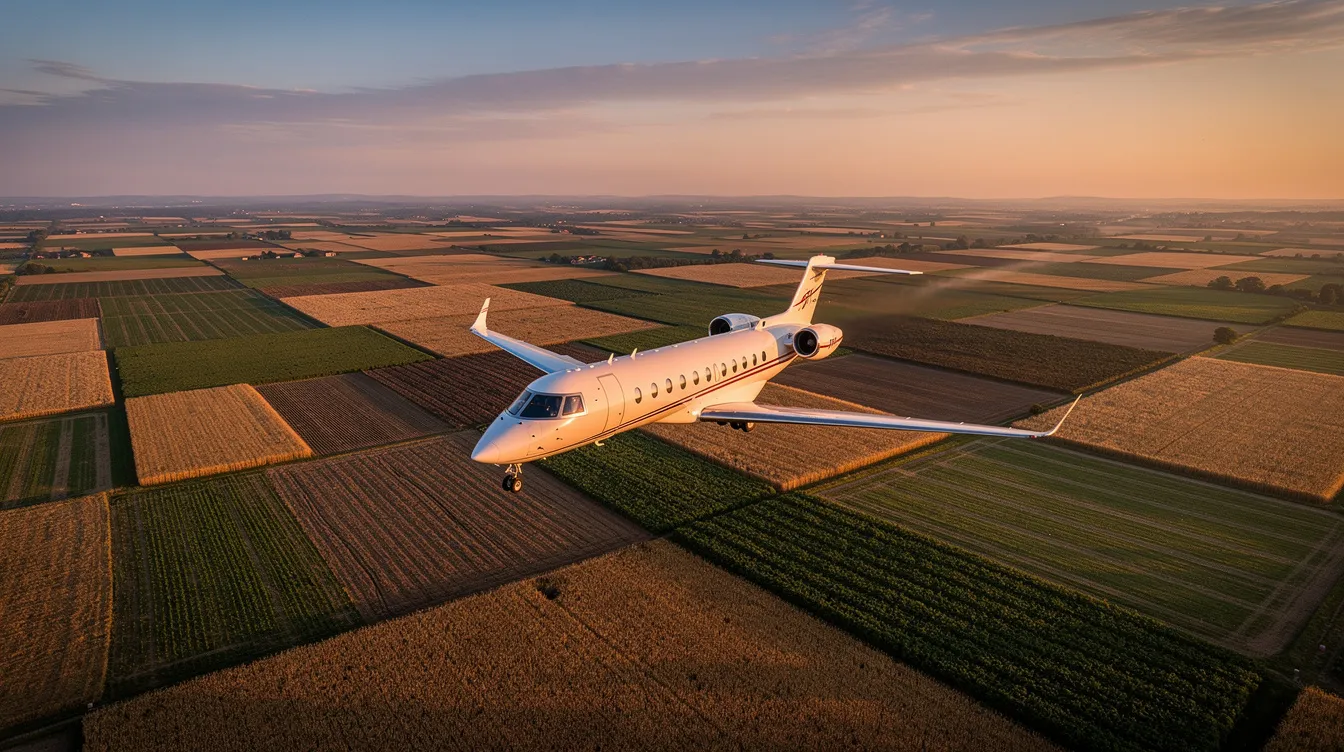
The regional entrepreneur: A Dallas-based business owner flies an SR22T on weekly 500 nm trips to clients in Chicago and Kansas City. Departing at dawn with two associates, the 2.5-hour flight replaces a 5-hour commercial itinerary. With full fuel (~540 lbs), the remaining useful load supports three adults and carry-on luggage. Twice per winter, convective weather forces a diversion or cancellation, reminding the owner of the limits of single engine piston travel.
The family weekender: A couple with two children uses a Diamond DA40 for 200-300 nm weekend trips from their home airport in Virginia to coastal destinations. Passenger capacity with baggage presses close to the useful load limit, occasionally requiring a fuel stop to stay within weight margins. The efficient performance of the DA40 keeps fuel costs low, and the Garmin G1000 NXi panel provides synthetic vision for IFR departures.
The former owner, now Jet Card member: A former SR22T owner based in Miami sold his aircraft after five years. His flight hours had dropped to 40 per year, but his travel needs had expanded to 1,200 nm legs (Miami to New York, Miami to Dallas) with four passengers. He now uses a BlackJet 25-hour Jet Card for time-sensitive trips, leveraging the flexibility of the BlackJet 25+ Hour Jet Card program and insights from a detailed 50 hour jet card cost guide, retaining his flying experience and aviation literacy while eliminating the ownership costs, weather-risk management, and scheduling constraints of piston single ownership.
Frequently Asked Questions About Single Engine Low Wing Aircraft
Are single engine low wing aircraft safe for business and family travel?
Most single engine piston accidents trace to pilot decision-making (fuel exhaustion, continued VFR into IMC, loss of control) rather than mechanical failure. Modern training, weather tools, and avionics have reduced accident rates across the category. Low wing design contributes to crashworthiness through energy-absorbing structures beneath the cabin. Cirrus aircraft add CAPS, which has saved over 250 lives since its introduction. For travelers who prefer professional crews, BlackJet Jet Card programs eliminate pilot workload and decision-making risk entirely, functioning as a structured alternative to simply chartering a small plane on a trip-by-trip basis.
How do ownership costs of a Cirrus SR22T or Cessna TTx compare to flying by Jet Card?
Over five years at 75-100 hours per year, SR22T ownership costs (acquisition, depreciation, hangar, insurance, fuel, maintenance, engine reserves) total roughly $350,000-$490,000 depending on financing. A Jet Card with predictable hourly rates and zero capital expenditure replaces this with transparent per-hour pricing, no depreciation risk, and no maintenance scheduling burden. For executives whose primary objective is saved time rather than flying as a hobby, Jet Card programs often deliver superior ROI and less operational risk, particularly at commitments like a 100 hour jet card cost level. See a full breakdown of Jet Card pricing structures, including comparisons of NetJets jet card cost and program design and detailed Flexjet jet card cost and options.
What avionics and ADS-B upgrades should I prioritize on older low wing aircraft?
Priorities for older airframes: ADS-B Out compliance (mandatory since 2020), WAAS GPS for RNAV approaches, a modern glass panel such as the Garmin G500TXi or G3X with high resolution displays, and an IFR-capable autopilot with envelope protection. Budget $15,000-$60,000 depending on scope, and plan for 2-4 weeks of downtime. These upgrades close the gap between older airframes and modern high performance piston aircraft in both true airspeed management and safety, often making even cheap light aircraft viable for serious cross-country flying.
Conclusion: From Single Engine Low Wing to Full-Spectrum Private Aviation with BlackJet
Single engine low wing aircraft deliver a compelling blend of cruise speed, fuel efficiency, and pilot control for regional travel. They remain the most accessible path to point-to-point private aviation for owner pilots, with piston performance that covers 300-800 nm routes at a fraction of turbine costs. As missions grow, some owners look to the best cheapest single pilot jets, evaluate 2 million dollar private jet options in the pre-owned and personal jet market, or even consider top private jets for sale under 10 million for expanded range and cabin comfort.
When legs stretch beyond 1,000 nm, when passenger counts exceed four, or when weather demands a pressurized cabin and professional crew, the calculus shifts. At that point, the same appreciation for performance metrics, significant payload capacity, and operational simplicity that made piston ownership rewarding translates directly into informed use of private jet access.
BlackJet Jet Card programs deliver speed, safety, sustainability, and scheduling freedom across multiple cabin classes, with no capital tie-up and carbon-neutral operations built into every flight. For those who know what it takes to fly, BlackJet offers what it takes to arrive, whether that means chartering the best private jet for 20 passengers for major business events, understanding private jet price dynamics in rupees for India-based operations, or exploring a premium UK private jet for sale with tailored acquisition support.
Explore BlackJet Jet Card membership and discover how refined, efficient private travel becomes your new standard.


 Sign up with google
 Sign up with Apple