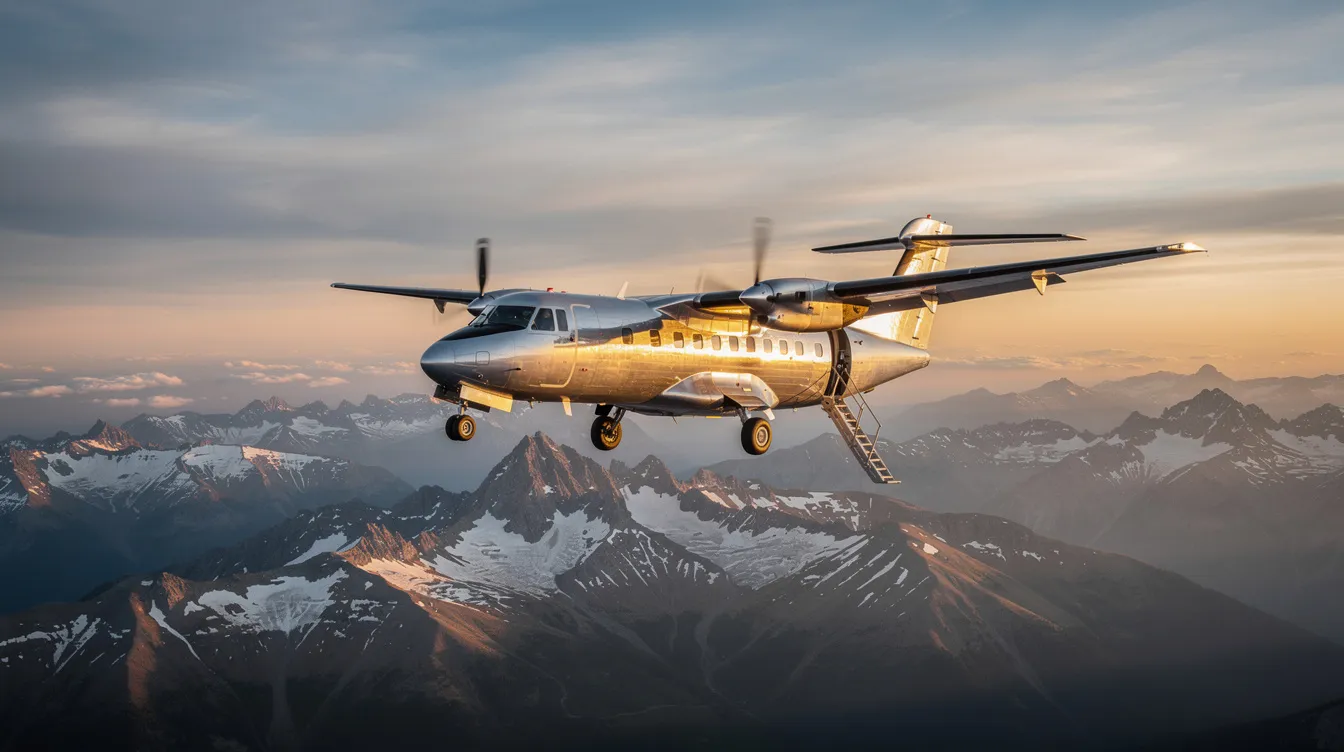
For discerning travelers who measure journeys in minutes saved and doors opened, the single-engine turboprop aircraft represents one of private aviation's most strategic assets. These high-performance machines combine jet technology with propeller efficiency, delivering access to airports that light jets simply cannot reach at a fraction of the hourly cost.
Why Single-Engine Turboprops Matter for High‑End Travelers
Consider a typical regional mission: New York (Teterboro) to Nashville, roughly 680 nautical miles. A commercial business class itinerary including connections, security, and ground transfers easily consumes five to six hours door-to-door. A single-engine turboprop like the Pilatus PC-12 NGX covers the same distance in approximately 2.5 hours of flight time, departing on your schedule from a private terminal minutes from Manhattan.
A light jet shaves perhaps 30 to 40 minutes off that airborne time, but often costs 40 to 60 percent more per hour and may require larger airports farther from your final destination. Single-engine turboprops typically have lower fuel burn than jets, consuming roughly 55 to 60 gallons per hour compared to 150 to 200 for many light jets. That difference compounds across dozens of annual trips into dramatically lower operating costs.
The key advantages extend beyond price. These aircraft deliver better short-field performance than jets, opening access to mountain strips, island runways, and regional airports that keep you closer to where you actually need to be. Single-engine turboprops are typically used for regional business travel and cargo transport, and their safety record, anchored by the legendary Pratt & Whitney PT6 engine family, inspires confidence across millions of fleet hours. At BlackJet, we select models like the pilatus pc 12 NGX and the TBM series into specific jet card categories where they deliver the best value and mission flexibility for our members.
What is a single-engine turboprop?
A single-engine turboprop is powered by a single gas turbine engine that drives a propeller through a reduction gearbox. Unlike multi-engine turboprops (such as the King Air) or pure jets, where exhaust thrust alone provides propulsion, the turboprop aircraft converts most of its power into propeller rotation, making it remarkably efficient at cruise speed ranges between 250 and 330 knots.
Modern turbine engines have fewer moving parts than traditional piston engines, increasing reliability and reducing maintenance complexity. Single-engine turboprops are easier to operate due to fewer systems to manage, and many are certified for single-pilot operations-a meaningful advantage for owner pilots and charter operators alike.
Popular models in the general aviation and private charter market include the Pilatus PC-12 NGX, the Daher TBM 960, the Piper M600 SLS (which features advanced flight control systems), and the emerging Beechcraft Denali. The Cessna Caravan 208B, with a range of about 964 nautical miles, and the Epic E1000 GX, which can reach a maximum cruise speed of 330 knots, round out the broader category. It is worth noting that the terms engine, turboprop, and turboprop aircraft are often used interchangeably in casual conversation, but technically the first refers to the powerplant and the second to the airplane itself. For a deeper look at how turboprop power shapes modern aviation, the distinction matters.
Key Advantages of Single-Engine Turboprops vs Light Jets
For trips between 300 and 1,500 nautical miles, high-net-worth travelers and corporate flight departments regularly weigh the same question: light jet or turboprop? Here is how the comparison breaks down across the criteria that actually matter.
Fuel efficiency: Single-engine turboprops offer greater fuel efficiency than multi-engine planes. The PC-12 NGX burns roughly 55 to 60 gallons per hour; the TBM 960 about 57 GPH at 308 KTAS. A comparable light jet burns two to three times as much fuel for a similar payload and distance.
Cruise speed: The TBM 960 achieves high cruise speeds of approximately 330 KTAS, making it slower than entry-level light jets at 400 to 425 KTAS in pure top-speed terms. On segments under 600 nm, climb and descent phases consume a large fraction of flight time, shrinking the real-world gap to minutes.
Short runway performance: A TBM 960 needs roughly 2,535 feet over a 50-foot obstacle; many light jets require 4,000 feet or more. This opens hundreds of additional airfields.
Payload and cabin: The PC-12 offers a spacious cabin measuring 16.2 feet long, 4.9 feet wide, and 4.8 feet tall, with a large cargo door for skis, golf clubs, or bulky equipment. Single-engine turboprops have a high payload capacity due to their lower weight, delivering higher payload and greater range relative to aircraft size.
Operating costs: Single-engine turboprops offer lower acquisition costs than jets. Charter rates for turboprops run approximately $1,500 to $3,000 per hour, versus $3,000 to $5,500 for light jets, reflecting lower operating costs across fuel, insurance, and maintenance.
Reliability: The PT6 family's in-flight shutdown rate is approximately one per 333,333 hours. Single-engine turboprops often simplify maintenance compared to twins, and modern digital engine controls (FADEC) further reduce pilot workload and increase dispatch reliability.
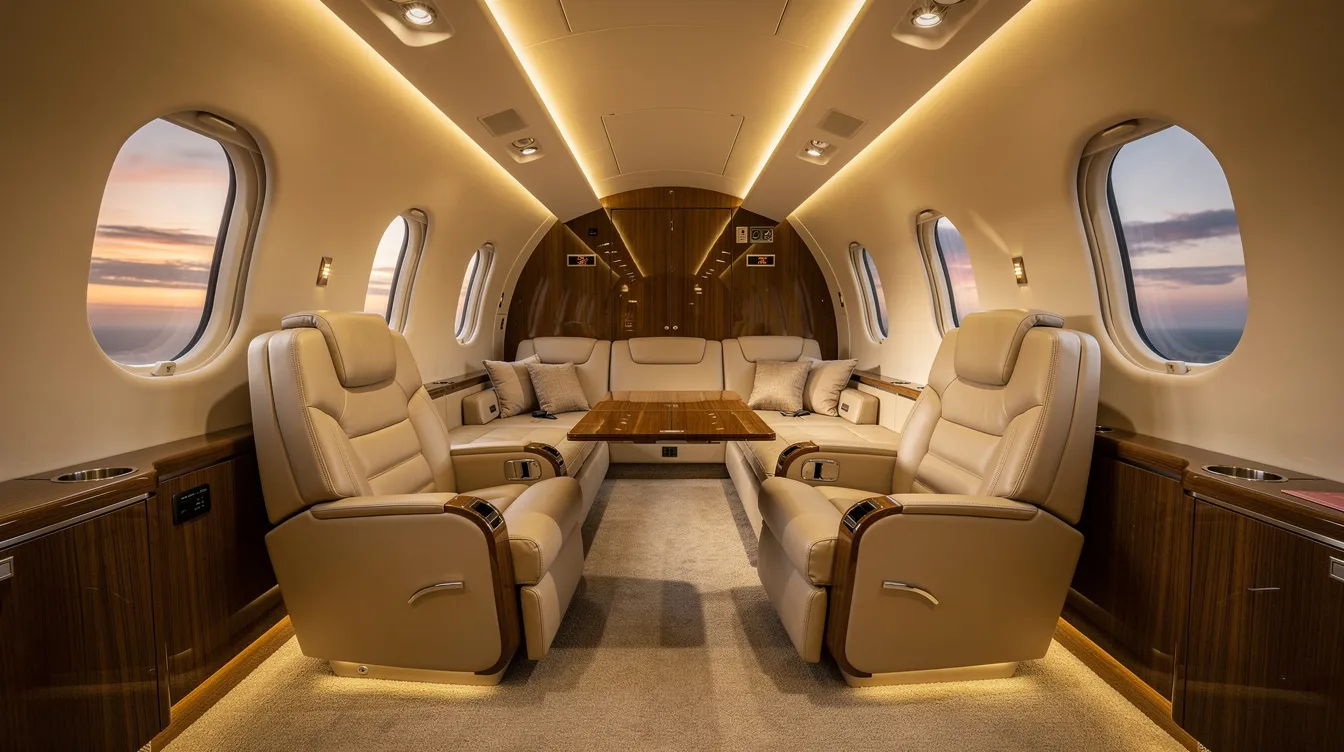
Modern single-engine turboprops match or exceed the cabin comfort of many light jets on flights under three hours, with reduced cabin sound through low-prop RPM cruise modes and flexible seating layouts that make regional travel genuinely enjoyable.
Flagship Single-Engine Turboprop Models Our Clients Ask About
BlackJet frequently books and evaluates the top models in this category for jet card members, especially for North American and European regional trips. We do not sell aircraft; instead, we curate access to the best-in-class turboprop aircraft through our premium private jet card programs and broader private aviation network.
Pilatus PC‑12 and PC‑12 NGX
The pilatus pc 12 has been the benchmark single-engine turboprop aircraft for private and corporate missions since the 1990s, with the global fleet recently surpassing 10 million flight hours. The pilatus pc 12 ngx, in service since approximately 2020, elevates the platform with the PT6E-67XP engine featuring FADEC and autothrottle, lower cabin noise, and an upgraded interior comparable to a light jet.
Cruise speed: The Pilatus PC-12 NGX has a maximum cruise speed of 290 knots
Range: Approximately 1,750 to 1,800 nm, depending on configuration
Cabin: Seating for up to 9 passengers in executive layout; large cargo door (52 × 51 inches)
Payload: Useful load exceeding 2,300 pounds
Consider a sample mission: Austin to Aspen, roughly 820 nm. A fully equipped PC-12 NGX handles it nonstop, carrying four to six passengers plus ski gear into Aspen's mountain airfield, where many light jets face performance limitations at elevation. New Pilatus PC-12 models exceed $5 million, while the average price for a used Pilatus PC-12 is $3 to $4.5 million. BlackJet aligns PC-12 aircraft into jet card tiers for members seeking efficiency, range, and cabin volume without stepping up to a midsize jet.
Daher TBM 900–960 Series
The TBM series positions itself as the speed leader among owner-flown single-engine turboprops-think of it as the sports car of the category. The Daher TBM 960 has a cruise speed of 330 KTAS, connecting near light jet performance with turboprop efficiency.
Range: Roughly 1,730 nm with maximum fuel
Passengers: Typically 4 to 6 in comfort
Advanced avionics: Garmin G3000 with HomeSafe emergency autoland, angle-of-attack protection, and digital engine and propeller electronic control
Used pricing: Used Daher TBM 960 prices range from $2.5 million to $4 million
BlackJet primarily leverages TBM aircraft for two to four-passenger, time-critical trips where speed and direct access to smaller airfields are paramount. Compared to the PC-12, the TBM is faster but with a smaller cabin and payload, making the difference one of mission priority rather than capability.
Beechcraft Denali and Emerging Designs
The Beechcraft Denali represents genuine innovation in this class, a new-generation single-engine turboprop designed to compete directly with the PC-12 and TBM using the GE Catalyst engine, which received FAA certification in February 2025. The GE Catalyst engine is designed for excellent dispatch reliability, with claims of approximately 20 percent greater efficiency over competitors.
Cruise speed: Targeted around 285 KTAS
Range: Projected at roughly 1,600 nm
Cabin: Flat floor, large windows, modern avionics (Garmin G3000), optional removable aft lavatory
Wingspan: 54 ft 3 in; seating for 6 to 9 passengers, depending on layout
Full type certification is expected in 2026, and BlackJet tracks these aircraft closely for future inclusion. Since its first flight, the Denali has drawn serious interest from the market. This category also includes rugged utility turboprops like the Daher Kodiak 100, which has a cruise speed of approximately 210 KTAS, and the Cessna Caravan. New Kodiak 100 pricing is generally $2.5 million to $3 million. BlackJet typically reserves these for specific mission profiles rather than core luxury itineraries, though their versatility in remote operations remains unmatched. Overall, single-engine turboprop prices range from $695,000 to $3,850,000 across the broader market, sitting alongside a range of top affordable private planes for budding aviators that make private flying more accessible.
Single-Engine Turboprop Comparison Table
Model | Max Cruise Speed (KTAS) | Range (nm) | Passengers | Cabin Features | Price Range (USD) | Engine |
|---|
Pilatus PC-12 NGX | 290 | 1,750-1,800 | Up to 9 | Large cargo door, spacious cabin | $3M - $5M+ (new/used) | Pratt & Whitney PT6E-67XP |
Daher TBM 960 | 330 | ~1,730 | 4 to 6 | Advanced Garmin G3000 avionics | $2.5M - $4M (used) | Pratt & Whitney PT6E-66XT |
Beechcraft Denali | ~285 (projected) | ~1,600 | 6 to 9 | Flat floor, large windows, optional lavatory | Expected $3M+ (new) | GE Catalyst |
Daher Kodiak 100 | ~210 | ~1,132 | Up to 9 | Rugged, short runway capability | $2.5M - $3M | Pratt & Whitney PT6A-34 |
Cessna Caravan 208B | ~185-195 | ~964 | Up to 9 | Utility-focused, cargo capability | $2.5M - $3M | Pratt & Whitney PT6A-140 |
Operating Costs, Range, and Performance: What Travelers Actually Feel
While aircraft owners scrutinize line-item operating costs, travelers experience these numbers as hourly rates and jet card pricing tiers. Here is what the data translates to in practice:
Single-engine turboprops generally deliver 20 to 40 percent lower direct operating costs than comparable light jets on 300 to 1,200 nm routes, and they occupy a sweet spot among the best small private aircraft for varied travel needs
Operating costs are generally lower for single-engine turboprops, with fuel representing 25 to 35 percent of total hourly cost, which is why they feature prominently among budget-friendly private aircraft options.
On a 600 nm leg, a PC-12 at 290 KTAS takes approximately 2.07 hours; a TBM 960 at long-range cruise speeds around 308 KTAS takes roughly 1.95 hours, a difference of minutes, not hours, especially compared with many of the cheapest private jet and entry-level options.
Strong performance in maintenance intervals (PT6 engine TBO up to 5,000 hours in NGX configurations) keeps recurring costs predictable, which is a critical context when evaluating jet card pricing structures and benefits.
For many regional missions under 2.5 hours, upgrading to a light jet mainly adds cost, not meaningful time savings. When you factor in the ground distance to larger airports that jets require, a turboprop departing from a closer regional field can actually achieve a faster door-to-door time. Single-engine turboprops can operate on shorter runways than jets, and that access advantage often determines which plane gets you there first.
Safety, Certification, and Technology in Modern Single-Engine Turboprops
The question pilots and passengers alike ask: Is a single engine safe enough? The data is unambiguous. Single-engine turboprops are widely considered safe and reliable. The Pratt & Whitney PT6 engine has an exceptional safety record spanning tens of millions of hours across thousands of aircraft worldwide.
Single-engine turboprops lack engine redundancy in case of failure-this is a factual engineering reality. However, modern powerplants and systems mitigate this through extraordinary reliability and layered safety technology that supports safer pilot decision-making during takeoff: FADEC-controlled engines, Garmin Emergency Autoland (available in the PC-12 NGX and TBM 940/960), terrain awareness systems including TAWS B, enhanced vision, and comprehensive ice-protection systems. Certain commercial operations restrict single-engine turboprop operations over water or at night, but under FAA and EASA certification, these aircraft are fully approved for IFR operations and commercial revenue flights.
BlackJet's network emphasizes third-party safety ratings-ARG/US, Wyvern, IS-BAO-and strict operator vetting before any single-engine turboprop is offered to members. Every cockpit in our network meets or exceeds modern avionics standards, ensuring pilots have the tools to fly safely in any conditions.
Single-Engine Turboprops in the BlackJet Jet Card Ecosystem
BlackJet's jet card model provides prepaid flight hours across multiple cabin categories, with 24/7 digital booking, real-time support, and carbon-neutral flights as standard. For travelers comparing providers, understanding the best jet cards for frequent flyers helps clarify where single-engine turboprops fit in your broader private aviation strategy. Single-engine turboprops sit within our turboprop or regional tiers-ideal for one to four passengers on 300 to 1,000 nm missions.
Typical use cases include weekly executive commutes between regional business hubs, family trips to mountain resorts via short runways, and same-day multi-stop site visits to secondary airports. Members enjoy predictable pricing with no ownership risk, accessing vetted turboprop aircraft without capital outlay. Our app and website enable quick aircraft matching based on passenger count, luggage needs, and runway performance-so you always fly the right plane for the mission, whether through turboprop tiers or the BlackJet 25+ Hour Jet Card. Explore our membership options to see how each category and class fits your travel pattern.
Sustainability and Carbon‑Neutral Flying with Turboprops
Single-engine turboprops naturally support more sustainable private travel through lower fuel burn. On a 600 nm mission, choosing a PC-12 NGX over a light jet of similar passenger capacity can reduce CO₂ emissions by roughly 20 to 30 percent. BlackJet ensures every flight, including turboprop sectors, is carbon neutral via verified offset programs, at no extra cost to members. Modern turboprop engines are compatible with sustainable aviation fuel blends, and as the SAF supply scales, turboprops will lead adoption due to smaller fuel volumes. For travelers who value both fuel efficiency and environmental responsibility, turboprops represent a sound choice.
How to Decide if a Single-Engine Turboprop Is Right for Your Trips
Whether you already fly privately or are upgrading from commercial first class, the decision framework is straightforward. Ask yourself:
What is your typical party size? (Turboprops excel with 1 to 6 passengers)
What is your average stage length? (Under 1,200 nm favors turboprops)
Do your preferred airports have runways under 4,000 feet?
Do you travel with bulky luggage, sports equipment, or specialized cargo?
Is cost efficiency or marginal speed more important?
A regional CEO flying 500 to 800 nm weekly with two to four colleagues will find a TBM or PC-12 tier delivers strong value. A family heading to a mountain vacation home with ski gear needs the PC-12's cargo door and cabin volume. An investment team visiting multiple sites in a single day benefits from the turboprop's ability to achieve efficient multi-stop itineraries into smaller fields, especially when you understand the broader types of private jets available for every traveler. Bot-assisted booking through BlackJet's platform makes matching your mission to the right aircraft effortless-our membership team is available on every page of the process to help optimize your routes.
FAQs: Single-Engine Turboprops and BlackJet Jet Cards
Are single-engine turboprops safe for night and IMC operations?
Yes. Models like the PC-12 NGX and TBM 960 are fully certified for IFR flight in all weather conditions, equipped with advanced avionics, ice protection, and emergency autoland systems. Certain commercial operations may restrict single-engine flights over water or at night under specific regulatory frameworks, but private charter operations under BlackJet's vetted operators fly these aircraft reliably in instrument conditions.
How do their operating costs compare to light jets?
Turboprop hourly rates typically run 20 to 40 percent less than light jets for equivalent missions. Fuel burn alone, 55 to 60 GPH, versus 150-plus accounts for much of the difference, a key factor whether you charter the whole aircraft or simply buy a seat on a private jet.
Can I specify aircraft type in my jet card?
BlackJet jet cards are structured by cabin category. Your membership team will match you to the optimal aircraft based on your mission profile, passenger count, and runway requirements.
Which single-engine turboprops does BlackJet most commonly source?
The Pilatus PC-12 NGX and Daher TBM 960 are our most frequently booked turboprop models, selected for their proven reliability, performance, and cabin quality within the wider universe of small private aircraft options and private jet sizes available to travelers.
What cruise speed and range can I expect?
The PC-12 NGX cruises at 290 KTAS with a range of up to 1,800 nm. The TBM 960 reaches 330 KTAS with a range of around 1,730 nm. Both cover most regional missions nonstop, while larger groups may look to top 16-seat private jet options for similar performance on a bigger scale.
How does BlackJet ensure carbon-neutral turboprop flights?
Every BlackJet flight, regardless of aircraft type, includes verified carbon offsets at no additional cost to the member. Turboprop flights generate smaller offset requirements due to inherently lower fuel burn, making the program even more efficient, especially for frequent flyers considering unlimited private jet membership concepts.
Conclusion: Elevating Regional Travel with Single-Engine Turboprops
The modern single-engine turboprop is not a compromise-it is a precision instrument for travelers who understand that reaching the right airport, on the right schedule, at the right cost is the ultimate measure of a fun and efficient journey. Aircraft like the Pilatus PC-12 NGX and TBM 960 deliver jet-like performance with greater mission flexibility, proven safety technology, and the ability to access airfields that keep you closer to the sky above your destination rather than stuck in ground traffic below it.
BlackJet curates these top-tier single-engine turboprops within our jet card program, ensuring every flight meets our standards for safety certification, carbon-neutral operation, and seamless digital booking. The style of travel we enable is not simply about getting there-it is about arriving with time, energy, and control intact.
Discover how BlackJet can reshape your regional travel. Visit our website or speak with our membership team to explore which jet card tier and which aircraft fit your next mission.


 Sign up with google
 Sign up with Apple