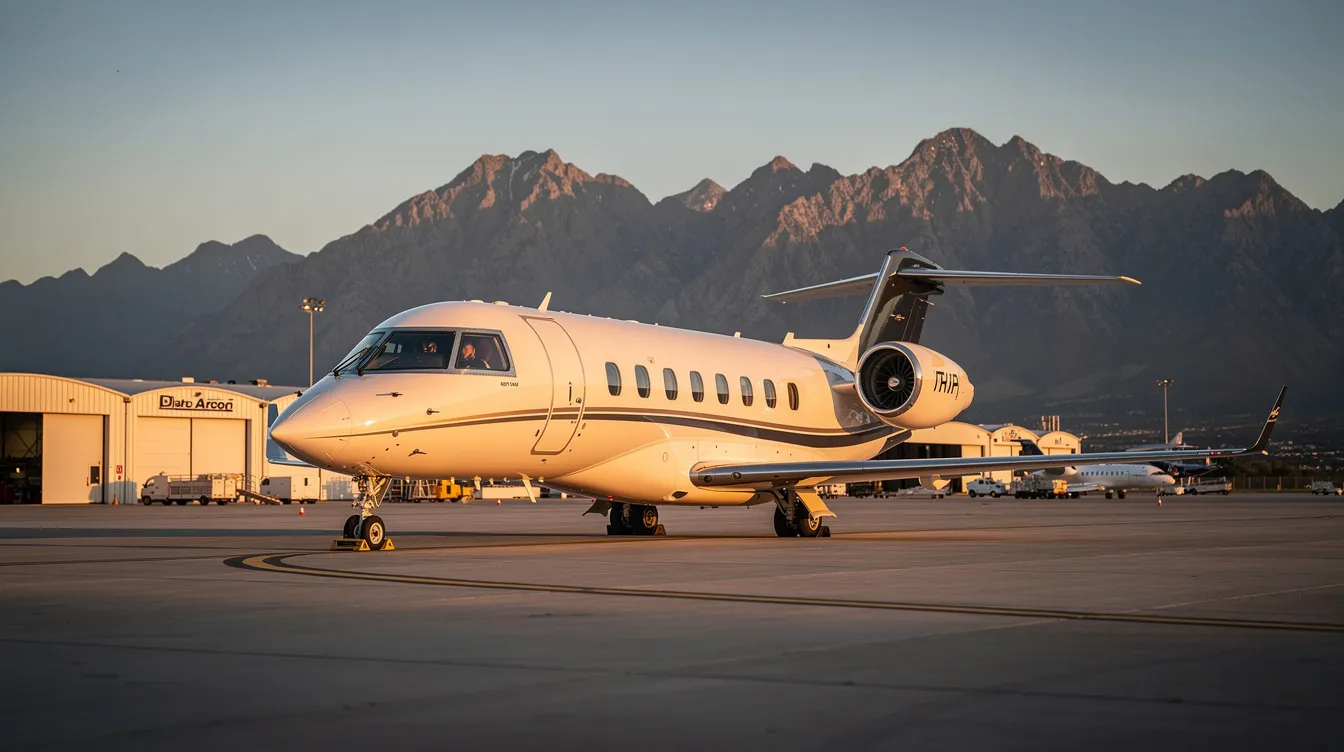
The general aviation market features a range of aircraft for different mission profiles-from single-engine piston aircraft used at flight schools to light jets that rival commercial first class in comfort and speed. Choosing among the best small planes requires understanding not just raw performance, but how each aircraft class fits the trips you actually fly. This guide ranks the top small private aircraft across every category, breaks down the criteria that matter, and shows how BlackJet's Jet Card and charter programs let you access the right aircraft without the burden of ownership. This guide is for aspiring pilots, business travelers, and personal aircraft owners considering their next aircraft. Choosing the right small plane can save time, increase travel flexibility, and optimize costs for both personal and business use.
Why The "Best" Small Plane Is A Strategic Asset, Not Just A Toy
A typical commercial flight from New York to Chicago takes 5 6 hours door-to-door once you account for security lines, boarding, taxiing, and ground transport on both ends. Private flying saves 4 6 hours per round trip on that same route. A light jet or turboprop covers the ~370 nm leg in well under two hours of flight time, and you depart from a private terminal with no layovers. On a route like London to Nice (~550 nm), the commercial grind of transfers, queues, and connections adds even more dead time that a small jet aircraft eliminates entirely.
Private aircraft have access to over 5,000 smaller airports that commercial carriers never touch, meaning you can land closer to your actual destination. Private jets can complete 500 800 nm trips in half a day, and private flying eliminates security lines and layovers entirely. That is the core of why the best small planes are not toys 6they are strategic tools that compress time, reduce friction, and expand the geography you can cover in a single business day.
"Best small planes" span a wide taxonomy: light aircraft like the Cessna 172, high-performance piston aircraft such as the Cirrus SR22T, turboprops like the Pilatus PC-12 NGX, very light jets including the Cirrus Vision Jet, and true light jets such as the HondaJet Elite II. The right choice depends on your mission-distance, passenger capacity, runway constraints, comfort expectations-not simply top speed.
BlackJet operates as a carbon-neutral Jet Card and private jet charter provider, matching each client's travel pattern to the appropriate aircraft category. Throughout this guide, we evaluate aircraft on the criteria that matter most: cruising speed, maximum range, runway performance, cabin comfort, fuel efficiency, safety technology, and access model 6whether ownership, Jet Card, or on-demand charter 6 all of which shape the cost to charter a small plane for a given mission.
Key Criteria: What Makes A "Best" Small Plane In 2026?
Small private aircraft include piston, turboprop, and jet categories, each with distinct performance bands:
Aircraft Category | Cruise Speed (KTAS) | Range (nm) | Passenger Capacity | Typical Mission Profile |
|---|
Piston Aircraft | 120 600-200 | 500 61,000 | 2 64 | Pilot training, weekend flying, short personal hops |
High-Performance Piston | 160 6220 | 800 61,200 | 4 65 | Family travel, business short trips, cross-country |
Turboprops | 260 6330 | 1,200 61,800 | 4 68 | Regional business, smaller airfields, fuel efficiency |
Very Light Jets (VLJs) | 300 6400 | 1,100 61,300 | 4 66 | Small executive groups, owner-pilots stepping up |
Light Jets | 400 6450 | 1,500 62,500 | 6 68 | Business travel, transcontinental routes |
Brochure numbers assume ideal conditions 6light loads, favorable winds, max takeoff weight at sea level. Real-world performance drops when you factor in payload, hot-and-high airports, legal IFR fuel reserves, and alternate airport requirements. Power and fuel capacity interact directly: a heavier passenger load reduces range because you cannot always carry adequate fuel for the published maximum distance. Runway performance matters just as much 6a turboprop that lands on 2,500-foot strips opens access to hundreds of airfields a light jet cannot reach.
Safety technology in 2026 has transformed what modern small aircraft can do. Modern small aircraft feature autopilot with envelope protection, preventing stalls and unusual attitudes. Synthetic vision systems enhance safety in modern cockpits by projecting terrain and runway imagery even in low visibility. Whole-airframe parachutes are standard in many modern small aircraft, particularly Cirrus models, and emergency autoland systems now exist in both piston and jet platforms. On the operator side, certifications like ARGUS Platinum, Wyvern Wingman PRO, and IS-BAO Stage 3 audit maintenance, pilot training, and safety culture at the highest level.
BlackJet clients tend to prioritize time savings, reliability, and cabin comfort over chasing absolute top speed 6priorities that also inform how we evaluate the cheapest private aircraft for practical travel. Operational consistency 6weather flexibility, ramp services, quiet cabins, access to less congested airports 6frequently outranks a few extra knots of cruising speed.
Overview Of Small Aircraft Categories: From Light Aircraft To Light Jet
Characteristics of modern small airplanes vary from luxury personal cruisers to efficient trainers. The general aviation market includes modern small airplanes and high-tech single-engine trainers alongside turboprops and jets. Here is how the primary categories break down:
Single-engine piston light aircraft: Cruise ~120 6160 KTAS, range 400 6700 nm, 2 64 seats. Mission: pilot training, weekend flying, short personal hops. Many personal aircraft in this class serve as stepping stones toward more capable platforms.
High-performance piston / best personal aircraft: Cruise ~160 6220 KTAS, range 800 61,200 nm, 4 65 seats, often pressurized or turbocharged. Mission: four-adult family travel, business short trips, serious cross-country flights.
Turboprops: Cruise ~260 6330 KTAS, range 1,200 61,800 nm, 4 68 seats executive configuration. Mission: regional business, accessing smaller airfields, balancing speed with fuel efficiency.
Very light jets (VLJs): Cruise ~300 6400 KTAS, range ~1,100 61,300 nm, 4 66 seats. Mission: small executive groups, owner-pilots stepping into jet aircraft.
Light jets: Cruise ~400 6450 KTAS, range 1,500 62,500+ nm, 6 68 seats with full lavatory. Mission: serious business travel, transcontinental routes, the complete best small private aircraft experience.
BlackJet uses this taxonomy to simplify client discussions. Rather than requiring you to know every model, the question is: "What kind of trip do you fly most?" That answer 6daily regional meetings, occasional cross-country, family retreats, or international work-maps directly to the right aircraft category from BlackJet's Jet Card and charter network.
Best Entry-Level Light Aircraft For Training And First Ownership
For an aspiring commercial pilot or a new personal aircraft owner, entry-level light aircraft remain the foundation. These are the most proven platforms used by flight schools worldwide, and they are where future BlackJet clients often build their initial hours.
Top small planes for personal use include the Cessna 172, Piper PA-28 Cherokee, and Cirrus SR22. At the training level, the Piper Archer TX is a popular training aircraft known for its predictable handling and rugged build 6a fixed-gear monoplane that forgives student mistakes while teaching real-world flight plan fundamentals. The Diamond DA40 offers a combination of efficiency, handling, and modern design, with a composite airframe and large windshield that provide exceptional visibility. Meanwhile, the Cirrus SR20 brings advanced avionics and the famous ballistic airframe parachute to the training tier, making it a technically advanced airplane that doubles as a capable personal cruiser.
Light Sport Aircraft also deserve mention: the light sport aircraft category includes models like the Vans RV-12iS that provide responsive handling under sport pilot rules, offering a recreational two-seat airplane option for pilots who want to fly light aircraft without a full private certificate. These are not business machines, but they represent the most accessible entry point into personal flight for very few prospective buyers who want to start simple.
Best Piston Single: Cessna 172 Skyhawk 6 The Benchmark Light Aircraft
The Cessna 172 Skyhawk is the most produced aircraft, with over 44,000 units built, a record that speaks to its role as the most popular training airplane and the default good training aircraft for decades, and it often appears alongside entry-level jets in discussions of the cheapest private jet and starter aircraft. It is also among the most popular personal aircraft for first-time owners.
Cruising speed sits around 120 KTAS. The Cessna 172 Skyhawk has a maximum range of 696 nautical miles, depending on weight and fuel load. Handling is benign: stable flight characteristics, low stall speeds, easy recovery. Operating costs 6fuell, maintenance, insurance 6are among the lowest in the personal aircraft category, making it the cheapest personal aircraft in practical total-cost terms for many owner-pilots who value simplicity. Its basic empty weight is low enough to allow useful payloads even with modest fuel capacity.
A typical use case: a new personal aircraft pilot flies the Skyhawk for 200 6300 nm weekend trips with two passengers and bags, building experience on easy-to-fly airplane characteristics. For longer or weather-critical missions, they rely on BlackJet's Jet Card for access to turboprops or light jets, keeping the Skyhawk for the short hops where it excels.
Best Step-Up Family Aircraft: Cessna 182 Skylane And Cessna 206 Turbo Stationair HD
When the 172 no longer matches your mission, the Cessna 182 Skylane and Turbo Stationair HD represent logical upgrades for families and small-business pilots.
The Skylane delivers a cruising speed of roughly 140 6145 KTAS with improved useful load over the 172. Typical maximum range runs 700 6900 nm for 3 64 passengers plus luggage. More powerful engines (often turbocharged variants) improve climb performance and altitude flexibility, making it a solid platform for a personal aircraft owner who needs to conduct cross-country flights regularly.
The Cessna 206 Turbo Stationair HD is the "SUV of the skies" 6 six seats, rugged utility, strong short-field performance, and compatibility with floats for amphibious airplane operations. It's slower than the 182 but dramatically more versatile, hauling heavier loads into backcountry strips that even some turboprops avoid. Many pilots describe it as the classic cabin aircraft of the utility world.
Both models serve personal aircraft ownership well for owners who still charter or use a Jet Card for weather-sensitive, longer, or time-critical trips where single-engine planes simply cannot match the speed or ceiling of a turboprop or jet 6situations where understanding private jet sizes and categories helps in choosing the right upgrade.
High-Performance Pistons: Cirrus SR22T And Diamond DA50 RG As Best Personal Aircraft
This category represents the heart of what defines the best personal aircraft for serious owner-pilots who value speed, safety, and technology. The Cirrus SR22 is considered the gold standard for high-performance personal aviation, and Cirrus is currently dominating new piston aircraft deliveries in the general aviation market.
The Cirrus SR22T has a cruise speed of 180 6213 KTAS depending on power setting and altitude 6the best-selling personal aircraft in its class with over 8,000 units produced since 2003. Its maximum range reaches approximately 1,000 61,100 nm with reserves. The Cirrus Airframe Parachute System (CAPS), a full aircraft parachute system, has a documented 95% survival rate 6a fuselage parachute system that no competitor in this class can match. The 2026 G7+ iteration adds Safe Return emergency autoland, a modern avionics deck with Garmin Perspective+, runway occupancy awareness, and smart pitot heat. Cirrus aircraft have set the standard for what a supremely cool personal aircraft can be, closely mimicking fine automobiles in interior fit and technology integration.
The Diamond DA50 RG entered the U.S. market in 2024 as a modern composite alternative. The Diamond DA50 RG has a maximum range of over 1,000 nautical miles with a 300 hp jet-fuel engine, retractable gear, and cruising speed near 180 KTAS. It appeals to pilots who prefer diesel/jet-fuel convenience and composite construction.
On routes of 400 6800 nm, these high-performance piston aircraft often compete with entry-level turboprop private planes and other small private jets for luxury travel, especially when runway availability and fuel costs are considered. The pilot who values efficient performance at lower operating cost will find either SR22T or the DA50 RG compelling, though for longer legs, turboprops or jets via BlackJet remain the smarter choice.
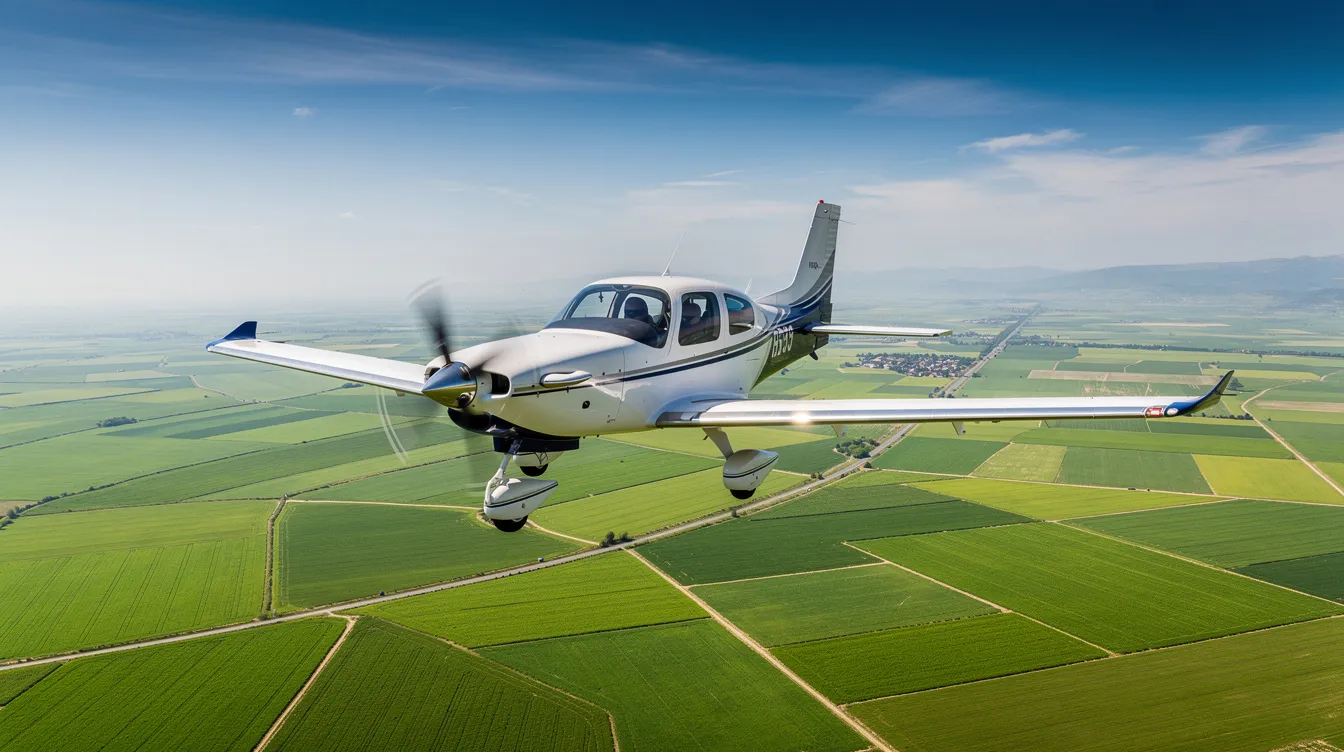
Speed Kings Of The Piston World: Mooney Acclaim Ultra, Ovation Ultra, And Cessna TTx
For pilots who care about cruising speed above all else, the Mooney Acclaim Ultra and the now-discontinued Cessna TTx still define the faster cross-country planes in the piston segment.
The Mooney Acclaim Ultra pushes top cruise to 230 6242 KTAS with a turbocharged Continental engine 6remarkable for single-engine planes, but demanding in pilot skill. Weight and center-of-gravity management are critical; the cabin is tight, and baggage is limited. The Ovation Ultra offers a normally aspirated alternative at 190 6200 KTAS with simpler systems and lower overhead, though still a high-workload airplane means business when flown near limits.
The Cessna TTx, a composite high-speed single, delivered ~230 KTAS cruise with modern avionics. Now available only on the used market, its maximum gross weight and avionics age must be carefully evaluated. For 800 61,000 nm cross-country flights, unmatched speed-to-fuel-efficiency ratios remain its calling card, but the more affordable the aircraft on the used market, the more expanded maintenance costs and avionics upgrades factor in.
The trade-off is clear: tight cabins, complex systems, and high fuel burn at max cruise. Many prospective travelers who evaluate these models ultimately realize that a turboprop or light jet via BlackJet delivers similar mission times with far more comfort, lower operational risk, and a professional crew, without the demands of personal aircraft ownership at this level.
Comfort-Focused Piston Singles: Beechcraft Bonanza G36 And Piper M350
For those who want near-jet comfort without leaving the piston category, the Beechcraft Bonanza G36 and Piper M350 represent classic personal airplanes refined for executive use.
The Bonanza G36 offers a six-seat cabin with cruising speed around 170 6176 KTAS and range near 800 6900 nm. Known for decades of robust construction and a loyal ownership community, it rides solidly and finishes its interior to standards that many general aviation aircraft simply do not reach. It remains one of the most popular personal aircraft among pilots who want capability and comfort in a single package.
The Piper M350 cruises at about 213 knots and is one of the few pressurized piston singles available. That pressurized cabin allows comfortable cruising in the high teens to low twenties (feet), reducing fatigue and eliminating supplemental oxygen needs. Maximum range reaches approximately 1,300 nm in economy cruise. Systems complexity 6pressurization, turbocharging 6equals higher operating costs, but the Piper M350 cruises at about 213 knots in a cabin that feels closer to a turboprop than a traditional piston single.
Both models function as "mini business aircraft," where the airplane means business on regional legs. For longer or multi-city itineraries, many personal aircraft owners in this class supplement with BlackJet's Jet Card to access turboprops and light jets.
Best Small Turboprops: Pilatus PC-12 NGX And TBM 960
Turboprops represent the bridge between high-performance pistons and true jets-where many business travelers find the optimal mix of fuel efficiency, speed, and cabin volume. This category is the workhorse of serious private flying on routes under 1,800 nm.
The Pilatus PC-12 NGX has a maximum range of 1,700 61,800 nautical miles in executive configuration seating 6 68. Cruising speed reaches approximately 285 KTAS, with excellent payload capacity and the ability to operate on shorter and unimproved runways. The 2025+ PC-12 PRO variant adds Garmin Emergency Autoland. Operating costs run around $1,918/hour, and its large cabin and baggage hold make it a favorite of charter and Jet Card fleets alike.
The Daher TBM 960 is currently the fastest single-engine turboprop, with cruise up to ~330 KTAS and maximum range near 1,730 nm at long-range settings. Its cabin seats 4 66 with less volume than the PC-12, but its speed advantage on 400 61,200 nm legs is meaningful. Advanced avionics include the Garmin G3000 suite with autothrottle, a modern avionics setup that makes aircraft cruising at high speed remarkably manageable.
For sub-1,000 nm routes, turboprops offer superior fuel efficiency compared to light jets while still delivering decisive time savings over pistons. Many premium aircraft charters and Jet Card fleets, including aircraft BlackJet accesses, rely heavily on these types; understanding how much it costs to charter a small plane helps quantify the value of choosing turboprops over light jets on shorter legs.
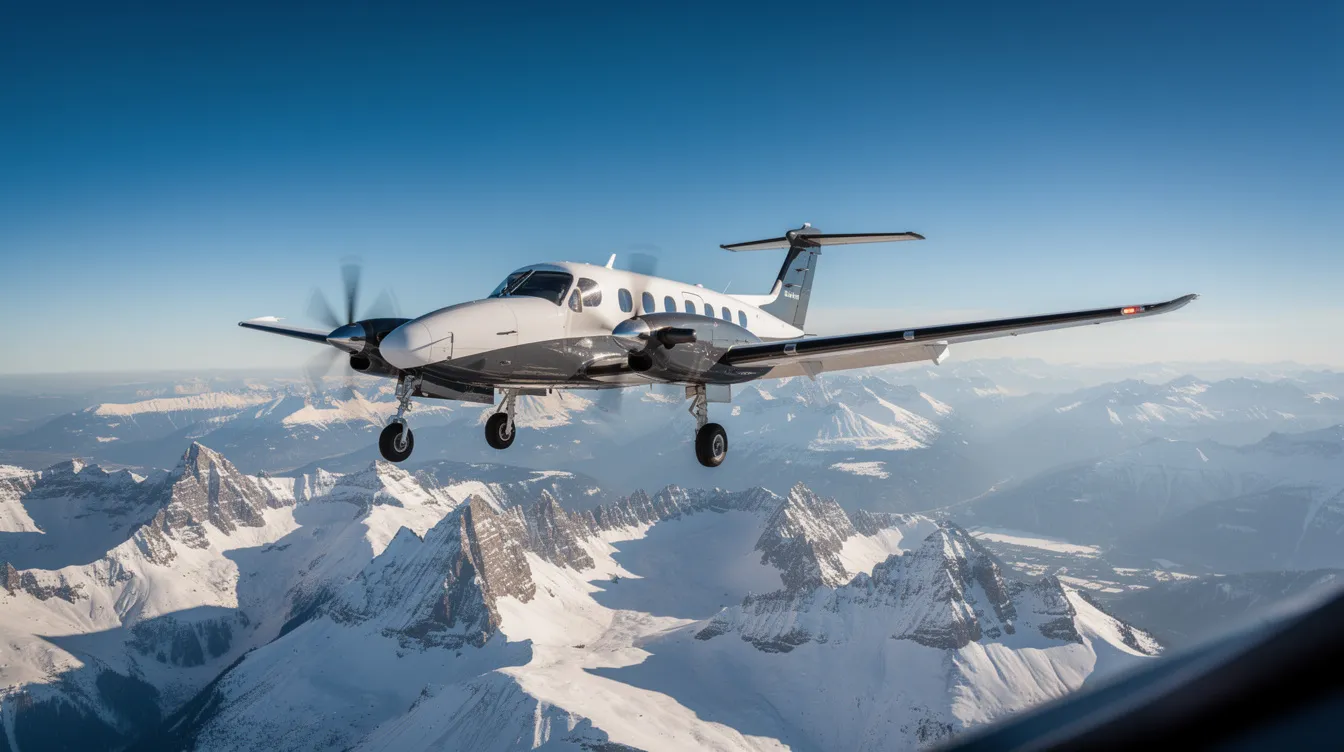
Most Accessible Personal Jet: Cirrus Vision Jet As A Very Light Jet
The Cirrus Vision Jet stands alone as the first certified single-engine personal jet-a flagship among very light jets and, for many pilots, the gateway into jet aircraft ownership.
Powered by a Williams FJ33-5A engine, the Cirrus Vision Jet delivers a typical cruising speed near 305 KTAS with a service ceiling of 31,000 feet. Maximum range stretches to approximately 1,200 nm in light-payload economy cruise, though with heavier loads it drops to around 600 nm-a stark reminder of how personal aircraft vary widely in real-world performance based on payload. Passenger capacity reaches five adults plus two smaller children.
Safety is the Vision Jet's signature: the Cirrus Vision Jet includes a Safe Return autoland feature that can land the aircraft at the nearest suitable airport at the push of a button, alongside the CAPS whole-airframe parachute. These systems, combined with advanced avionics designed for single-pilot operation, make it the most accessible jet for owner-pilots transitioning from high-performance pistons.
New pricing in 2026 runs approximately $3.3 63.5 million, positioning it as the cheapest practical small private jet to own when compared with other affordable private jet options. Compared with used VLJs like the Phenom 100 or Citation Mustang, it trades twin-engine redundancy for simplicity and lower crew requirements. For missions of 400 6800 nm, the Vision Jet handles business hops efficiently. Non-pilot executives can access it-and its competitors-through BlackJet's Jet Card programs rather than taking on personal aircraft ownership.
Best Light Jets For Business: HondaJet Elite II, Phenom 100EV, And Citation M2 Gen2
For many BlackJet clients, a professionally crewed light jet is what comes to mind when they think of the best private jet flights, aligning closely with our overview of small private jets and luxury travel options. These aircraft deliver the speed, quiet cabins, and enclosed lavatories that define serious business travel.
The HondaJet Elite II features its distinctive over-the-wing engine mount, which reduces cabin noise and vibration. Cruising speed reaches ~420 6422 KTAS. The HondaJet Elite II has a maximum range of over 1,500 nautical miles. Its fuel efficiency leads the class, and short-field performance opens access to secondary airports that larger jets cannot use. The cabin, while compact, is the quietest in its category.
The Embraer Phenom 100EV cruises at approximately 406 KTAS with a long-range cruise range of ~1,178 nm, carrying four occupants. Its Prodigy Touch flight deck (Garmin G3000-based) and strong climb rate make it well suited for busy airports. Takeoff distance at maximum gross weight sits around 3,190 feet, and baggage capacity reaches approximately 510 pounds.
The Cessna Citation M2 Gen2 cruises at ~404 KTAS with a range near 1,550 nm and seats up to seven. Its Garmin G3000 avionics and versatile cabin make it a step-up light jet for corporate fleets. Unlike an ultralong-haul business jet, these light jets are purpose-built for the 300 61,500 nm missions that represent the bulk of private jet flights, turning same-day out-and-back meetings into a comfortable reality, especially when paired with fixed-rate access through a 25+ hour Jet Card.
BlackJet's Jet Card and charter clients commonly use these aircraft for exactly these routes, with aircraft charters ready on short notice across multiple cabin types, while larger groups may instead opt for private jets accommodating up to 50 passengers.
Fuel Efficiency, Range, And Flight Planning With Small Aircraft
Fuel efficiency and maximum range interact in ways that directly determine which aircraft fits a given route. A typical flight plan must factor in winds aloft, alternate airports, legal IFR fuel reserves, runway length, and elevation-all of which reduce the usable range below published maximums.
Consider a 600 nm trip. A Cirrus SR22T at ~180 KTAS blocks approximately 3.5 hours with fuel reserves. A TBM 960 at ~308 KTAS covers the same distance in roughly 2.5 hours. A light jet like the HondaJet Elite II at ~420 KTAS does it in about 2 hours. Fuel burn increases with speed and power, but so does productivity-a trade-off that only the traveler's schedule can resolve.
The interaction between fuel capacity and payload is critical. Many aircraft cannot carry full fuel and full passengers simultaneously 6the transport aircraft equivalent of choosing between range and payload. Flying at economy cruise settings rather than max speed often extends range significantly while adding only modest time.
With BlackJet, clients never need to manage these variables personally. Expert schedulers and digital tools match aircraft to mission, ensuring adequate fuel margins, appropriate runway performance, and the right balance of speed versus efficiency-so your next private jet charter is optimized before you arrive at the terminal.
Safety, Certification, And Technology In Modern Small Planes
Modern light aircraft and small jets integrate advanced avionics that dramatically reduce pilot workload. Glass cockpits with synthetic vision project terrain, obstacles, and runway imagery. Envelope protection prevents stalls and unusual attitudes. Autothrottle on turboprops like the TBM 960 manages power settings automatically. The Cirrus Airframe Parachute System has a 95% survival rate across all deployments 6a safety net unmatched in aviation.
De-icing and anti-icing packages are standard on turboprops and light jets operating in winter or mountainous environments. FIKI (Flight Into Known Icing) certification ensures these aircraft can dispatch reliably in conditions that ground many piston singles.
Operator-level safety matters as much as airframe technology. FAR Part 135 compliance governs all US charter operations, while third-party audits from ARGUS, Wyvern, and IS-BAO verify maintenance programs, pilot training hours, safety management systems, and flight data monitoring. According to the NBAA Business Aviation Fact Book, the fatal general aviation accident rate fell approximately 32% between 2013 and 2023, and business aircraft accidents declined over 36% from 2021 to 2024.
BlackJet works exclusively with vetted operators holding top certifications, ensuring every flight meets the highest safety standards practical aviation allows.
Sustainability: Fuel Efficiency, SAF, And Carbon-Neutral Small Aircraft Travel
Efficient small aircraft inherently produce fewer emissions per passenger-mile than larger, less-occupied jets, though there are missions 6like moving 15 executives on a single itinerary 6where the best private jet for 15 passengers becomes the more sustainable choice compared with multiple smaller aircraft. A PC-12 NGX or TBM 960 on a 500 nm mission with full occupants burns significantly less total fuel than a midsize twin, making right-sizing your aircraft one of the most effective sustainability decisions in private aviation; understanding the types of private jets for every traveler is part of that right-sizing process.
Sustainable aviation fuel is accelerating this progress. HEFA-SAF derived from waste feedstocks can reduce lifecycle CO�8 emissions by 76 697% compared to fossil jet fuel. Many turboprops and light jets are already certified for SAF blends, and availability is expanding steadily.
BlackJet's commitment to carbon-neutral flights operates on two fronts: purchasing verified, high-quality carbon offsets for every flight, and prioritizing fuel-efficient aircraft selections where speed and range requirements allow, even on larger charter plane trips for 100 passengers. When you choose a turboprop over a midsize jet for a 600 nm leg, the environmental math improves substantially 6responsible luxury that aligns with modern leadership expectations 6 and the same logic applies when selecting the best private jet for 20 passengers instead of flying multiple smaller aircraft.
Ownership vs Jet Card vs On-Demand Charter For Accessing The Best Small Planes
Three primary models exist for accessing the best small planes, plus emerging concepts like unlimited private jet flight memberships:
Full or fractional ownership: You hold title to (or a share of) an aircraft. Maximum scheduling control. Highest capital commitment, depreciation risk, and expanded maintenance costs 6ownership costs for new light jets exceed $500,000 annually when you factor in hangar, crew, insurance, and maintenance.
Jet Cards: Prepaid flight-hour blocks (e.g., 25-hour or 50-hour programs) across multiple cabin types. Jet Cards are ideal for 50 6150 flight hours per year, offering predictable pricing and guaranteed availability without the complexity of owning.
On-demand charter: Book a flight when needed, no commitment. Charter is more economical under 100 flight hours annually, and charter eliminates hangar fees and maintenance scheduling entirely.
Ownership suits those flying 200+ hours annually, where the fixed costs amortize across enough trips to justify the investment, and a clear view of Jet Card pricing structures is essential before deciding to buy instead of prepaying for hours. Below that threshold, the capital at risk, depreciation, u nexpected maintenance, aandcrew costs rarely pencil out.
BlackJet's Jet Card structure offers multiple cabin-class options in 25-hour and 50-hour blocks, allowing clients to access light aircraft, turboprops, and light jets without tying their capital to one airframe, and our guide to Jet Card cost and pricing explains how those economics compare to ownership. For travelers who fly inconsistent routes or need different aircraft sizes trip-to-trip, this flexibility is the decisive advantage over on-demand charter or ownership, especially when you compare it with the best Jet Cards for frequent flyers.
Sample Trip Scenarios: Matching Small Planes To Real Missions
Scenario 1: New York to Boston (~190 nm), executive day trip. A Cirrus SR22T covers this in roughly 1.5 hours block time with minimal overhead 6a strong option for a personal aircraft pilot based near a regional field. A PC-12 NGX does it in about an hour with a larger cabin and more baggage room. A HondaJet Elite II shrinks flight time to 45 660 minutes with crewed service and a pressurized cabin, illustrating many of the advantages explored in our analysis of when chartering a private jet is worth it. The right call depends on passenger count and whether speed or cost leads the decision.
Scenario 2: Los Angeles to Aspen (~600+ nm), winter getaway. Aspen's short runway and high elevation demand respect. A TBM 960's high cruising speed (~330 KTAS) and strong climb handle the mission well, while the PC-12 NGX offers better payload and more forgiving runway performance in tricky conditions. A light jet may require a nearby alternate airport. BlackJet's operations team evaluates density altitude, weather, and runway conditions before recommending the right tail.
Scenario 3: London to Nice (~550 nm), summer family trip. A Vision Jet covers this in roughly two hours with a light load. A light jet like the HondaJet offers slightly faster transit with more luggage capacity. Commercial business class may have similar air time, but once you add ground transfers, check-in, and potential delays, the door-to-door comparison isn't close. Private access to smaller airports near the C锟絝4te d'Azur compresses the total journey by hours.

FAQ: Choosing And Using The Best Small Planes With BlackJet
What is the cheapest personal aircraft that still makes sense for serious travel? High-performance pistons like the Cirrus SR22T or Diamond DA50 RG offer the lowest ownership costs among capable cross-country platforms, and a survey of the cheapest private aircraft options can further refine that short list. A used SR22 can be found under $400,000, though total annual costs (maintenance, insurance, fuel, pilot training, depreciation) must be weighed against Jet Card rates. For many personal aircraft, the selling personal aircraft market provides better economics on older generations, but avionics and safety features decline accordingly.
How many hours per year justify owning vs. a Jet Card? Under ~50 hours per year, on-demand charter usually wins, and a detailed comparison of whether chartering a private jet is worth it can help validate that choice. Jet Cards are ideal at 50 6150 hours annually-enough volume for predictable pricing without the fixed costs of ownership; a dedicated breakdown of the 50-hour Jet Card cost and value clarifies where that sweet spot lies. Above 200 hours, ownership or fractional begins to justify the capital, and travelers considering that step often benchmark against a 100-hour Jet Card cost guide before committing. BlackJet's team can review your actual travel data and recommend how Jet Cards work for your profile.
Can small light jets cross the Atlantic? Generally, no. Most very light jets and light jets lack the fuel capacity for non-stop transatlantic crossings. Northern "Atlantic bridge" routes via Greenland and Iceland are possible for some light jets with extended range, but this is the domain of midsize or ultralong-haul business jet categories. For transatlantic needs, BlackJet matches clients to appropriately ranged aircraft.
How safe are light aircraft compared to airlines? Business aviation operated by certified Part 135 operators with ARGUS/Wyvern/IS-BAO credentials has accident rates dramatically lower than general aviation averages. With modern avionics, envelope protection, and airframe parachutes, well-operated small aircraft approach commercial airline safety margins. Transparency of operator credentials-something BlackJet provides for every booking 6is the critical variable. The Texas Aircraft Colt, a simple light sport aircraft, occupies a different safety profile than a professionally crewed light jet, which is why matching aircraft to mission matters.
Conclusion: How To Experience The Best Small Planes With BlackJet
The best small plane is not the fastest or most expensive 6it is the one aligned to your mission. From the Cessna 172 Skyhawk as the world's most popular training airplane to the Cirrus SR22T defining what a best-selling personal aircraft looks like in 2026, from turboprops like the PC-12 NGX to the Cirrus Vision Jet and crewed light jets like the HondaJet Elite II, each aircraft class solves a different problem.
The decision framework is straightforward: typical trip length, passenger count, cruising speed requirements, fuel efficiency priorities, and comfort expectations. Many personal aircraft serve owner-pilots brilliantly for short hops and regional flying. For longer legs, weather-critical missions, or trips requiring multiple cabin sizes, BlackJet's Jet Card and charter programs provide on-demand access to a curated mix of these aircraft, with safety certification, operator vetting, and carbon-neutral flights built into every booking.
Explore BlackJet membership, share a sample annual flight plan with our team, and discover which combination of the best small planes can reshape your travel. When your aircraft charters ready you for the next meeting, family retreat, or international trip without the complexity of ownership, you experience what private aviation was always meant to deliver.


 Sign up with google
 Sign up with Apple