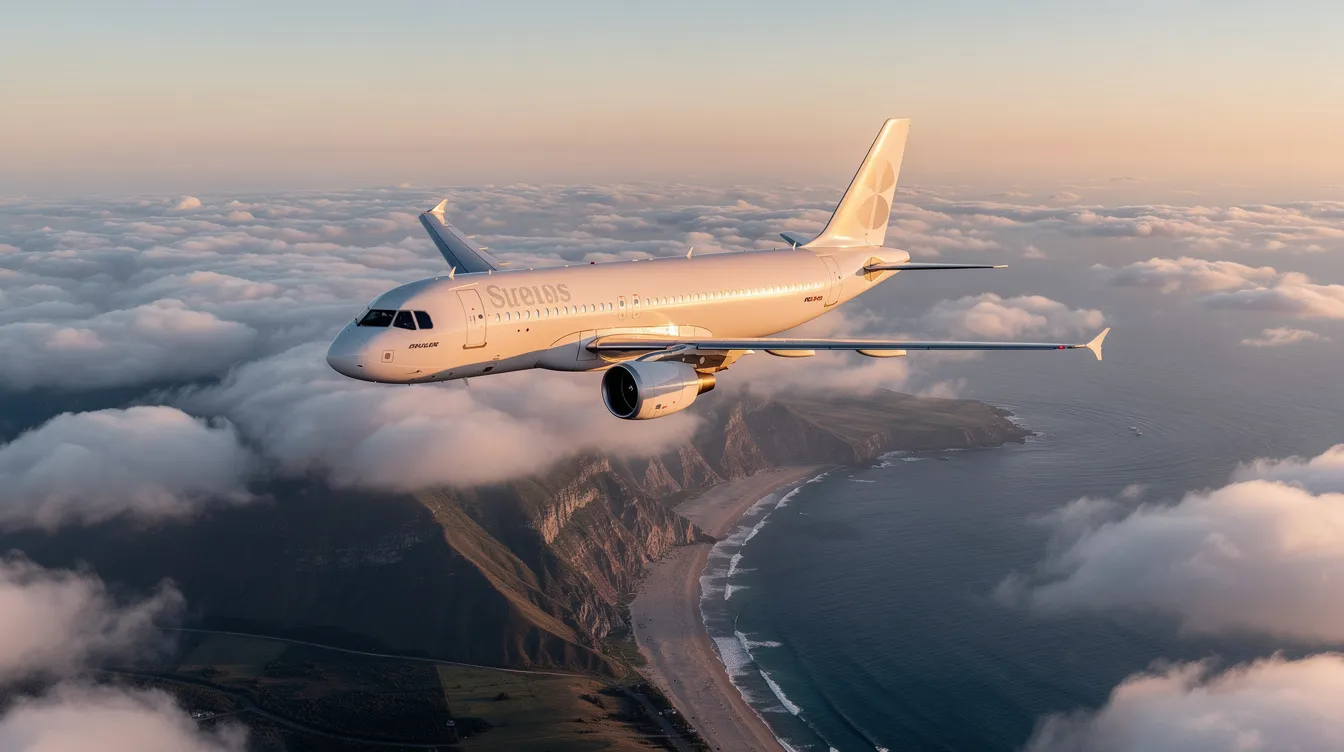
Range of 737- 800: How Far It Really Flies (and What That Means for Private Charter)
For executives and high-net-worth travelers, the difference between a nonstop flight and one with a connection is not just a matter of convenience-it is a strategic calculation. Every fuel stop, layover, or repositioning leg costs time, and time is the one resource that cannot be replenished. Understanding the range of the Boeing 737-800 is therefore essential when evaluating whether this aircraft can deliver a direct, seamless journey between the cities that matter most.
Quick Answer: Practical Range of the Boeing 737-800
Range defines the art of the possible. For a corporate team that needs to meet in Los Angeles by noon and return to New York the same evening, or for a group of 150 incentive-trip winners heading from London to a Mediterranean resort, a nonstop flight eliminates variables. It removes the scheduling fragility of connections, the fatigue of overnight positioning, and the operational risk of multi-stop itineraries.
The Boeing 737- 800, part of the 737 Next Generation family, has a maximum range of 3,377 nautical miles (approximately 6,255 km) under ideal test conditions. That figure assumes minimal payload and no adverse winds, representing the outer edge of the aircraft's performance envelope.
In the real world, where the plane is carrying a full or near-full complement of passengers, baggage, regulatory fuel reserves, and contingency fuel, the typical operational range is 2,800 to 3,100 nautical miles (roughly 5,185–5,740 km). This is the number that matters for charter planning. The ferry range of the Boeing 737-800 is approximately 3,760 nautical miles with minimal payload-useful for repositioning an empty aircraft but not representative of what charter clients will experience.
What does 2,800–3,100 nm look like on a map? Consider these routes:
New York (JFK) to Los Angeles (LAX): approximately 2,150 nm-well within comfortable nonstop range even with full passenger loads.
London (Heathrow) to Cairo: roughly 1,735 nm-a straightforward mission with ample fuel margin.
Toronto (Pearson) to Vancouver: about 1,810 nm-a classic transcontinental sector handled with ease.
For groups of up to 150–170 passengers, the 737-800 is a strong medium-haul option across these distances. BlackJet regularly sources this aircraft for corporate roadshows, incentive travel, and team transport where both capacity and range matter, while truly large delegations may be better served by private jets for around 20 passengers that bridge the gap between traditional business jets and airliners.
Understanding How Range Is Defined for the Boeing 737-800
"Range" is not a single number-it is a performance envelope. The published maximum range of 3,377 nautical miles represents what the Boeing 737-800 can achieve under International Standard Atmosphere (ISA) conditions: no strong headwinds, optimum cruise altitude, standard payload, and regulatory fuel reserves for diversion and holding. Maximum range under ideal conditions is reached with minimal payload and no adverse winds.
In practice, several factors compress that envelope. Airlines must carry extra fuel for alternative destinations and holding patterns, which reduces usable fuel available for the primary mission. Charter operations add further variables: different cabin layouts mean different weights, passenger counts fluctuate, and operators often build in additional reserves beyond the minimum regulatory requirement.
The difference between maximum range, economic range (what airlines plan for efficient daily schedules), and ETOPS-constrained range (over-water operations with mandated diversion options) matters. For charter clients, the key takeaway is that a competent operations team models each trip with current winds aloft, ambient temperatures, alternate airport fuel requirements, and runway constraints to determine whether nonstop service is genuinely viable-or whether a brief fuel stop is the smarter play.
The Boeing 737-800 Within the 737 Next Generation Family
Boeing launched the 737 Next Generation series in the late 1990s, with the family’s first delivery beginning in 1998, to extend thesingle-aislee market dominance of its most successful commercial platform. The NG series introduced four main variants, each targeting a different capacity and range sweet spot:
Variant | Typical Range | Seating (Two-Class) |
|---|
737-600 | ~2,900 nm | ~108–130 |
737-700 | ~3,365 nm | ~126–149 |
737-800 | ~3,377 nm | ~162 |
737-900/900ER | ~3,100 nm (ER) | ~177–189 |
The 737-800 sits near the upper end of the range spectrum while offering a seating capacity of 160 to 189 passengers depending on configuration. Key NG improvements over the classic series include a redesigned wing with improved aerodynamics, larger total fuel capacity, a higher maximum takeoff weight, and upgraded digital avionics across the flight deck.
By the mid-2010s, the 737-800 had become the best-selling variant of the NG series-many airlines worldwide selected it as their workhorse for medium-haul flying. That same balance of capacity and range is what makes it attractive for private charter: sports teams, corporate roadshows, and incentive groups can move large numbers of people nonstop on most routes under 3,000 nm at a cost per seat that widebody aircraft cannot match.
Core Specifications That Drive 737-800 Range
Range is the outcome of weight, aerodynamics, fuel capacity, and engine performance working in concert. Here are the numbers that define the 737-800's capability:
Maximum takeoff weight: approximately 79,000 kg (174,200 lb)-this is the max takeoff weight ceiling that governs how much combined fuel and payload the aircraft can carry.
Operating empty weight: roughly 41,000–42,000 kg, representing the aircraft's structural weight plus standard equipment.
Fuselage length: approximately 39.5 meters (129 ft 6 in).
Wingspan: about 35.8 m (117 ft 5 in) with advanced technology winglets, commonly known as blended winglets.
The Boeing 737-800 utilizes CFM56-7B turbofan engines, each producing between 24,200 and 27,300 lbs of thrust depending on the variant selected. The Boeing 737-800's typical cruising speed is 840 km/h-equivalent to a long-range cruise speed of Mach 0.78–0.79 (roughly 450–460 knots true airspeed). The service ceiling reaches up to 41,000 ft under standard conditions.
For charter operators, a lighter interior configuration-fewer seats, tailored VIP areas, reduced galley equipment-can slightly extend range by reducing operating weight, leaving more margin for fuel within the same max takeoff weight limit.
Fuel Capacity and Endurance of the Boeing 737-800
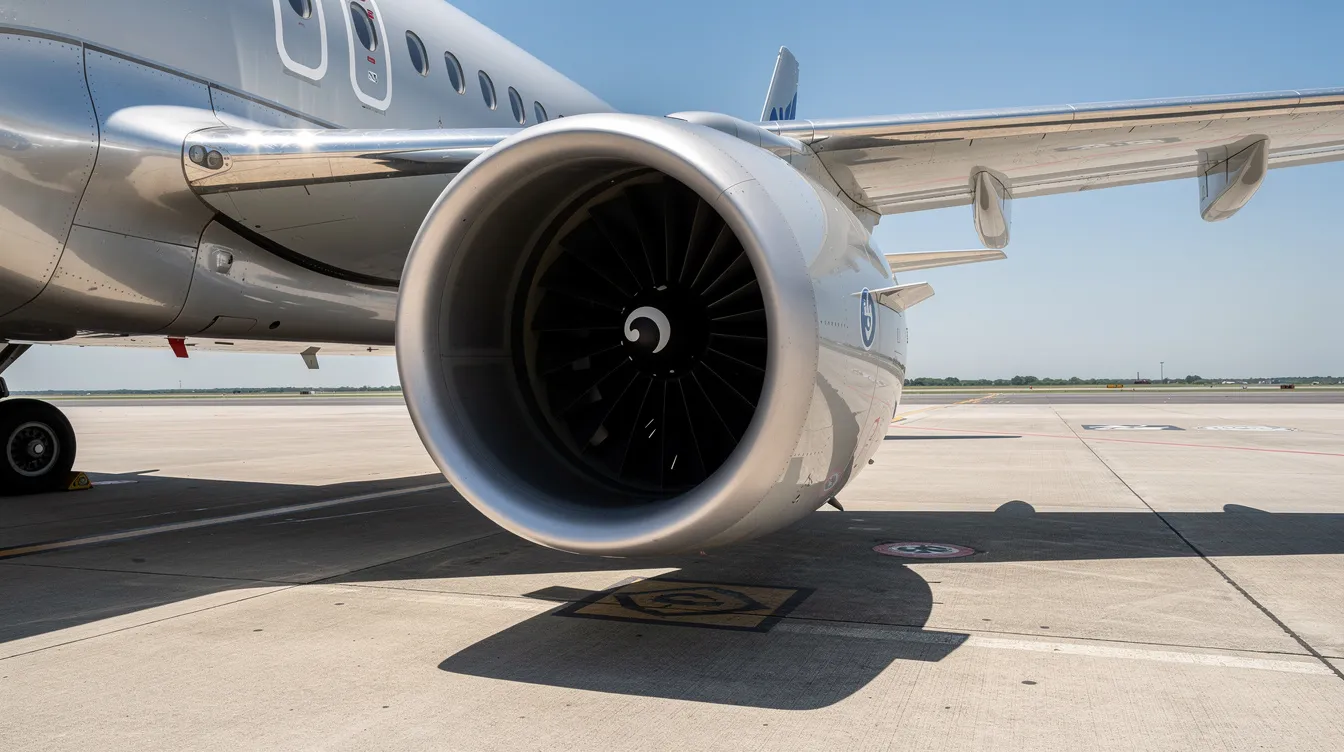
The Boeing 737-800 has a maximum fuel capacity of approximately 6,875 US gallons (about 26,020 liters), distributed across three main tanks: left wing, right wing, and center, which underpins both conventional charter planning and newer unlimited private jet membership concepts built around predictable usage rather than individual fuel loads. On long sectors, standard procedure is to burn center tank fuel first to maintain structural balance and reduce wing bending loads, then draw from the wing tanks for the remainder of the flight.
This increased total fuel capacity-compared with earlier Boeing 737 models-translates to roughly 6–7 or more hours of endurance under typical cruise settings and moderate loads. The exact figure depends on aircraft weight, altitude, and speed profile.
However, operators may not always be able to load full fuel. At airports with shorter runways or hot-and-high conditions (think summer departures from elevated fields), the aircraft may be unable to reach its full maximum takeoff weight safely. In those cases, operators trade fuel-and therefore range-for adequate takeoff and landing performance. BlackJet-chartered 737-800 missions account for both runway length and desired range when determining fuel loads and route options, ensuring that every departure is both safe and operationally sound.
Fuel Efficiency: Why the Boeing 737-800 Is Economical Per Seat
The 737-800 burns approximately 850 US gallons of fuel per hour under moderate load conditions-a figure that varies with weight, altitude, and atmospheric conditions, and directly informs how jet card pricing structures are built around hourly rates and fuel assumptions. Translated to a per-seat metric, fuel burn is about 4.5 to 5 gallons per seat per hour in a typical two-class layout of 162 passengers. In a high-density 189-seat configuration, that per-seat figure drops further, making fuel efficiency one of the aircraft's strongest selling points for group travel.
Blended winglets reduce drag by 4 to 5%, improving fuel efficiency on longer missions where induced drag compounds over hours of cruise. The CFM56-7B engines enhance fuel efficiency significantly compared with the powerplants on earlier 737 variants-the 737-800 achieves 7 to 10% better fuel burn than earlier models in the classic series.
Lower fuel burn per seat translates directly into fewer CO₂ emissions per passenger-kilometre, a metric increasingly important to corporate travel departments. BlackJet encourages the use of sustainable aviation fuel (SAF) where available, acknowledging that supply remains limited but growing, and aligns this with transparent jet card cost-per-hour comparisons for clients evaluating long-term charter strategies. For environmentally conscious charter clients, the 737-800's inherent efficiency is a meaningful starting point.
Cabin Layout, Passenger Capacity, and Range Trade-offs
Every kilogram added to the aircraft-passengers, baggage, interior fittings-either reduces range or increases fuel consumption, which is a crucial consideration when structuring fixed-commitment programs like a 100-hour private jet card. Payload weight significantly affects the operational range of the 737-800; in fact, the 737-800 can fly approximately 1,995 nautical miles at maximum takeoff weight with a full passenger complement and cargo hold.
Standard airline configurations illustrate the spectrum:
Typical two-class layout: approximately 162 seats with a business and economy cabin, offering a balance of comfort and capacity.
High-density single class: up to 189 seats, common among carriers like Southwest Airlines, United Airlines, and Alaska Airlines, which have operated as launch customers or major operators of the type.
For VIP or private charter, the calculus shifts, especially for clients using prepaid jet card membership programs who balance predictable hourly rates with aircraft size and range. A lighter, premium layout-say 50–80 business-style seats with meetlayout- say,and larger overhead bins for carry-on luggage-reduces total payload substantially. That freed weight can be used for additional fuel, restoring range margin on missions that might otherwise require a fuel stop.
Heavy baggage, sports equipment, or touring production gear adds significant weight and can push the mission into payload restrictions territory. The concept is straightforward: operators choose between maximum passengers and maximum distance along a "payload–range trade-off" curve. BlackJet's trip planning for group charters requests precise passenger counts and baggage details to determine exactly where that trade-off lies for each 737-800 charter.
Operational Range: Where the 737-800 Can Fly Nonstop
Think of the 737-800 as a medium-haul specialist that comfortably connects major city pairs up to about 3,000 nm. The range of the Boeing 737-800 comfortably covers many regional and continental routes, and transcontinental routes are within the operating range of the aircraft.
Comfortable nonstop examples:
New York to Los Angeles (~2,150 nm)
Chicago to San Jose (~1,900 nm)
London to Athens (~1,400 nm)
Dubai to Mumbai (~1,200 nm)
Singapore to Hong Kong (~1,540 nm)
Edge-of-range examples where payload limits and winds make nonstop more sensitive:
London to Dubai (~2,400–2,500 nm)
West Coast USA to Hawaii (~2,200–2,600 nm depending on origin)
High temperatures and altitude reduce the effective range of the 737-800. Airports like Denver, Mexico City, and Johannesburg sit at significant elevation, reducing air density and requiring longer takeoff rolls. When the available runway cannot support full max takeoff weight, the operator must reduce fuel or passengers-directly cutting into range.
BlackJet may recommend schedule tweaks-earlier morning departures when temperatures are cooler, seasonally favorable routing, or an alternate aircraft category-for missions that push the 737-800's operational limits.
737-800 Range vs. 737 MAX and Other 737 Variants
The 737 MAX family builds on the 737 Next Generation platform, incorporating newer engines and aerodynamic refinements to deliver greater range and improved fuel efficiency. Here is how the variants compare:
Aircraft | Approximate Range |
|---|
737-800 NG | ~3,377 nm |
737-900ER | ~3,100 nm (with auxiliary fuel tanks) |
737 MAX 8 | ~3,500 nm |
737 MAX 7 | ~3,850 nm |
The 737 MAX family achieves this increased range through LEAP-1B engines and advanced split-tip winglets that cut fuel burn by roughly 14–20% compared with the 737-800. That translates to meaningful operational flexibility: the extra 600–900 nm can open routes like longer Middle East to Europe pairings, deeper intra-Asia missions, or thinner transcontinental services that the NG cannot handle as comfortably.
The first flight of the 737 MAX took place in 2016, and many airlines have since received aircraft delivered from this program. FAA certification followed, with pilots noting improved flight deck ergonomics and performance margins. South Korea and other Asia-Pacific markets have been active customers.
BlackJet can source both Boeing 737-800 and selected 737 MAX family aircraft, matching each mission to the right balance of fuel efficiency, range, and cabin layout.
Boeing Business Jet Variants and Extended Range
The Boeing Business Jet line transforms the 737 platform into an ultra-long-range corporate aircraft by adding auxiliary fuel tanks, reducing passenger count, and installing bespoke cabin interiors. These are the planes that extend range well beyond what a standard airline-configured 737 can achieve.
BBJ1: Based on the 737-700 with 737-800 wings and landing gear for structural strength, the BBJ1 achieves more than 6,000 nautical miles with extra fuel tanks and a very low passenger count (typically 25–50 occupants). Boeing Business Jet variants can exceed 6,000 nautical miles with auxiliary fuel tanks installed.
BBJ2: Based on the 737-800, the BBJ2 offers 25% more cabin space than the BBJ1 while delivering a typical range band of 5,000 to 6,000 nautical miles depending on configuration and increased total fuel capacity through additional tankage.
BBJ3: Built on the 737-900ER platform, the BBJ3 provides even more cabin space and baggage space but trades some range, typically achieving 4,700 or more nautical miles in most configurations. Militarized 737 derivatives have also served the US Navy in transport and surveillance roles, which is distinct from VIP-configured Boeing Business Jet aircraft.
These variants trade seating capacity for fuel and luxury, turning the 737 into a long-range private jet suitable for routes like London to New York or Dubai to London, similar in spirit to premium offerings such as Flexjet’s structured jet card programs. The stretched version of each base model accommodates meeting rooms, rest suites, and full-service galleys. Carbon brakes and steel brakes options on the landing gear help manage the higher gross weights. For clients who require both the cabin space of a 737-class aircraft and intercontinental capability, BlackJet can arrange BBJ charters tailored to their specific mission.
Comparing 737-800 Range with Long-Range Private Jets
The 737-800 is a superb medium-haul group transport aircraft, while dedicated long-range private jets are purpose-built for intercontinental missions. The distinction is important when selecting the right tool.
Large-cabin business jets such as the Gulfstream G650/G700 or Bombardier Global 6000/7500 typically exceed 6,000–7,500 nm in range, enabling nonstop flights from New York to Hong Kong or London to Los Angeles. These aircraft cruise at higher altitudes (often FL430–FL510) and carry far fewer passengers-usually 12–19-in ultra-premium cabins.
Boeing Business Jet variants bridge the gap, offering 5,000–6,000 nm or more but at reduced passenger counts and higher per-hour charter costs than a standard 737-800.
When to use each:
737-800: Large corporate group (100–170 people), routes of 2,000–3,000 nm. Ideal for roadshows, incentive travel, team relocations.
BBJ or long-range business jet: C-suite team of 8–30 people, overnight legs of 5,000–7,500 nm. Ideal for intercontinental executive travel, particularly when backed by a 50-hour jet card commitment that locks in aircraft category and pricing.
BlackJet's advisory team evaluates each mission to recommend the aircraft that delivers the optimal combination of range, capacity, and aircraft availability, whether that means a 737-800, a private jet tailored for 15 passengers, or a larger VIP airliner.
Range Planning for Large Groups: Practical Scenarios and Charter Costs
Large groups-corporate events, sports teams, entertainment tours-push both capacity and range limits simultaneously. Most 737-800 charter missions are planned for distances under 3,000 nm to preserve payload flexibility and maintain a buffer for weather and routing adjustments.
Charter costs for a 737-800 generally fall in the mid five-figure range per flight hour (roughly $15,000–$25,000/hour depending on configuration, season, and positioning), though these are estimates that vary with aircraft availability and operational region; broader private jet price lists and category comparisons help frame where 737-800 charters sit within the market.
Sample scenarios: For some itineraries with smaller headcounts, private jets configured for around 30 passengers can offer a more intimate alternative while still supporting complex, multi-leg schedules.
European roadshow: Paris → Madrid → Barcelona (500–600 nm per leg). Well within range, maximum seating capacity utilized, minimal fuel concerns.
North American incentive trip: New York → Miami → Cancun (1,100 nm + 550 nm). Full passenger loads, strong economics per seat.
Asia-Pacific corporate launch: Singapore → Hong Kong → Tokyo (540 nm + 1,500 nm). Each leg comfortably within capability, with maintenance teams and ground support coordinated across three countries.
BlackJet's Jet Card and on-demand charter options, including the flexible 25+ Hour Jet Card program, provide predictable pricing and guaranteed access to airliner-class equipment for complex multi-sector programs like these.
Weather, Winds, and How They Influence 737-800 Range
Headwinds and tailwinds can shift effective range by hundreds of nautical miles on long sectors. Weather conditions can affect the fuel consumption and range of the Boeing 737-800 in ways that are difficult to appreciate from the ground.
On westbound North Atlantic crossings or transcontinental flights against prevailing westerlies, a sustained 50-knot headwind can consume several hundred nautical miles' worth of additional fuel. Eastbound, the same winds become a tailwind, effectively extending range at no cost. Hot-and-high conditions at departure airports compound the challenge: reduced air density lengthens takeoff roll and limits climb performance, potentially forcing weight restrictions that cut into fuel load.
Sophisticated flight planning systems model winds aloft forecasts, ambient temperatures, alternate airport fuel requirements, and holding fuel to calculate precise fuel needs plus reserves, whether the mission is a North Atlantic crossing or a regional private jet charter from Karachi. BlackJet's 24/7 operations center continually monitors weather and can adjust routings, departure times, or even aircraft type to protect both range and schedule reliability.
Range, Runway Length, and Airport Access Constraints
The full range of a 737-800 is only available from runways long enough to support maximum takeoff weight-typically around 7,000 ft (approximately 2,100 m) or more for long-range departures at sea level. At shorter runways or performance-limited airports, the aircraft must depart at reduced weight, which may mean fewer passengers, less fuel, or both.
Many secondary and regional airports cannot support a fully loaded 737-800, limiting where the aircraft can practically operate nonstop for long-range missions. The first aircraft to arrive at a remote airfield may face handling constraints as well-apron weight limits, refueling infrastructure, or noise restrictions can all complicate operations.
BlackJet sometimes blends solutions: flying a 737-800 into capable hub airports and coordinating smaller private jets or individual private jet seats for the last leg into shorter-runway destinations. This approach provides operational flexibility without forcing clients to compromise on timing. The strategic advantage is clear: access to both airline-class equipment and nimble private jets under a unified Jet Card and booking platform.
Sustainability, Fuel Efficiency, and Carbon-Neutral 737-800 Flights
Fuel efficiency and environmental performance are linked, especially for high-capacity aircraft like the Boeing 737-800. The CFM56-7B engines and the 737 Next Generation redesigned wing deliver meaningfully lower CO₂ emissions per seat compared with earlier Boeing 737 models from the classic series. Winglets and optimized cruise profiles on longer missions further enhance fuel efficiency.
The growing role of sustainable aviation fuel is relevant here. The 737-800 can use approved SAF blends without technical modifications, and as supply chains mature, SAF will become an increasingly practical tool for reducing lifecycle carbon intensity.
BlackJet commits to carbon-neutral flights through a combination of approaches, even when clients prioritize budget-friendly private aircraft options:
High-quality verified carbon offsets integrated into client itineraries
SAF purchases where regional supply permits
Continuous optimization of load factors and routing to minimize unnecessary fuel burn
These measures are built into the service at no extra operational complexity to the client, and can be paired with more affordable private jet options for travelers focused on cost as well as sustainability.
When the 737-800 Is Not the Ideal Choice
Despite its capabilities, the 737-800 is not optimized for every mission profile. Candor about its limitations is part of responsible aircraft selection.
Scenarios where range becomes restrictive:
Intercontinental flights beyond approximately 3,000–3,300 nm, particularly with strict ETOPS rules governing over-water or remote-area operations.
Departures from extremely hot-and-high airports where landing performance and takeoff weight restrictions severely limit fuel load.
Routes requiring large fuel reserves for distant alternate airports or long holding patterns.
Missions like London to New York (approximately 3,016 nm) sit right at the edge of the 737-800's published maximum range and are better served by BBJs or long-range business jets. Similarly, Dubai to London with heavy payload often calls for a widebody or BBJ solution. Auxiliary fuel tanks are rarely installed on airline-configured 737-800s, so extending range significantly typically means selecting a different aircraft altogether.
BlackJet's advisory role includes steering clients toward a more suitable platform when nonstop comfort, safety margins, or schedule reliability would be compromised by pushing the 737-800 beyond its practical limits, including recommending Boeing Business Jets for groups up to 50 passengers where appropriate.
FAQs: 737-800 Range and Private Charter with BlackJet
How far can a Boeing 737-800 fly nonstop with passengers under normal conditions?
The typical operational range is 2,800 to 3,100 nautical miles with a standard passenger load, fuel reserves, and moderate winds. The published maximum range of 3,377 nautical miles requires minimal payload and ideal conditions.
Is the 737-800 suitable for transatlantic flights like London to New York?
The great-circle distance is approximately 3,016 nm—right at the limit. With full payload, strong headwinds, and required reserves, this route typically needs a BBJ variant with auxiliary fuel tanks or a dedicated long-range business jet. Under favorable conditions with reduced payload, it may be feasible, but it is not a routine 737-800 mission.
How does fuel capacity affect charter planning on the 737-800?
The aircraft holds approximately 6,875 US gallons of usable fuel. After accounting for reserves, alternates, and contingency fuel, the remaining fuel determines range. If runway or temperature constraints limit takeoff weight, either payload or fuel must be reduced.
Can I book a Boeing 737-800 or Boeing Business Jet through BlackJet?
Yes. Aircraft availability depends on the specific mission, timing, and routing. BBJ options are available for clients requiring extended range, bespoke cabin space, or both.
How does BlackJet ensure carbon-neutral flights on 737-800 charters?
Through verified carbon offsets, SAF integration where supply exists, and operational optimization of load and fuel use. The 737-800's inherent per-seat efficiency provides a strong environmental baseline.
How does the 737-800 compare with the 737 MAX and long-range business jets in range?
The 737-800 offers approximately 3,377 nm maximum range. The 737 MAX 8 extends that to around 3,500 nm, and the MAX 7 reaches approximately 3,850 nm. Large-cabin business jets like the Gulfstream G650 or Bombardier Global 7500 exceed 6,000–7,500 nm. BlackJet's Jet Card programs and on-demand charter services simplify access to the right aircraft for each trip, and its premium private jet membership and charter solutions give frequent flyers a predictable framework for managing their travel.
Conclusion: Choosing the Right Range and Aircraft with BlackJet
The Boeing 737-800 delivers around 2,800–3,100 nautical miles of dependable, real-world range for private charters carrying substantial passenger counts. It remains the go-to aircraft for medium-haul group transport on most routes-from transcontinental US sectors to intra-European and intra-Asian missions.
Payload, weather, and airport constraints ultimately define how much of the theoretical 3,377 nm maximum range is usable on any given day. The 737-800, the Boeing Business Jet family, and long-range private jets are complementary tools, each ideal for different distance and group-size profiles.
Elevate your travel-effortlessly. With BlackJet, private flight is accessible on your terms through our Jet Card programs, complete with rigorous safety, carbon-neutral performance, and unmatched operational flexibility. Explore our Jet Card offerings and discover how refined, efficient group travel becomes your new standard.


 Sign up with google
 Sign up with Apple