Whether you are selecting a seat for your next commercial flight or weighing the leap to private aviation, understanding aircraft B738 seating is the first step toward a smarter trip.
Quick Answers: What "B738" Means and How Seating Is Arranged
"B738" is the ICAO and reservation-system code for the Boeing 737-800, part of Boeing's Next Generation family of narrow-body aircraft. The Boeing 737-800 is one of the most widely operated single-aisle aircraft in the world, and knowing how its seat layout works can save you hours of discomfort on medium-haul routes.
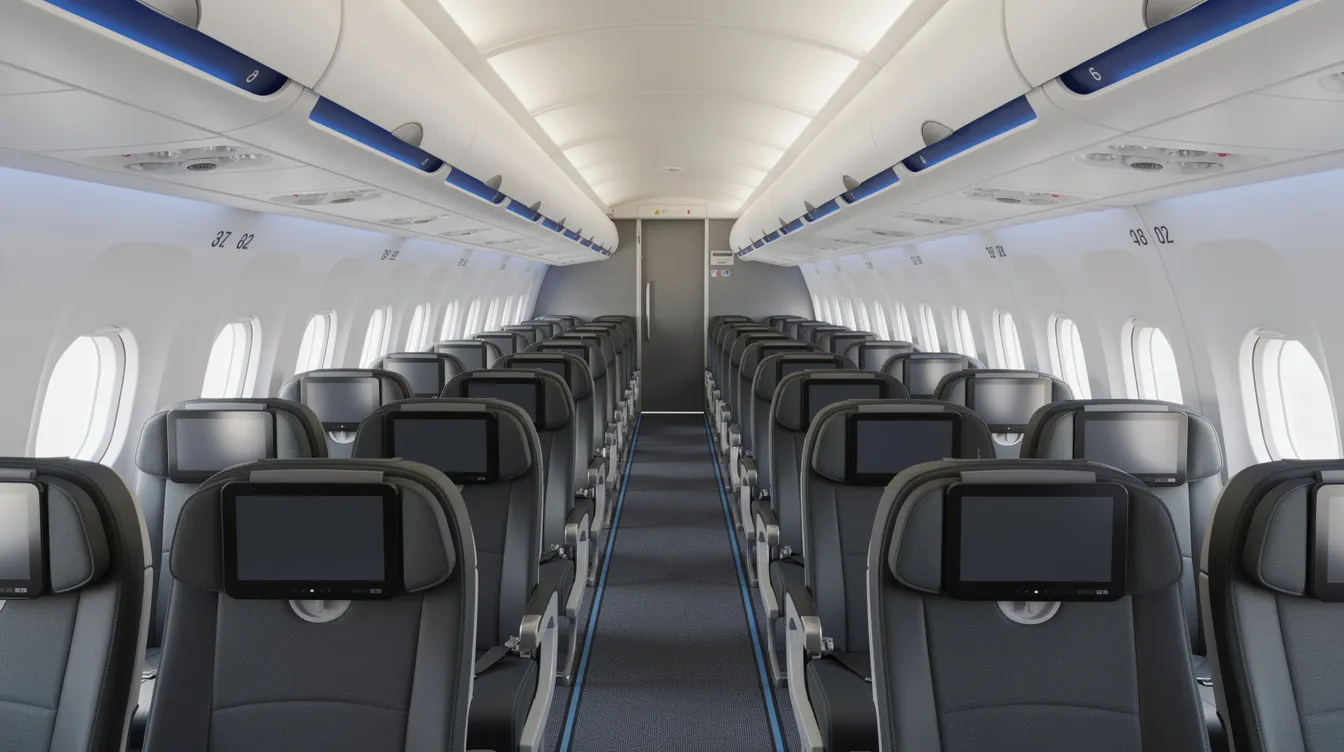
The Boeing 737-800 typically seats 162 to 189 passengers depending on airline configurations—most in a 3-3 economy class arrangement, though some carriers add first or premium economy cabins.
Key specs: range of approximately 2,935 nautical miles, typical cruising speed around 530 mph, wingspan of 124 ft 10 in, and tail height of roughly 41 ft 2 in. The aircraft is powered by twin CFM56-7B engines known for reliable performance.
Many airlines utilize the Boeing 737-800 for short- to medium-haul flights. Major operators include American Airlines, Gol, and Ryanair-each with different seat maps and cabin products across their fleet.
The private alternative: a flight via BlackJet carries 4–16 passengers with fully tailored, spacious seating and no need to study crowded seat maps. It is a fundamentally different experience in every measure.
Decoding American Airlines B738 Seat Map and Cabin Layouts
A seat map is a schematic diagram showing every seat, lavatory, galley, and exit on the plane. Reservation systems may label the Boeing 737-800 738 as "738" or "73H," and airlines often have multiple interior version variants with different seat counts.
American Airlines configures its 737-800 with 172 seats: 16 first-class seats in a 2-2 arrangement, a main cabin extra section with additional legroom, and standard economy in a 3-3 layout.
First Class on American Airlines' 737-800 has 16 seats. Premium Economy on American Airlines' 737-800 has 24 seats. Economy Class accommodates 132 passengers.
Gol's 186-seat Boeing 737-800 uses a denser economy layout with a small extra-legroom section (GOL+ Conforto) in the forward cabin-designed for domestic routes across South America.
Cabin lengths of the Boeing 737-800 are approximately 39.5 meters (129 feet 8 inches), and seat maps show galleys, lavatories—including accessible lavatory locations and diaper-changing table icons—emergency exits, and sometimes service-animal seating zones.
Always check the seat map for no-window seats (e.g., Gol's 10A, 11A), limited recline in the last row, and proximity to lavatories and galleys before you select your seat, since these common issues and some seat details or assignments are subject to change by airline or aircraft version.
Seat Data, Dimensions, and Comfort Factors on the Boeing 737-800
Seat width is the distance between armrests, seat pitch is the distance from the same point on one seat to the same point on the row ahead, and recline is the angle from upright. These three numbers define your comfort in every cabin class.
Cabin | Seat Layout | Pitch | Width | Notes |
|---|
First Class | 2-2 | 37 in | 20–21 in | Quieter forward cabin, quick deplaning |
Premium Economy | 3-3 (select rows) | 33–34 in | ~17 in | Exit rows offer up to 39 inches of pitch |
Standard Economy | 3-3 | 30 in | ~17 in | Optimized for longer regional routes |
American Airlines' "Project Oasis" 737-800s deliver this 172-seat layout with pitch as low as 30 inches in the main cabin. Seat pitch varies significantly based on airline configuration; premium classes can exceed 36 inches, while common pitch in economy class on budget airlines can reduce legroom to around 28 to 30 inches.
Some seats have non-reclining backs—particularly rear rows and exit rows—and fixed or non-movable armrests that restrict hip room. Proximity to galleys can increase noise levels, and the wing area affects turbulence perception. These trade-offs matter on a two- or three-hour flight and should inform every seat selection.
In-Seat Amenities, Tech, and Wi-Fi Quality
Modern Boeing 737-800 cabins emphasize connectivity over built-in screens. The change is driven by retrofit economics and personal device adoption.
Adjustable headrests and movable armrests vary by carrier and sub-fleet. USB ports are available on some premium class seats, and American Airlines' Oasis aircraft include 110V AC power at every seat.
Wi-fi quality ranges from basic messaging and email to HD streaming and video calls. American Airlines' Boeing 737-800 fleet generally supports streaming-capable wifi, with entertainment options streamed to personal devices instead of universal seatback screens.
Modern Boeing 737-800 aircraft can feature larger pivot-style overhead storage bins. Overhead bin sizes and cabin lighting are improved in newer or refurbished models, and the Boeing Sky Interior includes modern LED lighting and larger overhead bins.
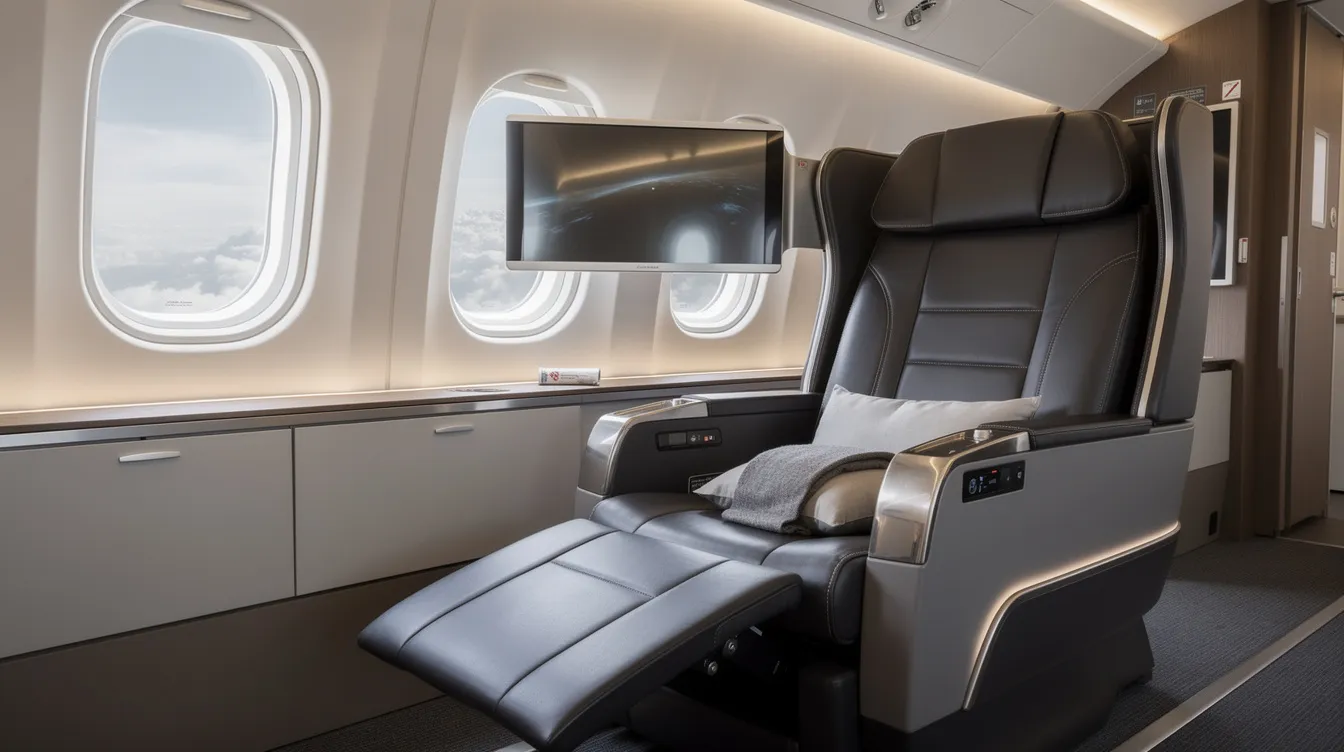
Privacy features such as partial dividers exist in premium economy or first, but economy cabins rarely offer enclosed sides. Understanding these details before you book helps set realistic expectations for any aircraft type.
Safety, Accessibility, and Special Seating on B738 Aircraft
All Boeing 737-800 (738) aircraft must meet strict FAA and EASA safety regulations, with clearly marked emergency exits and required safety equipment throughout the cabin.
Emergency exit rows provide extra legroom but carry restrictions: no infants, minimum mobility requirements, and sometimes limited recline.
Seat maps mark no-window seats, lavatories with diaper-changing tables, and wheelchair accessible lavatory positions—typically near the front or over-wing exits.
Some airlines in Europe and Asia arrange special rows for bassinet positions or service-animal seating, shown as icons on the site's seat map legend.
Passengers should always confirm safety and accessibility needs with prior notice to the airline, as aircraft type, seat assignments, and accessibility arrangements are subject to operational and regulatory change, even within Boeing 737-800 variants in the same fleet.
Commercial B738 Economy Class vs Private Jet Experience with BlackJet
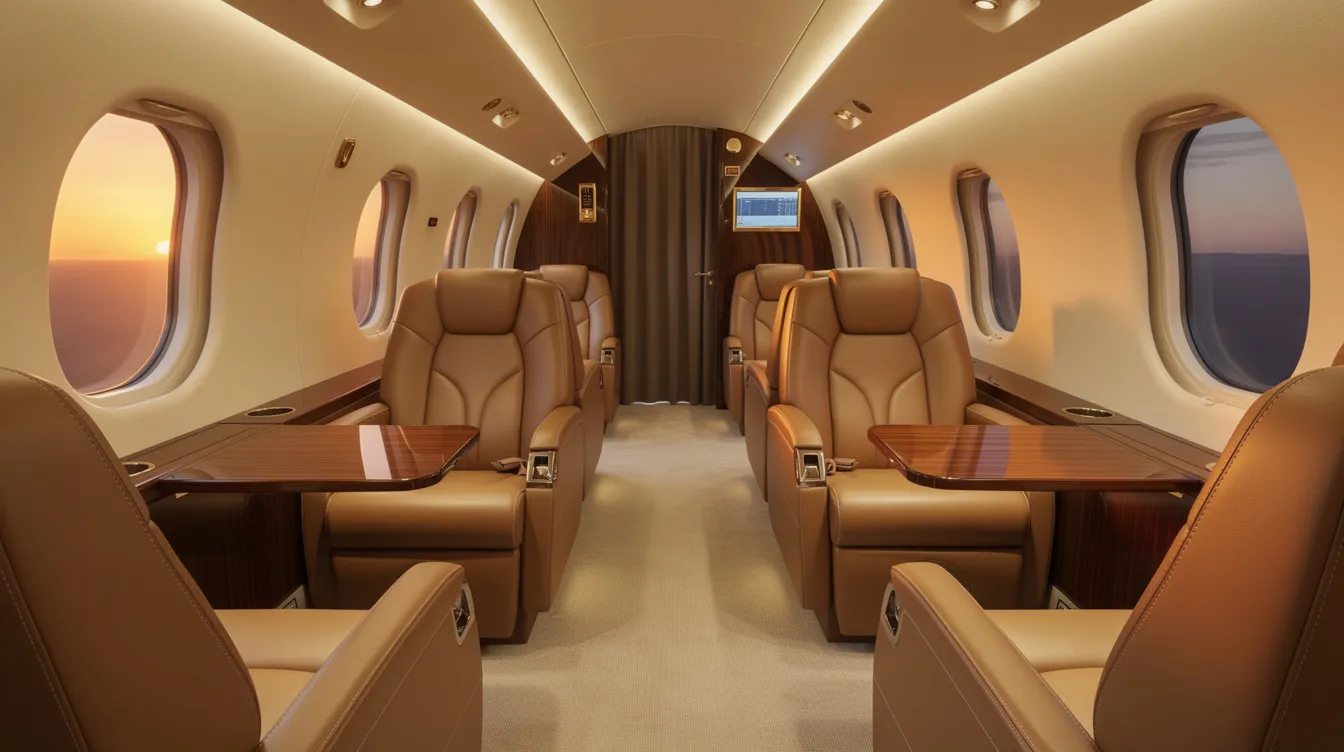
A fully loaded Boeing 737-800 carries 160–180 passengers in economy-heavy configurations. A private jet via BlackJet typically carries 4–16 people with customizable seating and bespoke catering—no standard seat map constraints.
Commercial 737-800 flights typically require 90–120 minutes of check-in and boarding at busy hub airports like Dallas. Private flights allow arrival just 15–30 minutes before departure, and private charters access over 5,000 airports globally—including smaller fields that commercial service cannot reach.
Concrete scenario: a 2.5-hour domestic flight takes roughly 4–5 hours door-to-door on a commercial Boeing 737 800. A BlackJet Jet Card can reduce that to approximately 2.5–3 hours—a private charter can reduce total travel time by half.
BlackJet's jet card model provides prepaid access across multiple aircraft categories, letting members find flights by aircraft type and choose the right cabin size instead of being locked into a single narrow-body like the 738. Every flight is carbon neutral at no extra cost.
While some operators offer VIP-configured Boeing 737-800 charters, BlackJet typically matches travelers with more efficient midsize or large-cabin jets with ergonomic seating and optimized private plane layouts unless group speed or capacity justifies airliner-sized equipment.
How to Choose the Best B738 Seat – and When to Upgrade to Private
Many travelers obsess over the perfect 737-800 seat map choice. The best option depends on your priorities—legroom, speed of deplaning, noise level, or budget.
Optimizing your 738 seat map:
Front premium cabin: rows 1–4 are the quietest section of the cabin, with quick exit and earlier service on most American Airlines aircraft.
Extra-legroom rows (e.g., AA Main Cabin Extra, Gol premium economy rows 1–5) deliver added pitch for taller passengers.
Exit rows around row 16–17 offer generous legroom but may have movable armrests and non-reclining backs on some aircraft.
Avoid seats near lavatories, last rows with limited recline, and no-window positions, as these common seating issues can mean more noise, less comfort, or an obstructed view. Always update your knowledge by checking the specific airline's seat map, since the exact layout and seat features are subject to change for the Boeing 737-800 version you are flying.
Stepping up to private with BlackJet:
Tight multi-city schedules where commercial connections on B738s introduce delays.
Confidential board meetings where privacy in an open 3-3 economy class or even premium economy is inadequate.
Group travel where a single private cabin replaces multiple rows spread across a commercial 737-800 seat map.
Whether you are selecting a seat for your next commercial flight or weighing the leap to private aviation, understanding aircraft B738 seating is the first step toward a smarter trip.
Quick Answers: What "B738" Means and How Seating Is Arranged
"B738" is the ICAO and reservation-system code for the Boeing 737-800, part of Boeing's Next Generation family of narrow-body aircraft. The Boeing 737-800 is one of the most widely operated single-aisle aircraft in the world, and knowing how its seat layout works can save you hours of discomfort on medium-haul routes.
The Boeing 737-800 typically seats 162 to 189 passengers depending on airline configurations—most in a 3-3 economy class arrangement, though some carriers add first or premium economy cabins.
Key specs: range of approximately 2,935 nautical miles, typical cruising speed around 530 mph, wingspan of 124 ft 10 in, and tail height of roughly 41 ft 2 in. The aircraft is powered by twin CFM56-7B engines known for reliable performance.
Many airlines utilize the Boeing 737-800 for short- to medium-haul flights. Major operators include American Airlines, Gol, and Ryanair—each with different seat maps and cabin products across their fleet.
The private alternative: a flight via BlackJet carries 4–16 passengers with fully tailored, spacious seating and no need to study crowded seat maps. It is a fundamentally different experience in every measure.
Decoding B738 Seat Maps and Cabin Layouts
A seat map is a schematic diagram showing every seat, lavatory, galley, and exit on the plane. Reservation systems may label the Boeing 737-800 738 as "738" or "73H," and airlines often have multiple interior version variants with different seat counts.
American Airlines configures its 737-800 with 172 seats: 16 first-class seats in a 2-2 arrangement, a main cabin extra section with additional legroom, and standard economy in a 3-3 layout, but groups of a similar size might instead compare private jet options for 15 passengers to gain more privacy and flexibility.
First Class on American Airlines' 737-800 has 16 seats. Premium Economy on American Airlines' 737-800 has 24 seats. Economy Class accommodates 132 passengers.
Gol's 186-seat Boeing 737-800 uses a denser economy layout with a small extra-legroom section (GOL+ Conforto) in the forward cabin, designed for domestic routes across South America.
Cabin lengths of the Boeing 737-800 are approximately 39.5 meters (129 feet 8 inches), and seat maps show galleys, lavatories—including accessible lavatory locations and diaper-changing table icons—emergency exits, and sometimes service-animal seating zones.
Always check the seat map for potential issues such as no-window seats (e.g., Gol's 10A, 11A), limited recline in the last row, and proximity to lavatories and galleys before you select your seat, and remember that some seat details and assignments are subject to change by airline or aircraft version.
Seat Data, Dimensions, and Comfort Factors on the Boeing 737-800
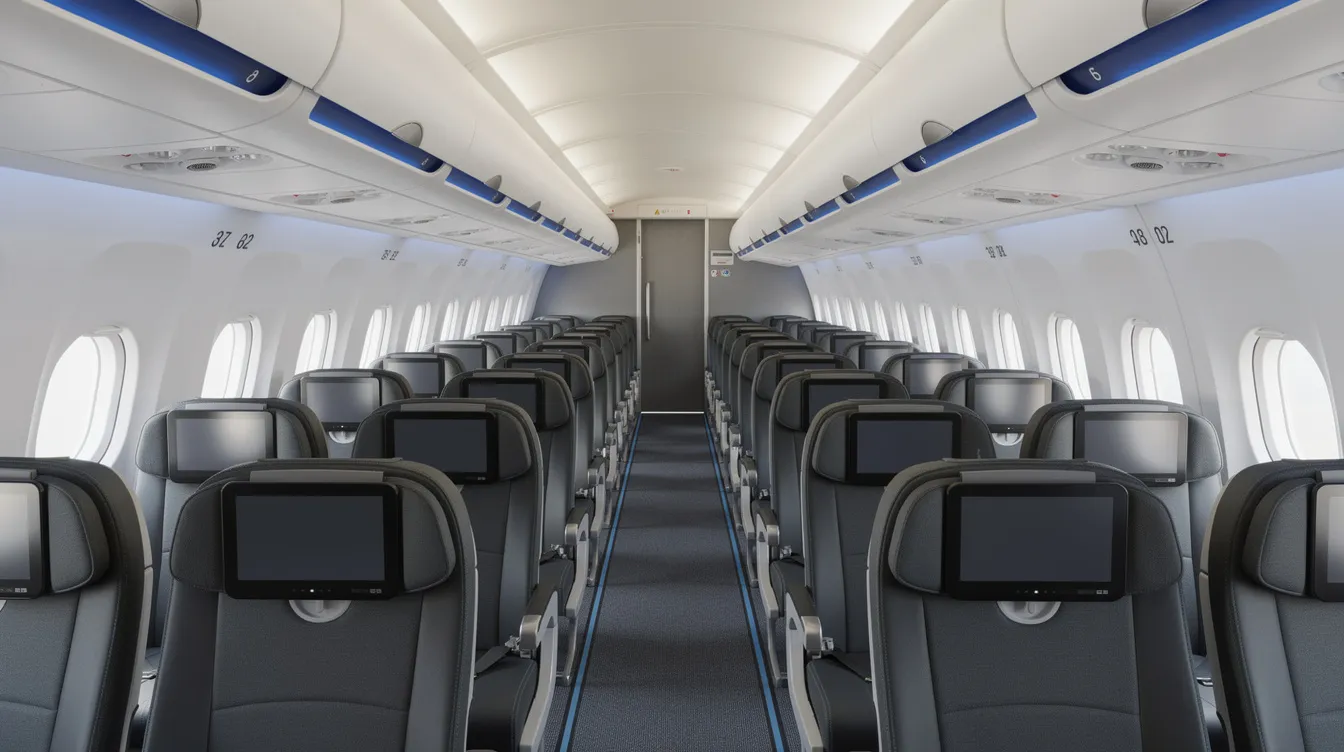
Seat width is the distance between armrests, seat pitch is the distance from the same point on one seat to the same point on the row ahead, and recline is the angle from upright. These three numbers define your comfort in every cabin class.
Cabin | Seat Layout | Pitch | Width | Notes |
|---|
First Class | 2-2 | 37 in | 20–21 in | Quieter forward cabin, quick deplaning |
Premium Economy | 3-3 (select rows) | 33–34 in | ~17 in | Exit rows offer up to 39 inches of pitch |
Standard Economy | 3-3 | 30 in | ~17 in | Optimized for longer regional routes |
American Airlines' "Project Oasis" 737-800s deliver this 172-seat layout with pitch as low as 30 inches in the main cabin. Seat pitch varies significantly based on airline configuration; premium classes can exceed 36 inches, while common pitch in economy class on budget airlines can reduce legroom to around 28 to 30 inches.
Some seats have non-reclining backs—particularly rear rows and exit rows—and fixed or non-movable armrests that restrict hip room. Proximity to galleys can increase noise levels, and the wing area affects turbulence perception. These trade-offs matter on a two- or three-hour flight and should inform every seat selection.
In-Seat Amenities, Tech, and Wi-Fi Quality
Modern Boeing 737-800 cabins emphasize connectivity over built-in screens. The change is driven by retrofit economics and personal device adoption.
Adjustable headrests and movable armrests vary by carrier and sub-fleet. USB ports are available on some premium class seats, and American Airlines' Oasis aircraft include 110V AC power at every seat.
Wi-fi quality ranges from basic messaging and email to HD streaming and video calls. American Airlines' Boeing 737-800 fleet generally supports streaming-capable wifi, with entertainment options streamed to personal devices instead of universal seatback screens.
Modern Boeing 737-800 aircraft can feature larger pivot-style overhead storage bins. Overhead bin sizes and cabin lighting are improved in newer or refurbished models, and the Boeing Sky Interior includes modern LED lighting and larger overhead bins.
Privacy features such as partial dividers exist in premium economy or first, but economy cabins rarely offer enclosed sides. Understanding these details before you book helps set realistic expectations for any aircraft type.
Safety, Accessibility, and Special Seating on B738 Aircraft
All Boeing 737-800 (738) aircraft must meet strict FAA and EASA safety regulations, with clearly marked emergency exits and required safety equipment throughout the cabin.
Emergency exit rows provide extra legroom but carry restrictions: no infants, minimum mobility requirements, and sometimes limited recline.
Seat maps mark no-window seats, lavatories with diaper-changing tables, and wheelchair accessible lavatory positions—typically near the front or over-wing exits.
Some airlines in Europe and Asia arrange special rows for bassinet positions or service-animal seating, shown as icons on the site's seat map legend.
Passengers should always confirm safety and accessibility needs with the airline in advance, as aircraft type, seat assignments, and accessibility arrangements are subject to operational and regulatory change even with prior notice, and specific configurations vary even among Boeing 737-800 variants within the same fleet.
Commercial B738 Economy vs Private Jet Experience with BlackJet
A fully loaded Boeing 737-800 carries 160–180 passengers in economy-heavy configurations. A private jet via BlackJet typically carries 4–16 people with customizable seating and bespoke catering—no standard seat map constraints — so understanding private jet sizes and cabin categories helps you pick the right fit for your trip.
Commercial 737-800 flights typically require 90–120 minutes of check-in and boarding at busy hub airports like Dallas. Private flights allow arrival just 15–30 minutes before departure, and private charters access over 5,000 airports globally—including smaller fields that commercial service cannot reach.
Concrete scenario: a 2.5-hour domestic flight takes roughly 4–5 hours door-to-door on a commercial Boeing 737 800. A BlackJet Jet Card can reduce that to approximately 2.5–3 hours—a private charter can reduce total travel time by half.
BlackJet's jet card model provides prepaid access across multiple aircraft categories, letting members find flights by aircraft type and choose the right cabin size instead of being locked into a single narrow-body like the 738. For more detail on jet card costs and membership pricing, compare hourly rates, deposit levels, and fees across leading providers. Every flight is carbon neutral at no extra cost.
While some operators offer VIP-configured Boeing 737-800 charters, BlackJet typically matches travelers with more efficient midsize or large-cabin jets with ergonomic seating and optimized private plane layouts, drawing from a wide range of private jet types for different traveler needs unless group speed or capacity justifies airliner-sized equipment.
Frequently Asked Questions (FAQs) About Boeing 737-800 Seating and Private Jet Alternatives
Q1: What is the typical seating capacity of the Boeing 737-800?A1: The Boeing 737-800 typically seats between 162 and 189 passengers depending on the airline's configuration, with common layouts including economy, premium economy, and first-class cabins.
Q2: How does American Airlines configure its Boeing 737-800 seating?A2: American Airlines configures its 737-800 with 172 seats: 16 in First Class arranged 2-2, 24 in Premium Economy, and 132 in standard Economy with a 3-3 layout.
Q3: What are the main comfort differences between commercial Boeing 737-800 flights and private jet travel?A3: Commercial flights carry many passengers with fixed seating and limited privacy, while private jets offer customizable seating, bespoke catering, fewer passengers (4–16), and access to more airports with flexible scheduling.
Q4: Are there specific seats on the 737-800 that offer more legroom?A4: Yes, exit rows and premium economy sections typically offer more legroom, with exit rows providing up to 39 inches of pitch, but these seats may have restrictions on recline and armrest movement.
Q5: Can I book a private charter on a Boeing 737-800?A5: Yes, while BlackJet usually matches travelers with midsize or large-cabin jets, some operators offer VIP-configured Boeing 737-800 charters for larger groups or special missions.
Q6: How does BlackJet ensure safety and sustainability on private flights?A6: BlackJet partners with licensed operators holding appropriate certifications, adheres to strict safety protocols, and offers carbon-neutral flights at no additional cost to members.
Q7: What amenities can I expect on a Boeing 737-800 commercial flight?A7: Amenities vary by airline but often include USB power outlets, Wi-Fi capable of streaming, adjustable headrests, and larger overhead bins on modern or refurbished aircraft.
Q8: How much time can I save by choosing private jet travel over a commercial 737-800 flight?A8: Private jet travelers can often arrive just 15–30 minutes before departure and access over 5,000 airports worldwide, potentially cutting total travel time by half compared to commercial flights requiring 90–120 minutes check-in.
Q9: What should I consider when selecting a seat on a Boeing 737-800?A9: Consider legroom, noise levels (front cabins are quieter), proximity to galleys or lavatories (which can increase noise), and whether the seat reclines or has movable armrests.
Q10: How do BlackJet Jet Card memberships enhance the private aviation experience?A10: Jet Card memberships provide prepaid access to a variety of aircraft types, flexible booking, predictable hourly rates, and carbon-neutral flights, offering a seamless alternative to commercial flying or jet ownership.
How to Choose the Best B738 Seat – and When to Upgrade to Private
Many travelers obsess over the perfect 737-800 seat map choice. The best option depends on your priorities—legroom, speed of deplaning, noise level, or budget.
Optimizing your 738 seat map:
Front premium cabin: rows 1–4 are the quietest section of the cabin, with quick exit and earlier service on most American Airlines aircraft.
Extra-legroom rows (e.g., AA Main Cabin Extra, Gol premium economy rows 1–5) deliver added pitch for taller passengers.
Exit rows around row 16–17 offer generous legroom but may have movable armrests and non-reclining backs on some aircraft.
Avoid seats near lavatories, last rows with limited recline, and no-window positions, as these are common seating issues. Always update your knowledge by checking the specific airline's seat map, since the exact seat map and seat features are subject to change for the specific Boeing 737-800 version you are flying.
Stepping up to private with BlackJet:
Tight multi-city schedules where commercial connections on B738s introduce delays.
Confidential board meetings where privacy in an open 3-3 economy class or even premium economy is inadequate.
Group travel where a single private cabin replaces multiple rows spread across a commercial 737-800 seat map.
Flight support and connectivity options on the 737-800 depend on the airline and may include USB power outlets—but they will never match the seamless, personalized experience of BlackJet’s premium private jet service. When the seat map becomes the bottleneck, explore BlackJet Jet Card membership and broader Jet Card pricing structures and benefits for predictable hourly rates, on-demand access, and carbon-neutral flights that bypass the compromises of Boeing 737-800 economy seating.


 Sign up with google
 Sign up with Apple