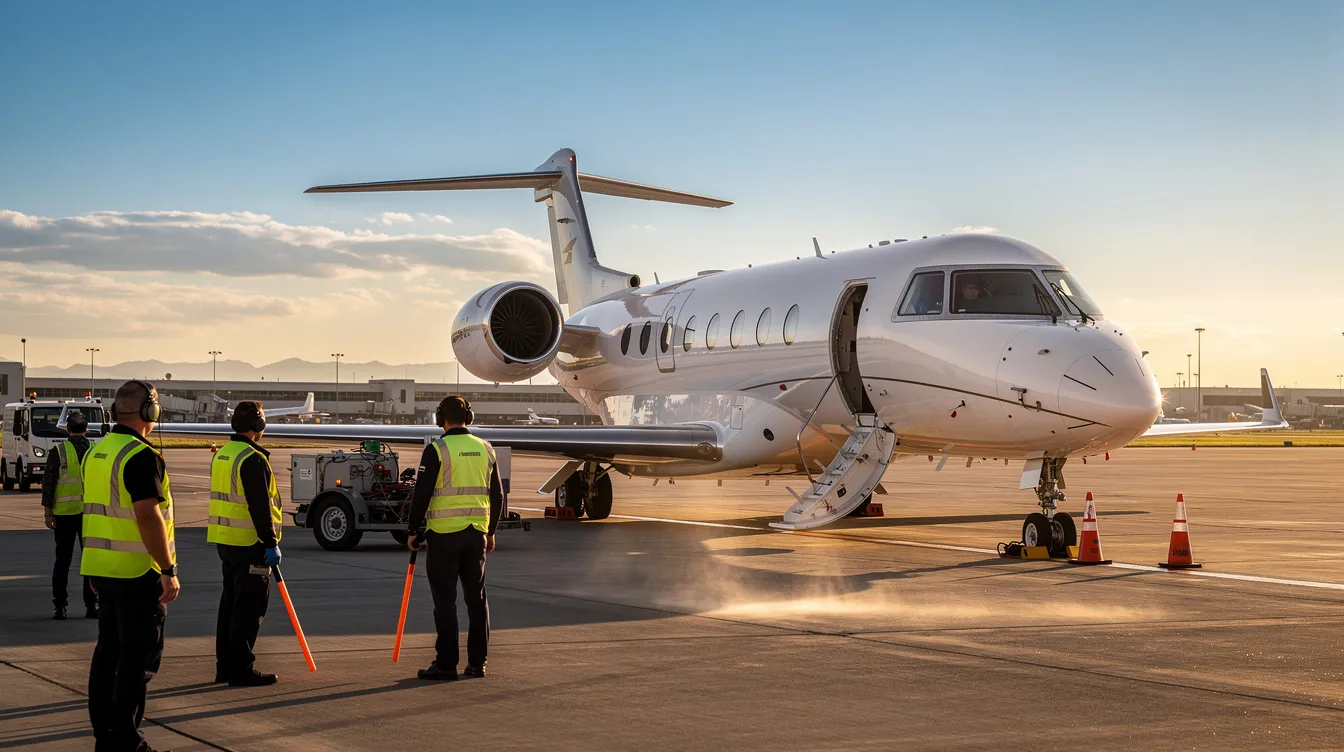
Private jets are more than a symbol of prestige—they are an efficient air travel tool for moving small groups with speed, privacy, and schedule control. If you searched for "private jet Wikipedia," this guide works like a current, practical Wikipedia-style overview of private jets, with added context on how travelers actually use them today through charter and jet card programs such as BlackJet rather than aircraft ownership alone.
Designed for frequent business travelers, executives, and high-net-worth leisure flyers who want flexible, safe, and luxury travel without owning an aircraft, private jets typically seat 4 to 19 passengers and operate on demand with no fixed schedules. Below, you'll find the key facts on private jet definitions, aircraft categories, and cabin classes, the history of business jets, access models, safety and regulation, sustainability, booking technology, and common questions—useful if you are comparing private aviation options for the time savings, convenience, and control that commercial flights often cannot match.
They can even be used for medical evacuations when speed is critical.
Overview of Private Jets and Business Aviation
If you have ever searched this subject on Wikipedia, you know the page is always in light mode and always uses a small font size - its content is as wide as possible for your browser window, yet it does not fully reflect the modern private-aviation world and was last edited without covering newer access models. This guide fills that gap, offering a Wikipedia-style reference while reflecting BlackJet's expertise in jet card access rather than ownership.
Consider a simple comparison: a business executive flying from New York to Chicago spends roughly 5–6 hours door-to-door via commercial flight. A private aircraft cuts that to approximately 2.5 hours, including ground transit, boarding at a private terminal, and landing at a closer airport. That time savings compounds across dozens of annual trips.
Typical use cases for business jets span a wide range, and understanding the types of private jets for every traveler helps align each mission with the right aircraft class:
Executive roadshows - visiting three or four cities in a single day
Investor and analyst trips requiring last-minute schedule changes
High-net-worth leisure travel to remote destinations or weekend getaways to Miami
Sports teams and entertainment groups are moving personnel and equipment
Government and VIP missions, including diplomatic transport
Medical evacuations where commercial options are too slow
History and Evolution of Private Jets
The beginning of dedicated business aviation dates back to the 1950s. The era of purpose-built jets started with the Lockheed JetStar's first flight in 1957, followed by the Learjet 23 in 1963, which made private jets accessible to a broader class of corporate buyers. Through the 1980s and 1990s, mid-size jets expanded the market, and very light jets emerged in the mid-2000s with aircraft like the Eclipse 500 and Citation Mustang.
Key milestones that span decades of innovation:
1957 - Lockheed JetStar, first purpose-built business jet
1963 - Learjet 23 democratizes private flying for corporations
1966 - Gulfstream II introduces large-cabin, long-range capability
1990s - Fractional ownership programs (NetJets) change the access model
Late 1990s–2000s - Jet card programs emerge, offering prepaid hourly blocks
2005–2007 - VLJs like the Citation Mustang and Phenom 100 enter service
2014 - Gulfstream G650ER certified, setting ultra-long-range benchmarks
2018 - Bombardier Global 7500 enters service with record range and cabin space
Boeing Business Jets also grew during this period, adapting commercial airliners into VIP private aircraft for governments and ultra-high-net-worth individuals.
Categories of Private Jets and Aircraft Classes
Private jets are grouped by cabin size, weight, and range. For travelers comparing options, the best small private aircraft for every need illustrates how pistons, turboprops, VLJs, and light jets fit different missions. BlackJet's jet card programs provide access across multiple categories, making it simple to match the right aircraft to each mission. Here is a list of the principal classes:
Category | Passenger Capacity | Range (nmi) | Typical Use Cases | Examples |
|---|
Very Light Jets (VLJs) | 4–6 | ~1,000–1,200 | Regional hops, short trips | Eclipse 500, Citation Mustang, HondaJet HA-420 |
Light Jets | 6–8 | ~1,953 | Short-to-medium legs, regional airports | Citation CJ3+, Embraer Phenom 300, Learjet 45 |
Mid-Size Jets | 7–9 | 2,000–3,200 | Coast-to-coast flights, business meetings | Citation XLS+, Hawker 850XP, Praetor 500 |
Super Mid-Size Jets | 10–11 | ~3,420 | Transatlantic flights, long-range flexibility | Gulfstream G280, Challenger 350, Falcon 2000 |
Heavy Jets | 10–16 | 4,000–7,500+ | Intercontinental travel, large groups | Gulfstream G450, Challenger 605, Falcon 900 |
Business Airliners (BBJ) | 12–19+ | 7,000–10,000+ | VIP transport, governments, large entourages | Boeing BBJ, Airbus Corporate Jets |
Very Light Jets (VLJs)
Very light jets have a maximum takeoff weight of 10,010 lb and seat 4–6 passengers. With a range of around 1,000–1,200 nmi, they suit trips under 2.5 hours - Los Angeles to Las Vegas, or Toronto, Canada, to New York. Their design allows access to thousands of small airports with runways as short as 3,000 feet. Cabin space is compact but efficient, with club seating and a limited galley. Examples include the Eclipse 500, Cessna Citation Mustang, Embraer Phenom 100, and HondaJet HA-420.
Light Jets
Light jets typically accommodate 6–8 passengers over 1953 nmi, offering enclosed lavatory facilities and room for meaningful baggage. Popular models include the Cessna Citation CJ3+, Citation M2, Embraer Phenom 300, and Learjet 45. These aircraft handle routes like New York–Miami or Paris–Marrakesh with ease, and their ability to use smaller regional airports reduces ground time versus commercial hubs. For cost-conscious flyers, exploring the cheapest private aircraft and entry-level jets shows how light jets can deliver strong value. Light jets remain a core offering in BlackJet's smaller-cabin jet card tiers.
Mid-Size Jets Mid-size jets seat 7–9 passengers and cover 2,000–3,200 nmi—enough for coast-to-coast U.S. flights or London to Moscow nonstop. With stand-up headroom, larger galleys, and improved lavatories, they offer a comfortable, meeting-friendly cabin for 3–5-hour trips. Popular models include the Citation XLS+, Citation Latitude, Hawker 850XP, and Embraer Praetor 500.
Super Mid-Size Jets
Super mid-size jets can accommodate 10–11 passengers over 3420 nmi, combining wide cabins with high cruise speed (often Mach 0.80+). Models like the Gulfstream G280, Challenger 350/3500, Praetor 600, and Dassault Falcon 2000 series provide separated zones for work and relaxation, advanced connectivity, and optional divans. Some private jets in this class require additional stops for refueling on long trips, but many transatlantic routes - such as Miami–São Paulo - are within nonstop range. These jets are popular among BlackJet members who need long-range flexibility without full heavy-jet pricing.
Heavy Jets and Ultra-Long-Range Jets
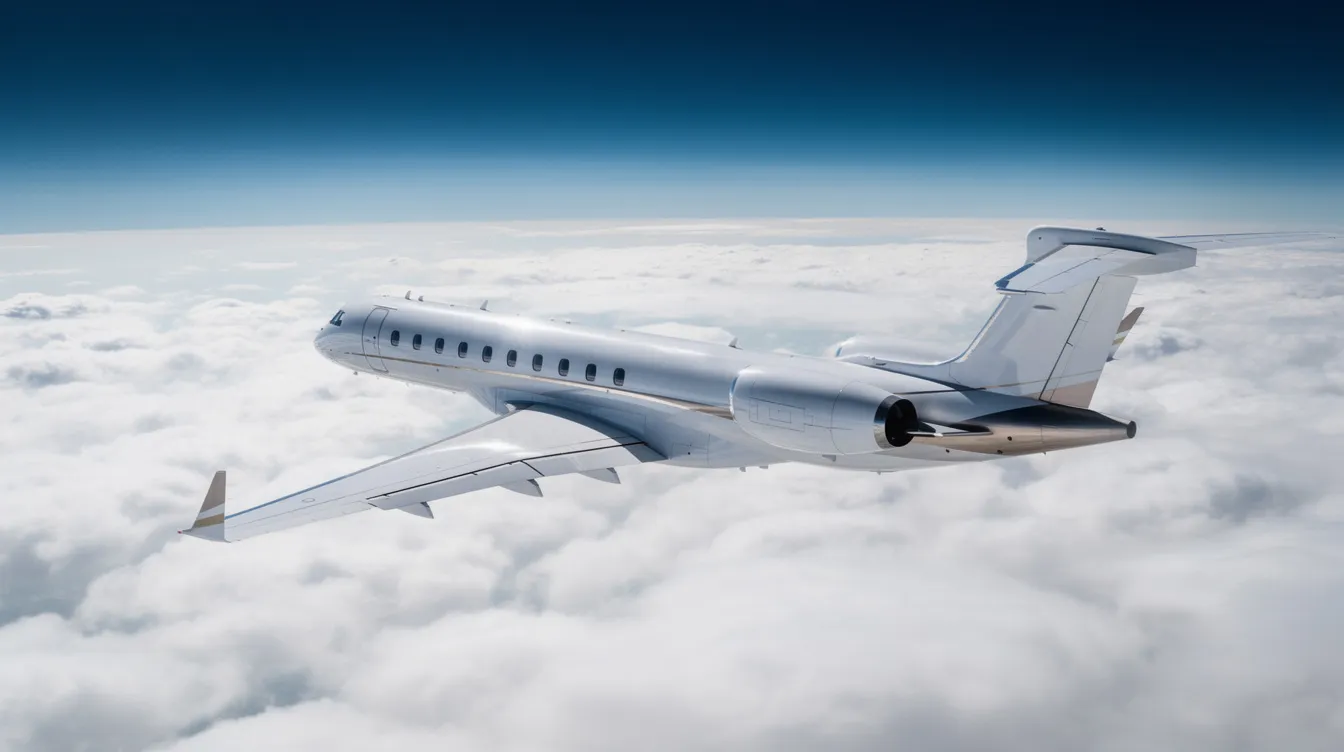
Heavy jets are the most expensive class of private jets, carrying 10–16 passengers with ranges from 4,000 to 7,500+ nmi. For larger groups, guides to the best private jet for 15 passengers highlight how cabin layout and range influence aircraft choice. Heavy models include the Gulfstream G450, Challenger 605, and Falcon 900. Ultra-long-range flagships - the G650ER, G700, Global 6500/7500, and Falcon 7X/8X - feature full-size galleys, lie-flat beds, crew rest areas, and multiple living zones. These are the largest business jets outside the airliner-based category and serve nonstop intercontinental itineraries.
Business Airliners and Boeing Business Jets (BBJ)
Business airliners converted into jets are called bizliners. The Boeing BBJ family - based on the 737 MAX, 787, and 777X - and Airbus Corporate Jets offer cabin configurations with multiple bedrooms, conference rooms, and lounges. A BBJ 787 can exceed 10,000 nmi of range, and guides to the best private jet for 20 passengers explain when these very large cabins make sense for group missions. These aircraft are typically operated by governments, Fortune 100 companies, and royal families, far beyond what most jet card members require, though some organizations evaluate charter plane options for 100 passengers for large-scale travel. BlackJet focuses on light, mid-size, super mid-size, and heavy business jets rather than BBJ-scale aircraft.
How Private Jet Access Works: Charter, Ownership, Fractional, and Jet Cards
Four main access models define modern private aviation: on-demand charter, full ownership, fractional ownership, and jet cards. Each balances capital outlay, flexibility, and control differently, and an overview of the private jet price list and access options helps put these models in a financial context. Let us discuss how they compare.
On-Demand Private Jet Charter
Charter means booking individual flights without a long-term commitment. Pricing includes hourly rates by aircraft category - light jets cost roughly $3,500–$6,500 per hour, while ultra-long-range jets reach $11,000–$17,000+ - plus repositioning fees, landing charges, and fuel surcharges. Travelers weighing whether chartering a private jet is worth it can compare these costs to the time savings and flexibility gained, and more detailed breakdowns of how much it costs to charter a small plane highlight how trip length and aircraft type drive pricing. Pay as you fly resembles commercial airline payment models, but price variability and availability uncertainty on peak days are drawbacks. BlackJet's jet card improves on charter by locking in rates and guaranteeing access.
Full Ownership of a Private Jet
Owning a private jet means acquiring, registering, and managing an aircraft. Purchase prices for new jets range from $3.5 million for light jets to $80+ million for ultra-long-range models, and buyers evaluating premium UK private jets for sale also factor in resale value and maintenance programs. Annual fixed costs - crew salaries, hangarage, insurance - add hundreds of thousands. Ownership typically makes sense above 200–300 hours of flying per year. For clients who want similar access without tying up capital, BlackJet's jet card programs provide a streamlined alternative.
Fractional Ownership
Fractional ownership allows multiple parties to share aircraft costs. A partner pays one-fourth for a quarter share of an aircraft, gaining a set number of annual hours. Overhead - crew, maintenance, insurance - is split among owners. Fractional ownership operations may be regulated by FAA part 91 or part 135, depending on structure. Limitations include long-term contracts, monthly management fees, and peak-day constraints. Many BlackJet clients who previously held fractional shares have moved to jet cards to regain flexibility.
Jet Card and Membership Programs (BlackJet Focus)
Clients can buy flight time in predetermined hourly blocks - typically 25-hour or 50-hour cards - at fixed rates across cabin types. The BlackJet 25+ Hour Jet Card is designed for frequent flyers who want fixed pricing on mid, super-mid, and large-cabin aircraft. BlackJet's premium private jet card programs let members book via 24/7 digital tools with real-time flight support, guaranteed availability, and transparent pricing based on a single contract. Every member flight is carbon-neutral by default, making BlackJet's offering distinct from many traditional providers.
Operational Advantages of Private Jets
Private jets often fly at higher altitudes than commercial airliners, typically cruising between 40,000 and 45,000 feet, which means smoother air and faster routing. A deeper look at how high a private jet flies compared to commercial flights shows how this altitude advantage reduces turbulence and enables more direct routings. They also have lower cabin altitude pressure, reducing passenger fatigue on longer flights. Private jets can access smaller, regional airports - over 5,000 in the U.S. alone - bringing travelers closer to final destinations. Consider an executive itinerary: Frankfurt–Zurich–Milan and back in one day, a schedule that is virtually impossible on commercial flights.
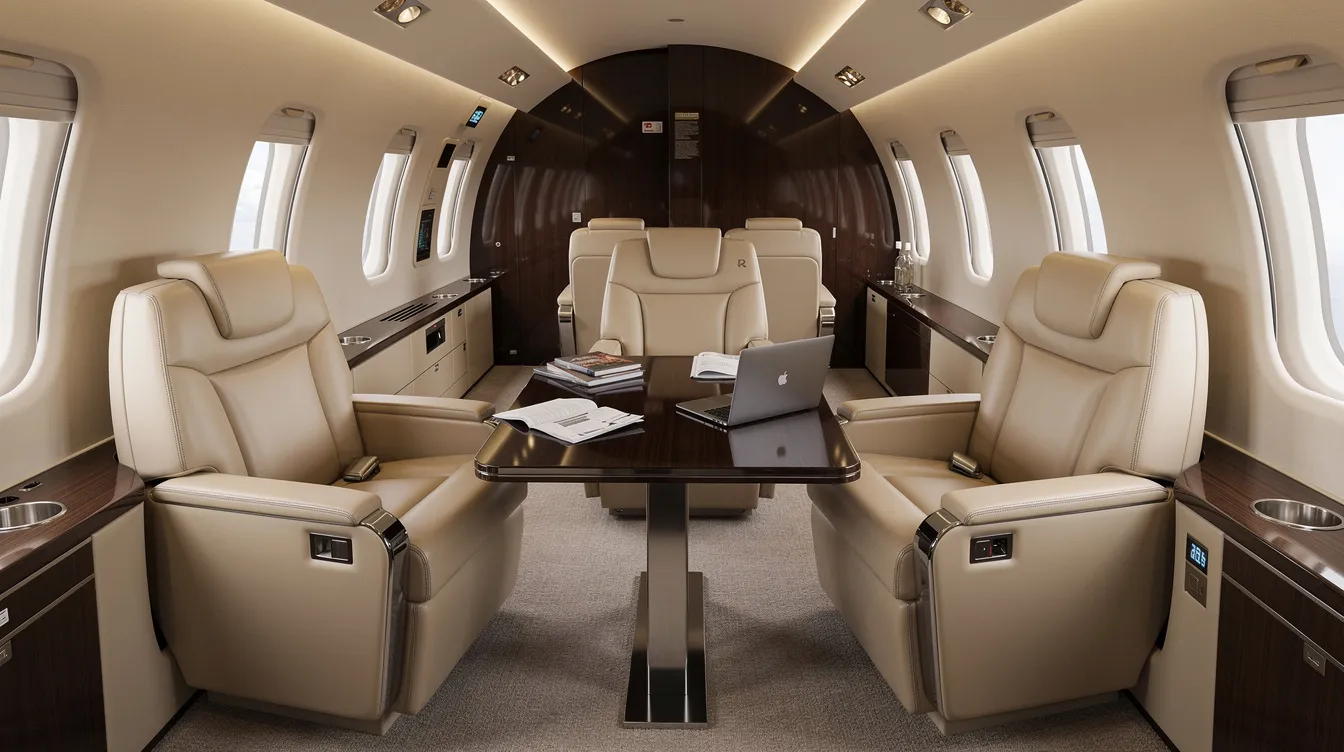
Cabin experience varies by class: VLJs and light jets are functional and efficient, while mid-size jets and above provide true meeting environments with tables, conferencing layouts, and secure connectivity. The entire cabin is exclusively yours, enabling confidential discussions that commercial first class simply cannot match.
Safety, Certification, and Regulation
Private aviation operates under less strict regulatory standards than commercial aviation's Part 121 framework, but Part 135 requirements for charter and jet card operations remain rigorous. Pilots must hold Airline Transport Pilot licenses with type ratings, meet minimum flight-hour requirements, and complete recurrent simulator training. Third-party audits by organizations like ARGUS and Wyvern grade operators on training, maintenance, and operational history. BlackJet requires all partner operators to hold recognized safety accreditations and enforces a "safety first, schedule second" culture - flights may be rescheduled or rerouted based on weather or crew duty-time limits without exception.
Environmental Impact and Sustainable Private Aviation
Private jets generate thousands of tons of CO2 emissions annually, and private jet travelers can fly over 350,000 km each year. Private jets have a disproportionate carbon footprint compared to commercial flights, a reality that has drawn public scrutiny, even as more travelers explore the cheapest private jet and other affordable options that may reduce waste through right-sizing aircraft to each mission. Tracking projects for private jets have gained media attention, and regulators are beginning to respond.
The industry is responding through change. Sustainable Aviation Fuel, produced from renewable feedstocks, can reduce lifecycle emissions significantly. Many newer business jets are certified for SAF blends. Carbon offsetting - purchasing verified credits, financing renewable energy, or reforestation - addresses remaining emissions. BlackJet ensures every member flight is carbon neutral through vetted offset programs, aligning luxury travel with responsible stewardship. Trip optimization - direct routing, appropriate aircraft sizing, efficient climb profiles - further reduces fuel burn.
Technology, Digital Booking, and the Future of Private Jets
Digital platforms have transformed how members access private jets, whether booking whole-aircraft charters or simply buying a seat on a private jet via shared and semi-private models. BlackJet's platform lets members search availability, request flights, and confirm itineraries 24/7 with instant pricing by aircraft category. Real-time flight support monitors weather and ATC delays, proactively adjusting routings. Data security practices include discreet ground arrangements for high-profile clients. As hybrid-electric propulsion and advanced automation mature, the next generation of aircraft—especially among the top private jets in the world—will deliver even greater efficiency.
Frequently Asked Questions About Private Jets and Jet Cards
How much does it cost to fly on a private jet per hour?
Rates range from approximately $3,500/hr for very light jets to $17,000+/hr for ultra-long-range jets. Jet card rates average around $11,578/hr across categories, and broader guides to jet card cost and membership pricing explain how hourly rates, fees, and policies differ by provider.
What is the difference between a light jet and a very light jet?
VLJs seat 4–6 passengers with ~1,200 nmi range; light jets carry 6–8 passengers over ~1,953 nmi with larger cabins and enclosed lavatories.
How far can a mid-size jet fly without stopping?
Most mid-size jets cover 2,000–3,200 nmi nonstop - sufficient for coast-to-coast U.S. flights.
What is a jet card, and how does it differ from charter?
A jet card provides prepaid hours at fixed rates with guaranteed availability, while charter pricing fluctuates per trip. High-utilization travelers may compare these structures using a detailed breakdown of the 100-hour jet card cost and value.
Are private jets safe?
Yes. Part 135 operators must meet strict requirements for pilot training, maintenance, and operational standards. Premium providers like BlackJet add third-party safety audits, and comparisons of NetJets jet card costs and programs often highlight how different operators approach safety and service tiers.
How does carbon-neutral private flying work?
Providers offset emissions through certified projects and, where available, SAF, ensuring each flight's carbon impact is neutralized.
What is a Boeing Business Jet compared to a regular private jet?
A BBJ is a commercial Boeing airliner - such as the 737 or 787 - converted into a VIP private aircraft with far greater cabin space and range than standard business jets, and it tends to be offered only by top private jet companies known for large-cabin fleets.
If you fly several times a year and value safety, sustainability, and flexibility, discover how BlackJet's jet card programs can reshape your travel.
Conclusion: Elevate Your Travel with Private Jet Excellence
Private jets represent more than luxury—they are a strategic asset for discerning travelers seeking unmatched efficiency, privacy, and control. With options ranging from very light jets to ultra-long-range heavy jets and business airliners, private aviation accommodates diverse mission profiles and passenger needs. BlackJet’s jet card programs offer a seamless, flexible alternative to ownership, combining guaranteed access, transparent pricing, and carbon-neutral flights backed by rigorous safety standards.
By choosing private jet travel, you save valuable time, access remote airports, and enjoy a personalized cabin environment tailored for productivity and comfort. The integration of sustainable aviation fuels and carbon offsetting ensures that your elevated travel experience aligns with responsible environmental stewardship.
Whether for business roadshows, urgent medical evacuations, or exclusive leisure trips, private jets redefine how high-net-worth individuals and executives move around the globe. Discover how BlackJet can unlock premier private jet access, setting a new standard for luxury, safety, and sustainability in modern aviation.


 Sign up with google
 Sign up with Apple