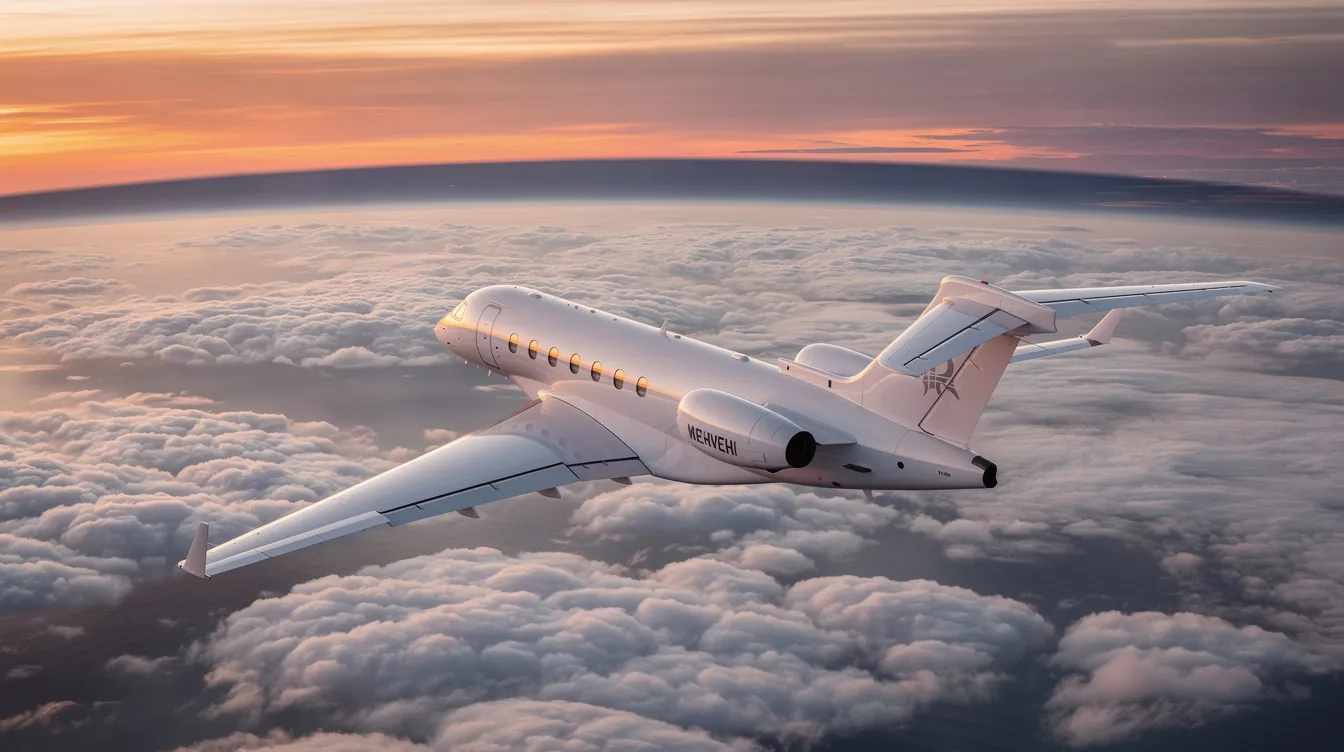
Flying private to Europe is no longer reserved for heads of state and Fortune 10 CEOs. In 2026, a growing number of executives, entrepreneurs, and high-net-worth families are choosing private jet travel for transatlantic trips—not because it signals status, but because the math on time, productivity, and flexibility increasingly justifies the investment. This guide breaks down exactly what a private jet to Europe costs in 2026, what drives that price, and how to fly smarter without sacrificing the experience.
Immediate answer: typical private jet prices to Europe in 2026
Renting a private jet to Europe typically costs between $60,000 and $200,000 for a one-way trip from the United States, with round-trip flights generally running $120,000 to $300,000 or more. The final price depends on aircraft category, departure city, European destination, passenger count, and time of year.
Here is what to expect on the most common routes in 2026:
New York (Teterboro) → London (Luton or Farnborough): A super midsize jet runs roughly $75,000–$100,000 one-way. Long-range jets push to $95,000–$150,000, while ultra long range jets land in the $130,000–$150,000+ range. Round-trip costs are approximately double, plus crew overnight and handling.
Miami → Paris (Le Bourget): The extra flight distance drives one-way pricing to $110,000–$160,000 on a heavy jet or ultra-long-range aircraft. Round trip: $220,000–$320,000+.
Los Angeles → Zurich: A nonstop ultra-long-range mission runs $165,000–$240,000+ one-way, with round trips potentially exceeding $330,000.
To put these numbers in context: eight business-class tickets on a commercial flight from New York to London in peak summer can total $80,000–$120,000. For the same group, a private jet charter delivers an entire aircraft, flexible scheduling, direct routing, and hours saved at the airport—often at only a modest premium when measured per person.
For BlackJet Jet Card members, European missions in 2026 commonly fall between $80,000 and $190,000 round trip, depending on aircraft category, dates, and airports chosen.
Why flying private to Europe is a strategic advantage (not just a luxury)
The clearest advantage of flying private to Europe is time. Skipping TSA queues, departing from regional airports minutes from home, and landing at secondary airports closer to European city centers can reclaim six to ten hours each way compared to a commercial flight through a major hub.
Consider a CEO based in New York who needs to attend a board meeting in London. A private flight from Teterboro departs at 10 p.m., arrives at Farnborough by 9 a.m. local time, and puts the executive in Mayfair for a noon meeting—no overnight hotel, no Heathrow crowds, no wasted morning. Or take a family flying Miami to Nice for summer: a direct private flight avoids connecting through Frankfurt or Madrid and lands steps from the Côte d'Azur.
Onboard privacy and productivity amplify the value. Secure calls, sensitive deal discussions, and the ability to rest properly on overnight flights in stand-up cabins with full berthing seats are not perks—they are operational advantages that offset the higher private jet cost. A connecting commercial itinerary through a congested hub simply cannot compete with the directness of an ultra-long-range flight that goes point to point.
BlackJet Jet Card members lock in access and predictable pricing for these European missions, removing the friction of shopping for a new charter every trip, and can pair that with premium private jet card programs that cover a broad range of aircraft and services.
Private jet hourly rates to Europe by aircraft category
Even for transatlantic private jet flights, pricing starts with the hourly rate. One billable flight hour on the aircraft is the foundational unit, and the total trip budget is built by multiplying that rate by estimated flight hours, then adding operational costs.
Here are 2026 indicative hourly ranges in USD for transatlantic-capable jets, noting that private jet rental costs range from $2,300 to $23,000 per hour depending on aircraft type:
Aircraft Category | Hourly Rate (USD) | Europe Suitability |
|---|
Turboprops | $2,300–$3,500 | Not suitable for transatlantic; daily minimums typically 1.5 hours |
Light jets | $2,500–$4,600 | Not practical nonstop; multiple fuel stops required |
Midsize jets | $4,700–$7,500 | Possible with tech stops from the East Coast; limited payload |
Super midsize jets | $5,500–$8,500 | Strong for East Coast → Western Europe nonstop |
Long range jets | $8,500–$17,000 | Designed for nonstop transatlantic with full payload |
Ultra long-range jets | $11,000–$17,000+ | Ideal for coast-to-coast US → Europe; maximum comfort |
Ultra luxury VIP airliners | $18,000–$23,000 | Boeing Business Jet class; ultimate cabin space |
Hourly aircraft rates scale by category based on jet size and capabilities, so the total private jet rental cost rises as larger, longer-range aircraft add more billable hours and operating expense. In European markets, average hourly rates can also run from approximately €2,600 to €15,000, and chartering a private jet in Europe typically costs between $2,000 and $18,000 per flight hour depending on the mission. Aircraft age can increase rental rates by $100 to $1,000 per hour for newer, lower-time airframes with updated avionics.
For Europe missions, most BlackJet clients choose super midsize, long range, or ultra long range jets. BlackJet's Jet Card fixes an hourly rate by aircraft category, insulating members from seasonal spikes on transatlantic flights.
Total trip vs. hourly rate: how Europe pricing is really built
Focusing only on cost per hour can be misleading for Europe flights. The number that matters is the total door-to-door mission cost, and private jet quotes often include various operational costs in addition to base hourly rates. Chartering a private jet in Europe involves a combination of hourly aircraft rates and logistics fees that add up quickly on long-haul flights, mirroring the broader dynamics of private jet charter pricing worldwide.
Key elements beyond the base hourly rate include:
Billable flight time: Includes taxi, takeoff, cruise, holding, and landing-not just time at altitude.
Positioning fees: Apply if the aircraft needs to fly empty to the departure airport, often billed at or near full rate. These repositioning fees can rival the cost of a short-leg flight segment.
Fuel surcharges: Add a variable percentage to the invoice based on current jet fuel prices.
Airport and handling charges: Fixed base operator fees, customs processing, and ground services at both ends.
International and overflight fees: Navigation charges for each country's airspace, plus oceanic track fees.
Crew fees and overnights: Hotels, per diems, and augmented crew requirements for ultra-long-range missions.
Premium services: Catering service costs vary widely based on passenger expectations and dietary requests, and Wi-Fi packages add to the final bill.
A professional quote for a private jet to Europe should itemize these line items clearly so you understand the full cost to charter, not just the hourly rate. BlackJet provides this breakdown by default, and Jet Card holders see most variables absorbed into a simplified structure—with only truly variable items like de-icing or specialized catering appearing as extras.
Key factors that move the price of a private jet to Europe
Five core variables typically drive 70–80 percent of a transatlantic private jet cost. Understanding them gives you leverage when planning.
Aircraft category and aircraft size: Larger jets cost more per hour but are necessary for nonstop transatlantic routes. The gap between a super midsize jet and an ultra long-range aircraft can be $50,000+ per mission.
Flight distance and billable flight hour total: Flight distance and route affect total flight time and fuel consumption. A New York departure is roughly 3,500 nautical miles to London; Los Angeles adds another 2,500, requiring a fundamentally different aircraft type.
Season and booking window: Private aviation demand spikes during peaks like summer holidays and major events. Booking four to six weeks ahead for summer routes helps secure better aircraft availability and pricing.
Airport choices: Using secondary airports (Farnborough over Heathrow, Le Bourget over CDG) can reduce landing fees and handling costs. Airport fees and handling vary significantly depending on the European airport.
Operational logistics: Crew duty limits, overnight stays, and repositioning all factor in. Fuel surcharges may apply during periods of high fuel prices, and seasonal charges can add expenses like de-icing or hangar fees in winter.
Factors influencing charter prices include aircraft size, flight distance, and seasonal demand. BlackJet advisors run multiple aircraft and routing scenarios per trip to right-size the jet and optimize overall cost—not just the hourly rate.
Typical 2026 route scenarios: private jet to Europe price examples
Concrete numbers help more than ranges. Here are three scenarios based on 2026 market pricing:
New York (Teterboro) → London (Luton): A super midsize jet (e.g., Challenger 350) covers this route in approximately 6.5–7 billable flight hours at roughly $8,000–$10,000 per hour, producing a one-way trip cost of $75,000–$100,000. A long range heavy jet (Gulfstream G500 class) at $10,000–$14,000 per hour brings the one-waycost to $95,000–$140,000. An ultra long range jet pushes past $130,000 one-way. Round-trip costs are roughly double, plus 10–20 percent for crew overnights, handling, and taxes. Private jet charter costs on this route can exceed $40,000 per hour for the largest jets.
Miami → Paris (Le Bourget) The extra distance adds roughly one to 1.5 flight hours versus a Northeast departure. At $12,000–$16,000 per hour on a heavy jet, expect $110,000–$160,000 one-way and $220,000–$320,000+ round trip. Crew rest requirements in Paris add hotel and ground transportation costs.
Los Angeles → Zurich: This is an 11–12 billable flight hour eastbound mission requiring anultra-long-rangee nonstop. At $15,000–$17,000+ per hour, the one-way ranges from $165,000 to $240,000+. A long range jet with a fuel stop in Iceland lowers the hourly rate but adds landing fees ($150–$2,000 per visit), handling, and time, netting only modest savings.
A BlackJet member on a 25-hour Jet Card or 50-hour Jet Card prices these same missions using fixed flight hour rates with fewer line items and simplified billing, making budgeting for international trips straightforward, while very large groups might instead consider private jets for up to 50 passengers when mission size justifies an airliner-class cabin.
Aircraft categories for Europe: which jet do you really need?
Not every private aircraft is built for a North America–Europe mission. Matching aircraft category to range, passenger count, and comfort expectations is essential-oversizing wastes money, undersizing wastes time.
Very light jet and light jet: Generally unsuitable for nonstop transatlantic crossings. A super light jet or light jet works well for short hops between European cities once you have already arrived, but the range falls far short of oceanic requirements.
Midsize jets: Possible with tech stops for shorter US departure points (e.g., Bangor to Shannon), but suboptimal for comfort and payload on a charter flight of this length; understanding private jet sizes and categories helps align expectations with range and cabin comfort.
Super midsize jet: An efficient aircraft choice for East Coast to Western Europe with six to nine passengers. Models like the Challenger 350 or Praetor 600 deliver near-heavy-jet comfort at lower private jet rental prices.
Long-range jets: Designed for nonstop US–Europe with full baggage and higher comfort. Think Gulfstream G500, Falcon 7X, or Global 5500-these handle the mission with room to spare.
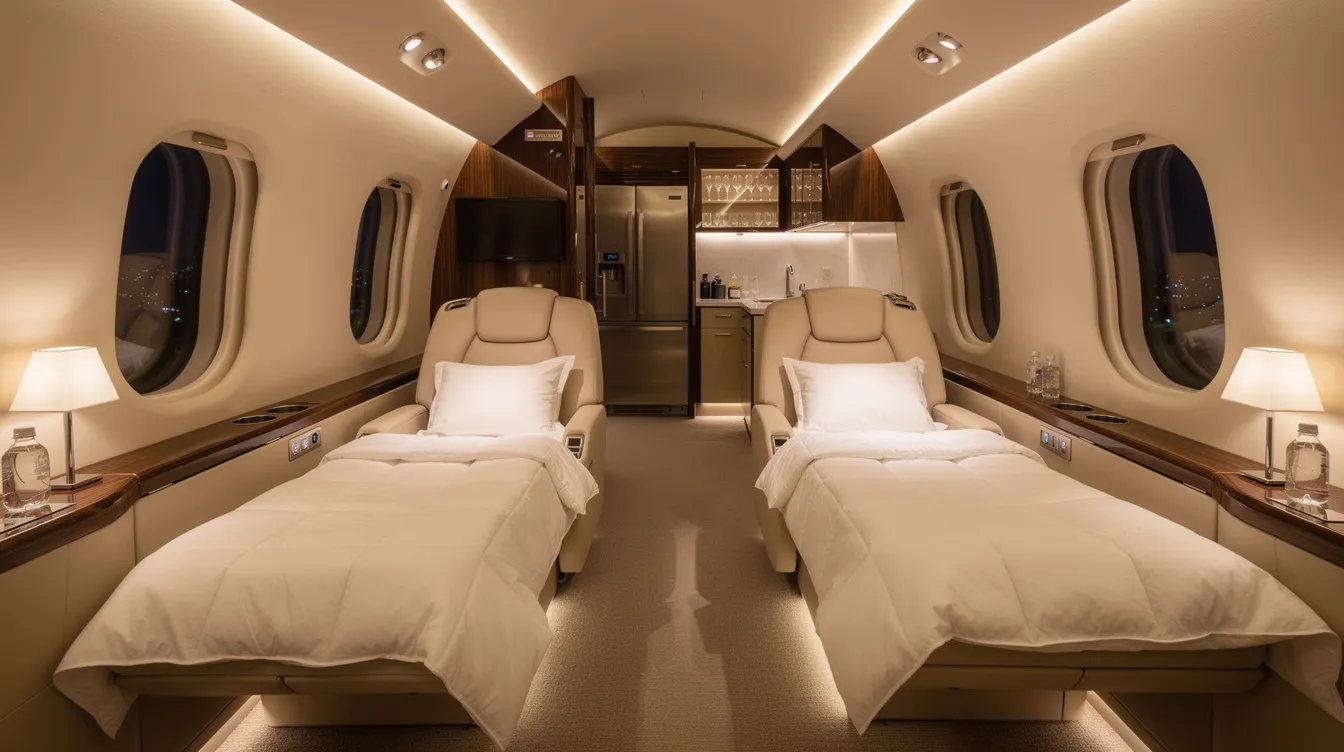
Ultra long range jets: Ideal for coast-to-coast US to Europe (LA to Rome, San Francisco to London) or deeper into the continent. Ultra long range jets seat 12 to 19 passengers and offer full berthing seats, enclosed lavatories, premium galley service, and cabin configurations that make overnight crossings genuinely restful, with many transatlantic cabins also including a flight attendant as part of the service level. Larger jets cost more per hour but are necessary for nonstop transatlantic routes at full payload.
BlackJet's aircraft sourcing spans all aircraft categories, allowing members to right-size per trip. An advisor may recommend a super midsize for a light New York–London run and an ultra long range for a full-family Los Angeles–Athens mission-saving 10–30 percent on the former without sacrificing the latter.
Operational costs, taxes, and fees on transatlantic flights
Long-range operations add layers of operational costs that rarely appear on short domestic flights or domestic flights of any kind. Understanding them prevents sticker shock.
Landing and parking fees: Airport landing fees can range from $150 to $2,000 per visit at European airports. Landing and parking fees at European airports are significant and vary by weight of the aircraft. Hangar fees for multi-day stays add further.
Handling charges: Each fixed base operator charges for ground staff, stairs, baggage, customs processing, and immigration. These vary significantly depending on the European airport.
Overflight and navigation fees: Every country's air traffic control charges for airspace use; oceanic route charges apply over the North Atlantic tracks.
Crew costs: Crew costs can significantly influence the overall expense of chartering a jet. Augmented crews (three or four pilots) are common on ultra-long-range jets to satisfy duty-time rules. Hotel, transport, and per diems for crew during multi-day European stays are billed as direct cost line items.
Taxes: A 7.5 percent federal excise tax applies to all US domestic flights (including domestic positioning legs), while transatlantic segments involve a different mix of national and EU-level fees. European Value Added Tax can apply depending on the flight path and registration country. These are itemized in the quote.
Seasonal charges: De-icing in winter, hangar storage fees during extended stays, and catering upgrades all appear as line items.
BlackJet's itemized proposals for Europe flights clearly separate these operational costs from the base aircraft rate so clients can audit and understand each line.
Private jet to Europe vs commercial first and business class
A private jet is not simply a more expensive seat on the same route. It is a tool for reclaiming time and control over your schedule.
Consider the per-person math: eight fully flexible business-class tickets from New York to London in peak season can total $80,000–$120,000. Eight first-class tickets may exceed $150,000. A private jet charter for the same group-offering the entire aircraft, a chosen departure time, use of a departure airport 20 minutes from Manhattan, and immediate baggage and immigration processing—runs $160,000–$250,000 round trip on a long-range jet. The premium per person narrows considerably.
For executives, the qualitative benefits compound: hold confidential meetings on board, arrive rested for high-stakes negotiations, and manage multi-city itineraries that would be impossible on commercial airlines with fixed schedules. Private jet flying eliminates connections, reduces layover risk, and lets you land at regional airports minutes from your meeting.
For groups traveling together several times a year, private jet service becomes justifiable when measured against billable time saved and the strategic value of arriving prepared rather than exhausted, and very large parties can even evaluate charter plane 100 passengers cost when missions require airline-style capacity with private control.
Jet Card vs on-demand charter for Europe trips with BlackJet
Frequent transatlantic travelers face a choice: charter a private jet on demand each time, or secure access through a Jet Card model, making it important to understand overall jet card cost and membership pricing before committing.
On-demand charter means each trip is quoted independently from current market rates. Pricing varies with aircraft availability, seasonal demand, and fuel prices. For long-range and ultra-long-range jets during peak summer, this exposure to market volatility can add 15–30 percent to what you might have paid in the off-season.
BlackJet Jet Card programs work differently. Jet card programs offer prepaid access to private jets—clients purchase blocks of 25 or more flight hours at fixed rates per aircraft category, so comparing jet card cost per hour is central to evaluating value across providers. Members can secure fixed flight hour rates with jet cards, locking in predictable per-hour pricing regardless of whether they fly in January or July. Jet card programs are cost-effective for frequent travelers and simplify travel planning for regular flyers by removing the need to re-negotiate every trip.
For Europe, the advantages are tangible: predictable budgeting per billable flight hour, priority aircraft availability during peak windows, and often a lower effective price than last-minute on-demand charter during high-demand periods. BlackJet's digital platform lets members price, schedule, and confirm Europe flights around the clock, while its global network supports aircraft sourcing, pricing, and availability for Europe missions, with operations and safety teams validating every mission in the background.
Safety, certification, and long-range flight standards
Crossing the Atlantic in a private aircraft introduces certification requirements well beyond what short domestic flights demand. Operators must hold ETOPS authorization for extended twin-engine operations over water, and crews must be experienced with oceanic procedures, alternate airport planning, and overwater navigation systems.
BlackJet only partners with operators meeting rigorous safety benchmarks—including top-tier third-party ratings from organizations like ARGUS, Wyvern, and IS-BAO, a standard that also underpins broader billionaire private jet price trends and expectations at the top of the market. This applies equally whether you charter a private jet once or fly regularly on a Jet Card.
For a New York–London winter night crossing, BlackJet's team reviews crew duty times, weather along the North Atlantic tracks, de-icing requirements, alternate airports in Iceland and Ireland, and diversion options before the mission is confirmed. Safety decisions are never compromised for marginal cost savings, even when optimizing private jet cost for Europe. Newer jets also carry enhanced avionics and structural resilience that matter on long-haul flights over open ocean, echoing the kinds of amenities and performance found in 20 million dollar private jets designed specifically for intercontinental missions.
Sustainability and fuel: SAF, surcharges, and carbon-neutral flights
Fuel is both the largest driver of operational costs and the central factor in the private aviation industry's environmental footprint, especially on ultra-long-range flights where a single mission can burn thousands of gallons, which is particularly visible on the most expensive luxury private jets operating globe-spanning routes.
Sustainable Aviation Fuel mandates now require 2 percent blending by 2026 at major hubs, and where SAF is available, its higher cost creates visible fuel surcharge line items in quotes. Newer jets emit lower CO2 per seat-mile than older models, making aircraft age a factor in both pricing and environmental performance.
Private aviation companies are increasingly adopting carbon-neutral flights as standard practice. BlackJet integrates sustainability directly: carbon offsets cost approximately $7.99 per 1,000 pounds of CO2, meaning offsetting a $100,000 flight costs about $793—a negligible addition that BlackJet includes by default through verified third-party programs. Clients do not need to manage the logistics.
Fuel surcharges on Europe flights may not track oil prices perfectly due to hedging and supply factors. BlackJet discloses any such surcharges in advance, keeping the private flight quote transparent. For modern high-net-worth travelers, sustainable choices are an expectation, not an optional afterthought.
How to reduce your private jet cost to Europe without downgrading the experience
A private jet to Europe is a premium purchase, but there are concrete ways to optimize cost without sacrificing safety, privacy, or comfort.
Right-size the aircraft category. Avoid defaulting to an ultra-long-range when a super midsize jet handles the route. This alone can save 10–30 percent and is one of several strategies to fly private more affordably without sacrificing comfort.
Choose efficient airports. Farnborough over Heathrow, Biggin Hill over Gatwick. Lower landing fees, faster handling, less congestion.
Be flexible on dates and times. Off-peak departures and midweek flying improve aircraft availability and can unlock better pricing. An air charter broker or BlackJet advisor can identify the most cost-effective windows.
Leverage empty leg flights. When operators reposition aircraft, empty leg flights can cut one-way pricing by 30–60 percent for travelers with schedule flexibility and are a core tactic in understanding how much to rent a private jet on a tighter budget.
Travel as a group. Sharing the entire aircraft among six to twelve travelers spreads fixed mission costs dramatically. Per-person cost may approach or rival commercial first class on the same route, especially when optimizing aircraft choice much like you would when chartering a small plane for shorter missions.
Structure itineraries wisely. BlackJet advisors help members plan multi-city, open-jaw, and return routing to minimize repositioning and short-leg fees, reducing unnecessary operational costs across the trip.
Booking a private jet to Europe with BlackJet: from quote to wheels up
The process begins with a conversation—or a few taps on BlackJet's platform. Here is how it works:
Submit trip details via the app or your dedicated advisor: dates, passenger count, origin, destination, and any aircraft preferences.
Receive itemized options across different aircraft categories, each showing total trip price, estimated billable flight time, and line-item operational costs.
Confirm and fund using Jet Card hours or a single-trip payment. Jet card programs often include 24/7 digital booking tools that let you lock in your mission day or night.
Complete preferences: passenger manifests, catering selections, ground transportation arrangements.
Receive final itinerary with departure airport details, European FBO information, customs coordination, and ground transfer confirmations.
BlackJet coordinates with European FBOs, customs authorities, and ground transport providers so you need to arrive only 20–30 minutes before departure. Real-time updates flow through the platform throughout your travel day, which is especially valuable on long-haul international legs where conditions can shift.
Ready to see what your next European mission costs? Explore BlackJet Jet Card membership, including options like the BlackJet 25+ Hour Jet Card, or request a tailored quote based on your specific routes and dates.
FAQ: Private jet to Europe price & practical questions
How many flight hours is New York to London, and how is that billed?
Typical eastbound block time is approximately 6.5–7 billable flight hours; westbound often runs 7.5–8 hours due to headwinds. Billing includes taxi, ground delays, and any positioning—not just cruise time. Minimum billable flight time policies may apply depending on operator.
Can a light jet or very light jet cross the Atlantic to Europe?
Technically yes, with multiple fuel and tech stops (Newfoundland, Iceland, Scotland), but the limited payload, restricted cabin comfort, and added stops make it impractical for most travelers. For nonstop crossings with a full group and luggage, super midsize or heavier private jet charter services are required, while shorter missions may justify the cheapest private aircraft options for budget-conscious flyers.
Is it cheaper to book one long round trip or two separate one-way charters?
A round trip is generally more cost-efficient because it reduces repositioning fees and crew logistics. However, combining two one-way legs with available empty leg flights can occasionally produce savings for flexible travelers, and understanding charter flight fundamentals helps in weighing these options.
How far in advance should I book a private jet to Europe in summer?
For peak season (June–August), booking four to six weeks ahead is advisable. Best aircraft selection and smoother pricing often require two to three months of lead time to avoid surcharges and limited inventory when private aviation demand is at its highest.
Can I lock in a 2026 hourly rate for Europe flights with a Jet Card?
Yes. BlackJet Jet Card programs allow clients to pre-purchase hours at a fixed hourly rate by aircraft category. This protects against fuel and seasonal surcharges, subject to program terms. A 100-hour Jet Card offers the deepest rate locks for the most frequent flyers, and broader jet card pricing guides can help benchmark those rates.
For a precise, route-specific quote rather than generic averages, contact BlackJet directly. Every transatlantic mission is different—and getting the details right is what separates a good private flight from an exceptional one, much as selecting among the best jet cards for frequent flyers requires matching program details to your specific travel profile.
Conclusion: Elevate Your Transatlantic Travel with BlackJet
Flying private to Europe in 2026 is not merely a luxury—it's a strategic investment in time, productivity, and a seamless experience. With pricing ranging broadly based on aircraft category, route, and operational factors, understanding the full scope of private jet to Europe pricing is essential for making informed choices. BlackJet's comprehensive Jet Card programs and expert advisory services simplify this complexity, offering fixed rates, priority access, and transparent, itemized quotes that empower you to fly smarter.
Whether you choose a super midsize jet for efficient East Coast to Western Europe hops or an ultra long range aircraft for coast-to-coast comfort, BlackJet ensures every journey meets the highest standards of safety, sustainability, and personalized service. By leveraging strategic airport choices, flexible scheduling, and cost optimization strategies like empty leg flights, you can reduce expenses without compromising the exceptional private aviation experience.
Explore how BlackJet can transform your private jet travel to Europe—unlocking unparalleled convenience, privacy, and operational excellence. Discover the difference of flying with a partner who prioritizes safety certification, carbon-neutral flights, and cutting-edge technology, all tailored to your unique travel needs.
Ready to elevate your next European mission? Join BlackJet's Jet Card program or request a personalized quote today, and experience private aviation redefined for the discerning traveler.


 Sign up with google
 Sign up with Apple